Overview

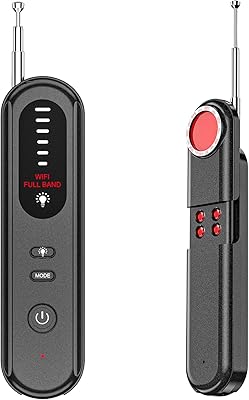
The HUYNL KT3 Hidden Camera Bug Detector is a mid-range privacy sweeper launched in late 2024, aimed at travelers and anyone uneasy about surveillance gear in unfamiliar spaces. Demand for tools like this has grown sharply alongside the rise of short-term rentals — checking a new Airbnb or hotel room now feels like a reasonable precaution rather than paranoia. Unlike single-purpose lens finders, this privacy scanner covers four detection modes in one compact package. HUYNL markets it with AI chip technology, which sounds impressive, but that claim is better treated as product positioning than a verified technical specification.
Features & Benefits

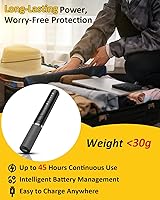
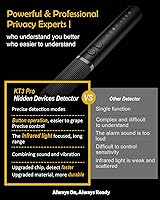
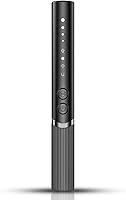
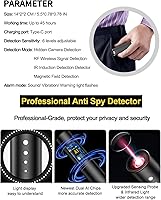
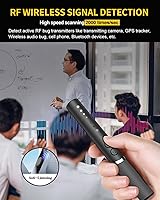
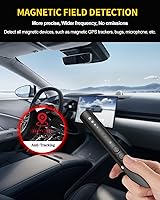
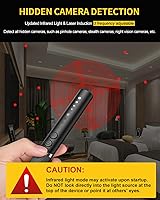
This bug and camera sweeper handles four distinct tasks: RF signal detection, infrared camera lens scanning, magnetic GPS tracker sweeping, and laser sensing. That range matters because a single-mode device can leave real gaps. Adjustable sensitivity lets you dial in the scan for a large open space or a tightly furnished room, and you can switch between audible alarm and vibration depending on how quietly you need to work. Battery life is a genuine highlight — rated at up to 45 hours of continuous use, with a full charge via Type-C in around 2.5 hours. The two-button control scheme means no manual to consult every time you pull it out of your bag.

Best For

The KT3 detector makes the most sense for people who travel frequently and want something portable enough to toss into carry-on luggage. Airbnb guests doing a quick sweep before unpacking, business travelers worried about conference room eavesdropping, and parents scouting changing rooms or gym locker areas are all solid fits. It also works well as a privacy-focused gift — practical, broadly appealing, and easy to hand off without a tutorial. Where it falls short is for anyone needing professional-grade counterintelligence coverage; this privacy scanner is a consumer convenience tool, not a substitute for dedicated RF spectrum analyzers used by security professionals.

User Feedback

With over 450 ratings and a 4.2-star average, buyer sentiment is broadly positive, though not without caveats worth knowing. Most reviewers highlight how easy it is to get started — no configuration headaches, solid battery endurance, and a build that does not feel like a burden to carry. The recurring criticism is harder to ignore: false positives are a real issue near WiFi routers, Bluetooth speakers, or other common wireless devices, which makes readings tricky for first-time users. This is a known limitation of consumer-grade RF detectors broadly, not unique to this bug and camera sweeper. Anyone expecting lab-grade accuracy will need to recalibrate their expectations.

Pros

  • Covers four detection modes in one pocket-sized device, reducing the need to carry multiple tools.
  • Battery life of up to 45 hours means this privacy scanner can last an entire trip without recharging.
  • Type-C fast charging brings it back to full in roughly 2.5 hours — no proprietary cables to track down.
  • Two-button operation makes it genuinely beginner-friendly with almost no learning curve.
  • Silent vibration mode lets you sweep a room discreetly without alerting anyone nearby.
  • Lightweight build at under 6 oz means it adds virtually nothing to a travel bag.
  • ABS casing resists fingerprints and minor drops, holding up well to everyday carry.
  • Adjustable sensitivity helps reduce noise in low-risk environments and increase range when needed.
  • Ranked in the top 250 in its Amazon category, reflecting solid early market traction for a 2024 release.
  • Works across a wide range of environments — hotel rooms, vehicles, offices, locker rooms, and more.

Cons

  • RF mode generates frequent false positives near WiFi routers, smart TVs, and Bluetooth devices.
  • The KT3 detector lacks a display screen, so interpreting signal readings requires some practice.
  • AI chip marketing language on the packaging overstates what is fundamentally a consumer-tier sensor.
  • No companion app or digital readout makes it harder to log or compare sweep results over time.
  • Detection range and accuracy drop noticeably in environments packed with competing wireless signals.
  • First-time users without any prior experience may misread normal RF noise as a genuine threat.
  • The 1 x 1 x 1 inch listed dimensions appear to be a placeholder error, leaving true size unclear from specs alone.
  • No independent lab certification or third-party testing data to back up detection claims.
  • Consumer reviews suggest the magnetic GPS detection mode is less reliable than the infrared lens finder.
  • Not suitable for sweeping large commercial spaces — best used in single rooms or small enclosed areas.

Ratings

The HUYNL KT3 Hidden Camera Bug Detector has been evaluated by our AI rating system after processing hundreds of verified global purchases, with spam, incentivized, and bot-flagged submissions actively filtered out before scoring. Ratings reflect the full spectrum of buyer experience — from first-time travelers impressed by its simplicity to more technically experienced users who ran into real-world limitations. Every score below captures both where this privacy scanner earns its keep and where it falls measurably short.
Detection Accuracy
67%
33%
The infrared lens detection mode performs consistently well for spotting camera lenses regardless of whether the device is actively transmitting, which is the mode most buyers end up relying on. In clean environments with minimal wireless clutter, the RF mode also flags active transmitters reliably enough for casual use.
In real hotel or apartment settings — where WiFi routers, smart TVs, and Bluetooth accessories are all running simultaneously — the RF mode generates a frustrating number of false positives that can make it nearly impossible to distinguish a genuine threat from background noise. This is a category-wide limitation, but it affects confidence in the device meaningfully.
Ease of Use
91%
Two-button operation is about as friction-free as a hardware device can get — buyers consistently report being able to start a room sweep within a minute of opening the box without consulting the manual. The clear mode switching and tactile feedback make it accessible even for older users or those with no background in security hardware.
While the controls themselves are intuitive, interpreting the alerts accurately is a different skill that the device does not really teach you. First-time users often do not know whether a strong RF reading means something suspicious or just means the room has a powerful WiFi router, and the manual does not go deep enough on distinguishing real detections from false ones.
Battery Life
88%
Buyers routinely note that the KT3 detector holds charge far longer than expected for a device in this category — sweeping a new rental each night during a week-long trip rarely requires a recharge mid-journey. The 2.5-hour Type-C fast charge adds real convenience since most travelers already carry compatible cables.
The 20 to 45-hour range is wide enough to be a little vague — battery drain varies noticeably depending on which mode is active and how high sensitivity is set. Heavy RF scanning sessions at maximum sensitivity chew through the battery considerably faster than the rated upper limit suggests.
Portability & Design
86%
At under 6 oz and with a footprint compact enough to fit in a jacket pocket, this privacy scanner genuinely disappears into travel luggage without adding bulk or weight to worry about. The anti-fingerprint coating keeps it looking clean even after frequent handling, which matters for something that gets passed around or used in professional settings.
The all-black compact form factor, while sleek, makes it easy to misplace in a bag packed with other small electronics. A few buyers also noted the device feels slightly plasticky in hand compared to pricier competitors, though it has held up well to minor drops in reported cases.
False Positive Rate
53%
47%
In low-interference environments — a rural cabin, a sparsely connected guest room, or a parked car away from populated areas — the bug and camera sweeper performs with noticeably fewer spurious alerts, giving users a more confident sweep experience. Switching to the magnetic or infrared modes sidesteps the RF noise problem almost entirely.
The RF detection mode's tendency to trigger on completely benign wireless signals is the single most common complaint across buyer reviews, and it meaningfully undermines trust in the device for users who do not have the technical background to contextualize false alerts. In dense urban hotel environments, this can make the RF mode feel more anxiety-inducing than reassuring.
Build Quality
74%
26%
The ABS plastic housing is solid enough for everyday carry and absorbs minor drops without cracking or warping based on buyer-reported experience. The anti-fingerprint surface treatment holds up across extended use and does not pick up smudges the way glossy plastic alternatives tend to.
Compared to mid-range competitors that use rubberized grips or metal accents, the KT3 detector feels utilitarian rather than premium. Some buyers noted that the buttons develop a slightly looser feel after several months of regular use, which is a minor durability concern for a device intended to last years.
Value for Money
71%
29%
Covering four detection modes in a single portable device at this price tier is genuinely competitive — buyers who have priced out dedicated RF detectors, lens finders, and GPS sweepers separately understand they would spend considerably more for equivalent multi-mode coverage across separate tools.
The value proposition weakens for buyers who planned to rely primarily on RF detection, since the inherent limitations of that mode at consumer price points mean they are effectively paying for a feature that underdelivers in typical real-world conditions. Those who primarily need infrared lens detection will extract better value from the purchase.
GPS Tracker Detection
69%
31%
The magnetic sweep mode works reasonably well for locating physically attached GPS trackers on vehicles, and several buyers reported successfully identifying tracking devices placed on their cars during personal safety situations. It requires no calibration and responds clearly to magnetic mass.
Passive GPS loggers that store location data without transmitting a live signal will not trigger the RF mode, and the magnetic mode alone cannot confirm whether a detected object is actually a tracker or just a metal bracket. The detection is a useful starting point, but confirmation requires visual inspection.
Alert System
82%
18%
The choice between audible alarm and silent vibration is one of the more practically useful design decisions in this category — being able to sweep a hotel room quietly while a travel partner is sleeping, or scan a conference room without drawing attention, is a real advantage that buyers frequently call out in positive reviews.
The vibration intensity on the silent mode is subtle enough that some users missed alerts when the device was sitting on a surface rather than held in hand. A visual indicator like an LED bar would strengthen the alert system considerably without adding meaningful complexity.
Infrared Lens Detection
79%
21%
This is consistently the most trusted mode among experienced users — scanning through the viewfinder to spot the reflective glint of a camera lens works independently of wireless signals, making it immune to the false positive problem that plagues the RF mode. It covers pinhole cameras, clock cameras, and smoke detector cameras reliably when the sweep is done methodically.
The effective range for infrared lens detection is limited to relatively short distances, requiring users to get close to suspected hiding spots, which can be inconvenient in larger rooms. Proper technique — darkening the room and scanning slowly — is necessary for best results, which the manual could explain more thoroughly.
Setup & Learning Curve
87%
No pairing, no app installation, no account creation — buyers appreciate that this privacy scanner is operational within seconds of powering on. The included English manual is clear enough that most users feel confident trying all four modes on their first session without external guidance.
The gap between operating the device and interpreting its output correctly is where some users struggle. Knowing how to reduce RF sensitivity to filter out ambient noise, for example, is not immediately obvious and takes a sweep or two to figure out through trial and error.
Charging Convenience
89%
Type-C compatibility means most travelers can charge this bug and camera sweeper from the same cable they already carry for their phone or laptop, eliminating the frustration of packing a proprietary charging cable. The 2.5-hour full charge turnaround is fast enough to top up during a lunch break or a flight layover.
The device does not support pass-through charging, meaning it cannot be used while plugged in — a minor inconvenience if the battery runs low mid-sweep and there is no convenient window to pause and recharge before continuing.
Versatility Across Environments
76%
24%
Buyers use the KT3 detector across a genuinely wide range of contexts — hotel rooms, rental cars, office boardrooms, gym locker areas, and even outdoor spaces around their own property. The four-mode coverage means at least one mode is practical in nearly any environment where surveillance concerns might arise.
Performance degrades in open outdoor spaces where RF signals from surrounding infrastructure create a persistent noise floor that makes the signal mode nearly useless. The device is best suited to enclosed, controlled environments where the source of wireless signals can be partially managed.
Brand Trust & Support
63%
37%
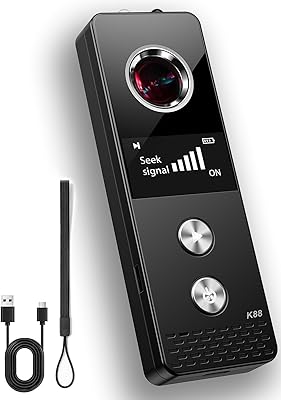
HUYNL offers 24-hour customer support and provides step-by-step setup documentation, which buyers on their first bug detector purchase find reassuring. The brand has maintained consistent product quality across both the K88 and KT3 models, suggesting a stable manufacturing baseline.
HUYNL is not a widely established name in the security hardware space, and independent verification of their AI chip claims or sensor specifications is not available. Buyers who prioritize brand reputation and third-party certification will find the lack of external validation difficult to overlook.

Suitable for:

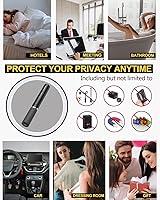
The HUYNL KT3 Hidden Camera Bug Detector is a practical pick for frequent travelers who regularly check into Airbnbs, short-term rentals, or budget hotels and want a fast, low-effort way to sweep a room before settling in. It covers enough ground — RF signals, infrared lens detection, magnetic GPS sweeping, and laser sensing — that a single device replaces what would otherwise require several separate tools. Business travelers with concerns about sensitive conversations in shared meeting rooms or unfamiliar offices will find the silent vibration alert mode particularly useful. Parents who want to spot-check gym changing rooms, school locker areas, or public fitting rooms before their kids use them will appreciate how little training the device requires. It also makes a genuinely thoughtful gift for privacy-minded friends or family members who would not know where to start with more technical equipment.
Not suitable for:

Anyone expecting professional counterintelligence capability should look elsewhere — the HUYNL KT3 Hidden Camera Bug Detector is a consumer-grade tool with the inherent limitations that come with that category. RF detectors at this price tier are notoriously prone to false positives in environments dense with wireless signals, including WiFi routers, Bluetooth speakers, smart TVs, and even some USB chargers, which can make readings confusing without prior experience. Security consultants, private investigators, or corporate protection teams who need reliable, repeatable results in high-stakes environments will find this bug and camera sweeper too imprecise for professional use. Users who live or work in heavily networked spaces — open-plan offices, apartment buildings with many active networks — may find the RF mode nearly unusable without significant contextual interpretation. If pinpoint accuracy is non-negotiable, a proper RF spectrum analyzer is the right tool, not a compact consumer sweeper.
Specifications

  • Brand: Manufactured and sold under the HUYNL brand, model designation KT3.
  • Detection Modes: Operates across four distinct modes: RF signal detection, infrared camera lens scanning, magnetic GPS tracker detection, and laser sensing.
  • Battery Life: Rated for 20 to 45 hours of continuous use depending on the active detection mode and sensitivity setting.
  • Charging: Charges via a standard Type-C cable and reaches a full charge in approximately 2.5 hours.
  • Power Source: Powered by a built-in rechargeable lithium-ion battery; one lithium-ion cell is included with the unit.
  • Weight: The device weighs approximately 5.9 oz (0.17 kg), making it light enough for everyday carry or travel luggage.
  • Material: Housing is constructed from ABS (Acrylonitrile Butadiene Styrene) plastic, treated to resist fingerprints and minor impact damage.
  • Controls: All functions are accessed through a simple two-button interface, requiring no software or pairing to operate.
  • Alert Modes: Users can choose between an audible alarm and a silent vibration alert, selectable depending on the environment.
  • Sensitivity: Detection sensitivity is user-adjustable, allowing the sweep range to be widened or narrowed based on the space being scanned.
  • Use Environments: Designed for use in hotel rooms, office spaces, bathrooms, changing rooms, gyms, vehicles, and other enclosed areas.
  • In the Box: Each unit ships with the detector, a Type-C charging cable, an English-language user manual, and a gift-ready box.
  • Release Date: This model was first made available for purchase in October 2024.
  • Market Rank: Holds a Best Sellers Rank of #243 in the Surveillance and Security Cameras category on Amazon as of the review period.
  • User Rating: Carries an average rating of 4.2 out of 5 stars based on 454 customer ratings.
  • Connectivity: No wireless connectivity required; the device operates as a standalone, standalone hardware unit with no app dependency.
  • Indoor/Outdoor: Rated for both indoor and outdoor use, though performance in open outdoor spaces may vary due to ambient RF interference.

Related Reviews

HUYNL K88 Hidden Camera and Bug Detector
75%
91%
Ease of Use
67%
Detection Performance
88%
Battery Life
93%
Portability
58%
False Positive Rate
More
SKXCASPA HWX-007 Hidden Camera & Bug Detector
71%
63%
Detection Accuracy
58%
False Positive Rate
89%
Portability & Form Factor
86%
Ease of Use
84%
Battery Life
More
SEVENPARK T01 Hidden Camera Detector
73%
94%
Portability
91%
Ease of Use
72%
RF Signal Detection
53%
False Positive Rate
61%
Build Quality
More
camgyeum A007 Hidden Camera Detector
71%
67%
Detection Accuracy
78%
Ease of Use
91%
Portability & Form Factor
61%
Build Quality
72%
Battery Life
More
POLESNOW P18 Hidden Camera Detector
86%
88%
Detection Accuracy
93%
Battery Life
90%
Portability
80%
Sensitivity Adjustment
91%
Ease of Use
More
CountureMode G007 Hidden Camera Detector
73%
67%
Detection Accuracy
83%
Ease of Use
91%
Portability & Form Factor
71%
Build Quality & Durability
78%
Battery Life & Charging
More
JMDHKK M8000 Hidden Camera Detector
83%
88%
Ease of Use
93%
Portability
84%
Detection Performance
80%
Build Quality
75%
Battery Life
More
Aleanu T01 Hidden Camera Detector
74%
71%
Detection Accuracy
58%
False Positive Rate
84%
Ease of Use
93%
Portability
63%
Build Quality
More
JMDHKK K18+ Hidden Camera and Bug Detector
73%
88%
Ease of Use
61%
RF Detection Accuracy
93%
Portability
67%
Magnetic Probe Performance
59%
Hidden Camera Detection
More
Abyliee Hidden Camera Detector Pro
74%
91%
Ease of Use
62%
Detection Accuracy
93%
Portability & Form Factor
61%
Build Quality
78%
Battery Life
More

FAQ

The short answer is: it depends on the camera type. The infrared lens detection mode is genuinely useful for spotting camera lenses regardless of whether the device is transmitting. The RF mode, however, will only flag cameras that are actively broadcasting a wireless signal, and it can pick up plenty of false positives from WiFi routers and Bluetooth devices nearby. Using both modes together gives you a more complete picture than relying on either one alone.

Start by turning off as many wireless devices in the room as you can — unplug the smart TV if possible and switch your phone to airplane mode to cut down on background RF noise. Then slowly sweep the KT3 detector across areas where cameras are commonly hidden: smoke detectors, clock radios, air purifiers, and wall outlets. Use the infrared lens mode by looking through the viewfinder while scanning, and switch to RF mode for anything that might be actively transmitting. Take your time near mirrors and shelving too.

It can, which is one of the honest trade-offs of consumer-grade RF detection. Dense wireless environments like apartment buildings or hotels with strong in-room WiFi will produce a lot of background signal noise. To work around this, lower the sensitivity setting and focus on the infrared lens and magnetic modes instead, which are far less susceptible to ambient wireless interference.

Yes, the magnetic detection mode is designed specifically to locate magnetic GPS trackers attached to vehicles. Slowly run the bug and camera sweeper along the underside of the car, wheel arches, and bumpers where trackers are commonly placed. Keep in mind that passive GPS trackers that only log location data without transmitting live may not trigger the RF mode, so the magnetic sweep is the more reliable method here.

The rated range is 20 to 45 hours, and real-world use tends to land somewhere in the middle depending on which modes you cycle through. Using the RF mode with high sensitivity draws more power than the infrared mode alone. For a typical travel use case — sweeping a room once or twice per stay — a single charge will last through many trips before you need to plug it in again.

It is genuinely one of the more beginner-accessible options in this category. The two-button interface means you are not navigating menus or configuring settings before you can start scanning. The included English manual walks through each mode clearly. That said, interpreting what the alerts actually mean — particularly distinguishing a real threat from background RF noise — does take a little practice and common sense.

The HUYNL KT3 Hidden Camera Bug Detector is positioned as the newer, more capable sibling to the K88. The KT3 carries updated sensor technology and broader detection coverage, which is reflected in its higher price point. The K88 has more reviews due to its longer time on the market, but buyers looking for the most current version of HUYNL's detection technology should opt for the KT3.
Yes, the vibration alert mode handles exactly that situation. You can sweep a room or shared space without any audible alarm drawing attention. It works much like a phone on silent — you feel the alert rather than hear it, which is handy if you share a room or are sweeping while someone else is present.

No app, no Bluetooth pairing, no setup required. This privacy scanner is completely standalone — charge it, power it on, and start scanning. That simplicity is actually one of its more practical qualities for travel, since there is nothing to install or configure when you arrive somewhere new.

It is a solid choice, especially if the recipient is not particularly tech-savvy. The compact size, long battery life, and straightforward operation make it easy to use without a technical background. It ships in a presentable gift box, so there is no extra packaging required. Just be upfront with the recipient that it is a practical privacy tool rather than a professional-grade security device — that keeps expectations realistic.