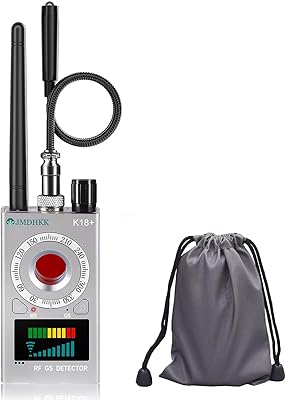
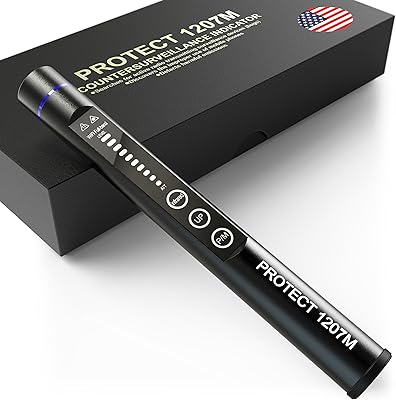
Overview

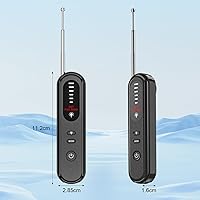
The Aleanu T01 Hidden Camera Detector arrives at a moment when privacy worries in short-term rentals and hotel rooms have shifted from niche anxiety to mainstream concern. Stories of hidden cameras turning up in Airbnbs have left many travelers uneasy, and this compact device targets exactly that audience — people who want a reasonable layer of reassurance without investing in professional-grade equipment. It packs four detection methods into a body that weighs barely an ounce, closer in size to a thick pen than any bulky gadget. That portability matters at this price point. Worth being clear from the start, though: this is a consumer-level tool, not a certified sweep device intended for security professionals.
Features & Benefits

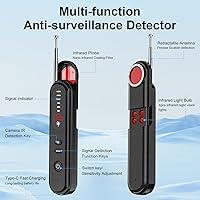
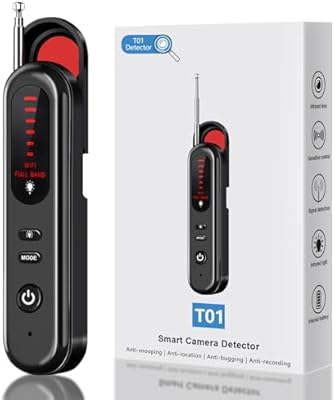
The four detection modes each serve a distinct purpose. The RF signal scanner sweeps a wide frequency band — from 1MHz up to 6.5GHz — covering most transmitting cameras, GPS trackers, and cellular signals you might realistically encounter. When a camera is not actively broadcasting, the infrared lens finder can still help spot it by detecting reflective lens elements during a manual visual scan. Magnetic detection adds another angle, useful if you suspect a tracker has been attached to your vehicle or bag. Six adjustable sensitivity levels help manage false alerts in Wi-Fi-heavy environments like hotels. Battery life is genuinely practical for travel: a one-hour charge delivers roughly 25 hours of active use.

Best For

This hidden camera detector makes the most sense for frequent travelers — especially anyone who regularly books short-term rentals or checks into unfamiliar hotels. It also suits people picking up their first counter-surveillance tool; the controls are approachable enough that no technical background is required. The compact build slides into a jacket pocket or toiletry bag without any fuss, which is exactly the point. For light home or office use, it handles basic checks adequately. What it is not designed for is professional security work — anyone conducting formal sweeps or working in compliance-driven environments will need equipment purpose-built and certified for that level of scrutiny.

User Feedback

Buyers often note that the Aleanu detector punches above its weight for casual travel use. Portability and ease of use come up repeatedly — most people figure it out within minutes, which matters when you are tired after a long trip and just want a quick sweep before settling in. A common observation, though, is that RF detection can be noisy in signal-saturated spaces; near hotel Wi-Fi routers or busy corridors, the sensitivity needs careful adjustment or alerts become constant. A few buyers mention a short learning curve around that calibration. Build quality draws mixed reactions — light enough to carry everywhere, but some find it feels less robust than expected. Most describe genuine peace of mind when expectations stay realistic.

Pros

  • Covers four detection methods in one device — RF signal, lens scan, magnetic field, and flashlight.
  • Weighs barely an ounce, making it one of the easiest privacy tools to carry on any trip.
  • Six sensitivity levels let you tune out background noise in busy Wi-Fi environments.
  • A one-hour charge delivers up to 25 hours of active use — strong stamina for travel.
  • The infrared lens finder can spot non-transmitting cameras that pure RF scanners would miss entirely.
  • Effective coverage of up to 30 square meters handles most standard hotel rooms in a single pass.
  • Approachable controls mean most users are up and running within minutes of unboxing.
  • 25-day standby time means you rarely return to a dead device after weeks between trips.
  • Magnetic detection adds a layer useful for checking vehicles or luggage for covert GPS trackers.
  • Ranked among the top sellers in its category, reflecting broad buyer confidence at this price tier.

Cons

  • RF mode triggers frequently near hotel Wi-Fi routers, making false positives a real frustration in busy buildings.
  • Cameras that are not actively transmitting at scan time can go undetected by the RF mode.
  • Included instructions are vague on sensitivity calibration, leaving new users to figure it out by trial and error.
  • The infrared lens scan requires slow, deliberate technique in dim conditions — easy to rush and miss results.
  • Build feels hollow and lightweight in hand, which concerns buyers looking for something more durable over time.
  • Charging uses an older cable type rather than USB-C, which adds a minor inconvenience for modern travel kits.
  • In larger open spaces or multi-room environments, the effective range falls noticeably short of stated coverage.
  • Some buyers ultimately feel the device functions more as a reassurance tool than a reliably accurate detector.
  • No clear audio or visual distinction between signal types makes interpreting alerts harder for inexperienced users.

Ratings

The Aleanu T01 Hidden Camera Detector has been evaluated by our AI system after analyzing verified purchase reviews from buyers worldwide, with spam, bot activity, and incentivized feedback actively filtered out. The scores below reflect a balanced picture — what this pocket-sized RF scanner genuinely does well and where it falls short — so you can make a clear-eyed decision before buying.
Detection Accuracy
71%
29%
For catching actively transmitting devices — a camera streaming over Wi-Fi or a GPS tracker pinging a signal — buyers report that the Aleanu detector responds reliably across common frequencies. Most users found it useful for a basic sweep of a rental room before unpacking.
Passive or Wi-Fi-connected cameras that are not actively transmitting at scan time can slip past the RF mode entirely. Several buyers noted that detection accuracy depends heavily on whether a device is live, which is not always predictable in practice.
False Positive Rate
58%
42%
The six sensitivity levels give users meaningful control, and buyers who took time to calibrate in a known-safe environment before scanning report a noticeably cleaner signal. Dropping to mid-range sensitivity in a hotel room helped reduce noise considerably.
In signal-dense environments — a busy hotel floor, an apartment building with multiple routers — the RF mode tends to alert frequently even with no hidden devices present. This is a known limitation of consumer RF detectors broadly, and new users often find it disorienting.
Ease of Use
84%
Most buyers describe the learning curve as short. The controls are straightforward enough that someone checking into a hotel room after a long flight can run a basic scan without reading a manual cover to cover. Feedback indicators are simple and readable.
Understanding how to interpret alerts — distinguishing a genuine hit from background RF noise — requires a bit of experience. A small number of buyers felt the included instructions did not explain sensitivity calibration clearly enough for first-time users.
Portability
93%
At roughly 30 grams, this pocket-sized RF scanner is genuinely unobtrusive to carry. It slides into a jacket pocket or a small toiletry bag without adding noticeable bulk, which is exactly what frequent travelers need from a tool they want to have on every trip.
The box-shaped form factor is slightly less elegant in hand than a true pen-style device. A small minority of buyers mentioned it shifted around in tight pockets more than expected, though this is a minor gripe rather than a real drawback.
Build Quality
63%
37%
The polycarbonate shell feels clean and presents well out of the box. For the price tier, most buyers consider the construction acceptable — nothing feels obviously flimsy on first inspection, and buttons respond with reasonable tactile feedback.
The lightweight build cuts both ways. Several buyers noted that the device feels hollow and somewhat fragile under sustained use, and a few reported cosmetic wear after being carried loose in a bag. It does not inspire confidence as a long-term daily carry item.
Battery Life
88%
Up to 25 hours of active use from a single charge is a strong figure for a device this size. Buyers who use it primarily for hotel check-ins report going weeks between charges, and the 25-day standby means they do not return to a dead unit after a break.
A handful of users reported that real-world battery life in active scanning mode fell somewhat short of the claimed figure, particularly with sensitivity set high. The discrepancy was not dramatic, but worth noting if you plan extended continuous use.
Charging Speed
86%
The roughly one-hour charge time is practical and well-suited for travel routines. Buyers appreciate being able to top it up during a shower or a meal rather than waiting overnight, which fits naturally into how most people pack and prepare before a trip.
The device charges via a proprietary or older cable style that a couple of buyers found inconvenient to source as a replacement. It is not a USB-C connection, which stands out as a minor friction point in an otherwise solid charging experience.
Infrared Lens Detection
67%
33%
The infrared lens scanner gives this detector an edge over RF-only competitors at this price. It can spot reflective camera lenses that are not transmitting any signal, which is the mode most likely to catch a deliberately dormant device hidden in a smoke detector or wall clock.
The technique requires a slow, deliberate manual scan in a darkened room to be effective, and results depend heavily on user patience and lighting conditions. Buyers who rushed the scan reported missing potential lens glints that a slower pass would have caught.
Magnetic Detection
74%
26%
For anyone concerned about magnetized GPS trackers attached to a vehicle or slipped into luggage, this mode adds a practical layer of protection that many competing devices at this price skip entirely. Buyers who tested it on known magnets confirmed consistent response.
Sensitivity in this mode can be unpredictable near metallic surfaces, door frames, or certain luggage hardware. A few buyers noted it triggered around ordinary metal objects, requiring slow, careful sweeping technique to isolate a genuine magnetic source.
Value for Money
79%
21%
Combining RF scanning, lens detection, magnetic detection, and a flashlight in a single affordable package represents solid value for privacy-conscious travelers who want one versatile tool rather than several single-purpose gadgets cluttering their bag.
Buyers with higher expectations — particularly those hoping for the accuracy of professional-grade equipment — sometimes feel the price point comes with noticeable capability ceilings. It is best understood as a solid entry-level option, not a budget version of a professional sweep device.
Sensitivity Calibration
61%
39%
Having six distinct levels rather than a simple low/medium/high toggle gives users meaningful granularity. Experienced buyers who tested it across different environments settled on a preferred sensitivity range and found the system behaved predictably once dialed in.
The calibration process is largely trial and error, and without clearer guidance in the manual, new users often overshoot. The most common frustration in buyer feedback is hitting maximum sensitivity in a hotel and receiving constant alerts from the building's own wireless infrastructure.
Range and Coverage
76%
24%
A stated effective area of up to 30 square meters covers most standard hotel rooms, studio apartments, and short-term rental spaces comfortably in a single sweep session. Buyers who tested it in typical room sizes found coverage adequate without needing to reposition repeatedly.
In larger open-plan spaces or rooms with thick walls and many signal-absorbing furnishings, effective range drops noticeably. The Aleanu detector is calibrated for typical residential room sizes, not large offices or multi-room sweeps.
Instruction Clarity
55%
45%
The core operations are intuitive enough that most buyers got the device running within minutes. For basic RF scanning and the flashlight function, the experience is largely self-explanatory without needing to consult any documentation at all.
The included documentation drew repeated criticism for being vague on the more nuanced functions — particularly how to interpret RF alerts in noisy environments and how to properly conduct the infrared lens scan. Several buyers said they relied on third-party video tutorials instead.
Peace of Mind Value
81%
19%
Regardless of whether any hidden device is ever actually found, the majority of buyers report feeling noticeably less anxious when checking into an unfamiliar rental after running a scan. That psychological reassurance is a real and frequently cited benefit in buyer feedback.
A small subset of buyers described the experience as closer to a novelty than a functional security tool, particularly after encountering too many false positives to trust the alerts. Managing expectations before purchase appears to be key to satisfaction.
Flashlight Utility
72%
28%
The integrated flashlight is more useful than it sounds. Scanning behind furniture, inside air vents, or around smoke detectors in a dimly lit room is considerably easier when the detection device itself provides illumination, removing the need for a second tool in hand.
The flashlight is functional rather than powerful. Buyers noted it works for close-range inspection but does not throw enough light to illuminate a full room or distant corners effectively, limiting its usefulness as a standalone lighting tool in genuinely dark spaces.

Suitable for:

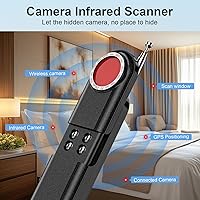
The Aleanu T01 Hidden Camera Detector is built for the kind of traveler who books Airbnbs or unfamiliar hotels regularly and wants a practical first line of defense against hidden surveillance devices. If you are not a security professional but simply want reasonable reassurance before unpacking in a rental room, this pocket-sized RF scanner slots naturally into your travel routine without demanding technical knowledge or much bag space. It is also a sensible pick for someone who has never owned a counter-surveillance tool before — the controls are approachable, and the four detection modes cover the most common threat scenarios a casual user would actually encounter. People with concerns about magnetized GPS trackers on their vehicles, or anyone wanting a basic sweep capability at home or in a small office, will find it fits those needs adequately. At roughly 30 grams, it disappears into a toiletry bag or jacket pocket, which means there is genuinely no friction in having it on you whenever you travel.
Not suitable for:

Anyone expecting professional-grade sweep capability should look elsewhere — the Aleanu T01 Hidden Camera Detector is a consumer device, and its detection accuracy reflects that honestly. Security consultants, corporate investigators, or anyone conducting compliance-driven surveillance sweeps will quickly find its limitations frustrating, particularly around false positives in signal-dense environments and the absence of certification for formal security work. If you stay primarily in high-rise hotels or densely populated apartment buildings where Wi-Fi signals are everywhere, be prepared for a learning curve around managing RF noise; in those environments, the device can alert constantly without any hidden devices present. Buyers expecting the infrared lens finder to work passively or instantly will also be disappointed — it requires a slow, deliberate manual scan in reduced lighting to be effective, which is not always practical. And if long-term durability is a priority, the lightweight polycarbonate build may feel less reassuring under daily wear than something engineered for rugged, repeated field use.
Specifications

  • Brand: Manufactured and sold under the Aleanu brand, model number T01.
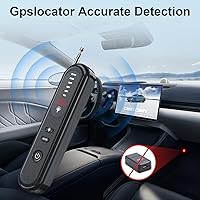
  • Detection Modes: Combines four functions: RF signal detection, infrared laser lens scanning, magnetic field detection, and a built-in flashlight.
  • RF Frequency Range: Detects radio frequency signals spanning from 1MHz to 6.5GHz, covering 2G, 3G, 4G, and most common wireless transmission bands.
  • Sensitivity Levels: Offers six adjustable sensitivity levels to help users reduce false positives in environments with high ambient RF activity.
  • Effective Coverage: Designed to scan an effective detection area of up to 30 square meters per session under typical conditions.
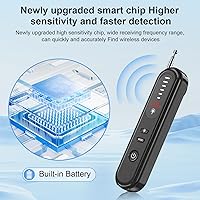
  • Battery Type: Powered by a built-in rechargeable lithium-ion battery rated at 2 Watt Hours.
  • Charging Time: Reaches a full charge in approximately one hour via the included charging cable.
  • Battery Life: Supports up to 25 hours of continuous active use on a single full charge.
  • Standby Time: Maintains a standby duration of up to 25 days when not in active scanning mode.
  • Weight: Weighs approximately 1.06 ounces (around 30g), making it one of the lightest detectors in its category.
  • Dimensions: Packaged in a box form factor measuring 10 x 10 x 2 inches including retail packaging.
  • Material: Housing is constructed from high-quality PC (polycarbonate), chosen for its light weight and impact resistance.
  • Color: Available in black as the sole listed color option.
  • Power Source: Operates on an internal rechargeable battery; one A-type battery is included in the box for initial use.
  • In the Box: Package includes the hidden camera detector unit and associated charging accessories as listed by the manufacturer.
  • Connectivity: Operates via passive RF reception and does not require pairing, Bluetooth, or app connectivity to function.
  • Supported Signals: Designed to detect transmitting cameras, GPS trackers, RF bug transmitters, and cellular network signals across covered frequency bands.
  • BSR Ranking: Held a Best Sellers Rank of number 35 in the Hidden Cameras category on Amazon at time of listing.
  • First Available: The product was first made available for purchase on March 24, 2025.
  • Lens Detection: Uses passive infrared laser scanning to visually identify reflective camera lenses that may not be actively transmitting a signal.

Related Reviews
SEVENPARK T01 Hidden Camera Detector
73%
94%
Portability
91%
Ease of Use
72%
RF Signal Detection
53%
False Positive Rate
61%
Build Quality
More
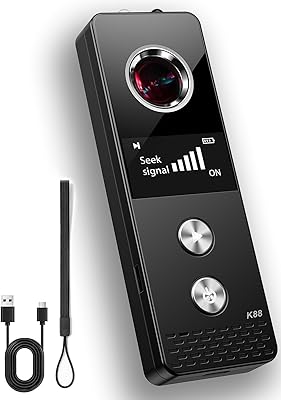
HUYNL K88 Hidden Camera and Bug Detector
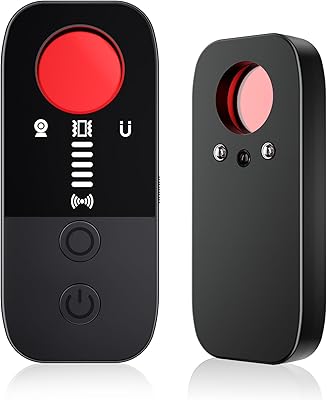
75%
91%
Ease of Use
67%
Detection Performance
88%
Battery Life
93%
Portability
58%
False Positive Rate
More
camgyeum A007 Hidden Camera Detector
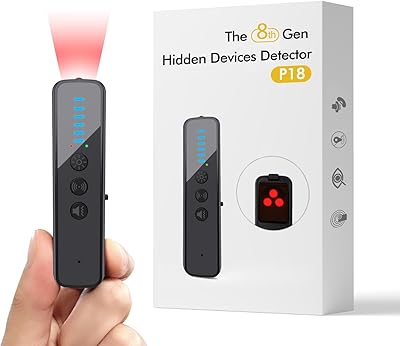
71%
67%
Detection Accuracy
78%
Ease of Use
91%
Portability & Form Factor
61%
Build Quality
72%
Battery Life
More
POLESNOW P18 Hidden Camera Detector
86%
88%
Detection Accuracy
93%
Battery Life
90%
Portability
80%
Sensitivity Adjustment
91%
Ease of Use
More
JMDHKK M8000 Hidden Camera Detector
83%
88%
Ease of Use
93%
Portability
84%
Detection Performance
80%
Build Quality
75%
Battery Life
More
Abyliee Hidden Camera Detector Pro
74%
91%
Ease of Use
62%
Detection Accuracy
93%
Portability & Form Factor
61%
Build Quality
78%
Battery Life
More
CountureMode G007 Hidden Camera Detector
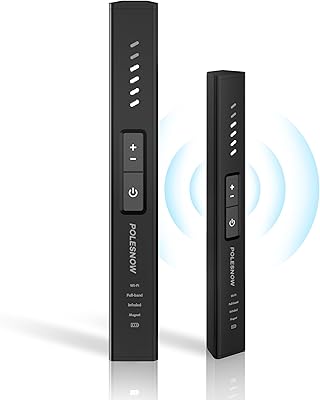
73%
67%
Detection Accuracy
83%
Ease of Use
91%
Portability & Form Factor
71%
Build Quality & Durability
78%
Battery Life & Charging
More
JMDHKK K18+ Hidden Camera and Bug Detector
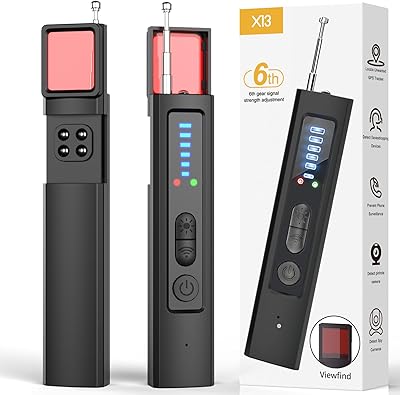
73%
88%
Ease of Use
61%
RF Detection Accuracy
93%
Portability
67%
Magnetic Probe Performance
59%
Hidden Camera Detection
More
HUYNL KT3 Hidden Camera Bug Detector
77%
67%
Detection Accuracy
91%
Ease of Use
88%
Battery Life
86%
Portability & Design
53%
False Positive Rate
More
JAXTIN G66 Pro Hidden Camera Detector
78%
88%
Ease of Use
71%
Detection Accuracy
67%
Build Quality
91%
Battery Life
58%
False Positive Rate
More

FAQ

It depends on whether the camera is transmitting any signal at the moment you scan. If a Wi-Fi camera is idle and not broadcasting, the RF mode may not alert. That is where the infrared lens finder becomes useful — it can detect the reflective glass of a camera lens regardless of whether the device is live, so using both modes together gives you a more complete picture.

That is a fair concern and one of the most common things buyers mention. In a signal-dense environment like a multi-floor hotel, RF detectors will pick up ambient signals from routers, other guests' devices, and building infrastructure. The key is to start at a lower sensitivity level and only increase it gradually. You are looking for a noticeably stronger or more localized signal spike rather than a constant background alert.

Dim the room as much as you can, then slowly sweep the detector across surfaces where a camera might be hidden — smoke detectors, wall clocks, air purifiers, shelving units, and vents are common spots. Look through the detector's viewfinder for a small bright reflection, which indicates a camera lens. It takes patience; rushing the scan is the main reason people miss potential hits.

No — a camera storing footage locally without any wireless transmission produces no RF signal for the detector to catch. In that scenario, the infrared lens scanner is your only option, since it works by spotting the physical lens rather than any emitted signal. This is a fundamental limitation of all consumer RF detectors, not just this one.

Generally yes — it is a small passive detection device, not a transmitter, and it does not contain anything that would typically trigger additional screening. The lithium-ion battery is well within carry-on size limits. That said, security procedures vary by country and airport, so if you are traveling internationally, it is worth being aware that some customs authorities may ask about unfamiliar electronic devices.

Start by turning it on in a space you know is clean — your own home or a trusted environment — and note the baseline alert behavior at each sensitivity level. That gives you a reference point. When you check into a rental, begin at a mid-range level and see if alerts cluster around specific objects or spread evenly across the room. Concentrated alerts near a single item are worth investigating further; diffuse alerts across the whole room usually indicate background RF noise.

Yes, this is actually one of the more practical use cases for the magnetic detection mode. Many covert GPS trackers use magnets to attach to the underside of vehicles. Slowly running the detector along the exterior of your car, wheel arches, and undercarriage can help surface anything unusual. The RF mode can also flag a tracker that is actively pinging its location, though trackers that report infrequently may be harder to catch in a brief scan.

The 25-hour figure is based on typical use, but active scanning — particularly with sensitivity set high — draws more power than standby. In practice, most users report getting somewhere between 18 and 22 hours of real scanning time before needing a charge. For travel purposes that is still more than enough to cover multiple hotel check-ins across a week-long trip without worrying about charging daily.

The polycarbonate shell is reasonably resistant to everyday bumps and scratches, but it is a lightweight consumer device rather than a ruggedized tool. Carrying it loose in a bag with keys, charging cables, and other hard objects will likely cause cosmetic wear over time. A small pouch or the original packaging insert makes a practical solution if you want to keep it in good shape for the long haul.

No setup or connectivity is required at all. This pocket-sized RF scanner is entirely standalone — you charge it, turn it on, and start scanning. There is no app to install, no account to create, and no Bluetooth or Wi-Fi pairing involved. That simplicity is part of what makes it approachable for first-time users who are not particularly tech-savvy.

Where to Buy