Overview

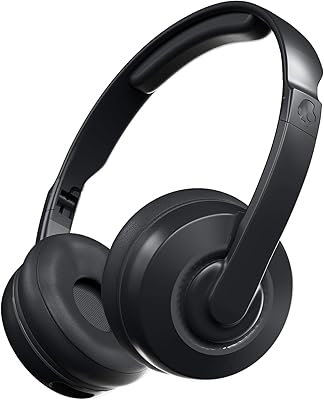
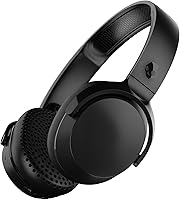
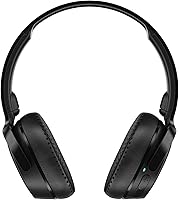
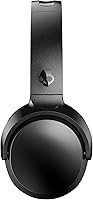
The Skullcandy Riff Wireless is Skullcandy's answer to one straightforward question: what do you actually need from a pair of wireless headphones? Launched in late 2018, these Skullcandy on-ears have built up a substantial real-world track record — over seven thousand ratings and counting. The design is intentionally unfussy: clean lines, a soft-touch finish, and four colorway options that let buyers inject a little personality without going overboard. These are not audiophile cans and were never meant to be. Think of them as a dependable, comfortable daily driver for anyone who wants wireless audio without spending a lot.

Features & Benefits

Battery life is where this wireless headphone genuinely earns its keep. A full charge delivers up to 12 hours of playback — enough for most workdays without needing a top-up. Better yet, ten minutes plugged in gets you back roughly two hours of listening, which is a real lifesaver when you forget to charge overnight. Bluetooth 4.1 holds a stable connection up to about ten meters, and the on-board controls handle volume, track skipping, and voice assistant access without reaching for your phone. Plush ear cushions and a 3.5mm wired backup round out a genuinely practical, no-fuss feature set.

Best For

If you're a student, a commuter, or someone who wants a reliable pair of cans for the office or gym, these Skullcandy on-ears fit the brief well. They also make solid sense as a secondary everyday pair — something to leave in a bag or at a desk without excessive worry. First-time wireless buyers stepping up from wired earbuds will find pairing simple and the controls intuitive from day one. And if you need a gift for someone who loves music but wants nothing complicated, this wireless headphone is a safe, well-regarded choice that does not require much explanation.

User Feedback

With a 4.4-star average across more than 7,000 ratings, the Riff Wireless has clearly resonated with a broad audience. Buyers consistently praise the comfortable fit and the easy Bluetooth pairing. The sound leans noticeably bass-heavy — great for pop, hip-hop, and electronic music, but listeners who prefer a flatter, more neutral profile may find it a touch overwhelming. The built-in mic is serviceable in quiet environments but struggles against wind and background noise. The all-plastic build draws the occasional comment, though outright durability complaints are rare considering the price bracket. Overall, the consensus is clear: straightforward, comfortable, and honest value.

Pros

  • Up to 12 hours of battery life handles full workdays and long commutes without a mid-day charge.
  • Ten minutes of charging delivers roughly two hours of playback — genuinely useful on rushed mornings.
  • Bluetooth pairing is fast and consistent, with very few connection complaints across thousands of reviews.
  • The Skullcandy Riff Wireless carries a 4.4-star average across more than 7,000 real buyer ratings.
  • Plush ear cushions make two-to-three-hour listening sessions comfortable for most users.
  • The bass-forward sound works well for pop, hip-hop, and electronic music at everyday volume levels.
  • A 3.5mm wired option means the headphone still works on a dead battery or on airplane mode.
  • Light overall weight keeps fatigue low during extended daily wear.
  • Simple on-ear controls handle volume, playback, and voice assistant access without pulling out your phone.
  • Available in multiple colorways, giving buyers a bit of personality without paying a style premium.

Cons

  • The all-plastic build shows scratches easily and has caused durability concerns for some buyers after extended use.
  • Microphone performance drops off sharply in outdoor or noisy environments, making calls frustrating.
  • No multipoint pairing means you cannot stay connected to two devices — phone and laptop — at the same time.
  • The on-ear cushions begin to cause noticeable pressure discomfort for many users after three or more hours.
  • Bluetooth 4.1 is aging and lacks modern features found on more recent wireless headphones.
  • No carrying case or pouch is included, leaving the headphone unprotected in a bag during daily transport.
  • Battery level feedback is limited to an audio tone — there is no percentage readout or visual indicator.
  • The volume adjustment increments feel coarser than ideal, making precise low-volume listening awkward.
  • Charging relies on an older micro-USB port rather than the now-standard USB-C connector.
  • Noise isolation is minimal — loud or unpredictable environments bleed through clearly during listening.

Ratings

The Skullcandy Riff Wireless scores below are generated by AI after systematically analyzing thousands of verified global user reviews, with spam, bot-submitted, and incentivized feedback actively filtered out. Drawing on real-world experiences from commuters, students, and everyday listeners, these ratings transparently reflect both where these Skullcandy on-ears genuinely deliver and where they fall short — no glossing over the rough edges.

Sound Quality
74%
26%
For casual listening on the go, the Riff Wireless produces a warm, energetic sound that works particularly well with pop, hip-hop, and electronic music. The low-end punch makes playlists feel lively during a commute or a workout, which is exactly what most buyers in this price range are after.
The bass-forward tuning is a deliberate choice, but it comes at the cost of midrange clarity and treble detail. Listeners who prefer a balanced or neutral sound signature — classical music fans, for instance — will likely find the coloration too heavy and fatiguing over time.
Battery Life
88%
Twelve hours of continuous playback is genuinely useful in day-to-day life — most users never needed to charge mid-day even during long study or work sessions. The battery held up consistently close to its rated figure across a wide range of real-world usage reports.
At moderate-to-high volume levels, a handful of users reported actual runtime dipping closer to nine or ten hours rather than the full twelve. There is also no battery percentage indicator, so knowing exactly how much charge remains requires guessing until the low-battery tone kicks in.
Quick Charge
91%
The rapid charge feature is one of the most frequently praised aspects of this wireless headphone across the entire review pool. Ten minutes plugged in before heading out the door genuinely buys around two hours of listening — users consistently called this out as a practical lifesaver for rushed mornings.
Quick charge only works via the included cable and requires a standard USB source, which is fine but not particularly modern. There is no wireless or USB-C charging, so if you lose the cable, replacing it adds a minor inconvenience that a few buyers flagged.
Comfort & Fit
83%
The plush ear cushions and lightly padded headband make these Skullcandy on-ears comfortable for sessions lasting two to three hours without significant pressure buildup. For an on-ear design at this price, the fit feels more considered than many competing options, and the weight is light enough to forget you have them on.
On-ear designs inherently apply pressure to the outer ear, and over sessions longer than three hours some users reported noticeable discomfort, particularly around the ear cartilage. People with larger ears also noted the pads do not fully accommodate their ear shape, which worsens fatigue during extended listening.
Build Quality
69%
31%
For a budget wireless headphone, the Riff Wireless holds together better than many rivals at this price point. The hinges feel reasonably sturdy, the headband has enough flex to accommodate different head sizes without feeling fragile, and most users reported no structural issues after months of daily use.
The all-plastic construction is the most common criticism across the review pool, and it does feel noticeably lightweight in a way that reads as inexpensive rather than sleek. The ear cups show scratches with regular bag use, and a small but consistent group of buyers reported the headband cracking after roughly a year of use.
Bluetooth Connectivity
82%
18%
Pairing with phones, tablets, and laptops was described as quick and hassle-free by the overwhelming majority of users — a first-time wireless buyer concern that these Skullcandy on-ears handle confidently. The connection stayed stable across the full ten-meter rated range in typical home and office environments.
Bluetooth 4.1 is functional but aging by current standards, lacking features like multipoint pairing that would let the headphone connect to two devices simultaneously. A smaller subset of users also noted occasional audio dropouts when their device was in a pocket on the opposite side of the body.
Microphone Quality
58%
42%
In quiet environments — a private office, a home setup, or a calm indoor space — call quality through the built-in mic is adequate for short conversations. Callers on the other end generally reported being able to understand the speaker without major complaints under controlled conditions.
Put this wireless headphone anywhere near street noise, a cafe, or wind, and the mic struggles noticeably. Background noise bleeds through heavily, and call recipients frequently reported difficulty understanding speech in outdoor or busy settings — a pattern that repeated consistently across hundreds of reviews.
Controls & Usability
79%
21%
The physical on-ear buttons handle playback, volume, and voice assistant activation intuitively enough that most users felt comfortable within the first few minutes. No app or setup is required, which keeps the experience accessible for first-time wireless headphone buyers.
The buttons are small and can be difficult to locate by touch alone, particularly while wearing gloves in winter. A few users also noted the volume increments feel coarser than expected, jumping in larger steps than they would prefer for fine-tuned listening at low levels.
Noise Isolation
62%
38%
Passive isolation from the on-ear cushions does a reasonable job of taking the edge off ambient noise in moderate environments — quiet offices, libraries, or buses where the background hum is consistent and not overwhelming.
There is no active noise cancellation, and the on-ear seal is not airtight by design, so loud or unpredictable environments like busy subway platforms or open-plan offices will still bleed through significantly. Buyers expecting meaningful isolation from the outside world will need to set expectations accordingly.
Wired Fallback
77%
23%
Having a 3.5mm cable included means this wireless headphone does not become a paperweight on a dead battery or in a no-Bluetooth environment like an airplane in low-power mode. Users appreciated that the wired mode still delivered solid sound without needing the battery at all.
The included cable is fairly basic and short, which limits comfortable use in wired mode when a device is in a bag or jacket pocket. The cable also does not have an in-line microphone, so hands-free calling is not available when using the wired connection.
Design & Aesthetics
78%
22%
The clean, understated styling translates well across the available colorways, and the soft-touch finish on the headband gives a premium tactile impression that punches slightly above the price bracket. Younger buyers and students in particular responded positively to the look.
The design, while tidy, is fairly generic and does not stand out from the crowd of similarly styled budget headphones. Those looking for distinctive or premium-looking aesthetics will likely feel the styling is too plain, especially given that the plastic sheen becomes more apparent in person.
Portability
73%
27%
At 5.6 ounces the Riff Wireless is light enough to carry all day in a bag without adding meaningful bulk, and the fold-flat ear cups make it easier to pack down compared to bulkier on-ear alternatives. Commuters and students frequently flagged this as a daily bag essential.
There is no included hard case or pouch, which means the headphone is essentially unprotected in a bag. Several users reported cosmetic scratches on the ear cups after just a few weeks of unprotected bag transport, and the lack of any carrying solution feels like an oversight at any price.
Voice Assistant Integration
71%
29%
Activating Siri or Google Assistant via the on-ear button works reliably in quiet conditions and saves the hassle of pulling out a phone during a commute. Users who relied on voice navigation or quick message dictation found this feature genuinely useful for hands-free daily tasks.
Because the microphone quality is limited in noisy environments, voice assistant performance degrades in exactly the situations where hands-free use matters most — outdoor commutes, busy streets, or windy conditions. The feature works, but its real-world utility is narrower than the spec sheet implies.
Value for Money
87%
Across more than 7,000 ratings, value is one of the most consistently praised dimensions of this wireless headphone. Buyers repeatedly noted that the combination of brand recognition, battery life, quick charge, and overall reliability is difficult to match from lesser-known alternatives at a comparable price.
The value case is strongest if you do not push the headphone into areas where it struggles — heavy call use, noise isolation, or neutral sound reproduction. If any of those are priorities, spending more on a different product will yield noticeably better results, making the value argument more situational than universal.

Suitable for:

The Skullcandy Riff Wireless was built for people who want reliable, no-fuss wireless audio without crossing into premium price territory — and for that audience, it genuinely delivers. Students who listen through lectures, study sessions, and commutes will get through a full day on a single charge without much thought. Commuters who occasionally forget to charge the night before will appreciate that ten minutes plugged in while getting ready buys another couple of hours on the bus or subway. These Skullcandy on-ears also make an excellent secondary pair — the kind you leave in a work bag or desk drawer for whenever your main headphones are elsewhere. First-time wireless buyers will find the pairing process straightforward and the controls intuitive from the very first use. Gift buyers who want something recognizable, practical, and well-reviewed without committing to a high budget will find this wireless headphone sits in a comfortable sweet spot.

Not suitable for:

If your priorities go beyond casual listening, the Skullcandy Riff Wireless will likely leave you wanting more in at least one meaningful area. Audiophiles or anyone who prefers a balanced, neutral sound signature should look elsewhere — the bass-forward tuning is a consistent trait, not a flaw that varies unit to unit, and it will color nearly everything you listen to. People who take a lot of calls in noisy environments — on the street, in open offices, or while commuting — will find the built-in mic frustratingly limited; it simply was not designed for that kind of demanding use. If noise isolation is a priority, the passive-only design of these Skullcandy on-ears will not satisfy anyone hoping to block out a loud office or a crowded train carriage. Buyers who need to connect to a laptop and a phone simultaneously will miss multipoint pairing, which Bluetooth 4.1 does not support. And anyone who has grown accustomed to USB-C charging will find the older port setup a minor but persistent annoyance.

Specifications

  • Form Factor: On-ear (supra-aural) design with ear cups that rest against the outer ear rather than fully enclosing it.
  • Connectivity: Bluetooth 4.1 wireless technology for reliable pairing with smartphones, tablets, and laptops.
  • Wireless Range: Stable wireless connection maintained up to approximately 10 meters from the paired source device.
  • Battery Life: Up to 12 hours of continuous audio playback on a full charge under standard listening conditions.
  • Quick Charge: 10 minutes of charging via the included cable provides approximately 2 hours of additional playback time.
  • Driver Type: Dynamic driver audio transducers deliver the bass-forward sound signature typical of the Skullcandy tuning profile.
  • Impedance: 32 Ohm impedance rating makes these headphones compatible with standard consumer smartphones and portable devices without amplification.
  • Dimensions: Overall folded dimensions measure 6.3 x 3.15 x 6.69 inches, compact enough for most bags and backpacks.
  • Weight: Headphone unit weighs 5.6 ounces (approximately 160g), keeping fatigue low during extended daily wear.
  • Wired Backup: A 3.5mm analog audio cable is included, allowing wired use when Bluetooth is unavailable or the battery is depleted.
  • Microphone: Built-in microphone supports hands-free calls and voice assistant activation directly from the ear cup controls.
  • Noise Control: Passive sound isolation only — the plush ear cushions provide a modest physical barrier against ambient noise without active cancellation.
  • Ear Pad Material: Ear cushions are constructed from plush synthetic material designed for comfortable extended contact with the outer ear.
  • Color Options: Available in 4 distinct colorways, allowing buyers to match personal style preferences at no additional cost.
  • Voice Assistant: On-ear button supports activation of Siri, Google Assistant, and other default device voice assistants.
  • Control Type: Physical media control buttons on the ear cup manage volume, track changes, call answering, and assistant activation.
  • Charging Port: Charges via a micro-USB port using the cable included in the box; USB-C is not supported on this model.
  • Battery Type: Internal rechargeable lithium polymer battery — included and not user-replaceable.
  • Compatibility: Works with any Bluetooth-enabled device; wired mode is compatible with any device featuring a standard 3.5mm headphone jack.
  • In the Box: Package includes the headphone unit, a 3.5mm audio cable, a micro-USB charging cable, and standard product documentation.

Related Reviews
Skullcandy Grind Wireless Earbuds
85%
92%
Battery Life
85%
Sound Quality
87%
Build Quality & Durability
70%
Comfort & Fit
90%
Water Resistance
More
Skullcandy Crusher Wireless
75%
93%
Bass Performance
84%
Battery Life
67%
Comfort & Fit
63%
Build Quality & Durability
71%
Sound Quality (Overall)
More
Skullcandy Mod Wireless Earbuds
85%
87%
Sound Quality
91%
Battery Life
83%
Build Quality
80%
Comfort & Fit
75%
Connectivity & Pairing
More
Skullcandy Terrain Wireless Bluetooth Speaker
85%
85%
Sound Quality
92%
Portability
90%
Waterproof Performance
88%
Battery Life
75%
Connectivity Stability
More
Skullcandy Grom Wireless
81%
93%
Battery Life
91%
Hearing Safety
89%
Value for Money
78%
Comfort & Fit
74%
Durability & Build Quality
More
Skullcandy Smokin’ Buds Wireless Earbuds
84%
88%
Sound Quality
91%
Battery Life
85%
Comfort & Fit
89%
Ease of Use
72%
Connectivity
More
Skullcandy Indy Evo Wireless Earbuds
87%
92%
Battery Life
85%
Sound Quality
88%
Comfort & Fit
90%
Ease of Setup
80%
Connectivity (Bluetooth)
More
Skullcandy Cassette Wireless
77%
91%
Battery Life
88%
Value for Money
67%
Sound Quality
74%
Comfort & Fit
63%
Build Quality
More
Skullcandy Dime 2 Wireless Earbuds
85%
87%
Sound Quality
90%
Comfort & Fit
82%
Battery Life
80%
Connectivity & Bluetooth Range
84%
Build Quality
More
Skullcandy Dime 3 Wireless Earbuds
84%
89%
Battery Life
85%
Sound Quality
92%
Comfort and Fit
80%
Build Quality
87%
Water Resistance (IPX4)
More

FAQ

Power on the headphones by holding the power button until the LED flashes, which puts them into pairing mode automatically on first use. Open Bluetooth settings on your phone, look for the Skullcandy Riff Wireless in the device list, and tap to connect. The whole process usually takes under a minute, and most users report it works without any issues.

No — Bluetooth 4.1 does not support multipoint pairing, so these Skullcandy on-ears can only maintain an active connection to one device at a time. You can switch between devices by disconnecting from one and reconnecting to the other through your Bluetooth settings, but it is not automatic.

Plug the headphone into any standard USB power source using the included micro-USB cable and leave it for ten minutes. That short charge should get you roughly two hours of playback — it is not a full charge, but it is genuinely enough to get through a commute or a study session when you forgot to charge overnight.

For pop, hip-hop, and electronic music, the sound is lively and enjoyable at this price point. The tuning is noticeably bass-forward, which is a deliberate Skullcandy design choice — if you listen to a lot of classical, jazz, or acoustic music and prefer a balanced or neutral profile, the low-end emphasis may feel a bit overwhelming over time.

Most users find them comfortable for two to three hours without much discomfort, thanks to the plush ear cushions and light overall weight. Beyond that, the on-ear design starts to apply noticeable pressure for some people, particularly around the cartilage. They are not the best choice if you regularly listen for four or more hours straight.

They work fine for calls in quiet environments — the microphone is clear enough in a private office or at home. In noisier settings like a busy street, a cafe, or public transport, the mic tends to pick up a lot of ambient sound, and callers may have trouble hearing you clearly. It is a known limitation and one of the more consistent criticisms across user reviews.

Yes, the ear cups fold down for easier packing. They do not fold completely flat like some travel-focused headphones, but they compress enough to fit comfortably in most bags and backpacks. Just keep in mind there is no carrying case included, so wrapping them or using a bag pouch is a good idea to avoid scratches.

Yes — plug in the included 3.5mm audio cable and connect it directly to your device, and these Skullcandy on-ears will work as a standard wired headphone without any battery. Note that the built-in microphone will not work in wired mode, and the in-line cable does not have a mic of its own.

The general consensus from a large pool of long-term owners is that they hold together well for the price, with most users not reporting structural failures within the first year of regular use. The plastic construction does show wear cosmetically — scratches on the ear cups are common with daily bag use. A smaller group of buyers noted headband stress cracks appearing after a year or more of heavy use, so they are not indestructible, but they are reasonably sturdy for what they cost.

They are a solid choice in that context — recognizable brand, multiple colorways, easy wireless setup, and a battery that lasts through a school day. The bass-heavy sound tends to suit the listening habits of younger audiences well. Just be aware that there is no parental volume limiting feature, so they can be played quite loud.