Overview

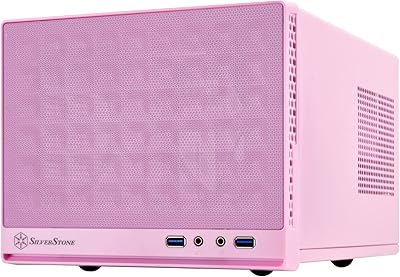
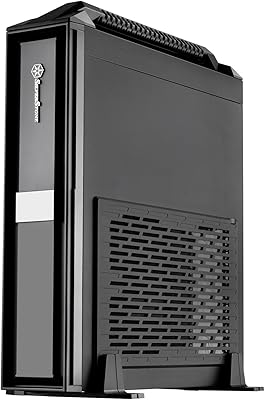
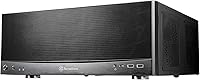
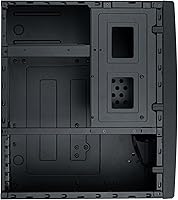
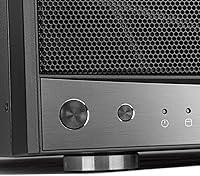
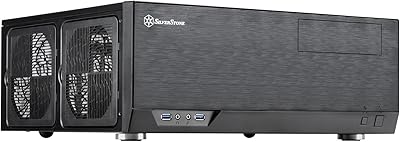
The SilverStone Grandia 11 HTPC Case is built around a clear premise: create a capable PC that looks right at home sitting next to a receiver and Blu-ray player. SilverStone's Grandia line has long catered to living room builders, and this entry pushes cooling ambitions noticeably further than its predecessors. Despite its low-profile chassis, it accommodates full ATX motherboards — a genuine rarity at this form factor. The fully meshed front panel gives it a purposeful, almost industrial character that reads as AV equipment rather than a desktop tower. That distinction matters when the case sits on your entertainment shelf in plain sight every day.

Features & Benefits

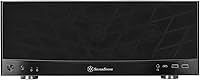
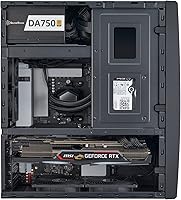
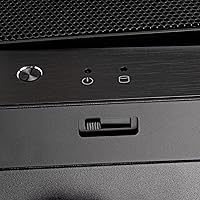
What makes the Grandia 11 genuinely interesting for a living room build is the 240mm radiator support — not something you typically find in a chassis this flat. Pair that with a positive air pressure design, and dust buildup becomes far less of a recurring headache without depending entirely on filters. The bottom-mounted PSU keeps airflow paths clean and weight distribution balanced. Up front, four USB 3.0 ports handle game controllers, drives, and peripherals without hunting for adapters. Motherboard compatibility spans SSI-CEB, ATX, and Micro-ATX, so builders are not locked into a single platform. The adjustable LED indicator is a small but welcome touch, especially in a dark media room.

Best For

This living room chassis suits anyone building a dedicated streaming or gaming PC that needs to disappear into an AV rack. If you have been making do with a mid-tower tucked behind a TV stand, the Grandia 11 offers a real alternative without sacrificing ATX flexibility or serious cooling capacity. It is also a strong pick for upgraders leaving older, cramped HTPC enclosures behind who want modern connectivity and liquid cooling headroom. That said, buyers planning to run long GPUs should measure carefully — vertical clearance is limited, and this case rewards thorough component planning over impulse purchases. Patient, detail-oriented builders will get the most from it.

User Feedback

Across its 88 ratings, this HTPC case holds a 4.5-star average, and the feedback tells a consistent story. Builders regularly praise the solid metal construction and better-than-expected thermals given how shallow the enclosure is. The understated exterior earns genuine appreciation from people who want their media setup to look intentional rather than improvised. Where opinions get mixed is internal workspace: cable routing feels tight once a full ATX board and a longer PSU are both installed. A number of users also flag that radiator installation demands patience, particularly around tubing clearance. Against older Grandia generations, most reviewers see this as a meaningful improvement — though it consistently rewards those who plan their build in advance.

Pros

  • Supports full ATX, Micro-ATX, and SSI-CEB motherboards in a genuinely slim, shelf-friendly form factor.
  • 240mm radiator compatibility is rare and impressive for a chassis this flat.
  • Positive air pressure design passively reduces dust accumulation over time.
  • Metal construction feels solid and durable, not like a budget plastic enclosure.
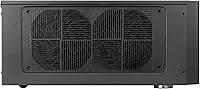
  • The meshed front panel moves meaningful air without looking out of place in an AV setup.
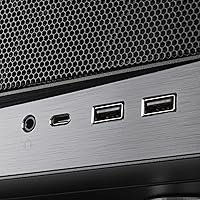
  • Four USB 3.0 front ports handle modern peripherals without adapters or hub clutter.
  • Bottom-mounted PSU improves airflow routing and keeps the build balanced.
  • Adjustable LED indicator is subtle enough to dim or disable in a dark media room.
  • Holds a strong 4.5-star average across nearly 90 real-world builder reviews.
  • Cleaner aesthetic than most competing HTPC cases at a comparable price point.

Cons

  • Cable management inside the Grandia 11 is genuinely tight once a full ATX board and PSU are both installed.
  • Radiator installation requires patience and careful tubing routing — not a quick afternoon project.
  • GPU clearance is limited; longer cards may not fit without thorough pre-build planning.
  • CPU cooler height restrictions apply, so air cooler buyers must verify compatibility before purchasing.
  • Only one included fan means additional fan purchases are likely for optimal airflow.
  • The mesh front panel, while functional, may collect surface dust more visibly than a solid panel.
  • Internal lighting options are minimal beyond the single adjustable LED indicator.
  • Limited expansion slot height may rule out some full-height GPUs favored by gaming builds.

Ratings

The SilverStone Grandia 11 HTPC Case scores below are generated by AI after systematically analyzing verified buyer reviews from global markets, with spam, bot-submitted, and incentivized feedback actively filtered out. The Grandia 11 earns strong marks in several key areas, but this living room chassis also carries real trade-offs that are honestly reflected in every category. Both what builders love and where they run into frustration are captured here without sugarcoating.

Build Quality
88%
Buyers consistently note that the metal chassis feels noticeably more substantial than competing HTPC cases at a similar price point. The panels sit flush, the finish resists scratching during assembly, and nothing flexes or rattles once the build is complete — a recurring compliment from experienced builders.
A handful of reviewers mention that some internal brackets and standoffs feel less precisely machined than the outer shell suggests, leading to minor alignment frustrations during assembly. It is not a dealbreaker, but it does chip away slightly from an otherwise premium-feeling enclosure.
Cooling Performance
91%
The 240mm radiator support is the headline feature here, and builders who take advantage of it report genuinely impressive thermals for a chassis this flat. The positive air pressure design actively works to keep internals cleaner over time, which real-world long-term owners appreciate during routine maintenance.
Air cooling options are constrained by CPU cooler height limits, so builders relying on tower-style air coolers need to verify compatibility carefully. If you are not running a low-profile air cooler or an AIO, thermal results can be more variable depending on airflow configuration.
Ease of Assembly
63%
37%
Builders who plan their component layout carefully — using modular PSUs and right-angle connectors — report that the build process is methodical and ultimately satisfying. The case opens up reasonably well, and SilverStone provides enough access points to make a considered assembly feel organized.
This is where the most consistent criticism lands. Once a full ATX board, a bottom-mounted PSU, and a radiator are all inside simultaneously, workspace shrinks dramatically. Multiple reviewers describe cable management as genuinely stressful, and radiator installation in particular requires patience and sometimes multiple attempts to route tubing cleanly.
Aesthetics & Design
86%
The stereo-receiver silhouette is exactly what living room builders are looking for — it sits next to AV gear without drawing attention, looks intentional rather than improvised, and the black metal finish ages well in a media cabinet. The meshed front adds a purposeful, understated industrial character that most buyers appreciate.
The mesh front panel, while functional and visually clean, does collect surface dust more visibly than a solid panel would. A small number of buyers also feel the overall design is conservative to the point of being anonymous, lacking the refined detailing seen on premium HTPC cases from European boutique brands.
Motherboard Compatibility
89%
Supporting SSI-CEB, ATX, and Micro-ATX in a chassis this slim is a genuine differentiator, and builders upgrading from Micro-ATX-only enclosures specifically call this out as the deciding factor. The flexibility means the case stays relevant across multiple build generations without forcing a platform downgrade.
While the compatibility list is wide, fitting a full ATX board narrows the remaining internal workspace considerably. Builders who go ATX will need to be especially deliberate about PSU length and cable routing, since there is less margin for error compared to using a smaller Micro-ATX board in the same enclosure.
GPU Clearance
58%
42%
For builders using compact or mid-range GPUs — a reasonable choice in a living room streaming or casual gaming build — clearance is adequate and the system performs well. Buyers running integrated graphics or smaller single-fan cards report zero issues with fitment.
This is a known pain point: the horizontal low-profile layout imposes real restrictions on GPU length and particularly card height, which rules out most current high-end discrete GPUs without careful pre-purchase verification. Builders who want to future-proof with a larger card should measure twice and check SilverStone's official clearance specs before committing.
Cable Management
54%
46%
With a modular PSU, flat cables, and some pre-planning, experienced builders do manage to achieve clean results inside this living room chassis. Dedicated builders who enjoy the challenge of tight builds find the constraints satisfying rather than frustrating.
For the average builder, internal cable routing is genuinely difficult once all major components are seated. Slack management and bundling options are limited, and reviews frequently mention that the finished interior looks messier than expected despite careful effort — a recurring frustration among first-time HTPC builders.
Dust Resistance
79%
21%
The positive air pressure philosophy pays dividends over months of continuous use — buyers who have owned the case for a year or more consistently note less internal dust accumulation compared to previous HTPC enclosures they have used. It works passively, requiring no additional filter maintenance.
The fully meshed front panel, while excellent for airflow, means that surface-level dust on the front face is visible and needs regular wiping. The case does not include removable magnetic dust filters, so buyers who prefer a sealed, filter-based approach will need to source aftermarket solutions.
Front Panel Connectivity
82%
18%
Four USB 3.0 ports on the front panel is genuinely useful in a living room setup where game controllers, external drives, and USB audio adapters rotate frequently. Buyers upgrading from older HTPC cases with only USB 2.0 front ports specifically highlight this as a noticeable quality-of-life improvement.
There is no USB-C port on the front panel, which is an increasingly common omission complaint as more modern peripherals and devices adopt the connector. For a case released in mid-2022, the absence of even one USB-C port feels like a missed opportunity at this price tier.
Noise Levels
76%
24%
Because the case relies entirely on user-selected fans and coolers, builders who invest in quality low-RPM 120mm fans and a well-matched AIO report very quiet operation — genuinely suitable for a living room environment where noise is a concern during movie playback or late-night sessions.
The case ships with no included fans, meaning noise performance is entirely dependent on what the builder chooses to install. Buyers who use default stock coolers or generic budget fans often report disappointing noise levels, and the mesh front provides no acoustic dampening whatsoever.
Value for Money
73%
27%
For builders who genuinely need ATX flexibility and 240mm radiator support in a shelf-friendly enclosure, the Grandia 11 is difficult to match at its price point — no direct competitor offers the same combination of motherboard compatibility and liquid cooling headroom in this form factor.
For casual builders who only need Micro-ATX support and will never run a liquid cooler, the price feels harder to justify given the assembly challenges. There are simpler, cheaper HTPC enclosures that serve straightforward builds without the complexity premium this case implicitly demands.
Storage Options
71%
29%
The drive bay configuration covers the needs of most HTPC and living room gaming builds, with enough slots to accommodate a boot SSD and a bulk storage drive simultaneously without feeling constrained. Buyers building media servers with moderate local storage report no fitment issues.
Heavy media server builders who need four or more drives will find the bay count limiting. The storage layout also competes for physical space with other components once the board and PSU are installed, so maximizing drive capacity in a heavily populated build requires careful planning.
Upgrade Friendliness
67%
33%
The broad motherboard compatibility and radiator support mean this living room chassis can absorb CPU and cooler upgrades across multiple hardware generations without needing to be replaced. That long-term flexibility is a genuine selling point for buyers who plan for a five-year build lifecycle.
Post-build upgrades — particularly swapping GPUs or adding drives after everything is cabled — are more disruptive than in a standard mid-tower. The tight internal workspace means that even minor hardware changes often require partially disassembling the build, which discourages casual mid-cycle tinkering.

Suitable for:

The SilverStone Grandia 11 HTPC Case is purpose-built for home theater enthusiasts who refuse to compromise on performance just because their PC needs to live in a media cabinet. If you are running a living room gaming or 4K streaming setup and want hardware that blends in with a receiver or soundbar rather than screaming gamer aesthetic, this chassis genuinely delivers. Builders who need the flexibility of a full ATX motherboard inside a low-profile enclosure will find few better options at this price tier. It is also a strong choice for anyone who has wrestled with overheating in older HTPC cases, since the 240mm radiator support and positive air pressure design give you real thermal headroom. Patient builders who take time to plan their component layout before assembly will get the best experience from this case.

Not suitable for:

The SilverStone Grandia 11 HTPC Case is not the right call for every builder, and it is worth being honest about where it falls short. If you plan to install a long, high-end discrete GPU, you need to verify clearance carefully before buying — the horizontal, flat layout imposes real constraints that a full tower simply does not. Builders who prefer quick, casual builds may find the internal workspace frustrating; cable management in a shallow chassis demands more planning and patience than most mid-towers require. Anyone expecting generous room around a large PSU and ATX board simultaneously should expect a tight fit. If your living room setup runs hot year-round and you need maximum airflow without careful management, a larger enclosure may serve you better in the long run.

Specifications

  • Model Number: The official model designation for this chassis is SST-GD11B.
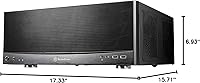
  • Dimensions: The case measures 15.71″ (L) x 17.33″ (W) x 6.93″ (H) inches, giving it a slim, shelf-ready profile.
  • Form Factor: Desktop HTPC enclosure styled after a stereo receiver, designed to sit horizontally in AV furniture.
  • Motherboard Support: Compatible with SSI-CEB, full ATX, and Micro-ATX motherboards.
  • Front Panel: Fully meshed front panel constructed from metal to maximize passive airflow intake.
  • Radiator Support: Supports up to a 240mm liquid cooling radiator, an uncommon capability in this slim form factor.
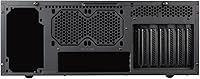
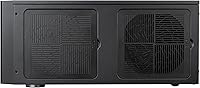
  • Fan Support: Accommodates up to three 120mm fans for flexible active airflow configuration.
  • Air Pressure Design: Engineered for positive air pressure to minimize dust ingress throughout the chassis interior.
  • PSU Mounting: Power supply unit mounts at the bottom of the chassis to improve airflow routing and lower center of gravity.
  • Front USB Ports: Four USB 3.0 ports are located on the front panel for convenient peripheral access.
  • LED Indicator: Includes an adjustable LED indicator that can be tuned or disabled to suit different lighting environments.
  • Material: Primary chassis construction uses metal throughout for rigidity and long-term durability.
  • Color: Available in black, which integrates cleanly with standard home theater and AV equipment aesthetics.
  • Expansion Slots: Provides seven expansion slots to support multiple add-in cards including discrete GPUs within clearance limits.
  • BSR Ranking: Ranked #461 in the Computer Cases category on Amazon, reflecting consistent buyer interest and sales volume.
  • Customer Rating: Holds a 4.5 out of 5 star average rating based on 88 verified buyer reviews on Amazon.
  • Brand: Manufactured by SilverStone Technology, a company with an established track record in specialty PC enclosures.
  • Series: Part of SilverStone's Grandia product family, which focuses specifically on HTPC and living room PC builds.

Related Reviews
SilverStone CS380 ATX Tower Case
79%
90%
Build quality
94%
Drive bay system
68%
Thermal performance
72%
Noise levels
88%
Ease of maintenance
More
SilverStone GD10B ATX HTPC Case
75%
88%
Build Quality
83%
Cabinet Fit
77%
Cooling Performance
52%
CPU Cooler Compatibility
86%
Aesthetic Design
More
SilverStone Technology SG13P Mini-ITX Case
85%
89%
Build Quality
87%
Cooling Performance
91%
Storage Flexibility
95%
Size & Portability
65%
Cable Management
More
SilverStone DS380B Mini-ITX NAS Case
69%
93%
Drive Bay Capacity
88%
Hot-Swap Functionality
76%
Build Quality
41%
Cable Management
57%
Thermal Performance
More
SilverStone Tek TJ08B-E Micro-ATX Case
86%
88%
Build Quality
91%
Airflow & Cooling
85%
Ease of Setup
80%
Storage Flexibility
83%
Cable Management
More
Silverstone SST-PS15W-G Micro ATX Case
85%
89%
Cooling Performance
91%
Build Quality
87%
Ease of Assembly
82%
Compatibility with Components
93%
Aesthetics & Design
More
SilverStone GD09 HTPC Case
76%
93%
Cabinet Compatibility
91%
Motherboard Flexibility
88%
Dust Management
74%
Noise Level
61%
CPU Cooler Compatibility
More
SilverStone FARA R1 V2 Mid-Tower ATX Case
84%
88%
Build Quality
91%
Airflow and Cooling Efficiency
85%
Ease of Maintenance
65%
Cable Management
87%
Design and Aesthetics
More
SilverStone FARA H1M Mid-Tower Micro-ATX Case
82%
91%
Airflow Performance
88%
Build Quality
85%
Cooling Options
65%
Cable Management
82%
Aesthetics
More
SilverStone ML08B-H Mini-ITX Slim Computer Case
86%
94%
Portability
87%
Build Quality
91%
Ease of Assembly
65%
Cooling Options
89%
Design Flexibility (Orientation)
More

FAQ

It genuinely supports full ATX boards, which is one of the more surprising things about the Grandia 11 given how flat it sits. That said, a full ATX board leaves less room to work with during assembly, so plan your cable routing before you start rather than figuring it out as you go.

Yes, the case officially supports a 240mm radiator. The install is doable but requires some patience — tubing clearance inside a low-profile chassis is tighter than in a standard tower, so it helps to dry-fit your components first and identify any routing issues before committing.

Expansion card length and height clearance in horizontal HTPC enclosures like this one are genuinely limited compared to mid-towers. You should check SilverStone's official spec sheet for the exact maximum card length before purchasing a GPU, and factor in whether your specific card's cooler height fits within the available vertical clearance.

Not at all — that is exactly what it is designed for. The stereo-receiver profile and black metal finish make it read as AV equipment rather than a PC, which is precisely the point. Most buyers who prioritize aesthetics in a media room are satisfied with how it integrates on a shelf.

The positive air pressure design helps counteract dust ingress — when more air is being pushed in than pulled out, dust has less opportunity to settle inside passively. It is not a sealed dustproof system, but real-world builders report noticeably less dust accumulation compared to neutral or negative pressure setups.

Noise levels depend heavily on the fans and cooler you choose, since the case itself is passive. The mesh front panel allows for good airflow, which means quieter fans can move adequate air without spinning up aggressively. Builders focused on silent operation typically pair this chassis with low-RPM 120mm fans and a quality AIO or low-profile air cooler.

Storage options are reasonable for an HTPC build — the case accommodates multiple 3.5-inch and 2.5-inch drives, making it practical for a media server or gaming system with local storage. Check SilverStone's spec sheet for the exact bay count since drive configurations can vary by layout revision.

Honest answer: it is tighter than a mid-tower and requires more planning. Once a full ATX board, a PSU, and a radiator are inside, workspace gets limited. Builders who use sleeved cables, right-angle connectors, and modular PSUs consistently report better results. It is not impossible — just not forgiving of a disorganized approach.

Yes, the LED indicator is adjustable, so you can dim it or turn it off entirely if you prefer a dark, unobtrusive look in your media room. This is a small detail but one that genuine home theater builders tend to appreciate.

Buyers who have owned earlier Grandia models generally see the Grandia 11 as a meaningful step forward, particularly in cooling support and front panel connectivity. The 240mm radiator compatibility and USB 3.0 ports are the two most cited improvements. Build quality is considered comparable or slightly better, though the internal layout is similarly tight by nature of the form factor.

Where to Buy