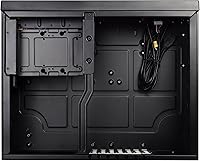
Overview

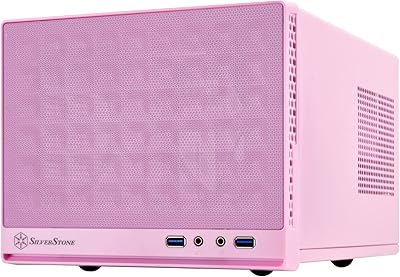
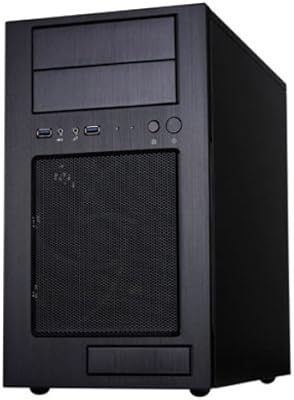
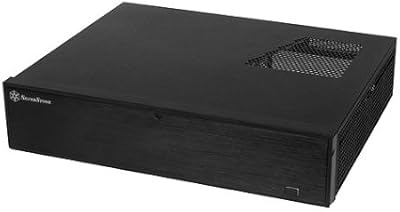
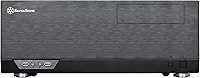
The SilverStone GD09 HTPC Case was built for one specific problem: fitting a real PC into an entertainment center without looking out of place. SilverStone has spent years designing small-form-factor and HTPC enclosures, and that depth of experience shows in the GD09's horizontal layout and brushed-look front panel. It sits at a mid-range price point — above thin sheet-metal budget options but well below boutique aluminum chassis. This living room enclosure isn't trying to be the fastest or most thermally aggressive build platform. It's for builders who want cabinet-friendly dimensions, reasonable noise levels, and enough internal flexibility to put together something genuinely capable.

Features & Benefits

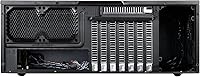
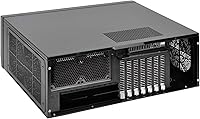
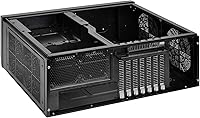
The GD09's positive air pressure design is one of its most practical engineering decisions. By running more intake than exhaust, the system pushes dust toward the filters at intake points rather than letting it settle across every internal surface — a real advantage in a living room where the case gets cleaned occasionally, not weekly. The 358mm depth is the number that matters most to cabinet builders; most standard AV furniture offers around 380–400mm of internal clearance, and this living room enclosure fits without issue. It also accepts ATX and Micro-ATX boards, which is uncommon in this form factor. One hard constraint: CPU cooler height tops out at 88mm with an optical drive installed — a Noctua NH-L9i fits, but a Noctua NH-D15 absolutely does not.

Best For

This HTPC case is squarely aimed at builders who want to put a capable PC inside an AV cabinet alongside a receiver, streaming box, or Blu-ray player. If you have a solid ATX motherboard and don't want to buy a new Mini-ITX board just to shrink things down, the GD09 solves that directly. It's also a strong pick for always-on media servers — Plex, Home Assistant, network storage — where passive dust management over months of continuous operation genuinely matters. There's even optional rackmount support via SilverStone's RA02 ears for dedicated AV rack setups. High-wattage gaming rigs or builds requiring tower coolers taller than 138mm should look elsewhere.

User Feedback

Buyers rate the GD09 at 4.4 stars across over 150 reviews, and the praise tends to be specific: people note how solid it feels in hand and how naturally it disappears inside a media cabinet. The interior space surprises most builders in a good way — it's roomier than the external footprint suggests. The most consistent complaint is cable management in full ATX configurations, particularly with semi-modular PSUs where the rear area tightens up fast. The 88mm cooler restriction with an optical drive installed is the one spec most likely to cause a return — verify your cooler clearance before committing. On noise, the included 120mm fan is inoffensive, but living-room-quiet depends entirely on which fans you install and how many.

Pros

  • Fits inside standard AV furniture at just 358mm deep, solving the primary pain point for living room PC builders.
  • Supports full ATX and Micro-ATX motherboards — rare flexibility in a horizontal HTPC form factor.
  • Positive air pressure cooling keeps dust accumulation manageable without requiring frequent cleanings.
  • Quick-release dust filters on intake points are a practical, low-effort maintenance feature for living room use.
  • Interior space impresses most builders; the chassis is roomier than the external dimensions suggest.
  • Optional rackmount support via SilverStone RA02 ears adds versatility for dedicated AV rack installations.
  • Accepts up to seven expansion cards at up to 12.2-inch length, keeping full-size GPU builds on the table.
  • Build quality feels solid and substantial for the price, with a front panel that reads as aluminum from normal viewing distance.
  • The horizontal layout and neutral black finish blend naturally into existing AV setups without visual disruption.

Cons

  • Cable management is tighter than expected in full ATX builds, especially with semi-modular or non-modular PSUs.
  • The 88mm CPU cooler height cap with an optical drive installed eliminates a wide range of popular mid-tower coolers.
  • Front panel is plastic with a faux aluminum finish — the illusion holds at a distance but not up close.
  • Only two USB 3.0 ports on the front I/O panel, which feels limited for a media-centric build.
  • PSU length is capped at 220mm, dropping to 150mm if you want to use the adjacent fan slot — awkward for some builds.
  • The single included 120mm fan is a starting point at best; achieving genuinely quiet operation requires aftermarket fan selection.
  • No USB-C port on the front panel, which is an increasingly noticeable omission for a case released in 2021.
  • Rackmount ears are sold separately, so the advertised rack compatibility comes at an additional cost.

Ratings

The SilverStone GD09 HTPC Case scores below are generated by our AI engine after analyzing verified global buyer reviews, with spam, bot submissions, and incentivized feedback actively filtered out. The result is an honest snapshot that reflects real builder experiences — both the aspects that consistently impress and the friction points that genuinely frustrate. Strengths and pain points are weighted equally so you can make a clear-eyed purchase decision.

Cabinet Compatibility
93%
The 358mm depth is the GD09's most celebrated specification among buyers who have spent time hunting for a case that actually disappears inside a TV stand or AV cabinet. Most report it fitting comfortably with room for rear cabling, which is the real test — dimensions on paper rarely account for cable bulk.
A small number of buyers with shallower or unusually partitioned AV furniture found clearance tighter than expected once cables were routed. Those with front-vented cabinets also noted that airflow can be restricted depending on shelf design, which partially undermines the cooling strategy.
Motherboard Flexibility
91%
Supporting full ATX, Micro-ATX, and SSI-CEB in a horizontal HTPC enclosure is genuinely rare at this price tier, and buyers repeatedly cite it as the deciding factor over competing cases. Builders reusing existing ATX boards from tower builds report a straightforward transplant without needing to invest in a new platform.
Full ATX installs noticeably reduce the working space for cable routing compared to Micro-ATX, and a handful of buyers noted that populating all ATX slots while managing a larger PSU made the interior feel cramped. The flexibility is real, but it comes with a complexity trade-off at the larger end of the spectrum.
Dust Management
88%
The positive air pressure approach combined with quick-release filters at every intake point is a genuinely practical solution for always-on builds living in a carpeted living room. Buyers running Plex servers and Home Assistant hubs around the clock report noticeably less internal dust accumulation compared to cases without this architecture.
The system works best when intake filters are cleaned regularly — buyers who let maintenance slip for several months reported reduced airflow and slightly higher component temperatures. The filter mesh is also fine enough that cleaning with compressed air alone sometimes requires a follow-up rinse to fully clear it.
Noise Level
74%
26%
For builds with light to moderate thermal loads, the GD09 can run near-silently in a living room environment, particularly when paired with quality PWM fans running at low RPM. The included 120mm fan is unobtrusive at idle, and buyers running passive or semi-passive GPU configurations report genuinely inaudible operation during media playback.
Noise performance is highly dependent on component choice and fan configuration — the case itself does not provide acoustic dampening, so high-RPM fans or a busy GPU will be clearly audible in a quiet room. Several buyers expressed disappointment that achieving true living-room silence required additional aftermarket investment beyond the case price.
CPU Cooler Compatibility
61%
39%
Builders who researched their cooler clearance ahead of time report a smooth experience, and the 138mm limit without an optical drive is workable for a solid range of mid-profile tower coolers like the Noctua NH-U9S. The case does accommodate meaningful CPU cooling options, particularly for builds prioritizing low-to-mid TDP processors.
This is the single most common source of buyer frustration and returns. The 88mm ceiling with an optical drive installed eliminates the majority of popular mid-tower coolers, and many buyers did not verify their specific cooler height before purchasing. The constraint is well-documented but easy to overlook during the excitement of planning a new build.
Cable Management
57%
43%
Builders using compact or SFX power supplies with fully modular cabling report a manageable interior once unnecessary cables are eliminated. For Micro-ATX builds with a streamlined component list, there is enough clearance behind the motherboard tray to tuck cables acceptably out of sight.
Full ATX builds with standard ATX PSUs are where cable management becomes genuinely difficult. The rear routing channel is shallow, and the combination of a full-size board, a non-modular PSU, and multiple drive connections leaves very little room to work. This is the most frequently mentioned complaint among experienced builders who expected more.
Build Quality
84%
The chassis feels substantial and well-constructed for its price tier — buyers consistently note that it does not rattle, flex, or feel hollow when handled. Panel fitment is tight, and the overall rigidity of the steel frame gives the impression of a more expensive enclosure than the faux aluminum finish might suggest.
The front panel's plastic construction becomes apparent once you handle it closely, and a few buyers noted that the panel clips feel less robust than the rest of the chassis. It is not a durability concern for normal use, but buyers expecting premium material feel across the board will notice the gap.
Aesthetic Design
78%
22%
The brushed-look front finish and horizontal profile give the GD09 a convincingly AV-equipment appearance when viewed from a normal seating distance. Buyers consistently report that it blends naturally into existing setups alongside receivers, Blu-ray players, and streaming devices without drawing attention to itself.
The illusion of premium materials only holds at a distance. Up close, the plastic finish does not replicate the tactile feel of real brushed aluminum, and the contrast between the solid steel side panels and the softer front face is noticeable. Buyers who handle the case regularly during setup often feel a slight disconnect between looks and touch.
Cooling Performance
76%
24%
For the target use case of media center and light productivity builds, the positive pressure airflow design keeps temperatures in a comfortable range without aggressive fan speeds. The three available 120mm fan positions offer enough flexibility to build a balanced intake and exhaust configuration for most moderate workloads.
Thermal headroom under sustained heavy loads is limited compared to larger tower cases, and the restricted internal volume means heat can build up quickly if fans are running slowly. High-TDP processors or power-hungry GPUs will likely require more active fan management than the out-of-box single fan configuration provides.
Interior Space
83%
A recurring theme in buyer feedback is genuine surprise at how much room the interior offers relative to the external footprint. GPU clearance for cards up to 12.2 inches is one of the standout practical benefits, and builders fitting mid-range discrete GPUs report no fitment issues.
The spaciousness that impresses in an empty chassis diminishes quickly once a full ATX motherboard, a standard ATX PSU, multiple drives, and a GPU are all installed simultaneously. The case is roomy for a horizontal HTPC enclosure, but it is not a large case by any absolute measure.
GPU Compatibility
82%
18%
Seven expansion slots and up to 12.2 inches of card length support make this one of the more GPU-friendly horizontal HTPC cases available. Builders fitting mainstream dual-slot cards for light gaming or hardware video decoding report clean installations without adapter complications.
Triple-slot or especially long high-end GPUs push against the enclosure limits and can complicate airflow in the already-restricted interior. Buyers fitting power-hungry cards also reported that the positive pressure cooling design was not optimized for the additional heat load those cards introduce.
Drive Bay Options
74%
26%
The combination of one 5.25-inch bay, two 3.5-inch bays, and a dedicated 2.5-inch slot gives builders enough storage flexibility for a typical media server or Plex build with a boot SSD plus one or two data drives. Buyers building NAS-adjacent systems appreciated having 3.5-inch bays for full-size spinning drives.
For storage-heavy builds requiring three or more 3.5-inch drives, the GD09 runs out of native bay space quickly. Buyers who wanted to repurpose the 5.25-inch bay for an additional drive cage found compatibility options limited, and removing the optical bay to gain CPU cooler clearance eliminates a storage option in the process.
Assembly Experience
71%
29%
Buyers with prior PC building experience generally describe the assembly process as straightforward once they understand the internal layout. The side panel removal is tool-free, and component access is reasonably direct for a horizontal enclosure of this depth.
First-time builders or those accustomed to spacious mid-tower cases often find the horizontal orientation and compact routing paths disorienting. Working around the PSU mounting position at the front of the case while simultaneously managing motherboard installation and cable routing requires patience and some planning ahead.
Value for Money
79%
21%
Positioned between disposable budget enclosures and expensive boutique aluminum HTPC cases, the GD09 hits a pricing point where the feature set — ATX support, positive pressure cooling, dust filters, rackmount compatibility — feels genuinely justified for a builder with specific living room requirements.
Buyers who run into the cable management constraints or the CPU cooler height limit after purchasing often feel the value proposition weakens considerably once rework costs or additional component purchases are factored in. For buyers who need a simple, stress-free build, the learning curve somewhat erodes the perceived value.
Front I/O
53%
47%
The two USB 3.0 Type-A ports cover basic connectivity needs for most media center scenarios, and the included audio jacks function reliably for users who plug in headphones or a microphone directly at the front panel.
The absence of a USB-C port is a noticeable omission for a case released in 2021, and buyers who use modern peripherals or fast external drives found themselves relying on adapters more than expected. With only two USB ports total on the front panel, power users who connect multiple devices simultaneously consistently flagged this as a frustrating limitation.

Suitable for:

The SilverStone GD09 HTPC Case is purpose-built for anyone trying to hide a real PC inside an entertainment center without sacrificing build flexibility. If you want a system that sits next to a receiver or soundbar and doesn't look like it wandered in from a gaming desk, this is one of the few cases that genuinely pulls that off at a mid-range price. It's especially well-suited for builders who already own a standard ATX or Micro-ATX motherboard and don't want to restart from scratch on a Mini-ITX platform just to get a lower profile. Always-on workloads — Plex media servers, Home Assistant hubs, NAS-adjacent builds — benefit directly from the positive air pressure cooling and quick-release dust filters, since those systems accumulate grime over months without anyone noticing. Enthusiasts with a dedicated AV rack will also appreciate the optional rackmount compatibility via SilverStone's RA02 ears, which is a genuinely uncommon feature at this price tier.

Not suitable for:

Builders chasing high thermal performance or running power-hungry components should think carefully before committing to this living room enclosure. The GD09 is not designed for maximum airflow — it prioritizes quiet operation and dust management, and a high-wattage GPU or overclocked CPU will push those priorities into conflict fast. The 88mm CPU cooler height restriction with an optical drive installed is a hard wall; popular coolers like the Noctua NH-U12S or be quiet! Dark Rock 4 are simply too tall, and even without the optical drive the 138mm ceiling rules out full tower-class coolers. Cable management is also genuinely tight in full ATX configurations, so builders planning a dense, fully-modular PSU setup should expect to spend extra time routing. Anyone who needs more than two USB 3.0 front ports will find the front I/O panel limiting, and the faux aluminum finish, while convincing at a distance, is plastic — buyers expecting a premium metal exterior at this price will be disappointed up close.

Specifications

  • Form Factor: Horizontal HTPC tower designed to sit flat inside AV furniture rather than stand upright on a desk.
  • Dimensions: The chassis measures 17.32″ wide, 6.69″ tall, and 14.09″ deep (440mm x 170mm x 358mm).
  • Weight: The empty case weighs 9.26 pounds, giving it a solid feel without being difficult to position inside a cabinet.
  • Motherboard Support: Compatible with SSI-CEB, full ATX, and Micro-ATX motherboards, offering more flexibility than most competing horizontal enclosures.
  • Front Panel: The front face is plastic with a faux aluminum finish that mimics brushed metal at typical viewing distances.
  • Cooling Design: Uses a positive air pressure configuration where intake airflow exceeds exhaust to direct dust toward removable filters rather than internal surfaces.
  • Included Fans: One 120mm fan is included from the factory as baseline intake; additional fan slots allow for a more comprehensive airflow setup.
  • Fan Slots: Supports up to five fans total: three 120mm positions and two 80mm positions distributed across intake and exhaust locations.
  • CPU Cooler Limit: Maximum CPU cooler height is 88mm when a 5.25-inch optical drive is installed, or 138mm when that bay is left empty.
  • Expansion Cards: Accommodates up to seven expansion cards, each up to 12.2 inches long and 5.25 inches tall, enabling full-size GPU installations.
  • Drive Bays: Includes one 5.25-inch bay, two 3.5-inch bays (one convertible to 2.5-inch), and one dedicated 2.5-inch bay for a total of four storage positions.
  • PSU Clearance: Accepts power supply units up to 220mm in length; this drops to 150mm if the adjacent internal fan slot is populated.
  • Dust Filters: Quick-release dust filters are fitted at all intake points, allowing removal and cleaning without tools.
  • Front I/O: The front panel provides two USB 3.0 Type-A ports along with standard HD audio headphone and microphone jacks.
  • Rackmount Support: The chassis is compatible with SilverStone RA02 rackmount ears, sold separately, for installation in standard AV or equipment racks.

Related Reviews
SilverStone CS380 ATX Tower Case
79%
90%
Build quality
94%
Drive bay system
68%
Thermal performance
72%
Noise levels
88%
Ease of maintenance
More
SilverStone Technology SG13P Mini-ITX Case
85%
89%
Build Quality
87%
Cooling Performance
91%
Storage Flexibility
95%
Size & Portability
65%
Cable Management
More
SilverStone GD10B ATX HTPC Case
75%
88%
Build Quality
83%
Cabinet Fit
77%
Cooling Performance
52%
CPU Cooler Compatibility
86%
Aesthetic Design
More
SilverStone Tek TJ08B-E Micro-ATX Case
86%
88%
Build Quality
91%
Airflow & Cooling
85%
Ease of Setup
80%
Storage Flexibility
83%
Cable Management
More
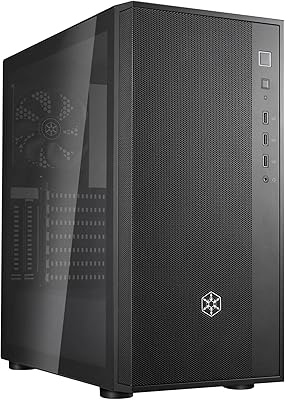
Silverstone SST-PS15W-G Micro ATX Case
85%
89%
Cooling Performance
91%
Build Quality
87%
Ease of Assembly
82%
Compatibility with Components
93%
Aesthetics & Design
More
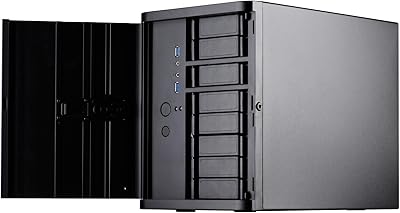
SilverStone DS380B Mini-ITX NAS Case
69%
93%
Drive Bay Capacity
88%
Hot-Swap Functionality
76%
Build Quality
41%
Cable Management
57%
Thermal Performance
More
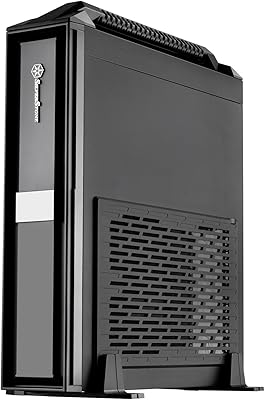
SilverStone ML08B-H Mini-ITX Slim Computer Case
86%
94%
Portability
87%
Build Quality
91%
Ease of Assembly
65%
Cooling Options
89%
Design Flexibility (Orientation)
More
SilverStone FARA R1 V2 Mid-Tower ATX Case
84%
88%
Build Quality
91%
Airflow and Cooling Efficiency
85%
Ease of Maintenance
65%
Cable Management
87%
Design and Aesthetics
More
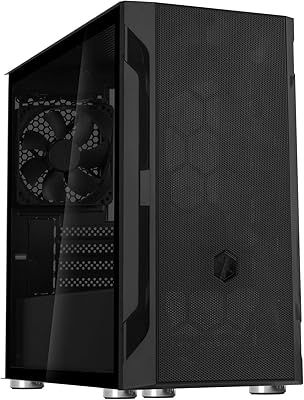
SilverStone FARA H1M Mid-Tower Micro-ATX Case
82%
91%
Airflow Performance
88%
Build Quality
85%
Cooling Options
65%
Cable Management
82%
Aesthetics
More
SilverStone ML04B Micro ATX HTPC Case
71%
86%
Build Quality
68%
Thermal Performance
61%
Acoustic Performance
63%
Internal Space & Layout
59%
Component Compatibility
More

FAQ

It depends on your furniture, but the 358mm depth is specifically what makes the GD09 practical for most standard AV cabinets — many entertainment units have between 380mm and 420mm of internal clearance. Measure your cabinet depth before buying and factor in a little extra room for cable routing at the rear. Width at 440mm is fairly standard for this class, and the 170mm height means it will slot comfortably on a typical shelf alongside a receiver or streaming device.

Yes, it genuinely supports full ATX boards, which is uncommon for a horizontal HTPC enclosure at this size. It also fits SSI-CEB and Micro-ATX. Just keep in mind that a full ATX build will leave you less room for cable management at the back, so a fully modular PSU is worth the investment if you go that route.

This is the most important spec to check before building. With a 5.25-inch optical drive installed, you're limited to 88mm of cooler height — that rules out most tower coolers and fits low-profile options like the Noctua NH-L9i or Noctua NH-L12S. Remove the optical drive and the ceiling rises to 138mm, which opens up mid-range coolers like the Noctua NH-U9S or be quiet! Shadow Rock LP. Anything taller simply won't close.

It's plastic with a brushed-metal-look finish — not real aluminum. SilverStone is upfront about calling it a faux aluminum finish. From across the room it reads convincingly as metal, but if you're touching it daily or examining it up close, you'll know. For a case living inside a cabinet that you rarely handle, it's a reasonable trade-off that helps keep the price reasonable.

The SilverStone GD09 HTPC Case is designed with quiet operation as a priority, but how quiet it actually runs depends heavily on your fan selection and the thermal load of your components. The included 120mm fan is unobtrusive at low speeds, but if you populate all five fan slots with high-RPM fans, it won't be silent. For true living-room-quiet builds, pair it with quality PWM fans like the Noctua NF-A12x25 and keep component TDP moderate.

Yes — the GD09 supports up to seven expansion cards, each up to 12.2 inches long and 5.25 inches tall, so most standard dual-slot GPUs will fit without issue. Cards above 12.2 inches will not clear the internal clearance limits, so verify your specific GPU length before purchasing. Thermal management for a power-hungry GPU in this enclosure will require thoughtful fan placement.

The filters at all intake points are quick-release, meaning you can pop them off without any tools. A light rinse under water or a few passes with compressed air is all it takes. Given that this case lives in a living room environment where it may run continuously, pulling the filters every couple of months is a sensible habit.

The case accepts PSUs up to 220mm in length under normal circumstances. If you want to use the internal fan slot adjacent to the PSU bay, the maximum PSU length drops to 150mm, which limits you to SFX-class or compact ATX units. Most standard ATX PSUs fall between 140mm and 160mm, so the fan slot restriction is mainly relevant if you are using a larger unit.

It is, but not out of the box. The GD09 is designed to accept SilverStone RA02 rackmount ears, which are sold separately. Once attached, the case can be installed in a standard equipment rack, which is a useful option for AV closets or home theater rooms with dedicated rack systems. It's a niche feature, but a thoughtful one for the target audience.

It can be, particularly in full ATX configurations. The interior is more spacious than the exterior suggests, but the rear routing area behind the motherboard tray is shallow. If you're using a semi-modular or non-modular PSU with a full ATX board, expect to spend real time organizing cables. Going fully modular and only connecting what you need will make the process considerably less frustrating.

Where to Buy