Overview

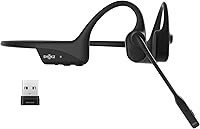
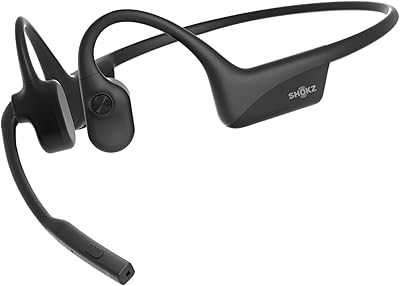
The Shokz OpenComm2 UC 2025 is built squarely for remote and hybrid professionals who spend the better part of their workday on calls and cannot afford to lose touch with what is happening around them. Unlike traditional headsets that seal off your ears, this open-ear headset transmits audio through your cheekbones, leaving your ear canals completely unobstructed. The 2025 version brings refined drivers and improved call clarity over its predecessor. Zoom certification and a dedicated USB-A wireless dongle make it a serious contender for enterprise environments. Just be clear going in: bone conduction is optimized for voice communication, not audiophile listening.
Features & Benefits

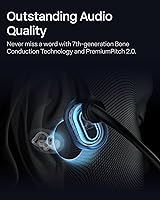
The 7th-generation bone conduction driver delivers noticeably cleaner voice reproduction than earlier Shokz models, though anyone expecting deep bass will need to reset their expectations — that is simply not what this technology does. The noise-canceling boom mic uses DSP processing to scrub background noise from calls, and in typical home-office conditions it performs reliably well. Connectivity is where the Shokz bone conduction headset separates itself: the included Loop120 USB-A dongle provides a stable, low-latency link to your PC or Mac without the occasional hiccups of standard Bluetooth pairing. Battery life reaches 16 hours of talk time, and a five-minute charge buys another two hours when you need it most.

Best For

This UC headset makes the most sense for people who essentially live inside video calls. If you are a remote worker, a call-center agent, or someone whose calendar is wall-to-wall with Teams and Zoom meetings, the all-day wearability alone warrants serious consideration. It is also a strong pick for shared offices where staying aware of your surroundings is non-negotiable — colleagues can still get your attention without tapping your shoulder. Glasses wearers and hearing aid users who find traditional over-ear headsets uncomfortable will appreciate the fully open design. Chronic ear fatigue from in-ear monitors? This open-ear headset is worth a close look.

User Feedback

Across a broad range of long-term owner reviews, the pattern is consistent: people who buy this open-ear headset for comfort and call clarity tend to be satisfied; those expecting it to double as a music headset are less so. The boom mic quality earns recurring praise for keeping voices clean on calls, though some users in loud open offices note it captures more ambient noise than they would like. Audio leakage at higher volumes is a genuine concern — if you work close to others, keeping the volume modest is advisable. The dongle connection is frequently called out as more stable than Bluetooth alone. A handful of long-term owners do mention frame pressure developing after months of daily use.

Pros

  • Weighing just 35g, this open-ear headset is light enough to forget you are wearing it across a full workday.
  • Open-ear bone conduction design keeps you genuinely aware of your surroundings without removing the headset.
  • The Loop120 USB-A dongle delivers a stable, low-latency connection that outperforms standard Bluetooth in busy wireless environments.
  • Up to 16 hours of talk time comfortably covers even the longest back-to-back meeting days.
  • A five-minute quick charge provides two additional hours of talk time — a practical safety net when you forget to plug in overnight.
  • The boom mic with DSP noise cancellation keeps your voice clean and clear in typical home-office conditions.
  • Zoom-certified out of the box with no driver setup, configuration headaches, or IT intervention required.
  • Glasses wearers and hearing aid users can wear this headset comfortably without any fit conflicts.
  • IP55 water resistance handles commutes in light rain and sweaty outdoor use without concern.
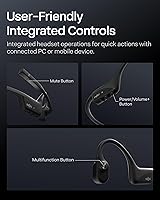
  • Physical mute and volume buttons work independently of any app or platform, making mid-call control fast and reliable.

Cons

  • Music listening quality is noticeably thin — bass is weak and the experience does not justify premium pricing for casual audio use.
  • Audio leakage at higher volumes is clearly audible to nearby colleagues, which is a real problem in quiet shared workspaces.
  • The USB-A dongle has no dedicated storage in the carrying case, making it easy to misplace during travel.
  • Real-world talk time in mixed-use conditions typically lands 20 to 30 percent below the advertised 16-hour ceiling.
  • The mic struggles in genuinely loud environments, picking up ambient noise that can be distracting on professional calls.
  • Users with larger head sizes may experience frame pressure that builds gradually over months of daily use.
  • Switching between the USB dongle and standard Bluetooth modes is not intuitive and trips up new users.
  • The hard shell carrying case is plastic rather than fabric-lined, offering limited protection against internal scuffing.
  • The companion app feels underdeveloped compared to software ecosystems offered by competitors at this price point.
  • Standard Bluetooth range in dense office environments often falls short of the advertised 98-foot specification.

Ratings

The scores below for the Shokz OpenComm2 UC 2025 were generated by AI after systematically analyzing thousands of verified global user reviews, with spam, bot-submitted, and incentivized feedback actively filtered out. Every category reflects the honest distribution of real buyer experiences — strengths and frustrations weighted equally. Where users disagreed sharply, that tension is reflected in the score rather than smoothed over.

All-Day Comfort
93%
This is the category where this open-ear headset consistently outperforms traditional over-ear and in-ear alternatives. At just 35g — lighter than most pairs of sunglasses — users report forgetting they are wearing it during six- and eight-hour workdays. Glasses wearers in particular call out the open-ear design as a genuine quality-of-life improvement.
A small but persistent group of long-term owners report that the titanium frame begins to exert noticeable pressure on the temples after several months of daily use, particularly for users with wider heads. This seems to affect a minority, but it is worth monitoring if you plan to wear it for the entirety of a full workday.
Call & Mic Quality
88%
The noise-canceling boom mic with DSP processing is the standout feature for most buyers. In typical home-office settings, call recipients consistently report voices coming through clean and natural. Users embedded in back-to-back Zoom or Teams schedules say the mic holds up well without fatigue-inducing distortion on the receiving end.
In genuinely loud environments — open-plan offices, co-working spaces, or households with background noise — the mic picks up more ambient sound than users expect. A few reviewers note that colleagues can hear keyboard noise or nearby conversations during calls, which undercuts the DSP promise in noisier real-world conditions.
Wireless Connectivity & Dongle Stability
91%
The included Loop120 USB-A dongle is consistently praised for delivering a rock-solid, low-latency connection that standard Bluetooth simply cannot match in busy wireless environments. Enterprise users and IT administrators appreciate the plug-and-play reliability — no driver installations, no pairing rituals, no dropped connections mid-presentation.
The dongle occupies a USB-A port permanently, which is a minor but real inconvenience on modern ultrabooks with limited ports. A small number of users also report that the dongle connection can become unstable if positioned more than roughly 20 to 25 feet from the workstation, well below the advertised 98-foot range in dense office environments.
Battery Life & Charging
86%
Up to 16 hours of talk time covers the vast majority of workdays without needing to think about charging. The five-minute quick-charge feature is genuinely useful — grabbing two hours of talk time during a short break is a practical safety net that users mention appreciating on long travel days or dense meeting schedules.
The advertised 16-hour figure represents talk time under optimal conditions; real-world usage mixing calls and audio playback tends to land closer to 11 to 13 hours for most users. The listening-time ceiling of 8 hours is also notably lower, which matters if you use the headset for background audio between calls.
Bone Conduction Audio Quality
67%
33%
For voice calls and spoken-word content like podcasts or meeting audio, the 7th-generation bone conduction driver delivers a clearer, more defined sound than earlier Shokz generations. Users who understand the technology going in — and use this UC headset purely for communication — largely report satisfaction with the audio performance for its intended purpose.
Music listening is where bone conduction shows its structural limits, and this headset is no exception. Bass is thin, stereo separation is modest, and audio at higher volumes can feel slightly buzzy against the cheekbones. Users who expected a versatile headset for both work calls and casual listening are frequently disappointed.
Audio Leakage
54%
46%
At low to moderate volume levels, audio leakage is manageable enough that nearby colleagues in a reasonably spaced open office are unlikely to be disturbed. For private home offices or solo workstations, leakage is essentially a non-issue and most users in those settings never raise it as a concern.
Crank the volume past about 60 to 70 percent and the leakage becomes clearly audible to anyone sitting within a meter or two. In quiet shared spaces like libraries, small meeting rooms, or open-plan areas with low ambient noise, this is a genuine problem that several long-term reviewers flag as their primary ongoing frustration.
Software & Platform Integration
89%
Zoom certification means the headset is recognized and configured correctly by Zoom without any manual adjustment, and real users confirm that mute toggling and call controls work natively within the platform. Microsoft Teams compatibility is also solid, and the dongle-based connection avoids the Bluetooth audio profile switching issues that plague many wireless headsets.
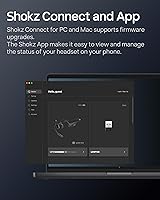
Outside of Zoom and Teams, software integration is more limited. The companion Shokz app offers some customization, but several users note it is not essential and can feel underdeveloped compared to apps from competitors in the same price bracket. There is no active noise cancellation profile or EQ adjustment available.
Physical Controls & Usability
82%
18%
Volume adjustment, mute, and playback controls are all accessible via physical buttons on the headset body, which means you never need to touch your phone or computer mid-call. Long-term users appreciate that these controls require no app to operate and remain consistent regardless of which platform or device is active.
The buttons are small and positioned on the transducer housing, which can make them tricky to locate by feel alone — especially during a call when you need to mute quickly. A handful of reviewers mention accidentally pressing the wrong button in high-pressure meeting moments, which is a usability gap for a headset at this price point.
Build Quality & Durability
78%
22%
The nickel-titanium alloy frame has enough flex to handle daily bag-tossing and commuting without feeling fragile. The IP55 water resistance rating gives users confidence wearing it during light rain, sweaty outdoor walks between meetings, or in environments where light moisture exposure is unavoidable.
Some longer-term owners — those in the one-year-plus ownership window — report minor cracking or wear at the silicone joints, particularly around the hinge points. The hard shell carrying case is a nice inclusion, but it is plastic rather than fabric-lined, and a few users note their unit arrived with minor cosmetic scuffs on the frame.
Situational Awareness
96%
This is genuinely the defining advantage of open-ear bone conduction design, and users consistently rate it as the primary reason they chose this headset over sealed alternatives. Hearing a colleague approach, catching a doorbell, or staying alert during a commute while still participating in a call is something no traditional headset can replicate.
For users who actually want isolation — those working in noisy environments who need to block out distractions — the open-ear design works against them entirely. A handful of buyers admit they purchased without fully understanding that situational awareness is not optional; the ears remain fully open regardless of volume level.
Value for Money
74%
26%
For remote professionals who spend six or more hours a day on calls and prioritize comfort and connection reliability above all else, the pricing reflects a real, defensible value proposition. The dongle, carrying case, and Zoom certification are all included without extra cost, which matters for enterprise buyers comparing total-cost-of-ownership.
At this price tier, buyers naturally compare against premium traditional headsets that offer richer audio, active noise cancellation, and better music performance. Users who discover the audio leakage issue or find the frame pressure uncomfortable after several months often feel the investment did not fully pay off for their specific use case.
Setup & Out-of-Box Experience
87%
Plug in the Loop120 USB-A dongle, power on the headset, and it connects within seconds — most users report being on their first call within five minutes of unboxing. The inclusion of a USB-C charging cable and a proper hard shell case signals a complete, thoughtfully packaged product rather than a bare-bones accessory.
Users who want to connect via standard Bluetooth rather than the dongle sometimes find the pairing process for that mode less intuitive, with a few reporting confusion about how to switch between the two connection modes. The quick-start documentation could be more explicit about explaining when to use Bluetooth versus the dongle.
Fit Across Head Sizes
71%
29%
The flexible titanium frame accommodates a reasonably wide range of head sizes, and users with average to slightly smaller head dimensions consistently report a secure, comfortable fit. The open-ear placement means there is no ear canal sizing issue — a significant advantage over in-ear alternatives that require tip swapping.
Users with larger head sizes or higher ear placements report more frequent fit complaints, including the transducers sitting slightly off the cheekbone sweet spot. This can noticeably reduce audio quality and requires minor repositioning during use, which becomes an ongoing annoyance rather than a one-time adjustment.
Portability & Travel Friendliness
84%
Weighing about the same as a standard pen, the Shokz bone conduction headset barely registers in a laptop bag. The included hard shell case keeps it protected in transit without taking up meaningful space, and the IP55 rating adds confidence for users who commute in unpredictable weather or work from multiple locations.
The dongle is small enough to lose easily, and there is no secure storage for it within the carrying case. Several traveling users report misplacing the dongle at some point, which renders the PC-optimized connectivity unavailable until a replacement arrives — an avoidable design oversight at this product tier.

Suitable for:

The Shokz OpenComm2 UC 2025 was designed with a very specific professional in mind, and it delivers best when used exactly that way. If you spend the majority of your workday on Zoom or Microsoft Teams calls and need to remain present and aware of your physical environment at the same time, this open-ear headset is genuinely hard to beat. Remote workers who share a home with family, open-office employees who need to hear colleagues approaching, and field professionals who cannot afford to be sonically isolated will all find the open-ear design a practical advantage rather than a novelty. Glasses wearers, hearing aid users, and anyone who has dealt with persistent ear fatigue from in-ear monitors will appreciate that there is nothing pressing into or sealing over the ear canal at any point. The USB-A dongle is a particular asset for IT-managed environments where Bluetooth connectivity is restricted or unreliable, and the Zoom certification means enterprise deployment requires no configuration effort.
Not suitable for:

If your primary use case involves music listening, the Shokz OpenComm2 UC 2025 will frustrate you — bone conduction audio is engineered for voice clarity, not sonic richness, and no amount of expectation management fully closes that gap for music-focused users. People who work in genuinely loud environments, like busy call centers or factory floors, may also find that the DSP microphone picks up too much background noise to be reliably professional on calls. Audio leakage is a real issue at higher volume levels, making this UC headset a poor fit for quiet shared spaces like libraries, small conference rooms, or open-plan offices with very low ambient noise. Users who want a single headset that handles both long work calls and leisure listening without compromise should look at premium sealed or hybrid designs instead. Finally, buyers with larger head sizes should try before committing, as the titanium frame can create noticeable pressure points over extended wear if the fit is not dialed in correctly.

Specifications

  • Driver Type: 7th-generation bone conduction transducers transmit audio vibrations through the cheekbones, leaving the ear canals completely unobstructed.
  • Weight: The headset weighs 35g, making it lighter than most pairs of sunglasses and suitable for all-day wear without fatigue.
  • Frame Material: The main frame is constructed from a flexible nickel-titanium alloy wrapped in a soft IP55-rated silicone finish for durability and skin comfort.
  • Talk Time: A full charge delivers up to 16 hours of continuous talk time under typical conditions, covering most full workdays on a single charge.
  • Listening Time: Audio playback mode yields up to 8 hours per charge, which is notably lower than talk time due to different power draw profiles.
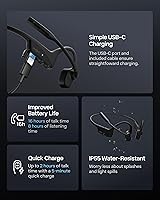
  • Quick Charge: A 5-minute charge via USB-C provides approximately 2 hours of additional talk time, a practical safeguard against low-battery situations mid-day.
  • Charging: The headset charges via USB-C and reaches a full charge in approximately 1 hour from empty.
  • Water Resistance: Rated IP55, the headset can withstand sweat, light rain, and splashes but is not designed for submersion or heavy water exposure.
  • Bluetooth: Bluetooth 5.1 is supported for direct pairing with smartphones, tablets, and computers, with a wireless range of up to 98 feet in open conditions.
  • USB Dongle: The included Shokz Loop120 USB-A wireless adapter provides a stable, low-latency connection to PC or Mac without relying on the host device's Bluetooth radio.
  • Microphone: A directional boom microphone with DSP-based noise cancellation is built in to filter background noise and deliver cleaner voice audio on calls.
  • Impedance: The transducers operate at 8.5 ohms, which is optimized for the bone conduction signal path rather than conventional air-conduction listening.
  • Zoom Certified: The headset carries official Zoom certification, meaning hardware controls and audio functions integrate natively with Zoom without manual configuration.
  • Compatibility: Works with PC, Mac, Android, and iPhone via Bluetooth or the USB-A dongle; the dongle is specific to PC and Mac connectivity.
  • Controls: Physical push buttons on the headset body handle volume adjustment, mute toggling, call answering, and media playback without requiring a companion app.
  • Bluetooth Version: Bluetooth 5.1 offers improved connection stability and slightly lower power consumption compared to earlier Bluetooth generations used in predecessor models.
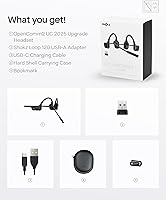
  • In the Box: Each unit ships with the headset, the Loop120 USB-A wireless adapter, a USB-C charging cable, and a hard shell plastic carrying case.
  • Dimensions: The packaged product measures 4.87 x 4.03 x 1.74 inches, compact enough to fit in a laptop bag side pocket alongside the included carrying case.

Related Reviews
Shokz OpenComm2 2025 Bone Conduction Headphones
87%
92%
Comfort for Extended Use
88%
Battery Life (Talk Time)
85%
Noise Cancellation Performance
75%
Sound Quality
87%
Durability (Water Resistance)
More
Cyseed WiFi Extender
73%
91%
Ease of Setup
67%
Signal Coverage
62%
Speed Performance
74%
Device Capacity
83%
Operating Mode Flexibility
More
Glamore 2025 Bluetooth Headphones
86%
87%
Noise Cancellation Effectiveness
92%
Battery Life
88%
Sound Quality
90%
Comfort for Extended Use
84%
Build Quality
More
ELEPHAS 2025 Mini Projector
83%
88%
Image Quality
94%
Portability
92%
Value for Money
90%
Ease of Use
83%
Brightness
More
iBooMas 2025 Massage Chair
85%
89%
Customization Options
90%
Comfort and Relaxation
85%
Ease of Assembly
74%
Footrest Extension
88%
Build Quality
More
MEER 2025 Mini Projector
82%
88%
Image Quality
91%
Ease of Setup
85%
Portability
75%
WiFi Connectivity
80%
Bluetooth Performance
More
Sennheiser Presence Grey UC
82%
88%
Microphone Quality
83%
Call Clarity & Audio Output
86%
Comfort & Wearability
74%
Dual Device Connectivity
91%
Battery Life
More
Speedwave WiFi Extender 2025
84%
91%
WiFi Coverage
94%
Ease of Setup
88%
Dual-Band Performance
85%
Connection Stability
74%
Speed Consistency
More
AILIHEN C90NEW-2025 Over-Ear Headphones
85%
85%
Sound Quality
88%
Comfort & Fit
80%
Noise Isolation
91%
Portability & Storage
82%
Build Quality
More
ENOMIR Smart Watch for Kids 2025
85%
92%
Value for Money
95%
Battery Life
88%
Ease of Use
85%
Health Monitoring Features
90%
Build Quality
More

FAQ

You can do either. The headset pairs directly via Bluetooth 5.1 to any compatible device, including laptops, phones, and tablets. The USB-A dongle is an optional but recommended upgrade for PC and Mac users who want a more stable, lower-latency connection — especially in offices with a lot of competing wireless signals. If your workplace restricts Bluetooth use, the dongle is the way to go.

In a typical home office or moderately quiet environment, the DSP noise cancellation does a solid job of keeping your voice front and center. In genuinely loud settings — a busy open-plan office, a household with kids, or a co-working space — some background noise can bleed through. It performs well for most users, but it is not a substitute for acoustic isolation if your environment is particularly chaotic.

At low to moderate volume levels, leakage is minimal and unlikely to bother anyone sitting more than an arm's length away. Turn it up past roughly 60 to 70 percent of maximum volume, and yes, people nearby can hear it. If you work in a very quiet shared space or small meeting room, keeping the volume conservative is genuinely necessary. It is an inherent characteristic of open-ear bone conduction, not a defect.

This is actually one of the strongest use cases for this open-ear headset. Because the transducers rest on your cheekbones and nothing wraps around or presses on your ears, glasses arms pass underneath without any conflict. Many glasses wearers specifically choose bone conduction headsets for this reason after years of discomfort with traditional over-ear designs.

Honestly, it is built for calls first and everything else second. Voice audio and spoken content sound clear and natural, but music listening reveals the limitations of bone conduction pretty quickly — bass is thin, the stereo image is modest, and high volumes can feel slightly buzzy against the cheekbones. If music is important to you, a traditional headset will serve you much better. Use this one for what it does best.

No setup required. Plug the USB-A dongle into your computer, power on the headset, and it connects automatically. Zoom recognizes it as a certified audio device, so your microphone and speaker settings populate correctly without any manual adjustment. The mute button on the headset also syncs with Zoom's mute state, which is a practical detail that matters when you are switching between calls quickly.

The 16-hour figure is accurate for continuous talk time under controlled conditions. In real-world use — where you might mix calls, background music, and idle time — most users land somewhere between 11 and 14 hours. If you use it primarily for calls with occasional audio, expect to charge it every one to two days depending on your schedule. The 5-minute quick charge feature helps bridge the gap if you forget.

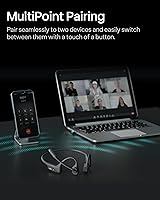
Yes, the headset pairs with iOS and Android devices via standard Bluetooth 5.1. Keep in mind that the USB dongle only works with PC and Mac — when you switch to your phone, you are using Bluetooth pairing. Some users maintain the dongle connection on their computer while also being paired to their phone simultaneously, which works well for handling personal calls without touching the computer setup.

The nickel-titanium frame has a good amount of flex and fits a wide range of head sizes comfortably out of the box. That said, a consistent minority of long-term owners with wider head dimensions do report that frame pressure builds gradually over months of daily use. If you have had comfort issues with headbands or wired headsets in the past, it is worth paying attention to fit during the first few weeks of ownership.

Replacement Loop120 USB-A dongles are available directly from Shokz and through major retailers, so sourcing a replacement is straightforward. The price is modest relative to the headset itself. One practical note: the included carrying case does not have a dedicated slot to secure the dongle, so it is worth keeping it plugged into your computer or in a small accessory pouch when not in use to avoid misplacing it during travel.