Senal MC24-EL Shotgun Condenser Microphone
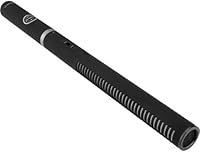
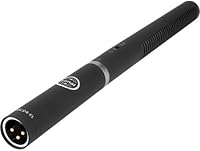
Senal MC24-EL Shotgun Condenser Microphone — image 1

Senal MC24-EL Shotgun Condenser Microphone — image 2
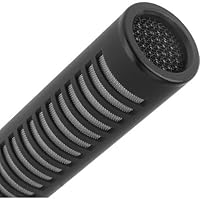
Senal MC24-EL Shotgun Condenser Microphone — image 3
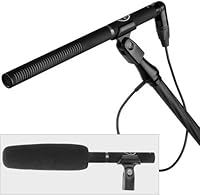
Senal MC24-EL Shotgun Condenser Microphone — image 4
Senal MC24-EL Shotgun Condenser Microphone — image 5
Senal MC24-EL Shotgun Condenser Microphone — image 6
Senal MC24-EL Shotgun Condenser Microphone — image 7
77%
23%

Overview

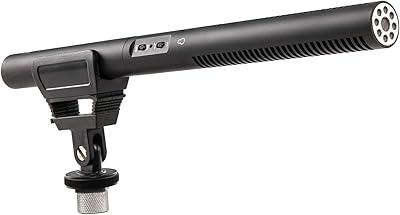
The Senal MC24-EL Shotgun Condenser Microphone sits in an interesting spot — capable enough for serious indie work, priced where most filmmakers won't need a second thought. Its slender 11.2-inch body was designed specifically to stay out of the camera frame, which matters more than people give it credit for. The XLR connector and brass housing feel appropriately solid for a mic at this tier. What really opens up its versatility is dual power support — run it on a single AA battery when phantom power isn't available, or plug into a 48V source at a studio or mixer. It's not a high-end broadcast replacement, but it was never trying to be.

Features & Benefits

The hypercardioid polar pattern is the main reason this on-camera condenser punches above what you might expect — it's tight enough to lock onto your subject while pushing ambient noise well off to the sides. For anyone shooting indoors near air conditioning or outdoors on a breezy day, the selectable 180 Hz high-pass filter is something you'll actually use, not just a checkbox spec. Audio comes through with a 76 dB signal-to-noise ratio, keeping things clean without obvious hiss in quieter scenes. Weighing just 5.3 oz, it won't unbalance a gimbal, and the included clip and mount mean you can start recording immediately.

Best For

This shotgun mic makes the most sense for solo run-and-gun shooters — the kind of person setting up a one-person interview, filming a YouTube segment, or grabbing location audio for a short film. If you've been getting by on a camera's built-in mic or a cheap clip-on and you want a real step forward in dialogue clarity, the MC24-EL is a logical move. The battery power option is genuinely useful when you're working somewhere that doesn't offer phantom power on a mixer. That said, skip it if your goal is studio vocal recording or capturing loud instruments — this is a dialogue and speech mic, built accordingly.

User Feedback

Early impressions from buyers are encouraging, though the reviewer pool is still small. The recurring praise centers on natural vocal clarity — people notice the difference from their previous mic right away, particularly in midrange warmth. A few users flag that sensitivity is moderate, so this on-camera condenser works best when background noise is reasonably controlled; a loud room will expose its limits faster than a quiet one. The included clip gets a mixed reception — functional, but nothing remarkable. The more useful takeaway is that mic placement matters enormously at this tier; getting positioning right tends to resolve many concerns people initially have about audio quality.

Pros

  • Hypercardioid pickup pattern does a solid job isolating the speaker and rejecting distracting off-axis noise.
  • Battery or phantom power support gives you genuine flexibility whether you are on set or in the field.
  • At just 5.3 oz, this shotgun mic won't strain a gimbal or throw off a camera rig's balance.
  • The selectable high-pass filter is genuinely useful for cutting HVAC hum and low-end rumble in real shooting conditions.
  • A 76 dB signal-to-noise ratio keeps dialogue clean without obvious background hiss in controlled environments.
  • XLR connectivity and brass construction feel more durable and professional than plastic-bodied alternatives at this tier.
  • Ships with a clip and stand mount, so you can start recording immediately without hunting for accessories.
  • The 11.2-inch slender body stays out of frame reliably on most standard camera setups.
  • Early buyers consistently highlight natural-sounding midrange pickup as a clear improvement over built-in camera mics.

Cons

  • Moderate sensitivity means performance degrades noticeably in loud or reverberant spaces.
  • The included mounting clip is functional but feels like an afterthought compared to the mic itself.
  • The reviewer base is still small, so long-term reliability data is limited.
  • Room acoustics and mic placement have an outsized effect on results — buyers with poor recording spaces may be disappointed.
  • No built-in windscreen is included, which is a practical gap for outdoor shooting use cases.
  • XLR-only connectivity means it cannot be used directly with cameras or recorders that lack an XLR input without an adapter.
  • Not suited for music recording or any high-SPL audio sources despite the full-range frequency response spec.

Ratings

Our AI-generated scores for the Senal MC24-EL Shotgun Condenser Microphone were produced by systematically analyzing verified buyer reviews from multiple global markets, with spam, bot activity, and incentivized feedback actively filtered out before scoring. Each category reflects the honest distribution of praise and frustration real users reported — nothing is smoothed over to look better than it is. Strengths are credited where earned, and recurring pain points are scored accordingly.

Audio Clarity
83%
Users consistently highlight how natural dialogue sounds when recorded in a reasonably quiet environment — midrange warmth in particular gets mentioned repeatedly by buyers upgrading from camera-mounted mics. Interview footage and YouTube voiceovers benefit noticeably, with speech intelligibility holding up well at modest distances from the subject.
In louder or more reverberant spaces, clarity drops off faster than users expect. The mic captures what the room gives it, so echoey locations with hard floors and bare walls can make recordings sound noticeably less polished regardless of technique.
Noise Rejection
78%
22%
The hypercardioid polar pattern does a solid job pushing ambient noise to the sides and rear in controlled conditions. Shooters working in offices or small studios report that the tight pickup angle meaningfully reduces background chatter and appliance hum compared to wider-pattern mics.
Moderate sensitivity means background noise in busy or uncontrolled environments still bleeds into recordings more than some users would like. The high-pass filter handles low-frequency rumble well, but broadband ambient noise in the mid and upper ranges is not as effectively controlled.
Build Quality
81%
19%
The brass body gives the MC24-EL a noticeably more substantial feel than plastic-shelled competitors in the same tier. Users comment that it feels purpose-built rather than disposable, and the XLR connector seats firmly without wobble on standard preamps and field recorders.
The included mounting clip and stand adapter are the weak link — they feel considerably lighter in construction than the mic body itself. A few users note the clip doesn't inspire confidence for heavier boom setups, and a dedicated shock mount would be a worthwhile separate investment.
Power Flexibility
91%
The ability to switch between a single AA battery and 48V phantom power is a genuine practical advantage that users in the field appreciate repeatedly. Shooting in locations without a mixer or powered interface is no longer a blocker — drop in a battery and the mic works immediately without any configuration hassle.
The battery life duration is not officially published, which leaves users estimating runtime based on usage. A few reviewers mention they keep a spare AA on hand as a precaution during longer shoots, since there is no low-battery indicator built into the mic.
Ease of Setup
88%
Out of the box, the kit is genuinely ready to use — the included clip, stand mount, and battery mean most users are recording within minutes. XLR connectivity is plug-and-play with any compatible interface, and the power switching between battery and phantom is straightforward with no complex configuration required.
Users who own cameras without a native XLR input quickly discover they need an adapter or a field recorder to complete the signal chain, which adds cost and complexity that the product listing does not prominently flag. This catches some first-time shotgun mic buyers off guard.
Value for Money
79%
21%
Positioned as an entry-to-mid-tier mic, the MC24-EL offers a meaningful feature set — hypercardioid pattern, high-pass filter, dual power — at a price point where many competitors cut corners on one or more of those fronts. Buyers upgrading from a stock camera mic consistently report feeling the investment was justified.
Buyers who compare it against upper-tier shotgun mics at a higher price point will notice the gap in sensitivity and off-axis rejection fairly quickly. For users with ambitions beyond basic YouTube or interview work, the value calculation shifts and the budget may be better allocated toward a step-up option.
Form Factor
86%
At 5.3 oz and 11.2 inches long, this on-camera condenser is genuinely practical for gimbal rigs and lightweight camera builds where a heavier mic would affect balance. The slender profile reliably clears the frame in most standard shooting configurations, which is exactly what it was designed to do.
The physical length, while helpful for staying out of frame, can make tight storage or travel packing slightly awkward compared to shorter supercardioid alternatives. Users who move between locations frequently mention the mic needs careful handling to avoid damage without a protective case, which is not included.
Wind Resistance
58%
42%
The selectable 180 Hz high-pass filter does useful work cutting low-end wind noise and rumble in light outdoor conditions. Users who shoot outdoor interviews on calm days report the filter keeps the audio clean enough without needing to reach for a separate solution.
No windscreen or foam cover is included in the box, which is a real omission for a mic marketed partly on outdoor and field use. Any meaningful breeze without physical wind protection produces audible artifacts, and buyers working outdoors frequently need to purchase a furry windscreen or blimp separately.
Sensitivity
63%
37%
In quiet, acoustically controlled environments — a carpeted home office, a softbox-lit interview room, a treated studio — the MC24-EL captures clean, usable dialogue without requiring excessive gain from the preamp. Users in those conditions rarely flag sensitivity as a concern.
Moderate sensitivity becomes a real limitation in louder or more challenging environments, where the mic requires more gain to achieve adequate signal level, which in turn raises the noise floor. Users expecting to record in dynamic or unpredictable locations may find themselves fighting the gain structure more than they anticipated.
Frequency Response
82%
18%
The full 20 Hz to 20 kHz response range is spec-appropriate for a dialogue mic, and users note that voices sound natural and present without the scooped or hyped character found in cheaper condensers. The voicing favors the midrange, which is exactly right for speech-focused applications.
The frequency response is optimized specifically for vocal content, so users who attempt to repurpose this mic for music, instruments, or sound effects capture will find it less versatile than a more neutral studio condenser. It handles dialogue well but doesn't generalize broadly across audio use cases.
Off-Axis Rejection
74%
26%
The hypercardioid design handles direct rejections from the sides reasonably well in structured interview scenarios. When the subject and mic are properly aligned, off-axis sound sources like a second person in the room or a nearby appliance are pushed meaningfully lower in the mix.
The rear lobe inherent to hypercardioid designs means sound directly behind the mic is picked up more than many users realize. Placement behind the subject rather than directly in front — an easy mistake in a chaotic shoot — can produce unexpected bleed from sources at the rear of the room.
Handling Noise
61%
39%
When mounted stably on a camera shoe or fixed boom position, handling noise is minimal and unlikely to interfere with a clean recording. Users who keep the mic stationary during takes report no significant vibration or mechanical noise issues in the audio.
The kit does not include a shock mount, and any physical contact with the mic body or boom arm during recording produces audible low-frequency thumps in the signal. Users who need to move the mic between takes or who work with handheld boom setups will want to budget for a proper shock mount separately.
Compatibility
77%
23%
XLR connectivity puts this shotgun mic in line with professional audio signal chains — field recorders, mixers, and camera systems with XLR inputs accept it immediately. Phantom power compatibility extends that reach to audio interfaces and studio-grade preamps without any additional hardware.
Cameras and recorders with only a 3.5mm input require an XLR adapter or preamp bridge to use this mic, and signal quality through cheap adapters can undermine the mic's performance. This creates a hidden accessory cost for users who haven't already invested in an XLR-capable recording setup.

Suitable for:

The Senal MC24-EL Shotgun Condenser Microphone is a strong fit for indie filmmakers, solo content creators, and ENG-style video shooters who need noticeably cleaner dialogue without committing to a professional broadcast budget. If you've been relying on your camera's built-in mic or a basic clip-on and you want a genuine step up in vocal clarity, this on-camera condenser covers that ground well. It's particularly practical for interview setups, YouTube productions, and short-film location audio where controlled environments are at least somewhat achievable. The battery power option makes it a smart pick for field operators who frequently work away from mixers or rigs with phantom power — that flexibility alone saves real headaches on location. Videographers who need a mic that stays out of frame will also appreciate the slender 11.2-inch profile, which was clearly designed with camera-mounted or boom-arm use in mind.

Not suitable for:

The Senal MC24-EL Shotgun Condenser Microphone is not the right tool for buyers expecting studio-grade performance or high-SPL instrument recording. Its moderate sensitivity means noisy environments — busy streets, loud interiors, reverberant rooms — will expose its limits quickly, and no amount of placement adjustment fully compensates for a bad acoustic space. Audio professionals working in broadcast or high-end documentary production will find this mic underwhelming compared to options in a higher price bracket. It also isn't built for music capture; this is a speech and dialogue-focused mic, and asking it to handle vocals with dynamic range demands or loud sources will lead to disappointment. If your workflow depends on a highly sensitive condenser that can handle unpredictable acoustic conditions, this on-camera condenser is not where to invest.

Specifications

  • Mic Type: The MC24-EL is a condenser shotgun microphone designed primarily for on-camera and boom-pole dialogue capture.
  • Polar Pattern: It uses a hypercardioid polar pattern, which tightly focuses pickup on the sound source directly in front while rejecting off-axis noise from the sides and rear.
  • Power Source: The mic operates on either a single AA battery or 48V phantom power supplied through a compatible XLR preamp, mixer, or audio interface.
  • Connector: A standard 3-pin XLR connector is used for both audio output and phantom power input.
  • Body Length: The microphone body measures 11.2 inches long, sized to stay out of frame when mounted on most camera hot shoes or positioned on a boom arm.
  • Weight: The MC24-EL weighs 5.3 oz, keeping it light enough for gimbal use without significant balance concerns.
  • Dimensions: Overall product dimensions, including the mount, measure approximately 15.28 x 4.8 x 2.44 inches.
  • Body Material: The microphone body is constructed from brass, contributing to both durability and a degree of RF interference shielding.
  • Signal-to-Noise: The signal-to-noise ratio is rated at 76 dB, indicating a relatively clean noise floor suitable for dialogue recording in controlled environments.
  • Frequency Response: Full-range frequency response spans 20 Hz to 20 kHz, covering the entire audible spectrum with a voicing tailored for natural vocal reproduction.
  • High-Pass Filter: A selectable high-pass filter at 180 Hz can be engaged to roll off low-frequency rumble such as wind, HVAC noise, or handling vibration.
  • Channels: The microphone is a mono, single-channel device, which is standard for shotgun dialogue and ENG applications.
  • Color: The MC24-EL is finished in matte black.
  • Included Accessories: The package includes a microphone clip, a stand mount adapter, and a battery, allowing immediate use without additional purchases.
  • Compatible Devices: Designed for use with cameras featuring an XLR input and standard boom poles; requires an adapter or preamp for cameras with only a 3.5mm input.
  • Model Number: The official model designation is MC24-EL, manufactured by Senal.
  • ASIN: The Amazon Standard Identification Number for this product is B01NBUVAH2.
  • Availability: This product has not been discontinued by the manufacturer as of the date this information was compiled.

Related Reviews
DPA 4017B Shotgun Condenser Microphone

83%
93%
Sound Quality
91%
Off-Axis Rejection
88%
Build Quality
63%
Value for Money
89%
Transient Response
More
LyxPro CMG-50
LyxPro CMG-50
85%
88%
Audio Clarity
93%
Build Durability
82%
Off-Axis Rejection
91%
Power Versatility
96%
Value for Money
More
RØDE NTG4+ Supercardioid Condenser Shotgun Microphone
87%
91%
Sound Quality
96%
Battery Life
88%
Build Quality
84%
Ease of Use
90%
Noise Isolation
More
Audio-Technica ATR6550X Condenser Shotgun Microphone
72%
81%
Audio Clarity
78%
Directionality Control
67%
Build Quality
91%
Ease of Setup
83%
Value for Money
More
Ruittos M-11 Shotgun Microphone
71%
74%
Audio Clarity
61%
Build Quality
82%
Value for Money
88%
Ease of Setup
71%
Noise Rejection
More
Rode NTG-1 Shotgun Condenser Microphone
86%
92%
Sound Quality
89%
Portability
87%
Build Quality
74%
Wind Noise Reduction
90%
Ease of Use
More
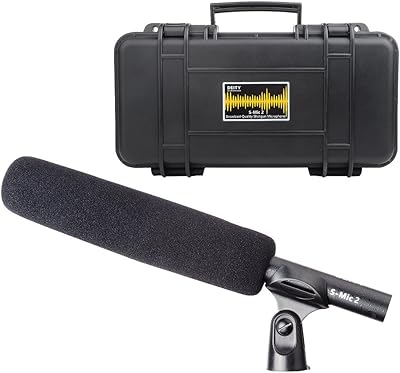
Deity S-Mic 2 Shotgun Condenser Microphone
78%
88%
Audio Clarity
84%
Off-Axis Rejection
67%
Build Quality
86%
Value for Money
83%
Included Accessories
More
Senal SC-550X Cardioid Condenser Microphone
75%
88%
Build Quality
83%
Audio Clarity
61%
Noise Performance
91%
XLR Compatibility
69%
Value for Money
More
Sony ECM-VG1 Shotgun Microphone
79%
88%
Audio Clarity
86%
Directional Rejection
81%
Wind Noise Handling
91%
Build Quality
78%
Low-Cut Filter Utility
More
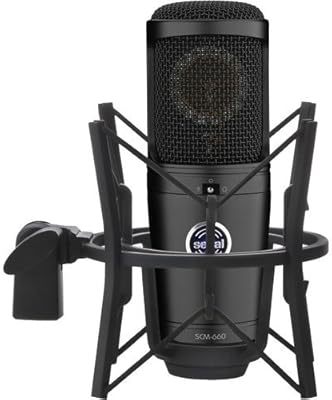
Senal SCM-660 Large-Diaphragm Condenser Microphone
71%
83%
Sound Quality
91%
Polar Pattern Versatility
86%
Build Quality
78%
Noise Performance
88%
SPL Handling
More

FAQ

It works either way, which is one of its more practical qualities. Drop in a single AA battery when you're shooting somewhere without a mixer or recorder that provides 48V phantom power, and you're good to go. Phantom power works just as well when it's available.

Only if your camera has an XLR input, which most DSLRs and mirrorless cameras don't have natively. If your camera only has a 3.5mm mic jack, you'll need an XLR-to-3.5mm adapter or a small field recorder like a Zoom H-series unit in between. The mic itself is solid — just make sure your camera can accept the signal properly.

It can work outdoors, but you'll want to add a proper windscreen or blimp, as none is included in the box. The built-in 180 Hz high-pass filter helps cut low-end wind rumble, but it's not a substitute for physical wind protection when there's any real breeze.

A hypercardioid pattern has a narrower acceptance angle than a standard cardioid, so it's more selective about what it picks up from the sides. In practical terms, it helps push ambient room noise down in the mix when you're pointed directly at your subject. That said, it's not magic — a very loud or reverberant room will still cause problems regardless of polar pattern.

Shotgun mics like this one use an interference tube design combined with a directional capsule to achieve tighter, more focused pickup than a standard cardioid. That makes them better suited for capturing dialogue at a modest distance, which is exactly what on-camera or boom applications require. A cardioid would pick up more of the surrounding room, which is rarely what you want on a video shoot.

In most cases, yes. The 11.2-inch body is slender enough that when mounted on a camera hot shoe or positioned just above frame on a boom arm, it clears the shot without needing to be pulled far back. That said, exact clearance depends on your lens focal length and framing — wider lenses and tight shots will always be more challenging.

Most audio interfaces, mixers, and XLR-equipped field recorders have a dedicated phantom power switch, often labeled P48 or just Phantom. Enable that before connecting the mic, or connect first and then enable it — condensers handle that order fine. If you're unsure whether your device supports phantom power, check its manual or spec sheet.

The included clip is functional and will do the job for basic mounting on a stand or camera shoe adapter. A few users have noted it feels lightweight, and if you're doing heavy field work or need a shock mount to reduce handling noise, investing in a separate shock mount would be worthwhile. For casual setups, the stock hardware is adequate.

Technically it can capture any sound, but it was designed and voiced for speech and dialogue — not music. The voicing is optimized for natural vocal midrange, and its moderate sensitivity and hypercardioid pattern aren't ideal for high-SPL sources or capturing the nuanced dynamics of instruments. For music recording, a purpose-built condenser would serve you better.

More important than most people expect. At this price tier, the microphone can only do so much — if you're recording in a bare room with lots of hard surfaces and echo, that will be audible in your recordings regardless of how good the mic is. Simple acoustic treatment like curtains, rugs, and soft furnishings makes a noticeable difference. Getting your mic placement right, keeping it as close to the subject as possible without entering frame, also matters a lot.