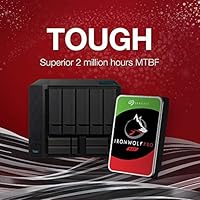
Overview

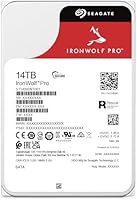
The Seagate IronWolf Pro 14TB NAS Hard Drive sits at the top of Seagate's NAS-focused lineup, stepping above the standard IronWolf with higher workload tolerances and an extended warranty package aimed squarely at professional and prosumer environments. Unlike a repurposed desktop drive, this IronWolf Pro drive is engineered from the ground up for always-on NAS operation, where multiple users hammer the system simultaneously and downtime is genuinely costly. At 14TB, it targets buyers who need serious capacity without juggling a sprawling array of smaller drives. Expect a premium price to match — this is not a casual purchase, but a deliberate investment in dependable, high-capacity shared storage.

Features & Benefits

Seagate's Pro-tier NAS drive uses CMR recording technology paired with AgileArray firmware, which means data is written reliably without the fragmentation risks associated with SMR drives — important when RAID rebuild integrity is on the line. The 300TB/year workload rating translates practically to a drive that can handle continuous heavy read/write cycles without being pushed beyond its design limits. Spinning at 7200 RPM with a 256MB cache, the 14TB Pro NAS HDD delivers strong sequential throughput across multi-drive arrays. The built-in RV sensors actively compensate for vibration caused by neighboring drives in dense enclosures, and the five-year warranty with three-year Rescue Data Recovery coverage adds real peace of mind.

Best For

This IronWolf Pro drive is a strong fit for small businesses and prosumers running 4-bay to 8-bay NAS enclosures under heavy simultaneous load — think shared file servers, surveillance storage, or collaborative media workflows. Video editors and photographers archiving large raw files locally will appreciate the capacity headroom. Home lab users building always-on Plex servers or redundant backup systems will find the workload rating reassuring. IT administrators configuring RAID 5 or RAID 6 arrays benefit directly from the RV sensor and firmware tuning. That said, if you just need extra storage for a single desktop machine, the premium cost is hard to justify.

User Feedback

Buyer sentiment on this drive lands at 3.6 out of 5 stars across 136 ratings — honestly lower than you would expect for a premium NAS drive at this price. Satisfied users consistently highlight the large capacity, strong sequential performance, and confidence the warranty coverage provides. On the other side, a meaningful number of buyers reported early unit failures and noted that noise and heat levels run higher than competing NAS-optimized drives under sustained load. Worth noting: some negative experiences appear tied to enclosure incompatibility or configuration issues rather than drive defects. The Rescue Data Recovery service gets repeated mentions as a valuable safety net when things do go wrong.

Pros

  • 14TB of capacity removes the need to juggle multiple smaller drives in a growing NAS array.
  • CMR recording technology ensures RAID rebuilds are reliable and data integrity is not compromised.
  • The 300TB/year workload rating means this IronWolf Pro drive is built to run hard, every day, without hitting design limits.
  • Built-in RV sensors actively reduce vibration interference in multi-bay enclosures, protecting both performance and drive longevity.
  • A five-year warranty is meaningfully longer than most competing NAS drives offer at this tier.
  • Three-year Rescue Data Recovery Services provides a real safety net if a unit does fail unexpectedly.
  • AgileArray firmware is tuned specifically for NAS compatibility, reducing the setup friction common with repurposed desktop drives.
  • 7200 RPM spin speed with a 256MB cache delivers strong sequential throughput across RAID configurations.
  • Broad compatibility with popular Synology, QNAP, and other major NAS enclosures makes integration straightforward.

Cons

  • The 3.6-star average rating is below what buyers reasonably expect from a premium-priced NAS drive.
  • A notable number of owners have reported early unit failures, which is a serious concern at this price point.
  • Noise levels under sustained load run higher than several competing NAS-class drives on the market.
  • Heat output during continuous operation has been flagged by multiple owners, which may matter in tightly enclosed NAS bays.
  • The Amazon product listing contains mislabeled fields describing it as an SSD — buyers must know this is a traditional spinning hard drive.
  • Premium pricing delivers no real benefit if the drive is used outside a proper multi-drive NAS environment.
  • Rescue Data Recovery Services, while valuable, requires engaging a support process that adds time and friction during an already stressful data loss event.
  • Some negative owner experiences appear rooted in enclosure incompatibility, suggesting setup research is non-negotiable before buying.

Ratings

The Seagate IronWolf Pro 14TB NAS Hard Drive has been evaluated by our AI rating system after analyzing verified owner reviews from across global marketplaces, actively filtering out incentivized, duplicate, and bot-generated submissions to surface what real buyers actually experience. Scores reflect an honest synthesis of both the genuine strengths that keep professionals coming back to this drive and the recurring pain points that have pushed its overall rating below what you would expect from a premium NAS product. Nothing here is rounded up to make the numbers look prettier than the evidence supports.

Storage Capacity
93%
At 14TB, this drive gives NAS users serious breathing room — enough to store tens of thousands of RAW photo files, hundreds of hours of 4K footage, or years of incremental backups without constantly reshuffling data across drives. Buyers running media servers or multi-user file shares consistently call the capacity one of the clearest reasons they chose this drive over smaller alternatives.
The only real limitation here is cost per terabyte at this capacity tier, which sits higher than comparable large-capacity desktop drives. For users who do not actually need 14TB, the value equation weakens considerably and smaller IronWolf Pro options may serve better.
NAS Compatibility
88%
The AgileArray firmware tuning means this drive slots into Synology, QNAP, and other major NAS enclosures with minimal friction, and it appears on the compatibility lists of most leading NAS manufacturers. Users running multi-bay setups report that the drive is recognized and configured cleanly without needing workarounds.
A portion of negative reviews trace back directly to buyers installing the drive in enclosures that were not validated for it or running outdated NAS firmware. Compatibility is strong when the setup is correct, but the drive offers little tolerance for mismatched environments.
Sequential Throughput
82%
18%
The combination of 7200 RPM spin speed and a 256MB cache delivers solid sequential read and write performance that holds up well during sustained transfers — particularly useful for video streaming from a Plex server or large file moves across a RAID array. Users copying multi-gigabyte files to and from the NAS regularly comment that speeds feel consistent and predictable.
Under highly random workloads with many small simultaneous requests — as opposed to large sequential transfers — the performance advantage over slower NAS drives narrows noticeably. This is a spinning disk, not flash storage, and that ceiling is real in certain workload profiles.
RAID Reliability
79%
21%
CMR recording technology keeps RAID rebuilds predictable and clean, which matters enormously when a drive in an array fails and the system needs to reconstruct data across remaining disks without triggering additional errors. IT administrators and home lab users building RAID 5 and RAID 6 arrays report confidence in the rebuild behavior compared to SMR-based alternatives.
The reported early failure rate among a subset of buyers introduces doubt about long-term reliability in RAID deployments where a dead drive means degraded array status and increased risk. For a drive positioned as a professional reliability tool, any pattern of early failures is a meaningful concern.
Vibration Compensation
84%
The built-in rotational vibration sensors make a tangible difference in dense multi-bay enclosures where neighboring spinning drives can create enough interference to degrade tracking accuracy. Users with 6-bay and 8-bay NAS systems note that performance stays stable even when all bays are populated, which is not always the case with drives lacking RV compensation.
The benefit is effectively invisible in single-drive or two-drive setups, making it a feature that only pays off in specific deployment contexts. Buyers who are not running dense multi-drive arrays are paying for a capability they will never actually use.
Noise Level
58%
42%
Under light loads — spinning idle or handling occasional file reads — the drive is reasonably quiet and unlikely to draw attention in a home lab or small office setting. Some users in noise-tolerant server room environments report no issues at all.
Under sustained heavy workloads, multiple owners flag this drive as notably louder than competing NAS-class drives, including the standard IronWolf. For buyers placing a NAS in a home office, bedroom, or open workspace, the acoustic performance under load is a genuine quality-of-life issue worth investigating before committing.
Heat Management
61%
39%
In enclosures with adequate airflow and active cooling, the drive operates within acceptable temperature ranges and does not trigger thermal warnings during normal NAS operation. Buyers with well-ventilated chassis report no heat-related issues over extended periods.
Several owners report elevated temperatures under continuous heavy workloads, particularly in tightly packed enclosures with limited airflow. Sustained heat can accelerate wear on spinning drives over years of 24x7 operation, and the reports are frequent enough to warrant attention when planning an enclosure build.
Warranty Coverage
91%
A five-year limited warranty is longer than the three-year coverage that most competing NAS drives offer, and it signals genuine confidence in the product's longevity — at least from the manufacturer's side. Buyers who have had to invoke the warranty describe the process as functional and the outcome as acceptable, which is more than can be said for some competitor warranty programs.
A warranty only helps after something has already gone wrong, and it does not compensate for the downtime, RAID degradation, and recovery effort that come with a failed drive in a live NAS environment. The five-year term is meaningful, but it does not neutralize the frustration of an early failure.
Rescue Data Recovery
86%
The three-year Rescue Data Recovery Services inclusion is a genuine differentiator that buyers frequently mention as a deciding factor — it provides a realistic last resort for data loss scenarios that go beyond what RAID alone can protect against. Users who have had to use the service cite it as a meaningful safety net that they were glad to have.
The service comes with limitations around what causes of data loss are actually covered, and activation requires engaging Seagate's support process which some buyers find cumbersome. It is a useful addition but works best as a complement to disciplined local and offsite backup practices, not a replacement.
Value for Money
63%
37%
For buyers who genuinely need high-capacity, always-on NAS storage with RAID reliability, the combination of features — CMR, RV sensors, extended warranty, and data recovery services — justifies the premium over cheaper alternatives that cut corners on NAS-specific engineering. Professional and prosumer users running demanding workloads tend to view the cost as appropriate for what they get.
The 3.6-star average rating makes it hard to call this exceptional value at a premium price point, particularly given the reported early failure rate. Buyers paying top-tier prices reasonably expect top-tier reliability, and the gap between expectation and experience is the core reason value scores fall below what the spec sheet would suggest.
Setup Experience
77%
23%
Installing the drive into a compatible NAS enclosure and getting it recognized by the NAS operating system is generally smooth — the drive follows standard SATA conventions and does not require any special configuration steps beyond what the NAS software guides you through. Most buyers report a clean first-boot recognition without any troubleshooting.
A meaningful slice of negative reviews involve setup problems that, on closer inspection, relate to enclosure firmware not supporting drives above a certain capacity or incompatible bay configurations. The drive itself is not always at fault, but the lack of clearer guidance around these scenarios creates friction for less experienced buyers.
Long-term Durability
62%
38%
Users who have run this IronWolf Pro drive for multiple years in stable, well-configured NAS environments report consistent performance with no degradation, and the five-year warranty provides a reasonable backstop against defects that surface over time. The 300TB/year workload rating suggests the drive is not close to its limits under typical prosumer use.
The pattern of early failures reported by a notable subset of buyers raises real questions about unit-to-unit consistency from the factory. Longevity is difficult to assess at the population level when some units fail within weeks while others run cleanly for years — that variance is uncomfortable for buyers making a significant storage investment.
Build & Design
74%
26%
The drive follows the standard 3.5-inch form factor with solid physical construction, and there are no reports of the kind of cosmetic or structural issues that sometimes surface with budget-tier drives. It fits cleanly into standard trays and mounts without play or alignment issues.
As a sealed internal HDD, there is little to differentiate this drive visually or physically from any other 3.5-inch disk — the design is purely functional. Buyers evaluating drives purely on build feel will find no meaningful differentiators here compared to other professional-grade NAS options.

Suitable for:

The Seagate IronWolf Pro 14TB NAS Hard Drive is purpose-built for buyers who run demanding, always-on shared storage environments and need a drive that can genuinely keep up. Small business owners operating multi-bay NAS enclosures — whether for file sharing, surveillance footage, or team collaboration — will find the 300TB/year workload rating and CMR recording technology directly relevant to their needs. Content creators, video editors, and photographers who store large local archives and cannot afford data loss will benefit from both the raw capacity and the included Rescue Data Recovery Services. Home lab enthusiasts building serious Plex servers, off-site backup targets, or redundant RAID arrays will appreciate the enterprise-adjacent reliability without the full enterprise price tag. IT administrators configuring RAID 5 or RAID 6 arrays in dense enclosures get practical value from the built-in rotational vibration sensors, which actively reduce the performance degradation that occurs when multiple spinning drives sit side by side.

Not suitable for:

The Seagate IronWolf Pro 14TB NAS Hard Drive is a poor match for buyers who simply need extra storage for a single desktop or laptop computer. The NAS-optimized firmware, workload tolerances, and vibration compensation are features that only pay off inside a multi-drive NAS enclosure running under real load — none of those advantages translate to a casual single-drive setup. Budget-conscious buyers should also think carefully here, as the premium pricing reflects a professional use case, and cheaper desktop or even standard NAS drives will serve light home users just as well at a lower cost. Those sensitive to drive noise or heat should know that some owners report this drive runs louder and warmer than competing NAS options under sustained workloads. And buyers who have had bad experiences with drive reliability should weigh the real-world 3.6-star rating carefully — early failures have been reported, and while warranty coverage helps, it does not eliminate the disruption of a failed unit.

Specifications

  • Capacity: This drive offers 14TB of usable storage, making it one of the higher-capacity options in the IronWolf Pro lineup for NAS deployments.
  • Form Factor: It uses the standard 3.5-inch internal form factor, compatible with the vast majority of desktop NAS enclosures on the market.
  • Interface: Connectivity is handled via SATA 6Gb/s (SATA/600), ensuring broad compatibility with modern NAS enclosures and motherboards.
  • Rotational Speed: The drive spins at 7200 RPM, delivering strong sequential read and write performance compared to slower 5400 RPM NAS alternatives.
  • Cache: A 256MB cache buffer helps sustain throughput during intensive multi-user read and write operations in RAID environments.
  • Recording Tech: CMR (Conventional Magnetic Recording) technology is used, providing reliable data placement and predictable RAID rebuild behavior.
  • Workload Rating: The annual workload rating is 300TB per year, designed for continuous heavy use across always-on shared storage environments.
  • Operation: The drive is rated for 24x7 continuous operation, unlike desktop HDDs which are designed for intermittent, lighter duty cycles.
  • Vibration Sensors: Built-in rotational vibration (RV) sensors actively detect and compensate for vibration caused by adjacent drives in multi-bay enclosures.
  • NAS Firmware: AgileArray firmware optimizes the drive for NAS-specific workloads, improving RAID reliability and compatibility with leading NAS operating systems.
  • RAID Support: The drive fully supports RAID configurations including RAID 0, 1, 5, 6, and 10, making it appropriate for redundant array deployments.
  • Warranty: Seagate provides a five-year limited warranty, which is longer than the three-year coverage typically offered on standard NAS-class drives.
  • Data Recovery: Three years of Seagate Rescue Data Recovery Services are included, covering accidental deletion, corruption, and certain physical drive failures.
  • Dimensions: The drive measures 5.79 x 4.01 x 1.03 inches, fitting standard 3.5-inch drive bays without modification.
  • Weight: At 1.51 pounds, the drive falls within the normal weight range for high-capacity 3.5-inch spinning hard drives.
  • Drive Type: This is a traditional spinning hard disk drive (HDD); despite some mislabeled fields in certain listings, it is not a solid-state drive.
  • Compatible Devices: Primarily designed for NAS enclosures from brands such as Synology, QNAP, and others; also physically compatible with desktop systems.
  • Manufacturer: Manufactured by Seagate Technology, a long-established producer of consumer, prosumer, and enterprise-grade storage solutions.

Related Reviews
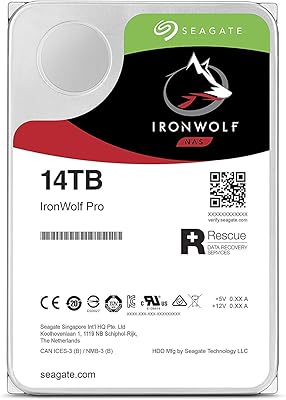
Seagate IronWolf Pro 14TB NAS Internal Hard Drive
84%
94%
Performance under Load
91%
Reliability for 24/7 Operation
89%
Workload Durability
83%
Ease of Setup
80%
Compatibility with NAS Systems
More
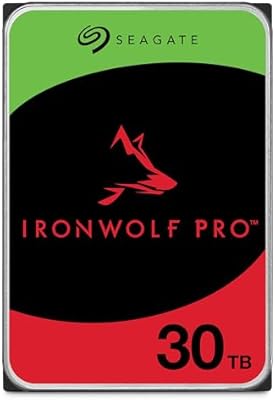
Seagate IronWolf Pro 30TB (ST30000NT011)
83%
98%
Storage Density
92%
Sustained Throughput
89%
Multi-Bay Stability
57%
Acoustic Profile
94%
Reliability & Support
More
Seagate IronWolf 3TB NAS Hard Drive
88%
91%
Performance in RAID Setups
87%
Reliability Over Time
85%
Ease of Setup
88%
Data Transfer Speed
84%
Noise and Vibration
More
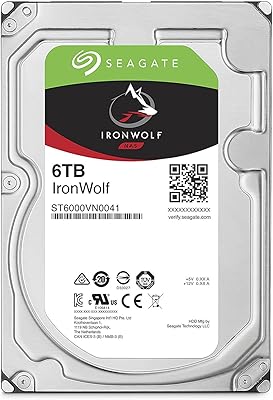
Seagate IronWolf 6TB NAS Hard Drive
87%
89%
Performance
91%
Reliability
85%
Setup/Installation
87%
Build Quality
75%
Noise Level
More
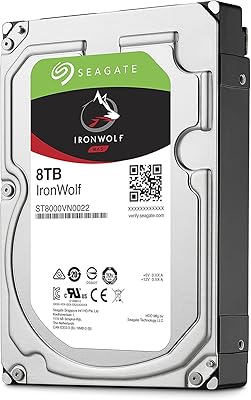
Seagate IronWolf 8TB NAS Internal Hard Drive
88%
88%
Performance
92%
Reliability
85%
Ease of Setup
89%
Data Transfer Speed
94%
Noise Levels
More
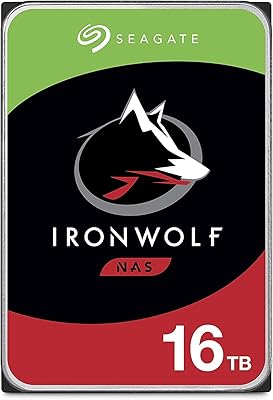
Seagate IronWolf 16TB NAS Hard Drive
80%
91%
RAID Compatibility
88%
NAS Enclosure Compatibility
83%
Sustained Read/Write Performance
74%
Long-Term Reliability
86%
Noise & Vibration
More
Seagate IronWolf 12TB NAS Internal Hard Drive
82%
93%
NAS Compatibility
84%
Long-Term Reliability
91%
Data Integrity & CMR Technology
82%
Read/Write Performance
88%
Vibration & Noise Management
More
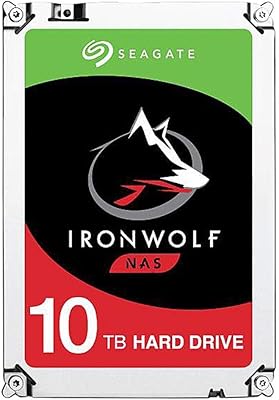
Seagate IronWolf 10TB NAS Internal Hard Drive
87%
89%
Performance & Speed
93%
Reliability & Durability
65%
Ease of Setup
88%
Noise & Vibration
91%
RAID & Multi-user Compatibility
More
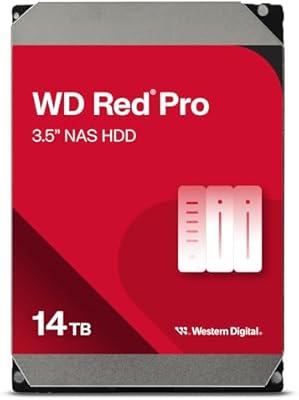
Western Digital WD Red Pro 14TB NAS Hard Drive
82%
91%
Long-Term Reliability
88%
Sustained Read/Write Performance
89%
NAS Compatibility
83%
Noise & Vibration
74%
Heat Management
More
Seagate Expansion 14TB Desktop Hard Drive
83%
96%
Storage Capacity
89%
Data Transfer Speed (USB 3.0)
92%
Setup & Installation
85%
Build Quality
90%
Compatibility (Windows & Mac)
More

FAQ

In most cases, yes. The IronWolf Pro lineup is specifically validated against a wide range of Synology and QNAP enclosures. That said, it is always worth checking the compatibility list published by your NAS manufacturer before buying, particularly if you are running an older enclosure model.

It is a traditional spinning hard disk drive. Some online listings incorrectly label it as a solid-state drive in certain fields, which is a listing error. Inside the casing are physical spinning platters — there is no flash memory involved.

It means the drive is engineered to read and write up to 300 terabytes of data annually without exceeding its design limits. For context, a busy small business NAS or an always-on home lab server would typically come nowhere near that ceiling, which means the drive has plenty of headroom for sustained daily use.

Physically, yes — it will connect and work in a desktop PC. Practically, it is not the best use of the money. The NAS-specific firmware tuning and vibration compensation features add cost that brings no real benefit outside a multi-drive NAS environment. A standard desktop hard drive would serve a solo desktop setup just as well for less.

CMR writes data in non-overlapping tracks, which keeps write operations predictable and fast. SMR drives overlap tracks to pack in more data, but this can slow things dramatically during RAID rebuilds. For any RAID setup, CMR is the safer, more reliable choice — rebuilds are faster and far less likely to trigger timeout errors that can cause secondary drive failures.

It is worth taking seriously. A portion of negative reviews cite early drive failures, and that is not something to dismiss for a drive at this price point. That said, some complaints appear to stem from enclosure incompatibility or configuration issues rather than defective hardware. Reading through NAS-focused forums like the Synology subreddit or ServeTheHome can give you a more balanced picture than Amazon reviews alone.

When multiple hard drives spin simultaneously inside a NAS enclosure, they generate vibrations that can interfere with each other's read and write heads, degrading performance or causing errors. The RV sensor detects that vibration in real time and allows the drive's firmware to compensate, keeping the heads tracking accurately even under noisy multi-drive conditions.

You register the drive with Seagate and, if you experience data loss from covered causes such as accidental deletion, corruption, or mechanical failure, you can ship the drive to Seagate's recovery lab. Coverage lasts three years from purchase. It is not a substitute for proper backups, but it is a meaningful last resort that most competing NAS drives do not include.

Several owners have noted it runs louder than some competing NAS drives, particularly under sustained read and write loads. If your NAS enclosure sits in a quiet room or open office space, that is worth factoring in. Enclosures with good vibration dampening and sound insulation can help reduce audible noise significantly.

Generally no special configuration is required beyond what your NAS operating system guides you through. The AgileArray firmware handles NAS-specific optimizations automatically. Just make sure your enclosure recognizes drives above 8TB if you are running older firmware on the NAS itself, and always update your enclosure firmware before installing new high-capacity drives.