Overview

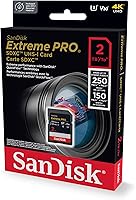
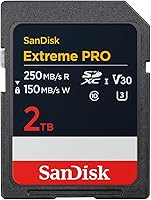
The SanDisk Extreme PRO 2TB SDXC Memory Card occupies the top tier of SanDisk's SD lineup, built for photographers and videographers who genuinely need both high capacity and fast transfer in a single card. What sets it apart from the standard Extreme is QuickFlow Technology, which allows read performance to exceed the conventional UHS-I ceiling — a meaningful difference when you're offloading hundreds of gigabytes onto a laptop after a long day in the field. It holds the #1 bestseller rank in its category with close to 78,000 ratings — a reflection of how widely adopted it has become, though popularity alone doesn't tell the full story. Host device compatibility is critical: without a modern camera body or a fast card reader, those peak speeds remain theoretical.
Features & Benefits

The Extreme PRO SDXC's headline read speed of 250MB/s is only achievable when paired with a compatible, high-speed card reader — but when those conditions are met, offloading a full day's worth of RAW files takes noticeably less time than with standard UHS-I cards. On the write side, 150MB/s sustained throughput keeps buffer clears quick during extended burst shooting with high-megapixel cameras, and the V30 rating ensures at least 30MB/s continuous write for 4K UHD recording without dropped frames. Two terabytes translates to roughly 35 hours of 4K footage or tens of thousands of RAW stills — enough storage to handle multi-day shoots without touching a laptop. The card weighs under 2 grams, and SanDisk's limited warranty provides a baseline of confidence backed by the brand's well-established track record in flash storage.

Best For

This 2TB SD card makes the most sense for working professionals who push their gear hard. Wildlife and sports photographers will appreciate the fast write speeds during long burst sequences — the difference between capturing and missing the critical moment when a buffer isn't keeping up. Hybrid shooters recording 4K video alongside high-res stills can consolidate storage into fewer cards, which is a genuine convenience during multi-day productions. Travel photographers and content creators who want to carry less will find the large capacity a practical advantage. Drone operators and action camera users should verify device compatibility before buying, as not every compact camera can take full advantage of this card's speed ceiling. Casual shooters with older bodies will likely find a slower, cheaper alternative a more sensible fit.

User Feedback

With a 4.8-star average across nearly 78,000 ratings, sentiment around this high-capacity memory card is broadly positive, with the most consistent praise focused on real-world transfer speeds that hold up in daily workflows when paired with a modern reader. That said, a few recurring concerns deserve attention. Some buyers report minimal speed gains when using older camera bodies, which confirms that hardware context matters as much as the card itself. There is also a well-documented counterfeit problem in the high-capacity SD card market — buying from an authorized retailer is not optional, it is essential. Long-term users generally report solid reliability, though flash storage lifespan always depends on usage intensity. Value-focused buyers should weigh the cost honestly against slower, more affordable alternatives before committing.

Pros

  • Offloading a full day of RAW files is noticeably faster when paired with a compatible high-speed reader.
  • The 2TB capacity is enough for roughly 35 hours of 4K footage, reducing mid-trip storage headaches significantly.
  • Sustained write performance keeps camera buffers clearing quickly during long burst sequences.
  • V30 and U3 ratings guarantee uninterrupted 4K UHD recording with no dropped-frame anxiety.
  • Weighing under 2 grams, this high-capacity memory card adds nothing meaningful to a travel kit.
  • SanDisk's established reputation in flash storage provides reasonable confidence in day-to-day reliability.
  • Nearly 78,000 ratings and a 4.8-star average signal broad real-world acceptance across diverse use cases.
  • QuickFlow Technology pushes read speeds beyond the conventional UHS-I ceiling when the host device supports it.
  • Consolidating storage into one high-capacity card reduces the risk of mislabeling or losing smaller cards in the field.

Cons

  • Peak speeds of 250MB/s are only achievable with a modern, compatible card reader — many buyers will see lower figures.
  • Older camera bodies cannot write fast enough to use this card's performance ceiling, making it a poor value for legacy gear.
  • The price per gigabyte is significantly higher than slower SD cards that handle casual shooting just as well.
  • Counterfeit versions of high-capacity SD cards are common online; buying from an unauthorized seller carries real risk.
  • Some users report real-world read speeds falling meaningfully short of the advertised maximum in standard setups.
  • The limited warranty offers basic coverage but does not protect against data loss, which matters when storing 2TB of critical work.
  • Casual photographers and hobbyists will likely never recoup the cost premium through actual workflow gains.
  • Compatibility with drones and action cameras is not guaranteed and must be checked individually per device.

Ratings

Our AI rating engine analyzed thousands of verified global reviews for the SanDisk Extreme PRO 2TB SDXC Memory Card, actively filtering out incentivized, bot-generated, and duplicate submissions to surface what real buyers actually experienced. The scores below reflect both the card's genuine strengths and the recurring frustrations that show up across professional and enthusiast user bases worldwide. Nothing is glossed over — where performance falls short of expectations or the price demands scrutiny, that is reflected honestly in the numbers.

Read Speed Performance
88%
Photographers offloading large RAW file batches after wildlife or wedding shoots consistently report that transfer times dropped noticeably compared to standard UHS-I cards when using a compatible high-speed reader. The QuickFlow Technology advantage is real and tangible in professional post-production workflows where time between shoots matters.
The 250MB/s ceiling is firmly conditional — users with older card readers or mid-range laptops with built-in SD slots frequently report real-world speeds closer to 90–100MB/s, which is far less exciting and harder to justify at this price point. The gap between marketed and experienced speeds is a recurring theme in critical reviews.
Write Speed & Buffer Handling
84%
Sports and wildlife photographers shooting high-megapixel RAW bursts note that camera buffers clear faster than with slower cards, reducing the frustrating wait time between sustained action sequences. Hybrid shooters recording 4K video alongside stills appreciate the headroom the write speed provides during demanding recording sessions.
Some users with mid-range camera bodies report that the card's write speed is effectively bottlenecked by the camera's own internal architecture, meaning the premium over a slower card yields no practical benefit in-camera. A few reviewers noted inconsistent sustained write speeds during very long continuous recording sessions.
Storage Capacity
93%
Travel filmmakers and documentary shooters repeatedly highlight the freedom of going through a full multi-day expedition without once worrying about storage management or carrying a laptop for nightly offloads. The ability to consolidate an entire project onto a single card significantly simplifies field kit logistics.
A small but vocal group of reviewers question whether 2TB in a single card is sensible practice — losing one card to failure or theft means losing everything, and the lack of redundancy is a genuine professional risk. The capacity, while impressive, amplifies the consequences of any single point of failure.
4K Video Recording Reliability
86%
Videographers recording 4K UHD consistently report clean, uninterrupted capture with no dropped frames on compatible camera bodies, validating the V30 and U3 ratings in practical use. Content creators running extended interview setups or event coverage appreciate the sustained performance across long uninterrupted clips.
Users attempting to use this card for more demanding formats — particularly high-bitrate 4K or early 8K implementations — occasionally report that the UHS-I interface becomes the limiting factor, with some cameras recommending UHS-II cards for guaranteed stability at those data rates.
Device Compatibility
71%
29%
The full-size SD form factor ensures broad compatibility with modern mirrorless cameras, DSLRs, and most card readers out of the box, and users with newer camera bodies report straightforward plug-and-play operation with no configuration needed.
Compatibility frustrations are among the most common complaints — several drone and action camera users discovered after purchase that their devices either capped the card's capacity or could not negotiate the speed tier, effectively wasting the premium. The burden of pre-purchase compatibility research falls entirely on the buyer.
Value for Money
67%
33%
For professional photographers and videographers who can genuinely leverage the speed and capacity in daily paid work, the cost amortizes reasonably over time — especially when factoring in the productivity gains from faster file offloads and fewer card swaps during commercial shoots.
Hobbyists and semi-professional users frequently conclude in their reviews that a slower, less expensive 1TB card would have served them equally well for a fraction of the cost. The price-per-gigabyte at the 2TB tier remains significantly higher than mid-range alternatives that handle most everyday shooting scenarios without complaint.
Counterfeit Risk & Purchase Safety
58%
42%
Buyers who purchased from authorized retailers — brand flagship stores, established electronics chains, or verified platform sellers — report no authenticity issues, and the card's model number makes it straightforward to cross-reference with SanDisk's official product database.
This is one of the most counterfeited SD card segments on the market, and multiple reviewers describe receiving convincing fakes through third-party marketplace sellers, complete with packaging that passed casual visual inspection. The risk is real enough that buying from anything other than an authorized source is genuinely inadvisable for a card at this price.
Durability & Longevity
82%
18%
Long-term users report consistent performance over extended periods of heavy use, with no significant speed degradation noted across thousands of write cycles in professional field environments. SanDisk's track record in flash storage manufacturing gives most buyers reasonable confidence in the underlying build quality.
A small percentage of reviewers report card failures within the first year, which, while not statistically alarming, is disproportionately alarming given the volume of irreplaceable data often stored on a single 2TB card. The limited warranty replaces the card but offers no path to data recovery.
Card Reader Pairing Experience
74%
26%
Users who invested in a compatible dedicated card reader — particularly SanDisk's own PRO-READER — report transfer experiences that genuinely justify the card's speed rating, with full offloads of dense RAW libraries completing in a fraction of the time compared to built-in laptop readers.
The card effectively requires an additional purchase — a high-quality compatible reader — to perform as marketed, which is an inconvenient and often unbudgeted cost that casual buyers do not always anticipate when evaluating the sticker price of the card alone.
Form Factor & Portability
91%
At 1.67 grams and standard SD dimensions, this high-capacity memory card fits into any SD slot without adapters, and travel photographers note they can carry several backup units in a compact card wallet that adds essentially nothing to their pack weight.
The standard SD form factor, while universally compatible, means users with newer laptops that lack a full-size SD slot still need a reader dongle — a minor but recurring inconvenience that several reviewers mention in the context of modern ultrabooks.
Burst Photography Support
83%
Sports photographers specifically call out improved burst sequence handling on cameras with fast mechanical shutters, noting that the write speed keeps pace with demanding continuous shooting modes that would stall cheaper cards mid-sequence.
On camera bodies where the internal buffer is the true limiting factor rather than the card write speed, users report no improvement over slower cards during peak burst performance — which is a consistent reality check against overstated expectations.
Setup & Initialization
89%
Nearly all reviewers describe a straightforward out-of-the-box experience — insert, format in-camera, and shoot. No drivers, apps, or configuration steps are needed for standard use, which is exactly what working photographers need before heading into the field.
A small number of users report that certain older camera bodies fail to recognize the full 2TB capacity without a firmware update, which can catch buyers off guard if they have not kept their camera software current.
Warranty & After-Sales Support
63%
37%
SanDisk's support infrastructure is well-established, and users who experienced genuine manufacturing defects report a reasonably smooth replacement process when dealing with official support channels and authorized purchase documentation.
The limited warranty explicitly excludes data loss, which is the most consequential failure mode for a professional storage card — a frustration that multiple reviewers raise after card failures left them without recourse for lost project files. Coverage terms also vary by region, adding uncertainty for international buyers.
Real-World Speed Consistency
76%
24%
Under controlled conditions with compatible equipment, the Extreme PRO SDXC delivers speed benchmarks that align closely with its ratings, and professional reviewers conducting structured tests confirm the QuickFlow advantage is not merely a marketing claim when the right host hardware is present.
In uncontrolled real-world environments — mixed camera bodies, varying ambient temperatures, and standard built-in readers — measured speeds land across a wide range, and many buyers feel the advertised numbers set expectations that their specific setup simply cannot meet.

Suitable for:

The SanDisk Extreme PRO 2TB SDXC Memory Card is built for photographers and videographers who spend serious time in the field and cannot afford to slow down mid-shoot. Wildlife and sports photographers shooting long RAW burst sequences will benefit most from the fast write performance, which keeps the camera buffer clearing quickly and reduces the risk of missed shots during critical action. Hybrid shooters who alternate between 4K video and high-resolution stills will appreciate having enough headroom to work across an entire multi-day production without constantly swapping or formatting cards. Travel content creators looking to streamline their kit will find the high capacity a real convenience — fewer cards to track, fewer interruptions. Those with modern mirrorless or DSLR bodies and a compatible high-speed card reader will also unlock the faster offload times that make post-shoot data management noticeably less tedious.

Not suitable for:

If you shoot casually on weekends or your camera is more than a few years old, the SanDisk Extreme PRO 2TB SDXC Memory Card is likely more card than you actually need. Older camera bodies with slower internal bus speeds simply cannot write data fast enough to take advantage of the card's rated performance, meaning you would be paying a premium for specs that go entirely unused. Budget-conscious buyers should also think carefully: per gigabyte, this card sits at a higher price point than slower alternatives that would handle casual photography or basic 1080p video without issue. Drone operators and action camera users need to verify device compatibility explicitly, as not every compact camera or drone slot can negotiate with this card's speed tier. And anyone buying primarily for video at lower resolutions like 1080p will find that far less expensive V30-rated cards do the job just as reliably.

Specifications

  • Capacity: This card offers 2TB of usable flash storage, though actual available space is slightly less than the marketed figure due to formatting overhead.
  • Max Read Speed: Read speeds reach up to 250MB/s via SanDisk QuickFlow Technology, which pushes beyond the standard UHS-I 104MB/s ceiling when used with a compatible host device.
  • Max Write Speed: Sustained write performance reaches up to 150MB/s, enabling fast buffer clears during continuous RAW burst shooting on supported camera bodies.
  • Video Speed Class: Rated V30, guaranteeing a minimum sustained write speed of 30MB/s to support uninterrupted 4K UHD video capture on UHS-enabled devices.
  • UHS Speed Class: Classified as UHS Speed Class 3 (U3), designed to handle the demands of real-time 4K video recording with compatible host hardware.
  • SD Class: Carries a Class 10 rating under the SD Association standard, confirming a minimum sequential write speed of 10MB/s for broad device compatibility.
  • Interface: Uses the UHS-I interface, which is widely supported across modern digital cameras, laptops, and card readers.
  • Flash Type: Built on SDXC flash architecture, supporting the extended capacity standard required for storage above 32GB.
  • Dimensions: The card measures 1.25″ long by 0.94″ wide by 0.1″ thick, matching the standard full-size SD form factor.
  • Weight: At just 1.67 grams, the card adds no meaningful weight to a camera bag or field kit.
  • Technology: SanDisk QuickFlow Technology is proprietary engineering that allows read speeds to exceed the conventional UHS-I maximum, available exclusively on select high-capacity variants.
  • Manufacturer: Designed and produced by Western Digital Technologies, Inc., the parent company behind the SanDisk brand.
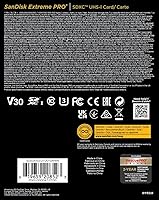
  • Model Number: The official model identifier is SDSDXXD-2T00-GN4IN, which can be used to verify authenticity when purchasing from a retailer.
  • Compatible Devices: Works with digital cameras, computers, home theatre devices, and car navigation systems that accept full-size SD cards.
  • Warranty: Covered by SanDisk's limited warranty; terms vary by region, and the warranty does not cover data recovery or loss resulting from card failure.
  • Color: Finished in a dark gray and black colorway consistent with SanDisk's Extreme PRO product family.
  • Availability Date: This specific 2TB variant was first made available for purchase in September 2024.

Related Reviews

SanDisk 2TB Extreme PRO Portable SSD
87%
91%
Performance (Read Speeds)
94%
Build Quality & Durability
78%
Write Speeds
88%
Portability & Size
85%
Ease of Use & Setup
More
SanDisk 2TB Extreme PRO Dual Drive USB
86%
94%
Performance (Speed)
88%
Build Quality
90%
Portability
85%
Ease of Use
91%
Compatibility
More
SABRENT Rocket CFX PRO 2TB CFexpress Card

84%
93%
Sequential Read Performance
89%
Sustained Write Performance
91%
Storage Capacity
67%
Value for Money
78%
Camera Compatibility
More
SanDisk 512GB Extreme PRO Dual Drive
87%
92%
Read Speed
87%
Write Speed
90%
Build Quality
88%
Portability
94%
Ease of Use
More
SanDisk Extreme Pro 1TB Portable SSD
84%
88%
Transfer Speed
93%
Build Quality
91%
Durability & Protection
94%
Portability & Form Factor
87%
Storage Capacity
More
SanDisk Professional PRO-G40 2TB SSD
89%
94%
Performance (Read/Write Speeds)
92%
Build Quality & Durability
88%
Portability & Size
85%
Ease of Setup & Use
90%
Connectivity & Compatibility
More
SanDisk Extreme PRO Dual Drive 1TB Flash Drive
80%
92%
Transfer Speed
89%
Dual Connector Convenience
88%
Build Quality & Durability
93%
Portability & Form Factor
84%
Data Security Features
More
SanDisk Creator Pro 2TB Portable SSD
82%
88%
Transfer Speed
91%
Build Quality
86%
Weather & Dust Resistance
93%
Portability & Form Factor
63%
Heat Management
More
SanDisk Extreme 2TB Portable External SSD
81%
88%
Transfer Speed
91%
Build Quality
94%
Portability
87%
Durability & Reliability
83%
Compatibility
More
SanDisk Extreme PRO USB4 4TB Portable SSD
82%
93%
Transfer Speed
88%
Build Quality
91%
Portability
84%
Compatibility
82%
Durability & Weather Resistance
More

FAQ

Probably not through the camera itself. The 250MB/s read speed applies to card-to-computer transfers and requires a compatible UHS-I card reader — like SanDisk's own PRO-READER — to hit that ceiling. Most cameras read data from the card at speeds determined by their own internal hardware, which is typically slower than what a dedicated reader can deliver.

That depends heavily on your camera's codec and bitrate settings. As a rough guide, 4K footage at a moderate bitrate of around 100Mbps fills about 45GB per hour, which means 2TB could hold roughly 40 or more hours of footage. At higher professional bitrates the number drops, but it is still an enormous amount of storage for a single card.

It depends on what you mean by a few years. If your camera body cannot write at speeds above 60 or 70MB/s internally, then no — you would be paying a significant premium for performance your gear cannot use. Check your camera's maximum write speed in its official specs and compare honestly before committing to the higher price point.

Buy exclusively from authorized retailers — SanDisk's official store, major electronics chains, or well-established platforms with verified seller status. Counterfeit high-capacity SD cards are a real problem in the market, and they typically look identical to genuine cards on the outside. After purchase, use a tool like H2testw or F3 to verify the card's true capacity and write speed before trusting it with important data.

Maybe, but you need to check your specific device's compatibility list before buying. Not every drone or compact action camera can physically negotiate with a high-speed card at this tier, and some have strict maximum capacity limits. Check the manufacturer's website for a supported SD card list — do not assume compatibility based on the physical slot fitting.

For most current 8K formats, the V30 rating may be the limiting factor, as some 8K recording modes recommend a V60 or V90 card to ensure stable sustained throughput. The Extreme PRO SDXC is UHS-I, which caps out below what UHS-II cards can deliver. If your camera shoots 8K, check its recommended card class in the manual before buying.

You need a UHS-I card reader that explicitly supports high-speed operation — SanDisk's own Professional PRO-READER SD is the reference recommendation for this card. A generic USB 2.0 reader will bottleneck transfers to around 40MB/s regardless of the card's capability. Investing in a fast reader is arguably as important as the card itself if offload speed matters to your workflow.

No single storage medium should be your only copy of important work, regardless of the brand or capacity. Flash storage has a finite write cycle lifespan, and while modern NAND flash is robust under normal use, card failures do happen. Use the 2TB capacity as working storage and back up to a second drive or cloud storage as soon as possible — that is good practice with any card.

The main differences are the QuickFlow Technology enabling faster reads beyond standard UHS-I limits, and the higher write speed ceiling. For professional workflows where time spent waiting on transfers has real cost, the upgrade can pay for itself. For hobbyists, the standard Extreme at a lower price point covers 4K recording and general photography without breaking a sweat.

The limited warranty covers manufacturing defects and is not a data recovery guarantee. If the card fails due to a defect, SanDisk will typically replace the card — but any data on it is your responsibility. Data recovery services exist but are expensive and not always successful, which is why maintaining redundant backups is essential when working at this storage capacity.