Overview

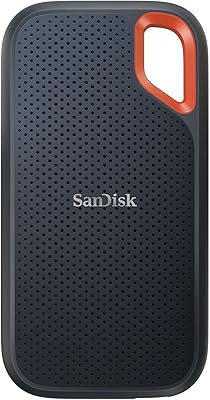
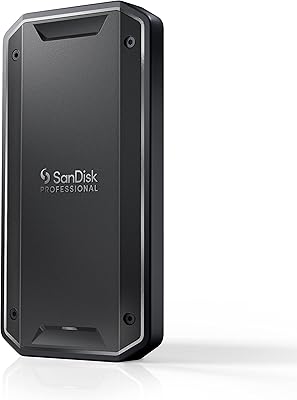
The SanDisk Extreme PRO USB4 4TB Portable SSD arrived in November 2024 as one of the first consumer portable drives built around the USB4 standard — a meaningful step forward from the USB 3.2 generation it replaces. With 4TB of storage onboard, it squarely targets professionals who need serious capacity in a pocket-sized form: think cinematographers archiving raw footage or engineers moving large datasets between workstations. The premium price tier reflects that ambition, and this is not a casual-user purchase. One thing worth flagging upfront: USB4 peak performance requires a compatible host port. On older USB 3.2 or 2.0 hardware, you will still get respectable speeds — just not the headlining numbers.
Features & Benefits

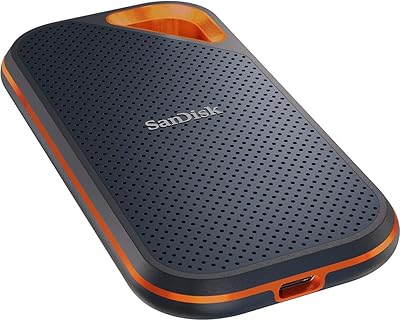
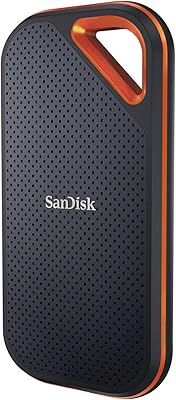
What really stands out about this USB4 portable SSD is the throughput it achieves in a drive this small. Transferring a 100GB project folder that used to take several minutes now completes in under 30 seconds on a USB4 or Thunderbolt 4 host — a tangible difference for anyone working with large files daily. The IP65 weather resistance is worth understanding correctly: it handles rain, splashes, and dusty shoot locations, but it is not rated for submersion. The aluminum chassis wrapped in silicone feels solid without being bulky, at just 6.1 oz. Hardware-level 256-bit AES encryption adds data security that software solutions cannot replicate, and the 5-year warranty rounds out a well-considered feature set.

Best For

The Extreme PRO USB4 drive is clearly built for professionals whose time is money — specifically video editors, filmmakers, and photographers who routinely transfer multi-gigabyte files and cannot afford slow storage to be the bottleneck. It also works well for IT professionals who need fast, reliable external storage across both modern USB4 setups and legacy equipment. Frequent travelers will appreciate the rugged build; this is a drive you can toss in a camera bag and not worry about. It also makes a compelling case for consolidating storage — replacing two or three older drives with a single high-capacity unit. If your workflow does not regularly demand moving large files at speed, a less expensive drive would serve you just as well.

User Feedback

Sitting at 4.5 stars across 165 reviews, SanDisk's flagship portable SSD has earned a broadly positive reception. Buyers who have USB4 or Thunderbolt 4 hardware consistently report that real-world speeds hold up close to the advertised figures, which is not always the case with storage drives. The compact size draws repeated praise, especially from photographers and editors who carry gear daily. The more common criticism targets the host-dependency issue: users plugging into standard USB 3.2 ports naturally see more modest performance and occasionally question whether the premium is justified. A few buyers mention thermal throttling during sustained large transfers, though this seems infrequent. Compared to the previous Extreme PRO generation, most agree the USB4 version delivers a worthwhile upgrade for those with the right hardware to support it.

Pros

  • Transfers 100GB of footage in well under a minute on USB4 or Thunderbolt 4 hardware.
  • 4TB capacity lets professionals consolidate multiple drives into one pocketable unit.
  • Rugged aluminum and silicone construction survives drops, dust, and rainy shoot conditions.
  • Hardware-level AES encryption protects sensitive client data without slowing transfers down.
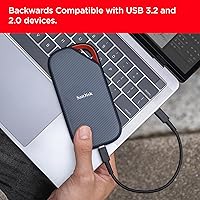
  • Backward compatibility with USB 3.2, USB 2.0, and Thunderbolt 4 covers virtually any machine in a mixed hardware environment.
  • At 6.1 oz and under 4 inches long, this USB4 portable SSD genuinely fits in a jacket pocket.
  • A 5-year limited warranty signals above-average confidence in long-term reliability.
  • Buyers upgrading from the previous USB 3.2 Extreme PRO generation with compatible hardware report a clearly noticeable speed improvement.
  • Plug-and-play on modern operating systems — no drivers, no setup friction, just connect and go.

Cons

  • Peak USB4 speeds are completely inaccessible if your laptop or desktop lacks a USB4 or Thunderbolt 4 port.
  • The price is difficult to justify for anyone whose workflow does not regularly involve moving very large files.
  • Sustained multi-hundred-gigabyte transfers can trigger thermal throttling, slowing speeds unpredictably.
  • The companion SanDisk app feels dated and unreliable, with reported crashes on some Windows systems.
  • IP65 is splash resistance, not waterproofing — accidental submersion has caused failures for some buyers.
  • The included USB-C cable is shorter than ideal for desktop setups and lacks clear USB4 speed markings.
  • Formatted usable capacity falls noticeably below the labeled 4TB, which surprises some buyers at first use.
  • The silicone outer shell collects lint and scuffs over time, dulling the appearance with regular carry.
  • Users on USB 3.2 hosts who purchased without checking port compatibility frequently report feeling misled by the advertised specifications.

Ratings

The SanDisk Extreme PRO USB4 4TB Portable SSD earns a strong overall standing in our analysis, drawn from verified buyer reviews worldwide — with spam, bot-submitted, and incentivized feedback actively filtered out before scoring. Across categories ranging from raw transfer performance to long-term durability, this USB4 portable SSD shows clear strengths for professional workflows, though a few real-world limitations keep it from a clean sweep. Both the praise and the friction points are reflected honestly in the scores below.

Transfer Speed
93%
On USB4 and Thunderbolt 4 hosts, buyers consistently report moving 100GB footage folders in well under a minute — a dramatic shift compared to the previous USB 3.2 generation. Creative professionals singling out this drive for on-set backups and studio-to-studio transfers frequently cite the speed as the primary reason for the purchase.
The headline speeds are entirely hardware-dependent. Users plugging into USB 3.2 ports — still common on many laptops and desktop hubs — see a fraction of the rated throughput, which creates a disconnect between marketing expectations and real-world results for a notable portion of buyers.
Build Quality
88%
The combination of forged aluminum chassis and silicone outer shell strikes a balance that most buyers appreciate: it feels substantive without being heavy. Field users — photographers, videographers, documentary crews — repeatedly note that the drive survives being tossed into bags, dropped on concrete, and used in light rain without issue.
A handful of buyers report the silicone bumper attracting lint and dust over time, which affects the aesthetic more than the function. A small number of users also felt the drive ran noticeably warm during extended back-to-back transfers, raising minor questions about long-term thermal management.
Portability
91%
At just over 6 oz and smaller than most smartphones, this USB4 portable SSD genuinely disappears into a jacket pocket or camera bag. Traveling professionals who previously carried two or three smaller drives particularly value having 4TB in a single unit this compact.
The drive is slightly thicker than ultra-slim rivals, which matters to users who carry it in tight organizer pouches. The attached USB-C cable, while convenient, adds a small bulk factor that some buyers would prefer to manage separately with a detachable option.
Compatibility
84%
Thunderbolt 4, USB4, USB 3.2, and USB 2.0 support means this drive works across a genuinely wide range of machines — from older Windows workstations to current MacBook Pros. IT professionals managing mixed hardware environments find the backward compatibility practically useful rather than just a checkbox feature.
The USB4 dependency for peak performance remains the central compatibility caveat. Buyers who did not verify their host port specs before purchasing often express frustration when real-world speeds do not match expectations, and the product packaging could do more to set those expectations upfront.
Durability & Weather Resistance
82%
18%
IP65 certification means rain, splashes, and dusty outdoor environments are handled confidently. Photographers working outdoor shoots and field technicians repeatedly cite the weather resistance as a genuine differentiator over non-rated drives in their kits.
IP65 is not submersion protection, and a portion of buyers appear to misread the rating as waterproof. Users who have accidentally submerged the drive — even briefly — report failures, suggesting clearer communication around the rating's limits would prevent misuse and negative outcomes.
Value for Money
71%
29%
For users with USB4 or Thunderbolt 4 hardware who regularly move large files, the performance-per-dollar argument holds up reasonably well compared to other drives in this speed class. The 5-year warranty adds perceived long-term value that justifies part of the premium for professional buyers.
For anyone without a USB4-capable host, the price is genuinely difficult to defend — you are paying a significant premium for speeds you cannot access. Even among professionals, several reviews question whether the incremental speed gain over a well-performing USB 3.2 drive justifies the cost difference in everyday workflows.
Data Security
86%
Hardware-level 256-bit AES encryption is a meaningful feature for professionals handling client footage, sensitive documents, or proprietary data on the move. Unlike software encryption, it does not depend on the host OS and adds no noticeable performance penalty during normal use.
The companion SanDisk app required to configure password protection receives mixed feedback — some users find the setup process cumbersome, and a few report app reliability issues on certain Windows configurations that made accessing the encryption features more frustrating than expected.
Thermal Performance
68%
32%
Under typical day-to-day use — moving projects, backing up card media, casual large file transfers — the drive stays cool and maintains consistent performance. Most users working in short bursts report no thermal-related issues over extended ownership periods.
During sustained, continuous transfers of several hundred gigabytes, a portion of buyers report noticeable speed drops consistent with thermal throttling. This is particularly relevant for users doing full-drive backups or large batch ingests, where transfer times can stretch and speeds become less predictable.
Software & App Experience
61%
39%
The SanDisk Memory Zone app provides a centralized way to manage files and monitor storage, which occasional users find helpful for keeping their drive organized without digging through folder structures manually.
Frequent complaints center on the app feeling dated and unreliable compared to the hardware it supports. Android compatibility is inconsistent, Windows users report occasional crashes, and several reviewers note that they simply stopped using the app altogether after early frustrations — relying on the drive as a plug-and-play unit instead.
Setup & Ease of Use
89%
Plug-and-play functionality means the vast majority of users are transferring files within seconds of unboxing, with no driver installation required on modern operating systems. The USB-C connector and included cable keep the out-of-box experience clean and uncomplicated.
The encryption setup, if pursued, adds a layer of complexity that some less technical users find confusing. A small number of buyers also report that the drive was not immediately recognized on older USB 2.0 hubs, requiring a direct port connection before functioning correctly.
Capacity & Storage Efficiency
92%
Four terabytes in a portable SSD is still a notable achievement at this form factor, and buyers consolidating multiple aging portable HDDs into a single modern unit consistently express satisfaction with the real-world available space. For 4K and 8K video workflows, the capacity feels genuinely future-proofed.
Formatted usable capacity lands slightly below the 4TB label as expected, which catches some buyers off guard. There are no meaningful complaints about the capacity itself — the minor friction here is simply the universal formatted-versus-advertised space gap common to all storage products.
Cable & Connector Quality
77%
23%
The bundled USB-C cable feels sturdy and handles frequent plug-and-unplug cycles without the flimsy quality sometimes found with included accessories. Buyers who use the drive daily across different setups appreciate not needing to source a separate cable immediately.
The cable is fixed-length and on the shorter side, which occasionally creates awkward positioning when connecting to desktop towers or docked setups. A small number of buyers also note that the cable, while adequate, is not a USB4-rated cable visually identifiable as such, causing minor confusion about what speeds it supports.
Upgrade Value Over Previous Generation
79%
21%
Buyers upgrading from the USB 3.2 Extreme PRO generation with compatible hardware describe the speed difference as immediately noticeable and practically impactful during daily workflows. The generational improvement feels earned for users who have invested in USB4 or Thunderbolt 4 infrastructure.
For users without a hardware upgrade path, the jump from the previous generation is largely theoretical. Several reviews from buyers who traded up from a USB 3.2 model without checking port compatibility express clear regret, noting the performance difference in their setup was negligible and not worth the price gap.

Suitable for:

The SanDisk Extreme PRO USB4 4TB Portable SSD was built with a clear user in mind: professionals who move large files constantly and cannot afford storage to be the slow link in their workflow. Video editors shuttling 4K or 8K project folders between a studio workstation and a home editing setup will feel the difference immediately on a USB4 or Thunderbolt 4 host — what used to be a multi-minute transfer becomes a quick pause. Photographers on location, particularly those shooting high-resolution RAW bursts across long sessions, will appreciate having 4TB of fast, rugged storage in a package that fits in a jacket pocket. Frequent travelers benefit from the IP65 splash and dust resistance and the two-meter drop tolerance, which together make this a drive you can use confidently in unpredictable environments. IT professionals managing large data migrations or backups across modern hardware will find the throughput and capacity combination genuinely practical. If you are also looking to consolidate several aging portable drives into a single reliable unit, the 4TB capacity makes that a reasonable one-time investment.
Not suitable for:

The SanDisk Extreme PRO USB4 4TB Portable SSD is a poor match for anyone who has not first confirmed that their computer or hub has a USB4 or Thunderbolt 4 port — without that, you are paying a steep premium for speeds your hardware simply cannot deliver. Casual users who store family photos, documents, or occasional backups will find the price hard to justify when a far less expensive USB 3.2 drive would handle those tasks just as effectively. Students or home users looking for a general-purpose external drive should look elsewhere; the value proposition here is narrowly tied to professional, high-throughput workflows. Anyone who needs waterproof protection should also look for a drive with an IP67 or IP68 rating, since IP65 covers splashes and rain but not accidental submersion. Users who rely heavily on companion software for file management may find the SanDisk app experience underwhelming relative to the hardware quality. Finally, buyers on a tight budget who are weighing this against capable mid-range alternatives should honestly assess whether their daily file sizes and transfer frequency are demanding enough to close that price gap.

Specifications

  • Storage Capacity: The drive offers 4TB of total storage capacity, with formatted usable space slightly below that figure due to standard filesystem overhead.
  • Interface: Uses the USB4 protocol, delivering the highest bandwidth tier currently available in consumer portable SSDs.
  • Read Speed: Sequential read speeds reach up to 3800 MB/s under optimal conditions on a USB4 or Thunderbolt 4 host.
  • Write Speed: Sequential write speeds reach up to 3700 MB/s, keeping read and write performance closely matched for demanding workflows.
  • Connector Type: The drive uses a USB-C connector and ships with a USB-C cable for direct connection to compatible ports.
  • Backward Compatibility: Fully compatible with USB 3.2 Gen 2, USB 2.0, and Thunderbolt 4 hosts, though maximum speeds are limited by the host interface.
  • Weather Resistance: Rated IP65 for resistance to low-pressure water jets and dust ingress, making it suitable for outdoor and field use in rain or dusty conditions but not for submersion.
  • Drop Protection: Designed to withstand drops from up to two meters onto hard surfaces, supported by the rugged silicone bumper and aluminum chassis construction.
  • Dimensions: The drive measures 3.97 × 2.07 × 0.38 inches, making it compact enough to fit in a shirt or jacket pocket.
  • Weight: Weighs 6.1 oz, which is notably light given the 4TB capacity and the protective metal-and-silicone housing.
  • Shell Materials: The outer housing combines a forged aluminum chassis for rigidity with a silicone shell that absorbs impact and provides grip during handling.
  • Encryption: Hardware-level 256-bit AES encryption is built into the drive and can be activated with password protection through the SanDisk companion app.
  • Warranty: Backed by a 5-year limited warranty from Western Digital, covering manufacturing defects under normal use conditions.
  • Drive Type: Uses NAND-based solid-state storage with no moving parts, providing faster access times and greater shock resilience than traditional portable hard drives.
  • Security Software: Compatible with the SanDisk Memory Zone app for file management and encryption setup on both Android and desktop platforms.
  • Manufacturer: Manufactured by Western Digital Technologies, Inc. under the SanDisk brand, which is a Western Digital subsidiary.
  • Release Date: First available in November 2024, positioning it as a current-generation product in the USB4 portable SSD category.
  • Color: Available in Black as the standard colorway for this model and capacity.
  • Model Number: The official model number is SDSSDE82-4T00-G25, which identifies the USB4 Extreme PRO series at the 4TB capacity tier.

Related Reviews

SanDisk 4TB Extreme Portable SSD
86%
91%
Performance
94%
Build Quality/Durability
89%
Portability/Size/Weight
88%
Speed (Read/Write)
85%
Security Features (Encryption)
More
SanDisk 2TB Extreme PRO Portable SSD
87%
91%
Performance (Read Speeds)
94%
Build Quality & Durability
78%
Write Speeds
88%
Portability & Size
85%
Ease of Use & Setup
More
SanDisk Creator Pro 4TB Portable SSD
79%
88%
Transfer Speed
91%
Build Quality
93%
Durability & Protection
89%
Portability
71%
Compatibility
More
SanDisk Extreme Pro 1TB Portable SSD
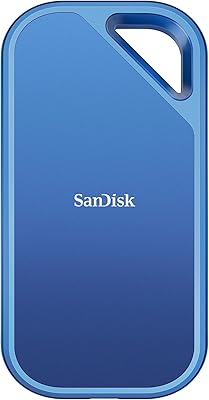
84%
88%
Transfer Speed
93%
Build Quality
91%
Durability & Protection
94%
Portability & Form Factor
87%
Storage Capacity
More
SanDisk 500GB Extreme Portable SSD
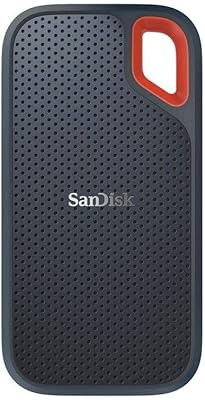
86%
94%
Performance
91%
Build Quality & Durability
89%
Portability & Size
96%
Speed (Data Transfer)
87%
Ease of Use
More
SanDisk Extreme 250GB Portable External SSD
79%
88%
Transfer Speed
94%
Portability & Form Factor
91%
Build Quality & Durability
79%
Water & Dust Resistance
61%
Storage Capacity
More
SanDisk Extreme 2TB Portable External SSD
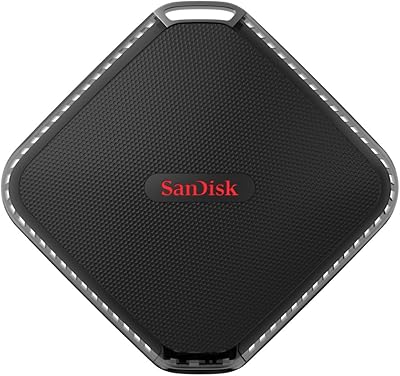
81%
88%
Transfer Speed
91%
Build Quality
94%
Portability
87%
Durability & Reliability
83%
Compatibility
More
SanDisk Creator Pro 2TB Portable SSD
82%
88%
Transfer Speed
91%
Build Quality
86%
Weather & Dust Resistance
93%
Portability & Form Factor
63%
Heat Management
More
SanDisk Extreme Portable SSD 8TB V2
88%
94%
Read Speed Performance
91%
Write Speed Performance
93%
Build Quality
90%
Durability
88%
Portability
More
SanDisk Extreme 500 Portable SSD 1TB
88%
92%
Performance
95%
Portability
88%
Durability
90%
Ease of Use
91%
Compatibility
More

FAQ

It will work on any USB-C port, including USB 3.2 and even USB 2.0 via an adapter, but the speeds you get will be capped by whatever your port supports. If your laptop only has USB 3.2 Gen 2, you will see roughly 1000 MB/s reads rather than the full 3800 MB/s — still fast, but a fraction of the potential. The USB4 and Thunderbolt 4 ports on recent MacBook Pros, newer Windows ultrabooks, and current Mac Studios are where this drive fully comes into its own.

IP65 means it handles rain, splashes, and dusty environments well — but it is not rated for submersion. If you drop it overboard or leave it sitting in a puddle, there is a real risk of water getting in. For anything involving actual water immersion, you would need a drive rated IP67 or higher. For outdoor shoots, hikes in light rain, or dusty job sites, the IP65 protection is genuinely solid and has held up well for field users.

If you have a USB4 or Thunderbolt 4 machine, the speed jump is substantial and immediately noticeable during large file transfers — projects that took a few minutes now complete in under 30 seconds. If you are on USB 3.2 hardware and do not plan to upgrade soon, the previous generation performs comparably on your setup and costs significantly less. The upgrade is worth it specifically when your hardware can actually take advantage of it.

It will connect and be recognized as external storage on both PlayStation 5 and Xbox Series consoles via USB-C or an appropriate adapter. Keep in mind that consoles do not support USB4 speeds — you will be limited to the USB 3.2 bandwidth those consoles provide. For game storage on a console, the performance difference versus a cheaper drive is minimal, so the premium here would largely go to waste in that use case.

Yes, it functions as a standard plug-and-play drive on Windows, macOS, iPad Pro, and Android without any software installation. The SanDisk app is only needed if you want to set up password protection and encryption or use the file management features. For straightforward file storage and transfer, you can ignore the app entirely.

Under typical use — moving a project folder, backing up a memory card — it stays cool. During very long sustained transfers, like copying several hundred gigabytes in one go, some users report it getting warm and occasionally throttling speeds toward the end of the transfer. This is a thermal management tradeoff common to high-performance compact SSDs. For most real-world workflows it is not a practical issue, but if you routinely do full-drive sequential writes you may notice the slowdown.

Setting it up requires the SanDisk app, which has received mixed reviews — some users find it straightforward, others report glitches particularly on Windows. Once configured, the hardware encryption does not add any noticeable performance penalty since it is processed on the drive itself rather than by your CPU. If the app gives you trouble, there are also third-party software encryption options that work on top of the drive without any speed hit.

The drive ships with a USB-C cable that handles data transfer across compatible interfaces. For full USB4 speeds, you will want to confirm the included cable is USB4-rated — and some users have noted the included cable lacks clear labeling on this. If you want to be certain, picking up a verified USB4-rated cable separately is a reasonable step, particularly for desktop setups where cable length may also matter.

In practical terms, 4TB holds roughly 24 hours of compressed 4K footage or several hours of 8K RAW depending on codec and bitrate. For a videographer who shoots multi-day events, commercial projects, or documentary content, that means carrying one drive instead of a stack of smaller ones. Coupled with the fast transfer speeds on a compatible host, ingesting a full day of footage from camera cards takes minutes rather than a coffee break.

Yes, the USB-C port on iPad Pro models with M-series chips supports this drive directly, and users report solid performance for offloading photos and video while in the field. The speeds you get will depend on the iPad Pro generation — the latest M4 models with USB4 support will see much higher throughput than older Lightning or USB 3.2 iPad Pros. It is one of the more compelling use cases for this drive for mobile creative professionals.

Where to Buy