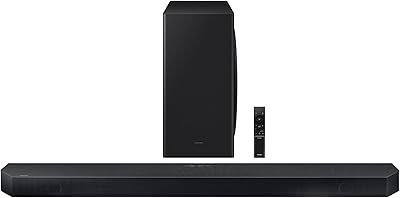
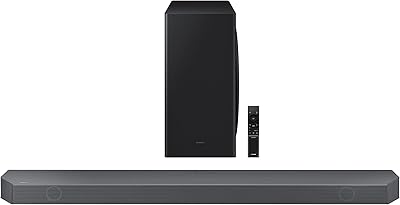
Overview

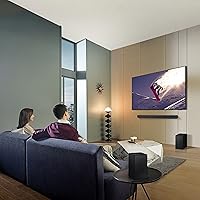
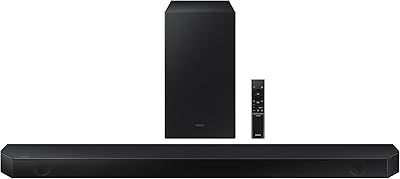
The Samsung HW-Q700C 3.1.2ch Dolby Atmos Soundbar arrived in early 2023 as a meaningful step up from Samsung's Q600C, aimed squarely at people who want genuinely better audio without rewiring their living room. The 3.1.2 channel setup — front bar, wireless subwoofer, and two up-firing drivers — covers the basics of spatial sound without demanding rear speaker placement or cable runs across the floor. The subwoofer connects wirelessly out of the box, which removes one of the most common friction points of any soundbar purchase. That said, this 3.1.2ch Atmos bar is not a substitute for a proper multi-speaker surround system; it punches well for its class, but expectations should be calibrated accordingly.
Features & Benefits

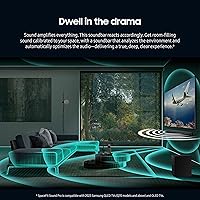
The HW-Q700C packs a notable range of features for its price tier, and most of them pull real weight in daily use. Q-Symphony is the standout if you own a compatible Samsung TV — it merges the soundbar and TV speakers into one coordinated system, noticeably widening the soundstage without adding hardware. SpaceFit Sound Pro runs an automatic room calibration on first setup, using a built-in mic to tune the EQ to your space; results vary, but it's a genuinely useful starting point. Dolby Atmos and DTS:X are both supported, with up-firing drivers handling the height channels — effective in taller rooms, more modest in low-ceiling spaces. Adaptive Sound continuously adjusts the mix based on what's playing, keeping dialogue intelligible during quiet scenes without a manual volume adjustment.

Best For

This Samsung soundbar makes the most sense for Samsung TV owners who want to activate Q-Symphony — that single feature justifies a lot of the purchase decision on its own. Gamers with a console connected via HDMI eARC will also get genuine value from Game Mode Pro, which cuts latency and shapes 3D spatial audio in a way that a basic soundbar simply can't match. For apartment dwellers or anyone in a mid-size room who wants Atmos-style immersion without drilling holes or hiding speaker wire, this 3.1.2ch Atmos bar is a practical fit. It's also a solid pick for heavy streaming users who lean on AirPlay 2, Chromecast, or Alexa — the multi-platform support is broad and reliable in everyday use.

User Feedback

Across roughly 174 ratings, the HW-Q700C holds a 4.2-star average, and the patterns in the reviews are fairly consistent. Buyers frequently cite clear dialogue and satisfying bass from the wireless subwoofer as the biggest wins — the subwoofer, in particular, gets a lot of credit for sounding fuller than expected at this price point. On the critical side, several users note that the Atmos height effects can feel underwhelming in rooms with standard 8-foot ceilings, and a few found the SmartThings app control less intuitive than Sonos or LG's equivalents. SpaceFit calibration gets mixed mentions — some users report a clear improvement post-calibration, while others barely notice a difference. Overall, the value-to-feature ratio earns genuine praise from buyers upgrading from basic 2.1 setups.

Pros

  • Wireless subwoofer pairs instantly out of the box — no cable routing, no fuss, just noticeably deeper bass from the start.
  • Q-Symphony integration with compatible Samsung TVs produces a wider, more cohesive soundstage without adding a single extra speaker.
  • SpaceFit Sound Pro automatically calibrates EQ to the room, giving buyers a tuned baseline without manual tinkering.
  • Game Mode Pro delivers low-latency 3D audio for console gaming via HDMI eARC — a real differentiator at this price tier.
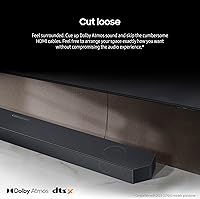
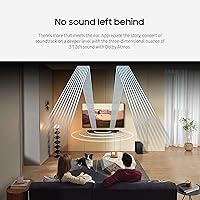
  • Dolby Atmos and DTS:X support via up-firing drivers adds convincing height and overhead movement in rooms with adequate ceiling height.
  • Adaptive Sound adjusts audio profiles in real time, keeping dialogue clear during quiet scenes without constant volume adjustments.
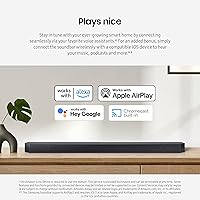
  • Connectivity is genuinely broad: AirPlay 2, Chromecast, Bluetooth, Wi-Fi, and Alexa built-in cover nearly every streaming habit.
  • Setup is straightforward — HDMI cable, remote, and wall-mount kit are all included in the box.
  • At 320W total output, the HW-Q700C delivers room-filling volume without distortion at higher listening levels.

Cons

  • Atmos height effects can feel underwhelming in rooms with standard 8-foot ceilings — the overhead immersion depends heavily on the space.
  • Q-Symphony only works with compatible Samsung TVs, leaving non-Samsung TV owners without one of the bar's headline features.
  • The SmartThings app is functional but lags behind competitors like Sonos in polish and ease of use.
  • SpaceFit calibration produces inconsistent results — some users hear a clear improvement, others notice almost no change after running it.
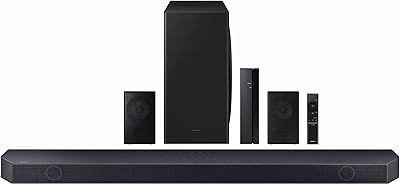
  • No option to add dedicated rear surround speakers to this configuration, which limits how far the surround experience can be expanded.
  • Bass tuning on the wireless subwoofer skews toward impact over accuracy, which suits action content but can feel excessive for music or dialogue-heavy shows.
  • Bluetooth range tops out at 10 meters, which may disappoint buyers in larger open-plan spaces who stream audio from a distance.
  • The one-year warranty is fairly standard for the category but short relative to some competing brands offering two-year coverage.
  • Wall-mount hardware is plastic, which feels underwhelming for a bar at this weight and price point.

Ratings

The scores below for the Samsung HW-Q700C 3.1.2ch Dolby Atmos Soundbar were generated by our AI rating engine after processing verified buyer reviews from global markets, with automated filters applied to remove incentivized, duplicate, and bot-driven submissions. Every category reflects the honest distribution of real user sentiment — strengths are credited where earned, and recurring pain points are scored without being softened.
Sound Quality
83%
For most living room setups, the HW-Q700C delivers a noticeably fuller and more dimensional soundscape than any basic 2.0 or 2.1 bar. Movie watchers in particular praise how well the front soundstage handles layered audio — action scenes feel spacious and dynamic without sounding muddy at higher volumes.
Buyers who have owned premium Sonos or Bose systems at a similar price sometimes note that mid-range clarity does not quite match those alternatives on complex music tracks. The overall soundstage has a realistic ceiling that becomes apparent when directly compared against higher-tier separates or receiver-based setups.
Bass Performance
86%
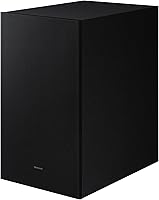
The 10-inch wireless subwoofer consistently earns high marks — buyers note that bass impact during action sequences and music feels deeper and more physical than expected for this class of product. The wireless design means the sub can be placed wherever it sounds best rather than wherever a cable reaches.
The subwoofer's default tuning leans toward punchy impact, which suits films well but can overwhelm lighter content like acoustic music or podcasts if left at factory settings. In very large open-plan rooms, a handful of buyers report that bass presence thins out noticeably at longer distances from the sub.
Dolby Atmos Height
67%
33%
In rooms with high, flat ceilings, the up-firing drivers produce a convincing sense of vertical space — rainfall effects, overhead aircraft, and ambient environmental audio gain a realistic sense of height that a flat stereo bar simply cannot replicate. Buyers in purpose-built cinema rooms consistently rate this aspect much higher.
In standard rooms with 8-foot ceilings, the height effect is modest at best and barely perceptible at worst — this is the single most commonly voiced disappointment across the review pool. Buyers expecting a cinema-grade overhead experience from bar-based Atmos are frequently underwhelmed regardless of content source.
Dialogue Clarity
88%
Vocal clarity is one of the strongest and most consistently praised aspects of this bar across hundreds of reviews. Buyers who struggle to follow speech on TV at low volumes particularly appreciate how Adaptive Sound keeps dialogue intelligible without requiring constant manual adjustments between scenes.
A few users running the soundbar without SpaceFit calibration in acoustically live rooms — bare floors, hard walls — report that dialogue can occasionally get masked during dense action soundtracks at high volumes. The out-of-box experience is more room-dependent than the calibrated one, which affects initial impressions.
Gaming Performance
81%
19%
Game Mode Pro is a genuine differentiator for console gamers connecting via HDMI eARC — the latency reduction is perceptible, and the 3D spatial audio shaping adds directional cues that meaningfully improve positional awareness in both competitive shooters and immersive open-world titles. Several buyers cite this as a primary purchase driver.
The mode performs best when the console connects through the TV's eARC port, adding a dependency that not all setups can accommodate cleanly. Buyers using an optical connection report a noticeably lesser gaming audio experience and do not receive the full low-latency benefit that makes the feature worthwhile.
Setup & Installation
91%
First-time soundbar buyers and less tech-confident users alike consistently describe the HW-Q700C as one of the easiest audio setups they have handled. The wireless subwoofer auto-pairs on power-on without any app or manual pairing required, and the included HDMI cable means everything needed for a complete installation is already in the box.
Wall-mounting requires careful measuring to center the bar under a TV, and the included plastic mount hardware feels cheap relative to the product's weight. A small number of buyers report that the subwoofer auto-pairing fails on the first power-on and requires a manual re-pair using the button on the back of the unit.
Q-Symphony Integration
84%
For owners of a compatible Samsung QLED or Neo QLED TV, Q-Symphony is the feature that most clearly separates this bar from brand-agnostic alternatives — it folds the TV's own speakers into the audio system, producing a wider soundstage that buyers consistently describe as immediately and obviously different from standard operation.
The feature is completely unavailable to non-Samsung TV owners, which is a meaningful limitation that a portion of buyers discover only after purchase. Compatibility also does not extend to every Samsung TV model, so checking the specific supported device list before buying is essential rather than optional.
Smart Connectivity
79%
21%
AirPlay 2, Chromecast, Bluetooth, and Wi-Fi together cover virtually every streaming scenario in a typical household, and Alexa built-in means hands-free voice control works without an external smart speaker. For households invested in Google or Apple ecosystems, the multi-platform support avoids forced choices that single-platform systems impose.
The 5 GHz Wi-Fi connection occasionally takes a noticeable moment to reconnect after the soundbar returns from standby, which frustrates buyers who switch sources frequently. Tap Sound, while a novel pairing method, is rarely mentioned in reviews as part of anyone's regular daily routine.
Room Calibration
72%
28%
When SpaceFit Sound Pro works as intended, buyers in acoustically difficult rooms — all-hard surfaces, irregular wall layouts, low furniture — report the most dramatic improvements, with the post-calibration EQ feeling noticeably more balanced and less fatiguing at extended listening volumes. The calibration process itself is quick and requires no expertise.
A meaningful portion of buyers notice no perceptible difference after running SpaceFit, raising questions about its consistency across different room types. Unlike advanced room correction systems from competing brands, SpaceFit offers no manual override, no visualization of changes made, and no way to compare before and after settings directly.
App Experience
58%
42%
The SmartThings app covers the core control functions adequately — source switching, EQ presets, sound mode selection, and firmware updates are all accessible without touching the remote. For users already embedded in the Samsung smart home ecosystem, managing the soundbar alongside other Samsung devices in one place is a practical convenience.
Compared to the Sonos app, which many buyers use as a benchmark, SmartThings feels clunky and requires more steps than it should for common adjustments. Several reviewers report that the app periodically loses connection to the soundbar and requires a restart to re-establish control, which erodes confidence in it as a daily-use tool.
Build & Design
74%
26%
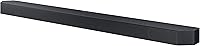
The soundbar's slim 2.4-inch profile and matte black finish give it a clean, understated look that fits under most TVs without blocking the IR sensor. At 43.7 inches wide, it proportionally matches 55-inch to 65-inch TVs well, and buyers note it looks more premium than its price suggests from a viewing distance.
Up close, the plastic chassis and lightweight remote feel less premium than the audio performance would suggest — the physical build does not match the sound quality tier. The included wall-mount bracket is particularly underwhelming: plastic construction, minimal adjustment range, and no anti-slip padding included for mounting stability.
Music Performance
69%
31%
For background music and casual listening, this 3.1.2ch Atmos bar performs well above the average TV speaker and holds its own as a room speaker for everyday use. Buyers report that Adaptive Sound handles streaming from Spotify or Apple Music reasonably well, particularly for pop, electronic, and cinematic scores.
Dedicated music listeners — especially those favoring acoustic, classical, or jazz — find the frequency balance too entertainment-skewed, with the subwoofer adding weight that occasionally muddies complex instrumental recordings. The HW-Q700C is a capable all-rounder but is not a replacement for a stereo hi-fi setup tuned specifically for music.
Value for Money
78%
22%
For Samsung TV owners who can activate Q-Symphony, the effective value is higher than the price tag suggests — the combined audio system performs above what either device delivers independently. The feature set, spanning Game Mode Pro, AirPlay 2, Chromecast, and SpaceFit, covers a genuinely broad range of real-world use cases.
For buyers without a compatible Samsung TV, the value equation narrows, and competing bars from LG at a similar price offer comparable Atmos performance without ecosystem dependency. The one-year warranty also feels short for a product positioned as a long-term home audio investment.

Suitable for:

The Samsung HW-Q700C 3.1.2ch Dolby Atmos Soundbar is best suited for Samsung TV owners who want to get meaningfully more out of their existing setup — Q-Symphony alone makes this a natural pairing if your TV supports it, since it turns the TV and soundbar into a coordinated audio system rather than two separate devices competing for the room. It also works well for gamers who connect a console via HDMI eARC and want low-latency 3D spatial audio without placing multiple speakers around the room. Apartment dwellers or anyone in a mid-size living space will appreciate that the wireless subwoofer requires no cable runs, and the wall-mount kit means installation stays clean and simple. Cord-cutters who already rely on AirPlay 2, Chromecast, or Alexa will find the smart home integration broad enough to cover most daily streaming habits without friction. For anyone stepping up from a basic 2.0 or 2.1 soundbar, the jump in bass presence and spatial depth is noticeable and worth the investment.
Not suitable for:

The Samsung HW-Q700C 3.1.2ch Dolby Atmos Soundbar is a harder sell for buyers who do not own a compatible Samsung TV, since Q-Symphony — one of its most distinctive advantages — simply will not work in that scenario, and the value proposition narrows considerably. Serious audiophiles or home theater enthusiasts who already own a receiver-based surround system will find the up-firing Atmos drivers a step down from properly positioned overhead or rear satellite speakers. Rooms with low or acoustically unusual ceilings can blunt the overhead height effect significantly, making the Atmos experience feel more like enhanced stereo than true three-dimensional audio. Buyers who prefer managing their audio through a polished companion app may find the SmartThings interface less intuitive than what Sonos or LG offer in a comparable price range. If rear surround presence is a non-negotiable priority, this bar does not include rear speakers and there is no option to add a dedicated surround kit in this configuration.
Specifications

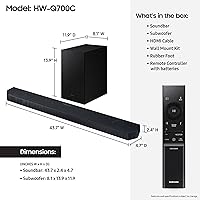
  • Channel Config: The HW-Q700C uses a 3.1.2 channel layout comprising a front soundbar, a wireless subwoofer, and two up-firing drivers that handle overhead audio for Dolby Atmos content.
  • Output Power: Total system output is 320W, distributed across the soundbar drivers and the 10-inch wireless subwoofer.
  • Subwoofer: The included subwoofer is a 10-inch wireless unit that connects to the soundbar automatically without any manual pairing steps after initial setup.
  • Dimensions: The soundbar measures 43.7″ wide, 4.7″ deep, and 2.4″ tall, making it a practical fit for most TV stands and wall-mount installations.
  • Weight: The soundbar unit weighs 23.6 lbs, which is standard for a bar of this size and should be accounted for if wall-mounting.
  • Audio Formats: Supported audio formats include Dolby Atmos, Dolby TrueHD, DTS:X, and standard PCM stereo, covering the full range of content from streaming services to physical media.
  • Wired Connections: Physical connectivity includes one HDMI eARC port and one optical input, with an HDMI cable included in the box.
  • Wireless Connectivity: Wireless options include Wi-Fi (5 GHz), Bluetooth (10-meter range), AirPlay 2, Chromecast, and Tap Sound for NFC-style device pairing.
  • Voice Assistants: Alexa is built directly into the soundbar, and it is also compatible with Google Assistant via Chromecast and Siri through AirPlay 2.
  • Room Calibration: SpaceFit Sound Pro uses a built-in microphone to analyze the acoustic environment and automatically adjust EQ settings to optimize audio for the specific room.
  • TV Sync Feature: Q-Symphony allows the HW-Q700C to operate in sync with compatible Samsung QLED and Neo QLED TV speakers, expanding the overall soundstage without additional hardware.
  • Gaming Feature: Game Mode Pro reduces input lag and applies a 3D spatial audio profile optimized for gaming, accessible via HDMI eARC connection to a compatible console or TV.
  • Adaptive Sound: Adaptive Sound analyzes the type of content being played in real time and adjusts the audio profile automatically to prioritize dialogue clarity, dynamic action sound, or musical balance.
  • In-Box Contents: The package includes the soundbar unit, wireless subwoofer, HDMI cable, remote controller, two AA batteries, and a wall-mount kit.
  • Power Source: The soundbar is corded electric and requires a standard AC power connection; it is not battery-powered or portable.
  • Warranty: Samsung covers this soundbar under a one-year limited manufacturer warranty against defects in materials and workmanship.

Related Reviews

Samsung HW-QS730D 3.1.2ch Dolby Atmos Soundbar
80%
83%
Sound Quality
79%
Subwoofer Performance
71%
Dolby Atmos Experience
86%
Q-Symphony Integration
88%
Dialogue Clarity
More
LG SC9S 3.1.3-Channel Soundbar
78%
88%
Dolby Atmos Performance
91%
Dialogue Clarity
93%
LG TV Integration
74%
Wireless Subwoofer Quality
82%
AI Room Calibration
More
Samsung S800D 3.1.2ch Soundbar
85%
91%
Sound Quality
88%
Ease of Setup
85%
Wireless Connectivity
92%
Design/Size
70%
Subwoofer Power
More
Samsung HW-Q910C 9.1.2ch Soundbar
78%
91%
Sound Quality
83%
Dolby Atmos Performance
76%
Surround Sound & Rear Speakers
88%
Q-Symphony Integration
79%
Subwoofer Performance
More
Samsung HW-Q800B 5.1.2ch Soundbar
80%
88%
Sound Quality
74%
Dolby Atmos Performance
86%
Bass Performance
93%
Samsung Ecosystem Integration
79%
Gaming Performance
More
Samsung HW-S60B 3.1ch Soundbar
76%
82%
Audio Quality
76%
Bass Performance
91%
Setup & Installation
84%
Build Quality & Design
79%
Smart Features & Connectivity
More
Samsung HW-Q60B 3.1ch Soundbar
76%
76%
Audio Quality
83%
Bass Performance
67%
Dialogue Clarity
81%
Gaming Performance
84%
Q-Symphony Integration
More
Samsung HW-S50B 3.0ch Soundbar
75%
88%
Dialogue Clarity
54%
Bass Performance
67%
Virtual Surround
91%
Setup & Ease of Use
74%
Build Quality
More
Sony HT-A3000 3.1ch Dolby Atmos Soundbar
86%
89%
Sound Quality
93%
Bass Performance
84%
Setup Ease
88%
Connectivity Options
87%
Dialogue Clarity
More
ULTIMEA Skywave F40 5.1.2ch Soundbar
76%
93%
Value for Money
76%
Dolby Atmos Performance
82%
Surround Sound Immersion
88%
App & Customization
87%
HDMI eARC & Connectivity
More

FAQ

Most buyers get the Samsung HW-Q700C 3.1.2ch Dolby Atmos Soundbar up and running in under 15 minutes. The wireless subwoofer pairs to the bar automatically when both are powered on, so there is no manual Bluetooth pairing required. Connect the soundbar to your TV via the included HDMI cable, power everything on, and the system handles the rest. Running SpaceFit Sound Pro calibration afterward takes an additional few minutes but is straightforward — the bar prompts you through it.
Q-Symphony is exclusive to compatible Samsung QLED and Neo QLED TVs — it will not activate with LG, Sony, or any other brand. If you do not own a supported Samsung TV, the soundbar still functions fully as a standalone unit, but you will not get the expanded soundstage that Q-Symphony provides. It is worth checking Samsung's compatibility list for your specific TV model before assuming it qualifies.

Honestly, it depends on your room. The up-firing drivers bounce sound off the ceiling to simulate overhead audio, which works well in rooms with ceilings around 9 to 10 feet and a relatively flat, hard surface above. In rooms with standard 8-foot ceilings, vaulted ceilings, or heavy acoustic treatment, the height effect tends to be subtle rather than dramatic. Atmos from a soundbar is always a compromise compared to dedicated ceiling or height speakers, so calibrate your expectations to the format rather than expecting a cinema-like overhead experience.

Yes, and it works well. Connect your console to the TV and use HDMI eARC from the TV to the soundbar, then activate Game Mode Pro for lower audio latency and 3D spatial sound optimized for gaming. The latency reduction is noticeable compared to the default mode, and the soundstage adds directional depth that helps with in-game positioning.

The results are genuinely mixed. A number of buyers report a clear and immediate improvement after running the calibration — especially in rooms with hard floors or reflective walls where bass builds up. Others in already well-treated rooms notice very little change. It is worth running at least once after installation, but do not expect a dramatic transformation in every environment.

Yes, you can stream audio directly to the HW-Q700C via AirPlay 2, Chromecast, Bluetooth, or Wi-Fi — the TV does not need to be involved. This makes it practical as a standalone music speaker for the room, not just a TV companion. Bluetooth range is rated at 10 meters, which covers most living room setups comfortably.

In normal home environments, the subwoofer connection is very stable. The pairing is handled on a dedicated wireless channel rather than standard Bluetooth, which reduces interference from other devices. A small number of users in apartments with significant wireless congestion have reported occasional dropouts, but this is not a common complaint in the broader review base.

For Samsung TV owners, this bar holds its own or edges ahead due to Q-Symphony, which LG and Sonos equivalents simply cannot replicate with Samsung hardware. For non-Samsung TV owners, LG's comparable Atmos bars offer similar channel configurations and are worth auditing side by side. Sonos products in this range tend to prioritize music performance and app polish over home theater immersion, so the right choice depends on whether your primary use is movies and gaming or music streaming.

The SmartThings app works and covers the main controls, but several users find it less intuitive than they expected — especially compared to Sonos. For daily adjustments like volume, source switching, and sound mode changes, the included remote is faster and more reliable. The app is more useful for initial configuration, EQ adjustments, and integrating the soundbar into a broader Samsung smart home setup.

Yes, the HW-Q700C includes an HDMI eARC port, which is important because it allows lossless and high-bitrate audio formats — including Dolby Atmos TrueHD — to pass from the TV to the soundbar without compression. Standard HDMI ARC can only handle compressed audio, which limits the quality of Atmos streams. If your TV has an eARC port and you connect with the included HDMI cable, you will be getting the best possible audio signal the system can deliver.