




Overview

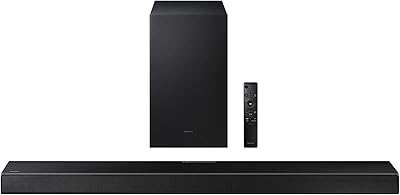
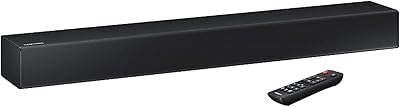
The Samsung HW-Q60B 3.1ch Soundbar is Samsung's 2022 entry into the mid-range soundbar space, built for people who want a meaningful audio upgrade without committing to a full surround system. It pairs a 30-inch bar with a wireless subwoofer and delivers 300W of total output — solid figures for a typical living room. If you own a compatible Samsung TV, the Q-Symphony integration is genuinely useful, combining TV and soundbar speakers for a wider overall sound. Worth noting upfront: Atmos support here is virtualized, not delivered through physical height channels, so it pays to set expectations before buying.

Features & Benefits

The HW-Q60B packs in several practical features. Dolby Atmos and DTS Virtual:X create a simulated 3D soundstage — noticeable on action-heavy content, though the effect relies on psychoacoustic processing rather than dedicated up-firing drivers. Adaptive Sound adjusts the EQ depending on what you are watching, which genuinely helps with dialogue clarity during quieter scenes. Game Mode tightens audio latency and adds directional cues useful for spatial awareness in shooters and open-world titles. You can also pair two Bluetooth devices simultaneously, and the wireless subwoofer keeps your setup tidy without running a cable across the floor.

Best For

This Samsung soundbar suits anyone already in the Samsung TV ecosystem — Q-Symphony compatibility is the single strongest reason to pick it over competing bars at a similar price. It fits naturally in small-to-medium living rooms where a 30-inch bar slots under most screens without overwhelming the space. Casual gamers will appreciate a dedicated audio mode without needing a complex multi-speaker rig. If your priority is straightforward setup and the ability to stream music from your phone with minimal fuss, this 3.1ch soundbar covers those needs reliably. Buyers chasing reference-quality or true spatial audio should budget for a step-up model.

User Feedback

Across roughly 650 ratings, the HW-Q60B holds a 4.2-star average — solid, though not a standout in a crowded category. Most buyers praise the easy initial setup and a noticeable bass improvement over built-in TV speakers. Owners with compatible Samsung displays tend to be the most satisfied, particularly with the Q-Symphony pairing. The recurring complaint is the virtualized Atmos ceiling: those expecting true overhead sound often feel let down. Dialogue can also blur at higher volumes during dense scenes. Gamers are generally more forgiving, with many calling out improved audio positioning in Game Mode as a real, day-to-day benefit.

Pros

  • Wireless subwoofer delivers deep, room-filling bass without any cable management headaches.
  • Q-Symphony integration with compatible Samsung TVs produces a noticeably wider soundstage.
  • Setup is genuinely quick — most users report being up and running in under 15 minutes.
  • Game Mode reduces audio latency and adds directional cues that improve spatial awareness during play.
  • Adaptive Sound does a good job adjusting EQ automatically across different content types.
  • Dual Bluetooth connection lets two devices share audio without re-pairing each time.
  • At 30 inches, the HW-Q60B fits cleanly under most mid-sized TV setups without dominating the space.
  • 300W total output handles typical living room volumes without obvious distortion.
  • Includes HDMI cable, wall-mount kit, and remote right in the box — no extra purchases needed.
  • A 4.2-star average across hundreds of real buyers reflects consistently solid everyday performance.

Cons

  • Dolby Atmos is virtualized only — there are no up-firing drivers, so overhead effects are simulated rather than physical.
  • Dialogue clarity can soften and blur when the bar is pushed to higher volume levels.
  • Q-Symphony only works with select Samsung TVs, limiting its value for anyone outside that ecosystem.
  • Buyers stepping up from a more capable surround system may find the overall soundstage narrow.
  • At 19.8 pounds, the combined system is heavier than expected if wall-mounting is part of the plan.
  • The Bluetooth connection range and stability have drawn occasional complaints from users in larger rooms.
  • Virtual surround processing does not hold up as well as competing bars with dedicated rear satellite speakers.
  • No app-based EQ control is available, which limits fine-tuning options compared to rivals at a similar price.

Ratings

The scores below reflect our AI-driven analysis of verified global buyer reviews for the Samsung HW-Q60B 3.1ch Soundbar, with spam, bot-generated, and incentivized feedback actively filtered out before scoring. Each category captures what real owners consistently praised or struggled with across hundreds of hands-on experiences. Both the strengths and the friction points are represented honestly, so you can make a genuinely informed call.

Audio Quality
76%
24%
For a mid-range 3.1ch system, the overall sound presentation is noticeably richer and more dynamic than any built-in TV speaker. Movies and streaming content benefit from a wider front soundstage, and the subwoofer adds weight to low-end effects that most compact bars simply cannot reproduce.
At higher volumes, the midrange can feel congested and dialogue loses some definition, which frustrates viewers during dense action sequences. The lack of physical height channels also means the Atmos experience is clearly a processing trick rather than a genuine spatial upgrade.
Bass Performance
83%
The 10-inch wireless subwoofer consistently earns praise from buyers who were previously underwhelmed by TV audio. It handles cinematic low-end — explosions, deep music baselines, rumbling ambience — with a satisfying presence that holds up well in small-to-medium rooms.
At very high output levels the bass can become a little indistinct, leaning more toward boom than controlled punch. Serious bass enthusiasts comparing this to a dedicated subwoofer system will notice the ceiling fairly quickly.
Dialogue Clarity
67%
33%
Adaptive Sound helps with vocal intelligibility during normal viewing conditions, and most buyers report following dialogue more easily compared to their previous TV speakers. Quiet conversations in drama content come through with reasonable clarity at moderate volumes.
This is the most commonly cited weakness across user reviews — at higher volume settings, speech can smear into the surrounding mix and become harder to track. Buyers who watch a lot of dialogue-heavy content in noisy households may find themselves consistently fighting this issue.
Gaming Performance
81%
19%
Game Mode genuinely reduces processing latency and reshapes the directional audio mix in a way that makes positional cues — enemy footsteps, off-screen gunfire — more distinct and easier to act on. Casual and mid-level gamers consistently rate this feature as a real, daily improvement over standard TV audio.
Competitive players with high expectations will find the spatial precision falls short of a quality gaming headset. The directional audio is noticeably better than standard mode, but it cannot match dedicated surround setups with true rear-channel speaker placement.
Q-Symphony Integration
84%
For Samsung TV owners, Q-Symphony is the single feature that most pleasantly surprises buyers in real-world use. Activating it produces a noticeably fuller, wider sound by recruiting the TV speakers into the mix, which gives the whole system a room-filling quality that neither component achieves alone.
The feature is entirely locked to compatible Samsung TVs, which means anyone pairing the HW-Q60B with a different brand gets none of this benefit. That is a real limitation for buyers who may switch TVs in the future or who already own a non-Samsung display.
Ease of Setup
91%
The subwoofer pairs automatically on first boot, the HDMI cable is included, and the overall process from unboxing to first sound is genuinely quick. The vast majority of reviewers highlight setup as a standout positive, with most reporting under 15 minutes from box to listening.
A small number of users report the wireless subwoofer occasionally failing to auto-pair on first connection, requiring a manual re-pair procedure. The remote-only control interface also limits setup flexibility for people who prefer app-based configuration.
Build Quality
72%
28%
The soundbar has a clean, understated design with a fabric grille and matte finish that blends naturally into most living room setups. At its price tier the construction feels appropriately solid, and the included accessories — wall-mount kit, HDMI cable, remote — add practical value.
The plastic chassis feels noticeably less premium when handled up close, and a few buyers mention the subwoofer housing feels lightweight for its size. It holds up fine in normal use, but it does not carry the tactile quality of higher-end competing systems.
Connectivity Options
69%
31%
Dual Bluetooth pairing is a practical convenience for households where two people alternate between streaming from their phones. HDMI ARC and Tap Sound cover the main connection scenarios most buyers need without overcomplicating the setup.
There is no Wi-Fi, no app control, and no multi-room audio support, which feels like a gap at this price point compared to competing bars that offer full wireless ecosystem integration. Buyers expecting app-based EQ or voice assistant support will be disappointed.
Soundstage Width
73%
27%
For a single-bar setup without satellite speakers, the front soundstage feels adequately wide for movie watching in a typical living room. Q-Symphony expands this further for Samsung TV users, which pushes the perceived width well beyond what the hardware alone achieves.
Without rear speakers, the sense of true surround envelopment is absent, and the virtual processing only goes so far in compensating. Buyers who have experienced a proper 5.1 system will notice the sides and rear of the soundstage feel empty.
Volume & Room Fill
78%
22%
300W of combined output is enough to comfortably fill a mid-sized living room or den without the system straining. Most buyers in typical apartment or house setups report never needing to push it past 60 to 70 percent to achieve satisfying listening levels.
In larger, open-plan spaces or rooms with high ceilings and hard surfaces, the system can feel underpowered at maximum output. The frequency response also starts at 300Hz, which means very low sub-bass extension is limited compared to systems with more capable subwoofer hardware.
Value for Money
79%
21%
Relative to the competition at its price tier, the HW-Q60B offers a competitive feature set — wireless subwoofer, dual Bluetooth, Game Mode, and Q-Symphony — without requiring any additional purchases out of the box. For Samsung TV households especially, the price-to-feature ratio is strong.
Buyers who skip Q-Symphony — either because they own a non-Samsung TV or choose not to use it — lose the most differentiated feature, which makes the value proposition feel less clear against some competing bars. A few step-up alternatives offer true up-firing Atmos drivers for a modest price increase.
Remote & Controls
62%
38%
The included remote covers the essential functions — volume, input switching, sound mode selection — and is comfortable enough for daily use. AAA batteries are included, which is a small but appreciated touch.
There is no display on the soundbar itself, so navigating sound modes requires counting button presses or listening for audio feedback tones, which several users find unintuitive. The absence of any app control makes it harder to access less-used settings quickly.
Wireless Subwoofer Reliability
74%
26%
In most setups the wireless pairing between the bar and subwoofer stays consistent across daily use with no manual reconnection required. The dedicated proprietary link keeps sync tight so bass effects land in time with on-screen action.
A subset of reviewers report occasional wireless dropouts, particularly in homes with dense Wi-Fi environments or thick walls between the bar and subwoofer. Repositioning the subwoofer closer to the bar typically resolves the issue, but it limits placement flexibility.

Suitable for:

The Samsung HW-Q60B 3.1ch Soundbar is a strong fit for anyone who wants a meaningful, fuss-free audio upgrade over their TV's built-in speakers without wiring up a full multi-channel system. It makes the most sense for Samsung Smart TV owners specifically, since the Q-Symphony feature — which combines the TV's own speakers with the soundbar for a fuller overall sound — only works within that ecosystem. Casual gamers will find genuine value here too: Game Mode keeps audio latency tight and adds directional cues that make a real difference in competitive play without requiring a dedicated gaming headset or surround setup. Movie and streaming fans in small-to-medium living rooms will appreciate the 30-inch form factor, wireless subwoofer, and Adaptive Sound, which collectively produce a noticeably richer experience than most TVs can manage on their own. If your priority is plug-in simplicity and reliable everyday performance, this 3.1ch soundbar delivers exactly that.

Not suitable for:

Buyers expecting true, height-channel Dolby Atmos — the kind produced by physical up-firing drivers — should know upfront that the Samsung HW-Q60B 3.1ch Soundbar handles Atmos through virtualization only, which is a noticeably different experience. Dedicated home theater enthusiasts who have already auditioned systems with discrete surround and overhead speakers will likely find the simulated soundstage underwhelming by comparison. The Q-Symphony feature, while impressive in practice, is entirely locked to compatible Samsung TVs, so pairing this bar with a Sony, LG, or any other brand yields a more ordinary experience. Audiophiles focused on vocal clarity and precise stereo imaging at high volumes may also be frustrated, as dialogue definition can break down when the bar is pushed hard. Anyone shopping for a permanent centerpiece in a large living room or dedicated media room should budget for a more capable step-up model with true spatial audio hardware.

Specifications

  • Channel Config: The system uses a 3.1 channel layout with three front-facing channels and one dedicated wireless subwoofer.
  • Total Output: Combined power output reaches 300W across the soundbar and wireless subwoofer together.
  • Soundbar Size: The soundbar unit measures 8″ deep by 30″ wide by 10″ tall, making it a compact fit for most TV stands.
  • Item Weight: The full system, including the subwoofer, weighs 19.8 pounds total.
  • Woofer Size: The wireless subwoofer houses a 10-inch dynamic driver for low-frequency reproduction.
  • Audio Formats: Supported audio formats include Dolby Atmos (virtualized) and DTS Virtual:X for simulated spatial sound processing.
  • Bluetooth: Bluetooth multi-connection allows two smart devices to be paired and active simultaneously.
  • Sound Modes: Built-in listening modes include Adaptive Sound, Game Mode, and Q-Symphony for Samsung TV pairing.
  • Connectivity: Primary connection options include HDMI (ARC), Bluetooth, and Tap Sound for NFC-enabled mobile devices.
  • Subwoofer Link: The subwoofer connects to the soundbar wirelessly, requiring no physical cable between the two units.
  • Mounting: The soundbar supports wall mounting and includes a wall-mount kit in the box.
  • Power Source: The soundbar operates on corded electric power and does not include any battery-based operation for the main unit.
  • Included Items: The box contains the soundbar, wireless subwoofer, HDMI cable, remote controller, wall-mount kit, and AAA batteries for the remote.
  • Compatible Devices: The HW-Q60B works with televisions, gaming consoles, laptops, and smartphones via Bluetooth or HDMI.
  • Release Year: This soundbar was introduced to the market in 2022 as part of Samsung's Q-series audio lineup.
  • Driver Type: Both the soundbar and subwoofer use dynamic driver technology for audio reproduction.
  • Remote Control: A physical remote controller is included and requires two AAA batteries, which are provided in the package.
  • Warranty: Samsung covers this unit under a limited manufacturer warranty; buyers should confirm regional terms at time of purchase.

Related Reviews

Samsung HW-S60B 3.1ch Soundbar
76%
82%
Audio Quality
76%
Bass Performance
91%
Setup & Installation
84%
Build Quality & Design
79%
Smart Features & Connectivity
More
Samsung HW-C450 2.1ch Soundbar
86%
88%
Sound Quality
91%
Bass Performance
85%
Gaming Performance
90%
Ease of Setup
80%
Bluetooth Connectivity
More
Samsung HW-B750D 5.1 Channel Soundbar

74%
91%
Dialogue Clarity
67%
Surround Sound Realism
78%
Bass Performance
93%
Setup & Installation
74%
TV Compatibility
More
Samsung HW-S50B 3.0ch Soundbar
75%
88%
Dialogue Clarity
54%
Bass Performance
67%
Virtual Surround
91%
Setup & Ease of Use
74%
Build Quality
More
Samsung HW-Q700C 3.1.2ch Dolby Atmos Soundbar

78%
83%
Sound Quality
86%
Bass Performance
67%
Dolby Atmos Height
88%
Dialogue Clarity
81%
Gaming Performance
More
Samsung HW-S60A 5.0ch Soundbar

75%
91%
Dialogue Clarity
86%
Soundstage Width
47%
Bass Performance
93%
Setup Experience
83%
Build Quality
More
Samsung HW-Q600A Soundbar
85%
89%
Sound Quality
88%
Bass Performance
80%
Setup and Installation
86%
Connectivity
84%
Design and Build Quality
More
Samsung HW-B550D 3.1ch Soundbar
76%
91%
Dialogue Clarity
78%
Bass Performance
93%
Setup & Installation
67%
Virtual Surround Sound
84%
Value for Money
More
Samsung HW-T400 2.0 Channel Soundbar
73%
78%
Audio Clarity
54%
Bass Performance
93%
Ease of Setup
81%
Value for Money
84%
Bluetooth Connectivity
More
Samsung HW-B550F 2.1 Channel Soundbar
79%
83%
Sound Quality
81%
Bass Performance
88%
Dialogue Clarity
67%
Virtual Surround
93%
Setup & Ease of Use
More

FAQ

Yes, the HW-Q60B connects to any TV with an HDMI ARC port or via Bluetooth, regardless of brand. The catch is that Q-Symphony — the feature that combines the TV and soundbar speakers — only activates with compatible Samsung TVs. On other brands you still get a solid soundbar experience, just without that specific enhancement.

It is virtualized Atmos, not hardware-based. There are no up-firing drivers, so the soundbar uses signal processing to simulate height and overhead effects. For most casual viewers it adds a sense of openness to the sound, but if you have heard a true Atmos system with physical ceiling or up-firing speakers, the difference is noticeable.

Setup is one of the easier parts of owning the Samsung HW-Q60B 3.1ch Soundbar. The subwoofer pairs to the bar automatically out of the box, and connecting via HDMI ARC takes just a single cable to your TV. Most buyers report being fully set up and listening within 15 minutes.

In normal use, there are no noticeable sync issues between the subwoofer and the soundbar. The wireless connection is proprietary and designed to stay in lockstep with the main unit. Interference from other devices in a crowded wireless environment could theoretically cause occasional dropout, but it is uncommon in practice.

It is genuinely useful for certain types of games. Game Mode reduces audio processing to cut down on latency, which matters if you are playing fast-paced shooters or action titles where even a small delay between action and sound is distracting. It also adjusts the directional mix to make positional audio — like footsteps or gunfire — feel more distinct. It is not a replacement for a dedicated gaming headset, but it is a real improvement over standard TV audio.

The primary wireless option for phones is Bluetooth. The HW-Q60B also supports Tap Sound, which lets you initiate playback by tapping a compatible NFC-enabled Android device to the soundbar. Beyond that, there is no Wi-Fi streaming or app-based control built in.

The 10-inch wireless subwoofer produces a clear, deep bass response that makes a genuine difference over TV speakers, especially for movies and music. At moderate volumes it stays tight and controlled. At very high volumes some users note the bass can feel slightly one-note compared to higher-end systems, but for everyday use it performs well above its price class.

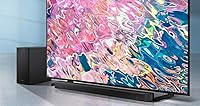
Yes, a wall-mount kit is included in the box, so you do not need to buy any additional hardware for a standard wall installation. The bar measures 30 inches wide, so it will fit cleanly beneath most 55-inch and larger televisions. Just note the subwoofer still needs to be placed on a surface nearby since it is a freestanding unit.

Sound mode selection — Adaptive Sound, Standard, Game Mode, and a few others — is handled through the remote. There is no companion app with a graphical EQ, which is a limitation compared to some competing bars. If precise manual EQ tuning matters to you, this bar is fairly limited in that regard.

It is a reasonable match for that setup. The 30-inch bar will not visually dominate under a 65-inch screen, and 300W of combined output is enough to fill a mid-sized room comfortably. If your room is particularly large or acoustically challenging — high ceilings, hard floors throughout — you may eventually want more output or true surround speakers, but for a typical den or bedroom setup it holds up well.