Overview

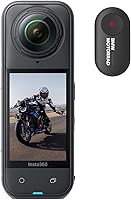
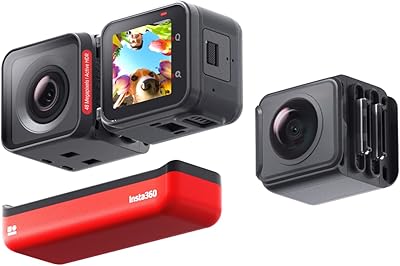
The Insta360 X5 BMW Motorrad Edition 360 Camera is a genuine collaboration between two brands with very different expertise — one builds motorcycles, the other builds cameras — and the result is more than a cosmetic partnership. This motorcycle action cam ships with a BMW Motorrad Mini Remote designed to mount on your handlebars, giving you intuitive one-tap control while riding. Under the hood, a triple AI chip and dual 1/1.28-inch sensors push 360 video to 8K30fps, a meaningful step up from prior Insta360 generations. It's built for riders who document their journeys, not casual users who'll mount it once and forget it.
Features & Benefits

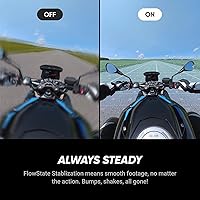
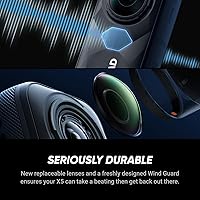
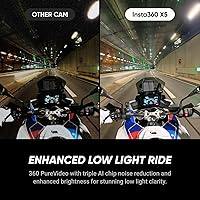
The dual 1/1.28-inch CMOS sensors are the foundation here — they capture noticeably richer color and shadow detail compared to smaller-sensor 360 cameras, which matters when you're riding into a tunnel or heading out before sunrise. The triple AI chip handles aggressive noise reduction in real time, so dim footage doesn't just survive — it looks usable. FlowState Stabilization combined with 360 Horizon Lock means the footage stays level even when you hit a pothole or lean hard into a corner. Lenses are now fully replaceable and scratch-resistant, a practical win for anyone who has watched a gravel chip ruin a lens mid-trip. The 4-mic wind guard array is a genuine attempt to solve the wind roar problem that plagues most action cams at highway speeds.

Best For

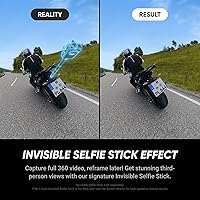
This 360 riding camera is an obvious fit for BMW Motorrad owners who want a camera that integrates with their bike's aesthetic and works with the included handlebar remote out of the box. Touring riders and motorcycle vloggers will appreciate InstaFrame Mode, which lets you capture a standard forward-facing video and a full 360 simultaneously — useful when you want flexible editing options without running two cameras. Off-road and adventure riders benefit most from the stabilization and rugged lens design. Content creators chasing that invisible selfie stick effect — where the camera appears to float behind you — will want this, though the required accessory is sold separately. Low-light commuters and early-morning canyon riders round out the core audience.

User Feedback

Because the X5 BMW Motorrad Edition only became available in April 2025, verified buyer feedback is still building — so take early impressions with that context in mind. Riders who upgraded from previous Insta360 models report a noticeable improvement in wind noise reduction, though some note it doesn't fully eliminate roar at sustained highway speeds above 60 mph. Battery life gets mixed responses; the 3-hour claim holds under moderate conditions, but longer touring days likely require a spare. The BMW Motorrad branding draws an honest divide — some buyers see it as meaningful integration, others view it as cosmetic. The Insta360 app earns consistent praise for its reframing workflow, and lens replacement pricing and availability remain a watch item for long-term owners.

Pros

  • FlowState Stabilization keeps footage smooth on gravel, cobblestones, and rough mountain switchbacks without a gimbal.
  • Dual 1/1.28-inch sensors deliver richer color and shadow detail than most action cameras in this class.
  • Replaceable lenses mean one gravel chip does not end the camera's useful life mid-trip.
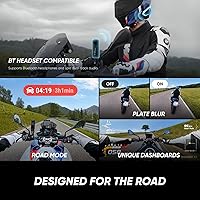
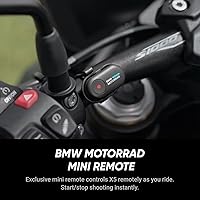
  • The included BMW Motorrad Mini Remote enables gloved, eyes-forward camera control while riding.
  • Low-light footage from the X5 BMW Motorrad Edition is genuinely usable in tunnels and at dusk, not just salvageable.
  • InstaFrame Mode captures forward-view and full 360 video simultaneously, giving editors more options in post.
  • The 4-mic wind guard array is a real improvement over previous Insta360 models at moderate riding speeds.
  • Waterproofing works reliably in sustained rain without needing a separate housing.
  • The Insta360 app makes AI-assisted reframing accessible to riders with no professional editing background.
  • 8K resolution gives significant headroom for cropping and reframing without losing output quality.

Cons

  • Battery drains faster than the 3-hour claim during continuous 8K recording, especially in cold weather.
  • The invisible selfie stick effect requires a separately purchased accessory not included in the box.
  • Wind noise above 65 mph still requires post-processing to clean up, despite the upgraded microphone array.
  • Replacement lenses are newly launched and long-term parts availability remains an open question.
  • The BMW Motorrad branding adds cost that non-BMW riders gain nothing practical from.
  • Exporting high-resolution 360 footage is slow and battery-intensive on older or mid-range smartphones.
  • The 360 form factor is bulkier than single-lens action cams, creating noticeable wind resistance on helmet mounts at speed.
  • Riders on non-standard handlebars may need extra trial and error to find a stable remote mounting position.
  • High-speed vibration from certain engine types can introduce subtle micro-jitter that stabilization does not fully suppress.
  • Buyers focused only on forward-facing video will find cheaper, simpler options that match the core output quality.

Ratings

The scores below for the Insta360 X5 BMW Motorrad Edition 360 Camera were generated by our AI system after analyzing verified buyer reviews from global markets, with spam, bot-submitted, and incentivized feedback actively filtered out. Each category reflects honest synthesis of real riding experiences — the genuine strengths and recurring frustrations alike. Nothing has been softened to protect the score.
Video Quality
93%
Riders consistently report that 8K30fps footage holds up impressively when reframed to a standard wide-angle view — detail on road textures, signage, and distant scenery is noticeably sharper than on previous Insta360 models. The larger sensors make a real difference when shooting through tree-lined roads with alternating light and shadow.
A handful of users note that maximum 8K quality comes with heavier file sizes that stress slower Micro SD cards, occasionally causing dropped frames. At 4K and below the gap narrows considerably, so buyers who never plan to shoot in full 360 resolution may find the spec less compelling in practice.
Low Light Performance
88%
Early morning canyon runs and urban night rides are where this camera quietly earns its price. The triple AI chip's noise reduction keeps footage looking usable rather than grainy in situations where older action cams produced muddy, unusable clips. Tunnel entry and exit — notoriously harsh lighting transitions — are handled with noticeably less blown-out overexposure.
At true nighttime conditions without streetlights, noise reduction can slightly over-smooth fine detail, giving footage a slightly plastic look on closer inspection. It is better than most competitors in this class, but it is not a mirrorless camera — buyers expecting DSLR-level night performance will be setting unrealistic standards.
Stabilization
91%
FlowState Stabilization combined with 360 Horizon Lock is the feature most riders mention unprompted in positive reviews. Gravel sections, cobblestone city centers, and sharp switchbacks all produce footage that stays level and smooth without any gimbal attached. For touring riders doing multi-surface routes, this is a genuine confidence builder.
At very high-frequency vibration points — certain engine RPM ranges on older bikes or extended off-road washboard sections — a subtle micro-jitter can still creep into footage. It is rarely deal-breaking, but riders with especially high-vibration parallel twins have flagged it as noticeable on close inspection.
Wind Noise Reduction
74%
26%
Compared to previous Insta360 models, the 4-mic array with built-in wind guard is a real step forward for speeds up to around 55 mph. Narration recorded during moderate-speed riding is genuinely cleaner, and the wind guard does a better job isolating voice frequencies than a bare microphone setup would.
Above 65 mph on open highways, wind roar still intrudes enough to require post-processing in most cases. Buyers expecting studio-clean audio at full freeway speed will be disappointed — this is an improvement, not a solution. Riders in full-face helmets with intercom systems may find those setups still outperform the onboard mics for narration.
Battery Life
67%
33%
For day rides under two hours or shorter touring legs, the battery holds up reasonably well. Riders who shoot intermittently rather than continuously — capturing specific scenic sections rather than running the camera the whole trip — report the 3-hour claim is roughly achievable under those conditions.
Full-day touring riders consistently flag battery life as the camera's most practical limitation. Continuous 8K recording drains the pack noticeably faster than the rated figure, and cold weather — common on mountain passes — compounds the drop. Carrying a spare battery is less of an option and more of a requirement for serious touring use.
Build Quality & Durability
86%
The overall chassis feels solid and well-engineered, and the waterproofing holds up to rain riding without riders needing a separate housing. The Midnight Black finish resists showing minor scuffs and fingerprints better than glossy-finish competitors, which matters when the camera is mounted and handled frequently.
A few buyers note that the lens module connection point — while replaceable — feels slightly less robust than the body itself, and warrants careful handling during lens swaps. The camera is not indestructible; a direct high-speed impact has resulted in cracked bodies in isolated reported cases, as you would expect at this price tier.
Lens Replaceability
82%
18%
Riders who have previously written off action cameras after a single gravel-chip incident genuinely appreciate that lenses can be swapped in seconds without tools. The scratch-resistant coating holds up better than prior-generation lenses under normal riding conditions, reducing how often replacements are actually needed.
Replacement lens pricing and retail availability are still early-stage concerns given the camera only launched in April 2025. A few buyers have flagged uncertainty about long-term parts supply if the product line evolves, which is a reasonable concern for anyone planning to use this camera over several seasons.
Handlebar Remote Integration
89%
The included BMW Motorrad Mini Remote is the feature that most cleanly justifies the collaboration branding. Mounting it on the handlebars and toggling between InstaFrame views with a gloved hand is genuinely intuitive, and riders report it significantly reduces the urge to reach for the camera body itself while moving.
The remote is purpose-built for Insta360's ecosystem, which means it does not offer the kind of customizable button mapping that power users might want. Riders with non-standard handlebar setups have also noted that finding the right mounting position takes some trial and error before it feels natural.
Invisible Selfie Stick Effect
71%
29%
When it works, the third-person floating perspective produces footage that genuinely stands out compared to standard helmet or chest-mount action cam shots. Content creators documenting riding trips consistently highlight this as their favorite creative output from the camera.
The effect requires a separately purchased invisible selfie stick, which is not included despite the feature being prominently marketed. This feels like a meaningful omission at the price point, and buyers who missed the small print have expressed frustration after unboxing. The additional cost needs to be factored into the total purchase decision.
App & Editing Workflow
83%
The Insta360 mobile app earns consistent praise for making AI-assisted reframing accessible to riders who are not professional editors. Choosing your angle after the fact — rather than committing to a fixed mount position before the ride — is a workflow shift that most users adapt to quickly and genuinely appreciate.
Exporting high-resolution 360 footage on older smartphones is a slow, battery-intensive process, and the app has occasionally drawn criticism for stability on non-flagship Android devices. Desktop editing via Insta360 Studio is more capable but has a steeper learning curve that casual users find off-putting.
Waterproofing
87%
Rain riding is simply not a concern with this camera, which is exactly what touring riders need. Multiple buyers have reported riding through sustained downpours and mountain mist without any water ingress issues, and the camera continues functioning normally afterward.
Waterproofing is only rated without the USB port open — riders who forget to fully seal the port before hitting wet weather have reported minor moisture issues in isolated cases. It is user error more than a design flaw, but worth flagging for buyers who swap batteries or charge frequently mid-trip.
Weight & Portability
78%
22%
At 1.26 pounds, this 360 riding camera is not ultralight, but it is compact enough that most handlebar and helmet mounts handle it without excessive vibration-related issues. Riders transitioning from larger DSLR setups consistently describe the portability as a meaningful upgrade.
Compared to smaller single-lens action cameras, the 360 form factor is noticeably bulkier, and a handful of riders have noted wind resistance on the camera body at high speeds — particularly when mounted on top of a helmet rather than the handlebars.
Value for Money
69%
31%
For BMW Motorrad owners who will genuinely use the handlebar remote and the full 360 capture workflow, the bundled ecosystem approach does justify a meaningful portion of the price premium. The sensor and stabilization improvements over the prior generation are real, not just marketing copy.
Buyers who primarily want a forward-facing action cam — and have no interest in 360 reframing — will find significantly cheaper options that cover that use case well. The BMW Motorrad branding also adds cost that non-BMW riders are essentially paying for without deriving any additional benefit.
BMW Motorrad Branding Value
61%
39%
For BMW Motorrad owners, the co-branded aesthetic, the included dedicated remote, and the sense of an integrated riding ecosystem do add a layer of satisfaction that purely functional buyers might undervalue. It feels purpose-built rather than generic, which matters to enthusiasts.
Non-BMW riders and pragmatic buyers tend to view the Motorrad badge as cosmetic rather than functional, and several reviewers have directly noted that the same hardware is available in the standard X5 at a lower price point. The branding premium is real and not universally seen as earned.

Suitable for:

The Insta360 X5 BMW Motorrad Edition 360 Camera is built for a specific kind of rider, and it earns its price most convincingly for that audience. BMW Motorrad owners get the most out of it immediately — the included handlebar-mounted mini remote means you can switch views, start and stop recording, and toggle InstaFrame Mode without ever taking your hands off the bars or your eyes off the road. Touring riders who document multi-day routes will appreciate the combination of FlowState Stabilization and replaceable lenses, since both reduce the anxiety of riding hard knowing your footage and your gear can recover from the unexpected. Content creators shooting motorcycle vlogs or cinematic riding clips will find the 360 capture-first, reframe-later workflow a genuine creative advantage over fixed-angle cameras. Riders who frequently push into low-light conditions — early morning departures, mountain passes at dusk, or urban night commutes — will get tangible value from the improved sensor size and AI noise handling. Adventure and off-road riders also fit naturally into this camera's strengths, where stabilization and rugged build matter more than any single spec on paper.
Not suitable for:

If you primarily want a forward-facing action cam to mount and forget, the Insta360 X5 BMW Motorrad Edition 360 Camera is almost certainly more camera than you need — and more expensive than the alternatives that would serve that use case just as well. Riders who do not own a BMW Motorrad bike are effectively paying for branding and a remote ecosystem that has no special advantage for their setup, since the core imaging hardware is also available through the standard X5 line. Full-day tourers covering 400-plus miles in a single stretch will find the battery life a genuine operational problem, and this camera does not solve that without carrying spares or planning charging stops around ride breaks. Buyers who expected the invisible selfie stick effect to be ready out of the box will need to budget for the separately sold accessory, which is a frustrating discovery after unboxing a premium product. Riders who want truly clean, broadcast-quality audio at highway speeds should know this camera improves on the problem but does not eliminate it — an external mic solution or helmet intercom will still produce better narration results. Finally, anyone on a tight budget who is comparing this to mid-range single-lens action cameras will struggle to justify the price gap unless 360 capture and the Insta360 reframing workflow are central to how they actually plan to use it.
Specifications

  • Video Resolution: Shoots up to 8K30fps in full 360 mode using dual 1/1.28″ CMOS sensors for high-detail immersive footage.
  • Sensor Size: Dual 1/1.28″ CMOS sensors deliver improved dynamic range, color accuracy, and low-light performance over smaller-sensor predecessors.
  • Aperture: Both lenses operate at f/2.0, allowing more light in during dawn, dusk, and low-ambient riding conditions.
  • AI Processing: A triple AI chip design handles real-time noise reduction, image processing, and stabilization computation simultaneously.
  • Stabilization: FlowState Stabilization combined with 360 Horizon Lock keeps footage level and smooth across rough terrain without a gimbal.
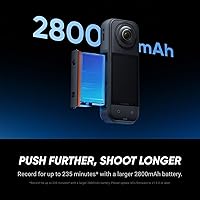
  • Battery Life: Rated up to 3 hours of continuous recording under standard conditions, with reduced runtime expected in cold weather or at maximum resolution.
  • Audio System: A 4-microphone array with a built-in wind guard reduces wind interference and prioritizes voice capture during riding and narration.
  • Lens Type: Fully replaceable, scratch-resistant lenses can be swapped without tools in seconds, reducing downtime after damage.
  • Screen Size: Features a 2.5″ touchscreen for on-camera playback, settings navigation, and framing reference.
  • Storage Format: Records to Micro SD cards; no internal storage is included, so a high-speed card is required for 8K recording.
  • Video Format: Saves footage in MP4 (for standard playback) and INSV (Insta360's native format for full 360 editing in the app and desktop software).
  • Audio Format: Audio is recorded in AAC format, compatible with standard video editing and post-production workflows.
  • Connectivity: Connects to devices via USB for file transfer and charging; wireless pairing is handled through the Insta360 mobile app.
  • Weight: The camera body weighs 1.26 pounds, which is manageable for handlebar and helmet mounts but heavier than compact single-lens action cameras.
  • Included Remote: Ships with the BMW Motorrad Mini Remote, designed for handlebar mounting to allow gloved, one-tap camera control while riding.
  • Focal Length: Maximum focal length of 30mm supports wide-angle 360 capture suitable for immersive riding and action footage.
  • Color Option: Available in Midnight Black, a finish that resists visible fingerprints and minor surface scuffs during regular handling and mounting.
  • Model Number: Official model identifier is CINSAAHA, useful for verifying compatibility with Insta360 accessories and replacement parts.
  • Package Size: The retail package measures 17.17 x 7.17 x 2.91 inches, accommodating the camera body, remote, and included accessories.
  • Launch Date: First made available on April 22, 2025, making long-term reliability and user review data still limited compared to more established camera models.

Related Reviews
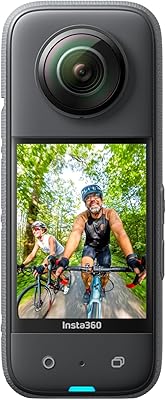
Insta360 X3 360° Action Camera
81%
88%
Video Quality (360 Mode)
93%
Stabilization Performance
91%
Reframing Flexibility
84%
App & AI Editing Experience
79%
Build Quality & Durability
More
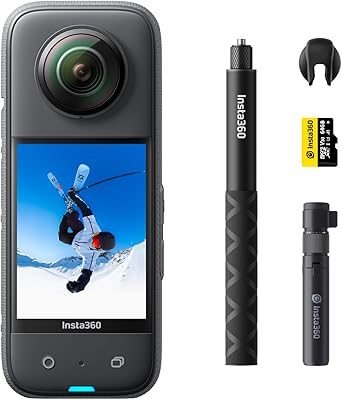
Insta360 X3 Creator Kit 360 Action Camera

75%
88%
Video Quality (360 Mode)
79%
Video Quality (Single-Lens Mode)
93%
Stabilization
74%
Low-Light Performance
51%
Battery Life
More
Samsung Gear 360 (2017 Edition) 4K Camera
82%
91%
Video Quality
88%
Portability
65%
Battery Life
80%
Build Quality
85%
Ease of Use
More
Insta360 ONE X2 360-Degree Action Camera
78%
93%
Video Stabilization
86%
360 Video Quality
91%
Waterproofing & Durability
58%
Battery Life
78%
App & Editing Workflow
More
AKASO 360 Action Camera
74%
81%
Video Quality (Daylight)
52%
Low-Light Performance
74%
Stabilization (360-SuperSmooth)
88%
Invisible Selfie Stick Effect
79%
Photo Quality (72MP Mode)
More
GoPro MAX 360 Action Camera
76%
88%
360 Video Quality
91%
Dual-Mode Versatility
83%
Pole Removal & Stitching
54%
Battery Life
93%
Waterproofing
More
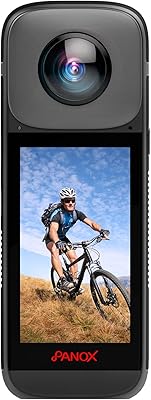
PANOX V2 360 Camera
PANOX V2 360 Camera
82%
91%
Stabilization Performance
88%
Live Streaming Quality
85%
Ease of Use
83%
Build Quality
75%
Battery Life
More
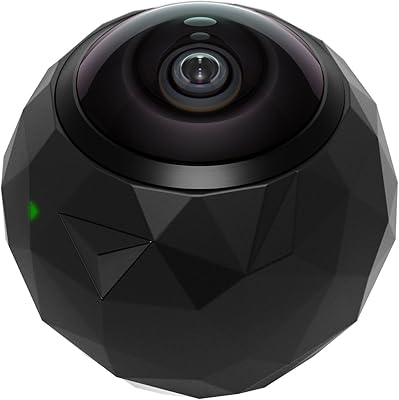
360fly 360° HD Video Camera
84%
89%
Video Quality
75%
Battery Life
91%
Build Durability
85%
Ease of Use
80%
App Performance
More
Insta360 ONE RS Twin Edition Action Camera
80%
88%
Video Quality
93%
Stabilization
84%
360 Lens Performance
58%
Battery Life
81%
Build Quality & Durability
More
Insta360 ONE RS 4K Edition Action Camera
77%
93%
Video Stabilization
86%
Image & Video Quality
47%
Battery Life
88%
Modular Lens System
82%
Build Quality & Durability
More

FAQ

Not quite — the effect itself is a feature of how 360 footage gets reframed in the Insta360 app, but achieving the floating third-person perspective requires a compatible invisible selfie stick, which is sold separately and not included in the box. Make sure to budget for that accessory if cinematic third-person riding shots are a main reason you are buying this camera.

Yes, the remote is a standard Insta360 accessory that mounts via a handlebar clamp and works with any bike regardless of brand. The BMW Motorrad branding is cosmetic and collaborative in nature — the remote itself is not locked to BMW hardware or electronics.

At speeds up to around 55 mph, the improvement over older Insta360 models is real and noticeable — voice narration comes through considerably cleaner. Above 65 mph on open roads, wind roar still intrudes enough that you will likely want to do some audio cleanup in post. It is a meaningful step forward, but not a complete fix for high-speed freeway riding.

You can replace the lenses yourself without any tools — the design is intentionally user-serviceable. Insta360 engineered the swap to take just a few seconds, which is particularly useful if you chip or crack a lens mid-trip and need to get back out shooting quickly.

For stable 8K30fps recording, you will want a card rated at UHS-I Speed Class 3 (U3) or better, with a minimum write speed of around 60 MB/s. Using a slower card risks dropped frames or recording interruptions, especially during longer continuous sessions.

The camera is waterproof as-is — no separate housing is needed for rain riding. Just make sure the USB port cover is fully sealed before riding in wet conditions, as the waterproofing is only rated with all ports closed. Several riders have confirmed it holds up well through sustained downpours.

InstaFrame Mode records a standard fixed-angle video and a full 360 video at the same time. In practice, you can double-tap the remote to instantly toggle between a forward-facing view and a selfie view while the 360 capture runs continuously in the background. It gives you editing flexibility after the ride without having to run two separate cameras.

For most full-day rides, 3 hours will not be enough if you are recording continuously. The rating holds reasonably well under moderate conditions, but cold mountain weather and maximum-resolution recording both reduce it noticeably. Carrying at least one spare battery is a practical necessity for longer touring days rather than just a nice-to-have.

You can use other software, but the 360 reframing workflow — where you choose your angle after shooting — works best inside the Insta360 mobile app or Insta360 Studio on desktop. Standard editors like Premiere Pro can handle the MP4 output, but you lose the AI-assisted reframing tools unless you export a flattened version first. For most riders, the Insta360 app is the easiest path to a finished, shareable clip.

It can be, depending on your priorities. The core imaging hardware — the sensors, stabilization, and low-light performance — is the same regardless of what bike you ride, and the handlebar remote works on any motorcycle. Where the BMW Motorrad collaboration adds less obvious value is if the branding itself does not appeal to you, since you are effectively paying a premium for it. Non-BMW riders who want the same imaging capabilities might find the standard X5 a more cost-efficient path to identical performance.