

Overview

The RYR NEO100 Wireless Gaming Earbuds enter a crowded mid-range market with a clear pitch: low-latency wireless audio in a compact form that works across VR headsets, consoles, and PC without the weight of a full gaming headset. RYR is a newer brand, so you won't find decades of reputation behind the name — but the NEO100 makes a reasonable case on specs alone. The core hook is dual connectivity: a 2.4GHz USB-C dongle for lag-sensitive gaming alongside Bluetooth for your phone, running simultaneously. Multi-platform, portable gamers are the clear target here.

Features & Benefits

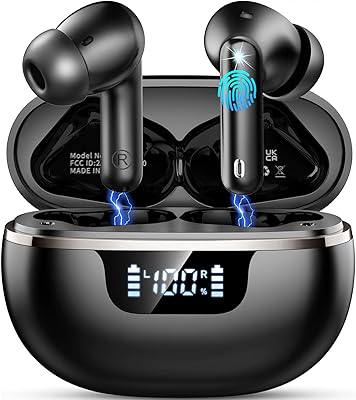
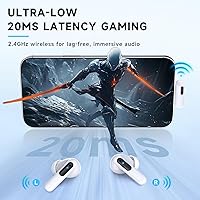
The standout feature is latency. When using the 2.4GHz dongle, audio delay drops below the threshold where most people detect any lip-sync or sound-action mismatch — a real difference in VR environments or fast-paced shooters where even a fraction of a second matters. The 12mm dynamic drivers lean toward bass-heavy output, which suits explosions and ambient game audio well, though audiophiles wanting a flat response should look elsewhere. Dual microphones handle voice chat adequately in quiet to moderate environments; don't expect studio-grade isolation in a noisy room. The LED battery display on the case is a genuinely useful touch — rare at this price — and overall battery reserves comfortably cover a full day of mixed gaming and listening.

Best For

These gaming earbuds make the most sense for Meta Quest 2 or 3 owners who find over-ear headsets too hot or cumbersome during longer sessions, and for anyone constantly switching between a PS5, Switch, Steam Deck, or phone without wanting to re-pair every time. The ability to take a call mid-game without fumbling with settings is genuinely convenient. IPX4 sweat resistance also makes them a solid pick for VR fitness games. That said, if you primarily game at a fixed desktop and already own a quality headset, the portability angle won't justify a switch. Buyers needing professional mic quality for streaming should look at dedicated solutions — this wireless earbud set is built for players, not broadcasters.

User Feedback

Buyers using the NEO100 with a Meta Quest or Steam Deck generally confirm the low-latency claim holds up — the 2.4GHz connection feels noticeably tighter than standard Bluetooth for fast-moving games. Comfort during extended wear is more mixed; fit is personal, and some users report fatigue after an hour or more, worth keeping in mind before committing. Mic performance earns a middling response — fine for casual party chat, but background noise from fans or keyboards does bleed through. A few buyers noted minor confusion over the dongle's charging port position, which varies between units. Build quality is considered acceptable for ABS plastic at this tier, though long-term durability from a newer brand remains an open question.

Pros

  • The 2.4GHz dongle delivers genuinely low latency that makes a noticeable difference in VR and fast-paced competitive games.
  • Simultaneous dual connection lets you stay on Bluetooth for calls while gaming without ever touching a settings menu.
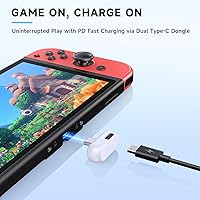
  • Compatible out of the box with Meta Quest, PS5, PS4, Switch, Steam Deck, and PC — one device covers most setups.
  • IPX4 sweat resistance makes these gaming earbuds a practical choice for active VR workouts, not just seated sessions.
  • The LED battery display on the case gives you a clear charge readout without digging through a phone app.
  • Total battery reserve across earbuds and case comfortably covers a full day of mixed gaming and casual listening.
  • Compact case is genuinely pocketable, making it easy to bring the NEO100 to a friend's place or on a trip.
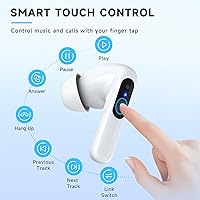
  • Touch controls for calls and track management work reliably enough to become second nature within a day or two.
  • The 12mm drivers produce satisfying bass weight that suits action games and immersive open-world audio well.
  • Plug-and-play dongle setup on Steam Deck and PS5 requires no driver installation or configuration.

Cons

  • Mic noise reduction struggles in any environment beyond near-silence — keyboard noise and fans bleed through noticeably.
  • Comfort during extended sessions is inconsistent; some users report ear fatigue well before the two-hour mark.
  • The bass-heavy audio tuning can make vocals and high-frequency game audio feel recessed and less defined.
  • Dongle port placement varies between units — some arrive with a side port, others with a top port, which can cause initial confusion.
  • No Xbox compatibility, leaving a significant portion of the console gaming audience without support.
  • Touch controls are sensitive enough that accidental inputs happen regularly during active VR movement.
  • Long-term durability is an open question given RYR has limited brand history and no established repair ecosystem.
  • Bluetooth latency is standard consumer grade — the low-latency advantage only applies when the 2.4GHz dongle is in use.
  • The dongle is an extra accessory to carry and track; losing it eliminates the core gaming use case entirely.
  • No in-app EQ or sound profile adjustment means the bass-forward tuning is fixed, with no way to personalize it.

Ratings

The RYR NEO100 Wireless Gaming Earbuds have been scored by our AI system after parsing verified buyer reviews from multiple global markets, with spam, bot-generated, and incentivized submissions actively filtered out. These scores reflect the honest spread of real user experiences — the genuine wins and the friction points that show up repeatedly across different platforms and use cases. Both strengths and weaknesses are weighted transparently so you can make a confident, informed decision.

Latency Performance
88%
When paired via the 2.4GHz dongle, users consistently report that audio feels locked to the action — particularly notable in VR titles on Meta Quest 3 where even small delays break immersion. FPS players switching from standard Bluetooth setups frequently call out this improvement as the single biggest reason they kept the earbuds.
A small number of users noted occasional micro-stutters during dongle use near crowded 2.4GHz environments like busy apartments or offices. The low-latency advantage also disappears entirely when connecting via Bluetooth, which runs at standard consumer delays.
Audio Quality
74%
26%
The 12mm drivers punch reasonably hard in the low end, which works well for action-heavy games — explosions, weapon fire, and ambient environmental audio all come through with satisfying weight. For the price tier, the overall soundstage is wide enough to give positional cues in multiplayer games.
The tuning is clearly bass-forward, which means vocals and high-frequency details can feel slightly recessed. Music listeners and those who prefer a neutral or bright sound signature will find the balance skewed, and there is no EQ adjustment available in-app or on the earbuds themselves.
Microphone Quality
61%
39%
For casual party chat on Discord or in-game voice channels, the dual microphones do the job well enough in quiet home environments. Teammates can hear you clearly during low-key sessions, and the noise reduction does catch the softest background hum from PC fans.
In noisier settings — a running air conditioner, keyboard clatter, or household activity — the noise reduction struggles to keep up, and bleed becomes noticeable to others on the call. Streamers or anyone who needs dependable mic isolation will find this underwhelming compared to even entry-level standalone mics.
Comfort & Fit
67%
33%
Out of the box, most users find the default ear tips sit securely during moderate movement, which holds up well for seated gaming sessions and light VR use. The compact earbud housing does not protrude heavily from the ear, which helps with headset compatibility on Meta Quest.
Fit is highly personal with in-ear designs, and a meaningful portion of reviewers report discomfort or looseness after 60 to 90 minutes of continuous wear. The included tip sizes cover the basics, but buyers with unusually small or large ear canals may need to source third-party tips separately.
Battery Life
83%
The charging case carries enough reserve power to top the earbuds up multiple times before needing a wall charge — easily covering a full weekend of mixed gaming and casual listening without anxiety. For travelers or portable gamers, this is a genuine practical advantage over shorter-reserve competitors at a similar price.
Earbud-only playtime per single charge is solid but not exceptional by current standards, and heavy users running the 2.4GHz connection continuously may see runtime drop somewhat below the advertised ceiling. The case also charges via USB-C, but the port position varies between units — some users received a side-port version, others a top-port version, which created minor confusion on first use.
Build Quality
63%
37%
The overall assembly feels tidy for an ABS plastic construction at this price point — nothing rattles, hinge movement on the case is consistent, and the earbuds themselves have a clean finish without obvious molding seams. The nano-coating adds a layer of reassurance for sweaty gaming sessions.
Long-term durability is the open question here since RYR lacks the track record of established brands. Several buyers flagged that the case lid feels lighter and less premium than competitors, and there are early reports of hinge looseness developing after a few months of daily use.
Ease of Connectivity
79%
21%
Pairing the dongle is genuinely plug-and-play on Steam Deck, PS5, and PC — no driver installation, no menu diving, just insert and go. Simultaneous Bluetooth connection for phone calls works reliably once set up, which removes the hassle of re-pairing when switching contexts mid-session.
Some Android users reported that initial Bluetooth pairing required a few attempts before stabilizing, and a handful of Switch users noted the USB-C dongle orientation in the dock can be awkward depending on port placement. The dual-connection mode also occasionally needs a manual reconnect after the earbuds have been left in the case overnight.
Platform Compatibility
86%
Coverage across Meta Quest 2 and 3, PS5, PS4, Switch, Steam Deck, and PC in a single device is a genuine selling point for multi-platform households. Users who regularly move between a handheld and a console in the same evening particularly appreciate not needing separate audio solutions.
Xbox is absent from the supported list, which will matter to a portion of the gaming audience. There is also no official support for older USB-A-only devices without the included adapter, and that adapter adds one more small accessory to keep track of.
Water & Sweat Resistance
77%
23%
IPX4 coverage handles the real-world demands of VR fitness games like Beat Saber or Supernatural without issue — users report no degradation in performance after multiple sweaty sessions. The nano-coating gives added confidence that brief splashes or a light rain caught on the commute home will not cause damage.
IPX4 is splash-resistant, not waterproof, so submerging or rinsing under running water is out. Buyers planning to use these during high-intensity outdoor workouts in rain may want a higher-rated option, and the charging case itself carries no listed water resistance rating.
Controls & Usability
71%
29%
Touch controls for answering calls, skipping tracks, and basic volume management work reliably enough that most users stop thinking about them after a day or two of adjustment. The ability to handle a phone call without touching your phone mid-game is a small but genuinely appreciated convenience.
The touch surface is sensitive enough that accidental inputs during earbud adjustment happen more than users would like, particularly during active VR movement. There is no dedicated game or music mode toggle on the earbuds themselves — switching between 2.4GHz and Bluetooth requires a physical dongle swap or phone action.
LED Battery Display
82%
18%
Having a visible battery readout on the case rather than hunting through a Bluetooth settings menu is a small convenience that gets mentioned positively in reviews far more often than expected. It saves the frustrating experience of opening your case mid-session only to discover you have less charge than you thought.
The display shows percentage in broad increments rather than precise numbers, so the last 20% feels less predictable than it looks. A few users also noted the display dims quickly and can be hard to read in bright direct sunlight.
Value for Money
81%
19%
Stacking dual-mode connectivity, low-latency 2.4GHz, IPX4 resistance, and an LED case display together at this price tier is objectively competitive. Buyers who specifically need VR-ready wireless earbuds without stepping into significantly more expensive territory consistently rate the value proposition highly.
The value calculus shifts for buyers who do not need multi-platform flexibility or VR compatibility — in that narrower use case, competing options offer better audio tuning or mic quality for a similar outlay. The newer brand also means there is no second-hand market or ecosystem of accessories to fall back on.
Portability & Case Design
76%
24%
The compact case dimensions make these earbuds genuinely pocketable in a way most gaming headsets are not, which opens them up for commutes, travel, and on-the-go sessions that a full headset could never support. Case weight is light enough to forget it is in a bag.
The dongle adds an extra item to carry and keep track of, and losing it would significantly limit the product's core functionality. The USB-C port inconsistency across production batches is a minor but real quality-control gap that can confuse buyers who purchase a second unit expecting identical hardware.

Suitable for:

The RYR NEO100 Wireless Gaming Earbuds are a strong fit for anyone who games across multiple platforms and wants a single audio solution that keeps up with all of them. Meta Quest 2 and 3 owners in particular will appreciate a compact earbud that sidesteps the heat and pressure of over-ear headsets during longer VR sessions, while still delivering the low-latency connection that makes VR audio feel believable. If you regularly bounce between a Steam Deck on the couch, a PS5 at the desk, and your phone in between, the simultaneous dual-connection setup removes a lot of the usual friction. Fitness-focused VR players who work up a real sweat in games like Beat Saber will find the IPX4 splash resistance a practical safeguard rather than a marketing checkbox. This wireless earbud set also suits buyers who need to stay reachable by phone mid-session without pausing gameplay — the ability to take a call and return to the game without re-pairing is a small but genuinely useful quality-of-life feature.

Not suitable for:

The RYR NEO100 Wireless Gaming Earbuds are not the right tool for every gamer, and it is worth being clear about where they fall short. If you stream, create content, or rely on voice chat in noisy environments, the dual microphones will likely frustrate you — the noise reduction handles gentle background hum reasonably well, but it is not built for keyboard clatter, room echo, or any environment with real ambient noise. Buyers who care deeply about audio fidelity and prefer a flat or bright sound signature will also find the bass-forward tuning limiting, with no EQ option to compensate. Xbox users are out of scope entirely, since neither the USB-C dongle nor any bundled adapter adds Xbox compatibility. Those who game primarily at a fixed desktop setup and already own a quality headset will find little reason to switch, as portability is the main value driver here. Finally, anyone who needs long-term brand reliability assurance — warranty support, replacement parts, an established repair ecosystem — should know that RYR is a newer name, and that track record simply does not exist yet.

Specifications

  • Model: The earbuds are designated the NEO100, manufactured by RYR.
  • Connectivity: Connects via a 2.4GHz USB-C dongle for low-latency gaming and Bluetooth 5.3 for simultaneous phone pairing.
  • Audio Latency: Audio delay drops below 20 milliseconds when using the 2.4GHz dongle connection.
  • Driver Size: Each earbud houses a 12mm dynamic driver tuned for a bass-forward gaming audio profile.
  • Impedance: Driver impedance is rated at 20 Ohm, suitable for direct pairing with mobile devices and gaming consoles.
  • Microphone: Dual built-in microphones with noise reduction are included for voice chat and phone calls.
  • Total Playtime: Combined earbud and charging case capacity delivers up to 36 hours of total playback time.
  • Case Battery: The charging case holds a 500mAh battery, providing multiple full recharges for the earbuds on a single case charge.
  • Water Resistance: Earbuds carry an IPX4 rating with a nano-coating, protecting against sweat and incidental splashes.
  • Bluetooth Range: Wireless Bluetooth range extends up to approximately 50 feet in open conditions.
  • Controls: Playback, call management, and track switching are handled via touch controls built into the earbud surface.
  • Case Dimensions: The charging case measures 72mm long by 51mm wide by 32mm tall, compact enough to fit in a trouser pocket.
  • Case Weight: The charging case weighs approximately 41.28 grams without the earbuds inside.
  • Material: Both the earbuds and charging case are constructed from ABS plastic with an ABS and plastic composite case shell.
  • Compatible Platforms: Officially compatible with Meta Quest 2 and 3, PS5, PS4, Nintendo Switch, Steam Deck, PC, and iOS devices.
  • Included Items: Package includes the earbuds, charging case, USB-C transmitter dongle, USB-C to USB-A adapter, charging cable, three ear tip sizes, and a user manual.
  • Earbud Weight: Total earbud weight is approximately 0.12 pounds for the pair, keeping them lightweight during extended wear.
  • Audio Driver Type: Both earbuds use dynamic driver technology rather than balanced armature or hybrid configurations.

Related Reviews
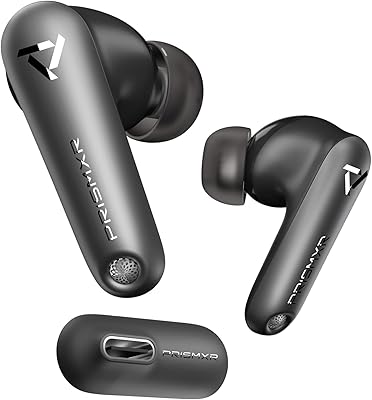
PrismXR Vega T1 Wireless Gaming Earbuds
73%
83%
Audio Latency
78%
Dual-Device Connectivity
76%
Compatibility Range
88%
Passthrough Charging
69%
Sound Quality
More
Razer Hammerhead HyperSpeed Wireless Gaming Earbuds
74%
91%
Latency Performance
88%
VR Compatibility
79%
Comfort & Fit
67%
Active Noise Cancellation
62%
Microphone Quality
More
ASUS ROG Cetra True Wireless Gaming Earbuds
84%
91%
Sound Quality
88%
Battery Life
82%
Noise Cancellation
86%
Comfort & Fit
73%
Bluetooth Connectivity
More
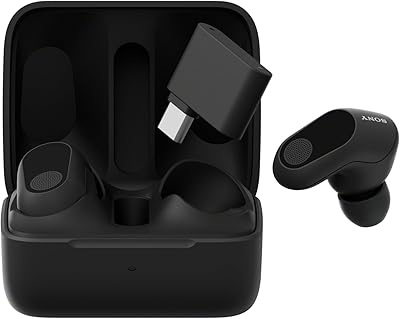
Sony INZONE Buds Wireless Gaming Earbuds
75%
91%
PS5 Integration
88%
Audio Latency
83%
Spatial Sound Quality
67%
Active Noise Canceling
76%
Microphone Quality
More
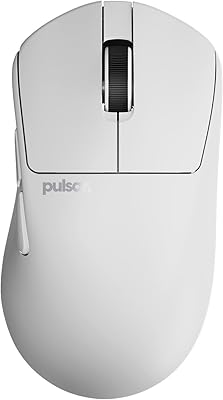
Pulsar Gaming Gears X3 Wireless Gaming Mouse
86%
94%
Precision & Tracking Performance
89%
Ergonomics & Comfort
91%
Lightweight Design
87%
Durability & Build Quality
90%
Button Responsiveness & Switch Longevity
More
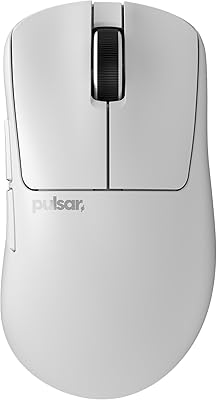
Pulsar X2F Wireless Fingertip Gaming Mouse
80%
94%
Weight & Form Factor
89%
Sensor Performance
91%
Polling Rate (8K Wireless)
88%
Switch Feel & Click Quality
78%
Grip & Ergonomics
More
Pulsar Gaming Gears Xlite v3 Medium Wireless Gaming Mouse
88%
93%
Ergonomics & Comfort
91%
Wireless Performance
89%
Battery Life
86%
Build Quality
94%
Precision & Sensor Accuracy
More
Soundcore P40i
Soundcore P40i
78%
93%
Value for Money
91%
Battery Life
72%
Active Noise Cancellation
74%
Sound Quality
79%
Call Quality
More
ZONWOO S1 Wireless Earbuds
86%
94%
Battery Life
86%
Sound Quality
88%
Fit and Comfort
91%
Water Resistance
75%
Bluetooth Connectivity
More
NDO T07 Wireless Earbuds
81%
94%
Fit and Stability
91%
Water Resistance
88%
Battery Endurance
93%
Value for Money
86%
Bluetooth Reliability
More

FAQ

For VR gaming and fast-paced shooters, the difference is real and worth caring about. Standard Bluetooth typically introduces delays that can make audio feel slightly detached from the action — small enough to ignore in casual use, but genuinely disruptive in VR where your brain expects sound and movement to be perfectly in sync. Switching to the 2.4GHz dongle tightens that connection enough that most users notice it within minutes.

Yes, the USB-C dongle plugs directly into the Quest 3's USB-C port and is recognized immediately — no Bluetooth pairing menus or app configuration needed. Just plug in the dongle, power on the earbuds, and you are ready. It is one of the more straightforward setups for VR audio at this price.

Yes, with a small caveat. The Switch dock has USB-A ports, so you will need the included USB-C to USB-A adapter to connect the dongle. Once that adapter is in place, the setup works the same as any other platform — plug in, power on, play. Keep the adapter somewhere safe since it is easy to misplace.

Nothing is wrong. RYR has openly acknowledged that the transmitter dongle comes in two hardware versions: one with the charging port on top and another with it on the side. Both versions perform identically — the difference is purely cosmetic and relates to a production change between batches. If you received one that looks different from product photos, it will still work exactly as expected.

Honest answer: adequate for casual gaming chat, but limited in noisier environments. The dual microphones with noise reduction handle the gentle hum of a quiet room reasonably well, but a louder PC, mechanical keyboard, or desk fan will bleed through to varying degrees. If most of your communication is relaxed squad chat rather than anything where clarity is critical, you will likely be fine. For anything more demanding, a dedicated mic is a better investment.

Yes, this is one of the more practical features of the RYR NEO100 Wireless Gaming Earbuds. The earbuds maintain a Bluetooth connection to your phone while simultaneously receiving game audio through the 2.4GHz dongle. When a call comes in, you can answer directly using the touch controls without pausing your game or re-pairing anything. It works reliably once both connections are established.

Comfort really depends on your ear shape and how well the included tips seal for you. Many users find them perfectly fine for sessions up to 90 minutes, but fatigue starts to become a factor for a meaningful portion of buyers beyond that point. Trying the different included tip sizes helps, and if none of them fit well, third-party foam or silicone tips in your specific size can make a significant difference.

The IPX4 rating with nano-coating covers sweat and incidental splashes, which is enough for active VR games and moderate workouts. Users playing high-intensity titles like Beat Saber without issue are common in feedback. Just avoid submerging them or using them in heavy rain — IPX4 is splash resistance, not waterproofing, and the case carries no water resistance rating of its own.

Specific charge time figures are not officially published by RYR, and fast charging is not listed as a feature, so standard USB-C charging speeds apply. Based on the 500mAh case capacity, a full case charge from empty should take roughly one to two hours using a typical 5W charger. The earbuds themselves charge inside the case whenever the case has power and the lid is closed.

RYR is a newer entrant in the gaming audio space, which means they do not have the years of customer service history or product track record that brands like Jabra or Sony carry. That is worth acknowledging honestly. What they do have is a product that delivers on its core promises at launch, reasonable early buyer feedback, and a clear focus on the VR and multi-platform gaming niche. The main uncertainty is long-term durability and after-sales support, which only time and a larger user base will fully answer.