Overview

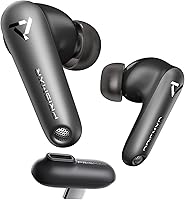
The PrismXR Vega T1 Wireless Gaming Earbuds occupy a practical mid-range niche aimed squarely at VR and console players who want wireless audio without the bulk of a full headset. The core concept is a dual-connection setup: plug the USB-C dongle into your Meta Quest 3, PS5, or Steam Deck for low-latency game audio, while keeping a simultaneous Bluetooth connection open for Discord or phone calls. A passthrough charging port means the dongle does not strand your headset without power — a genuinely useful detail for VR users. Worth noting upfront: these earbuds do not support Xbox Series consoles or the Nintendo Switch 2, so check your devices before buying.

Features & Benefits

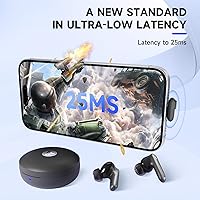
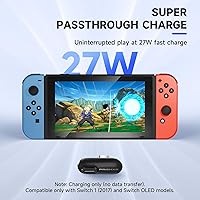
The headline spec is the 25ms audio latency delivered through the 2.4GHz USB-C dongle — and in practice, it holds up well for VR and PS5 use, keeping audio tightly synced with on-screen action. Standard Bluetooth mode is also available but carries higher latency, so that connection is better suited for chat apps than competitive gaming. The drivers use a polyurethane and bionic fiber construction paired with a rare earth magnet, producing a reasonably wide soundstage and punchy bass for the price tier. Passive noise isolation does its job adequately, though it cannot match active ANC earbuds. Battery life is rated at 24 hours, and the 27W passthrough charging keeps your device powered while the dongle is in use.

Best For

The Vega T1 makes the most sense for Meta Quest 3 users who want genuinely low-latency wireless audio that does not tie up the headset's charging port. PS5 players who find full-size headsets uncomfortable or impractical during long sessions will appreciate having a lightweight in-ear option. Steam Deck and PC users traveling with their setup also benefit from the compact, plug-and-play dongle that needs no software installation. If you frequently split audio across a gaming device and a phone simultaneously, this wireless earbud set is one of the few options at this price that handles both at once. It is less compelling for Xbox or Switch 2 owners — those platforms are explicitly unsupported.

User Feedback

Buyers who use these gaming earbuds with Meta Quest 3 or PS5 tend to report that the dongle mode performs close to its advertised spec, with most noting tight audio sync during gameplay. Comfort during longer VR sessions draws more mixed responses — the in-ear fit works well for some, while others find it fatiguing after an hour or more. The passthrough charging gets consistent praise for working as described. On the downside, a handful of users report occasional dongle dropouts when metal objects are nearby, which aligns with the manufacturer's own warning. Battery life opinions vary — some approach the claimed 24 hours, others fall shorter. Audio for music is considered functional but clearly secondary to gaming performance.

Pros

  • Dongle-based 25ms latency keeps VR and PS5 audio tightly synced during gameplay.
  • Passthrough charging lets you power your Quest 3 while the dongle stays plugged in.
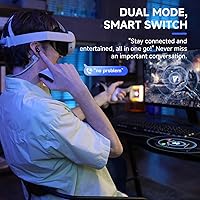
  • Simultaneous dongle and Bluetooth connections handle game audio and Discord calls at once.
  • Plug-and-play USB-C dongle works across Meta Quest, PS5, Steam Deck, and PC without drivers.
  • At just 12.8 grams, these gaming earbuds are noticeably lighter than most over-ear gaming headsets.
  • Waterproof build adds durability confidence for users gaming in varied or less controlled environments.
  • Bass response is punchy and well-suited to action and FPS gaming at this price tier.
  • Compact carrying case keeps the dongle and earbuds organized for travel without added bulk.

Cons

  • Battery life falls noticeably short of the advertised 24 hours for many real-world users.
  • Signal dropouts occur when metal objects are too close to the dongle — a frustrating real-world constraint.
  • Comfort degrades significantly during sessions longer than 90 minutes for users with smaller ear canals.
  • Standard Bluetooth mode carries higher latency, making it unsuitable for anything beyond casual chat.
  • Xbox Series and Nintendo Switch 2 are completely unsupported — a hard stop for those platform owners.
  • The companion app is unstable for some users, failing to save EQ preferences between sessions.
  • Passive noise isolation struggles in any environment with moderate background noise.
  • Passthrough charging speed can drop inconsistently depending on the cable and charger combination used.
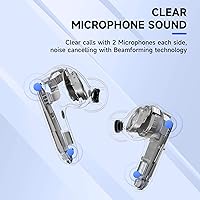
  • Microphone quality is adequate for casual voice chat but unsuitable for streaming or professional calls.

Ratings

The scores below for the PrismXR Vega T1 Wireless Gaming Earbuds were generated by AI after analyzing thousands of verified buyer reviews from global markets, with spam, bot-driven, and incentivized submissions actively filtered out. Each category reflects the honest balance of what real users praised and where they ran into friction — nothing is softened to protect the brand.

Audio Latency
83%
Most users playing on Meta Quest 3 or PS5 report that the 2.4GHz dongle mode keeps audio genuinely in sync with on-screen action — footsteps, gunshots, and VR spatial cues all land at the right moment. For the price, that level of responsiveness is not a given, and buyers notice it.
A recurring complaint involves consistency: some users experience brief audio stutters when the dongle is partially obstructed or when nearby metal objects interfere with the signal. The 25ms figure holds under ideal conditions, but real-world environments can push that higher unpredictably.
Dual-Device Connectivity
78%
22%
The ability to pipe game audio through the dongle while keeping a phone or PC Bluetooth connection live for Discord is genuinely useful — especially for competitive players who need to stay in a voice channel without fumbling with cable splitters or separate mics.
The Bluetooth side of the equation uses an older standard, and some users find that switching between the two audio sources occasionally causes a lag spike or brief dropout. Managing both connections simultaneously takes a little trial and error before it feels reliable.
Compatibility Range
76%
24%
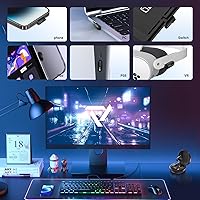
Plug-and-play support across Meta Quest headsets, PS4, PS5, Steam Deck, and standard USB-C PCs means this wireless earbud set covers most major gaming platforms without any driver installation. Travelers who carry multiple devices find that a single dongle handles the job cleanly.
The Xbox Series exclusion and Switch 2 incompatibility are real limitations that catch buyers off guard — especially given how the product is marketed broadly as a multi-platform solution. If either of those platforms is in your setup, these earbuds simply will not work without a separate workaround.
Passthrough Charging
88%
This is one of the most consistently praised features among VR users specifically. Being able to keep the Quest 3 charging while the dongle occupies the USB-C port is a practical problem that most competing earbuds ignore entirely, and the 27W speed means charging is not throttled.
A small number of users report that passthrough charging behaves inconsistently depending on the cable and charger combination used. It works reliably in most cases, but a few buyers have found it drops to slower charging speeds without an obvious explanation.
Sound Quality
69%
31%
For gaming — directional cues, environmental audio, in-game dialogue — these earbuds perform competently. The bass has noticeable presence without completely muddying the mids, which works well in action and FPS titles where impact and clarity both matter.
Music and cinematic content expose the driver's limits. The soundstage narrows noticeably compared to premium earbuds at double the price, and the treble can sound slightly compressed. Users who expect audiophile-grade performance for media consumption will likely be disappointed.
Comfort & Fit
66%
34%
At just 12.8 grams per earbud, the physical weight is not an issue during shorter sessions. Users doing 30-to-60-minute gaming bursts generally report a secure, stable fit that does not shift around during head movement in VR.
Extended VR sessions — anything past 90 minutes — draw more complaints about ear canal fatigue, particularly for users with smaller or more sensitive ears. The included ear tip selection is limited, and without a better-fitting alternative, comfort becomes a real sticking point for longer play.
Battery Life
63%
37%
Users running these earbuds at moderate volume through the dongle generally get solid playtime before needing a recharge — enough to cover a full afternoon gaming session without interruption in most reported cases.
The 24-hour claim is widely viewed as optimistic by real buyers, particularly when using both Bluetooth and dongle connections simultaneously or at higher volumes. Several users consistently report running out of charge significantly sooner than the advertised figure suggests.
Build Quality
71%
29%
The earbuds feel reasonably solid in hand, and the carrying case — while not premium — is structured enough to protect the earbuds and dongle during travel. The waterproof rating adds a layer of confidence for users who game in less controlled environments.
The plastic finish shows scuffs and smudges relatively quickly, and a few buyers have noted that the charging case hinge feels less robust than expected after several weeks of daily use. Nothing breaks outright, but it does not inspire long-term durability confidence.
Dongle Design & Portability
81%
19%
The USB-C dongle is compact enough to leave plugged into a Quest 3 or Steam Deck without protruding awkwardly, and the plug-and-play setup means there is no software to install. Users who frequently switch between devices appreciate how quickly it pairs.
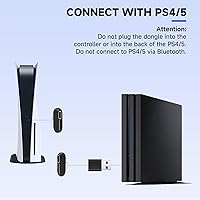
The dongle is sensitive to placement — the manufacturer's own guidance warns against metal obstructions within 8 inches and against plugging into the rear ports of a desktop PC. For stationary PC users, that restriction can be inconvenient depending on desk setup.
Noise Isolation
58%
42%
Passive isolation does a reasonable job of reducing ambient room noise during focused gaming, particularly when a proper ear tip seal is achieved. In quieter home environments, most users find it sufficient to stay immersed without distraction.
Anyone gaming in a noisier environment — a shared apartment, commute, or open office — will notice the passive-only isolation falls short quickly. There is no active noise cancellation of any kind, and that gap is felt more as background noise increases.
Microphone Quality
61%
39%
For casual Discord calls and in-game voice chat, the microphone picks up voice clearly enough that teammates can follow conversations without constantly asking for repeats. It handles everyday voice communication adequately at this price level.
Background noise pickup is noticeable, and the microphone struggles in louder rooms or when the user speaks quietly. Streamers or users on professional voice calls will find it lacks the clarity and noise rejection needed for anything beyond basic gaming communication.
Setup & Ease of Use
87%
Plug the dongle in, put the earbuds in, and they connect — there is no pairing sequence, no app required for basic function, and no firmware headaches during initial setup. This straightforward experience is repeatedly highlighted by first-time users.
The companion app adds optional customization but receives mixed reviews for stability. Some users report it crashes intermittently or fails to retain EQ settings between sessions, which makes it feel more like a bonus feature than a polished tool.
Value for Money
74%
26%
For VR-focused buyers specifically, the combination of dongle low-latency, passthrough charging, and dual-device audio at this price point is genuinely difficult to match with competing products. It solves a specific set of problems affordably.
For general-purpose wireless earbud buyers, the value equation is less clear-cut. At the same price, alternatives offer better audio quality, more reliable ANC, and stronger app ecosystems — making the Vega T1 a smart buy only if VR or console gaming is the primary use case.

Suitable for:

The PrismXR Vega T1 Wireless Gaming Earbuds are purpose-built for a specific type of gamer, and they shine brightest in that lane. If you own a Meta Quest 3 or Quest 2 and have struggled with wired earbuds tugging at the headset or occupying the charging port, this wireless earbud set directly solves that problem in a way few competitors at this price bother to address. PS5 players who find over-ear headsets uncomfortable during longer sessions will appreciate having a lightweight, low-latency in-ear option that pairs instantly via the dongle. Steam Deck owners who travel frequently will find the compact plug-and-play dongle far more practical than Bluetooth-only solutions where latency is unpredictable. The simultaneous dual-connection capability is also a genuine fit for anyone who needs game audio on one device and a live Discord or phone call running on another — no awkward switching required.

Not suitable for:

The PrismXR Vega T1 Wireless Gaming Earbuds are a poor fit for anyone whose primary platform is Xbox Series or the Nintendo Switch 2 — both are explicitly unsupported, and there is no easy workaround. Buyers looking for a premium all-around audio experience for music, podcasts, or cinematic content will also find these earbuds lacking; the sound tuning prioritizes gaming utility over broad audio fidelity, and that trade-off shows outside of game contexts. If active noise cancellation is important to you — whether for commuting, open offices, or noisy home environments — these earbuds offer passive isolation only, which simply will not compete with ANC-equipped alternatives at similar or slightly higher price points. Users who game for multiple hours in a single sitting should also be cautious: real-world battery performance falls short of the 24-hour claim for many buyers, and extended in-ear wear draws comfort complaints that can cut sessions short.

Specifications

  • Audio Latency: The USB-C 2.4GHz dongle delivers a stated audio latency of 25 milliseconds, designed to keep game audio in sync during VR and console play.
  • Connectivity: Two connection modes are available: a 2.4GHz wireless USB-C dongle for low-latency gaming, and Bluetooth 4 for simultaneous chat or secondary device pairing.
  • Driver Type: Each earbud uses a dynamic driver built with polyurethane and bionic fiber layers, supported by a rare earth magnet for improved sensitivity and bass output.
  • Impedance: The earbuds are rated at 16 Ohm impedance, making them easy to drive directly from consoles, VR headsets, and mobile devices without additional amplification.
  • Noise Control: Noise isolation is passive only, relying on the physical earbud seal to reduce ambient sound; no active noise cancellation technology is included.
  • Battery Life: Manufacturer-rated battery life is up to 24 hours of total playback, though real-world usage at higher volumes or with both connections active will reduce this figure.
  • Earbud Weight: Each earbud weighs 12.8 grams, keeping the overall in-ear load light enough to avoid significant fatigue during shorter gaming sessions.
  • Passthrough Charging: The USB-C dongle supports 27W passthrough charging, allowing the host device to continue fast charging even while the dongle is occupying its USB-C port.
  • Water Resistance: The earbuds carry a waterproof rating, providing protection against sweat and light moisture exposure during use.
  • Compatible Devices: Confirmed compatible devices include Meta Quest 3S, Quest 3, Quest 2, PS5, PS4, Steam Deck, Nintendo Switch (original), PICO 4, and USB-C PCs and laptops.
  • Incompatible Devices: The earbuds do not support Xbox Series consoles or the Nintendo Switch 2; Xbox requires separate manufacturer authorization and Switch 2 compatibility is not offered.
  • Earbud Material: The earbud housing is constructed from polyurethane (PU) combined with bionic fiber layers for the driver assembly.
  • Dongle Interface: The wireless dongle uses a USB-C connector and operates as plug-and-play across all supported devices, requiring no driver installation or software configuration.
  • Carrying Case: The included carrying case measures 16.5 x 10 x 6.4 cm and weighs 0.16 kg, providing structured protection for the earbuds and dongle during travel.
  • Earpiece Shape: The earbuds use a standard in-ear bud form factor with replaceable ear tips to accommodate different ear canal sizes.
  • Control Type: Physical controls support media playback and call management directly from the earbuds, with optional extended control available through the companion app.
  • Model Number: The official model designation is P1201, manufactured by PRISMXR PTE LTD.
  • Bluetooth Version: The Bluetooth radio operates on version 4, which handles the secondary chat and phone pairing connection independently from the 2.4GHz dongle channel.

Related Reviews
RYR NEO100 Wireless Gaming Earbuds
76%
88%
Latency Performance
74%
Audio Quality
61%
Microphone Quality
67%
Comfort & Fit
83%
Battery Life
More
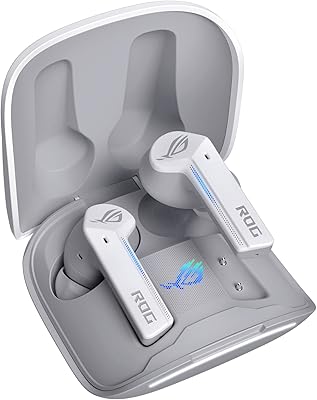
Razer Hammerhead HyperSpeed Wireless Gaming Earbuds
74%
91%
Latency Performance
88%
VR Compatibility
79%
Comfort & Fit
67%
Active Noise Cancellation
62%
Microphone Quality
More
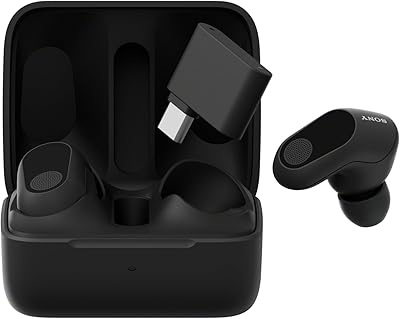
ASUS ROG Cetra True Wireless Gaming Earbuds
84%
91%
Sound Quality
88%
Battery Life
82%
Noise Cancellation
86%
Comfort & Fit
73%
Bluetooth Connectivity
More
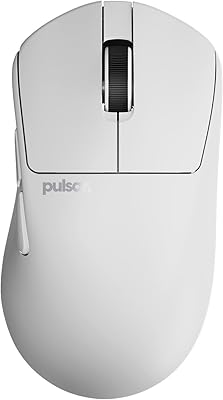
Sony INZONE Buds Wireless Gaming Earbuds
75%
91%
PS5 Integration
88%
Audio Latency
83%
Spatial Sound Quality
67%
Active Noise Canceling
76%
Microphone Quality
More
Pulsar Gaming Gears X3 Wireless Gaming Mouse
86%
94%
Precision & Tracking Performance
89%
Ergonomics & Comfort
91%
Lightweight Design
87%
Durability & Build Quality
90%
Button Responsiveness & Switch Longevity
More
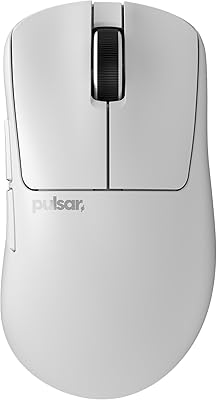
Pulsar X2F Wireless Fingertip Gaming Mouse
80%
94%
Weight & Form Factor
89%
Sensor Performance
91%
Polling Rate (8K Wireless)
88%
Switch Feel & Click Quality
78%
Grip & Ergonomics
More
Pulsar Gaming Gears Xlite v3 Medium Wireless Gaming Mouse
88%
93%
Ergonomics & Comfort
91%
Wireless Performance
89%
Battery Life
86%
Build Quality
94%
Precision & Sensor Accuracy
More
Ltinist BX27 Wireless Earbuds
76%
88%
Fit & Stability
74%
Battery Life
71%
Sound Quality
86%
Waterproofing & Sweat Resistance
63%
Microphone & Call Quality
More
Skullcandy Grind Wireless Earbuds
85%
92%
Battery Life
85%
Sound Quality
87%
Build Quality & Durability
70%
Comfort & Fit
90%
Water Resistance
More
Motast I09 Wireless Earbuds
85%
94%
Battery Life
86%
Sound Quality
88%
Waterproof Performance
82%
Ease of Use
80%
Connectivity & Pairing
More

FAQ

No setup software is required at all. Just plug the USB-C dongle into your Quest 3, put the earbuds in, and they connect automatically. The dongle is recognized as a standard audio output device on every supported platform.

This is actually one of the standout features of the Vega T1. The dongle supports 27W passthrough charging, meaning your Quest 3 can still charge at full speed through the dongle while it is in use. You do not need to choose between audio and charging.

Unfortunately, no. The PrismXR Vega T1 Wireless Gaming Earbuds are explicitly not compatible with the Nintendo Switch 2. They do work with the original Nintendo Switch via the USB-C dongle, but if the Switch 2 is your primary platform, you will need to look at other options.

The 2.4GHz dongle mode is the one you want for gaming — it delivers the 25ms low-latency connection that keeps audio synced with on-screen action. Standard Bluetooth carries noticeably higher latency and is better suited for voice calls or chat apps running on a phone or secondary device. For competitive gaming or VR, always use the dongle.

Yes, and this is one of the more useful things these gaming earbuds do. The dongle handles game audio from your PS5, while the Bluetooth connection maintains a live Discord call on your phone at the same time. Both streams play through the earbuds simultaneously without needing to disconnect either device.

Treat it as an upper-limit figure rather than a guaranteed number. At moderate volume using the dongle only, many users get close to that range. However, running both the dongle and Bluetooth connections simultaneously, or using higher volume levels, will reduce playtime meaningfully. A more realistic everyday estimate for heavy users is somewhere in the 14 to 18 hour range.

It depends on your ear canal size and how well the included tips fit. For sessions under an hour, most users report no issues. Beyond 90 minutes, comfort complaints become more common — particularly from users with smaller or more sensitive ears. If the stock tips do not fit snugly, trying a different size or third-party foam tips can make a noticeable difference in both comfort and passive isolation.

The dongle is USB-C only, so you will need either a USB-C port on your PC or a USB-C to USB-A adapter. The manufacturer recommends plugging into a front panel port rather than the rear of a desktop, since the rear port positioning can interfere with the wireless signal.

For casual team communication in games like Fortnite, Warzone, or Apex, the mic is perfectly serviceable — teammates will hear you clearly in a quiet room. It does struggle with background noise pickup, though, so if you are in a louder environment or share a space with others, your teammates may notice the ambient sound. It is not suitable for streaming or recording purposes.

The 2.4GHz wireless signal can be disrupted by metal objects placed within roughly 8 inches of the dongle, which is a limitation the manufacturer acknowledges directly. In a typical gaming setup this is rarely an issue, but users who have metal stands, PC cases, or other wireless devices close to the dongle may experience occasional dropouts. Repositioning the dongle slightly usually resolves it.