Overview

The Razer Hammerhead HyperSpeed Wireless Gaming Earbuds arrived in late 2023 as Razer's answer to a specific gap in the VR audio market — capable, low-latency earbuds built with Meta Quest users firmly in mind. These VR earbuds sit in the premium tier, competing with wireless audio brands that aren't necessarily optimized for headset-compatible use. The white colorway isn't purely aesthetic; it's a deliberate visual match for Quest hardware. What separates this from a standard wireless earbud launch is the dual connectivity approach — 2.4GHz via dongle and Bluetooth 5.2 — which means you're covered whether you're inside a virtual world or just out running errands.

Features & Benefits

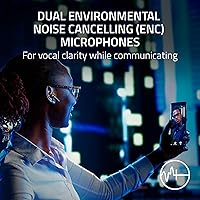
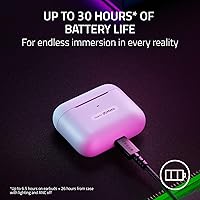
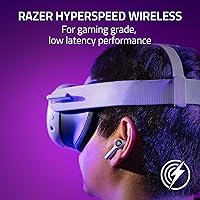
The standout feature is the 2.4GHz HyperSpeed connection, which plugs directly into Meta Quest's USB-C port and cuts the audio delay you'd normally experience over standard Bluetooth. In VR, even small lag breaks presence fast, so this matters more than many buyers initially expect. The Hammerhead HyperSpeed also includes Active Noise Cancellation to reduce ambient sound — fan hum, traffic, background chatter. Separately, the dual ENC microphones handle outgoing voice, reducing background pickup so teammates hear you clearly. Battery life covers most sessions well at roughly 6.5 hours per charge on the buds alone, though the 30-hour total assumes lighting and ANC are both switched off.

Best For

Razer's wireless gaming earbuds make the most sense for Meta Quest 2 or 3 owners who've grown tired of the headset's built-in audio and don't want a heavy over-ear headphone adding bulk during long sessions. They're also a solid pick for players who bounce between platforms — plug the dongle into your Quest, flip to Bluetooth for your phone, and you're set without carrying separate gear. Commuters who also game will appreciate the ANC and call-capable microphones. If you have no VR setup at all, however, these are harder to justify — the 2.4GHz dongle becomes a feature you're paying for but never actually using.

User Feedback

Buyers using these VR earbuds with Meta Quest consistently report a noticeable improvement in audio sync over standard Bluetooth — that core promise holds up. Comfort also earns strong marks, with most users getting through multi-hour sessions without irritation. Where reactions split is the dongle: some appreciate the dedicated low-latency link, while others find swapping it between devices cumbersome day to day. ANC draws middling responses — it works, but it won't challenge top consumer earbuds at that task. A handful of buyers note that microphone output is functional rather than exceptional. Satisfaction runs high among VR-focused owners but drops off for buyers who expected a premium all-purpose earbud.

Pros

  • The 2.4GHz dongle connection delivers noticeably tighter audio sync in VR compared to standard Bluetooth.
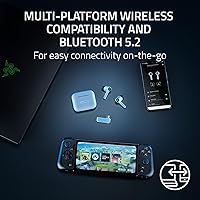
  • Multi-platform flexibility means one pair covers Meta Quest, PC, PlayStation, and your phone.
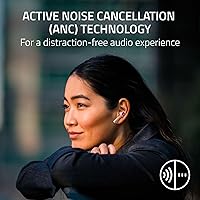
  • ANC effectively cuts background noise during long gaming sessions or commutes.
  • The ergonomic fit holds up well across extended wear without the discomfort common in gaming earbuds.
  • Dual ENC microphones keep voice pickup clean enough for multiplayer gaming and work calls.
  • The charging case extends total playback time substantially, reducing how often you hunt for a cable.
  • Meta Quest authorization adds a layer of confidence that the dongle pairing actually works as advertised.
  • Bluetooth 5.2 keeps the everyday wireless connection stable across supported devices.
  • The white colorway integrates naturally with Quest hardware for users who care about a consistent setup aesthetic.

Cons

  • The 30-hour battery total only applies with ANC and lighting both turned off — real-world figures will be lower.
  • Managing the USB-C dongle when switching between devices regularly can feel fiddly compared to pure Bluetooth earbuds.
  • ANC performance lags behind dedicated consumer earbuds at a similar price point from audio-focused brands.
  • Microphone output is serviceable for gaming but noticeably average for professional or high-quality call use.
  • Buyers without a VR setup are paying for a core feature they will likely never use.
  • Ear tip fit may not suit all ear sizes equally well, and tip variety in the box is limited.
  • Connectivity stability has drawn occasional complaints from buyers using the dongle across non-Quest devices.
  • The price is harder to justify if you spend the majority of your time on Bluetooth rather than the 2.4GHz connection.

Ratings

Our AI-generated scores for the Razer Hammerhead HyperSpeed Wireless Gaming Earbuds are built by analyzing thousands of verified global buyer reviews, with spam, bot-submitted, and incentivized feedback actively filtered out before scoring. Each category reflects what real owners consistently praised or complained about — not what the marketing materials claim. Both the strengths and the friction points are represented transparently so you can make a genuinely informed decision.
Latency Performance
91%
VR users consistently describe the 2.4GHz dongle connection as a clear, tangible improvement over standard Bluetooth — audio feels locked to visuals rather than trailing behind. Buyers who previously used generic earbuds with Meta Quest frequently mention this as the single most noticeable upgrade.
The latency advantage only applies when the dongle is in use. Switch to Bluetooth mode for your phone or another device and you're back to standard wireless delay, which frustrates users who expected low-latency performance across all connection types.
VR Compatibility
88%
The Meta Quest 2 and 3 authorization gives buyers genuine confidence that the USB-C dongle will work without firmware headaches or driver fiddling. Owners report a plug-and-play experience that removes the usual uncertainty around third-party accessories with VR hardware.
Compatibility is narrower than the broad marketing implies — Meta Quest 1 is not supported, and a handful of users report inconsistent dongle behavior on certain PC USB-C ports that require an adapter, adding unexpected friction to the setup.
Comfort & Fit
79%
21%
The ergonomic in-ear design holds up well during extended VR sessions and physical activity — most buyers report no discomfort or fatigue after two to three hours of continuous wear. The low-profile form sits flush enough under VR headsets to avoid pressure buildup.
Fit is noticeably ear-shape dependent. Users with shallower ear canals or smaller ears report the default tips feel loose and unstable, and several mention the included tip variety is limited enough that they needed to source third-party silicone tips for a reliable seal.
Active Noise Cancellation
67%
33%
ANC does its job adequately in consistent low-frequency noise environments — office HVAC hum, light traffic, and PC fan noise get noticeably reduced. For VR immersion at home, where background sound is usually predictable, it performs well enough to justify the feature.
Buyers comparing against dedicated consumer earbuds from audio-focused brands at similar price points consistently rate the ANC as noticeably weaker. It struggles with variable or sharp ambient sounds, and a few users report a slight pressure sensation during extended ANC-on sessions.
Microphone Quality
62%
38%
The dual ENC microphones handle multiplayer gaming chat effectively in moderately quiet home environments, and teammates report voice coming through clearly without significant background intrusion. For casual gaming calls and basic work video meetings, the output is functionally acceptable.
Anything demanding more than baseline call quality exposes limitations — voices sound thin and mid-heavy rather than natural, and in louder real-world environments the ENC struggles to isolate the speaker reliably. Remote workers on back-to-back calls tend to find these microphones underwhelming over time.
Battery Life
74%
26%
The charging case extending total runtime to around 30 hours on paper resonates with buyers who want all-day coverage without anxiety about running out mid-session. For users who keep ANC off during Bluetooth-only use, real-world totals land closer to the advertised figures.
The 30-hour headline requires ANC and any lighting effects to be completely disabled, which many buyers only discover after purchase. With ANC active — the default for most users — the actual combined runtime drops meaningfully, and the earbuds-only figure of 6.5 hours limits uninterrupted single-session use.
Multi-Platform Flexibility
81%
19%
Buyers who genuinely use multiple platforms — switching between Meta Quest in the evening and a smartphone or PC during the day — appreciate having one pair of earbuds that handles both scenarios without needing to re-pair from scratch each time. PlayStation Bluetooth compatibility adds further reach.
Physically swapping the USB-C dongle between devices is more cumbersome than purely software-driven multi-device pairing found in some competing earbuds. Users with multiple gaming platforms describe the dongle management as workable but not elegant compared to earbuds built around Bluetooth multipoint.
Build Quality
77%
23%
The earbuds themselves feel solid and well-assembled — no creaking, no loose hinges, and the charging case snaps shut with a satisfying magnetic close. For a product in this tier, the physical construction inspires reasonable confidence for daily handling.
A subset of buyers flag the charging case exterior as prone to scuffing and light scratches after only a few weeks of pocket or bag carry. The dongle, while functional, feels somewhat plasticky for the overall price point and generates occasional concern about long-term durability with frequent insertion and removal.
Value for Money
63%
37%
For committed Meta Quest owners who will actively use the USB-C dongle and ANC daily, the feature set justifies the pricing relative to the specific use case. The combination of low-latency VR audio and multi-platform wireless in one package has genuine convenience value for that buyer.
For anyone outside the core VR use case, the value proposition weakens considerably. Buyers who primarily use Bluetooth report feeling like they overpaid for features they rarely touch, and direct competitors in the general wireless gaming earbud space offer comparable or stronger specs at lower prices.
Dongle Portability
58%
42%
The USB-C dongle is compact enough to travel without adding meaningful bulk, and leaving it semi-permanently plugged into the Meta Quest headset works well for home users who don't need to move it frequently. In that stationary setup, its presence is essentially invisible.
For users who carry their setup between locations or hot-desk across multiple devices, the dongle is an easy item to misplace. It has no on-case storage slot in the charging case, meaning it must be tracked separately — something several buyers mention as an oversight given the asking price.
Setup & Pairing
83%
Initial setup is genuinely straightforward — plug the dongle into a compatible USB-C port and the connection establishes quickly without needing companion apps or driver installations. Bluetooth pairing follows a standard process that most users complete in under a minute.
Switching the dongle between different devices requires physical removal and re-insertion each time, which some users find disruptive. A small number of buyers also report that re-establishing the dongle connection after a device restart occasionally requires a brief reconnection cycle.
Audio Quality
72%
28%
For gaming-focused listening, the tuning works well — spatial cues come through clearly and environmental audio in VR feels present and directional. Casual music listening and podcast playback are perfectly enjoyable, and the low-latency connection prevents any disconnect between sound and action.
Audiophiles or users who prioritize music reproduction over gaming performance will find the sound signature noticeably V-shaped — boosted lows and highs with a slightly recessed midrange. It suits gaming well but feels colored and less natural for critical or detailed music listening.
ANC vs ENC Distinction
69%
31%
Having both ANC for incoming noise and ENC for outgoing voice in a single pair is genuinely useful for users who game and take calls in the same session, removing the need to mentally switch between different tools. The two systems operate independently and don't interfere with each other.
Many buyers arrive not understanding that ANC and ENC are separate systems addressing opposite directions, which leads to confusion when one performs below expectation. The product communication around this distinction is not always clear, and some users mistakenly expect ENC to help with what is actually an ANC limitation.
Long-Session Wearability
76%
24%
Extended VR sessions of two hours or more are where the ergonomic design earns its strongest reviews — the earbuds remain stable under headset movement and don't migrate outward during active use. Buyers doing fitness VR or standing room-scale sessions in particular appreciate the secure hold.
Beyond the three-hour mark, a portion of users report mild ear canal fatigue, particularly if ANC is running continuously. The in-ear seal that makes the fit stable also means airflow is limited, and sensitivity to this varies enough across buyers that it warrants consideration for marathon sessions.

Suitable for:

The Razer Hammerhead HyperSpeed Wireless Gaming Earbuds were built with a clear buyer in mind: someone who owns a Meta Quest 2 or 3 and is tired of settling for the headset's mediocre built-in audio. The officially authorized USB-C dongle connection means you get genuinely low-latency sound that keeps audio synced to what you're seeing in VR — a real difference if you've ever noticed that slight disconnect using standard Bluetooth earbuds. Beyond VR, these work well for anyone who wants one pair of earbuds that handles gaming across multiple platforms, daily commutes, and work calls without constant re-pairing. The ANC is a genuine bonus for users in noisy environments — open offices, busy households, or public transit — where blocking ambient sound helps concentration. Adults looking for a premium wireless option with enough battery to get through a full day without reaching for the charging case will also find the overall package compelling.
Not suitable for:

The Razer Hammerhead HyperSpeed Wireless Gaming Earbuds are a poor fit for anyone who does not own a VR headset or dedicated gaming setup, because the signature low-latency dongle feature becomes irrelevant and you end up paying a premium price for something that performs like a mid-tier Bluetooth earbud. Buyers primarily seeking a best-in-class ANC experience should look at consumer-focused alternatives, as the noise cancellation here is functional but not the main event. If microphone quality is critical — for podcast recording, professional calls, or content creation — the dual ENC mics handle gaming chat adequately but are not a replacement for a proper headset or standalone microphone. Listeners who prioritize audiophile-level sound quality over low latency may also find the audio tuning skewed toward gaming rather than music or film. Finally, anyone who dislikes managing a physical USB-C dongle and prefers a pure Bluetooth experience will find the workflow slightly more cumbersome than simpler wireless earbuds.
Specifications

  • Brand: Manufactured by Razer, a brand known for gaming peripherals and audio accessories.
  • Model: The specific model designation is Hammerhead HyperSpeed, released in December 2023.
  • Form Factor: In-ear (earbud) design with an ergonomic fit intended for extended wear during gaming or physical activity.
  • Primary Wireless: Connects via a 2.4GHz HyperSpeed USB-C dongle for ultra-low latency audio on compatible devices.
  • Secondary Wireless: Bluetooth 5.2 support allows standard wireless pairing with smartphones, tablets, and other Bluetooth-enabled devices.
  • Noise Cancellation: Active Noise Cancellation (ANC) reduces incoming ambient sound to maintain audio immersion during use.
  • Microphones: Dual Environmental Noise Cancelling (ENC) microphones reduce outgoing background noise during calls or multiplayer sessions.
  • Earbud Battery: The earbuds themselves provide up to 6.5 hours of playback per full charge under optimal conditions.
  • Total Battery: Combined earbud and charging case capacity delivers up to 30 hours total, with ANC and lighting disabled.
  • Charging Case: A charging case is included in the box and provides the supplemental battery storage for the earbuds.
  • Compatible Platforms: Officially authorized for Meta Quest 2 and 3, and also compatible with PC, PlayStation, smartphones, and tablets.
  • Color: Available in White, designed to complement the aesthetic of Meta Quest VR headsets.
  • Package Dimensions: The retail package measures 7.52 x 4.06 x 1.69 inches.
  • Item Weight: The total package weight is 6 ounces.
  • Power Source: Powered by a built-in lithium-ion battery; one lithium-ion battery is included and required for operation.
  • Audio Jack: Connection via USB-C dongle; no traditional 3.5mm analog audio jack is used for the wireless dongle link.
  • OS Compatibility: Android is noted as a compatible operating system for Bluetooth pairing alongside other Bluetooth 5.2 platforms.
  • Release Date: The product was first made available on Amazon on December 5, 2023.
  • Model Number: The official item model number is RZ12-03820400-R3U1 as listed by the manufacturer.
  • In the Box: The package includes the Razer Hammerhead HyperSpeed Wireless Gaming Earbuds, USB-C dongle, and charging case.

Related Reviews
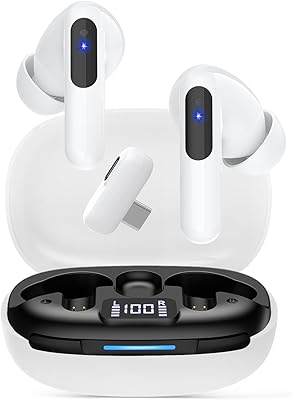
RYR NEO100 Wireless Gaming Earbuds
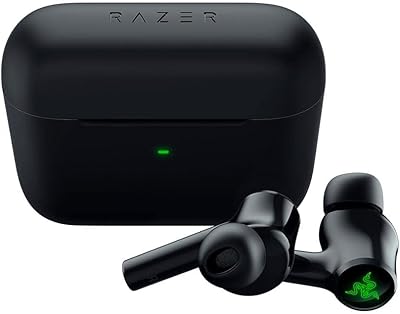
76%
88%
Latency Performance
74%
Audio Quality
61%
Microphone Quality
67%
Comfort & Fit
83%
Battery Life
More
Razer Hammerhead True Wireless 2nd Gen
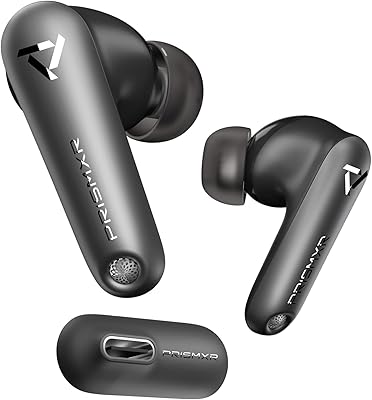
72%
88%
Gaming Latency Performance
61%
Active Noise Cancellation
79%
Microphone & Call Quality
72%
Sound Quality
67%
Comfort & Fit
More
PrismXR Vega T1 Wireless Gaming Earbuds
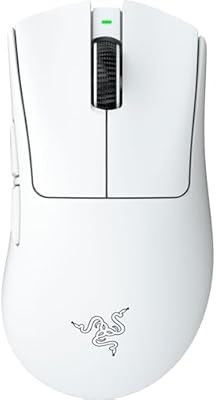
73%
83%
Audio Latency
78%
Dual-Device Connectivity
76%
Compatibility Range
88%
Passthrough Charging
69%
Sound Quality
More
ASUS ROG Cetra True Wireless Gaming Earbuds
84%
91%
Sound Quality
88%
Battery Life
82%
Noise Cancellation
86%
Comfort & Fit
73%
Bluetooth Connectivity
More
Razer DeathAdder V4 Pro Wireless Gaming Mouse
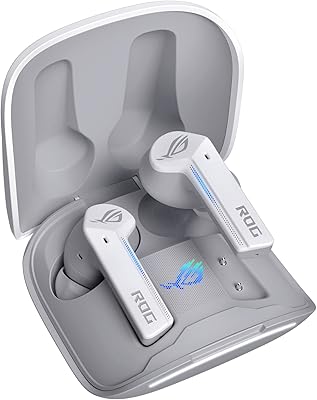
86%
95%
Precision and Tracking
91%
Build Quality
90%
Battery Life
89%
Ergonomics and Comfort
92%
Wireless Connectivity
More
Sony INZONE Buds Wireless Gaming Earbuds
75%
91%
PS5 Integration
88%
Audio Latency
83%
Spatial Sound Quality
67%
Active Noise Canceling
76%
Microphone Quality
More
Pulsar Gaming Gears X3 Wireless Gaming Mouse
86%
94%
Precision & Tracking Performance
89%
Ergonomics & Comfort
91%
Lightweight Design
87%
Durability & Build Quality
90%
Button Responsiveness & Switch Longevity
More
Pulsar X2F Wireless Fingertip Gaming Mouse
80%
94%
Weight & Form Factor
89%
Sensor Performance
91%
Polling Rate (8K Wireless)
88%
Switch Feel & Click Quality
78%
Grip & Ergonomics
More
Pulsar Gaming Gears Xlite v3 Medium Wireless Gaming Mouse
88%
93%
Ergonomics & Comfort
91%
Wireless Performance
89%
Battery Life
86%
Build Quality
94%
Precision & Sensor Accuracy
More
ZONWOO S1 Wireless Earbuds
86%
94%
Battery Life
86%
Sound Quality
88%
Fit and Comfort
91%
Water Resistance
75%
Bluetooth Connectivity
More

FAQ

The 2.4GHz dongle connection genuinely does reduce latency compared to standard Bluetooth. Bluetooth inherently adds a small delay that can feel off in VR when sound and visuals don't quite sync — the dedicated wireless link addresses that directly. Most VR users who have tried both notice the difference, even if casual listeners might not.

Yes, you can pair them via Bluetooth 5.2 with a PlayStation that supports Bluetooth audio output. Keep in mind that Bluetooth pairing won't give you the same low-latency performance as the USB-C dongle connection, but for general gaming or media use it works fine.

They handle opposite directions. ANC (Active Noise Cancellation) works on sound coming in — it reduces what you hear from the outside world, like fan noise or street traffic. ENC (Environmental Noise Cancelling) works on sound going out — it helps the microphones filter your background noise so the person you're talking to hears you more clearly. They're separate systems doing separate jobs.

That figure is possible but represents best-case conditions — specifically with ANC turned off and any lighting features disabled. In typical use with ANC active, expect noticeably less. The earbuds alone run around 6.5 hours per charge, which is solid for a single session; the case tops them up multiple times from there.

This is one of the more practical questions for VR users. In-ear earbuds generally fit better under VR headsets than over-ear models because they sit flush with your ear rather than adding external bulk. That said, fit varies by ear shape, and a few users with shallower ear canals have noted the seal feels inconsistent. Trying different included ear tip sizes usually helps.

The dongle handles the Quest connection independently of Bluetooth. You can leave the dongle plugged into your Quest and maintain a separate Bluetooth pairing with your phone. Switching audio output between them depends on your device settings, but you don't need to go through the full pairing process each time once both connections are established.

Honestly, less so. The core feature that justifies the premium pricing is the low-latency USB-C dongle, which only makes a meaningful difference in VR or latency-sensitive gaming. Without a compatible headset to plug the dongle into, you're essentially using these as a Bluetooth earbud with ANC — and there are strong competitors at lower price points that do that job equally well.

They're adequate for work calls in reasonably quiet environments. The ENC mics do a decent job reducing consistent background noise like HVAC hum or keyboard clicks. For louder or unpredictable environments, results are less consistent. They're not a replacement for a dedicated headset or boom mic if call clarity is critical to your work.

It's a small dongle, so yes, losing it is a realistic concern if you're not careful. Razer does sell replacement dongles separately, but it's worth keeping a dedicated spot for it — either stored in the charging case when not in use, or left plugged into your Quest if that's your primary use case. The dongle itself feels solidly built for its size.

The official authorization covers Meta Quest 2 and Meta Quest 3 specifically. The original Meta Quest used a different port configuration, so compatibility is not guaranteed. If you're on Quest 2 or 3, the dongle pairing is designed to work out of the box without any special setup.

Where to Buy