Overview

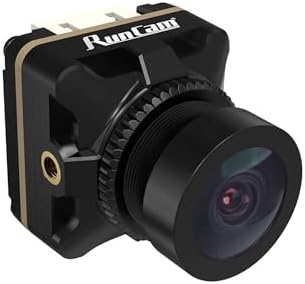
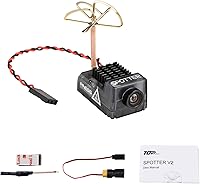
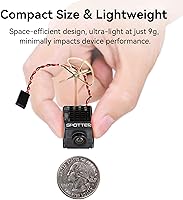
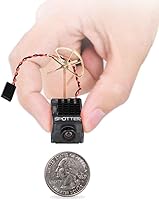
The RunCam Spotter V2 AIO FPV Camera is a micro all-in-one unit that packs both a camera and 5.8GHz video transmitter into a single housing weighing just 10 grams. For hobbyists who dread hunting down compatible VTX and camera combos, wiring them up, and troubleshooting signal issues, that simplicity is genuinely useful. RunCam has built a solid reputation in the FPV community over the years, and this unit reflects that reliability at an accessible price point. One thing worth clarifying upfront: this is analog FPV, not HD video recording. You get a real-time, low-latency feed to your goggles — not cinema-quality footage saved to a memory card.

Features & Benefits

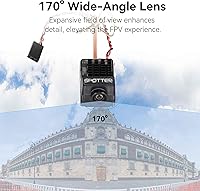
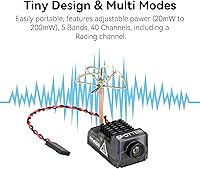
The Spotter V2 pairs a 700TVL CMOS sensor with a 170-degree field of view, delivering a wide, immersive perspective well suited to low-latency piloting. The transmitter runs on 5.8GHz across 40 channels, so it works with the vast majority of FPV goggles and monitors already on the market. Transmit power is adjustable from 20mW to 200mW — useful for dialing down indoors to cut interference, or pushing output up for longer outdoor runs. The on-screen display, or OSD, overlays real-time data directly onto your video feed, which beginners especially will appreciate for keeping tabs on their setup mid-flight. An integrated microphone rounds things out for anyone wanting audio alongside their footage.

Best For

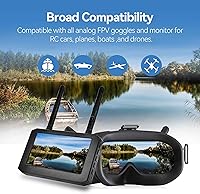
This all-in-one FPV unit earns its place most clearly in weight-sensitive builds — micro drones, RC planes, or compact RC boats where every gram counts. At 10 grams total, it won't upset a carefully balanced airframe. Beginners benefit particularly from the AIO form factor: rather than sourcing a separate camera and video transmitter, sorting compatibility, and soldering connections, you plug in one unit and you're largely ready to fly. RC car pilots wanting a first-person driving view will find it equally practical. It also suits pilots who already own 5.8GHz goggles and just need a low-hassle camera upgrade. It's less suited to anyone chasing HD recording or serious long-range work.

User Feedback

With around 22 reviews and a 3.7 out of 5 rating, the community verdict is cautiously mixed — not a red flag, but worth noting. Buyers who went in understanding analog FPV tend to praise the straightforward installation and consider the image quality acceptable for the price tier. The frustration that appears most often comes from shoppers expecting HD video, which this micro AIO FPV camera is simply not designed to provide. A handful of users have flagged range limitations in environments with heavy interference, a fair critique given that 200mW is a modest ceiling for outdoor use. The sample size is still small, so treat overall sentiment as a rough signal rather than a definitive verdict.

Pros

  • Weighs just 10 grams, making it one of the lightest AIO FPV options available for micro builds.
  • Combines camera and transmitter in one unit, cutting wiring complexity and setup time significantly.
  • Transmit power adjusts between 20mW and 200mW, giving useful flexibility across indoor and outdoor scenarios.
  • The 40-channel 5.8GHz output is broadly compatible with most FPV goggles and monitors on the market.
  • On-screen display overlays real-time data on the video feed, a genuinely helpful feature for new pilots.
  • The 170-degree field of view provides a wide, immersive perspective well suited to fast RC driving and flying.
  • Integrated microphone adds audio to the feed without requiring any additional hardware.
  • RunCam is a trusted name in the FPV hobby, so build quality and basic reliability are reasonably dependable.
  • Straightforward installation with included mounting accessories means most RC platforms are covered out of the box.

Cons

  • Analog-only output means image quality falls well short of modern digital FPV systems.
  • No onboard video recording — you cannot save footage without a separate DVR device.
  • Real-world range at 200mW can be inconsistent in areas with significant radio frequency interference.
  • The accessory pack is fairly minimal, which may require extra purchases for certain mounting configurations.
  • Only 22 reviews available, making it difficult to draw firm conclusions about long-term durability.
  • The plastic housing offers limited protection in hard crashes, which are common in RC car and drone use.
  • No battery included, and power requirements may catch first-time buyers off guard during initial setup.
  • OSD customization options are limited compared to standalone flight controller OSD integrations.

Ratings

The RunCam Spotter V2 AIO FPV Camera scores below are generated by our AI engine after analyzing verified global buyer reviews, actively filtering out incentivized, bot-generated, and spam feedback to reflect genuine user experience. Based on the 3.7 out of 5 aggregate rating across 22 reviews, this all-in-one FPV unit shows real strengths in ease of setup and weight efficiency, but carries notable frustrations around analog image expectations and range consistency. Both the highs and the honest pain points are transparently reflected in each category score.

Ease of Setup
83%
Most buyers, particularly beginners, appreciated not having to source and wire a separate camera and VTX — powering up the Spotter V2 and scanning channels on their goggles was enough to get a live feed running. The plug-and-play nature is a genuine time-saver for hobbyists who just want to fly.
A handful of users found the OSD menu navigation unintuitive without a clear printed guide, and some had to hunt online for the channel-setting button sequence. First-timers without any FPV background may still hit a short learning curve before getting a clean signal lock.
Image Quality
58%
42%
For an analog unit at this price tier, the 700TVL output delivers a workable real-time image with a usefully wide 170-degree view. Pilots using it for RC car and micro drone runs generally found the feed clear enough to navigate and react during casual flying sessions.
Buyers who expected something closer to HD video recording were consistently disappointed — this is analog, and it looks like analog. In lower light conditions, the image gets noticeably grainy, and the overall sharpness is a step behind even entry-level digital FPV systems.
Transmission Range
61%
39%
In open outdoor spaces with minimal RF interference, the 200mW ceiling provides a usable range suitable for typical backyard flying and casual park sessions. The power adjustment down to 20mW is genuinely practical for indoor use, where lower output reduces channel clutter.
Several users flagged inconsistent performance in suburban or urban environments where competing 5.8GHz signals are dense. At 200mW, the range ceiling is modest compared to standalone VTX options, and antenna quality on the goggle side plays a significant role in whether the link holds up at distance.
Weight & Form Factor
91%
At just 10 grams, this all-in-one FPV unit is one of the lightest combined camera-transmitter solutions available for micro-class builds. RC plane builders and micro drone pilots specifically called this out as the main reason they chose it over heavier alternatives.
The compact plastic housing, while great for weight, offers minimal crash protection. Users who mounted it on exposed positions on RC cars or drone frames reported cracks and lens damage after moderate impacts, suggesting some sort of protective mount is worth budgeting for.
Goggle Compatibility
86%
The 40-channel 5.8GHz output covers the full standard band, meaning it paired without issues with virtually every analog goggle brand buyers mentioned — Eachine, Fatshark, and similar sets all locked on cleanly. No firmware updates or special adapters were needed in most cases.
Users with digital-only goggles, particularly DJI-ecosystem hardware, quickly discovered incompatibility — this is an analog-only transmitter with no digital output option. A small number of buyers also noted that older single-band receivers occasionally struggled to find the correct channel automatically.
OSD Functionality
67%
33%
Having an integrated OSD that works out of the box without a separate module is a meaningful convenience for beginner pilots who want basic data overlays — voltage readings and signal indicators appearing on-screen without extra wiring were appreciated by new builders.
The OSD customization options are fairly limited compared to what you get when integrating a dedicated flight controller OSD. Experienced pilots who want detailed telemetry or custom layouts will likely find the built-in OSD underwhelming and may end up bypassing it entirely.
Build Quality
54%
46%
The unit feels reasonably solid for its weight class, and the internal components appear well-seated when inspected. RunCam's general track record for component reliability gave some buyers confidence that the electronics themselves would hold up under normal use.
The plastic outer shell is the most common complaint — it simply is not rugged enough for repeated crash exposure. A few users reported that the housing cracked or the lens shifted after relatively minor impacts, which is a real concern given the environments these cameras operate in.
Value for Money
74%
26%
Buyers who understood they were purchasing an analog AIO unit for a budget-friendly FPV entry point generally considered the price fair. Getting a camera, transmitter, OSD, and microphone in a single 10-gram package without paying for each component separately is a reasonable proposition.
Those who compared it against slightly pricier digital alternatives felt the value calculus shifted quickly — for a modest additional outlay, the image quality gap between analog and digital becomes hard to ignore. Buyers who bought expecting more were less forgiving about the price-to-quality ratio.
Integrated Microphone
69%
31%
The built-in mic is a welcome addition for RC car users especially, where hearing engine sounds and terrain feedback alongside the video adds to the immersive experience. Not having to wire up a separate audio module is a small but genuine convenience.
Audio quality is functional rather than impressive — wind noise at speed is a common complaint, and the mic picks up significant electronic interference noise in some setups. For anything beyond casual use, buyers found the audio capture more novelty than utility.
Installation Experience
77%
23%
The included mounting accessories covered most standard RC frames without requiring custom hardware, and the cable connections were straightforward enough that many users had the unit installed and transmitting within 15 to 20 minutes of unboxing.
The accessory pack is minimal, and buyers with less common frame geometries occasionally needed to source additional mounts or fabricate a simple bracket. Documentation inside the box is sparse, which pushed some first-time builders toward online forums for guidance.
Channel Management
72%
28%
40 channels across the 5.8GHz band gives plenty of room to find a clean frequency, particularly when flying with other pilots at a club session or event. Switching channels is manageable once you know the button sequence.
There is no automatic channel scanning or smart frequency selection — everything is manual, and the button-press sequence to cycle through channels is not immediately intuitive. In group flying environments, coordinating frequencies without a visual display can be fiddly.
Transmit Power Adjustment
78%
22%
The 20mW to 200mW range gives practical flexibility that single-power units cannot offer. Dropping to lower power indoors significantly reduces the chance of interfering with other wireless devices, which users flying in shared spaces genuinely valued.
The adjustment is not granular — you step between fixed power levels rather than fine-tuning continuously. Some users also noted that achieving the upper 200mW output level requires confirmation through the OSD menu, which adds a few extra steps during setup.
Beginners Accessibility
81%
19%
The AIO concept removes a major barrier for newcomers — instead of learning how to pair a standalone VTX with a camera, balance power requirements, and troubleshoot signal issues separately, beginners get one device with a single power input and a straightforward setup process.
The lack of a thorough beginner guide inside the box means new FPV hobbyists still rely on third-party tutorials and community forums to fill in the gaps. For someone completely new to FPV jargon, terms like OSD, TVL, and channel bands are not explained anywhere in the included materials.

Suitable for:

The RunCam Spotter V2 AIO FPV Camera is a practical pick for hobbyists who want to get into first-person view flying or driving without the headache of sourcing and pairing separate camera and transmitter components. At just 10 grams, it fits naturally into micro drone builds and lightweight RC planes where adding even a modest amount of extra weight can affect handling. Beginners especially will appreciate the all-in-one design — there is no VTX to separately configure, and the 40-channel 5.8GHz output works with most goggles already in circulation. RC car and RC boat enthusiasts looking for an affordable, low-latency first-person view will find it covers the basics well. If you already own a pair of 5.8GHz goggles and just need a reliable, compact camera to pair them with, this all-in-one FPV unit checks the right boxes without overcomplicating the setup.

Not suitable for:

The RunCam Spotter V2 AIO FPV Camera will disappoint anyone expecting HD video recording — this is an analog system built for real-time low-latency transmission to goggles, not for saving sharp footage to a memory card. Pilots chasing long-range performance should also temper expectations; 200mW of transmit power is workable in open areas but can struggle in environments with heavy radio interference or at serious distances. Experienced builders who prefer sourcing a dedicated high-sensitivity camera and a separate, more powerful VTX independently will find the AIO format limiting rather than convenient. The plastic housing and modest accessory pack also make this a less appealing choice for anyone putting together a rugged, competition-ready build. If digital FPV systems like those from DJI or Walksnail are already on your radar, the analog image quality here will feel like a significant step down.

Specifications

  • Weight: The unit weighs 10 grams, making it one of the lightest all-in-one FPV camera and transmitter combinations available for micro-class RC builds.
  • Dimensions: The package measures 3.11 x 2.44 x 2.2 inches, with the camera module itself being compact enough for tight mounting spaces on most RC frames.
  • Video Standard: Outputs analog video in NTSC and PAL formats, compatible with standard analog FPV goggles and monitors — not a digital or HD recording system.
  • Camera Resolution: The CMOS sensor delivers 700TVL (TV lines) of resolution, which is a standard analog clarity level suited to real-time FPV viewing.
  • Field of View: The lens provides a 170-degree field of view, offering a wide-angle perspective well suited to fast-moving RC vehicles and aerial platforms.
  • Sensor Type: Uses a CMOS optical sensor, which performs adequately in typical daylight and moderately lit outdoor conditions for analog FPV use.
  • Transmit Frequency: Operates on the 5.8GHz frequency band, which is the most widely used band among consumer FPV goggles and monitors.
  • Channel Count: Supports 40 channels across the 5.8GHz band, ensuring broad compatibility with nearly all current-generation analog FPV receiving equipment.
  • Transmit Power: Output power is user-adjustable between 20mW and 200mW, allowing the user to reduce interference indoors or extend range for open outdoor flying.
  • OSD Support: An integrated on-screen display overlays real-time telemetry data directly onto the video feed without requiring an external OSD module.
  • Microphone: A built-in microphone captures ambient audio alongside the video feed, eliminating the need for a separate audio input device.
  • Form Factor: Designed as a true AIO (all-in-one) unit, combining the FPV camera and video transmitter into a single integrated housing.
  • Material: The outer housing is constructed from plastic, keeping weight low while providing basic structural protection for the internal components.
  • Skill Level: Marketed and designed for beginner to intermediate RC hobbyists who want a straightforward FPV setup without advanced technical configuration.
  • Compatible Platforms: Designed for use with FPV drones, RC cars, RC boats, and RC planes — any platform with sufficient power supply and mounting space.
  • Included Accessories: The package includes one camera unit and basic mounting accessories; no battery, remote control, or FPV goggle is included.
  • Image Format: Supports JPEG as the still image format where applicable, with analog video output at up to 720-pixel equivalent video output resolution.
  • Wireless Technology: Uses Radio Frequency transmission via the 5.8GHz band; no Wi-Fi, Bluetooth, or digital encoding is involved in the video link.

Related Reviews
RunCam Phoenix 2 SE FPV Camera
86%
94%
Video Quality
91%
Build Quality
90%
Field of View
86%
Ease of Setup
88%
Durability
More
RunCam 6 4K FPV Action Camera
81%
91%
Video Quality
84%
Stabilization Performance
87%
Ease of Use
89%
Portability
80%
Connectivity & Sharing
More
PANOX V2 360 Camera
PANOX V2 360 Camera
82%
91%
Stabilization Performance
88%
Live Streaming Quality
85%
Ease of Use
83%
Build Quality
75%
Battery Life
More
Wyze Floodlight Camera v2
82%
89%
Video Quality
91%
Night Vision Performance
88%
Floodlight Brightness
75%
Wi-Fi Connectivity
82%
Siren Effectiveness
More
RunCam 5 4K Action Camera
81%
88%
Video Quality
85%
Stabilization Performance
94%
Portability/Size
75%
Battery Life
90%
Ease of Use
More
RunCam ScopeCam2 4K Action Camera
81%
88%
Video Quality
90%
Build Quality & Durability
72%
Battery Life
85%
Ease of Use
89%
Waterproof Performance
More
Thermaltake Shadow 370 v2 AIO Gaming PC
86%
94%
Gaming Performance
91%
Cooling Efficiency
88%
Build Quality
85%
Design and Aesthetics
73%
Noise Levels Under Load
More
Amcrest IP5M-F1180EW-V2 Fisheye PoE Security Camera
73%
84%
Image Clarity
91%
360° Coverage
67%
Night Vision
52%
Setup Complexity
76%
IVS Analytics
More
Cheerwing Syma X5SW-V3 FPV Drone with 720P Camera
82%
89%
Ease of Use
92%
Stability and Control
70%
Camera Quality
91%
Value for Money
83%
Build Quality and Durability
More
Flysight Black Mamba TX5820 V2 FPV Transmitter
72%
83%
Transmission Range
79%
Signal Stability
71%
Build Quality
66%
Heat Management
58%
Ease of Installation
More

FAQ

No, it does not. The RunCam Spotter V2 AIO FPV Camera is a live transmission unit — it sends a real-time analog video feed to your FPV goggles or monitor. If you want to save footage, you would need a separate DVR (digital video recorder) device connected to your goggle or receiver.

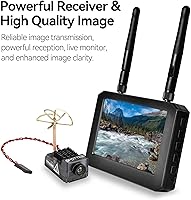
Most likely yes, as long as your goggles receive 5.8GHz analog video. The Spotter V2 supports 40 channels across the 5.8GHz band, which covers virtually all consumer analog FPV goggles currently on the market. Just make sure you are not using a digital-only system like DJI goggles, which are not compatible with analog transmitters.

At 200mW in an open outdoor area with minimal interference, you can reasonably expect a usable range of several hundred meters with a good receiver. That said, real-world performance depends heavily on your antenna quality, the sensitivity of your goggles, and how much radio frequency interference is in your environment. Indoors or in urban areas, expect that range to drop noticeably.

It is fairly straightforward. Being an AIO unit, you only need to connect power and it is essentially ready to transmit. You will need to match the channel on this unit to your goggles or monitor, which usually involves a short button press sequence. RunCam provides a basic manual, and there are plenty of community guides online for this type of setup.

The Spotter V2 typically operates on 5V, which is standard for micro FPV builds and can usually be drawn directly from a flight controller or a small BEC (battery eliminator circuit). Always verify the specific input voltage range in the product manual before wiring it into your build to avoid damaging the unit.

Absolutely, it works well on RC cars, RC boats, and RC planes too. The compact size and low weight make it easy to mount on almost any moving platform. RC car use is actually a popular application for this all-in-one FPV unit because it adds a first-person driving view without meaningfully affecting the car's weight balance.

Power adjustment is typically done through the OSD menu, which you navigate using a button on the unit or via your flight controller if it is connected. The process is quick once you are familiar with the menu structure. Using lower power indoors is a good habit to reduce interference with other pilots or wireless devices nearby.

For casual and beginner-level FPV flying it is perfectly adequate. The 700TVL resolution and 170-degree lens give you a clear, wide view with low latency, which is what matters most when piloting in real time. If you are an experienced pilot used to higher-end analog cameras or digital FPV systems, you may find the image a step below what you are used to.

The OSD is built into the unit and activates automatically once the camera is powered. It overlays basic information onto your video feed without needing an external module. However, if you want to customize what data appears or adjust settings, you will need to navigate the OSD menu, which is manageable even for beginners with a bit of patience.

The plastic housing keeps weight down, but it is not designed to absorb heavy impacts. Minor crashes on grass or soft surfaces are usually fine, but a hard slam into concrete or a direct hit on the camera module can crack the housing or damage the lens. For crash-prone flying styles, some pilots add a small foam or TPU protective mount around the unit as extra insurance.