Overview

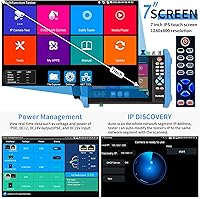
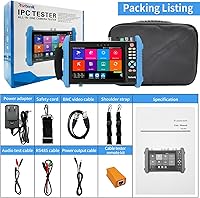
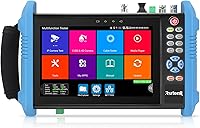
The Rsrteng IPC-9800ADHS Pro CCTV Camera Tester is built squarely for security installers and technicians — not hobbyists looking for a weekend project. Running on Android 11, it supports third-party app installs and brings a noticeably more responsive interface than older testers stuck on outdated firmware. The 7-inch IPS touchscreen at 1280x800 resolution makes a genuine difference when you are squinting at camera feeds in a bright equipment room or cramped server closet. This field tester sits in the middle of Rsrteng's IPC-9800 lineup, offering a well-rounded feature set without stepping up to the fully loaded top-tier variant. Expect a real learning curve before navigating the menus confidently.
Features & Benefits

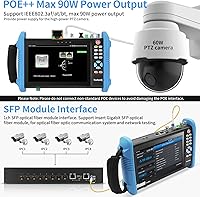
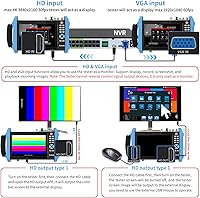
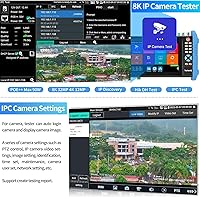
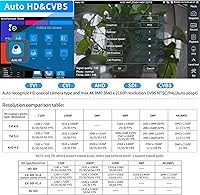
Where this CCTV tester earns its place in a technician's bag is the sheer range of camera formats it handles without fuss. IP cameras up to 8K 32MP resolution can be pulled up through auto-discovery and RTSP playback, cutting out the laptop for most on-site commissioning tasks. The POE++ output at 90W is a standout — older testers top out well below that, leaving high-power PTZ domes unpowered, while this field tester handles them without an external injector. AHD, TVI, CVI, SDI, and CVBS coaxial formats are recognized automatically. Built-in Hikvision and Dahua tools allow batch camera configuration, and the Gigabit SFP slot means fiber links can be verified on the same device.

Best For

The IPC-9800ADHS Pro is most at home with security integrators who regularly juggle mixed environments — sites where a legacy analog coaxial system runs alongside a newer IP camera network, and where nobody has time to carry four separate tools. Technicians commissioning or servicing high-power PTZ installations will appreciate powering them directly without an external injector on the bench. Professionals dealing with fiber runs benefit from the SFP compatibility, and TDR cable testing up to 180M is a practical addition for fault-finding long cable runs. If you are a homeowner or occasional tinkerer, though, the complexity and price point genuinely target full-time field technicians, not casual users.

User Feedback

Buyers consistently highlight format compatibility as the main reason they chose this CCTV tester — particularly installers who previously switched between two or three devices on mixed-system jobs. Touchscreen responsiveness gets mixed marks; indoors it is generally fine, but screen brightness in direct sunlight draws recurring complaints. Several users flag that the menu system takes real time to learn, and the documentation is not always clear for English-speaking technicians. Battery life holds up reasonably well for a standard workday, according to most reviews. Build quality is described as solid but not ruggedized — it is not designed to shrug off drops onto concrete. Compared to simpler budget testers, the professional tool depth justifies the investment for working technicians.

Pros

  • Auto-recognizes AHD, TVI, CVI, SDI, CVBS, and IP camera formats, eliminating manual mode switching on mixed-system jobs.
  • POE++ output up to 90W powers high-wattage PTZ domes that most competing handheld testers simply cannot supply.
  • IP camera auto-discovery and RTSP playback up to 8K 32MP removes the need for a laptop on most commissioning visits.
  • Built-in Hikvision and Dahua batch configuration tools cut setup time significantly on larger multi-camera installations.
  • Gigabit SFP slot lets technicians verify fiber link status without carrying a separate fiber testing device.
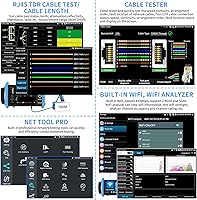
  • TDR cable testing up to 180 meters covers fault isolation for impedance, attenuation, and skew in a single tool.
  • Android 11 platform supports third-party app installs, extending functionality beyond factory pre-loaded tools.
  • At under a kilogram and just over an inch thick, this CCTV tester is genuinely portable across a full day of field work.
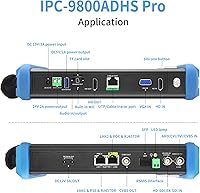
  • Dual Gigabit Ethernet ports, RS485, WiFi, HDMI, and VGA connectivity cover virtually every installation interface scenario.
  • Network diagnostics including traceroute, DHCP server, Ping, and port flashing handle most on-site IP troubleshooting needs.

Cons

  • Screen brightness struggles in direct sunlight, making outdoor use on bright days genuinely difficult.
  • The menu system takes real time to learn, and the included English documentation does not provide enough guidance.
  • Sustained high-wattage POE++ output drains the battery faster, which can be problematic on long back-to-back install days.
  • No formal ruggedization or IP rating means the chassis is not built to tolerate drops, dust, or moisture exposure.
  • Third-party and lesser-known IP camera brands fall back to manual RTSP entry, losing the auto-discovery convenience.
  • TDR accuracy beyond approximately 120 meters is inconsistent compared to dedicated cable analyzers.
  • SFP fiber testing is limited to basic link verification and is not a substitute for optical power measurement or OTDR work.
  • Installers who work outside Hikvision and Dahua ecosystems miss out on the batch configuration tools that justify much of the depth.
  • Operating one-handed on a ladder is awkward given the 7-inch screen footprint and multi-port cable routing requirements.
  • For lower-volume or occasional users, the complexity and price point make it difficult to justify over simpler, cheaper alternatives.

Ratings

The Rsrteng IPC-9800ADHS Pro CCTV Camera Tester has been evaluated by our AI system after processing verified purchase reviews from buyers across North America, Europe, and Asia-Pacific, with spam, incentivized, and bot-flagged submissions actively filtered out. The scores below reflect what working security professionals genuinely experienced in the field — not a curated highlight reel. Both the standout strengths and the friction points that frustrated real buyers are transparently represented.
Format Compatibility
93%
Installers working on sites with legacy coaxial cameras alongside newer IP systems consistently cite this as the single biggest reason they chose this field tester. The auto-recognition across AHD, TVI, CVI, SDI, CVBS, and high-resolution IP formats eliminates the need to manually switch modes mid-job, which adds up significantly across a full installation day.
A small number of users reported edge cases with older or off-brand analog cameras not being recognized cleanly by the auto-detection routine. In those situations, manual input is required, which slows the workflow the auto-recognition is specifically meant to avoid.
POE Output Power
91%
The 90W POE++ output is a genuine differentiator for technicians commissioning high-power PTZ speed domes, which most competing testers simply cannot power on their own. Being able to verify camera behavior while supplying full operational power from a single handheld unit removes the need for a separate injector on the bench or up a ladder.
A handful of buyers noted that sustained high-wattage output puts noticeable strain on the battery, shortening runtime compared to lighter testing tasks. For installations requiring continuous 90W delivery over extended periods, battery management becomes a practical concern.
IP Camera Testing Capability
89%
Auto-discovery and RTSP playback up to 8K 32MP means technicians can pull live feeds and verify image quality on-site without opening a laptop. The built-in Hikvision and Dahua batch configuration tools are particularly valued by integrators managing large camera counts, cutting setup time meaningfully on commercial installations.
Third-party and lesser-known IP camera brands occasionally require manual RTSP string entry rather than benefiting from auto-discovery. Users also note that navigating between IP tools and coaxial tools within the menu system is not always intuitive on first use.
Display Quality
76%
24%
Indoors and in low-light environments, the 7-inch IPS panel at 1280x800 renders camera feeds with enough clarity to make a confident quality judgment on the spot. The touchscreen response is generally reliable for menu navigation and swipe gestures when used in normal ambient conditions.
Screen brightness becomes a real limitation outdoors on sunny job sites — multiple buyers describe needing to shade the unit with their body to see the display properly. For an instrument priced at a professional level, the outdoor visibility gap is a recurring frustration that competitors have addressed more effectively.
TDR Cable Testing
84%
The TDR function covering up to 180 meters with readings on impedance, attenuation, skew, and reflectivity is a solid fault-isolation tool for installers troubleshooting long cable runs. Having this built in means one fewer dedicated cable analyzer to carry and calibrate.
Accuracy at distances beyond 120 meters gets mixed feedback, with some technicians finding the length readings slightly inconsistent compared to dedicated TDR instruments. It is capable for most field diagnostics but should not be treated as a replacement for a precision cable analyzer on critical infrastructure work.
SFP Fiber Testing
78%
22%
The Gigabit SFP slot allows technicians on fiber-connected camera installations to verify link status and network connectivity without carrying a separate fiber tester. For integrators who only occasionally deal with fiber runs, this consolidated capability is a genuine convenience.
The SFP functionality is a basic link verification tool rather than a full optical power meter or OTDR replacement. Users with serious fiber diagnostics needs have noted it is useful for confirming connectivity but limited for in-depth fault analysis on longer or more complex fiber runs.
Software & Android Platform
74%
26%
Running Android 11 means technicians can install third-party apps directly on the tester, which opens the door to manufacturer-specific configuration apps and utility tools that older testers could never run. The operating system itself is stable and benefits from a more modern interface compared to previous generations.
The native pre-installed software has a steep learning curve, and the English-language documentation does not always map cleanly to what is on screen. Several buyers describe spending significant time online looking for tutorials before feeling confident navigating the full feature set.
Build Quality & Durability
71%
29%
The chassis feels solid in hand and the unit handles everyday transport in a tool bag without issue. At just under a kilogram, it strikes a reasonable balance between feeling substantial and staying portable across a full day of moving between floors or locations on a job site.
It is not ruggedized in any formal sense — there is no IP rating for dust or moisture resistance, and buyers who have dropped it report varying outcomes depending on the surface. For a tool used in active construction or outdoor environments, the lack of corner protection or reinforced housing is a legitimate concern.
Battery Life
73%
27%
Under typical mixed-use conditions — a combination of IP camera viewing, POE testing, and cable checks — most buyers report the battery lasting through a standard workday without needing a mid-shift charge. The included lithium polymer cell is conveniently built in with no separate purchase required.
Heavy continuous use, especially sustained POE++ output at high wattage or extended video streaming, drains the battery noticeably faster than average tasks. Technicians on longer back-to-back installs have flagged the need to carry a power bank or plan around charging windows.
Portability & Form Factor
82%
18%
At 9.4 x 5.3 x 1.4 inches and under a kilogram, this field tester fits comfortably in a tool bag and does not fatigue the wrist during extended single-hand use. The relatively slim profile for a device with this feature count is something buyers coming from bulkier competing units specifically appreciate.
The 7-inch screen, while useful, makes the unit slightly awkward to operate entirely one-handed when up a ladder. A few users have noted that the port layout requires some cable routing awareness when multiple connections are active simultaneously.
Network Diagnostic Tools
81%
19%
The suite of built-in network tools — including traceroute, DHCP server, link monitor, port flashing, and Ping — covers most of what an installer needs to verify camera network health without pulling out a separate laptop or tablet. These tools work well for diagnosing IP conflicts and verifying network paths on-site.
For more advanced network analysis, the tools are functional but not deep. IT professionals or integrators working on complex enterprise networks may find the diagnostics a bit surface-level compared to dedicated network analyzers or even some software-based alternatives.
Value for Money
77%
23%
For a working professional who previously carried three or four separate tools to cover the same functions, consolidating into this CCTV tester represents a genuine cost and logistics reduction. The feature density relative to the price is acknowledged positively by integrators who use it regularly enough to justify the outlay.
Buyers who only occasionally test cameras or those in smaller operations have noted the price feels hard to justify when simpler, cheaper testers cover eighty percent of their daily needs. The value proposition is strongest for high-volume installers; for infrequent use, the return on investment is less clear-cut.
Hikvision & Dahua Integration
86%
Technicians who work predominantly in Hikvision or Dahua ecosystems — which describes a significant share of the professional install market — find the dedicated batch configuration tools save meaningful time on larger sites. Being able to set multiple cameras without jumping into each device individually through a browser is a practical efficiency gain.
The integration is essentially brand-specific, so installers working with Axis, Hanwha, or other major IP camera brands do not benefit from the same depth of native tooling. Those deployments fall back to standard ONVIF or manual RTSP access, which is functional but less streamlined.
Ease of Initial Setup
62%
38%
Once a technician has spent time with the IPC-9800ADHS Pro and mapped out the menu logic, day-to-day use becomes reasonably efficient. Buyers who pushed through the initial learning phase generally report confidence in the workflow after a few real-world jobs.
Out of the box, the learning curve is steep, particularly for users unfamiliar with Android-based testers. The included documentation is often described as inadequate for the English-speaking market, and the menu hierarchy is not always logically organized, leading to early frustration for new users.

Suitable for:

The Rsrteng IPC-9800ADHS Pro CCTV Camera Tester is built for security system integrators and field technicians who regularly deal with the messy reality of mixed camera environments — sites where aging coaxial infrastructure coexists with modern IP systems, and where downtime costs real money. If you are commissioning high-power PTZ speed domes that require more than the 30W ceiling most older testers provide, the 90W POE++ output alone makes this field tester worth serious consideration. Professionals who predominantly work within Hikvision or Dahua ecosystems will find the batch configuration tools a genuine time-saver on larger commercial installations. Technicians who have previously carried a separate cable tester, PoE injector, and camera viewer will immediately appreciate having those functions consolidated into a single portable unit. Anyone working on fiber-connected camera systems who needs on-site SFP link verification without hauling additional equipment will also find this CCTV tester punches well above its size.
Not suitable for:

The Rsrteng IPC-9800ADHS Pro CCTV Camera Tester is not the right tool for homeowners, hobbyists, or anyone who only needs to check a handful of cameras once or twice a year. The menu system has a documented learning curve, and the documentation bundled with the unit does not do enough to flatten it — buyers who are not already comfortable with Android-based field instruments will find the early experience frustrating. If most of your work involves a single camera brand outside of Hikvision or Dahua, you will not get full value from the brand-specific tooling that justifies a significant part of this device's depth. Technicians who work exclusively outdoors in bright sunlight should also be aware that screen visibility is a recurring complaint, and without meaningful ruggedization or an IP dust and moisture rating, this field tester is not well-suited to harsh construction environments where drops onto concrete are a genuine daily risk. If your testing needs are modest and occasional, a simpler, less expensive tester will serve you just as well without the complexity.
Specifications

  • Max IP Resolution: Supports IP camera testing up to 8K 32MP (8160x3616) resolution for the most demanding modern installations.
  • Coaxial Formats: Tests AHD, TVI, CVI, SDI, and CVBS analog coaxial cameras up to 8MP (3840x2160) with automatic format recognition.
  • Display: Features a 7-inch IPS touchscreen with 1280x800 resolution for viewing live camera feeds and navigating the interface on-site.
  • POE Output: Delivers Power over Ethernet compliant with IEEE 802.3af, 802.3at, and 802.3bt standards, with a maximum output of 90W.
  • Ethernet Ports: Includes dual Ethernet ports supporting 10/100/1000Mbps speeds for flexible network connectivity and testing.
  • SFP Interface: Equipped with one Gigabit SFP optical fiber module slot for on-site fiber network link verification.
  • TDR Cable Test: Built-in TDR function tests cable pair status, length, attenuation, impedance, reflectivity, and skew up to a range of 180 meters.
  • Operating System: Runs Android 11, enabling installation of third-party apps and access to a modern, touch-optimized interface.
  • DC Outputs: Provides three DC power output options: 24V/2A, 12V/3A, and 5V/2A to power cameras and peripheral devices during testing.
  • Connectivity: Includes RS485, WiFi, HDMI input and output, VGA input, and audio input and output for comprehensive field connectivity.
  • Dimensions: Measures 9.4 x 5.3 x 1.4 inches, keeping the unit compact enough to fit comfortably in a standard tool bag.
  • Weight: Weighs approximately 0.93 kg (2.07 lbs), striking a practical balance between portability and build substance for all-day field use.
  • Battery: Powered by a built-in lithium polymer battery that is included in the box and charged via the unit itself.
  • Brand Tools: Includes dedicated built-in applications for Hikvision and Dahua cameras, supporting batch configuration and fast parameter setup.
  • Network Tools: Offers integrated network diagnostics including Ping, traceroute, DHCP server, link monitor, and port flashing utilities.
  • Model Number: Official model designation is IPC-9800ADHS Pro, sitting within Rsrteng's broader IPC-9800 series product line.
  • LED Lighting: Includes a built-in LED lamp to assist with visibility when working in dimly lit equipment rooms or cable trays.
  • PTZ Control: Supports UTC PTZ control and OSD menu access for coaxial PTZ cameras directly from the tester interface.

Related Reviews
Rsrteng IPC-5200 Plus 8K IP Camera Tester
85%
88%
Ease of Use
90%
Battery Life
85%
Display Quality
87%
Portability
92%
Compatibility
More
Triplett CamView IP Pro 5 Camera Tester
79%
93%
Multi-Format Compatibility
88%
Display Quality
91%
Built-in PoE Output
84%
Cable Testing Capability
61%
Interface & Navigation
More
EVERSECU CCTV IP Camera Tester
83%
88%
Ease of Use
91%
Display Quality
85%
Battery Life
80%
Versatility
75%
Compatibility
More
Hiseeu Wireless Pro 4K NVR Security Camera System, 8 Cameras, 3TB Storage
85%
94%
Setup and Installation
88%
Image Quality
92%
Storage Capacity
85%
Motion Detection Accuracy
87%
Night Vision Performance
More
Wyze Floodlight Cam Pro Outdoor Security Camera
80%
88%
Video Clarity & Night Vision
93%
Field of View Coverage
84%
AI Motion Detection Accuracy
91%
LED Floodlight Performance
82%
Active Deterrence (Siren & Voice Alert)
More
CUMCITIN 1080P 4-in-1 Analog Dome Security Camera
77%
88%
DVR Compatibility
82%
Night Vision Performance
71%
Image Clarity
91%
Build Quality & Housing
87%
Weather Resistance
More
Canary Pro Indoor Home Security Camera
73%
91%
Ease of Setup
78%
Video Quality
63%
Motion Detection
61%
App Experience
87%
Siren Effectiveness
More
iContact Camera Pro 4K Webcam
75%
88%
Eye Contact Effect
91%
Video Quality
71%
Build Quality & Arm Stability
74%
Microphone Quality
94%
Setup & Ease of Use
More
SGEF 5900ACT 5″ Portable CCTV Tester
76%
83%
Display Clarity
79%
Camera Compatibility
81%
PTZ Control
86%
Portability & Form Factor
67%
Battery Life
More
Anpviz 5MP 4-in-1 Analog Turret Security Camera
72%
88%
Image Clarity
74%
Night Vision Performance
91%
Build Quality & Housing
89%
Weatherproofing & Durability
82%
DVR Compatibility
More

FAQ

Yes, the IPC-9800ADHS Pro supports standard ONVIF protocol and manual RTSP stream entry, so it can display and test cameras from most major IP brands. You just will not get the same streamlined batch configuration experience that the dedicated Hikvision and Dahua tools provide — those brands get their own purpose-built menus, while others rely on standard network access methods.

For most high-power PTZ domes on the market, 90W is sufficient to bring the camera fully online, including pan, tilt, zoom, and IR functions simultaneously. This is the ceiling most professional field testers currently offer, and it covers the vast majority of PTZ models you are likely to encounter on a commercial installation.

Under typical mixed-use conditions — cycling through camera views, running some Ping tests, and checking cable continuity — most technicians report the battery lasting through a standard 7 to 8 hour workday. If you are running sustained high-wattage POE++ output to power demanding PTZ cameras for extended periods, expect the runtime to shorten noticeably. Carrying a USB power bank as a backup is a reasonable precaution for longer days.

The unit runs Android 11 and supports sideloading APK files, so you can install manufacturer camera apps and utility tools directly. Whether Google Play Services is pre-configured varies by firmware version and region — many users sideload APKs directly rather than relying on the Play Store, which works fine for most professional camera brand apps.

The SFP slot is built in, but an actual SFP optical fiber transceiver module is not included in the box — you need to supply your own compatible Gigabit SFP module. This is standard practice for devices with SFP interfaces, as the appropriate module type depends on the fiber type and wavelength used in your specific installation.

For general field diagnostics, the TDR function is reliable enough to localize faults and estimate cable lengths within a reasonable margin on runs up to around 120 meters. Beyond that distance, some users have found the readings to be slightly less consistent compared to a standalone precision TDR instrument. It is a solid first-pass diagnostic tool, but not a replacement for high-accuracy cable certification equipment.

There is no IP dust or moisture rating on this field tester, so it is not designed for exposure to rain or dusty environments. It handles normal outdoor use — checking a camera on an exterior wall on a dry day — without issue, but you should keep it away from direct water exposure and protect it in dusty conduit work areas.

Yes, the unit includes both HDMI output and VGA input, so you can connect it to a larger display or projector. The HDMI output is particularly handy for showing clients live camera angles during a handover walkthrough without everyone crowding around the 7-inch screen.

The honest answer is that the learning curve is real, especially if you are new to Android-based testers or coming from a simpler single-function device. The included documentation is functional but thin for English-speaking users, and the menu structure is not always self-explanatory. Most technicians find their rhythm after two or three real jobs — there are also community tutorials and YouTube walkthroughs from other installers that fill the documentation gaps more effectively than the manual does.

Yes, RS485 is included in the connectivity spec, which means you can send PTZ control commands to coaxial PTZ cameras directly from the tester. Combined with the UTC PTZ control support for HD coaxial cameras, this covers the main control interfaces you would encounter on legacy and modern analog PTZ installations.