Overview

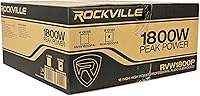
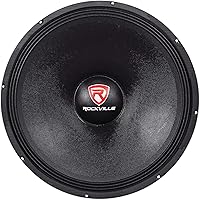
The Rockville RVW1800P8 18″ DJ Subwoofer is a raw passive driver built for the DIY pro-audio crowd — not a plug-and-play speaker you drop in a corner and forget. Before anything else, understand what you're buying: this is a cone, magnet, and voice coil assembly that needs an enclosure, an amplifier, and a crossover to make sound. Rockville rates it at 900W RMS continuous, with 1800W peak — and the RMS figure is what actually matters for amplifier matching. At 8 ohms, it pairs with a wide range of pro-audio amps. For the price, this 18-inch subwoofer driver competes solidly with budget-adjacent semi-pro options.
Features & Benefits

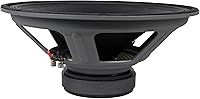
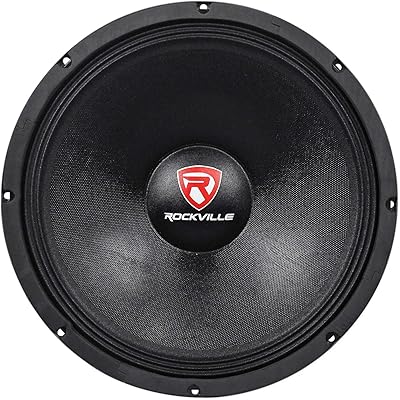
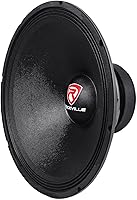
The 107oz magnet assembly is the headline component here, and for good reason — a heavier magnet means a stronger motor, better cone control, and more accurate bass at the low end. Paired with a 3-inch, 4-layer voice coil designed to handle sustained heat, the Rockville raw sub can hold up during long sets without thermal throttling becoming a concern. The Kevlar-reinforced cone is meaningfully tougher than plain paper, which matters if you're loading and unloading gear regularly. A dual-spider suspension system keeps excursion controlled at high SPL, reducing distortion when you push it hard. The claimed 20Hz response is a free-air measurement — expect real-world performance to vary depending on your cabinet design.

Best For

This DJ sub woofer is squarely aimed at builders and working professionals, not casual buyers. DIY cabinet builders get the most value here — you're paying for quality raw components rather than a finished product's markup. Mobile DJs who build their own enclosures, and live sound technicians looking for a spare or replacement driver, will find the price-to-spec ratio genuinely attractive at this size. Home theater enthusiasts with experience building ported or bandpass cabinets can also make this work well. That said, if you're expecting to plug this into a receiver and call it done, look elsewhere. External amplification and a proper enclosure are non-negotiable requirements.

User Feedback

Buyers who understand what they're purchasing tend to be quite satisfied with this 18-inch subwoofer driver. Output and bass impact are the most praised aspects — many report it hits harder than expected at this price. The banana plug terminals draw consistent compliments for making wiring fast and clean in custom builds. On the critical side, some buyers wrestled with amplifier matching, particularly around whether their amp could properly drive an 8-ohm load at the rated RMS. A handful noted they wished Rockville provided enclosure volume recommendations in the documentation. Long-term durability reports are mostly positive, though a small number of users flagged inconsistencies in unit-to-unit quality control worth being aware of.

Pros

  • Substantial 107oz magnet provides strong motor force and tight cone control for an 18-inch driver at this price.
  • Rated at 900W RMS continuous, giving you real headroom for extended high-volume use without babying the driver.
  • Kevlar-reinforced cone holds up better than plain paper under repeated loading, humidity changes, and outdoor gigs.
  • High-temperature 4-layer voice coil keeps thermal compression in check during long, demanding sets.
  • Nickel-plated banana plug terminals make wiring into custom cabinets fast, clean, and secure.
  • Dual-spider suspension system helps control cone excursion and reduce distortion when pushed hard.
  • Buyers consistently report bass output that feels strong relative to what was paid for the driver.
  • At 15 pounds, the unit is manageable to mount solo during a cabinet build or driver swap.
  • 8-ohm impedance is a practical, widely compatible load for most pro-audio amplifiers.
  • Competitive component spec sheet compared to similarly priced 18-inch raw drivers from other brands.

Cons

  • No enclosure, amplifier, or crossover included — new buyers routinely overlook this and return the unit.
  • Rockville provides no enclosure volume or tuning recommendations, leaving DIY builders to source that guidance elsewhere.
  • Peak power marketing (1800W) is misleading; real-world continuous handling is the 900W RMS figure that actually matters.
  • Some buyers report inconsistent unit-to-unit quality, suggesting manufacturing tolerances are not always tight.
  • Amplifier matching questions come up frequently in user feedback, pointing to a gap in documentation and setup guidance.
  • The 20Hz frequency response spec is a free-air measurement with little practical meaning without a properly tuned enclosure.
  • No carrying handles or mounting accessories are included, making solo installation into deep cabinets awkward.
  • Limited warranty support and after-sale service from Rockville can be difficult to navigate for technical issues.
  • This DJ sub woofer has no passive crossover built in, so high-frequency driver protection depends entirely on your external signal chain.

Ratings

Our AI rating engine analyzed thousands of verified global user reviews for the Rockville RVW1800P8 18″ DJ Subwoofer, actively filtering out incentivized, spam, and bot-generated feedback to surface the most credible buyer experiences. The scores below reflect what real-world users — from gigging mobile DJs to experienced cabinet builders — consistently praised and criticized across verified purchase records. Both genuine strengths and recurring pain points are transparently represented in every category.

Value for Money
83%
Among 18-inch raw subwoofer drivers in this price bracket, this one consistently earns praise for punching above its weight. Buyers who upgraded from cheaper, flimsier drivers were particularly impressed by the magnet size and cone construction they received without stretching into higher-tier brand territory.
A portion of negative feedback on value comes from buyers who didn't account for the additional cost of an amplifier and enclosure on top of the driver itself. For those buyers, total system cost ends up significantly higher than the sticker price implied.
Bass Output
87%
Bass output is the most consistently praised attribute across user reviews — gigging DJs and DIY builders alike describe the low-end as hitting harder than expected for the price. When matched with a properly powered amplifier and a well-tuned ported enclosure, the driver produces genuinely room-pressurizing output.
A smaller group of buyers found the output underwhelming, but in most cases the root cause was an underpowered amplifier or a poorly designed cabinet rather than the driver itself. Without proper system matching, the driver's real potential simply doesn't materialize.
Build Quality
76%
24%
The Kevlar-reinforced cone, treated cloth surround, and substantial magnet assembly all contribute to a driver that feels noticeably more solid than budget alternatives at this size. Builders who handled competing drivers side by side consistently report that the physical quality comes across immediately upon inspection.
Recurring reports of inconsistent quality between individual units are a genuine concern — some buyers received drivers with minor cosmetic or assembly issues that raised questions about manufacturing tolerances. It's not universal, but it appears frequently enough to treat as a real purchasing risk.
Amplifier Compatibility
64%
36%
The 8-ohm impedance is a widely compatible load that pairs cleanly with the majority of pro-audio power amplifiers without special configuration. For experienced users, integrating this driver into an existing amp rack or DJ rig is a straightforward process.
Amplifier matching is the most commonly cited source of frustration in user feedback — many buyers aren't clear on what continuous RMS output they need, and Rockville provides almost no pairing guidance in the product documentation. This gap leads directly to underpowered setups and disappointing results.
Documentation & Setup Guidance
38%
62%
The basic spec sheet covers the fundamental electrical parameters needed to get started, and the banana plug terminal layout is intuitive enough that experienced builders can wire it up without instructions. For seasoned DIY audio builders, the missing details are findable through community resources.
The complete absence of published Thiele-Small parameters, enclosure volume recommendations, and amplifier pairing guidelines is the most consistently criticized aspect across all user reviews. Buyers new to raw driver builds are left entirely to their own research, which frequently results in poor system outcomes and frustrated returns.
Magnet & Motor Strength
84%
The 107oz magnet is a standout spec at this price point, and technically inclined users consistently note that the motor strength translates directly into tighter, more controlled bass reproduction. Compared to lighter-magnet competitors in the same range, the difference in cone authority is clearly audible in a properly built enclosure.
While the magnet assembly is genuinely impressive, Rockville's decision not to publish Thiele-Small parameters makes it harder for builders to model the driver's behavior before committing to an enclosure design. That gap forces builders to either measure the driver themselves or depend on community-sourced estimates.
Voice Coil Durability
78%
22%
The 3-inch, 4-layer high-temperature voice coil gives the driver meaningful headroom during sustained high-volume use — a real advantage for mobile DJs running extended gigs. Users who have pushed the driver regularly over many months report no coil failures when operating within the 900W RMS rating.
A handful of users report premature voice coil damage, almost always traced to amplifier clipping or consistent operation above the continuous power ceiling. Thermal failure risk rises sharply when buyers trust the peak wattage figure and select an amplifier sized to match it rather than the RMS spec.
Cone Durability
74%
26%
The Kevlar-reinforced composite cone holds up well against the handling realities of regular gigging — humidity fluctuations, sustained vibration, and incidental contact that would degrade a plain paper cone noticeably faster. Touring DJs who gig multiple times per week generally report the cone staying intact after months of consistent use.
A few buyers noted minor surface wear or early fatigue signs on the cone after extended high-excursion use, suggesting the Kevlar reinforcement isn't entirely immune to mechanical stress over time. The treated surround has also shown wear on some units used regularly in high-humidity outdoor environments.
Suspension Performance
77%
23%
The dual-spider linear progressive suspension does a solid job controlling cone movement at high SPL, keeping distortion from becoming audible when the driver is pushed firmly. Builders who have measured harmonic distortion in their finished enclosures find the suspension contributes meaningfully to clean, composed output.
At extreme excursion levels approaching the driver's mechanical limits, a small number of technically oriented users reported suspension bottoming that suggested the progressive stiffening curve is less gradual than expected. This is an edge-case scenario, but it matters for anyone designing a very aggressive ported or bandpass alignment.
Terminal Quality
82%
18%
The nickel-plated banana plug terminals consistently earn praise from builders for making cabinet wiring fast, clean, and reliable without requiring soldering or specialized tools. Technicians who service or rotate drivers regularly appreciate being able to disconnect and reconnect in seconds, and the plating holds up well against oxidation.
The banana plug format does limit flexibility for builders who prefer traditional binding post or push-terminal wiring configurations, requiring adapters that add cost and a potential failure point. A small number of users also noted the terminal housing feeling slightly less robust than the rest of the driver's construction.
Low-End Extension
61%
39%
When housed in a properly designed and tuned ported enclosure, this DJ sub woofer delivers solid output in the upper-bass and sub-bass range that satisfies most DJ and live sound applications. Experienced builders working from modeled cabinet designs report genuinely satisfying low-end performance.
The 20Hz free-air spec is a measurement taken without an enclosure and does not reflect real-world in-cabinet performance, leaving many buyers feeling misled. Without published modeling parameters or enclosure guidance from Rockville, hitting the driver's true low-end potential requires independent acoustic research and experimentation.
Thermal Handling
73%
27%
The high-temperature voice coil gives the Rockville raw sub more thermal headroom than typical budget-tier alternatives, and users running extended high-volume sets report the driver staying composed without audible compression during normal use. That resilience is a meaningful practical advantage for anyone running multi-hour events.
When fed a clipping signal from an underpowered amplifier — a scenario that arises directly from the confusing peak wattage marketing — thermal damage accumulates quickly. Several users have reported voice coil burnout under these conditions, which is technically operator error but is made significantly more likely by the unclear spec presentation.
Installation Ease
79%
21%
The banana plug terminals speed up wiring considerably, and the driver drops into a standard 18-inch baffle cutout without any unusual fitment challenges. First-time cabinet builders consistently report the mechanical installation going smoothly, which is an underrated practical advantage for a driver at this price.
The weight of the magnet assembly — one of the driver's genuine strengths — makes solo installation into a deep or overhead cabinet position genuinely awkward and potentially risky for the suspension if the driver is dropped or torqued during mounting. A second pair of hands is strongly advisable for this step.
Unit Consistency
57%
43%
The majority of buyers receive a driver that performs as expected right out of the box, and many users who ordered multiple units for paired cabinet builds report consistent output between them without needing to hand-match or return any units. For most buyers, quality control is not an issue they encounter.
A recurring minority of reviews describe receiving units with visible assembly defects, magnet seating issues, or audible rattles at low frequencies that point to inconsistent manufacturing. The frequency of these reports is high enough that thoroughly bench-testing the driver before committing it to a finished cabinet build is a sensible precaution.
Brand Support
52%
48%
Rockville maintains an active online presence, and a reasonably sized user community has generated shared knowledge around their drivers that partly fills the gap left by thin official documentation. Some buyers have reported satisfactory warranty resolution for units that arrived with clear manufacturing defects.
Official technical support is frequently described as slow, difficult to reach, or unhelpful when buyers have specific compatibility or setup questions. Warranty claim outcomes are also inconsistent, with a noticeable number of users reporting difficulty getting resolution on units that failed within the covered period.

Suitable for:

The Rockville RVW1800P8 18″ DJ Subwoofer is purpose-built for buyers who already know their way around a speaker cabinet and an amplifier rack. DIY audio builders will find the component quality punches above what you'd normally expect at this price point — the heavy magnet, reinforced cone, and quality voice coil are real assets when you're specifying a custom enclosure build. Mobile DJs who construct their own cabs to save on transport weight or costs will appreciate the raw output this driver delivers when paired with a competent amp. Live sound technicians at smaller venues or regional touring outfits looking for a reliable spare or a cost-effective replacement driver will find this a practical option. Home theater enthusiasts with the skills to design and build a ported or bandpass enclosure can also extract strong, room-filling low-end from this driver at a fraction of what finished subwoofer systems cost.
Not suitable for:

Buyers expecting a ready-to-use powered subwoofer will be immediately disappointed — this is a raw passive driver, full stop, and that distinction is responsible for the majority of frustrated returns and negative reviews the product receives. There is no built-in amplifier, no enclosure, no crossover, and no instructions for building one; you are buying a component, not a finished speaker system. Shoppers without prior experience in speaker cabinet design or amplifier matching should look at fully integrated powered subwoofer solutions instead. The 8-ohm impedance is straightforward but does require that your amplifier be rated to handle it at the power levels you plan to use — mismatching here wastes performance or risks equipment damage. The 20Hz frequency response figure printed in the specs is measured in free air and will not reflect real-world output; in-cabinet extension depends heavily on enclosure volume and tuning, so anyone expecting guaranteed ultra-deep bass without doing the cabinet design work may be let down.

Specifications

  • Peak Power: This driver carries a peak power rating of 1800W, which reflects a momentary ceiling rather than a sustained operating level.
  • RMS Power: Continuous RMS power handling is rated at 900W, which is the figure that matters when selecting a compatible amplifier.
  • Driver Diameter: The cone measures 18 inches across, making it suited to high-output bass reinforcement in large custom enclosures or pro-audio rigs.
  • Impedance: Nominal impedance is 8 Ohm, a standard load compatible with most pro-audio power amplifiers.
  • Magnet Assembly: The motor assembly uses a 107oz magnet, providing strong driving force for accurate low-frequency cone control.
  • Voice Coil: A 3-inch, 4-layer high-temperature voice coil is fitted to handle sustained thermal loads during extended high-volume use.
  • Cone Material: The cone is constructed from a Kevlar-reinforced paper composite, offering greater tear and moisture resistance than plain paper alternatives.
  • Surround Type: A treated accordion cloth surround is used, providing controlled compliance and long-term resilience under high excursion conditions.
  • Suspension: A linear progressive dual conex spider system manages cone travel, helping to reduce distortion when the driver is pushed toward its limits.
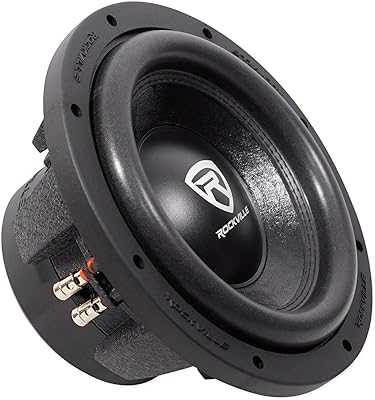
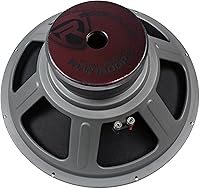
  • Terminals: Input connections use nickel-plated banana plug terminals, simplifying wiring into custom cabinets or speaker switching setups.
  • Frequency Response: The stated frequency response reaches down to 20Hz, measured in free air; actual in-cabinet extension depends on enclosure design and tuning.
  • Dimensions: The driver measures 20″ deep by 11″ wide by 20″ high, so verify cutout and baffle clearance before ordering.
  • Weight: The complete unit weighs 15.07 pounds, manageable for solo installation but worth accounting for in portable cabinet builds.
  • Power Source: This is a passive driver with no internal amplification; it requires a dedicated external power amplifier to operate.
  • Compatible Systems: Designed for use in pro audio, DJ, and live sound applications; not intended for direct connection to AV receivers or home stereo systems.

Related Reviews

Rockville RVW1500P8 15″ Raw DJ Subwoofer
84%
92%
Sound Quality
94%
Bass Output
89%
Durability
65%
Ease of Transport
88%
Build Quality
More
Rockville Destroyer 12D1 12″ Car Subwoofer
81%
93%
Bass Output & SPL Performance
88%
Build Quality & Materials
91%
Voice Coil Durability
89%
Magnet Structure & Motor Strength
82%
Enclosure Compatibility & Flexibility
More
Rockville RTB80A 8″ Powered Car Subwoofer
69%
88%
Ease of Installation
71%
Bass Output
82%
Value for Money
67%
Build Quality
44%
Power Accuracy
More
Rockville Bass Blaster 12 Powered Subwoofer
73%
83%
Bass Output
88%
Value for Money
86%
Setup & Connectivity
71%
Build Quality
74%
Sound Tuning Controls
More
Rockville MS12LW 12-inch Marine Subwoofer
71%
74%
Bass Performance
67%
Build Quality
52%
Water Resistance
88%
Installation Ease
81%
Value for Money
More
Rockville MS10LB 10-inch Marine Subwoofer
68%
71%
Bass Performance
86%
Ease of Installation
58%
Build Quality
63%
Weather Resistance
78%
Value for Money
More
QSC KS118 Active 18″ Subwoofer
88%
96%
Raw Sound Output
93%
Low-Frequency Extension
94%
Build Durability
67%
Portability & Transport
89%
DSP & Interface Ease
More
Rockville W10K6D2 V2 10″ Car Subwoofer
77%
83%
Build Quality
88%
Bass Output & Volume
91%
Value for Money
77%
Thermal Management & Durability
86%
Amplifier Compatibility & Wiring Flexibility
More
Rockville VS10K54 10″ K5 Subwoofer
85%
92%
Bass Quality
88%
Durability and Build Quality
91%
Value for Money
84%
Power Output
85%
Ease of Installation
More
Rockville Punisher 10D1 10-inch Car Subwoofer
79%
91%
Bass Output & Impact
88%
Build Quality
86%
Power Handling
89%
Value for Money
74%
Enclosure Compatibility
More

FAQ

The Rockville RVW1800P8 18″ DJ Subwoofer is a raw passive driver — there is no amplifier built in. You will need a separate power amplifier rated to drive an 8-ohm load, plus an enclosure to mount it in. This is the single most important thing to understand before purchasing.
A good rule of thumb is to match your amplifier's RMS output at 8 ohms to somewhere between 75% and 100% of the driver's 900W RMS rating. Running an amp that significantly under-powers this 18-inch subwoofer driver can actually cause more damage than running it at appropriate levels, because a clipping amp is harder on voice coils than clean power.

Rockville does not publish official Thiele-Small parameters or enclosure recommendations for this driver, which is a genuine gap in the product documentation. Most experienced builders treating this as a vented or ported design use enclosures in the 8 to 12 cubic foot range as a starting point, but running the actual T-S specs through modeling software like WinISD will give you a much more accurate target.

The 20Hz figure is a free-air measurement taken without an enclosure, so treat it as a theoretical floor rather than a real-world performance guarantee. In practice, usable low-frequency extension will be shaped almost entirely by your enclosure design, port tuning, and room acoustics. Expect solid output in the 35 to 50Hz range in a well-designed ported box.

Technically yes — the 8-ohm impedance and banana plug terminals are not car-specific, but you will need a car amplifier that can drive an 8-ohm load cleanly, which narrows your options compared to the more common 2 or 4-ohm car subs. The driver is also fairly large and heavy for a vehicle install, so enclosure fitment is a real constraint to work through before committing.

Kevlar composite cones hold up noticeably better against humidity, repeated flexing, and minor physical contact than plain paper cones do. If you're gigging regularly, loading the cab in and out of a van, or using the driver in an outdoor setting, the material difference is meaningful over time. It's not indestructible, but it's a practical upgrade for working equipment.

Banana plugs are spring-loaded connector pins that slide into the binding post terminals — no soldering required and no bare wire that can short against the cabinet. For custom builds you just terminate your speaker cable with banana plugs, and swapping drivers for maintenance or testing becomes a one-minute job instead of a wiring project.

Yes, but you need to think through the impedance math first. Two 8-ohm drivers wired in parallel gives you a 4-ohm load; wired in series you get 16 ohms. Make sure your amplifier is stable and rated at whichever impedance you end up with, or you risk either damaging the amp or leaving significant power on the table.

A 107oz magnet is on the heavier side for this price bracket — many competing drivers in the same range use magnets in the 70 to 90oz category. More magnet mass generally means stronger motor force, better cone control, and improved transient response at low frequencies. It's one of the specs worth paying attention to when comparing raw drivers side by side.

User feedback is largely positive on durability, especially from buyers who run the driver at sensible levels relative to its 900W RMS rating. The main reliability risk comes from over-driving it with an amplifier that clips or operates well beyond the driver's continuous power handling. Treat it as a working-grade driver rather than a professional touring workhorse, and it holds up well for most mobile DJ and small venue applications.

Where to Buy