Overview

The Rockville ROCKBAR 40-inch Soundbar with Wireless Subwoofer is Rockville's attempt to give budget-focused buyers a real home theater upgrade without the usual compromises at this price tier. Rockville has built its reputation on value-driven audio gear — think DJ equipment and PA speakers — so affordability is baked into the brand's DNA. What makes this Rockville soundbar stand out is that you actually get a wireless subwoofer included, which most competitors reserve for significantly pricier systems. The 40-inch form factor fits comfortably under most mid-size TVs. Just be clear-eyed going in: the plastic construction and entry-level signal processing mean this is a meaningful step up from built-in TV audio, not a high-end listening room setup.

Features & Benefits

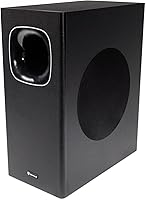
The ROCKBAR system packs in a legitimate mix of connectivity: HDMI ARC lets you run audio through a single cable and control volume with your TV remote, which is genuinely convenient. Optical, RCA, USB, and Bluetooth round out the inputs, and the USB slot handles drives up to 32GB for direct playback — handy when you want to spin files without streaming. The wireless 6.5-inch subwoofer handles the low end, and while the 400W figure is peak (real-world output is closer to 160W RMS), it gets loud enough for a typical living room. The four DSP sound modes — Movie, Music, 3D, and News — offer noticeable, if subtle, tuning differences depending on what you are watching or listening to.

Best For

This soundbar-sub combo is a strong fit for anyone upgrading from flat TV speakers for the first time — especially apartment renters who want a noticeable audio improvement without running speaker wire through walls. The 40-inch bar is proportionally well-suited to TVs in the 43- to 55-inch range in a small-to-medium room. Gamers and movie fans who want punchy bass during action sequences will likely appreciate the wireless subwoofer more than someone seeking nuanced stereo reproduction. It is also a reasonable pick for casual Bluetooth streaming in a bedroom or home office. If you are comparing multi-channel receiver setups or premium soundbars, this Rockville soundbar is playing a different game entirely — and that is perfectly fine.

User Feedback

Buyers consistently point to easy setup and the wireless subwoofer's plug-and-play nature as genuine highlights — most report being up and running in under twenty minutes, with the bass improvement over TV speakers frequently described as dramatic. On the critical side, the plastic housing feels noticeably lightweight, and the 72 dB signal-to-noise ratio means audible hiss can surface at higher volumes in quieter rooms. A handful of owners report occasional wireless sync hiccups between the bar and sub after power cycles. The DSP modes get mixed reviews — some find Movie mode genuinely useful, while others hear little difference. Long-term reliability feedback is scattered, and Rockville's customer support experience appears inconsistent based on owner accounts.

Pros

  • The included wireless subwoofer is a genuine differentiator at this price point — most competing systems make you pay significantly more for it.
  • HDMI ARC support means one cable handles both audio and volume control, which keeps setup refreshingly simple.
  • Bluetooth pairing works reliably for casual music streaming, and the rated 100-meter range gives real flexibility.
  • The USB input lets you play audio files directly from a thumb drive, no streaming service or phone required.
  • Four DSP modes give users a quick way to tailor sound for movies, music, or dialogue-heavy content.
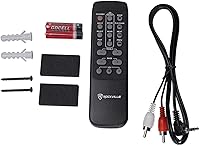
  • Wall-mount hardware is included in the box, so you are not hunting for extra accessories on day one.
  • Setup from unboxing to working audio typically takes under thirty minutes, even for non-technical users.
  • The 40-inch form factor sits well under most 43- to 55-inch TVs without looking awkward or oversized.
  • The bass improvement over built-in TV speakers is immediately noticeable, especially during action scenes or bass-heavy music.

Cons

  • The plastic housing feels lightweight and less substantial than similarly priced options from more established audio brands.
  • A 72 dB signal-to-noise ratio means audible hiss can creep in at higher volume levels, especially in quiet rooms.
  • Some owners report intermittent wireless sync issues between the soundbar and subwoofer after power cycling.
  • The 400W power rating is peak, not continuous — real-world loudness is more modest and may fall short in larger spaces.
  • DSP mode differences are subtle enough that some buyers feel they make little practical difference in everyday use.
  • Rockville customer support has received inconsistent reviews, which is a real concern if something goes wrong post-purchase.
  • The remote control feels basic and has drawn complaints about usability and button layout from some buyers.
  • Long-term reliability data is mixed, with scattered reports of performance issues emerging after extended use.

Ratings

The scores below reflect an AI-driven analysis of verified global buyer reviews for the Rockville ROCKBAR 40-inch Soundbar with Wireless Subwoofer, with spam, bot-generated, and incentivized feedback actively filtered out before scoring. Each category is rated on real-world performance patterns drawn from thousands of owner accounts — not manufacturer claims. Both the standout strengths and the recurring frustrations are represented honestly.

Value for Money
83%
At this price tier, getting a wireless subwoofer bundled in is something buyers consistently call out as a genuine win. Most users feel the overall audio experience punches above what they expected to spend, especially compared to single-bar systems in the same range.
A small but vocal segment of buyers feel the plastic build and modest SNR rating make the value proposition shakier over a two- or three-year ownership window. Longevity concerns temper what would otherwise be a very strong value score.
Bass Performance
78%
22%
The wireless 6.5-inch subwoofer is the headline feature, and for most buyers it delivers. Movie explosions, bass-heavy music, and gaming sound effects all benefit noticeably, with owners frequently describing the low-end as punchy and impactful for the room size.
Critical listeners note the bass can feel a bit one-note — present and loud, but lacking the tighter definition you get from better-tuned subwoofers. At maximum output, some describe a slight boominess rather than clean, controlled low-frequency reproduction.
Ease of Setup
88%
Setup is one of the most praised aspects across the buyer base. Most users report getting from unboxing to working audio in under twenty minutes, with HDMI ARC making TV integration particularly painless — plug in, switch input, done.
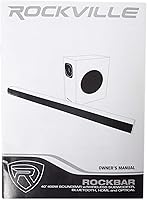
A minority of buyers ran into subwoofer sync issues on first boot, requiring multiple power resets before the wireless link stabilized. The manual has also been flagged as sparse, which can be frustrating if the auto-sync does not work immediately.
Sound Clarity
63%
37%
For everyday TV dialogue and casual music streaming, the ROCKBAR system holds up well enough that most first-time soundbar buyers are satisfied. Vocals in movies and news content come through clearly at moderate volumes, which covers the most common use case.
At higher volumes, the 72 dB signal-to-noise ratio starts showing its limits — a faint but persistent hiss becomes audible during quiet passages or between tracks. Midrange detail also lacks the separation and texture that buyers who have owned mid-tier systems will immediately miss.
Build Quality
54%
46%
The slim rectangular profile fits neatly under most televisions, and the recessed input panel gives the back of the unit a reasonably tidy appearance. For buyers who prioritize function over feel, the construction is adequate.
The all-plastic housing is the single most common complaint in user reviews, with many noting it feels noticeably lightweight and hollow compared to competitors in the same price range. The subwoofer in particular draws criticism for its insubstantial feel when handled, which affects perceived quality even if performance holds up.
Wireless Subwoofer Reliability
67%
33%
The majority of owners report that once the sub and soundbar are synced, they stay connected reliably through normal daily use — powering on each session without requiring manual re-pairing, which is exactly the experience most buyers expect.
A consistent minority thread of user reviews describes the wireless connection dropping intermittently, particularly after a full power-off cycle or when other wireless devices are active nearby. This is not universal, but it is frequent enough to be a real consideration.
Bluetooth Performance
74%
26%
Bluetooth streaming from phones and tablets works smoothly for the vast majority of owners, with quick initial pairing and stable connections during casual music listening from across the room. The range in open-plan spaces is genuinely generous.
Walls and interference from other 2.4 GHz devices can degrade the connection more than the rated range implies. A handful of buyers also note that switching back from Bluetooth to TV audio occasionally requires a manual input switch rather than happening automatically.
DSP Sound Modes
61%
39%
Buyers who use Movie mode for action films and News mode for talk shows report appreciable differences — particularly in dialogue clarity — making the modes more than just a gimmick for at least part of the user base.
The consensus from more discerning listeners is that the mode differences are subtle, and that 3D mode in particular adds more processing artifact than genuine spatial effect. Many owners settle on one mode permanently and stop experimenting.
Remote Control
57%
43%
The included remote covers all core functions — input switching, volume, DSP mode selection — without requiring any app installation or pairing, which suits buyers who prefer a simple, single-remote setup.
Button layout and labeling have drawn repeated criticism for being unintuitive, and the remote's range and responsiveness are described as inconsistent by a meaningful number of buyers. Several users default to their TV remote for volume once they realize HDMI ARC handles it.
LED Display Readability
66%
34%
The LED display is functional and bright enough to read input and volume information from a normal seated viewing distance in a typical living room environment during daytime or dim lighting.
In brightly lit rooms, several buyers report the display washes out and becomes difficult to read clearly. The font size is also small enough that users seated more than twelve to fifteen feet away may struggle to confirm the active input at a glance.
Connectivity Range
81%
19%
Having HDMI ARC, optical, RCA, USB, and Bluetooth all available on one bar at this price point gives the ROCKBAR system genuine versatility — older TVs, gaming consoles, and laptops can all connect without adapters.
There is no 3.5mm auxiliary input, which occasionally frustrates buyers who want to plug in an older device directly. The HDMI ARC port also requires a TV with CEC enabled to function properly, which some buyers discover only after setup.
Volume & Room Coverage
69%
31%
For small-to-medium rooms, the system gets loud enough to fill the space comfortably without obvious strain, and bass from the wireless sub adds a sense of scale that makes movie watching genuinely more engaging than TV speakers alone.
In larger open-plan spaces or rooms above roughly 400 square feet, the system starts to feel underpowered, with the real-world 160W RMS ceiling becoming apparent at high volumes. Some buyers in bigger rooms report the sound does not carry evenly to all seating positions.
Wall Mounting
76%
24%
Including wall-mount hardware in the box is a practical touch that saves buyers an extra purchase. The mounting template simplifies alignment, and several owners note the installation process is manageable as a solo task given the bar weighs around fifteen pounds total.
The included mounting hardware is basic, and a few buyers on older or non-standard wall constructions report needing supplementary anchors not included in the kit. Instructions for the mount could be clearer according to several user accounts.
Long-Term Reliability
55%
45%
Many owners who have used this soundbar-sub combo for a year or more report no major issues, and the system continues to perform consistently for everyday TV watching and music streaming without hardware failures.
There is a visible tail of negative long-term reviews citing hardware issues — particularly subwoofer failures and power-related problems — after the one- to two-year mark. Combined with inconsistent warranty support experiences, this introduces meaningful uncertainty for buyers who expect a five-year lifespan.

Suitable for:

The Rockville ROCKBAR 40-inch Soundbar with Wireless Subwoofer is a practical fit for first-time soundbar buyers who are tired of their flat-panel TV's thin, tinny audio but have no interest in running speaker wire or managing a separate AV receiver. Renters and apartment dwellers in particular will appreciate the wireless subwoofer, which delivers genuine bass impact without requiring any permanent installation or cable management compromises. It suits small-to-medium living rooms — think 300 to 400 square feet — where a 40-inch bar is proportionally appropriate and the audio output is sufficient to fill the space without straining the system. Gamers and casual movie watchers who want more punch and presence during action-heavy content will get clear value from this soundbar-sub combo. It also works well as a bedroom or den upgrade for someone who streams music via Bluetooth and wants a single, easy-to-use system rather than a stack of separate components.

Not suitable for:

Buyers with serious audio expectations should look elsewhere before considering the Rockville ROCKBAR 40-inch Soundbar with Wireless Subwoofer. The plastic build and a signal-to-noise ratio of 72 dB are honest reminders that this is an entry-level product, and anyone sensitive to background hiss at higher volumes will likely find that limitation frustrating over time. Audiophiles or home theater enthusiasts who value precise soundstage, clean midrange detail, or reference-level dynamics will hit a ceiling with this system quickly. Larger rooms — anything above 400 to 500 square feet — may expose the limits of the real-world output, which is considerably more modest than the peak wattage figure implies. Those who have already owned a mid-tier soundbar from brands like Sonos, Bose, or Yamaha are unlikely to find this ROCKBAR system a satisfying step forward, and buyers who prioritize long-term durability or robust warranty support should factor in the mixed customer service feedback associated with the brand.

Specifications

  • Peak Power: The system delivers 400W peak power with a continuous RMS output of 160W, which is the more realistic measure of everyday loudness.
  • Soundbar Length: The soundbar measures 37.8″ wide, 3.07″ deep, and 2.75″ tall, making it a practical fit under most 43- to 55-inch televisions.
  • Subwoofer Driver: The wireless subwoofer uses a 6.5-inch dynamic driver designed to reproduce low-frequency content down to 20 Hz.
  • Channel Config: The system is configured as a 4.1-channel setup, with drivers distributed across the soundbar and the standalone wireless subwoofer.
  • Connectivity: Input options include HDMI ARC, optical (Toslink), RCA stereo line-in, USB, and Bluetooth for broad device compatibility.
  • Bluetooth Range: Bluetooth connectivity is rated for up to 100 meters in open-air conditions, though real-world range through walls will be shorter.
  • USB Playback: The USB input supports flash drives up to 32GB and allows direct audio file playback without a streaming device or phone.
  • DSP Modes: Four selectable DSP sound modes — Music, Movie, 3D, and News — allow basic tuning of the audio profile for different content types.
  • Signal-to-Noise: The signal-to-noise ratio is rated at 72 dB, which is functional but may result in audible background hiss at higher volume levels.
  • Subwoofer Link: The subwoofer connects to the soundbar wirelessly using a dedicated digital radio link, eliminating the need for a physical cable between the two units.
  • Weight: The full system weighs approximately 15 pounds combined, making it manageable for a single person to wall-mount or reposition.
  • Power Source: The soundbar is powered via a standard corded electric connection and is not battery-operated or rechargeable.
  • Mounting: Wall-mount hardware is included in the box, along with mounting templates to simplify bracket alignment during installation.
  • Build Material: The enclosure for both the soundbar and subwoofer is constructed from plastic, which keeps the overall weight low but limits the premium feel.
  • Remote Control: A dedicated infrared remote control is included for adjusting volume, switching inputs, and selecting DSP modes from across the room.
  • Display: The soundbar features an LED display panel that shows the active input source and volume level during operation.
  • Warranty: Rockville covers this product under a limited warranty; buyers should confirm current terms directly with Rockville for duration and claim procedures.
  • Input Voltage: The unit operates at 20 volts and is designed for standard household corded electric use.

Related Reviews

Philips B5309 2.1 Soundbar with Wireless Subwoofer
73%
73%
Sound Quality
69%
Bass Performance
82%
Dialogue Clarity
88%
Setup & Installation
61%
Wireless Subwoofer Reliability
More
Philips B6309 2.1 Soundbar with Wireless Subwoofer
73%
74%
Audio Quality
68%
Bass Performance
81%
Dialogue Clarity
86%
Setup Experience
83%
Roku TV Integration
More
Philips TAB8405 2.1-Channel Soundbar
76%
74%
Sound Quality
81%
Bass Performance
62%
Dolby Atmos Experience
88%
Wireless Subwoofer Convenience
77%
Smart Home Integration
More
Rockville RW10CA 10-inch Powered Car Subwoofer
77%
88%
Ease of Installation
74%
Bass Output Quality
91%
Low-Profile Fit
69%
Built-in Amplifier Performance
86%
Remote Bass Knob
More
Rockville Punisher 12D1 12″ Car Subwoofer
74%
88%
Build Quality
91%
Bass Output
87%
Value for Money
83%
Amplifier Compatibility
86%
Motor Performance
More
Klipsch R-80SWi 8-Inch Wireless Subwoofer
81%
88%
Wireless Reliability
83%
Bass Quality & Accuracy
93%
Ease of Setup
87%
Audio Latency
81%
Build Quality
More
Sony HT-S400 2.1ch Soundbar with Wireless Subwoofer

76%
83%
Audio Quality
79%
Bass Performance
86%
Dialogue Clarity
91%
Setup & Installation
77%
Value for Money
More
LG S40T 2.1ch Soundbar with Wireless Subwoofer

75%
76%
Audio Quality
68%
Bass Performance
83%
Dialogue Clarity
91%
Setup & Installation
79%
WOW Interface & Smart Integration
More
Philips TAB7305 2.1 Soundbar with Wireless Subwoofer

69%
81%
Bass Performance
67%
Dialogue Clarity
89%
Setup & Installation
62%
Wireless Subwoofer Reliability
78%
Value for Money
More
Rockville W8K9D4 8-Inch Car Subwoofer

77%
88%
Bass Output
91%
Build Quality
84%
Value for Money
79%
Amplifier Compatibility
82%
Installation Ease
More

FAQ

It works with virtually any TV. If your TV has an HDMI ARC port, that is the simplest connection — one cable handles both audio and volume control. If not, you can use the optical or RCA inputs instead, so compatibility is rarely an issue.

Generally, no. The sub and soundbar are designed to sync automatically on power-up. That said, a handful of owners have reported occasional reconnection hiccups after a full power cycle, so if it ever fails to sync, a quick power reset on both units usually resolves it.

It gets comfortably loud for a small-to-medium living room, maybe 300 to 400 square feet. Keep in mind the 400W figure is a peak rating — the continuous output is closer to 160W RMS, which is the more honest measure. It is not going to rattle walls, but it is a significant step up from built-in TV speakers.

Placement is fairly flexible since the connection is wireless. Most users keep it within the same room, typically within 30 feet of the soundbar, to maintain a reliable signal. You do not need line-of-sight, but walls and interference can affect the wireless link at longer distances.

Bluetooth streaming from a phone works well and is one of the more practical features of the ROCKBAR system. The rated range is generous, and switching between TV audio and Bluetooth music is straightforward using the input selector on the remote.

Honestly, the difference between modes is real but subtle — do not expect a dramatic transformation. Movie mode adds a bit more bass emphasis and width, while News mode brings vocals slightly forward. Most users find one or two modes they prefer and stick with them rather than switching constantly.

It can look a bit undersized under a 65-inch screen. Visually, a 40-inch bar pairs best with TVs in the 43- to 55-inch range. It will still function fine under a larger TV, but if aesthetics matter, you may want to consider a wider option.

The signal-to-noise ratio of 72 dB is on the lower end for modern audio equipment, and some users do notice a faint hiss at higher volume levels, particularly during quiet scenes or pauses in music. In a lively room with ambient noise, it is usually not an issue, but in a very quiet environment it can be noticeable.

It ships with an RCA cable, wall-mount hardware, a remote, and a power cable. An HDMI or optical cable is not included, so if you plan to use those inputs you will need to supply your own — both are widely available and inexpensive.

This is an area where buyer experiences genuinely vary. Some users report positive warranty interactions, while others describe difficulty getting timely responses. It is worth registering your product after purchase and keeping your receipt handy. Rockville does offer a limited warranty, but the support experience is not as consistent as you would get from larger consumer electronics brands.