Overview

The Rockville RFC30F 30 Farad Car Audio Capacitor has been around since 2015 and still holds a top-25 spot in its Amazon category — that kind of staying power says something. At its core, this is a power stabilization unit built for serious car audio installations, rated to support amplifiers up to 3000 watts. It sits in the mid-range tier, competing with offerings from brands like Scosche and Planet Audio. If your system pulls hard during bass hits and you are seeing voltage sag or flickering headlights, this stiffening cap is the category of solution you would reach for first.

Features & Benefits

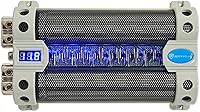
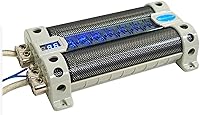
The RFC30F packs a few genuinely useful features beyond the capacitance number on the label. The platinum-plated terminals resist corrosion and ensure a low-resistance connection that cheaper units often skip. The built-in 3-digit LED display gives you a real-time voltage readout accurate to ±0.1VDC, with audible alarms that trigger if voltage dips below 10V or climbs past 16V. That kind of feedback is surprisingly practical during install and tuning. There is also an automatic sleep mode that kicks in during quiet periods to reduce unnecessary draw. The blue LED pulses with the music, which feels like a bonus rather than a gimmick for builds where the cap is visible.

Best For

This Rockville capacitor makes the most sense in builds where you have already sorted your main battery and alternator but are still chasing that last bit of voltage stability. Think: a dedicated amplifier running at or above 1500 watts, where bass transients are causing momentary sag your electrical system cannot recover from fast enough. It is also worth considering if you want a built-in voltage monitor without running a separate gauge. That said, if your electrical system is genuinely underpowered, a stiffening cap will not fix it — a second battery or upgraded alternator would be the smarter path. Reverse polarity protection makes this one more forgiving for less experienced installers than several competing units.

User Feedback

With over 240 ratings and a 4.3-star average, the RFC30F has earned consistent marks from buyers. The LED voltage display comes up often as a genuine highlight — people appreciate having that readout at a glance without adding a separate monitor. Installation gets positive mentions too, particularly the included mount hardware and the polarity warning system. On the critical side, some buyers note that the initial charging process requires a resistor to avoid blowing a fuse — it is standard procedure for caps, but the manual could be clearer. A handful of reviewers also mention the unit is bulkier than expected. Long-term durability feedback skews positive, though a few users report display issues after extended use in hot environments.

Pros

  • Built-in 3-digit LED voltage display eliminates the need for a separate monitoring gauge during install and daily use.
  • Reverse polarity warning with an audible alert adds meaningful protection for less experienced installers.
  • Platinum-plated terminals resist corrosion and maintain a reliable low-resistance connection over time.
  • Automatic sleep mode reduces unnecessary current draw when the system is idle or at low volume.
  • Supports amplifiers up to 3000 watts, making it relevant for genuinely high-powered builds rather than entry-level setups.
  • Buyers consistently report noticeable reduction in headlight dimming during heavy bass hits after install.
  • Aluminum housing with wire mesh cover feels durable and looks intentional, not like a budget afterthought.
  • Mount hardware is included in the box, which simplifies the installation process without extra trips to the hardware store.
  • Over and under-voltage alarms provide a practical safety layer for protecting downstream components.
  • Has maintained a top-25 bestseller rank in its category for years, reflecting steady buyer satisfaction.

Cons

  • The initial charging procedure requires an external resistor, and the included instructions do not walk through this clearly enough for beginners.
  • At over 12 inches long and nearly 5 pounds, fitting this unit into compact trunk or under-seat spaces can be genuinely difficult.
  • A small number of long-term owners report that the LED voltage display becomes unreliable after extended use in hot environments.
  • The blue LED pulse effect, while decorative, cannot be disabled — this may not suit every install aesthetic.
  • For lower-powered builds under 1000 watts, this stiffening cap is more capacitance than necessary and represents poor value for money.
  • The RFC30F does not replace a weak alternator or failing battery; buyers who skip those upgrades may see little real-world improvement.
  • Some reviewers note the product dimensions listed online did not match their physical expectations, leading to fitment surprises on install day.
  • Competing units at a similar price point from other brands offer comparable capacitance without the added bulk and weight.

Ratings

The Rockville RFC30F 30 Farad Car Audio Capacitor has been scored across 12 key categories by our AI rating engine, which analyzed verified buyer reviews from multiple global sources while actively filtering out incentivized, bot-generated, and duplicate feedback. The scores reflect genuine ownership experiences — from first-time installers to seasoned car audio builders — and do not shy away from the real frustrations buyers have encountered alongside the clear strengths this stiffening cap delivers.

Voltage Stabilization
86%
Buyers running amplifiers between 1500 and 3000 watts consistently report a meaningful reduction in headlight dimming during heavy bass hits after installing the RFC30F. The speed at which the cap responds to transient power demands is its core value, and real-world feedback confirms it delivers on that promise for well-matched systems.
Users with underpowered alternators or aging batteries report less dramatic improvement, which creates a split in satisfaction depending on the broader electrical setup. A small group of buyers in particularly demanding competition-level builds felt the cap alone was not enough without additional electrical upgrades.
Build Quality
78%
22%
The aluminum housing with black wire mesh cover feels noticeably more substantial than competing units in the same price bracket, and the platinum-plated terminals have held up well for most long-term owners. Several reviewers specifically called out the solid construction after a year or more of use in warm trunk environments.
A recurring minority of reviews mention that the LED display develops inconsistencies after extended exposure to high heat, which is a real concern for installs in hot climates or poorly ventilated trunk spaces. The wire mesh cover, while functional, can accumulate dust and debris in exposed mounting locations.
Ease of Installation
81%
19%
The included metal mount tubes, clear terminal labeling, and the reverse polarity alarm make the physical install straightforward for most users with basic car audio experience. Multiple reviewers noted the polarity warning tone saved them from a wiring mistake during their first install with this type of accessory.
The instruction manual does not adequately explain the pre-charge resistor procedure, which is a critical step before connecting the cap to a live system. Buyers who skipped this step — often because the manual left them unclear — reported blown fuses and unnecessary frustration that a better documentation package would have prevented.
Voltage Display Accuracy
88%
The 3-digit LED readout accurate to ±0.1VDC is one of the most consistently praised features across all feedback, with buyers appreciating the ability to monitor system voltage in real time without a separate gauge. Installers particularly value this during the tuning phase when dial-in precision actually matters.
The display brightness is not adjustable, which a handful of users found either too bright in a dark cabin at night or slightly hard to read in direct sunlight at certain angles. It is a minor complaint but comes up often enough to note for buyers with specific visibility preferences.
Value for Money
74%
26%
For buyers running genuinely high-powered systems, the RFC30F offers a competitive combination of capacitance, built-in monitoring, and protection features at a mid-range price point that undercuts some comparable units from better-known brands. The feature set relative to cost is generally seen as fair by experienced buyers who know what to expect from a cap in this class.
For anyone running less than 1000 watts, 30 farads is excessive and the cost hard to justify when smaller, cheaper caps would do the same job. Some buyers also note that similarly priced second-battery kits could offer more total benefit for their particular setup, making the value proposition dependent on the specific use case.
Sleep Mode Performance
77%
23%
The automatic sleep mode functions reliably in most installs, kicking in during quiet periods and preventing the cap from maintaining unnecessary draw on the vehicle battery overnight. Owners who park for extended periods report no noticeable battery drain attributable to the capacitor during normal use.
The threshold sensitivity for triggering sleep mode is not user-adjustable, which frustrates a few buyers who feel it activates too aggressively during quiet passages in music. In some low-signal scenarios, the unit cycling in and out of sleep mode has caused the display to flicker, which is a minor but noticeable nuisance.
LED Aesthetics
71%
29%
For trunk builds where the capacitor is visible, the blue LED pulse synced to audio output adds a dynamic visual element that buyers working on show-quality installs genuinely appreciate. The effect is subtle enough not to look cheap and fits naturally into builds that already incorporate LED lighting.
There is no way to disable the LED pulse, which is a dealbreaker for buyers who want a completely stealth install or prefer a clean, unlit appearance. A small number of users also note the blue color does not integrate well with red or green lighting themes they have built around other components.
Polarity Protection
83%
The audible reverse polarity warning is one of the more practical safety features on this unit and has reportedly saved multiple buyers from wiring errors during installation, which would otherwise have caused immediate and potentially expensive damage. It is the kind of safeguard that experienced installers appreciate and beginners genuinely need.
The warning system only alerts — it does not physically prevent connection — so users who ignore or misunderstand the tone and proceed anyway can still damage the unit. A clearer explanation in the manual about what the tone means and what to do next would reduce the number of support issues from confused first-time buyers.
Physical Dimensions
62%
38%
The rectangular form factor with through-hole mounting is practical for flat trunk floor installations, and the included mount tubes make securing the unit straightforward on solid surfaces. For builders who have the space, the layout is clean and purposeful.
At over 12 inches long and nearly 5 pounds, fitting this stiffening cap into tight spaces — under seats, inside small hatchbacks, or alongside crowded amp racks — is genuinely difficult and sometimes impossible without creative custom mounting. Several buyers report the listed dimensions did not match their mental model of the unit before it arrived.
Terminal Quality
84%
Platinum-plated terminals consistently earn positive remarks from buyers who have experienced corrosion issues with bare copper or tin-plated alternatives over time, especially in humid climates. Long-term owners report that connections remain tight and oxide-free after multiple seasons of use.
The terminal hardware, while corrosion-resistant, does not include any kind of protective cover or shroud, leaving connections exposed to dust and incidental contact in open trunk installs. A few buyers noted that the provided terminal screws are not the most robust and recommended upgrading to aftermarket hardware for permanent installs.
Over and Under-Voltage Alarms
79%
21%
The alarm system triggers reliably at the stated thresholds and functions as a useful diagnostic signal, particularly when a system is being pushed hard and voltage sag becomes a real concern. Buyers report the alarms are loud enough to hear even with music playing at moderate volume.
There is no way to customize the alarm thresholds, which means systems that normally operate near the edges of the 10–16V window — such as vehicles with slightly elevated charging voltage — may experience nuisance alarms during normal operation. A small number of buyers in this situation found the alerts more annoying than useful.
Long-Term Durability
69%
31%
The majority of buyers who have owned this Rockville capacitor for one to two years report it is still functioning correctly, and the aluminum chassis shows minimal signs of wear even in moderately harsh install environments. The overall failure rate suggested by the review pool is relatively low for a mid-range capacitor.
The LED display is the most commonly cited component to show wear over time, with a noticeable cluster of reviews mentioning display degradation or total failure after one to two years in high-heat trunks. This points to a real durability ceiling for the display electronics specifically, rather than the capacitor itself.

Suitable for:

The Rockville RFC30F 30 Farad Car Audio Capacitor is a solid pick for car audio enthusiasts who have already built out a serious amplifier setup and are dealing with the classic symptom of headlights dimming in time with bass hits. If your amplifier is pulling anywhere from 1500 to 3000 watts and your electrical system just cannot respond fast enough to sudden transient demands, this stiffening cap addresses exactly that gap. It is also a smart choice for installers who want a voltage monitor baked right into the unit — the built-in LED display means you can keep an eye on system voltage without running a separate gauge or tapping into your head unit. Builders who care about under-hood or trunk aesthetics will appreciate that the blue LED pulse and aluminum housing look purposeful rather than cheap. First-time capacitor installers benefit from the reverse polarity warning system, which adds a layer of protection that more stripped-down competitors leave out entirely.

Not suitable for:

The Rockville RFC30F 30 Farad Car Audio Capacitor is not the right tool if your electrical system is fundamentally underpowered — a weak alternator or an aging battery will not be fixed by adding capacitance, and buyers who expect a dramatic transformation without addressing those root causes tend to be disappointed. If you are running a modest system under 1000 watts, a 30-farad capacitor is likely oversized for your actual needs and the money would be better spent elsewhere. The physical dimensions are substantial at over 12 inches long and nearly 4.8 pounds, so tight trunk or firewall installations with limited real estate may struggle to accommodate it cleanly. Buyers who are not comfortable with the initial resistor-based charging procedure — which is standard for large capacitors but not always intuitive — could run into install frustrations if they skip that step. Finally, anyone in an extremely hot climate should weigh the handful of reports about display reliability degrading over time in high-heat environments before committing.

Specifications

  • Capacitance: The unit provides 30 farads of capacitance, designed to stabilize voltage delivery for amplifiers drawing up to 3000 watts.
  • Max Voltage: Maximum operating voltage is rated at 27.5V, with normal working range optimized for 12V automotive electrical systems.
  • Voltage Range: The built-in alarm system monitors system voltage and triggers alerts when levels fall below 10V or exceed 16V DC.
  • Display Type: A 3-digit LED display provides real-time voltage readout with an accuracy of ±0.1VDC for continuous system monitoring.
  • Terminal Type: Platinum-plated terminals are used on all connections to minimize resistance and resist corrosion over long-term use.
  • Sleep Mode: An automatic sleep mode activates during low-volume or idle periods to reduce unnecessary current draw from the vehicle battery.
  • Polarity Protection: A reverse polarity warning system provides an audible tone alert if connections are made incorrectly during installation.
  • LED Feature: A blue LED window pulses in sync with audio signal levels, providing a visual accent that responds dynamically to music.
  • Dimensions: The unit measures 3.23 x 12.45 x 8.55 inches, making it a substantial component that requires adequate mounting space.
  • Weight: The RFC30F weighs 4.79 pounds, which should be factored into mounting decisions for trunk floors or firewall installations.
  • Housing Material: The outer enclosure is constructed from aluminum with a black wire mesh cover that aids ventilation and adds structural rigidity.
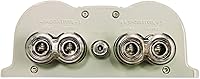
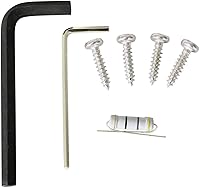
  • Mounting Type: Through-hole mounting is used, and the package includes two metal mount tubes to secure the unit to a flat surface.
  • Brand: Manufactured and sold by Audiosavings under the Rockville brand, which focuses on mid-range car and pro audio accessories.
  • Model Number: The official model designation is RFC30F, used across all product documentation and compatibility references.
  • In the Box: The package includes the capacitor unit and two metal mounting tubes; no fuse holder or charge resistor is included.

Related Reviews
Rockville RXC50D v2 50 Farad 24V Car Audio Capacitor
84%
87%
Performance
90%
Ease of Installation
76%
Voltage Display Accuracy
85%
Bass Improvement
82%
Build Quality
More
Planet Audio PC10F 10 Farad Car Capacitor
80%
88%
Value for Money
91%
Ease of Installation
87%
LED Voltage Display
79%
Bass Performance Impact
63%
Build Quality
More
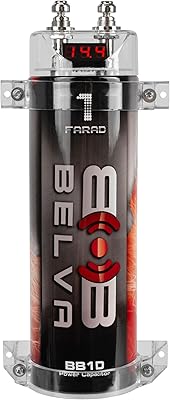
Belva BB1D 1 Farad Car Audio Capacitor
76%
88%
Ease of Installation
91%
Voltage Display Clarity
74%
Power Stabilization Effectiveness
58%
Audible Alert Usefulness
62%
Automatic Shutoff Protection
More
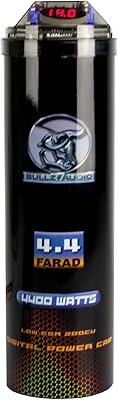
Bullz Audio BCAP4.4 4.4F Car Power Capacitor
71%
83%
Voltage Stabilization
78%
Value for Money
81%
Ease of Installation
74%
Digital Display Quality
61%
Build Quality
More
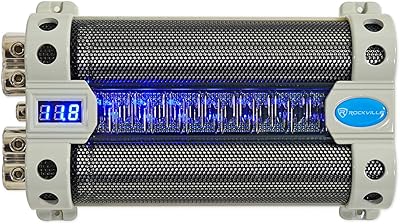
Rockville RFC50F 50 Farad Car Capacitor
75%
83%
Voltage Stabilization
88%
Voltage Display Accuracy
61%
Installation Experience
91%
Visual Appeal
72%
Build Quality
More
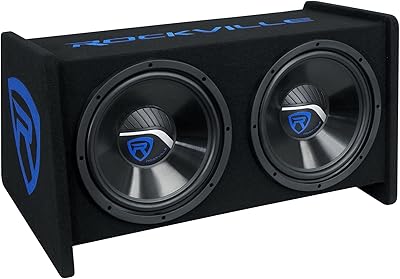
Rockville RV1212P Dual 12″ Car Audio Subwoofers
85%
94%
Bass Performance
89%
Build Quality
84%
Ease of Installation
92%
Value for Money
88%
Sound Clarity
More
Rockville RXC2D 2 Farad Car Audio Capacitor
79%
83%
Voltage Stabilization
88%
Ease of Installation
67%
Volt Meter Accuracy
76%
Build Quality
84%
Value for Money
More
Rockville W12K6D2 V2 12″ Car Subwoofer
72%
88%
Value for Money
84%
Bass Output
67%
Build Quality
91%
Wiring Flexibility
79%
Low-Frequency Extension
More
Rockville W8K9D4 8-Inch Car Subwoofer
77%
88%
Bass Output
91%
Build Quality
84%
Value for Money
79%
Amplifier Compatibility
82%
Installation Ease
More
Rockville K5 W12K5S2 12″ 2-Ohm Car Audio Subwoofer
86%
94%
Bass Performance
91%
Power Output
88%
Build Quality
82%
Installation Ease
89%
Durability
More

FAQ

Yes, and skipping this step is one of the most common install mistakes. Before connecting the RFC30F to your system, you need to pre-charge it using a resistor in series with the power lead — a simple 1000-ohm resistor works fine. This prevents a large inrush of current that could blow a fuse or damage the cap. Once the voltage display reads close to your battery voltage, you can remove the resistor and complete the final connection.

It can help, but results depend on how well the rest of your electrical system is set up. This stiffening cap stores energy and releases it quickly during transient peaks, which is exactly what causes headlight flicker. If your alternator and battery are in decent shape, adding the cap often makes a noticeable difference. If your charging system is genuinely underperforming, the cap will soften the symptom but not eliminate it.

Honestly, yes. The general rule of thumb in car audio is roughly 1 farad per 1000 watts of amplifier power. For a 1000-watt system, a 1 to 2 farad cap is typically sufficient. A 30-farad unit is sized for serious high-powered builds and using it on a modest system just means you are spending more than you need to without a corresponding benefit.

The Rockville RFC30F 30 Farad Car Audio Capacitor can be mounted horizontally — it does not contain liquid electrolyte like an older-style wet capacitor, so orientation is flexible. The included metal mount tubes are designed for flat surface mounting, which makes horizontal trunk floor installs straightforward.

The automatic sleep mode handles this. When audio signal drops below a certain threshold for a period of time, the unit reduces its draw and the display dims or turns off. It does not stay fully lit and draining your battery while the car sits overnight.

You should match the wire gauge you used for your amplifier power run — typically 0 or 2 gauge for systems in the 1500 to 3000 watt range. The platinum-plated terminals on this unit are built to handle heavy gauge wiring, so do not downsize the cable or you will create a bottleneck that defeats the purpose of adding a capacitor.

Yes, it is a universal 12V DC accessory and works with any standard automotive electrical system. It does not matter whether your amplifier is from Rockville, JL Audio, Kenwood, or anyone else — the cap simply sits in the power line between the battery and the amp distribution block.

The built-in display monitors your system voltage continuously. If voltage drops below 10V — which can signal an overloaded electrical system — you get an audible alarm. The same happens if voltage climbs above 16V, which could indicate a regulator problem. It is a useful diagnostic feature, especially during initial install when you are dialing in your system.

No, there is no switch or setting to turn off the blue LED pulse — it responds to the audio signal automatically. If you are doing a stealth install or prefer a cleaner look without lighting effects, that is worth knowing before you buy. For most builds where the cap is visible in a trunk setup, it tends to look intentional rather than distracting.

That is a fair debate and the honest answer is that they solve slightly different problems. A capacitor reacts faster to instantaneous power demands — it charges and discharges in milliseconds, which is why it helps with bass transients. A second battery adds reserve capacity for sustained high-draw situations. For most car audio builds, a properly sized capacitor with a healthy primary battery and alternator is all you need. If you are running competition-level power for extended sessions, a secondary battery may still be worth considering on top of the cap.

Where to Buy