Overview

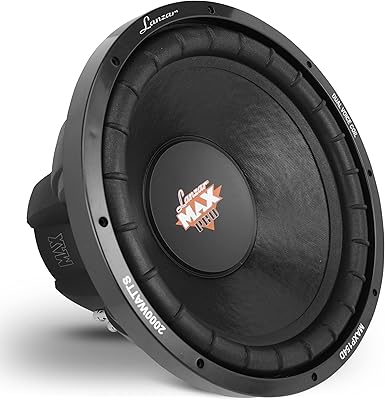
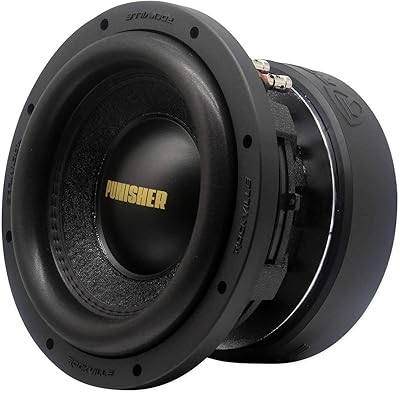
The Rockville Punisher 15D2 15-inch Car Subwoofer is built for one purpose: serious competition and high-output car audio builds, not casual listening. Rockville occupies an interesting spot in the market — they price aggressively compared to boutique SPL names, but the specs packed into this driver are closer to what you'd expect from hardware costing twice as much. The dual 2-ohm voice coil gives installers real wiring flexibility, letting you run parallel, series, or bridged configurations to match your amplifier's output impedance. One thing to understand upfront: this is a high-excursion competition sub that needs a well-designed ported or bandpass enclosure to perform. Drop it in a sealed box and you'll wonder what the fuss is about.

Features & Benefits

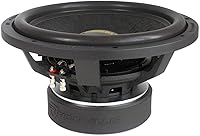
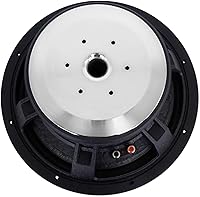
Starting with the motor: the 3-inch 4-layer voice coil is wound on an aluminum former with OFC wire, and that combination matters more than most buyers realize. Aluminum sheds heat far faster than traditional copper formers, which means sustained high-power runs are less likely to cause thermal compression or coil failure. The double-stacked magnet assembly — a genuinely heavy piece of hardware — produces strong, precise motor force, which translates to tighter low-frequency control rather than just brute loudness. The 29mm one-way excursion capability means this 15-inch Rockville sub can move a serious column of air without bottoming out. Cooling is handled by a vented pole piece and an oversized aluminum heatsink ring, both targeting heat buildup under extended loads. The CEA-2006 rated 1500W RMS figure is also worth noting — that compliance standard makes it a real apples-to-apples number.

Best For

The Punisher 15D2 is the right call for SPL competitors and show builders who want credible competition specs without spending boutique money. If you're building a ported or bandpass enclosure tuned in the 30–40Hz range, this sub has the excursion and motor strength to really exploit that design. Plan on pairing it with an amplifier capable of delivering at least 1000W RMS — buyers who pair this competition subwoofer with a modest amp consistently report disappointing results, because the driver simply needs adequate power to wake up. The dual voice coil configuration also gives you useful flexibility to match whatever impedance your amp prefers. That said, if you're looking for a tight, accurate sub for a small sealed enclosure or a daily commuter setup, this isn't it. Raw output is the priority here, not nuance.

User Feedback

Across a broad range of owner reviews, two themes come up consistently: output that surprises people who expect less from a value brand, and installation complexity that catches some buyers off guard. At nearly 45 pounds with a cutout requirement over 14 inches, this isn't a weekend afternoon project — you need a solid, purpose-built box or this sub will never deliver what it's capable of. Buyers using underpowered amplifiers form a visible cluster of disappointed reviewers, which reinforces what the specs suggest. On the positive side, long-term owners frequently report that the voice coil holds up well under sustained high-power use, and more than a few buyers have noted that the Punisher 15D2 competes directly with drivers costing significantly more. That's the kind of real-world feedback that carries weight for anyone building on a budget.

Pros

  • CEA-2006 certified power handling means the 1500W RMS claim is directly comparable to competing brands, not inflated marketing.
  • The aluminum voice coil former sheds heat faster than copper, reducing thermal compression during extended high-power competition runs.
  • Generous one-way excursion allows the driver to move serious air without bottoming out at high SPL levels.
  • Dual 2-ohm voice coil wiring gives builders the flexibility to run series, parallel, or bridged configurations with ease.
  • Build quality — particularly the magnet assembly and cone construction — consistently exceeds buyer expectations at this price tier.
  • Long-term owners report solid voice coil durability under sustained competition use, which is not always a given at this price point.
  • The double-stacked magnet produces strong motor force, giving the Punisher 15D2 noticeably controlled low-frequency response.
  • Buyers frequently report that output levels match or compete with drivers sold at significantly higher price points.

Cons

  • At nearly 45 pounds, this sub is genuinely heavy and demands a solid, well-braced enclosure — budget extra for the build.
  • A cutout requirement exceeding 14 inches rules out most compact vehicles, hatchbacks, and many pre-fabricated enclosures.
  • Buyers pairing this competition subwoofer with underpowered amplifiers consistently report underwhelming bass — adequate power is non-negotiable.
  • Performance is entirely enclosure-dependent; without a properly tuned ported or bandpass box, output falls well short of potential.
  • Rockville's brand reputation still trails established boutique SPL names, which can affect community credibility and long-term resale value.
  • No installation hardware or mounting accessories are included, adding to total project cost for first-time builders.
  • The excursion-focused design makes this sub a poor match for music genres that prioritize midrange texture or sonic detail.
  • Setup complexity is high — box tuning errors are punishing, and this driver is unforgiving for builders without enclosure experience.

Ratings

The Rockville Punisher 15D2 15-inch Car Subwoofer earns its scores from an AI-powered analysis of verified global buyer reviews, with spam, incentivized feedback, and bot activity actively filtered to ensure the ratings reflect authentic ownership experiences. Every category — from raw output and build quality to installation complexity and daily usability — was evaluated without bias, and both the standout strengths and the real friction points buyers encounter are transparently represented. What you see here is the full picture, not a filtered highlight reel, so you can make a confident, informed decision about whether this competition sub fits your specific build and budget.
Output & SPL Performance
88%
Buyers consistently describe the output as genuinely startling for a sub at this price point, particularly in ported enclosures tuned to the low 30Hz range. At competition events and high-volume shows, the Punisher 15D2 holds its own against drivers costing considerably more, and that output ceiling is the single biggest reason serious builders recommend it.
In setups where the enclosure is not properly tuned or the amplifier is not delivering adequate power, that output potential simply does not show up. Buyers expecting casual loudness from a modest setup end up underwhelmed, which skews perceived scores in mixed-audience reviews where system context is unknown.
Build Quality
84%
The magnet assembly draws consistent praise from experienced builders who know what quality hardware feels like — it is noticeably heavy and solid, not the lightweight construction common at this price tier. The non-pressed paper cone and polypropylene dust cap also hold up visually and functionally after extended high-power use.
Rockville's quality control has occasionally been flagged as inconsistent across production batches, with a small but visible subset of buyers reporting cosmetic or minor structural imperfections out of the box. Manufacturing precision does not quite match boutique competition sub makers, even if functional output often tells a different story.
Thermal Management
81%
19%
The aluminum heatsink ring and vented pole piece combination earns specific praise from builders who push this competition subwoofer through long competition runs. Unlike cheaper drivers that go into thermal compression and lose output after a few minutes at full power, the Punisher 15D2 maintains consistent output levels across sustained high-power sessions.
Prolonged bass-off competitions in summer heat with poor vehicle ventilation still put pressure on the thermal system, and some heavy users caution that amplifier clipping compounds heat stress faster than passive cooling can offset. Voice coil longevity ultimately depends on responsible amplifier gain calibration.
Value for Money
87%
This is where this 15-inch Rockville sub generates the most enthusiasm across buyer communities. Reviewers with hands-on experience with premium competition brands consistently note that the output and hardware quality delivered here punches well above what the price implies, making it a compelling choice for budget-conscious builders who refuse to sacrifice specs.
The value equation weakens once you factor in total system cost — this driver demands a high-output amplifier and a purpose-built enclosure, both of which add significant expense. Buyers who purchase the sub without budgeting for those components often feel misled by the driver's initial price point.
Low-Frequency Extension
83%
In a properly tuned ported box, this competition subwoofer reaches convincingly deep — the kind of low-end felt in your chest rather than just heard through speakers. Buyers building enclosures tuned around 33–36Hz report that the sub reproduces sub-bass with authority that genuinely rivals drivers in a higher price bracket.
Low-frequency extension is highly enclosure-dependent, and buyers who skip proper box tuning hear a noticeably blunted low end that misrepresents what the driver can actually do. A portion of users in smaller vehicles also report that achieving full bass depth requires more enclosure volume than their trunk realistically allows.
Power Handling
86%
The CEA-2006 compliance on the RMS rating is a real differentiator — it means the power handling claim is verifiable and directly comparable to other CEA-rated drivers, not inflated marketing copy. Builders who feed this sub clean, stable power report that it handles sustained high-wattage sessions without flinching, which is exactly what competition use demands.
A recurring complaint pattern emerges when buyers pair this sub with amplifiers that cannot maintain stable output at the required impedance — the driver's power handling potential is then never realized. There is also a learning curve around gain structure and amplifier tuning that consistently trips up less experienced installers.
Installation Complexity
46%
54%
Experienced installers appreciate that the dual voice coil configuration provides wiring flexibility that simplifies matching to a wide range of amplifier setups. For builders who already know their way around a car audio project, the physical installation process is predictable and well within the range of a skilled DIY build.
For anyone without prior car audio build experience, this is one of the most demanding installs in the category — nearly 45 pounds, a large cutout requirement, no included hardware, and strict enclosure specifications create a steep barrier. Feedback from novice buyers who skipped proper enclosure planning is consistently and overwhelmingly negative.
Enclosure Flexibility
57%
43%
The driver's parameters are well-suited to ported and bandpass enclosures of various tunings, giving experienced builders meaningful room to tailor the frequency response for different competition classes or listening preferences. Builders who invest time in proper box modeling get rewarded with highly versatile and controllable tuning outcomes.
Sealed enclosure buyers are essentially shut out — this sub is not designed for that application, and buyers who attempt it consistently report underwhelming results. The large physical footprint and significant enclosure volume requirements also make it impractical for compact vehicles or any build where space efficiency is a priority.
Wiring Flexibility
89%
The dual 2-ohm voice coil is one of the most installer-friendly features this driver offers — the ability to wire in parallel, in series, or run each coil independently makes this competition subwoofer compatible with a wide range of amplifier configurations without needing additional components or adapters.
The wiring flexibility is only useful if the installer understands impedance matching well enough to apply it correctly — mismatched loads are a real cause of amplifier damage and poor performance in reviews from less experienced buyers. The absence of any wiring guide in the package leaves beginners to figure out the correct configuration independently.
Voice Coil Durability
78%
22%
Long-term owner feedback suggests the aluminum former and OFC winding combination holds up well under regular competition use — several owners report months of heavy use without coil issues, which is a positive signal for a driver at this price point. The high thermal tolerance specification gives the coil meaningful headroom under typical high-power use.
A visible minority of reviewers report coil failure after extended use at maximum power, particularly in builds where amplifier clipping is present. Rockville's warranty support process has received mixed feedback, and buyers who push the sub aggressively should factor potential replacement costs into their long-term system budget.
Excursion Control
82%
18%
The generous linear excursion range allows the driver to move a substantial column of air without the mechanical stress that causes cone damage or suspension failure. Buyers building for bass-heavy music report that the sub maintains composure even when driven hard, which validates the motor design in real-world conditions.
At very high excursion levels near mechanical limits, some buyers report audible distortion and minor suspension creep over time — signs the driver is being pushed beyond its comfortable operating range. Proper low-pass crossover setting and subsonic filter use are essential to protect the suspension during extreme output sessions.
Amplifier Dependency
53%
47%
For builders who already own a capable high-output amplifier, the sub's demanding power requirements are simply a reflection of correct system-level thinking for any serious SPL build. Pairing this driver with a quality amplifier at the right impedance reveals a level of performance that genuinely surprises even skeptical reviewers.
Performance is almost entirely contingent on amplifier quality — buyers who are not ready to invest in a proper amplifier pairing will find this driver deeply disappointing regardless of enclosure quality. This hard dependency is the most common root cause of negative reviews from buyers who feel the product underdelivered on its promise.
Daily Drivability
51%
49%
Enthusiasts who invest in proper tuning and run the sub with appropriate crossover settings do report enjoyable everyday listening, especially for hip-hop, electronic, and bass-forward music where deep high-volume output is the goal. In those cases the sub works reliably as a daily driver for the right type of listener.
Buyers expecting a plug-and-play daily commuter sub find the experience frustrating — the enclosure requirements, amplifier demands, and system complexity make this driver far more work than casual daily use warrants. The raw high-output character also means the sub lacks the musical refinement that most daily listeners expect from a well-rounded bass setup.
Brand Reputation
63%
37%
Within the value-focused car audio community, Rockville has built a genuine following among builders who prioritize output specs over brand prestige. The Punisher 15D2 in particular has become a reference point in online discussions about getting competition-grade bass on a realistic budget, lending it credibility the broader Rockville catalog sometimes lacks.
In serious competition circles and among audiophile-leaning buyers, the Rockville name still carries an uphill credibility challenge against established SPL brands. Resale value is noticeably weaker than equivalent-performing boutique hardware, and some competitors report informal social pressure to run better-known brands at organized events.

Suitable for:

The Rockville Punisher 15D2 15-inch Car Subwoofer is built for the buyer who already knows their way around a car audio build — someone who understands enclosure tuning, amplifier matching, and why excursion specs matter. SPL competitors and show car enthusiasts are the natural fit here, especially those constructing ported or bandpass enclosures tuned to exploit the sub's low-end range. It's also a compelling option for experienced installers who want competition-tier mechanical specs without the price premium of boutique brands, making it a disciplined choice for serious builds on a controlled budget. The dual 2-ohm voice coil gives builders real wiring options — series, parallel, or bridged — to dial in the right load for their amplifier rather than compromising on power delivery. Anyone running a capable high-output amplifier in the 1000W RMS range or above is set up to get exactly what this sub was designed to deliver.
Not suitable for:

The Rockville Punisher 15D2 15-inch Car Subwoofer is almost certainly the wrong choice for casual listeners looking for a straightforward, low-effort factory audio upgrade. At close to 45 pounds and requiring a cutout of over 14 inches, it demands a purpose-built, well-braced enclosure — there is no shortcut, and buyers who skip that step consistently come away frustrated. This is not a sealed-box driver; the design favors high-excursion output over the tight, controlled response that sealed builds deliver, so if accuracy, sound quality, or nuanced bass matter more to you than raw output, a different sub will serve you better. Commuters or casual music listeners who pair this with a modest amplifier will likely hear underwhelming results, because the driver simply needs serious power to perform. Anyone dealing with limited trunk space, a compact vehicle, or a tight budget that doesn't leave room for a proper high-output amplifier and custom enclosure should strongly reconsider.

Specifications

  • Driver Size: The woofer cone measures 15 inches in diameter, placing it in the large-format category designed for high-output and competition car audio builds.
  • RMS Power: Continuous power handling is rated at 1500W RMS under CEA-2006 compliance, making this figure directly comparable to other CEA-rated drivers across brands.
  • Peak Power: Peak output is rated at 6000W, though real-world sustained performance is governed entirely by the 1500W RMS rating.
  • Voice Coil: Equipped with a 3-inch diameter, 4-layer coil wound on an aluminum former using USA-sourced oxygen-free copper wire for both thermal performance and signal fidelity.
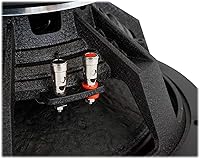
  • Impedance: Configured as a dual 2-ohm voice coil, supporting series wiring at 4 ohms, parallel wiring at 1 ohm, or independent dual-channel operation.
  • Magnet Assembly: Uses a double-stacked magnet structure weighing 246 oz, generating strong and consistent motor force for precise control over cone movement at low frequencies.
  • Linear Excursion: One-way linear excursion (XMAX) measures 29mm, with a total peak-to-peak travel of 58mm, enabling deep output at high volume without mechanical over-extension.
  • Frequency Response: Rated from 31Hz to 500Hz, with the usable low-end range optimized for ported or bandpass enclosures tuned in the 30–40Hz region.
  • Cone Material: The cone is fabricated from ultra-stiff non-pressed paper, which is more rigid than standard pressed paper and lighter than fiberglass or carbon fiber alternatives.
  • Dust Cap: A 1.2mm polypropylene dust cap protects the voice coil gap from debris while adding structural support to the cone assembly.
  • Thermal Tolerance: The voice coil assembly is rated thermally stable up to 250 degrees Celsius, reducing the risk of coil failure under sustained high-power operation.
  • Cooling System: An oversized aluminum heatsink ring combined with a vented pole piece channels heat away from the motor structure during extended high-excursion use.
  • Cutout Diameter: Requires a mounting cutout of 14.57 inches in the enclosure baffle, which must be verified against available space before purchasing.
  • Mounting Depth: A minimum mounting depth of 7.87 inches is required, a critical measurement to confirm against the enclosure and vehicle cavity depth.
  • Product Weight: The assembled driver weighs 44.7 pounds, requiring a structurally reinforced enclosure and secure, heavy-duty mounting hardware.
  • Dimensions: Overall frame dimensions measure 18″ deep by 18″ wide by 14″ tall, reflecting the full physical footprint including the basket and motor assembly.
  • Enclosure Type: Designed and optimized for ported or bandpass enclosure configurations; sealed box applications are not recommended for this driver.
  • Warranty: Covered by a limited warranty from Rockville; buyers should confirm current warranty terms and the claims process directly with the manufacturer prior to purchase.

Related Reviews
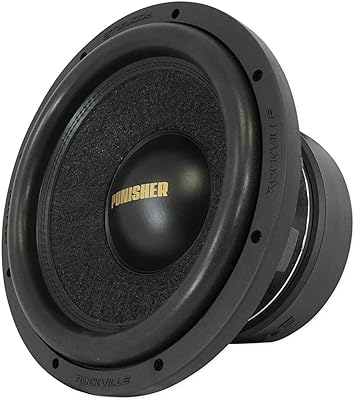
Rockville Punisher 12D1 12″ Car Subwoofer
74%
88%
Build Quality
91%
Bass Output
87%
Value for Money
83%
Amplifier Compatibility
86%
Motor Performance
More
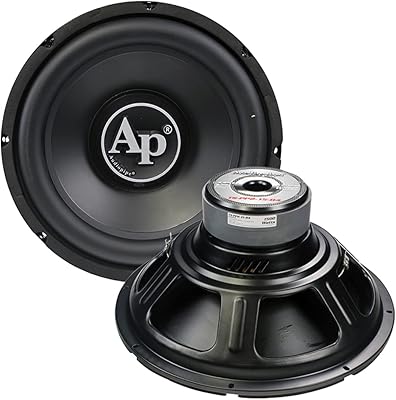
Audiopipe TS-PP2-15-D4 15-inch Car Subwoofer
84%
94%
Bass Output
92%
Power Handling
90%
Durability
87%
Value for Money
89%
Sound Clarity
More
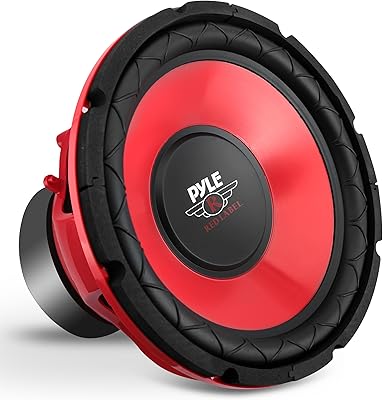
Pyle PLW15RD 15-Inch Car Subwoofer
85%
93%
Bass Performance
88%
Sound Clarity
90%
Build Quality
82%
Ease of Installation
87%
Durability
More
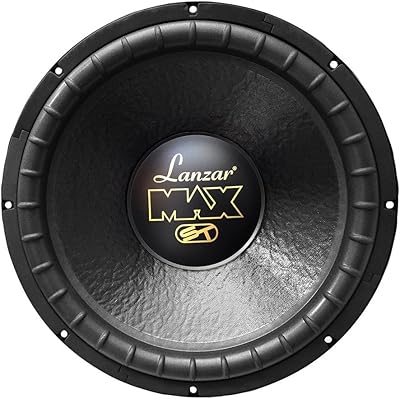
Lanzar MAX15D 15-Inch Car Subwoofer
84%
94%
Sound Performance
91%
Value for Money
88%
Build Quality
75%
Installation Ease
89%
Durability
More
Lanzar MAXP154D 15-inch Car Subwoofer
87%
92%
Bass Quality
88%
Sound Clarity
85%
Ease of Installation
90%
Build Quality
89%
Durability
More
Rockville W8K9D4 8-Inch Car Subwoofer
77%
88%
Bass Output
91%
Build Quality
84%
Value for Money
79%
Amplifier Compatibility
82%
Installation Ease
More
Rockville RVB12.1A 12-Inch Powered Subwoofer Enclosure
75%
91%
Ease of Installation
78%
Bass Performance
84%
Value for Money
76%
Build Quality
63%
Amplifier Reliability
More
Rockville W15K5S4 15-inch Car Subwoofer
75%
91%
Value for Money
86%
Bass Output
78%
Build Quality
52%
Power Handling Accuracy
83%
Ease of Installation
More
DS18 ZR15.4D Elite-Z 15-Inch Car Audio Subwoofer
86%
91%
Bass Quality
89%
Power Handling
94%
Build Quality
65%
Ease of Installation
87%
Sound Clarity
More
Rockville Punisher 10D2 10″ Car Subwoofer
77%
91%
Bass Output & SPL
84%
Build Quality
88%
Power Handling
89%
Value for Money
82%
Thermal Management
More

FAQ

You want an amplifier that can cleanly deliver at least 1000W RMS into whatever impedance you wire the sub at. Buyers who pair this competition subwoofer with undersized amps almost always end up disappointed — the driver genuinely needs real, stable power to perform. Matching it to something in the 1000W to 1500W RMS range at the correct load is the practical sweet spot.

You can, but the results will frustrate you. The Punisher 15D2 is engineered for ported or bandpass boxes where its excursion capability can actually work. In a sealed enclosure you get tighter, more controlled bass, but the output drops considerably and you never get close to what this driver is built to do. If a sealed setup is what you need, there are better-suited subs for that application.

It depends on what your amplifier handles best. Wiring both coils in parallel gives you a 1-ohm load, which squeezes maximum power from most mono amplifiers but only works if your amp is rated stable at 1 ohm. Series wiring brings you to 4 ohms, which is the safer choice for amps without a low-impedance rating. Running each coil to its own amplifier channel is also valid if your setup supports it. Check your amp's impedance rating before committing to a wiring scheme.

It can serve as a daily driver, but it was clearly built with SPL competition and high-output builds in mind. If balanced, musical bass for your daily commute is the goal, there are simpler and more cost-effective options that don't demand a custom enclosure and a serious amplifier. That said, plenty of enthusiasts run this 15-inch Rockville sub every day and are very happy — you just need to go in with realistic expectations about the install complexity.

For a ported build, most experienced installers recommend somewhere in the range of 3 to 4 cubic feet of net internal volume, tuned between about 32Hz and 38Hz to exploit the driver's low-end strength. Bandpass designs are also well-suited if you are targeting a narrow frequency peak for competition scoring. Before cutting any wood, model the box using software like WinISD with the sub's published Thiele-Small parameters — enclosure design has more impact on this driver's output than almost anything else.

Boutique competition brands like Sundown or Fi Audio carry deeper SPL engineering heritage and more credibility in the competition community, and they still have an edge in terms of refinement and resale value. That said, this 15-inch Rockville sub delivers output that a notable number of buyers describe as genuinely comparable at a fraction of the price. If community standing and long-term value matter to you, the boutique names hold the advantage — but for raw output per dollar spent, the gap is much smaller than the brand names might suggest.

This is not a beginner-friendly install. Between the weight, the large cutout requirement, and the enclosure demands, this is a project for someone with prior car audio build experience or a genuine willingness to research thoroughly. Getting the enclosure wrong — incorrect volume, poor tuning, insufficient bracing — will hurt performance and can damage the driver. If this is your first build, spending time in a dedicated car audio forum or consulting a local shop before starting is a worthwhile investment.

Long-term owner feedback is generally positive on durability — the aluminum former and OFC winding are designed to handle sustained thermal stress, and the cooling features help manage heat during extended sessions. That said, no driver is indestructible at maximum power for prolonged periods. Keep your amplifier gain properly set, avoid clipping, and this competition subwoofer should hold up well under regular competition or aggressive daily use.

No — the box contains the subwoofer and nothing else. Speaker wire, mounting hardware, terminals, and all enclosure materials are sourced separately. For a driver at this level, budget for quality wiring and a properly engineered box; skimping on either will undercut the performance of the driver itself.

It was built for bass-heavy, high-SPL listening — hip-hop, electronic, trap, and any genre where deep, loud low-end is the primary goal. In those genres, the output is genuinely impressive. If your listening leans toward rock, acoustic, jazz, or anything that values tonal balance over sheer volume, this sub's character will likely feel one-dimensional. It excels at what it was designed to do; it simply was not designed to do everything.