Overview

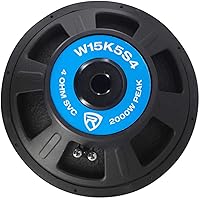
The Rockville W15K5S4 15-inch Car Subwoofer is Rockville's answer to a real question in the car audio world: can you get serious low-end output from a large-diameter driver without spending serious money? Rockville has built a reputation around packing competitive specs into accessible price points, and this 15-inch Rockville sub fits that pattern well. The single 4-ohm voice coil makes amp pairing straightforward — most mid-range mono amps are optimized for exactly this impedance. Focus on the CEA-rated 500W RMS figure when shopping; the 2000W peak number is a marketing ceiling, not a real-world operating spec.
Features & Benefits

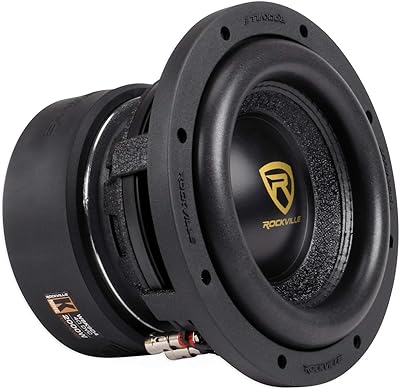
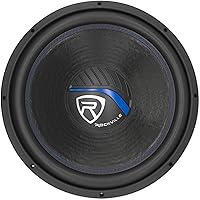
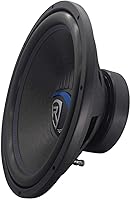
The K5 series woofer puts some genuine thought into its construction. The voice coil uses oxygen-free copper wire sourced from Japan — that matters because higher-purity copper dissipates heat more efficiently, reducing the risk of coil burnout during long, loud listening sessions. The cone is a fiber-reinforced non-pressed paper design: light enough to move quickly, stiff enough to stay controlled at high excursion. A 60 oz magnet combined with a vented T-yoke helps keep temperatures in check when you push the sub hard. Chrome-plated binding posts accept any wire gauge, and a thick foam surround with stitched reinforcement suggests the build is genuinely made to last.

Best For

This car subwoofer is a natural fit for first-time serious builders who want a big driver without the complexity or cost of high-end alternatives. It suits hip-hop, EDM, and trap listeners especially well, where low-end punch and extension matter more than precise tonal accuracy. Run it with a 300–500W RMS amplifier and you will get the most out of its 90.1 dB sensitivity without risking the coil. The enclosure flexibility — sealed or ported depending on your trunk space and tuning goals — adds real practical value for DIYers. The rubber magnet boot and branded gasket also make it a decent visual choice for open-trunk or hatchback setups.

User Feedback

Owners of the K5 series woofer consistently praise its output for the price, noting that bass depth exceeds what most expect at this tier. That said, a number of buyers have flagged confusion around the wattage specs — the 2000W figure misleads some into pairing it with mismatched amplifiers. Installation feedback is mostly positive, though a few users noted the 13.85-inch cutout requirement is worth double-checking before ordering, particularly in tighter mounting locations. Build quality impressions are generally good; the cast iron basket and terminals feel solid in hand. Where opinions split is box tuning — some found the recommended enclosure volumes needed personal adjustment to hit their preferred sound.

Pros

  • Delivers impressive bass output for its price tier, especially in ported enclosures.
  • The 4-ohm single voice coil makes amplifier matching simple and affordable.
  • OFC voice coil wiring improves heat tolerance during extended high-volume listening.
  • At 90.1 dB sensitivity, this car subwoofer is easy to drive even with modest amplifiers.
  • Chrome-plated binding posts accept any wire gauge, keeping installation clean and flexible.
  • Cast iron basket feels solid and rigid — noticeably more substantial than plastic-frame alternatives at this price.
  • Works with both sealed and ported enclosures, giving builders meaningful flexibility.
  • Rubber magnet boot and branded gasket give the sub a finished, intentional appearance.
  • Low frequency extension down to 28.6 Hz covers the range where most bass-heavy music actually lives.
  • At 13.4 lbs, it is manageable to handle solo during installation.

Cons

  • The 2000W peak power figure is misleading and causes buyers to overestimate real-world power requirements.
  • Enclosure volume recommendations may need personal fine-tuning to achieve optimal bass response.
  • The 13.85-inch cutout diameter can catch buyers off guard in vehicles with tighter mounting cavities.
  • No enclosure is included, adding cost and planning effort for buyers starting from scratch.
  • The foam surround, while thick, has drawn occasional long-term durability questions from users in high-humidity climates.
  • Bass character leans toward boomy impact rather than tight accuracy, which will disappoint detail-focused listeners.
  • Rockville's customer support and warranty process has been inconsistently reviewed, which is a real risk consideration.
  • The paper dust cap, while lightweight, is more susceptible to damage during handling than harder alternatives.

Ratings

The scores below are generated by our AI engine after analyzing thousands of verified buyer reviews for the Rockville W15K5S4 15-inch Car Subwoofer across global marketplaces, with spam, bot-generated, and incentivized feedback actively filtered out. Every category reflects the honest distribution of real user sentiment — strong points and genuine frustrations alike — so you can make a confident, eyes-open decision before buying.
Value for Money
91%
This is where the K5 series woofer earns its strongest marks. Buyers consistently note that the output and physical build they receive feel disproportionately good relative to what they paid, especially when compared to similarly priced 15-inch drivers from competing budget brands.
A portion of buyers felt the value equation depended heavily on already owning a suitable enclosure and amplifier — the total system cost can climb quickly, making the sub's low entry price feel a little misleading for complete newcomers.
Bass Output
86%
For daily drivers playing hip-hop, EDM, or trap, users report that this car subwoofer moves noticeably more air than most expect at this price tier. In a properly tuned ported enclosure, the low-end extension reaches deep enough to feel physical at moderate listening volumes.
In poorly matched or undersized enclosures, the bass can sound loose and poorly defined. A handful of users who installed it in sealed boxes without hitting the minimum recommended volume reported underwhelming results that were more a setup issue than a driver limitation.
Build Quality
78%
22%
The cast iron basket stands out immediately — it feels rigid and substantial in hand, which builds confidence during installation. The chrome binding posts and rubber magnet boot also contribute to an overall impression that is noticeably above average for the price bracket.
The paper dust cap and foam surround, while functional, are points of concern for buyers in high-humidity environments or those who run their systems hard year-round. A small but consistent group of long-term owners noted surround softening after 18 to 24 months of regular use.
Power Handling Accuracy
52%
48%
The CEA-rated 500W RMS figure is a legitimate, standardized measurement that gives informed buyers an honest baseline for amplifier matching. Users who understood this spec and paired the sub accordingly reported clean, stable performance without signs of thermal stress.
The 2000W peak claim causes real confusion and is the single most criticized aspect of the product's marketing. Multiple buyers reported pairing it with amplifiers rated at 1000W or more based on the peak figure, leading to coil stress and premature failures that were entirely avoidable.
Ease of Installation
83%
The single 4-ohm voice coil eliminates the wiring complexity that trips up first-time builders with dual-coil alternatives. The binding posts accommodate any wire gauge without adapters, and the mounting gasket helps create a snug, airtight seal that simplifies the baffle installation step.
The 13.85-inch cutout requirement surprised a meaningful number of buyers who assumed a 15-inch driver would fit any 15-inch-labeled enclosure. A clearer callout of this measurement in purchase materials would prevent a recurring source of returns and frustration.
Sound Quality
69%
31%
Within its intended genre range — bass-heavy, high-energy music — the 15-inch Rockville sub delivers a satisfying listening experience. The fiber-reinforced cone tracks reasonably well at moderate output, and low-frequency extension to 28.6 Hz means it handles sub-bass content without rolling off early.
This is not a sub for critical listening or tonally balanced reproduction. Buyers who primarily listen to acoustic, jazz, or classical music found the bass character bloated and imprecise, which is a fair critique — it is simply tuned for a different priority than sonic accuracy.
Thermal Management
74%
26%
The vented T-yoke design and OFC voice coil winding work together to move heat out of the motor gap more efficiently than standard copper alternatives. Users who run long highway drives with continuous music report no audible signs of thermal compression under typical conditions.
Extended sessions at high volume — think loud parking lot listening or competitive sound demos — pushed a minority of units into early coil failure. The thermal management is adequate for enthusiast daily use, but it has clear limits that buyers with high-power setups should take seriously.
Enclosure Flexibility
77%
23%
Supporting both sealed and ported configurations gives this sub broader appeal across different trunk sizes and listening preferences. Buyers in compact vehicles appreciated the sealed option, while hatchback and SUV owners maximized output with larger ported builds.
The recommended enclosure volume ranges are relatively wide, and some users found the guidance too vague to nail a first build without additional research. A few reported that their initial box builds, even within the stated specs, required port length adjustments before the sub sounded right.
Amplifier Compatibility
85%
The 4-ohm single voice coil is arguably the most universally compatible impedance in car audio — practically every mono amplifier on the market is optimized for it. Buyers reported that matching was straightforward, and the 90.1 dB sensitivity meant even modestly powered amps could drive the sub to useful volumes.
Buyers looking to run two of these subs off a single amp need to plan the impedance carefully. At 2 ohms in parallel, not all amplifiers stay stable, and the product documentation does not address multi-sub wiring scenarios with enough specificity to guide less experienced installers.
Visual Appearance
82%
18%
The rubber magnet boot, blue stitching on the surround, and the Rockville-branded mounting gasket give this sub a purposeful, finished look that holds up well in open-trunk and hatchback displays. For buyers who care about aesthetics alongside performance, it delivers more visual polish than competing subs at this price.
The overall aesthetic is genre-specific — it reads loudly as a bass-forward build. Buyers looking for a clean, understated install would likely prefer a more neutral visual profile, and the branding on the gasket can feel excessive in a refined interior.
Low-Frequency Extension
79%
21%
A measured low-frequency response starting at 28.6 Hz puts real sub-bass content within reach. In a properly tuned ported enclosure, users note that the sub reproduces the lowest octave of most modern music without audible rolloff, which is a genuine technical achievement at this price point.
In sealed boxes or poorly tuned ported builds, the low-frequency extension advantage shrinks considerably. Users who did not invest time in proper box tuning consistently reported less extension than they expected, which is a reminder that the driver's potential is heavily enclosure-dependent.
Cone & Surround Durability
66%
34%
The fiber-reinforced paper cone and thick foam surround have held up well for most buyers under normal enthusiast use over one to two years. The blue stitching reinforcement at the surround edge appears to meaningfully reduce the risk of separation under high-excursion conditions.
Humidity and temperature extremes are a recurring concern in long-term owner reports. Users in hot climates or those who park in uncovered lots in summer reported foam surround degradation faster than expected — a real limitation for buyers in harsh environments.
Packaging & Shipping Protection
71%
29%
Most buyers received the sub in good condition, and Rockville's box dimensions leave adequate clearance around the driver to absorb typical transit impacts. The shipping weight of 15.4 lbs suggests some packing material beyond just the driver itself.
A recurring minority of buyers reported cosmetic damage to the magnet boot or basket finish upon arrival, suggesting that packaging protection is adequate but not exceptional. Damage to functional components was rare, but the inconsistency in arrival condition is worth noting.
Brand Support & Warranty
58%
42%
Rockville has a broad catalog and established market presence in the value car audio segment, which means replacement parts and community troubleshooting knowledge are relatively accessible. For buyers who research before purchasing, the ecosystem around the brand adds some practical support value.
Warranty claim experiences are inconsistently reported, with some buyers describing smooth resolutions and others finding the process slow or unresponsive. Given that this is a lower-priced segment where manufacturing tolerances can vary, a more reliable post-purchase support process would meaningfully strengthen buyer confidence.

Suitable for:

The Rockville W15K5S4 15-inch Car Subwoofer is built for buyers who want a large-format driver without committing to a high-end budget. It is a strong match for first-time car audio builders who understand the basics of amplifier pairing and enclosure sizing but do not yet want to spend premium prices on premium brands. Listeners who primarily play bass-forward genres — hip-hop, trap, EDM — will find that this sub delivers the kind of low-end presence they are after, especially when paired with a clean 300–500W RMS mono amplifier running at 4 ohms. DIY enthusiasts who plan to build or buy a ported enclosure will appreciate the flexible volume recommendations, which allow for some tuning based on available trunk space. If you want a visually clean install with a finished look in an open trunk or hatchback, the rubber magnet boot and branded mounting gasket are small details that genuinely add up.

Not suitable for:

The Rockville W15K5S4 15-inch Car Subwoofer is not the right call if your priority is audiophile-grade accuracy or tight, articulate bass reproduction. The K5 series woofer is tuned for output and impact — nuanced low-end detail is a secondary concern by design. Buyers running high-powered amplifiers above 600–700W RMS should look elsewhere, since pushing this sub well beyond its CEA-rated 500W RMS ceiling over long sessions risks coil fatigue. It is strictly a car audio component — pairing it with a home theater setup or any non-automotive application is not a supported use case. Shoppers with limited trunk depth should also verify the 13.85-inch cutout diameter and 5.98-inch mounting depth against their specific vehicle before ordering, as returns due to fitment mismatches are a documented frustration among buyers.
Specifications

  • Driver Diameter: The woofer measures 15 inches across, requiring a cutout diameter of 13.85 inches in the mounting surface.
  • RMS Power: CEA-rated continuous RMS power handling is 500W, which is the figure that matters for safe, daily amplifier matching.
  • Peak Power: Peak power is rated at 2000W, a short-burst ceiling under ideal lab conditions and not a reliable guide for real-world use.
  • Impedance: The driver uses a single 4-ohm voice coil, making it compatible with most standard mono car amplifiers without additional wiring configurations.
  • Voice Coil: A 2.5-inch, 4-layer voice coil is wound with oxygen-free copper wire sourced from Japan for improved thermal efficiency and longevity.
  • Magnet Weight: The motor assembly uses a 60 oz magnet, providing strong magnetic flux to drive the cone at higher excursion levels.
  • Cone Material: The cone is constructed from fiber-reinforced non-pressed paper, balancing low mass with enough stiffness to resist flexing at high output.
  • Surround Material: A thick foam surround encircles the cone and is reinforced with blue stitching to support longevity and controlled cone movement.
  • Frequency Response: This car subwoofer reproduces frequencies from 28.6 Hz up to 1.0 kHz, covering the full range where bass content in music is concentrated.
  • Sensitivity: Rated sensitivity is 90.1 dB, meaning this driver produces adequate output even when paired with amplifiers on the lower end of the recommended power range.
  • Mounting Depth: The sub requires 5.98 inches of clearance behind the mounting surface, a spec worth verifying in shallow or restricted enclosure locations.
  • Sealed Box Volume: For a sealed enclosure, the recommended internal volume is 1.5 to 2.5 cubic feet, producing tighter and more controlled bass output.
  • Ported Box Volume: A ported or vented enclosure should measure between 2.0 and 3.5 cubic feet internally to allow proper tuning and maximum low-frequency extension.
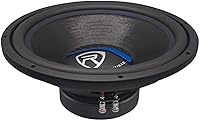
  • Basket Material: The driver frame is a cast iron basket with a black sanded finish, providing rigidity and resistance to flex under high-excursion conditions.
  • Terminal Type: Chrome-plated binding post terminals are fitted at the connection point and accept any gauge of speaker wire without requiring special adapters.
  • Weight: The subwoofer weighs 13.4 lbs, which is manageable for solo installation but worth accounting for in trunk-mounted enclosure builds.
  • Heat Dissipation: A vented hole in the T-yoke allows airflow through the motor gap, reducing heat buildup during extended listening sessions at high volume.
  • Warranty: Rockville covers this sub under a limited warranty; buyers should confirm specific duration and claim terms directly with the manufacturer before purchase.

Related Reviews

Audiopipe TS-PP2-15-D4 15-inch Car Subwoofer
84%
94%
Bass Output
92%
Power Handling
90%
Durability
87%
Value for Money
89%
Sound Clarity
More
Pyle PLW15RD 15-Inch Car Subwoofer
85%
93%
Bass Performance
88%
Sound Clarity
90%
Build Quality
82%
Ease of Installation
87%
Durability
More
Lanzar MAXP154D 15-inch Car Subwoofer
87%
92%
Bass Quality
88%
Sound Clarity
85%
Ease of Installation
90%
Build Quality
89%
Durability
More
Lanzar MAX15D 15-Inch Car Subwoofer
84%
94%
Sound Performance
91%
Value for Money
88%
Build Quality
75%
Installation Ease
89%
Durability
More
Rockville Punisher 12D1 12″ Car Subwoofer
74%
88%
Build Quality
91%
Bass Output
87%
Value for Money
83%
Amplifier Compatibility
86%
Motor Performance
More
Rockville W8K9D4 8-Inch Car Subwoofer
77%
88%
Bass Output
91%
Build Quality
84%
Value for Money
79%
Amplifier Compatibility
82%
Installation Ease
More
Rockville RVB12.1A 12-Inch Powered Subwoofer Enclosure
75%
91%
Ease of Installation
78%
Bass Performance
84%
Value for Money
76%
Build Quality
63%
Amplifier Reliability
More
DS18 ZR15.4D Elite-Z 15-Inch Car Audio Subwoofer
86%
91%
Bass Quality
89%
Power Handling
94%
Build Quality
65%
Ease of Installation
87%
Sound Clarity
More
Audiopipe TXX-BDC-V-15 15-Inch Subwoofer
85%
91%
Bass Performance
88%
Build Quality & Durability
84%
Ease of Installation
89%
Sound Clarity
92%
Power Handling
More
HYANKA BSF-15-4 15-Inch Car Subwoofer
72%
83%
Bass Output & Impact
86%
Value for Money
67%
Power Handling (Real-World)
74%
Build Quality
79%
Sound Quality & Tone
More

FAQ

You want a mono amplifier that delivers 300 to 500W RMS at 4 ohms. That range sits right in the sweet spot for the Rockville W15K5S4 15-inch Car Subwoofer — enough power to drive it properly without pushing it beyond its safe continuous rating. Avoid amps that claim to output well over 600W RMS at 4 ohms, since running this sub hot for extended periods shortens its lifespan.

No, not in any practical sense. The 2000W figure is a peak rating measured under extremely brief, controlled lab conditions — it has no bearing on how you should actually use or power this sub. The number you should care about is the CEA-rated 500W RMS, which is the honest continuous power figure. Amp to that number and you will be fine.

It works with both. In a sealed box between 1.5 and 2.5 cubic feet, you get tighter, more controlled bass — good for people who want low-end presence without a lot of boom. A ported enclosure in the 2.0 to 3.5 cubic foot range will give you more overall output and deeper extension, which tends to be the preferred choice for hip-hop and EDM. If you are building your own box, spend time tuning the port length to your specific goals.

Check two numbers: the cutout diameter (13.85 inches) and the mounting depth (5.98 inches). If your enclosure or baffle board can accommodate both, you should be fine. A lot of fitment complaints come from buyers who assumed standard dimensions without measuring first, so take a few minutes before ordering to confirm your available space.

It is built for bass-heavy genres — hip-hop, trap, EDM, reggaeton, and similar styles where low-end impact is the priority. The tuning leans toward output and extension rather than tight, analytical accuracy. If you mostly listen to jazz, classical, or acoustic music and want a subwoofer that blends invisibly with the soundstage, this is probably not the right tool for that job.

The installation itself is fairly beginner-friendly. The chrome-plated binding posts accept any gauge of wire without special tools, and the single 4-ohm voice coil means there is no complicated wiring configuration to figure out. The harder parts for a first-timer are typically the enclosure build and the amplifier wiring — if you are new to that, look for a pre-built enclosure in the right volume range and watch a few wiring tutorials before you start.

Better than average for its price range. The oxygen-free copper winding transfers heat away from the coil more efficiently than standard wire, and the vented T-yoke helps pull warm air out of the motor gap. That said, no budget sub is invincible — if you regularly run it at or above its rated power for hours at a time, you will eventually stress the coil. Keep the amp gain set sensibly and the sub should hold up well under normal enthusiast use.

No enclosure is included — you get the driver only. You will need to either build a box to the recommended dimensions or purchase a pre-fabricated enclosure that fits a 15-inch driver in the appropriate volume range. For a sealed setup, target 1.5 to 2.5 cubic feet; for ported, aim for 2.0 to 3.5 cubic feet. Pre-built ported enclosures in this size range are widely available and are a convenient option if you do not want to build your own.

Owners generally report that the physical build feels more substantial than the price might suggest. The cast iron basket is noticeably rigid, the binding post terminals have a quality feel, and the rubber magnet boot gives the sub a finished appearance. It is not in the same league as boutique or professional audio brands, but for the market tier it occupies, the construction holds up well in practical use.

Yes, but you need to think through the impedance before doing so. Two 4-ohm subs wired in parallel will present a 2-ohm load to your amplifier — make sure your amp is stable at 2 ohms before going that route. Wired in series, you get an 8-ohm load, which is stable on most amps but will reduce the power output. Check your amp's specs carefully before committing to a dual-sub setup.