Overview

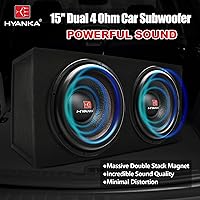
The HYANKA BSF-15-4 15-Inch Car Subwoofer sits in a competitive spot — priced for everyday buyers who want real bass performance without committing to flagship-tier hardware. Its headline specs are a dual 4-ohm voice coil and 1000W RMS power handling, which together define what kind of system this woofer belongs in. The aluminum basket and paper cone are deliberate choices at this tier: they keep weight reasonable and preserve a warmer, more musical low-end character. This isn't a sub built to chase record SPL numbers at a competition. What it is, realistically, is a capable entry into the 15-inch segment — with a lifetime warranty that, if honored properly, adds genuine value to the purchase.
Features & Benefits

The dual 4-ohm configuration is the most practically useful spec here — it gives you the option to wire down to 2 ohms for more power from a compatible amp, or up to 8 ohms if your setup calls for it. The 1000W RMS rating is the number that actually matters; ignore the 2000W MAX figure, which reflects a brief peak under ideal conditions rather than sustained real-world use. A Y35 magnet measuring 170x40mm drives the cone with enough force for solid daily-use excursion, though the 0.59-inch Xmax tells you this isn't built for extreme output. The paper cone keeps things light and responsive, and the 35Hz low-end extension is genuinely respectable for a woofer at this price point.

Best For

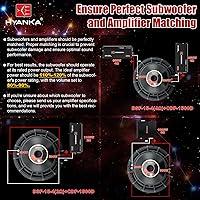
This 15-inch sub is a natural fit for daily drivers and beginners who want a meaningful bass upgrade without overbuilding their first system. Pair it with an amplifier rated between 500W and 1000W RMS, and you'll be in the sweet spot — pushing it harder risks stressing the voice coil over time. Truck and SUV owners benefit most, since those larger cab volumes let the 15-inch cone breathe and produce fuller, deeper bass than it would in a cramped sedan trunk. If you lean toward musical listening — hip-hop, R&B, or anything where bass texture matters as much as raw volume — the paper cone delivers a warmer, more natural tone than stiffer composite alternatives. Hardcore SPL competitors will want to look elsewhere.

User Feedback

Buyers tend to highlight bass output per dollar as the standout quality — a recurring theme across reviews is that the HYANKA woofer punches well relative to what was paid. Installation generally gets positive marks too: the terminals are workable, leads are a reasonable length, and the basket drops into standard 15-inch enclosures without trouble. That said, the listing's spec inconsistencies — like the woofer diameter being listed as 12 inches in some fields despite this clearly being a 15-inch driver — have made some buyers uneasy before purchase. Durability at moderate power levels appears solid for most users over several months, though a handful report surround or coil issues when pushed aggressively. Treat the RMS rating as a ceiling, not a floor.

Pros

  • Delivers impressive bass output relative to its price, consistently outperforming buyer expectations set by the cost.
  • The dual 4-ohm voice coil lets you wire to 2 ohms or 8 ohms depending on your amplifier — genuinely useful flexibility.
  • Paper cone produces warm, musical bass that suits everyday listening far better than stiff, over-damped alternatives.
  • The aluminum basket feels solid and fits standard 15-inch enclosure cutouts without modification.
  • A 35Hz low-end floor is respectable for this driver class and price tier, covering most real-world bass content.
  • Pairs well with affordable mid-power monoblock amplifiers, making the total system cost accessible for budget builds.
  • At 23 pounds, it is manageable to handle and install solo without needing a second person for positioning.
  • The 90-day refund window gives buyers a reasonable real-world evaluation period before committing long-term.
  • Truck and SUV owners consistently report fuller, deeper bass versus sedans — the cone area rewards larger enclosure volume.

Cons

  • The advertised 2000W MAX power figure is misleading — sustained real-world headroom is capped at 1000W RMS.
  • Product listing fields contain spec inconsistencies, including a woofer diameter listed as 12 inches for a 15-inch driver.
  • Voice coil failures are a recurring theme in negative reviews when the woofer is driven aggressively near its rated ceiling.
  • Documentation is minimal, leaving dual voice coil wiring configurations unexplained for first-time buyers.
  • Warranty support experiences are inconsistent — some buyers report slow or difficult resolution when claiming coverage.
  • The paper cone is vulnerable to moisture and humidity, limiting safe installation locations in open beds or damp environments.
  • Below 35Hz, output drops off noticeably — not a strong performer for infrasonic or cinematic sub-bass content.
  • Terminal block quality feels functional at best, and lead length is tight for deeper custom enclosure builds.
  • The listing's color description varies between fields, causing minor confusion about the actual basket finish before purchase.

Ratings

The HYANKA BSF-15-4 15-Inch Car Subwoofer has been evaluated using AI-driven analysis of verified global buyer reviews, with spam, bot-generated, and incentivized feedback actively filtered out to ensure accuracy. Scores reflect genuine user experiences across a wide range of real-world setups — from daily commuter builds to weekend truck installs — and both the strengths and recurring frustrations are represented without sugarcoating.
Bass Output & Impact
83%
For buyers coming from factory audio or a smaller aftermarket sub, the step up in bass presence is immediately noticeable. Owners using it in trucks and SUVs consistently describe a full, room-filling low end that holds its own against woofers priced considerably higher.
At the limits of its Xmax, the cone begins to compress and the bass loses definition rather than getting louder. Buyers chasing very deep, extended sub-bass below 35Hz will find this 15-inch sub starts rolling off sooner than premium competition drivers.
Value for Money
86%
The price-to-performance ratio is the single most praised aspect across buyer reviews. Enthusiasts on a budget consistently note that the HYANKA woofer delivers output and build that feels punching above its cost tier, especially when matched with a quality amplifier.
The value equation weakens if you need to replace the unit early due to voice coil failure from aggressive use. A few buyers also factor in the cost of professional installation to compensate for unclear documentation, which erodes the overall savings.
Power Handling (Real-World)
67%
33%
Driven at 500W to 800W RMS from a stable amplifier, this dual voice coil subwoofer handles daily listening sessions without complaint. Most buyers running it conservatively report solid thermal performance and consistent output over months of use.
The advertised 2000W MAX figure is misleading — real sustained headroom is defined by the 1000W RMS rating, and some users report stress signs when pushing close to that ceiling for extended periods. Trusting the MAX number and under-sizing your amplifier management is a recipe for early failure.
Build Quality
74%
26%
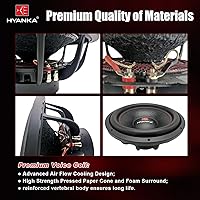
The aluminum basket feels rigid and well-formed for the price, and the overall assembly is tighter than some competing budget woofers in the same segment. Tinsel leads and cone-to-surround bonding appear consistent across most units buyers have reported on.
The paper cone, while tonally appealing, shows vulnerability if the enclosure gets any moisture exposure — not a surprise for the material, but worth noting for installs in open truck beds or humid climates. A handful of buyers noted minor surround irregularities out of the box.
Sound Quality & Tone
79%
21%
Paper cones are known for a warmer, more musical character compared to stiffer poly or treated options, and this woofer reflects that. Listeners who play hip-hop, R&B, or acoustic-heavy tracks frequently describe the bass as textured and natural rather than one-note or boomy.
The tonal warmth that works well for musical listening becomes a liability in setups tuned for maximum SPL — the cone lacks the rigidity to stay clean at high excursion. Critical listeners in quiet cabins may also detect slight cone breakup on sharp transients near the upper frequency range.
Installation Ease
71%
29%
The basket dimensions fit cleanly into standard 15-inch cutouts, and the push-style terminals accept most common wire gauges without needing adapters. DIY installers with moderate experience generally report a straightforward drop-in process with no unusual fitment issues.
The included documentation is minimal, which creates friction for true beginners who need wiring diagrams to understand dual voice coil configurations. Lead length is workable but tight for some enclosure depths, and the terminal block quality feels functional rather than premium.
Enclosure Compatibility
76%
24%
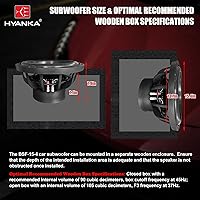
The woofer performs well in both ported and sealed enclosures of appropriate volume, giving builders flexibility. Truck owners with larger box space in particular benefit from the 15-inch cone area, which responds well to a properly tuned ported design.
The moderate Xmax of 0.59 inches means the sub is sensitive to enclosure volume accuracy — an undersized box raises the resonant frequency and kills low-end extension noticeably. Without enclosure modeling experience, beginners may not get the best out of this driver without guidance.
Wiring Flexibility
81%
19%
The dual 4-ohm coil configuration is one of the most versatile setups available — buyers can wire to a 2-ohm load for higher power from most monoblock amplifiers, or series to 8 ohms for a more stable, cooler-running option on conservative amps. This adaptability is a real practical advantage.
For complete beginners, dual voice coil wiring can be confusing without a clear diagram, and incorrect wiring can result in phase cancellation or amplifier instability. The listing does not provide enough wiring guidance to prevent this for first-time builders.
Magnet & Motor Strength
72%
28%
The Y35-grade magnet at 170x40mm provides adequate magnetic flux for a budget 15-inch driver, producing enough force to move the cone with decent authority at moderate power levels. For daily listening in a well-tuned box, the motor feels appropriately matched to the cone assembly.
Compared to higher-grade magnets found on mid-tier competition subs, the Y35 shows its limitations when the amplifier is pushed hard — gap saturation comes earlier, and dynamic headroom shrinks under heavy continuous bass loads. It is fine for casual use but not for sustained high-output sessions.
Durability Over Time
68%
32%
Buyers who run this dual voice coil subwoofer at sensible power levels — staying comfortably within 700W to 800W RMS — report solid longevity over six months to a year of daily use. The aluminum basket shows no signs of flex fatigue, and the surround holds up well under normal thermal cycling.
A recurring pattern in negative reviews involves voice coil failure after aggressive use near or above rated power. The paper cone is also less forgiving of over-excursion events than harder materials, making a subsonic filter on the amplifier essentially non-optional for long-term reliability.
Spec Accuracy & Listing Transparency
48%
52%
The core functional specs — RMS power, impedance, and frequency range — align reasonably well with what buyers experience in practice. Buyers who researched carefully before purchasing generally felt the product delivered what the meaningful specs implied.
The product listing contains inconsistencies that undermine trust — including fields that list the woofer diameter as 12 inches for a clearly 15-inch driver, and a MAX power figure that inflates perception well beyond what the driver can sustain. These are red flags for informed buyers and a genuine point of frustration across multiple reviews.
Sensitivity & Amplifier Matching
73%
27%
At 89 dB sensitivity, the woofer is reasonably efficient and does not demand a high-powered amplifier to produce audible results. Buyers pairing it with 500W RMS class-D monoblock amps report satisfying output without straining the amplifier or running into thermal issues.
The 89 dB rating sits slightly below the sensitivity of premium competition drivers, which means at equal power input this sub will play slightly quieter. For maximum output in a loudness-focused build, that gap becomes meaningful and may require more amplifier headroom to compensate.
Warranty & Customer Support
58%
42%
The lifetime warranty headline is an attention-grabbing claim at this price point, and the 90-day refund window gives buyers a reasonable evaluation period. For buyers who receive a functioning unit, the warranty provides a degree of purchase confidence.
Real-world warranty claim experiences in buyer reviews are inconsistent — some buyers report smooth resolution, while others describe difficulty reaching support or slow response times. A lifetime warranty is only as valuable as the process behind it, and the brand's support infrastructure appears to be a work in progress.
Low-Frequency Extension
77%
23%
A rated floor of 35Hz is genuinely respectable for a paper cone driver at this tier. In a well-tuned ported enclosure, the HYANKA woofer produces felt bass on kick drums and synth bass lines that most factory or entry-level aftermarket setups simply cannot reproduce.
Output below 35Hz drops off meaningfully, and the woofer is not well-suited to infrasonic content that some electronic and cinematic material demands. Buyers expecting earthquake-level sub-bass extension comparable to high-end audiophile drivers will come away disappointed.
Aesthetic & Fitment Finish
69%
31%
The black aluminum basket has a clean, purposeful appearance that fits well in custom enclosures with a competition-style cutout window. At this price, the visual presentation is noticeably better than bare-steel-basket alternatives in the same segment.
The color description in the listing — alternating between black and reddish-black depending on the field — has led to minor confusion about the actual finish. In person, some buyers describe the color as slightly warmer than a true matte black, which may not match every build aesthetic.

Suitable for:

The HYANKA BSF-15-4 15-Inch Car Subwoofer is a solid pick for budget-conscious car audio enthusiasts who want a genuine performance upgrade without spending big. It fits naturally into first-time subwoofer builds where the buyer already owns or plans to buy a monoblock amplifier rated between 500W and 1000W RMS — that pairing keeps the woofer in its comfort zone and delivers the kind of bass impact that makes the upgrade feel worthwhile. Truck and SUV owners are particularly well-positioned to get the most from this driver, since larger cabin and enclosure volumes let a 15-inch cone develop its full low-end potential. Listeners who care about musical bass — the kind that reproduces kick drums and bass guitar lines with texture rather than just volume — will appreciate the paper cone's warmer tonal character. If your goal is a daily driver setup that sounds noticeably better than stock without requiring a second mortgage, the HYANKA woofer delivers on that premise.
Not suitable for:

The HYANKA BSF-15-4 15-Inch Car Subwoofer is not the right tool for buyers who want to push extreme SPL or compete in sound pressure level events. With an Xmax of only 0.59 inches and a paper cone, this dual voice coil subwoofer simply lacks the excursion capability and mechanical robustness that high-output competition builds demand — running it hard for extended sessions risks voice coil failure, and the cone will not stay clean under aggressive over-excursion. Audiophile-grade listeners who want ruler-flat frequency response, ultra-deep sub-bass extension below 30Hz, or the kind of controlled output that high-end boutique drivers produce will find this woofer falls short of those expectations. The spec inconsistencies in the product listing — including mismatched diameter figures across listing fields — also make this a harder sell for technically rigorous buyers who rely on accurate documentation to design their enclosures. And if long-term warranty support is a decisive factor for you, the brand's customer service track record is uneven enough to warrant caution.
Specifications

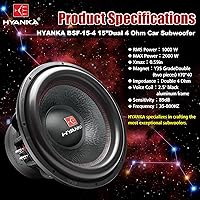
  • Driver Size: The woofer uses a 15-inch cone assembly, providing a large radiating surface area suited to high-volume enclosures in trucks, SUVs, and full-size sedans.
  • RMS Power: Continuous power handling is rated at 1000W RMS, which represents the sustained input the driver can tolerate under normal operating conditions.
  • MAX Power: The peak power rating is listed at 2000W MAX, a figure reflecting brief transient headroom rather than a sustainable operating level.
  • Voice Coil: A 2.5-inch dual voice coil is wound on a black aluminum former, allowing flexible impedance wiring configurations depending on the connected amplifier.
  • Impedance: Each coil measures 4 ohms, enabling series wiring to 8 ohms or parallel wiring to 2 ohms for amplifier matching versatility.
  • Magnet: The motor assembly uses a Y35-grade ferrite magnet measuring 170x40mm, providing the magnetic flux required for controlled cone excursion at this power tier.
  • Xmax: One-way linear excursion (Xmax) is rated at 0.59 inches, indicating moderate cone travel adequate for daily listening but not extreme SPL applications.
  • Frequency Range: The driver is rated to operate between 35Hz and 800Hz, covering the full subwoofer band with a respectable low-end floor for a paper cone design.
  • Sensitivity: Rated sensitivity is 89 dB, meaning the woofer requires a reasonably capable amplifier to reach high output levels compared to more efficient competition drivers.
  • Basket Material: The basket is constructed from black-finished aluminum, offering a rigid yet lightweight frame that resists flex under high-excursion conditions.
  • Cone Material: The cone is made from paper, a material chosen for its low mass and warm tonal character, though it requires protection from moisture exposure.
  • Dimensions: Overall unit dimensions measure 15.6″ in diameter by 7.2″ in depth, which should be factored into enclosure depth clearance during installation planning.
  • Weight: The complete driver assembly weighs 23 pounds, reflecting the substantial magnet structure and aluminum basket construction.
  • Signal-to-Noise: The listed signal-to-noise ratio is 87 dB, a baseline figure for the driver's dynamic range under standard operating conditions.
  • Mounting Type: The subwoofer is designed for car mount installation, fitting standard 15-inch round cutout enclosures with a top-mount configuration.
  • Warranty: HYANKA states a lifetime warranty on the driver along with a 90-day full refund window, though warranty service experiences vary among buyers.
  • Connectivity: The driver connects via wired push-style terminals compatible with standard speaker wire gauges used in car audio installations.
  • Included Items: The package contains one 15-inch subwoofer driver only; no amplifier, wiring harness, enclosure, or mounting hardware is included.

Related Reviews
Audiopipe TS-PP2-15-D4 15-inch Car Subwoofer
84%
94%
Bass Output
92%
Power Handling
90%
Durability
87%
Value for Money
89%
Sound Clarity
More
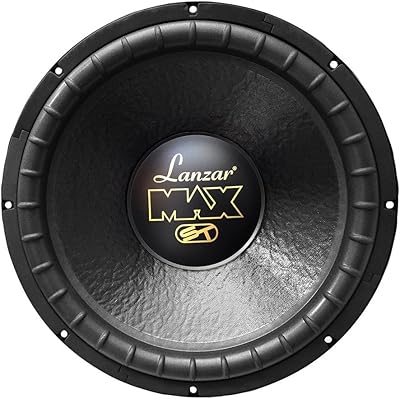
Lanzar MAX15D 15-Inch Car Subwoofer
84%
94%
Sound Performance
91%
Value for Money
88%
Build Quality
75%
Installation Ease
89%
Durability
More
Lanzar MAXP154D 15-inch Car Subwoofer
87%
92%
Bass Quality
88%
Sound Clarity
85%
Ease of Installation
90%
Build Quality
89%
Durability
More
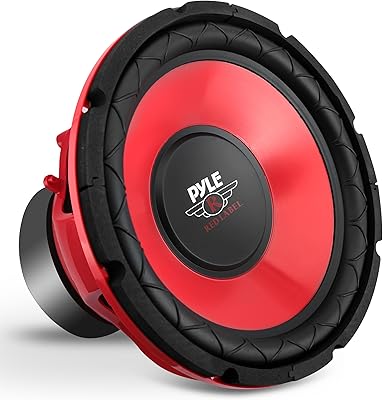
Pyle PLW15RD 15-Inch Car Subwoofer
85%
93%
Bass Performance
88%
Sound Clarity
90%
Build Quality
82%
Ease of Installation
87%
Durability
More
Seventour HR-DTSUB 10″ Car Subwoofer
73%
88%
Value for Money
79%
Bass Output
83%
Install Friendliness
71%
Build Quality
74%
Amplifier Compatibility
More
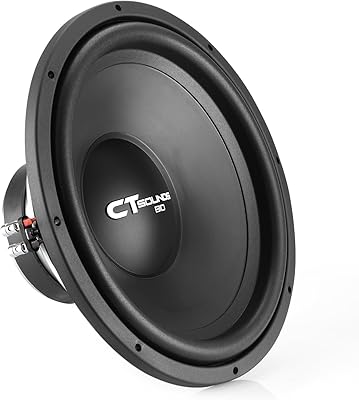
CT Sounds Bio 15” Dual 4-Ohm Car Subwoofer
87%
94%
Bass Performance
88%
Ease of Installation
90%
Durability
92%
Sound Clarity
65%
Weight & Portability
More
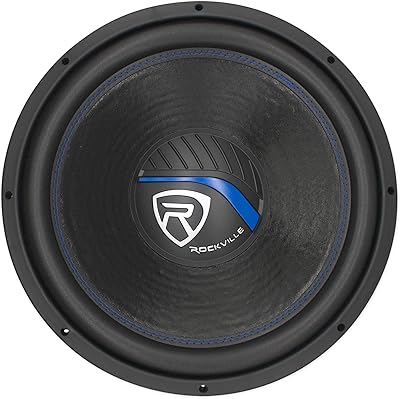
Rockville K5 W15K5S4 15″ 4-Ohm Car Audio Subwoofer
88%
92%
Bass Quality
90%
Power Handling
88%
Sound Clarity
85%
Heat Dissipation
86%
Installation Ease
More
Kicker 44CWCS154 CompC 15″ 1200w Single 4-Ohm Car Subwoofer
86%
94%
Bass Performance
92%
Power Handling
89%
Sound Clarity
90%
Build Quality
67%
Ease of Installation
More
NVX VCW84v3 8-inch 1300W Dual 4-Ohm Car Subwoofer
87%
91%
Bass Performance
89%
Build Quality
84%
Installation Ease
87%
Amplifier Compatibility
92%
Durability
More
DS18 ZR15.4D Elite-Z 15-Inch Car Audio Subwoofer
86%
91%
Bass Quality
89%
Power Handling
94%
Build Quality
65%
Ease of Installation
87%
Sound Clarity
More

FAQ

A monoblock class-D amplifier rated between 500W and 1000W RMS at either 2 ohms or 4 ohms is the sweet spot for this woofer. Wiring both coils in parallel gives you a 2-ohm load, which most budget monoblock amps handle well and deliver more power from. Avoid undersizing your amp — a clipping amplifier is more damaging to the voice coil than a powerful clean one.

It's straightforward once you understand the two options. Wiring both coils in parallel (positive to positive, negative to negative on each coil, then combined to the amp) gives you a 2-ohm final load. Wiring them in series gives you 8 ohms. Most buyers go parallel for 2 ohms to extract maximum power from their amp. The documentation included is minimal, so look up a DVC wiring diagram online before you start.

No — and this is important to understand before you buy. The 2000W figure is a peak MAX rating that reflects a momentary spike under ideal lab conditions. The number that actually matters for real-world use is 1000W RMS, which is the continuous power the driver can handle safely over time. Size your amplifier to that number, not the MAX figure.

Both work, but a ported box tuned between 30Hz and 35Hz tends to give this 15-inch sub its best output and low-end extension for daily listening. A sealed box will sound tighter and more controlled but slightly less loud for the same power input. Given the moderate Xmax, make sure your ported enclosure is properly sized — too small and the tuning rises, robbing you of low-end reach.

In most cases, yes. The basket is designed around a standard 15-inch round cutout, so it should drop into most off-the-shelf enclosures without modification. The one thing to double-check is depth clearance — at 7.2 inches deep, some shallow or slot-ported prefab boxes may not provide enough rear clearance for the basket and magnet assembly. Measure your box's interior depth before assuming it will fit.

Paper cones are generally lighter and more responsive than stiffer poly or treated options, which tends to produce a warmer, more textured bass character. If you mostly listen to hip-hop, R&B, or music where bass notes have a natural feel rather than just being loud, paper usually sounds more natural. The trade-off is that paper is less durable under very high excursion loads and is sensitive to moisture — poly cones handle abuse better.

That is a listing error on the product page and not a defect in the driver itself. The physical product is a 15-inch subwoofer, and dimensions confirm that. The 12-inch figure appearing in certain specification fields appears to be a data entry inconsistency. It is understandably confusing, but buyers who have received the item consistently confirm they received a 15-inch driver.

It is actually a reasonable starting point for a first build, provided you go in with realistic expectations. Pair it with a properly rated amplifier, build or buy an appropriate enclosure, and keep the gain set conservatively while you get familiar with the system. Where beginners run into trouble is trusting the MAX power number and overpowering the sub with a clipping amplifier — that is the most common cause of early failure.

At moderate power levels — think 600W to 800W RMS from a clean amplifier — most buyers report solid durability over extended daily use. The aluminum basket and surround show no significant degradation under normal thermal cycling. The voice coil is the weak link if you push it hard consistently; buyers who run at or above rated power without a subsonic filter are the ones who report failures. Use a subsonic filter set around 30Hz to 35Hz and the longevity improves considerably.

HYANKA advertises a lifetime warranty alongside a 90-day refund window, which sounds strong on paper. In practice, warranty claim experiences vary — some buyers report smooth resolution, while others have had difficulty getting timely responses. The 90-day refund window is the more reliable safety net for catching defects early. If long-term warranty support is a deciding factor for you, it is worth factoring in that the brand's after-sale support infrastructure is not yet at the level of more established car audio names.