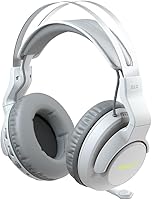
Overview

The ROCCAT Elo 7.1 Air Wireless Gaming Headset is ROCCAT's mid-range take on wireless PC audio, built for gamers who prioritize comfort as much as performance. It connects via a 2.4GHz USB dongle, keeping latency low enough that you won't notice the absence of a cable during fast-paced play. The over-ear design leans heavily on memory foam cushioning, and the ProSpecs glasses relief system is a genuinely thoughtful addition for anyone who has dealt with temple pressure halfway through a long session. Compatible with PC, PS4/5, and Nintendo Switch, this wireless headset covers most of the bases a modern gamer needs without stepping into flagship pricing territory.
Features & Benefits

The Elo 7.1 Air runs on 50mm neodymium drivers powering its virtual 7.1 surround sound — worth noting that the spatial audio is software-processed, not a hardware multi-driver setup, so results vary depending on the game and your sensitivity to virtual surround. Battery life is rated at 24 hours, which in practice means most gamers charge it once or twice a week rather than every night. The detachable TruSpeak microphone includes adjustable mic monitoring, letting you hear your own voice in the earcups to avoid unconsciously raising your volume mid-match. AIMO RGB lighting ties into ROCCAT's broader peripheral ecosystem, though it is purely cosmetic and easy to ignore if aesthetics are not a priority.

Best For

This ROCCAT headset makes the most sense for comfort-focused PC gamers who spend three-plus hours in a single sitting — the glasses relief system is a real differentiator here, not just a marketing footnote. It is also a solid pick for competitive FPS or battle royale players who want wireless freedom without audio lag, since the 2.4GHz dongle holds a notably more stable connection than Bluetooth during gaming. If you already run ROCCAT peripherals, the AIMO lighting sync is a welcome bonus. Those gaming primarily on console or chasing audiophile-grade sound may find tougher competition at this price point from brands with deeper audio credentials.

User Feedback

Buyers consistently single out all-day wearing comfort as the standout quality — glasses wearers in particular say the ProSpecs design makes a tangible difference compared to standard headsets. The 2.4GHz wireless connection draws repeated praise for staying stable across a room without dropouts. On the critical side, a number of reviewers find the virtual surround underwhelming against plain stereo, describing it as processed and hollow. The microphone earns mixed marks — serviceable for casual voice chat, but not recommended for streaming or recording. A few owners have also flagged concerns about headband durability over time, though with roughly 165 ratings the long-term picture is still forming.

Pros

  • The ProSpecs glasses relief design genuinely reduces temple pressure during long sessions — a rare, practical differentiator.
  • Stable 2.4GHz wireless holds steady across a full room without the dropout risk common to Bluetooth headsets.
  • Battery life comfortably supports several days of heavy gaming before needing a recharge.
  • Plug-and-play USB dongle setup works instantly on Windows and PlayStation hardware with no driver hassle.
  • Mic monitoring lets you hear your own voice naturally, preventing the unconscious volume creep in loud sessions.
  • Memory foam earpads provide consistent comfort even during warmer gaming sessions for most users.
  • The Elo 7.1 Air covers PC, PS4, PS5, and Nintendo Switch from a single dongle without adapters or mode switching.
  • AIMO lighting syncs with other ROCCAT peripherals for a cohesive setup aesthetic without third-party software.
  • Positional audio in competitive titles gives FPS players a practical edge in tracking enemy movement by sound.
  • USB-C charging is a modern, convenient choice that most gamers already have cables for.

Cons

  • Virtual 7.1 surround is software-processed and sounds hollow or artificial to many users, especially in non-optimized titles.
  • Microphone quality is underwhelming for anything beyond basic voice chat — streaming and recording use is not realistic.
  • Leatherette earpads trap heat during extended summer sessions, causing noticeable ear warmth for some users.
  • Headband adjustment points develop audible creaking on some units after months of regular use.
  • ROCCAT Swarm software is sluggish and buggy, with settings occasionally failing to persist after a system restart.
  • Xbox compatibility is completely absent, cutting out a large segment of the console gaming market.
  • No meaningful mobile or Bluetooth use case — this headset lives and dies by its USB dongle.
  • Battery performance on older units shows degradation, with runtime dropping below the rated figure over time.
  • The virtual surround and RGB features are locked behind Windows software, limiting the full experience on other platforms.

Ratings

The ROCCAT Elo 7.1 Air Wireless Gaming Headset earns an overall rating built from AI analysis of verified global buyer reviews, with spam, bot activity, and incentivized feedback actively filtered out before scoring. Across categories from comfort and audio quality to microphone performance and build durability, both the genuine strengths and the recurring frustrations are reflected honestly in every score below.

Wearing Comfort
88%
Long-session comfort is where this headset genuinely stands out. The memory foam earpads distribute pressure evenly, and buyers who game for three or four hours straight frequently say they forget they are wearing it. The cushioning softness holds up well even in warmer rooms.
A handful of users note the leatherette material traps heat during extended summer sessions, causing mild ear warmth. The headband padding, while adequate, gets a few mentions of being slightly thin compared to dedicated comfort-first competitors at this price range.
Glasses Compatibility
91%
The ProSpecs glasses relief system draws consistent, specific praise from buyers who wear prescription or gaming glasses. Multiple reviewers describe it as the primary reason they chose this headset over alternatives, noting the grooved cushion design genuinely reduces temple pressure during multi-hour sessions.
Users with thicker or wider frames occasionally report that the relief is less pronounced than expected, suggesting the system works best for standard-width glasses. It is not a universal fix, and a few buyers with larger frames still felt mild discomfort after about two hours.
Wireless Stability
86%
The 2.4GHz USB dongle connection earns consistent praise for holding solid across a full room without dropouts. Buyers in busy wireless environments — apartments with multiple routers nearby — still report stable, interruption-free connections that Bluetooth-based headsets in the same range often cannot match.
A small number of users report occasional brief dropouts when the dongle is plugged into a rear USB port on a desktop tower, suggesting placement sensitivity. Interference from other 2.4GHz devices in crowded setups can introduce minor instability, though this is not a widespread complaint.
Audio Quality
72%
28%
For competitive gaming, the 50mm drivers produce a punchy low-mid response that makes footsteps and environmental cues easy to track. Buyers focused on shooters and survival games find the sound profile well-suited to hearing positional details without needing to tweak software settings extensively.
Music and cinematic content expose the drivers' limitations — the high-frequency detail is modest and the soundstage feels narrow in stereo mode. Several audiophile-leaning reviewers describe the overall tuning as mid-heavy and note that it does not hold up well against dedicated stereo headphones at the same price.
Virtual Surround Sound
63%
37%
When it works well in supported games, the virtual 7.1 processing adds a useful sense of directionality that helps with positioning enemies above or below in multi-level maps. Some buyers specifically call out improvements in titles like Apex Legends and Warzone when the surround mode is active.
The software-processed nature of the surround means results are inconsistent across game engines — several users find it sounds hollow, compressed, or artificially wide, and many end up defaulting back to stereo. The effect is clearly not hardware-driven, and buyers expecting true multi-driver spatial audio will be disappointed.
Microphone Quality
61%
39%
For everyday squad voice chat, the TruSpeak microphone is functional and clear enough that teammates report no difficulty understanding speech. The mic monitoring feature — hearing your own voice in the earcups — is a genuinely useful touch that prevents the unconscious volume creep common in louder gaming setups.
The microphone falls noticeably short for anyone beyond casual chat use. Streamers and content creators consistently flag it as thin-sounding with limited dynamic range. Background noise rejection is mediocre, and the detachable design, while convenient, introduces occasional loose-connection issues that affect audio consistency.
Battery Life
83%
Real-world battery performance largely validates the 24-hour rating. Most buyers report comfortably gaming across several days on a single charge, with a typical pattern of weekly charging rather than daily top-ups. This makes it genuinely practical for late-night gaming without the anxiety of a dying headset mid-session.
A minority of users report battery degradation after several months of regular use, with effective runtime dropping noticeably below the rated figure. The 24-hour charging time listed in specs also catches some buyers off guard — though that appears to be a spec labeling issue rather than a true full-charge duration.
Build Quality
67%
33%
The metal reinforcement in the headband gives the frame a structural confidence that all-plastic competitors at this tier often lack. The overall assembly feels intentional, and the headset handles being dropped into a bag or tossed on a desk without obvious flex or creak under normal handling.
Plastic dominates the earcup housings, and over time a proportion of buyers report creaking at the headband adjustment points. A few users mention early hinge wear, which tempers the initial solid impression. For heavy daily users, the long-term durability feels more mid-tier than the price might suggest.
RGB Lighting
74%
26%
Buyers already invested in the AIMO ecosystem find the lighting integration genuinely satisfying — the synchronization with other ROCCAT peripherals creates a cohesive, reactive desk aesthetic without needing third-party software juggling. The lighting patterns themselves are varied enough to avoid feeling token.
For anyone outside the ROCCAT ecosystem, the RGB adds little practical value and contributes to battery consumption. A segment of buyers actively disable it to extend wireless runtime, viewing it as an unnecessary feature on a headset that should prioritize audio and comfort over aesthetics.
Value for Money
71%
29%
At its price point, the combination of stable 2.4GHz wireless, genuine comfort design, and decent competitive gaming audio represents fair value for buyers who prioritize those specific attributes. The glasses relief system alone distinguishes it in a way that justifies the price for the right buyer.
Competitors from brands like SteelSeries, HyperX, and Corsair offer comparable or stronger audio performance in the same bracket, making the value case narrower than it first appears. Buyers who do not wear glasses or do not care about RGB integration may find better-tuned options at similar or slightly lower prices.
Software & App Experience
58%
42%
The ROCCAT Swarm software gives users access to surround sound configuration, equalizer adjustments, and mic monitoring tuning in one place. For buyers willing to spend time in the app, there is meaningful customization available that can meaningfully shape the headset's sound profile.
Multiple reviewers describe the software as sluggish, occasionally buggy, and less intuitive than competing platforms like SteelSeries GG or Logitech G Hub. Some users report that settings fail to persist after system restarts, which is a recurring frustration that erodes confidence in the software layer.
Ease of Setup
89%
Plug-and-play setup via the USB-A dongle is consistently described as effortless — no driver installation needed on most Windows systems, and the headset is recognized and ready within seconds of plugging in. Console compatibility on PS4/5 follows the same frictionless pattern.
Mac and Linux users occasionally report limited driver support, which narrows the out-of-box experience for non-Windows setups. The AIMO lighting and surround features also require the Windows software to unlock fully, which is a limitation worth flagging for buyers on other platforms.
Microphone Monitoring
81%
19%
The adjustable sidetone is a feature buyers frequently mention positively, especially those coming from headsets without it. Being able to hear your own voice at a natural level while gaming prevents the tunnel-vision vocal behavior that leads to shouting in competitive matches without realizing it.
The monitoring volume adjustment range is somewhat limited — users who want very subtle sidetone find the lowest setting still slightly prominent, and fine-tuning options within the software are not granular enough for those with specific preferences around self-monitoring levels.
Compatibility & Platform Support
77%
23%
Working across PC, PS4, PS5, and Nintendo Switch via the same dongle is a meaningful practical advantage for multi-platform households. The lack of additional adapters or mode switching makes transitioning between devices straightforward for the majority of supported setups.
Xbox is conspicuously absent from the compatibility list, which is a direct disqualifier for a segment of the gaming market. The headset is also listed as not Bluetooth-capable for mobile use in any meaningful sense, limiting its utility outside of the primary USB dongle connection.

Suitable for:

The ROCCAT Elo 7.1 Air Wireless Gaming Headset is a strong match for PC gamers who spend long hours in a single session and want a wireless setup that does not punish them for it. The glasses relief system is the headline differentiator — if you wear prescription frames and have given up on headsets pinching your temples, this is one of the few options at this price that actually addresses the problem with a purpose-built cushion design. Competitive FPS and battle royale players who depend on positional audio will find the 2.4GHz dongle connection reliable enough for fast-paced play, with none of the latency anxiety that Bluetooth connections introduce. It also suits gamers who are already building a ROCCAT peripheral setup, since the AIMO lighting integration adds genuine cohesion to a matching desk ecosystem. The long battery runtime makes it particularly practical for night-shift gamers or anyone who finds charging a headset every day an annoying chore.

Not suitable for:

The ROCCAT Elo 7.1 Air Wireless Gaming Headset is a harder sell for buyers whose priorities fall outside its core strengths. Xbox console players are immediately excluded — the dongle connection simply does not work with Xbox hardware, which is a straightforward dealbreaker for that platform. Streamers and content creators who need a reliable, broadcast-quality microphone should look elsewhere, as the TruSpeak mic is serviceable for squad chat but lacks the clarity and background rejection that even basic dedicated mics provide. Buyers chasing a premium stereo listening experience — for music, films, or high-fidelity game audio — will likely find the sound profile underwhelming compared to dedicated headphones or higher-tier gaming headsets in the same bracket. The virtual 7.1 surround is software-processed, so anyone expecting a hardware multi-driver spatial audio experience will be disappointed. And if long-term build durability is a top concern, the plastic-heavy earcup construction has drawn enough comments about wear over time to warrant caution.

Specifications

  • Connection: Connects via a 2.4GHz low-latency wireless signal transmitted through an included USB-A dongle.
  • Battery Life: Rated for up to 24 hours of continuous use on a single full charge under standard conditions.
  • Charging: Charges via USB-C cable, which is included in the box alongside the headset and USB-A transmitter.
  • Drivers: Equipped with 50mm neodymium dynamic drivers tuned for gaming-oriented audio reproduction.
  • Audio Mode: Supports virtual 7.1 surround sound processed through ROCCAT Swarm software on Windows.
  • Microphone: Features a detachable TruSpeak retractable microphone with adjustable sidetone mic monitoring.
  • Earpads: Over-ear memory foam earpads with a leatherette finish and a ProSpecs glasses relief groove system.
  • Compatibility: Compatible with Windows 7, 8, 10, and 11, PlayStation 4, PlayStation 5, and Nintendo Switch via USB dongle.
  • Weight: Weighs approximately 12.16 ounces (344g) including the earcups and headband assembly.
  • Dimensions: Measures 7.6 x 8.43 x 3.63 inches when fully assembled in its standard wearing position.
  • Materials: Constructed from a combination of metal reinforcement in the headband and plastic housing in the earcups.
  • RGB Lighting: Integrated AIMO intelligent RGB lighting ecosystem that synchronizes with other ROCCAT AIMO-compatible peripherals.
  • Wireless Range: Rated wireless operating range of up to 10 meters from the USB-A transmitter under open conditions.
  • Bluetooth: Listed as Bluetooth-capable in product specs, though primary gaming use relies on the 2.4GHz USB dongle connection.
  • In the Box: Package includes the headset, USB-A wireless transmitter, USB-C charging cable, and a printed quick-start guide.
  • Platform Support: Not compatible with Xbox consoles or native mobile Bluetooth audio without additional adapters or software.
  • Software: Full feature access including EQ, surround configuration, and lighting control requires ROCCAT Swarm on Windows.
  • Power Source: Powered by an internal rechargeable lithium polymer battery — no replaceable batteries required or supported.

Related Reviews
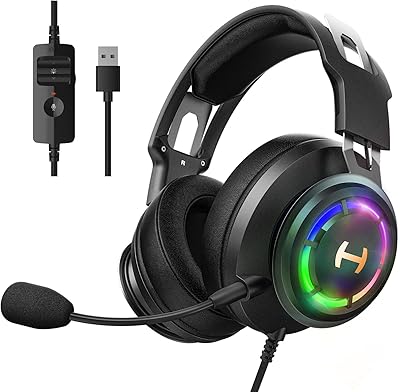
Edifier G35 Gaming Headset
69%
74%
Sound Quality
61%
7.1 Virtual Surround
63%
Microphone Performance
58%
Comfort & Fit
56%
Build Quality
More
Alienware Pro Wireless Gaming Headset
87%
91%
Sound Quality
88%
Noise Cancellation
90%
Comfort for Long Sessions
95%
Battery Life
92%
Charging Speed
More
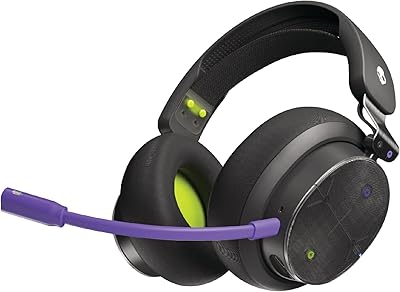
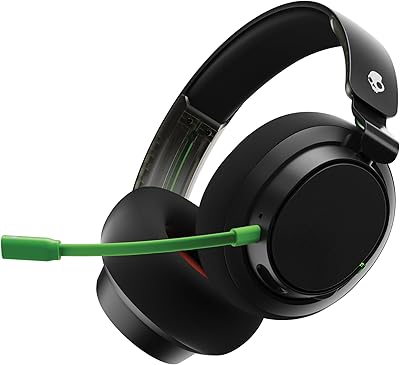
Skullcandy PLYR Wireless Gaming Headset
77%
91%
Battery Life
88%
Wireless Performance
76%
Sound Quality
69%
Microphone Quality
83%
Comfort & Fit
More
YOTMS Wireless Gaming Headset Q2
85%
88%
Comfort for Long Sessions
91%
Sound Quality (7.1 Surround)
85%
Battery Life
70%
Microphone Performance
90%
Ease of Setup
More
Vakedy HW20
Vakedy HW20
78%
91%
Battery Life
88%
Value for Money
83%
Wireless Performance
61%
Microphone Quality
74%
Comfort & Fit
More
HyperX Cloud Alpha Wireless
76%
96%
Battery Life
83%
Audio Quality
88%
Comfort & Fit
91%
Wireless Stability
61%
Microphone Quality
More
Corsair Virtuoso MAX Wireless Gaming Headset
86%
88%
Sound Quality
85%
Noise Cancellation
94%
Battery Life
90%
Build Quality
89%
Comfort for Extended Use
More
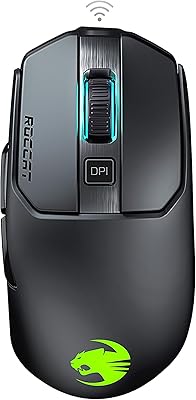
ROCCAT Kain 200 Wireless Gaming Mouse
85%
88%
Performance
93%
Ergonomics and Comfort
84%
Battery Life
91%
Precision and Responsiveness
85%
Build Quality
More
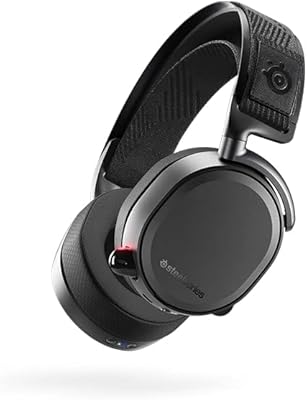
SteelSeries Arctis Pro Wireless
80%
93%
Wireless Performance
88%
Dual-Wireless Functionality
91%
Audio Quality
89%
Microphone Quality
94%
Battery System
More
MSI Immerse GH50 Wireless Gaming Headset
87%
91%
Battery Life
88%
Sound Quality
89%
Wireless Connectivity
84%
Comfort for Extended Use
86%
Microphone Clarity
More

FAQ

Yes, it does. Just plug the USB-A dongle into one of the PS5 USB ports and the headset connects automatically. You do not need to install any software or adjust settings — it is recognized as a standard USB audio device. Keep in mind that the virtual surround and AIMO lighting features only activate through the Windows software, so on PS5 you get solid stereo audio without those extras.

It is a genuine design feature, not just a label. The earcup cushions have a recessed groove that runs along the area where glasses arms typically press into your head, which reduces the pinching sensation that most headsets cause after an hour or two. Buyers with standard-width frames report a noticeable difference. If you have particularly thick or wide frames, the relief is less dramatic, but it still tends to be more comfortable than a flat foam earpad.

Expect roughly two to three hours for a full charge from a completely drained battery using the included USB-C cable. The 24-hour figure listed in some spec tables refers to battery life, not charge time — that particular listing appears to be a data entry error on the product page. In real-world use, most buyers charge it overnight and do not think about it again for several days.

You can use it as a basic wireless audio output device on macOS — plug in the dongle and it should work for general listening and gaming. However, the ROCCAT Swarm software that controls EQ, virtual surround, and RGB lighting is Windows-only, so those features are not available on Mac. For straightforward wireless audio without software customization, it functions fine.

Yes, the mic pulls out cleanly and the headset functions normally as a listening device without it. There is no degradation to audio playback when the microphone is removed. This makes it easy to switch between gaming sessions where you need voice chat and quieter solo listening without any cable management hassle.

This is genuinely a matter of personal preference and game engine. Some competitive players find the positional cues in FPS titles more useful with surround enabled — particularly for detecting footsteps above or below them in vertical maps. Others find the processed effect muddies the sound and prefer the cleaner stereo image. A practical approach is to try both modes in your usual games and stick with whichever helps you track sounds more naturally.

Basic audio functionality works on any compatible PC or console without software. However, custom EQ profiles, surround settings, and lighting configurations set through ROCCAT Swarm are stored in the software, not on the headset itself, so those preferences do not transfer to a different machine unless Swarm is installed there too. For a secondary setup, it defaults to standard stereo output.

Generally quite stable. The 2.4GHz dongle connection is more focused and less susceptible to crowded Wi-Fi interference than Bluetooth, and most users in dense apartment environments report clean, uninterrupted audio. Occasional micro-dropouts can happen if the dongle is blocked by a desktop tower case — plugging it into a front panel port or using a short USB extension to bring it closer to line-of-sight with the headset usually resolves that.

It does have some impact, though the headset still comfortably reaches well beyond 20 hours even with lighting active in typical use. If you want to maximize runtime — especially during extended travel gaming or away-from-outlet sessions — disabling the lighting through ROCCAT Swarm is a straightforward way to squeeze out additional hours. Many buyers simply leave lighting off permanently and treat it as a non-factor.

Absolutely, particularly if comfort during long sessions and low-latency wireless are your main priorities. The AIMO lighting sync is a bonus for existing ROCCAT users but is not a deciding factor for anyone else — it works independently of that ecosystem. Where it earns its place on its own merits is the glasses relief design and the reliable 2.4GHz connection, both of which stand on their own regardless of what brand mouse or keyboard sits on your desk.

Where to Buy