

Overview

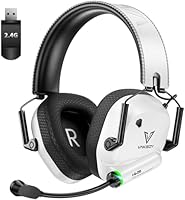
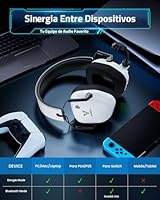
The Vakedy HW20 enters a crowded budget wireless market with a confident pitch: genuine wireless freedom across multiple platforms without a hefty price tag. It connects via a 2.4GHz USB dongle for gaming or Bluetooth 5.4 for casual listening on a phone or tablet. One important note upfront — this gaming headset does not work with Xbox consoles, and Bluetooth does not function on PS4 or PS5; the dongle is your connection method for those platforms. The white colorway and RGB breathing lights give it a look that punches above its price tier, which is a welcome bonus for any desk setup.

Features & Benefits

The 2.4GHz wireless connection keeps latency tight enough that fast-paced shooters feel responsive rather than sluggish. The 50mm drivers handle spatial cues decently — footsteps and directional audio come through clearly enough for casual competitive play. Battery life is a genuine strong point; a full charge carries you through multiple long gaming days before you need to plug in, and USB-C charging means no hunting for proprietary cables. The one-button mute is genuinely handy mid-session, and the rotating boom mic sits close enough to your mouth for readable voice pickup. Breathable mesh ear pads round out a comfortable overall package.

Best For

This wireless headset suits anyone making their first jump from wired to wireless gaming without committing to a premium price. It works well in multi-platform households where one headset needs to cover a PS5 at the desk and a smartphone on the go. Younger gamers who care about aesthetics will appreciate the RGB look without the steep cost. If you regularly push through four- or five-hour sessions, the impressive battery life alone makes this worth considering over cheaper alternatives that die mid-game. It is not the right pick for Xbox owners or listeners chasing high-fidelity audio reproduction.

User Feedback

Buyers consistently highlight battery longevity as the standout strength — most report several days of regular use between charges, which is genuinely hard to fault at this price. The microphone draws mixed opinions. It performs acceptably in quiet rooms, but in noisier environments the omnidirectional pickup grabs too much ambient sound, which can frustrate teammates. Comfort holds up through two-hour sessions reasonably well, though some users notice increasing clamping pressure beyond the three-hour mark. Build quality feels predictably plastic in hand, and a handful of buyers mention occasional USB dongle dropout on PC, suggesting connection stability can vary depending on the setup.

Pros

  • Battery life is exceptional for the price — most users go multiple days between charges during regular gaming sessions.
  • The 2.4GHz wireless connection holds up reliably in typical home gaming distances with no noticeable audio lag.
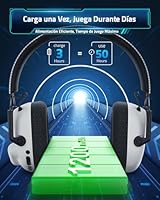
  • USB-C charging means one less proprietary cable to track down, and a full charge completes in roughly three hours.
  • This wireless headset works across PS5, PS4, PC, Mac, and Switch from a single device, covering most gaming households.
  • The one-button mute is fast, tactile, and exactly where your fingers expect it to be mid-game.
  • Breathable mesh ear pads genuinely reduce heat buildup compared to synthetic leather alternatives at this price.
  • The RGB lighting looks sharp in a dark gaming setup and adds personality without meaningfully draining battery.
  • At well under thirty dollars, the dual wireless feature set is difficult to match among direct competitors.
  • Setup is nearly instant — plug in the dongle, power on, and the connection is live with no driver installation required.

Cons

  • The omnidirectional microphone struggles badly in noisy rooms, pulling in background sound that frustrates teammates.
  • Clamping pressure becomes uncomfortable during sessions longer than two to three hours, especially for larger heads.
  • Bluetooth mode introduces noticeable audio delay, making it unsuitable for video content or gaming — music and calls only.
  • USB dongle dropout on PC has been reported intermittently by a meaningful number of buyers, with no consistent fix.
  • The plastic build creaks at the headband joints for some users after weeks of regular daily handling.
  • No companion app means zero control over RGB customization or sound profiles beyond the hardware defaults.
  • Switching between 2.4GHz and Bluetooth requires a full power cycle rather than a quick toggle button.
  • Actual wireless range inside a real home with walls and interference falls short of the open-space advertised figure.
  • The microphone is non-functional on Nintendo Switch, which undercuts the multi-platform pitch for Switch-primary users.

Ratings

The Vakedy HW20 has been put through its paces by buyers across multiple continents, and these scores reflect AI analysis of verified global purchase reviews — with spam, bot submissions, and incentivized feedback actively filtered out. The result is an honest picture of where this wireless gaming headset genuinely delivers and where it falls short for real-world users. Both the standout strengths and the recurring frustrations are represented transparently in the categories below.

Battery Life
91%
This is the category where the headset consistently earns the most enthusiastic praise. Buyers who game for multiple hours daily report going several days between charges, which removes the low-battery anxiety that plagues cheaper wireless options. For long weekend sessions or all-day LAN-style home gaming, the endurance is genuinely impressive.
A small number of users have noted that battery performance degrades noticeably when RGB lighting is kept on continuously at full brightness. The battery indicator system also lacks granularity, so you sometimes go from a low-battery warning to dead faster than expected.
Value for Money
88%
At this price point, getting dual wireless connectivity, a functional mic, RGB lighting, and multi-platform support in a single package is difficult to argue against. Most buyers feel the feature set comfortably outpaces what the price tag suggests, particularly for first-time wireless buyers upgrading from a basic wired headset.
The value calculation shifts if you are an Xbox or PS5-Bluetooth user, since those incompatibilities effectively remove features you are paying for. A handful of buyers felt misled by the feature list before reading the fine print, which left a sour taste despite the low cost.
Wireless Performance
83%
In typical home gaming setups — sitting six to fifteen feet from the console or PC — the 2.4GHz connection holds steady with no perceptible lag during fast-paced shooters. Most buyers transitioning from wired headsets describe the wireless experience as noticeably freeing without the drop-outs they feared.
Range claims in open-space lab conditions rarely translate to real homes full of walls, furniture, and competing Wi-Fi signals. Several users report the signal weakens or stutters when moving into an adjacent room, and a subset specifically flag USB dongle dropout on PC as an intermittent but recurring irritation.
Microphone Quality
61%
39%
In quiet, controlled environments the mic captures voice clearly enough for casual gaming chat and online calls. Teammates can hear you without constant requests to repeat yourself, and the one-button mute is fast and reliable during those moments when background noise spikes unexpectedly.
The omnidirectional pickup pattern is the core weakness here — it captures ambient noise aggressively in louder environments like shared rooms, apartments with street noise, or homes with other people present. Users who game near a fan, TV, or keyboard report frequent complaints from teammates about background interference.
Comfort & Fit
74%
26%
At under nine ounces the headset sits lightly on the head, and the breathable mesh ear pads do a reasonable job of reducing heat buildup compared to synthetic leather alternatives at this price. Most buyers report comfortable wear through the first couple of hours with minimal fatigue.
Clamping force becomes a recurring complaint in sessions that push past the two-to-three-hour mark, particularly for users with larger heads. The headband padding is adequate but not plush, and a few buyers who wear glasses noted growing pressure discomfort during extended play.
Audio Quality
72%
28%
The 50mm drivers produce a sound profile that handles gaming well — bass is present enough to feel impactful in explosions and music, and directional cues like footsteps and distant gunfire come through clearly enough for casual competitive scenarios. For the price, the audio holds up in everyday gaming contexts.
Audiophiles and anyone accustomed to mid-range or premium headsets will find the sound stage narrow and the high-frequency detail lacking crispness. Music listening is serviceable but flat, and the sound signature clearly prioritizes gaming impact over balanced audio reproduction.
Build Quality
63%
37%
The headset feels reasonably solid out of the box, and the adjustable headband mechanism operates smoothly without loose slop. For casual daily handling — picking it up, adjusting it, setting it down — it behaves well enough that most buyers do not worry about it immediately.
The ABS plastic construction communicates budget origins clearly in hand, and long-term durability remains a genuine question mark. A subset of buyers mention creaking at the headband joints after weeks of use, and the overall feel lacks the reassuring density of even modestly more expensive competitors.
Ease of Setup
89%
Plug the USB dongle in, power the headset on, and it connects — that is essentially the full setup process for 2.4GHz mode. Bluetooth pairing follows standard conventions and works reliably with phones and tablets. The learning curve is minimal even for users who have never owned a wireless gaming headset.
The dongle is not plug-and-play on every system. A small number of PC users report needing to manually assign audio output in Windows settings before the headset is recognized, which can confuse less tech-savvy buyers who expect it to simply work immediately.
Latency & Responsiveness
84%
During 2.4GHz gaming sessions, the audio-to-action synchronization feels tight enough that it does not intrude on the gaming experience. Buyers who play fast-paced competitive titles like shooters or battle royale games report no frustrating audio delay that affects gameplay decisions.
Bluetooth mode, while convenient for casual use, introduces a noticeable lag that makes it unsuitable for gaming. Buyers who tried to use Bluetooth for video content on a PC also flagged slight lip-sync delay, so Bluetooth is best reserved strictly for music and voice calls.
Multi-Platform Compatibility
67%
33%
The ability to cover PS5, PS4, PC, and Mac from a single headset is genuinely useful for households with multiple devices. Switching between platforms is straightforward using the dongle, and buyers appreciate not needing separate headsets for different setups.
The compatibility matrix has real gaps that frustrate buyers who do not read the fine print. Xbox is fully unsupported across all connection modes, Bluetooth does not work on PS4 or PS5, and the mic is non-functional on Nintendo Switch. These limitations narrow the actual multi-platform value considerably.
RGB Lighting
78%
22%
The breathing light effect on the earcups looks genuinely attractive in a darkened gaming space, and for younger users or anyone building an RGB-accented desk setup, it adds personality that competitors at this price point often skip entirely. The aesthetic execution is better than expected.
There is no companion app to customize lighting colors or patterns, which limits creative control. Some buyers also noted that sustained use of the lighting noticeably trims the upper end of battery life, so users who prioritize runtime eventually turn it off anyway.
Charging Experience
86%
USB-C charging is the right call in 2024 — buyers can use the same cable they charge their phone with, which eliminates the drawer-rummaging for a proprietary cable. Charging from low to full takes roughly three hours, which is fast enough that an overnight charge always means a full battery by morning.
There is no pass-through charging that allows gaming while charging, which can be inconvenient if you forget to charge and need to play immediately. The charging indicator feedback is also minimal, making it easy to assume the headset is charging when the cable connection is not fully seated.
Controls & Usability
81%
19%
The physical volume wheel and mute button are placed intuitively on the earcup and respond well to touch without requiring the headset to be removed. Mid-game volume adjustments and quick mutes feel natural once muscle memory kicks in after a day or two of use.
The button layout can feel cramped, and a few users with larger fingers report occasionally pressing the wrong control in the dark. There is no dedicated EQ or connection-switching button, meaning swapping between 2.4GHz and Bluetooth requires powering the headset off and back on rather than a simple toggle.

Suitable for:

The Vakedy HW20 is built for the value-conscious gamer who wants to cut the cord without cutting deep into their budget. It fits naturally into multi-platform households where one headset needs to pull duty across a PS5, a gaming PC, and a smartphone — the dual wireless modes make that kind of device-hopping practical. Students and younger gamers who care about how their setup looks will appreciate the RGB lighting and clean white design, which genuinely punch above the price tier aesthetically. If you are coming from a wired headset and want to understand what wireless gaming feels like before committing serious money, this gaming headset is a low-risk entry point. The extended battery life is a particular draw for anyone who games in long, uninterrupted stretches and cannot stand the interruption of a mid-session charge.

Not suitable for:

The Vakedy HW20 is the wrong choice for Xbox owners — it has no compatibility with any Xbox console across any connection mode, full stop. Buyers who assumed the Bluetooth feature extends to PS4 or PS5 will be disappointed; on those platforms, the USB dongle is the only valid connection method, and that limitation has caught many purchasers off guard. Competitive players who demand precise, studio-quality positional audio for ranked play will find the sound stage too narrow to rely on at a serious level. Anyone who games in a noisy shared environment — a busy household, a dorm room, an open-plan space — should also think carefully, as the omnidirectional microphone picks up ambient sound aggressively and will frustrate teammates. Finally, buyers who prioritize long-term build durability over short-term value should look elsewhere; the plastic construction is adequate but not built to last through years of heavy daily use.

Specifications

  • Wireless Modes: Connects via a 2.4GHz USB dongle for low-latency gaming or Bluetooth 5.4 for casual listening on smartphones and tablets.
  • Audio Latency: The 2.4GHz connection operates at approximately 20ms latency, which is low enough to keep audio and on-screen action in sync during fast-paced gaming.
  • Driver Size: Each earcup houses a 50mm dynamic driver designed to reproduce directional audio detail including positional cues and environmental sound.
  • Battery Capacity: The internal 900mAh lithium-ion battery supports up to 50 hours of playtime on a full charge under typical usage conditions.
  • Charging: Charges via USB-C and reaches a full charge in approximately 2.5 to 3 hours, with a low-battery alert to prompt timely recharging.
  • Weight: The headset weighs 8.8 ounces, placing it in the lightweight category for over-ear wireless gaming headsets.
  • Impedance: Rated at 32 Ohm impedance, making it easy to drive from standard gaming console and PC audio outputs without amplification.
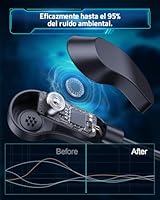
  • Microphone: Features a built-in omnidirectional noise-cancelling boom mic with 360-degree rotation and a dedicated one-button mute on the earcup.
  • 2.4GHz Range: The USB dongle connection maintains a stable signal up to approximately 49 feet in open, unobstructed spaces.
  • Bluetooth Range: Bluetooth 5.4 supports a wireless range of up to 39 feet between the headset and the paired device under typical indoor conditions.
  • Ear Cushions: Ear pads are constructed from breathable mesh fabric designed to reduce heat and moisture buildup during extended wear sessions.
  • Headset Material: The primary structural material is ABS (Acrylonitrile Butadiene Styrene) plastic, which keeps weight low at the cost of premium build feel.
  • Lighting: Both earcups feature RGB breathing lights with a pulsing glow effect, operable independently from core audio functions.
  • Headphone Jack: Includes a 3.5mm auxiliary jack for optional wired connection when wireless modes are unavailable or battery is depleted.
  • Compatibility: Compatible with PS5, PS4, PC, and Mac via the USB dongle; Bluetooth mode supports smartphones and tablets only, and is not functional on PS4, PS5, or Xbox consoles.
  • Switch Support: The headset connects to Nintendo Switch via the USB dongle for audio playback, but the microphone function is not supported on Switch.
  • Xbox Compatibility: This headset is not compatible with any Xbox console across any connection mode, including both 2.4GHz and Bluetooth.
  • Package Contents: Each unit ships with the wireless gaming headset, USB dongle, USB-C charging cable, and a printed user manual.
  • Manufacturer: Produced by Dongguan Shuyou Intelligent Technology Co., Ltd. and sold under the Vakedy brand, with 24-hour after-sales support offered directly by the brand.

Related Reviews

FAQ

No, it does not. Neither the 2.4GHz dongle nor the Bluetooth connection is compatible with any Xbox console. If you are primarily an Xbox gamer, this is not the right headset for you and you should look elsewhere before purchasing.

Unfortunately no, and this trips up a lot of buyers. Bluetooth mode on this gaming headset is restricted to smartphones, tablets, and other standard Bluetooth devices. For PS5 and PS4, you must use the included USB dongle — that is the only supported connection method for those consoles.

Partially. The headset connects to Switch via the USB dongle and audio playback works fine, but the microphone is non-functional in that mode. You can hear your game, but teammates will not be able to hear you through this headset while on Switch.

Most users get several days of regular gaming sessions out of a single charge, which is genuinely strong for this price tier. The rated 50-hour figure is under ideal conditions, but even in everyday use with mixed 2.4GHz and RGB lighting activity, longevity is one of the headset's most praised qualities.

In open lab conditions, yes — but real homes are full of walls, furniture, and competing Wi-Fi signals that reduce effective range. Most users find the connection stays solid within the same room and a short distance beyond it, but expect performance to drop if you move into an adjacent room or put a wall between yourself and the dongle.

Yes. The headset includes a 3.5mm auxiliary jack, so you can plug in a standard audio cable and keep using it wired while the battery charges. It is a useful backup that prevents the headset from becoming a paperweight when you forget to charge it overnight.

Honestly, it is a weak point. The omnidirectional pickup pattern captures your voice well in a quiet environment, but in louder spaces — near a fan, with a TV on, or in a shared room — it grabs a lot of background noise alongside your voice. If you game in a noisy setting regularly, teammates will likely notice the ambient sound.

Comfort holds up well for the first couple of hours thanks to the lightweight build and mesh ear pads. Beyond that, some users — particularly those with larger heads — report that the clamping force becomes noticeable and adds pressure around the ears and temples. It is not a universal complaint, but it is consistent enough to mention if you typically game in long uninterrupted stretches.

Not simultaneously. The headset operates on one active connection at a time — either the 2.4GHz dongle for the PC or Bluetooth for the phone. Switching between them requires powering the headset off and reconnecting to the desired device, which takes a few seconds but is not complicated once you have done it a couple of times.

Setup is about as simple as it gets. For PC, PS5, or PS4, plug the USB dongle into the device and power on the headset — it connects automatically with no drivers or software required in most cases. A small number of Windows users have needed to manually set the headset as the default audio device in system settings, but that is a two-step fix rather than a genuine technical hurdle.