Overview

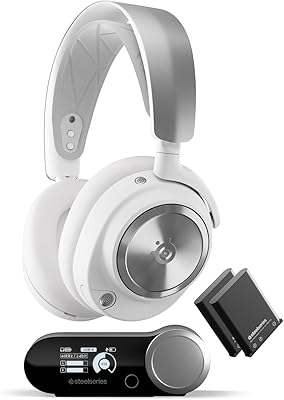
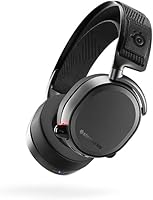
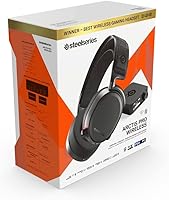
The SteelSeries Arctis Pro Wireless is a premium gaming headset built for PC and console gamers who refuse to compromise on audio quality or cord-free convenience. What separates it from most wireless competitors is its dual-wireless system — simultaneous 2.4GHz and Bluetooth connections running at the same time, not a toggle between them. The polished steel and aluminum alloy construction feels genuinely built to last years, not just one upgrade cycle. It ships with a base station charging dock that keeps the desk tidy and batteries topped up, though it does claim a noticeable footprint. This is a dedicated desk setup, not something you throw in a bag for a commute.
Features & Benefits

The 2.4GHz lossless connection handles all gaming audio with virtually imperceptible lag — critical when in-game sound cues drive your reactions. Bluetooth runs alongside it independently, so a phone call or background playlist never drops the gaming link. The Hi-Res certified drivers span 10–40,000 Hz, meaning cinematic game soundtracks and layered audio mixes reveal detail that narrower drivers simply compress away. On the mic side, the ClearCast bidirectional microphone filters background noise from what your teammates hear — to be clear, it does not cancel noise for your own ears. Battery swapping is the practical standout: one charges in the dock while you play on the other, each lasting around 20 hours.

Best For

This dual-wireless headset fits best into a permanent desk setup where you divide time between PC gaming, video calls, and casual listening — all from one device. PC gamers who want simultaneous Bluetooth and 2.4GHz without juggling separate gear will find real value here. Streamers and long-session players benefit most from the swappable battery design — no forced breaks, no charging anxiety mid-stream. Audiophiles crossing into gaming will appreciate the wide frequency response over typical gaming-tuned sound profiles. It also serves PS4 and PS5 users well. If portability matters or desk space is tight, though, the weight and base station make this a stay-at-home proposition.

User Feedback

Across more than 6,000 ratings, the Arctis Pro Wireless holds a 4.1-star average — broadly positive, with a few consistent complaints worth knowing. Buyers regularly highlight wireless stability, mic clarity on group calls, and the genuine convenience of never waiting on a recharge. On the downside, ear cushion heat is a real issue during sessions beyond two hours, particularly in warmer rooms. The base station draws mixed reactions: functional and organized, but physically large for compact desks. Some owners also note that full EQ customization requires installing the SteelSeries GG software. Occasional firmware friction and Bluetooth multipoint limitations surface in edge cases, though neither is a widespread dealbreaker.

Pros

  • Simultaneous 2.4GHz and Bluetooth means gaming and phone calls coexist without switching modes.
  • The swappable battery system eliminates charging downtime entirely for long-session players and streamers.
  • Hi-Res certified drivers reveal audio detail in game soundtracks that standard gaming headsets compress away.
  • The ClearCast mic transmits voice with broadcast-level clarity, reducing background noise for teammates.
  • Polished steel and aluminum construction feels durable enough to survive years of daily desk use.
  • 2.4GHz wireless connection performs with latency that is functionally indistinguishable from a cable.
  • The base station keeps batteries organized and charged with minimal daily effort.
  • Native PS4 and PS5 support makes this dual-wireless headset a strong console upgrade option.
  • Physical ear cup controls — volume, mic mute — work reliably without requiring software access.
  • Wide compatibility via included 3.5mm cable extends use to devices without wireless support.

Cons

  • Ear cushions trap heat noticeably during sessions exceeding 90 minutes, especially in warm rooms.
  • The base station occupies significant desk real estate and requires a permanent USB connection.
  • Full EQ customization is locked behind the SteelSeries GG software installation.
  • Bluetooth multipoint is absent, so switching between two paired devices requires manual re-pairing.
  • At 687 grams, the headset becomes fatiguing during very long sessions for some users.
  • Firmware updates have occasionally reset custom audio settings or introduced connectivity bugs.
  • Replacement batteries are proprietary, adding a long-term ownership cost as cells age and degrade.
  • Xbox and Nintendo Switch wireless support is absent, limiting multi-platform console households.
  • Bluetooth mode carries inherent audio delay, making it unsuitable for latency-sensitive gaming.
  • Out-of-box sound tuning skews slightly bright and benefits from EQ adjustment before it performs at its best.

Ratings

The SteelSeries Arctis Pro Wireless earned its 4.1-star average across more than 6,000 verified global ratings, and the scores below reflect what buyers actually experienced — not what the spec sheet promises. Our AI rating system analyzed confirmed purchase reviews worldwide, actively filtering incentivized, bot-generated, and duplicate feedback to surface honest signal. The result is a transparent breakdown that weights both the genuine strengths and the friction points that real owners encountered after weeks of daily use.
Wireless Performance
93%
The 2.4GHz lossless connection is the headset's most consistently praised attribute. Owners report zero perceptible lag even in fast-paced competitive titles, and the signal holds solid through walls and across mid-sized rooms without dropout. For desk gaming, it performs as reliably as a wired connection.
A small share of users encountered intermittent reconnection issues after firmware updates, requiring a manual re-pair cycle. The 2.4GHz range also struggles more than expected in environments with heavy wireless congestion, such as dense apartment buildings with many overlapping networks.
Dual-Wireless Functionality
88%
Running 2.4GHz for gaming and Bluetooth simultaneously — not as a toggle — is something few headsets at any price pull off reliably. Users who take calls mid-session or keep music streaming from a phone while gaming consistently call this the feature that justifies the cost over simpler single-mode options.
Bluetooth multipoint support is absent, so connecting to more than one Bluetooth device at a time requires manual switching. Some users also found the Bluetooth pairing process more cumbersome than expected when switching between a phone and a secondary device like a tablet.
Audio Quality
91%
The Hi-Res certified drivers produce a frequency range wide enough that audiophile-leaning buyers frequently comment on hearing soundtrack layers in games they had played for years without noticing. Spatial detail in first-person shooters is strong, and music through this headset holds up against dedicated listening headphones at a similar price.
Out of the box, the sound signature leans slightly bright, which can cause ear fatigue during extended sessions at higher volumes. Reaching the ideal EQ balance requires time inside the SteelSeries GG software — buyers who want great sound without software configuration may find the defaults underwhelming.
Microphone Quality
89%
The ClearCast microphone consistently earns recognition as one of the better stock mics in gaming headsets. Teammates report voices coming through with noticeable clarity, and the bidirectional design filters out keyboard noise and ambient room sounds effectively on the transmission side.
It is worth being precise: the noise cancellation operates on what your mic sends out, not on what you hear. Buyers expecting active noise cancellation for their own listening experience will be disappointed. The mic boom also lacks a flexible arm, limiting fine-tuned positioning for some face shapes.
Battery System
94%
The dual swappable battery design is practically unmatched for long-session use. Each battery lasts around 20 hours, and the base station charges the spare simultaneously — meaning streamers and marathon session players essentially have unlimited wireless runtime with a few seconds of swapping.
The batteries are proprietary, so replacements require purchasing directly from SteelSeries. Over time, as lithium polymer cells degrade, the finite pool of two batteries means aging units may eventually force more frequent swaps than the original experience suggested.
Build Quality & Materials
87%
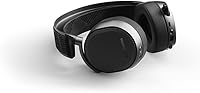
Polished steel and aluminum alloy construction gives the Arctis Pro Wireless a genuinely premium feel that survives daily desk use without visible wear. The headband flexes under pressure rather than cracking, and the overall assembly feels more like a long-term investment than most plastic-heavy competitors.
At 687 grams the headset is noticeably heavy compared to lighter wireless options, and some users feel that weight during sessions exceeding two hours. A few owners also noted that the polished steel finish picks up fingerprints and light scratches on the headband over time.
Comfort & Fit
74%
26%
The ski-goggle-style headband distributes weight across a wider surface than typical headbands, which helps during the first hour or two. Most buyers find the on-ear cushions comfortable out of the box, and the adjustable fit accommodates a wide range of head sizes without excessive clamping force.
Ear cushion heat buildup is the most cited comfort complaint across reviews. During sessions lasting more than 90 minutes — especially in warmer rooms — the on-ear design traps heat noticeably, and buyers with larger ears find the cups less accommodating than over-ear alternatives.
Software & Customization
67%
33%
The SteelSeries GG application provides meaningful EQ control, ChatMix balance between game and voice channels, and sidetone adjustment — features that genuinely improve the experience for users willing to spend time with the software setup.
Full EQ customization is locked behind the software, meaning the headset underperforms its potential for users who prefer plug-and-play. Several owners report that SteelSeries GG has introduced connectivity bugs or reset custom settings after forced updates, which is frustrating at this price point.
Base Station Design
78%
22%
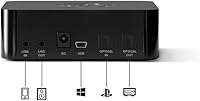
The base station keeps the desk organized by serving as a charging dock, 2.4GHz transmitter, and a visual indicator for battery status simultaneously. For users with a dedicated gaming desk, it integrates cleanly into a permanent setup and makes swapping batteries fast and intuitive.
The base station footprint is larger than most USB dongle-style receivers, and buyers with compact or minimalist desks consistently flag it as an annoyance. It also requires a USB connection to the PC, adding a cable to what is otherwise marketed as a wireless experience.
Latency & In-Game Response
92%
In competitive gaming environments — battle royales, tactical shooters, fighting games — the 2.4GHz connection delivers audio cues that feel synchronous with on-screen action. Users upgrading from Bluetooth-only headsets frequently note the latency difference immediately and describe the 2.4GHz experience as indistinguishable from wired.
Bluetooth mode introduces the audio delay inherent to the standard, making it unsuitable for latency-sensitive gaming. Users who accidentally leave Bluetooth as the primary audio source and then game on it are sometimes confused about why lip-sync or audio timing feels off.
Compatibility
82%
18%
Native support across PC, PS4, and PS5 covers the majority of desktop gaming setups, and Bluetooth extends the headset to smartphones and tablets for calls or media. The included 3.5mm cable further expands compatibility to devices without wireless support, including some portable gaming consoles.
Xbox compatibility requires the 3.5mm analog workaround rather than a first-class wireless connection, which some console gamers find unsatisfying. Nintendo Switch wireless support is similarly absent in 2.4GHz mode, limiting the headset's versatility for multi-platform console households.
Value for Money
76%
24%
For buyers who will genuinely use both wireless modes daily and who sit in long sessions where swappable batteries matter, the price reflects a meaningful collection of capabilities that most competing headsets do not bundle together. The build durability also argues for long-term cost-per-use.
For casual gamers or those who only need basic wireless audio, the price premium is hard to defend — cheaper single-mode options deliver comparable sound with less complexity. Buyers who never exploit the dual-wireless or battery-swap features are effectively paying for specs they will never use.
Setup & Ease of Use
71%
29%
Initial 2.4GHz pairing through the base station is straightforward, and once configured the headset reconnects automatically each session without manual intervention. The physical controls on the ear cup — including a volume dial and mic mute — work well without requiring software access.
Bluetooth pairing adds steps that some users find needlessly complicated compared to simpler headsets, and firmware update processes have drawn criticism for occasionally breaking previously stable settings. New users unfamiliar with SteelSeries GG may spend considerable time troubleshooting before achieving optimal performance.
Portability
41%
59%
The headset includes a 3.5mm cable for passive use without the base station, which does offer some flexibility when traveling. The build quality means it can survive being packed for occasional transport without structural concern.
At 687 grams with a large dedicated base station, the Arctis Pro Wireless is firmly a desk setup. There is no included carrying case, no foldable design, and no compact dongle for laptop use on the go. Buyers looking for a headset that transitions between home and travel will find this a poor fit.

Suitable for:

The SteelSeries Arctis Pro Wireless is built for the kind of gamer who treats their desk setup seriously — someone who spends three or four hours a night gaming and wants audio that holds up across every minute of it. Streamers and content creators get the most out of the swappable battery design, since there is never a forced pause to recharge mid-broadcast, and the ClearCast mic means teammates and audiences hear a clean voice without expensive standalone recording gear. PC gamers who split their attention between gaming, phone calls, and background music will genuinely use the simultaneous dual-wireless daily rather than treating it as a novelty. Audiophiles moving into gaming will appreciate that the wide-range drivers do not flatten the soundstage the way most gaming-tuned headsets do. Home office users who want a single headset for video calls, casual listening, and evening gaming sessions will find this dual-wireless headset covers all three without compromise. PS4 and PS5 owners looking to step up from basic wireless options will also find strong native support here.
Not suitable for:

The SteelSeries Arctis Pro Wireless is a poor match for anyone who needs a headset that travels with them — at 687 grams with a large base station that must sit on your desk, this is not something you pack for a commute or a LAN party. Buyers on a tighter budget who primarily want decent gaming audio should look elsewhere, because a significant portion of the cost is tied to the dual-wireless system and build materials that casual gamers simply will not exploit. Users who game across multiple platforms — particularly Xbox or Nintendo Switch wirelessly — will run into native compatibility walls that reduce the headset to a wired fallback on those devices. Anyone sensitive to ear warmth or who regularly plays in heated rooms should take the cushion heat complaints seriously; the on-ear design is a genuine comfort limitation past the 90-minute mark. Finally, buyers who refuse to install third-party software should know that reaching the headset's full EQ potential requires SteelSeries GG — without it, the sound is good but noticeably unoptimized.

Specifications

  • Wireless Connectivity: Operates on simultaneous 2.4GHz lossless wireless and Bluetooth 4.1, both active at the same time without requiring a mode switch.
  • Frequency Response: Hi-Res certified dynamic drivers reproduce audio across a 10–40,000 Hz range, significantly wider than the 20–20,000 Hz threshold of standard gaming headsets.
  • Impedance: Driver impedance is rated at 32 Ohm, making the headset easy to drive without a dedicated amplifier.
  • Sensitivity: Headset sensitivity is rated at 102 dB, delivering clear, audible output at moderate power levels.
  • Microphone Type: ClearCast bidirectional condenser microphone with transmit-side noise cancellation and a removable, retractable boom arm.
  • Battery Life: Each of the two included lithium polymer batteries provides approximately 20 hours of wireless playback per charge cycle.
  • Battery System: Two swappable lithium polymer batteries are included; one charges in the base station dock while the other powers the headset.
  • Audio Jack: A 3.5mm analog input is included for passive wired use when the base station is unavailable or on incompatible devices.
  • Construction: Headband is built from polished steel with aluminum alloy accents, designed for long-term structural durability under daily desk use.
  • Weight: The headset weighs 687 grams (approximately 1.51 lbs), which is notably heavier than most wireless gaming headsets in its category.
  • Dimensions: Product dimensions measure 6.55 x 3.54 x 7.37 inches, reflecting the on-ear form factor and the structural depth of the headband assembly.
  • Ear Placement: On-ear design positions the cushioned cups directly against the outer ear rather than enclosing it fully, as over-ear designs do.
  • Driver Type: Dynamic audio drivers are used, tuned to the Hi-Res specification for extended high-frequency accuracy.
  • Included Accessories: Package includes the base station charging dock, USB cable, 3.5mm audio cable, and a removable ClearCast microphone boom.
  • Platform Support: Native wireless support covers PC and PS4/PS5; Bluetooth extends compatibility to smartphones and tablets; 3.5mm cable enables use on additional devices.
  • Software: Full EQ and ChatMix customization is available through the SteelSeries GG application, available for Windows and macOS.
  • Bluetooth Version: Bluetooth 4.1 is used for the secondary wireless connection, supporting standard pairing with mobile devices and computers.
  • Water Resistance: The headset carries no water resistance rating and is not designed for use in wet or high-humidity environments.
  • Warranty: SteelSeries provides a 2-year EU spare part availability guarantee, with standard manufacturer warranty terms applying by region.
  • Model Number: Official SteelSeries model number is 61473, with ASIN B07B819VMQ identifying the standard black wireless variant.

Related Reviews

SteelSeries Arctis Nova Pro Wireless Multi-System
78%
94%
Battery System
88%
Wireless Connectivity
86%
Sound Quality
67%
Active Noise Cancellation
83%
Microphone Quality
More
SteelSeries Arctis Nova 5 Wireless
79%
93%
Battery Life
88%
Wireless Connectivity
84%
Microphone Quality
76%
Audio Quality
81%
Comfort & Fit
More
SteelSeries Arctis Nova 3P Wireless Gaming Headset
86%
88%
Audio Quality
92%
Battery Life
85%
Comfort & Fit
91%
Fast Charging
90%
Multi-Platform Compatibility
More
SteelSeries Arctis GameBuds for Xbox
80%
91%
Wireless Performance
78%
Active Noise Cancellation
84%
Sound Quality
67%
Microphone Quality
76%
Comfort & Fit
More
Razer Pro Click Wireless Mouse
84%
88%
Ergonomics & Comfort
91%
Precision & Performance
94%
Battery Life
85%
Multi-Device Connectivity
82%
Programmable Buttons
More
Keychron B6 Pro
Keychron B6 Pro
80%
93%
Battery Life
88%
Wireless Connectivity
71%
Typing Experience
91%
Mac Compatibility
67%
Build Quality
More
Sennheiser IE 100 Pro Wireless
85%
91%
Sound Quality
88%
Comfort & Fit
87%
Battery Life
85%
Build Quality
83%
Connectivity
More
SoundPEATS Air5 Pro Wireless Earbuds
85%
88%
Sound Quality
85%
Noise Cancellation Performance
92%
Battery Life
78%
Connectivity
84%
Comfort and Fit
More
Beats Powerbeats Pro Wireless Headphones
87%
91%
Sound Quality
92%
Battery Life
80%
Comfort & Fit
72%
Bluetooth Connectivity
87%
Build Quality & Durability
More
Xinwld A97 Pro Wireless Earbuds
87%
88%
Sound Quality
92%
Battery Life
84%
Build Quality
86%
Noise Cancellation
90%
Waterproof Rating
More

FAQ

Both connections run simultaneously — that is the core design feature that sets the SteelSeries Arctis Pro Wireless apart from most competitors. In practice, you can have your PC audio coming through 2.4GHz while your phone stays connected over Bluetooth, and an incoming call will mix into your headset without dropping the game audio or requiring you to touch any settings.
The base station holds one spare battery and charges it continuously whenever it is seated there. When the battery in the headset runs low, you pop it out, click in the charged spare, and you are back in business within about ten seconds. For streamers or anyone doing four-hour-plus sessions, it effectively means the headset never has to go dead on you.

Not quite — and this is worth being clear about. The noise cancellation on the ClearCast microphone works on the transmission side, filtering out keyboard clicks, room noise, and background sounds from what your teammates hear. It does not cancel noise for your own listening experience. There is no active noise cancellation for the listener built into this headset.

Not over the 2.4GHz connection, no. The wireless base station is designed for PC and PlayStation platforms. You can still use the headset with Xbox or Switch by plugging in the included 3.5mm audio cable, but you lose all the wireless functionality when doing so. If cross-platform wireless is a priority, this is a meaningful limitation to factor in.

Basic audio works immediately without software — plug in the base station, power on the headset, and it connects. However, if you want to adjust the EQ, set up ChatMix to balance game versus voice audio, or fine-tune sidetone levels on the mic, you will need to install SteelSeries GG. For most buyers the default sound is acceptable, but getting the best performance out of the drivers really does benefit from at least a quick EQ session in the app.

Yes, the ClearCast microphone boom is fully removable — it simply unplugs from the left ear cup. When you are using the headset for music or a movie rather than gaming, pulling the mic off makes it look considerably less like a gaming peripheral, which matters to some people using it in a home office setting.

Honestly, heat buildup is one of the more consistent complaints from long-term owners, and it is worth taking seriously if you game in a warm room or tend to run hot. The on-ear design means the cushions press against the skin rather than surrounding the ear, and after about 90 minutes to two hours there is noticeable warmth. It rarely crosses into genuinely uncomfortable territory for most users, but it is real and worth knowing about before you commit.

The base station is larger than a simple USB dongle receiver — it is a proper dock with a footprint that will claim a visible portion of your desk. It needs to connect to your PC via USB and should ideally sit within a reasonable line of sight to the headset for the best 2.4GHz signal. Most users keep it beside their monitor. If your desk is compact or heavily organized, the base station is something to plan space for, not just a background accessory.

No — the Bluetooth implementation does not support multipoint, which means it holds a connection to one Bluetooth device at a time. If you want to switch from your phone to your tablet, you need to disconnect one and pair the other manually. It is a limitation that stands out at this price tier, where some competing headsets do offer multipoint Bluetooth.

The batteries are replaceable, but they are proprietary SteelSeries units rather than standard off-the-shelf cells, so you will need to purchase replacements directly from SteelSeries or an authorized retailer. The upside is that the dual-battery design extends the overall lifespan of the headset — when one battery starts holding less charge, you are not immediately forced into a full replacement cycle, just a battery swap.