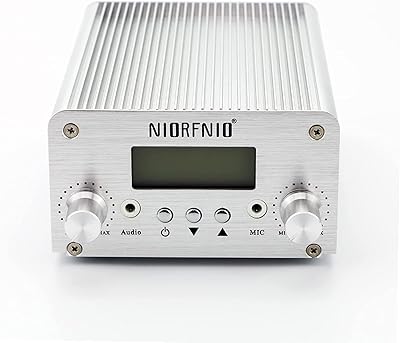
Overview

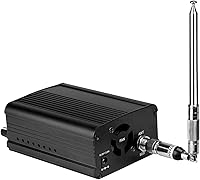
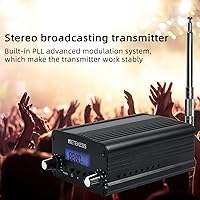
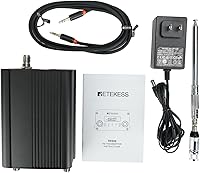
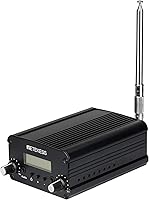
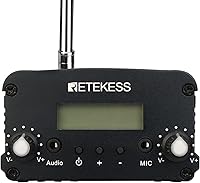
The Retekess TR509 FM Broadcast Transmitter sits in an interesting middle ground — it's not the cheap plug-in you'd grab for a road trip, and it's not a professional broadcast rack unit either. What sets it apart from the usual budget clutter is its FCC certification, which matters a great deal for anyone running a structured event rather than just streaming music to a single car. Built around a PLL modulation system and housed in an aluminum alloy chassis, this broadcast unit is clearly aimed at organized use cases like church services, drive-in screenings, and campus PA relays. Audio fidelity is solid for the price tier, though buyers expecting studio-level clarity may need to recalibrate their expectations.
Features & Benefits

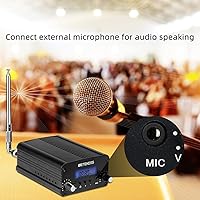
One of the first things worth noting is that frequency stability is genuinely reliable here — the PLL modulation keeps the signal locked without the drifting you often get from cheaper units. The LCD screen is clear and intuitive, and the auto-save function means you won't need to punch in your frequency settings every time you power it up. The TR509 accepts a standard 3.5mm stereo input, which covers smartphones, laptops, mixers, and most audio sources out of the box. External microphone connectivity adds useful flexibility for live announcements. The aluminum housing handles heat well during longer sessions, which is a real concern if you're running an all-day event.

Best For

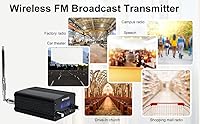
This FM transmitter is most at home in organized, permission-based scenarios where you need everyone tuned to the same station without handing out receivers. Churches running parking lot services or overflow listening for congregants in cars are probably the most natural fit. It also works well for drive-in movie nights, small outdoor concerts, and community events where attendees already have FM radios handy. Campus and shopping mall operators have used it for localized announcements, and it handles conference speech relay decently with an external mic connected. If you need plug-and-play simplicity with repeatable settings session after session, this broadcast unit is genuinely convenient.

User Feedback

With 104 ratings averaging 3.8 stars, the reception is broadly positive but not without caveats. Most satisfied buyers zero in on ease of setup and the fact that the frequency holds steady — which, for a church or event context, is the bare minimum you need working reliably. A number of users have noted it compares favorably to more expensive options for simple broadcast tasks. That said, complaints do surface: real-world range falls noticeably short of the stated maximum in dense urban areas or buildings with interference, and microphone input sensitivity can be finicky, sometimes requiring external gain staging to get usable levels. It's a capable unit, but not a flawless one.

Pros

  • FCC certification provides legal peace of mind for organized public or semi-public broadcasts.
  • PLL modulation keeps the frequency locked and stable throughout long event sessions.
  • Settings are automatically saved on shutdown, so there is no reconfiguration needed next time.
  • Compatible with any standard FM radio receiver, meaning audiences need no special hardware.
  • The aluminum alloy chassis handles heat well during extended use without throttling performance.
  • Setup is genuinely quick and beginner-friendly, even for non-technical event organizers.
  • The 3.5mm stereo input works with virtually any audio source, from phones to mixers.
  • External microphone support adds real flexibility for live speech or announcement scenarios.
  • Several buyers report it outperforms more expensive units for basic church and event broadcasting.
  • The LCD display is easy to read and navigate, even in outdoor lighting conditions.

Cons

  • Real-world range in urban or signal-dense areas often falls well short of the advertised maximum.
  • Microphone input sensitivity is inconsistent and may require an external preamp for usable levels.
  • Audio balancing between mic and line inputs can be tricky to dial in without additional equipment.
  • No battery or portable power option limits where and how it can be deployed.
  • With only 104 reviews, long-term reliability data is limited compared to more established competitors.
  • The unit may struggle in areas with heavy FM frequency congestion, narrowing usable channel options.
  • No bundled carrying case or protective accessories, which matters for teams transporting it regularly.
  • Customer support responsiveness from Retekess can be hit or miss based on user reports.

Ratings

The scores below reflect an AI-driven analysis of verified buyer reviews for the Retekess TR509 FM Broadcast Transmitter, drawn from global sources with spam, bot-generated, and incentivized feedback actively filtered out. Every category score is shaped by patterns found across real-world use cases — from weekly church services to one-off community events — so both the genuine strengths and the recurring frustrations are represented honestly.

Signal Stability
83%
The PLL modulation system earns consistent praise from event organizers who run multi-hour sessions. Church operators in particular note that once a frequency is locked in, it stays there — no drifting mid-service, no need to babysit the unit. That reliability builds real confidence when broadcasting to a parking lot full of cars.
In areas dense with competing FM stations, users occasionally report interference bleeding in from nearby commercial signals, which narrows the usable frequency options noticeably. Finding a clean channel before the event is essentially mandatory in urban deployments.
Broadcast Range
61%
39%
In wide open spaces — think large church parking lots, outdoor fairgrounds, or rural drive-in setups — several buyers confirm the unit reaches respectable distances well beyond what a car FM transmitter could manage. For contained venues, the range is more than adequate.
The 1km claim is regularly challenged in real-world conditions. Users in suburban neighborhoods or areas with buildings and trees report effective range dropping to 200–400 meters. This gap between the advertised figure and actual performance is the single most common complaint across reviews.
Ease of Setup
88%
Most buyers report being up and broadcasting within minutes of opening the box, which is a genuine win for non-technical event organizers. The LCD interface is clear, the frequency adjustment is straightforward, and the auto-save feature means repeat users barely need to touch the settings after the first session.
First-time users sometimes struggle to identify a clear FM frequency in their area without doing a manual scan first, which adds a small but unexpected step to initial setup. The instruction manual could be more explicit about this process for truly beginner users.
Audio Quality
72%
28%
For speech-forward broadcasts — sermons, announcements, event narration — the audio output is clean and intelligible, with no notable delay or distortion under normal line-level input. Users feeding audio from a mixer or laptop consistently report a satisfying listening experience for their audiences.
The unit is not going to satisfy anyone with high expectations for music fidelity. Stereo separation is modest, and the overall sound profile lacks the warmth and detail of higher-end broadcast gear. It covers functional needs well, but audiophiles will feel the ceiling quickly.
Build Quality
79%
21%
The aluminum alloy chassis feels substantively more serious than plastic-bodied competitors at the same price point. Users who transport the unit between weekly events note that it handles the routine without showing wear, and the heat dissipation during long sessions gives it a dependable, solid feel.
The touch controls, while functional, do not have the tactile precision of physical buttons, and a few users report them feeling slightly unresponsive in colder outdoor conditions. The overall finish is functional rather than refined, which is fine for the use case but worth knowing.
Mic Input Performance
54%
46%
Having an external mic input at all is a meaningful addition for a unit in this category, and users running simple spoken announcements through a decent dynamic microphone report acceptable clarity when levels are properly dialed in. It broadens the use case beyond pure line-level audio.
This is one of the weaker aspects of the unit. Mic sensitivity is inconsistent, and multiple users report needing an external preamp or mixer to get usable gain levels. Without that extra gear, live mic audio can sound thin, quiet, or unbalanced against the line-level input.
FCC Compliance
91%
For buyers in the United States running organized public or semi-public events, FCC certification is not a nice-to-have — it is essential. This broadcast unit clears that bar definitively, giving church coordinators and event organizers real peace of mind that they are operating within the law.
FCC certification applies to the US only, so international buyers need to verify local compliance independently. The certification also does not guarantee interference-free operation in congested spectrum environments, which some users wrongly assume it does.
Settings Memory
86%
The auto-save functionality is quietly one of the most appreciated features among repeat users. Churches and recurring event hosts love that they can power the unit on and be broadcasting within seconds, without touching a single setting. It removes a small but real friction point from every session.
There is no profile system for storing multiple frequency presets, so users who broadcast on different frequencies across different venues have to manually update the saved setting each time. A multi-slot memory would make this feature substantially more powerful.
Value for Money
74%
26%
Against the price of professional broadcast gear, this FM transmitter lands in a genuinely accessible range for small organizations and community groups. Several buyers explicitly mention it as a smarter buy than competing units that cost more and deliver comparable or worse performance for basic broadcast needs.
Budget-conscious buyers occasionally feel the sting of needing additional accessories — a preamp for mic use, a better cable, sometimes a signal booster — that push the effective total cost above initial expectations. The unit itself is fair value; the full working setup sometimes less so.
Compatibility
89%
The universality of FM reception is one of the strongest practical arguments for this broadcast unit. Audiences need only a car stereo, a pocket radio, or any FM-capable device — no apps, no pairing, no downloads. That zero-barrier listener experience is especially valuable for older or less tech-savvy audiences.
The input side is limited to 3.5mm auxiliary, so sources with only Bluetooth output require an intermediary adapter. While this is a minor issue for most, users with modern Bluetooth-only mixers or sound systems will need to plan around it.
LCD Display
77%
23%
The display is clear and readable in most lighting conditions, including outdoor daylight, which matters for event setup scenarios. Parameters are shown in a logical layout, and the backlight makes nighttime operation or dim indoor environments easy to manage.
The screen is functional but basic — there is no real feedback for signal strength or transmission quality, which would be genuinely useful for operators trying to optimize placement. A few users also note the display feels slightly dated compared to newer competing models.
Heat Management
81%
19%
Extended sessions lasting several hours are routine for church and event use, and the aluminum housing handles that thermal load noticeably better than plastic-bodied alternatives. Users running all-day community events report no heat-related shutdowns or performance drops.
The unit does get warm during prolonged use, which can be slightly concerning for first-time users unfamiliar with the normal operating temperature. Placing it in an enclosed or poorly ventilated space will amplify that warmth, so airflow around the unit should be considered during deployment.
Portability
58%
42%
At under two pounds, the unit is light enough to carry easily between locations, and its compact footprint means it fits in a carry bag or equipment case without dominating the space. For small event teams setting up and breaking down weekly, the physical size is never a problem.
The lack of any battery or portable power option is a real constraint. Every deployment requires a nearby power outlet or a dedicated portable power station, which limits flexibility for outdoor setups without infrastructure. It is strictly a plug-in unit, and that shapes where and how it can be used.
Instruction Quality
55%
45%
Basic setup is intuitive enough that most technically confident users can figure the unit out without consulting the manual at all. The LCD labels and button functions are logical, and the learning curve for core operation is short.
The included documentation is thin and not always clearly translated, which becomes a real issue when users hit less obvious configurations like mic input balancing or frequency interference troubleshooting. Several reviewers mention turning to online forums or video tutorials to fill gaps the manual leaves open.

Suitable for:

The Retekess TR509 FM Broadcast Transmitter is purpose-built for anyone who needs to broadcast audio to a group of people already sitting in their cars or spread across an open area with FM radios on hand. Churches running parking lot overflow services or drive-in worship events are probably the single best use case — the FCC certification removes legal ambiguity, and the stable PLL frequency means the congregation can tune in once and stay locked without fiddling. Drive-in movie organizers and community event hosts will also find it practical, since it requires zero special equipment on the listener's end beyond a standard FM radio. Campus administrators, shopping mall operators, and conference organizers who need to relay speech or background audio across a defined zone can get solid, repeatable results with minimal technical overhead. If you run recurring events and want a unit that remembers its settings between sessions, this broadcast unit genuinely delivers that convenience.
Not suitable for:

The Retekess TR509 FM Broadcast Transmitter is not the right tool for buyers expecting professional broadcast range or studio-quality audio fidelity. The advertised 1km range is a best-case figure measured in open, interference-free conditions — in practice, dense urban environments, buildings, or areas saturated with competing FM signals will cut that range significantly, sometimes by more than half. Anyone planning to use it with a microphone as the primary input should know that the mic sensitivity can be inconsistent, often requiring an external preamp or mixer to achieve clean, balanced levels. It is also not suited for mobile or battery-powered deployments, since it relies on wired power and is not designed for portable use on the go. Buyers who need precise audio control, multiple simultaneous inputs, or guaranteed range specifications for large-scale events should look at purpose-built professional broadcast equipment instead.
Specifications

  • Brand: Manufactured by Retekess, a brand specializing in wireless audio communication devices.
  • Model Number: The unit is officially designated as model TR509.
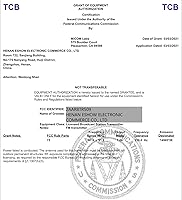
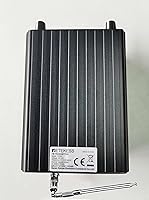
  • FCC Certification: Carries FCC certification under ID 2AAR8TR509, confirming legal compliance for short-range FM broadcasting in the United States.
  • Modulation Type: Uses a professional PLL (Phase-Locked Loop) stereo modulation system for stable, drift-resistant frequency output.
  • Transmission Range: Rated for a maximum range of up to 1km (approximately 3,280ft) under optimal, open-air conditions.
  • Audio Input: Accepts a 3.5mm stereo line-level audio jack, compatible with smartphones, laptops, mixers, and most consumer audio devices.
  • Mic Connectivity: Supports connection of an external microphone or mic equipment for live speech and announcement use cases.
  • Display: Equipped with a backlit LCD screen that shows frequency and operating parameters at a glance.
  • Settings Memory: Automatically saves all user-configured parameters on shutdown and restores them on the next power-on.
  • Housing Material: Chassis is constructed from aluminum alloy, which aids in heat dissipation during extended broadcast sessions.
  • Dimensions: The unit measures 3.74″ wide by 5.04″ deep by 2.17″ tall.
  • Weight: Weighs approximately 1.98 pounds (about 900 grams) as a complete unit.
  • Output Mode: Broadcasts audio exclusively via FM radio frequency, receivable on any standard FM tuner or radio.
  • Controller Type: Features a touch-based interface for navigating menus and adjusting settings.
  • Color: Available in black only.
  • Power Supply: Requires a wired power connection; no internal battery or portable power option is included.
  • Availability Date: First made available for purchase in November 2020.
  • Audio Output: Delivers stereo FM audio output with no perceptible signal delay under normal operating conditions.
  • Compatible Devices: Works with any audio source that has a 3.5mm auxiliary output port, including phones, tablets, and audio mixers.
  • User Rating: Holds an average customer rating of 3.8 out of 5 stars based on 104 verified ratings on Amazon.

Related Reviews
Retekess FT11 Portable FM Broadcast Transmitter
78%
93%
Ease of Setup
62%
Transmission Range
81%
Audio Clarity
88%
Battery Life
74%
Microphone Quality
More
Retekess TR508 FM Transmitter
71%
83%
Audio Clarity
67%
Broadcast Range
81%
Ease of Setup
72%
Dual Input & Mixing
91%
FCC Compliance & Legality
More
Retekess TR604 AM/FM Radio
85%
88%
Ease of Use
82%
Sound Quality
91%
Portability
84%
Battery Life
75%
Tuning Accuracy
More
FMUSER GP100 FM Ground Plane Antenna
80%
88%
Signal Performance
91%
Build Quality
84%
Weatherproofing
93%
Ease of Installation
89%
VSWR Stability
More
NIORFNIO T15B 15W FM Transmitter
71%
83%
Signal Stability
88%
Bluetooth Connectivity
61%
Broadcast Range
54%
PC Software & Scheduling
79%
Build Quality
More
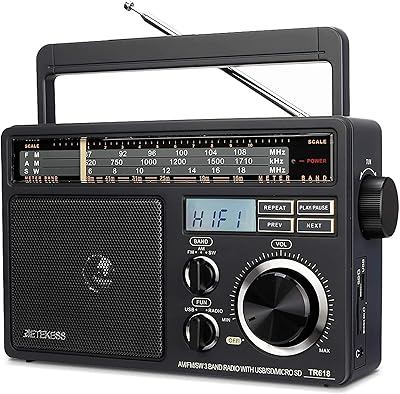
Retekess TR618 AM FM SW Radio
87%
91%
Value for Money
87%
Reception Quality
88%
Sound Quality
92%
Portability
89%
Ease of Use
More
Retekess TR626 Portable AM FM Radio with Bluetooth
87%
88%
Bluetooth Functionality
90%
Reception Quality
78%
Sound Quality
92%
Portability
85%
Battery Life
More
Retekess TR113 Full-Band Shortwave Radio
74%
93%
Band Coverage
81%
SSB Reception
78%
Reception Sensitivity
52%
Ease of Use
74%
Build Quality
More
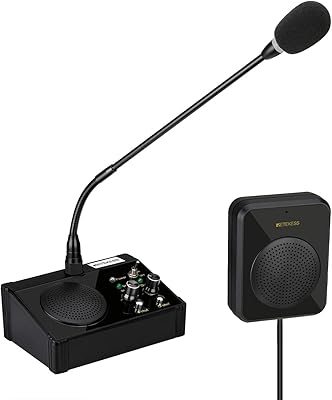
DreamSky AM/FM Shortwave Portable Radio
78%
93%
Ease of Use
86%
AM/FM Reception
61%
Shortwave Reception
74%
Speaker Quality
67%
Build Quality
More
Retekess TW106 Window Intercom
87%
94%
Audio Clarity
88%
Microphone Sensitivity
91%
Ease of Installation
86%
Build Quality
85%
Durability
More

FAQ

Yes, and that is one of the main reasons buyers choose it over cheaper alternatives. The unit carries a legitimate FCC certification, which means it is authorized for short-range FM broadcasting in the United States. You still need to stay within the permitted power limits and frequency range, but for a typical parking lot or drive-in church service, it is fully compliant.

The stated maximum is 1km in open air with no interference, but most users report realistic ranges of 300 to 600 meters in typical outdoor settings. In urban areas, parking garages, or locations with competing FM stations nearby, range can drop further. Treat the 1km figure as a ceiling, not a guarantee, and test your specific environment before your event.

Any standard FM radio will work — car stereos, handheld radios, portable speakers with FM tuners, all of it. There is nothing proprietary about the signal. Your audience just needs to know the frequency you are broadcasting on and tune to it like any other station.

The unit does support external microphone input, but it is worth knowing that the built-in mic sensitivity is fairly modest. For casual announcements it may be sufficient, but if you need clean, loud, and balanced voice audio, running the mic through a small preamp or mixer first before feeding the signal into the transmitter will give you much better results.

Yes, that is one of the more practical features on this broadcast unit. It automatically saves your frequency and configuration parameters when you power it off, so the next time you switch it on it picks up right where it left off. This is particularly useful for weekly recurring events like church services.

Absolutely. The 3.5mm stereo input is the same standard auxiliary jack found on most phones, tablets, laptops, and audio interfaces. A simple aux cable is all you need to get audio flowing from your source device into the transmitter. If your source device only has Bluetooth output, you would need a Bluetooth receiver with a 3.5mm output as an intermediary.

The aluminum alloy chassis is specifically there to help manage heat, and most users report no issues during multi-hour sessions. It will get warm to the touch after extended use, which is normal, but thermal throttling or shutdowns are not commonly reported. Just make sure it has some airflow around it and is not tucked inside a sealed box.

For the most part, yes. Plugging in your audio source, selecting an open FM frequency in your area, and powering it on is genuinely straightforward. The LCD screen walks you through the parameters clearly. The trickier part is finding a clear frequency channel in your area that does not clash with local commercial stations, but a quick FM scan with any radio will help you identify open slots.

The unit is not rated as weatherproof or water-resistant, so it should be kept protected from rain, direct moisture, and extreme humidity. For outdoor events, placing it inside a vehicle, a small pop-up tent, or any covered area is the safe approach. It handles normal ambient temperatures well, but exposure to direct rain would be a risk.

The difference is meaningful in a few key areas. Budget car transmitters are low-power, often uncertified, and notorious for frequency drift. This broadcast unit uses PLL modulation for a locked, stable signal, carries legitimate FCC certification, and is built for continuous broadcast use rather than occasional personal listening. If you are running any kind of organized event where reliability matters, the step up in quality is worth it.