Overview

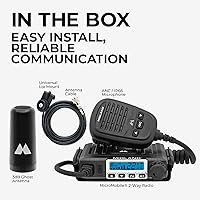
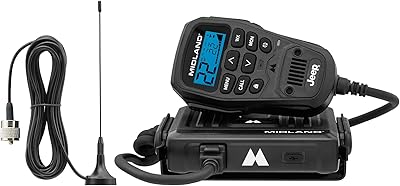
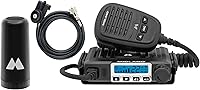
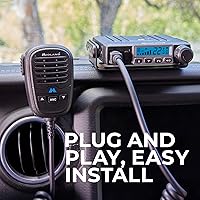
The Midland MXT115VP3 GMRS MicroMobile Radio is not a toy walkie-talkie — it's a purpose-built, vehicle-mounted communication tool designed for people who genuinely depend on reliable comms in the field. With 15-watt output, it puts serious distance between itself and the handheld FRS radios most people start with. Before you buy, know this: GMRS operation requires an FCC license — a quick and affordable process, but one that catches plenty of shoppers off guard. The compact MicroMobile form factor is purpose-made for mounting in trucks, UTVs, and tractors, and the included lip mount antenna means you're not sourcing accessories separately right out of the box.
Features & Benefits

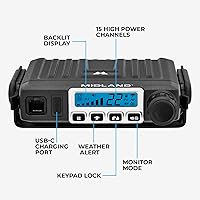
At the core of this MicroMobile radio is a 15-watt transmitter that operates across 15 GMRS channels, giving you meaningful reach in open country or across a sprawling ranch. Eight of those channels are repeater-capable, which matters if you're working terrain where direct line-of-sight comms fall short. The 142 CTCSS/DCS privacy codes let you lock out unwanted chatter on busy channels — useful during large group runs or at popular trailheads. The noise-canceling microphone is dustproof and genuinely holds up in loud environments like tractor cabs or open UTV cockpits. Add automatic NOAA weather scanning with severe-alert lock-on, plus a USB output port for charging devices on the trail, and the feature set looks quite complete.

Best For

This vehicle-mounted radio is a natural fit for overlanding and off-road convoys where truck-to-truck communication is critical and handhelds just don't cut it. Farmers and ranch operators covering hundreds of acres will appreciate the power advantage over consumer-grade alternatives. RV caravans traveling through remote corridors also benefit, particularly when weather changes fast. Search-and-rescue volunteers and outdoor guides who already hold a GMRS license will find the repeater compatibility a genuine operational asset in hilly or densely forested terrain. It's less suited to casual campers who want a simple plug-and-play solution — the setup process and licensing requirement demand a bit of commitment. If you're serious about backcountry communication, the Midland GMRS unit earns its place in the cab.

User Feedback

Buyers have settled at a solid 4.3-star average, which reflects genuine satisfaction with some honest caveats. The most consistent praise centers on range improvement over handhelds and how well the audio holds up in noisy environments — drivers in loud diesel trucks specifically call out the microphone quality. On the other side, some users found the initial setup less intuitive than expected, and a handful were caught off guard by the FCC licensing requirement, which is worth knowing before checkout. Antenna performance drew mixed reactions; a portion of buyers eventually upgraded to a higher-gain aftermarket option. Long-term owners generally report solid durability, and most feel the price is justified given the feature depth — though it's a real investment that rewards buyers who actually use what it offers.

Pros

  • Fifteen watts of output power puts this MicroMobile radio in a different league from handheld FRS alternatives.
  • Eight repeater-capable channels let organized groups extend communication range well beyond direct line-of-sight limits.
  • The noise-canceling, dustproof microphone holds up in loud tractor cabs, diesel trucks, and open UTVs.
  • NOAA weather scanning automatically locks onto the strongest available alert channel — a real safety asset in remote areas.
  • 142 privacy codes across 15 channels give convoy groups effective control over channel interference and chatter.
  • The included lip mount antenna and mounting hardware mean you are not spending extra to get up and running.
  • Long-term owners consistently report reliable hardware durability over two or more years of regular field use.
  • Direct compatibility with Midland FRS and GMRS handhelds lets groups mix vehicle-mounted and portable radios without coordination headaches.
  • The compact MicroMobile form factor installs cleanly in tight cab spaces like UTVs and compact trucks.
  • A built-in USB output port covers basic device charging needs without requiring a separate 12-volt adapter.

Cons

  • A valid FCC license is legally required before you can transmit — this catches many buyers completely off guard.
  • The included antenna underperforms what the radio is capable of, pushing many users toward an aftermarket upgrade.
  • Menu navigation for assigning privacy codes and configuring channels is unintuitive and relies heavily on the manual.
  • The instruction manual lacks the depth needed for users without prior 12-volt installation or radio experience.
  • Real-world range in hilly, forested, or urban terrain falls far short of the advertised theoretical maximum.
  • The microphone connection cable shows wear in long-term reviews, particularly from users who stow and retrieve it frequently.
  • The unit offers zero water resistance, which is a meaningful limitation for open-cab farm equipment or UTVs.
  • USB charging output is low wattage and impractical as a primary power source for modern devices.
  • Buyers without access to GMRS repeater infrastructure get no practical benefit from one of the unit's headline features.
  • Channel scan speed is slow enough to miss briefly active channels in high-traffic radio frequency environments.

Ratings

The Midland MXT115VP3 GMRS MicroMobile Radio was evaluated by our AI rating system after processing verified buyer reviews from multiple global sources, with spam, bot-generated, and incentivized feedback actively filtered out. Scores reflect the full spectrum of real-world experience — not just the highs — so both consistent strengths and recurring frustrations are represented transparently. Whether you're an overlander, a farmer, or an RV traveler, the breakdown below gives you an honest picture of where this vehicle-mounted radio delivers and where it asks for patience.
Transmission Range
78%
22%
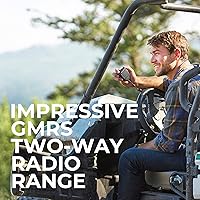
In open terrain — flat ranch land, desert trails, or wide-open highways — users consistently report range that leaves handheld FRS radios far behind. Convoy groups running 4x4 trails praised the ability to stay connected across 2 to 5 miles of real-world distance without signal dropouts.
The theoretical 40-mile maximum is essentially unreachable in practice. Hilly terrain, dense forest, and urban environments cut that figure dramatically, and buyers who expected near-maximum performance in wooded or mountainous conditions were often disappointed.
Audio Clarity
84%
The noise-canceling microphone is one of the most consistently praised aspects across the review base. Drivers operating diesel tractors, open UTVs, and loud off-road vehicles specifically noted that voice transmission remained clear and intelligible even at high ambient noise levels.
A smaller subset of buyers reported that receive-side audio could sound tinny at higher volume settings through the built-in speaker, and a few noted that wind interference during open-cab use occasionally degraded incoming clarity more than expected.
Repeater Functionality
81%
19%
For users already operating in areas with GMRS repeater infrastructure, the eight repeater-capable channels add a meaningful communication range extension that handhelds simply cannot match. Search-and-rescue volunteers and organized off-road clubs in particular found this feature operationally valuable.
Repeater access depends entirely on external infrastructure that many rural users simply do not have nearby. Buyers in remote areas without established repeater networks get no practical benefit from this feature, which limits its usefulness to a specific subset of the audience.
Ease of Installation
76%
24%
Most users found the physical mounting process straightforward — the included lip mount antenna and magnetic mount design made dashboard or roll-bar installation achievable without professional help. The compact footprint fits neatly in smaller cab environments like UTVs and compact trucks.
Wiring the unit for power gave some buyers trouble, particularly those without prior experience installing 12-volt accessories. The instruction manual drew criticism for being less detailed than expected at this price level, and a few users relied on online forums to complete the setup correctly.
Build Quality
79%
21%
The radio's housing feels appropriately robust for a vehicle-mounted unit, and the dustproof microphone is a tangible quality indicator that buyers noticed immediately. Long-term owners — those using the Midland GMRS unit for two or more years — generally report no significant hardware degradation.
The unit is not water resistant, which is a notable gap for buyers using it in open-cab UTVs or farm equipment exposed to rain. A few reviewers reported connector or cable wear over extended rough-terrain use, suggesting the accessories may not match the durability of the main unit.
Channel & Privacy Code Management
72%
28%
Having 142 CTCSS/DCS privacy codes across 15 channels gives groups running organized convoys or job-site operations real flexibility to carve out clean, interference-free communication. Users in busy recreational areas found the privacy code system effective at filtering out unrelated chatter.
Navigating the menu to assign and store privacy codes is unintuitive, and multiple buyers flagged that the process requires repeated reference to the manual. For less tech-savvy users, getting the radio fully configured the way they want takes considerably longer than it should.
NOAA Weather Alerts
88%
The automatic weather scan that locks onto the strongest available NOAA channel is a genuinely useful safety feature, especially for users operating far from cell service. RV travelers and farmers reported that weather alerts provided timely warnings during fast-moving storm systems.
The weather alert feature is only as useful as local NOAA broadcast coverage, which can be weak in very remote areas. A small number of users noted that the alert tone is loud enough to startle in quiet environments, with no easy way to adjust the alert volume independently.
Antenna Performance
67%
33%
The included 3dB gain lip mount antenna is a reasonable starting point and performs adequately for general use. Buyers who mounted it correctly on a metal vehicle surface found it delivered consistent results for everyday convoy and farm communication needs.
Antenna satisfaction was one of the more divisive topics in the review base. A meaningful share of users eventually replaced the included antenna with a higher-gain aftermarket option to get closer to the radio's actual potential, suggesting the bundled antenna undersells what the unit can do.
Value for Money
73%
27%
Buyers who understood what they were purchasing before checkout — a serious licensed GMRS mobile radio with repeater access and a noise-canceling mic — generally felt the price reflected the capability. The included antenna and mounting hardware add genuine bundle value that competitors often charge extra for.
For buyers who discovered the FCC license requirement after purchase, or who expected near-maximum range in challenging terrain, the price felt harder to justify. A handful of reviewers felt comparable communication results could be achieved for less if repeater access was not a priority.
FCC Licensing Clarity
54%
46%
For buyers who researched GMRS before purchasing, the licensing process is straightforward and relatively low-cost, and experienced radio users appreciated that this vehicle-mounted radio operates on a properly licensed spectrum band rather than the congested FRS frequencies.
Far too many buyers were caught off guard by the FCC license requirement, which is mandatory for legal GMRS operation. This is not a fault of the hardware itself, but it created frustration and negative reviews from buyers who simply did not know what they were buying into beforehand.
Microphone Durability
82%
18%
The detachable, dustproof design means the microphone can handle gritty farm environments and muddy trail conditions without performance degradation. Users who regularly operate in dusty or dirty conditions specifically called out the microphone as holding up better than expected over time.
The cable connecting the handheld mic to the unit showed wear in a subset of long-term reviews, particularly for users who frequently stow and retrieve the mic. A coiled or reinforced cable design would likely improve the longevity of this component meaningfully.
Compatibility with Handheld Radios
83%
The ability to communicate directly with Midland FRS and GMRS handheld radios is a practical feature that many buyers actively used — allowing a mix of vehicle-mounted and portable radios within the same group without needing separate channel coordination.
Compatibility is limited to FRS/GMRS frequencies, meaning users hoping to bridge communication with other radio types or brands outside the GMRS ecosystem will find the unit constraining. This is a frequency-band limitation rather than a product flaw, but it matters for some use cases.
USB Output Port
69%
31%
Having a USB charging port built into the radio is a practical convenience for trail use, allowing users to top up a phone or GPS device without hunting for a separate 12-volt adapter. Overlanders running minimal accessory setups appreciated having one less thing to wire in.
The USB output is a single port with modest output wattage, which limits its usefulness for faster device charging. Users managing multiple devices simultaneously found it inadequate as a primary charging solution, treating it more as an emergency top-up than a reliable power source.
Channel Scan Speed
71%
29%
The channel scan function works reliably for identifying active traffic in the area, which proved useful for users arriving at a new trail system or campground who wanted to find which channel the group ahead was using without manually stepping through each one.
Scan speed is not particularly fast, and in areas with multiple active channels, the radio can take a noticeable amount of time cycling through all 15. A few users noted it occasionally skipped briefly active channels, making it less reliable in high-traffic RF environments.

Suitable for:

The Midland MXT115VP3 GMRS MicroMobile Radio is built for people who treat communication as a functional necessity rather than a convenience — and that distinction matters when choosing this over a cheaper alternative. Off-road convoy groups running UTVs, overlanding rigs, or coordinated 4x4 trails will find the 15-watt output and repeater-capable channels genuinely transformative compared to the handheld radios many start with. Farmers and ranch operators covering large, irregular properties will appreciate how consistently this vehicle-mounted radio outperforms consumer-grade options across open terrain. RV travelers who regularly move through remote corridors benefit from the built-in NOAA weather scanning, which can provide early storm warnings when cell service is unavailable. Search-and-rescue volunteers, outdoor guides, and organized recreation clubs who already hold a GMRS license will find the repeater access and privacy code system practical tools for real operational coordination. If you're someone who spends serious time in the field and wants a mounted radio that works hard alongside you, this Midland GMRS unit is sized and specced for exactly that.

Not suitable for:

Casual buyers looking for a simple, plug-and-play communication solution should approach the Midland MXT115VP3 GMRS MicroMobile Radio with caution, because it demands more from the user than most consumer radios do. GMRS operation is federally licensed in the United States, which means you cannot legally transmit without first obtaining an FCC license — a step that surprises a significant number of buyers who only discover it after the purchase. The installation process, while manageable for someone comfortable with 12-volt vehicle wiring, is not as intuitive as the product's otherwise clean design might suggest, and the manual does not fully bridge that gap. Buyers who plan to use this primarily in dense forests, mountainous terrain, or urban environments should also temper their range expectations significantly — real-world performance in those conditions falls well short of the theoretical maximum. The unit is not water resistant, which makes it a poor fit for open-cab vehicles that routinely get exposed to rain or heavy splash. And if you simply need a pair of radios for a weekend camping trip without the overhead of licensing and vehicle installation, there are far simpler and more affordable options that will serve you better.
Specifications

  • Power Output: The radio transmits at 15 watts on high power and offers a switchable low-power mode for shorter-range communication where full output is unnecessary.
  • Frequency Range: Operates across the standard GMRS frequency band from 462 MHz to 467 MHz as allocated by the FCC for licensed personal and business use.
  • Channels: Provides 15 total GMRS channels, of which 8 are configured to work with external repeater systems for extended range communication.
  • Privacy Codes: Supports 142 CTCSS and DCS privacy codes, allowing users to filter out unwanted transmissions from other radios sharing the same channel.
  • Weather Radio: Includes NOAA weather scanning across 10 available WX band channels, with automatic lock-on to the strongest signal and an audible severe weather alert.
  • Antenna: Ships with a 3dB gain universal lip mount antenna designed for exterior vehicle installation to maximize transmission and reception performance.
  • Microphone: The included handheld microphone is detachable, dustproof, and features automatic noise cancellation to maintain clear audio in loud environments.
  • Water Resistance: This unit carries no official water resistance rating and should be protected from rain, heavy moisture, and direct liquid exposure during use.
  • USB Output: A USB output port is built into the unit to allow charging of external devices such as smartphones or GPS units while the radio is powered.
  • Dimensions: The main radio body measures 12.2 x 10.39 x 5.04 inches, making it compact enough for installation in most truck cabs, UTV dashboards, and RV interiors.
  • Weight: The unit weighs 2 pounds, which is light enough for straightforward bracket mounting without requiring reinforced hardware in most vehicle applications.
  • Compatibility: Fully compatible with all Midland FRS and GMRS handheld walkie-talkies, enabling mixed use of vehicle-mounted and portable radios within the same communication group.
  • Channel Scan: An automatic channel scan function cycles through all 15 GMRS channels to detect active transmissions in the area, useful for locating which channel a group is using.
  • Split Tone: The unit is split tone capable, meaning it can receive on a different privacy code than it transmits on, which is useful in repeater-based communication setups.
  • FCC Licensing: Legal operation on GMRS frequencies requires a valid FCC license, which covers the licensee and their immediate family members for a multi-year term.
  • Silent Operation: A silent operation mode is available to disable all alert and notification tones for situations where audible signals would be disruptive.
  • AMBER Alerts: When connected to an active NOAA weather radio broadcast, the unit is also capable of receiving AMBER alerts for missing children alongside severe weather notifications.
  • Availability: The product was first made available for purchase in February 2018 and remains an active, non-discontinued product in the Midland Radio lineup.

Related Reviews

Midland MXT275 15-Watt GMRS Mobile Radio
79%
91%
Audio Clarity
67%
Transmission Range
88%
Ease of Installation
86%
Integrated Mic Design
82%
Build Quality
More
BTECH GMRS-PRO GMRS Two-Way Radio
78%
91%
Build Quality & Durability
88%
GPS Accuracy & Location Sharing
84%
Bluetooth Performance
72%
Range & Signal Clarity
63%
App & Channel Programming
More
BTECH GMRS-V2 5W 200-Channel GMRS Radio
83%
91%
Build Quality
88%
Ease of Use
94%
Weather Resistance
75%
Range Performance
85%
Programming with CHIRP
More
Retevis RA25 GMRS Mobile Radio
82%
91%
Audio Clarity
89%
Transmission Range
87%
Channel Versatility
84%
Ease of Installation
79%
Build Quality
More
Retevis RA86 GMRS Mobile Radio
85%
88%
Performance
91%
Audio Clarity
85%
Ease of Use
93%
NOAA Weather Alerts
65%
Installation Complexity
More
Retevis HA1G GMRS Handheld Radio
79%
83%
Build Quality
88%
Waterproofing
86%
Battery Life
81%
Range & Repeater Performance
71%
Audio Clarity
More
Retevis RA87 GMRS Mobile Radio
78%
88%
Transmit Power
84%
Repeater Channel Support
86%
Audio Clarity
83%
Ease of Installation
81%
CHIRP Compatibility
More
Midland BizTalk BR200 Two-Way Radio
79%
83%
Audio Clarity
67%
Indoor Range & Coverage
91%
Ease of Use
71%
Build Quality & Durability
74%
Battery Life & Management
More
Radioddity GM-30 GMRS Handheld Two-Way Radio
81%
91%
Value for Money
88%
Audio Clarity
67%
Range Performance
74%
Ease of Use
83%
Build Quality
More
Midland 75-822 Handheld CB Radio
76%
91%
Ease of Setup
78%
Build Quality
74%
Audio Clarity
88%
NOAA Weather Reception
53%
Talk Range
More

FAQ

It is a firm legal requirement, not a formality. GMRS frequencies are licensed by the FCC, and transmitting without a valid license is a federal violation. The good news is that a single license covers you and your entire immediate family, it is relatively affordable, and the application process through the FCC website is straightforward. You do not need a test to obtain it, unlike an amateur radio license.

In open, flat terrain with clear line-of-sight — think open farmland or a desert highway — many users report reliable communication in the 3 to 8 mile range. The theoretical 40-mile maximum requires near-ideal conditions that are essentially impossible to replicate in practice. Hilly terrain, forest cover, and buildings all reduce that figure significantly. If you need to push beyond line-of-sight range, the repeater-capable channels are your best tool.

Yes, the Midland MXT115VP3 GMRS MicroMobile Radio is fully compatible with all Midland FRS and GMRS handheld radios. As long as you are on matching channels and privacy codes, your vehicle-mounted unit and any Midland handheld radios in your group will communicate without issue. This makes it easy to mix a cab-mounted radio in one vehicle with portable radios for people on foot.
Most users with basic DIY comfort manage the installation without professional help. The physical mounting of the antenna and main unit is fairly intuitive. The part that trips some people up is wiring the unit to a 12-volt power source in their vehicle, particularly if they are not familiar with automotive electrical work. The included manual covers the basics, but users commonly supplement it with online tutorials or forums for the wiring portion specifically.

This is where you need to be careful — the unit carries no water resistance rating whatsoever. The main radio body should ideally be mounted somewhere protected from direct rain exposure. The microphone is dustproof but not waterproof. If your UTV regularly gets exposed to heavy rain or water crossings, you will want to consider waterproofing your mount location or looking at a unit with an IPX-rated enclosure.

A GMRS repeater is a fixed radio station, usually mounted on a hilltop or tower, that receives your signal and re-transmits it at higher power across a wider area. If you are in an area that has GMRS repeater infrastructure, using one of the eight repeater-capable channels on this Midland GMRS unit can dramatically extend your effective range beyond what direct radio-to-radio communication allows. If you are in a very remote area with no repeater coverage nearby, those channels will function as standard direct channels and the repeater feature will not benefit you in practice.

The bundled 3dB gain lip mount antenna is a reasonable starting point and performs adequately for general use when mounted correctly on a metal vehicle surface. That said, a meaningful portion of buyers who push the radio to its limits — particularly those trying to maximize range or overcome terrain challenges — eventually upgrade to a higher-gain aftermarket antenna. If you want to get the most out of the radio's 15-watt transmitter, an antenna upgrade is a worthwhile consideration down the road.

Privacy codes, technically called CTCSS and DCS tones, do not encrypt your transmission — anyone with a scanner can still hear you. What they do is instruct your radio to ignore incoming traffic that does not carry the matching tone. This is particularly useful at busy trailheads or recreation areas where multiple groups share the same GMRS channels. You agree on a channel and code with your group, and your radios filter out everyone else's chatter automatically. With 142 code options, the odds of accidental interference from another group using the same combination are low.

Yes, there is a built-in USB output port that can charge external devices. It is a useful backup option when you need to top off a phone or GPS unit and do not have a spare 12-volt port available. That said, the output wattage is modest, so do not expect fast charging — it is better suited to maintaining a charge than rapidly recovering a depleted battery on a modern smartphone.

The radio automatically scans through all 10 available NOAA weather broadcast channels and locks onto whichever one is transmitting the strongest signal in your area. If a severe weather warning is issued — including thunderstorms, tornadoes, or flash floods — the radio sounds an audible alarm to notify you. It also receives AMBER alerts when broadcast over NOAA frequencies. This feature works independently of cell service, which makes it genuinely valuable for users in remote areas where mobile weather apps are not an option.