QZTELECTRONIC Glasses-01 Bone Conduction Smart Glasses
QZTELECTRONIC Glasses-01 Bone Conduction Smart Glasses — image 1

QZTELECTRONIC Glasses-01 Bone Conduction Smart Glasses — image 2
QZTELECTRONIC Glasses-01 Bone Conduction Smart Glasses — image 3
QZTELECTRONIC Glasses-01 Bone Conduction Smart Glasses — image 4

QZTELECTRONIC Glasses-01 Bone Conduction Smart Glasses — image 5
QZTELECTRONIC Glasses-01 Bone Conduction Smart Glasses — image 6
QZTELECTRONIC Glasses-01 Bone Conduction Smart Glasses — image 7
QZTELECTRONIC Glasses-01 Bone Conduction Smart Glasses — image 8
67%
33%

Overview

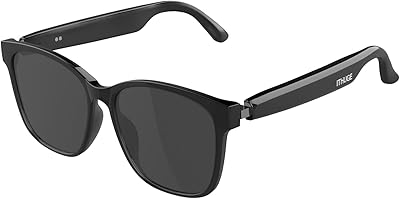
The QZTELECTRONIC Glasses-01 Bone Conduction Smart Glasses sit at an interesting crossroads — part functional eyewear, part open-ear audio device — in a category that is still finding its footing with mainstream buyers. These bone conduction smart glasses are designed for active adults who want to stay connected without sacrificing awareness of their surroundings. The dual-purpose appeal is real: photochromic lenses that adapt to sunlight paired with wireless audio built right into the frame. QZTELECTRONIC is not a household name, and that matters — long-term support and warranty reliability are harder to gauge. At a mid-range price point, they ask buyers to take a measured leap of faith.

Features & Benefits

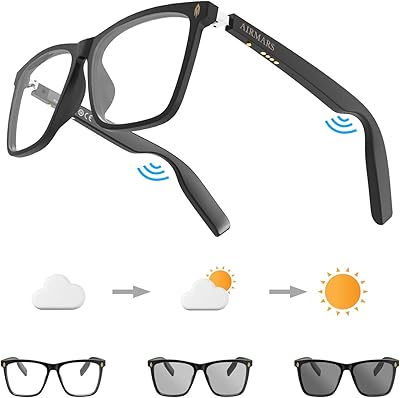
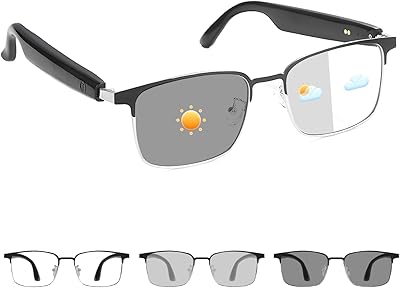
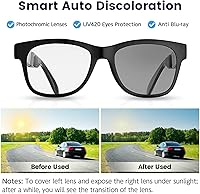
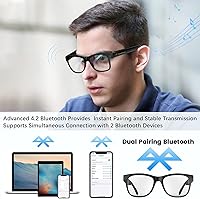
The core idea behind these bone conduction smart glasses is that audio is delivered through vibrations against your cheekbones rather than through your ear canal, keeping your ears completely open to ambient sound. It works better than it sounds for podcasts and calls, though it is not the right tool for critical listening. The photochromic lenses adjust tint outdoors and block blue light indoors — genuinely useful in one package. Bluetooth 4.2 connects to two devices simultaneously with a 10-meter range; it is an older standard, so expect occasional pairing quirks. The IP6 rating covers sweat and rain comfortably, but this is not swim-proof gear. At 32 grams, the frame sits lightly on your face.

Best For

This open-ear eyewear hits its stride with people who are always on the move. Cyclists and joggers benefit most — hearing traffic or voices while still getting audio from their phone is genuinely difficult to pull off with standard earbuds. Commuters who take calls while driving will find the hands-free calling setup practical, since there is nothing to insert or fumble with. Office workers spending long hours in front of screens get a secondary benefit from the blue-light blocking lens function. That said, if you wear prescription lenses already, these will not accommodate them. People with sensitivity to in-ear devices may find open-ear audio a genuinely comfortable alternative worth exploring.

User Feedback

Buyers who pick up the QZTELECTRONIC audio glasses tend to appreciate the sheer convenience — one item covering sunglasses, blue-light protection, and wireless audio is a compelling pitch that largely delivers. The sound leakage issue, however, comes up repeatedly in real-world use: push the volume past the 70% mark and people nearby can hear what you are listening to. That is not a defect — it is how bone conduction physically works at higher outputs. Build quality concerns surface too; the frame feels functional but not particularly premium. Lens transition speed draws mixed feedback, with some users expecting faster darkening outdoors. Manage expectations around audio fidelity — bone conduction is clear and usable, not rich or immersive.

Pros

  • Keeps ears fully open, making it genuinely safer for outdoor sports and commuting.
  • Photochromic lenses adjust automatically outdoors and block blue light at your desk — two functions in one pair of glasses.
  • At 32 grams, these bone conduction smart glasses are light enough to forget you are wearing them.
  • Dual-device Bluetooth pairing lets you stay connected to a phone and laptop simultaneously.
  • Frame-integrated controls handle volume, calls, and music without ever reaching for your phone.
  • IP6 water resistance holds up reliably against sweat and rain during workouts.
  • A full charge takes only two hours and delivers up to four hours of playback.
  • Works with both iOS and Android devices without any compatibility headaches.
  • Hands-free calling is clean and practical for drivers who want zero distraction.
  • Open-ear format is a comfortable alternative for users who cannot tolerate in-ear devices.

Cons

  • Sound leakage at volumes above 70% is noticeable to people nearby — a real limitation in quiet settings.
  • Bluetooth 4.2 is an aging standard; connection stability and codec support lag behind newer alternatives.
  • Audio quality is functional but flat — bone conduction cannot replicate the depth or richness of traditional headphones.
  • Build quality feels adequate rather than confident; long-term durability is hard to predict from a lesser-known brand.
  • Lens transition speed outdoors has drawn criticism — darkening is slower than some buyers expect.
  • No prescription lens support, which excludes a significant portion of potential buyers outright.
  • The included charger cable is proprietary USB, adding inconvenience if it is lost or damaged.
  • QZTELECTRONIC has a thin public track record, making warranty claims and after-sales support uncertain.
  • Four hours of playback is enough for a workout but falls short for long travel days.
  • Higher volume use risks audible echo during calls, a known limitation the brand itself flags.

Ratings

Our AI rating system analyzed verified buyer feedback for the QZTELECTRONIC Glasses-01 Bone Conduction Smart Glasses from multiple global marketplaces, rigorously filtering out incentivized reviews, bot activity, and spam to surface authentic user experiences. The scores below reflect both what these open-ear audio glasses genuinely do well and where real-world performance falls short of buyer expectations. No aspect has been softened — strengths and frustrations are weighted equally.

Audio Quality
61%
39%
For podcasts, audiobooks, and phone calls during a morning run or commute, the audio is clear and functional at moderate volumes. The open-ear format means you never feel disconnected from your surroundings, which many active users genuinely value over pure sound quality.
Music playback exposes bone conduction's biggest limitation — there is almost no bass, and the overall sound profile feels thin compared to even a modest pair of earbuds. Users who expect anything close to hi-fi audio will find this a consistent frustration, especially with genre-heavy playlists.
Sound Leakage
53%
47%
At the recommended 50% to 60% volume range, leakage is minimal enough for normal use in offices, cafes, or on public transit. Staying within that range makes the QZTELECTRONIC audio glasses reasonably discreet for everyday listening in mixed environments.
Push past the 70% mark and the leakage becomes genuinely noticeable — people sitting nearby in quiet settings will hear your audio clearly. This is a fundamental constraint of the technology at higher outputs, and it rules out these glasses for anyone who listens loud in shared or professional spaces.
Lens Performance
73%
27%
The dual-function lenses pull real weight — they darken outdoors under UV exposure and revert to clear indoors, which is useful for people who move between environments frequently throughout the day. The blue-light blocking coating adds genuine desk value for screen-heavy workers.
The transition speed is slower than what most buyers expect from dedicated photochromic eyewear, particularly on overcast days or in partial shade where the change is barely perceptible. Several users noted that the darkening feels behind the curve compared to prescription photochromic lenses they have used previously.
Build Quality
62%
38%
The frame feels solid enough out of the box, and the 32-gram weight suggests a considered, lightweight construction. For casual daily use — commutes, morning runs, desk work — the build holds up adequately during the first few months of ownership.
Long-term durability is a genuine concern — the plastic finish does not inspire premium confidence, and hinge points show wear relatively quickly with frequent folding and unfolding. Since QZTELECTRONIC is a lesser-known brand, buyers have limited recourse if the frame develops a fault beyond the initial purchase window.
Value for Money
66%
34%
For buyers who genuinely need both photochromic sunglasses and open-ear audio in one wearable, the combined utility justifies the price point more convincingly than buying each separately. Cyclists and commuters who use both features daily tend to see the investment as fair.
For anyone who only wants one of the two main functions, the price feels harder to justify against more specialized alternatives. Buyers who primarily want audio and care little about lenses — or vice versa — will likely find purpose-built options that outperform these bone conduction smart glasses at a similar cost.
Comfort & Fit
78%
22%
At just 32 grams, the frame barely registers on your face during a workout or a long commute, and the open-ear design eliminates the sweaty-ear discomfort that plagues extended earbud sessions. Users with sensitivity to in-ear pressure consistently highlight how much more comfortable this format is during prolonged wear.
The fit is not universally flattering across all face shapes — users with narrower temples sometimes find the frame sits loosely, while those with wider heads report mild pressure during longer sessions. The non-slip pads help, but are not a complete fix for fit variability across different face geometries.
Battery Life
69%
31%
A 2-hour recharge delivering up to 4 hours of playback is a reasonable trade-off for a device this light, and the 10-day standby time means you rarely have to think about charging on lighter-use days. For most daily commuters, a single nightly charge covers the next day comfortably.
Four hours of active playback falls short for travel days, long hikes, or back-to-back workouts — users who need all-day audio will hit a wall before evening. The proprietary USB cable also means a dead charge is harder to recover from on the go without that specific cable on hand.
Bluetooth Connectivity
64%
36%
Dual-device pairing works as advertised — keeping a laptop and phone connected simultaneously is genuinely convenient for office workers who switch between calls and music without re-pairing. The 10-meter wireless range is sufficient for most indoor and outdoor movement scenarios without noticeable dropout.
Bluetooth 4.2 is a noticeably dated standard in a market where 5.0 and 5.3 are now the norm, and some users report occasional connection instability in environments with heavy wireless interference. The older standard also limits codec support, which compounds the already constrained audio quality further.
Call Quality
72%
28%
For hands-free driving calls or quick check-ins during a jog, the call clarity is more than acceptable — voices come through cleanly at moderate volume, and the microphone picks up speech adequately in outdoor conditions. Most users report the other party can hear them clearly without significant complaint.
At maximum volume, echo during calls is a confirmed issue — the brand itself warns against it. In noisy environments like busy streets or windy cycling conditions, microphone pickup becomes inconsistent, and callers report struggling to hear clearly, which limits reliability for important calls on the move.
Water Resistance
74%
26%
The IP6 rating handles real-world sweat and rain exposure confidently — users report running through light rain and finishing intense gym sessions without audio degradation or frame damage. For the primary sports use case, the water resistance level is appropriate and consistently reliable.
IP6 is not a submersion rating, and buyers who assume waterproof means pool-safe have caused damage by taking this open-ear eyewear into water sports settings. The rating also does not cover pressurized water like strong shower jets, which has caught some users off guard after post-run showers.
Ease of Controls
77%
23%
Frame-integrated buttons for volume, play and pause, and call management work intuitively after a short adjustment period — most users feel comfortable with the layout within the first day of use. Not reaching for a phone mid-run or mid-drive is a practical convenience that appears repeatedly in positive feedback.
Button tactility is not always crisp, and locating the right control by feel alone takes more trial and error than expected on first use, particularly when wearing gloves in cooler weather. A few users also noted that accidental presses occur when adjusting the frame fit on the fly.
Design & Aesthetics
75%
25%
The unisex frame reads as modern and sporty without looking overtly tech-forward, which means it blends into everyday wear better than many competing smart glasses. The slim profile means most people would not immediately identify these as audio glasses on a first glance.
Color options are limited, and the frame finish is functional rather than refined — it lacks the surface quality of dedicated sunglasses or established wearable audio brands. Style-conscious buyers may find the overall look adequate for sport use but not compelling enough to wear as a fashion-forward accessory.
Brand Trust & Support
49%
51%
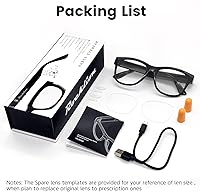
The product ships with a thoughtful accessory package — lens templates, non-slip pads, and a cloth pouch — suggesting the manufacturer has put some consideration into the out-of-box experience. For buyers who simply want the device to work as described and are not concerned with brand legacy, this may be enough.
QZTELECTRONIC has virtually no public brand history, verified service infrastructure, or established warranty process, making post-purchase support unpredictable. Buyers who have encountered issues beyond the return window report difficulty getting meaningful assistance, and this absence of a recognizable support structure is the single biggest trust weakness for the product.

Suitable for:

The QZTELECTRONIC Glasses-01 Bone Conduction Smart Glasses are a practical fit for people whose daily routines demand awareness of their surroundings while staying connected. Cyclists, runners, and commuters are the clearest match — keeping ears open to traffic, other pedestrians, or ambient cues is a genuine safety advantage that standard earbuds simply cannot offer. Drivers who want to take calls without fumbling with an earbud will also find the frame-integrated controls and open-ear design refreshingly low-friction. People who struggle with the discomfort of in-ear or over-ear headphones, whether due to ear sensitivity or prolonged wear fatigue, may find this format a more comfortable daily option. The photochromic lenses add real value for anyone who moves frequently between indoor and outdoor environments, since they transition automatically and double as blue-light blockers at a desk.

Not suitable for:

Buyers expecting hi-fi audio quality will be disappointed — the QZTELECTRONIC Glasses-01 Bone Conduction Smart Glasses are built for convenience and awareness, not for critical or immersive listening. Anyone who listens at high volumes in quiet public spaces should know that sound leakage above roughly 70% volume is a documented reality of bone conduction technology, and people nearby will hear your audio. Those who need prescription lenses will hit a hard wall, as the frame does not accommodate them. Swimmers or anyone planning to use these around water beyond light rain and sweat should look elsewhere, since the IP6 rating does not cover submersion. Tech-savvy buyers who prioritize up-to-date wireless performance should also note that Bluetooth 4.2 is a noticeably older standard compared to what competing products now offer, and anyone who values strong brand support or a reassuring warranty track record may hesitate given QZTELECTRONIC's limited public reputation.

Specifications

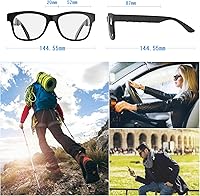
  • Weight: The frame weighs 32 grams, making it light enough for extended daily wear without noticeable pressure on the nose or temples.
  • Dimensions: The frame measures 14.5 x 5.2 x 14.4 cm, sized to fit most adult faces in a standard unisex eyewear profile.
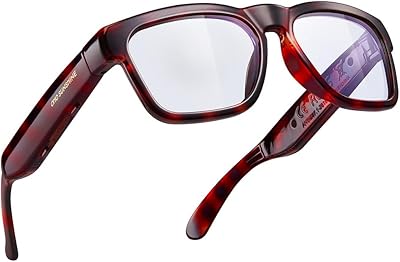
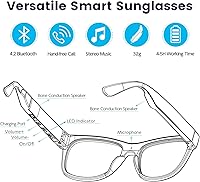
  • Speaker Type: Audio is delivered via bone conduction speakers embedded in the frame, which transmit sound through cheekbone vibrations rather than through the ear canal.
  • Speaker Sensitivity: Speaker sensitivity is rated at 102 dB, which provides adequate loudness for everyday listening at recommended volume levels.
  • Impedance: The speakers operate at 2 Ohm impedance, optimized for low-power output from a compact Bluetooth audio source.
  • Microphone: The built-in microphone carries a sensitivity rating of -40 dB, suitable for voice calls and basic voice interaction in moderately quiet environments.
  • Bluetooth: The frame uses Bluetooth 4.2, supporting simultaneous dual-device pairing and a wireless range of up to 10 meters.
  • Battery Capacity: An internal 250 mAh lithium polymer battery powers the audio and Bluetooth functions, with standby time rated at up to 10 days.
  • Playback Time: Continuous music playback lasts up to 4 hours when the volume is kept between 50% and 60%, as recommended by the manufacturer.
  • Call Time: The battery supports up to 3 hours of continuous phone call use at moderate volume before requiring a recharge.
  • Charge Time: A full charge takes approximately 2 hours using a 5V 1A USB charger, which is not included in the box.
  • Water Resistance: The frame carries an IP6 water resistance rating, providing reliable protection against sweat and rain but not against submersion or underwater use.
  • Lens Type: Lenses are photochromic with UV420 anti-blue light coating, automatically darkening under UV exposure outdoors and remaining clear in low-light indoor conditions.
  • Ear Placement: The design uses an open-ear format with no ear canal contact, leaving both ears fully exposed to ambient sound at all times.
  • Compatibility: The glasses connect wirelessly to both iOS and Android smartphones, tablets, and laptops via standard Bluetooth pairing.
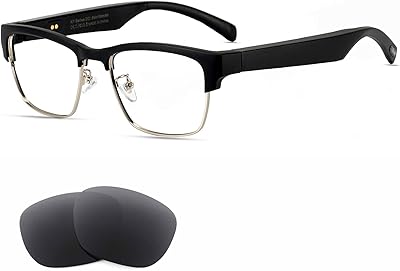
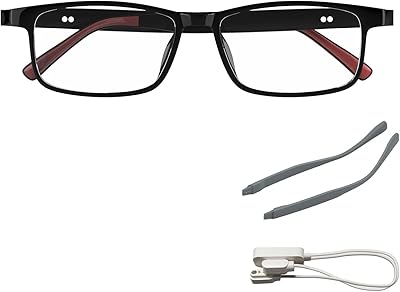
  • Package Contents: The box includes the smart glasses, two lens templates, a USB charging cable, two non-slip pads, a cloth pouch, and a user manual.

Related Reviews
Emerhome E13 Bluetooth Smart Glasses
70%
83%
Ease of Pairing
79%
Call Clarity
58%
Audio Volume & Quality
54%
Battery Life
71%
Touch Control Accuracy
More
TnoxHD Smart Glasses
85%
85%
Audio Quality
90%
Battery Life
80%
Comfort and Fit
78%
Sound Clarity for Calls
88%
Ease of Use
More
AIRMARS SG8 Bluetooth Smart Glasses
74%
88%
Value for Money
83%
Lens Performance
58%
Audio Quality
61%
Call Quality
79%
Comfort & Fit
More
DOVIICO KY02 Bluetooth Audio Smart Glasses
66%
83%
Open-Ear Comfort
41%
Battery Life
54%
Audio Quality
62%
Voice Assistant Integration
63%
Build Quality
More
Raycon Bone Conduction Headphones RBB842
74%
91%
Water Resistance
93%
Situational Awareness
87%
Battery Life
63%
Audio Quality
82%
Fit & Stability
More
ITHUGE UF-09(ai) AI Smart Translation Glasses
70%
67%
Translation Accuracy
62%
Build Quality
78%
Battery Life
53%
Ease of Setup
59%
Audio Quality
More
Tulbeys G07 Bluetooth Audio Glasses
70%
91%
Wearing Comfort
83%
Bluetooth Connectivity
61%
Audio Quality
48%
Sound Leakage
57%
Microphone & Call Quality
More
Tulbeys GS06 Photochromic Bluetooth Smart Glasses
73%
83%
Value for Money
78%
Lens Performance
61%
Audio Quality
72%
Comfort & Fit
54%
Charging Experience
More
GS038 Bluetooth Audio Sunglasses
71%
83%
Value for Money
79%
Comfort & Fit
58%
Audio Quality
71%
Call Quality
74%
Battery Life
More
Enerair A20 Bone Conduction Headphones
73%
84%
Value for Money
81%
Comfort & Fit
63%
Sound Quality
88%
Water & Sweat Resistance
76%
Battery Life
More

FAQ

Instead of pushing sound into your ear canal, the QZTELECTRONIC Glasses-01 Bone Conduction Smart Glasses use small transducers built into the frame that sit against your cheekbones. They send vibrations through your skull directly to your inner ear, bypassing the eardrum entirely. Your ears stay completely open, so you hear both your audio and everything around you at the same time.

No, these are a standalone frame and cannot be worn over existing eyewear. The bone conduction smart glasses are also not compatible with prescription inserts. If you need vision correction, these are not a practical choice unless you use contact lenses.

It can be, especially in quiet environments. At volumes above 70%, people sitting close to you will likely be able to hear what you are listening to. The brand is upfront about this — it is a physical characteristic of bone conduction technology at higher outputs, not a manufacturing flaw. Keeping volume in the 50% to 60% range keeps leakage minimal for most situations.

No, the IP6 rating only covers protection against rain, splashing, and sweat. These are not waterproof in the submersion sense, so swimming or water sports would likely cause damage. Stick to dry outdoor activities and gym workouts.

Power the glasses on by holding the main button until you hear an audio cue or see an indicator light, then open the Bluetooth settings on your phone and look for the device in the available list. The pairing process follows standard Bluetooth protocol and works the same way for both iOS and Android.

Yes, Bluetooth 4.2 dual-device pairing is supported, so you can stay connected to, say, your phone and your laptop simultaneously. Keep in mind that actively streaming audio from one device while the other is on standby is the typical use case — seamless switching between active streams depends on device behavior.

They do transition, but the speed varies depending on UV intensity and temperature. On a bright, sunny day the darkening is noticeable within a minute or two, but on overcast days or in partial shade the change is more subtle. Some users report the transition is slower than they expected coming from dedicated photochromic prescription lenses, so set your expectations accordingly.

At 32 grams, the frame is genuinely lightweight and most users find it comfortable for a couple of hours without issue. The open-ear design avoids the fatigue that in-ear tips can cause over time. That said, the fit may vary depending on face shape, and the included non-slip pads help if the frame tends to slide during activity.

Honest answer: functional, not impressive. Bone conduction is clear enough for calls, podcasts, and casual music listening, but it lacks bass response and the kind of richness you would get from quality over-ear headphones. Think of it as a practical communication tool that happens to play music, rather than an audio-first product.

This is worth thinking about before buying. QZTELECTRONIC is not a widely established brand, so after-sales support and parts availability are less predictable compared to major audio or eyewear manufacturers. The box does include a USB charging cable and two lens templates, but if the frame itself develops a fault outside of any included warranty period, your options may be limited.