
Overview

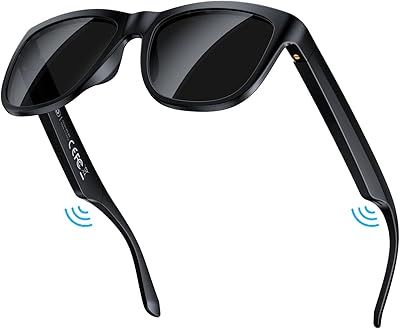
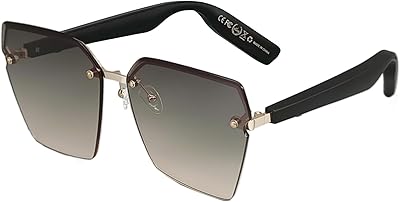
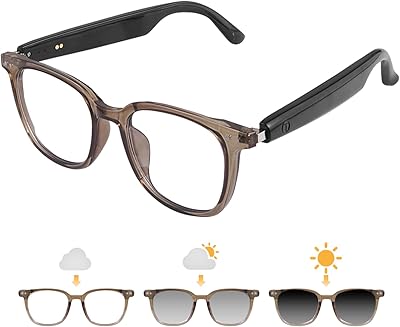
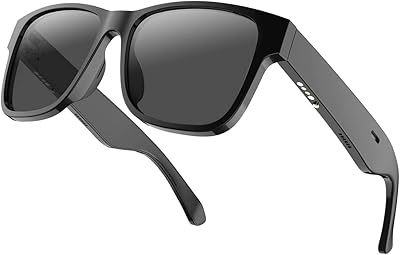
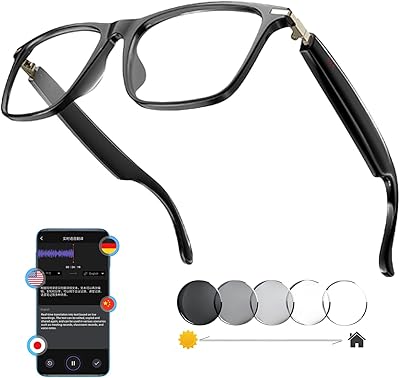
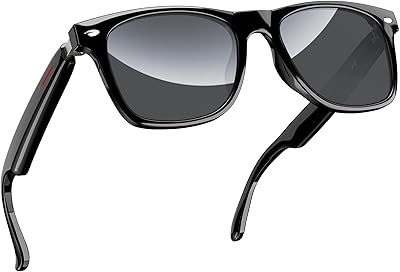
The AIRMARS SG8 Bluetooth Smart Glasses arrived in late 2024 as one of the more interesting budget attempts at the smart eyewear concept — combining photochromic lenses with built-in audio in a single, lightweight frame. At just 43g, these smart glasses sit comfortably for hours without the fatigue you might expect from tech-loaded eyewear. The lenses shift from clear to tinted when you step outside, which is genuinely useful rather than just a selling point. Add IPX4 water resistance and a TR90 temple build, and you have a pair that handles real daily wear — commutes, light rain, afternoon errands — without needing to treat them as something fragile.

Features & Benefits

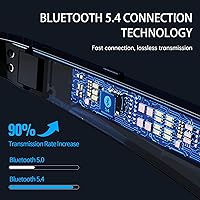
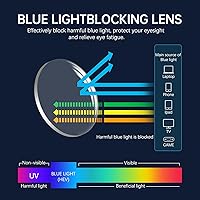
The Bluetooth 5.4 connection pairs quickly and holds steady across iOS, Android, Mac, and PC — and with a claimed range of 10 to 15 meters, you are not tethered to your phone. Temple-mounted controls let you answer calls, skip tracks, or pull up Siri and Google Assistant with a single press. Battery life is a real highlight: up to 8 hours of music playback from a 160mAh cell is respectable for such a slim frame. The photochromic blue light lenses work double duty, filtering screen glare indoors and darkening automatically outdoors, though transition speed can slow noticeably in cold weather — worth knowing if you live somewhere with harsh winters.

Best For

This Bluetooth eyewear hits a specific sweet spot. If you commute by car or bike and want hands-free audio without stuffing earbuds in your ears, it makes a lot of practical sense. Students and remote workers who spend long hours in front of screens will appreciate the passive blue light filtering — it works quietly in the background without needing an app or adjustment. Outdoor hobbyists doing low-intensity activities like golf or casual cycling will find the AIRMARS shades comfortable and functional. They are also a sensible entry point for anyone curious about smart eyewear but not ready to commit to a premium brand's price tag.

User Feedback

Buyers tend to highlight the lens transition speed positively — most find the shift from clear to tinted satisfyingly quick in warm, bright conditions, and the value-for-money angle comes up repeatedly. On the downside, speaker volume gets flagged fairly often; open-ear audio is inherently limited in loud environments, and some users report noticeable sound leakage in quiet spaces. Microphone performance in wind also draws mixed reactions. Fit is another variable — the rectangular frame suits many but not everyone, so face shape matters. Connection stability is generally solid, though a handful of users mention occasional dropout with certain Android devices.

Pros

  • Photochromic lenses shift from clear to tinted automatically, handling both screen work and sunlight in one pair.
  • At just 43g, these smart glasses are light enough to wear all day without discomfort.
  • Bluetooth 5.4 pairs fast and works reliably across iOS, Android, Mac, and PC.
  • Up to 8 hours of music playback is impressive given how slim the frame is.
  • One-touch temple controls make answering calls and skipping tracks genuinely effortless.
  • Blue light filtering works passively — no app, no settings, no effort required.
  • IPX4 resistance handles sweat, light rain, and everyday outdoor conditions without issue.
  • Voice assistant access via Siri or Google is a practical daily convenience for hands-free use.
  • The 240-hour standby means you are not constantly hunting for a charger between uses.
  • For the price, the feature set is difficult to match in the smart eyewear category.

Cons

  • Speaker volume is limited — in noisy environments like traffic or a café, audio gets lost fast.
  • Sound leakage is noticeable in quiet spaces, which makes them awkward on public transport or in offices.
  • Microphone performance in wind is inconsistent, making outdoor calls unreliable in breezy conditions.
  • Lens transition speed drops significantly in cold weather, which frustrates buyers in northern climates.
  • The photochromic tint may not darken enough for intense sunlight at the beach or high altitude.
  • A small number of users report occasional Bluetooth dropout with certain Android devices.
  • The rectangular frame suits many faces but is not adjustable, so fit is hit or miss.
  • No prescription lens option limits the audience to those who do not need vision correction.
  • The 160mAh battery, while adequate, is smaller than what some competing smart glasses offer.

Ratings

The scores below are generated by AI after analyzing verified buyer reviews from global markets, with spam, bot-submitted, and incentivized feedback actively filtered out — so what you see reflects genuine, real-world experience with the AIRMARS SG8 Bluetooth Smart Glasses. Both the strengths and the friction points are weighted transparently, meaning a high score is earned and a low one is honest. These ratings are designed to help you make a smarter buying decision, not to sell you anything.

Value for Money
88%
For a product in this price tier, the combination of photochromic lenses, Bluetooth 5.4, and built-in audio is hard to argue with. Buyers consistently note that they expected much less and were surprised by how much actually works — particularly the lens transition and the stable wireless connection.
A small segment of buyers feel the audio limitations undercut the overall value proposition, since open-ear speakers on budget frames are noticeably weaker than even entry-level earbuds. If audio is your main priority, the value equation shifts.
Lens Performance
83%
The photochromic transition from clear to tinted gets frequent praise, especially from commuters who move between indoor offices and outdoor environments throughout the day. The blue light filtering layer adds genuine utility for screen-heavy users who want passive eye protection without extra gear.
In cold temperatures the transition slows considerably, which frustrates buyers in northern or high-altitude climates who step outside in winter and find the lenses still mostly clear. A handful of users also feel the maximum tint level falls short in very intense midday sunlight.
Audio Quality
58%
42%
For casual listening — podcasts during a morning commute, background music on a bike ride — the temple speakers do the job adequately. Users who set realistic expectations for open-ear audio tend to rate this positively, appreciating the awareness of surrounding sounds while still getting audio.
Volume ceiling is a consistent complaint; in any environment with ambient noise, the speakers simply cannot compete. Bass is minimal and sound leakage at medium-to-high volumes is noticeable in quiet spaces like offices or public transit, which limits practical use scenarios considerably.
Call Quality
61%
39%
In calm, low-noise indoor environments the microphone picks up voice clearly enough for routine calls. Several commuters mention using these successfully for hands-free driving calls, where the controlled cabin environment compensates for the microphone's limitations.
Wind noise is a recurring pain point — outdoor calls in anything above a light breeze result in the other party struggling to hear. Mic sensitivity appears tuned for close-range indoor use, which narrows the real-world call scenarios where these perform reliably.
Comfort & Fit
79%
21%
At 43g the frame is genuinely lightweight and most users report being able to wear these for several hours without any pressure points or fatigue. The TR90 temples are flexible enough to accommodate a range of head sizes without feeling tight.
The fixed rectangular frame does not suit everyone — buyers with narrower or wider-than-average faces mention fit issues that no amount of adjustment can resolve. There is no nose pad customization either, which affects how the glasses sit at different nose bridge heights.
Build Quality
74%
26%
The combination of a PC front frame and TR90 temples gives these a construction that feels more solid than the price suggests. The hinges move smoothly and show no early signs of loosening, which matters for daily put-on and take-off cycles.
Some buyers note that the overall finish has a budget-plastic feel that gives away the price point when held next to mid-range competitors. A few long-term users have reported minor creaking from the temples after several months of regular use.
Battery Life
82%
18%
Eight hours of music playback from a 160mAh cell is a genuine achievement for a frame this slim, and most daily users confirm they rarely run out before the end of the day. The 240-hour standby means leaving them in a bag between uses does not drain the battery unexpectedly.
The 160mAh capacity is smaller than what some rival smart glasses offer, and heavy users who combine frequent calls with continuous music playback may find the 7-8 hour ceiling tighter than it sounds. Battery degradation over many charge cycles is also an open question given the limited track record.
Charging Experience
77%
23%
A roughly 2-hour charge time is fast enough that plugging in during an evening easily prepares the glasses for the next full day. The magnetic or proprietary charging connector is straightforward and buyers rarely report issues with the charging process itself.
The glasses use a proprietary charging cable rather than a standard USB-C connection, which means losing or damaging the cable requires sourcing a replacement specifically for this model. Buyers who travel frequently flag this as a minor but real inconvenience.
Bluetooth Connectivity
81%
19%
Bluetooth 5.4 delivers noticeably fast initial pairing, and most users across both iOS and Android report a stable connection throughout daily use. Multi-device compatibility — including Mac and Windows laptops — is appreciated by buyers who switch between phone and computer throughout the day.
A recurring minority complaint involves occasional dropout specifically on certain Android devices, though it is not a widespread issue. Re-pairing after a dropout is generally quick, but the inconsistency across Android brands suggests some firmware variability that AIRMARS has not fully ironed out.
Ease of Use
86%
One-touch temple controls are intuitive from the first use — answering calls, adjusting volume, and triggering a voice assistant all work without consulting any manual. Buyers who dislike fiddling with small touchpads on competing products specifically mention appreciating the physical button approach here.
There is no companion app, which means no equalizer adjustment, no battery percentage display, and no firmware update pathway that users are aware of. For a tech product, the lack of any software layer feels like a missed opportunity even at this price point.
Water Resistance
78%
22%
IPX4 performs as advertised for the use cases most buyers describe: sweaty gym sessions, light drizzle on a bike ride, and outdoor sports in humid conditions. Users who previously avoided wearing electronics outdoors note that these hold up without any special treatment.
IPX4 is splash resistance, not waterproofing, and a handful of buyers have discovered this distinction the hard way after getting caught in heavy rain. The rating is appropriate for the product's intended use but can be misread as broader protection than it actually provides.
Voice Assistant Access
75%
25%
The ability to summon Siri or Google Assistant without touching a phone is genuinely useful during driving or cycling, and most users confirm the activation is responsive. For quick queries, setting reminders, or sending messages hands-free, the feature works reliably in quiet conditions.
In noisy outdoor environments the voice assistant struggles with the same microphone limitations that affect call quality — wind and ambient noise interfere with accurate command recognition. This reduces the practical usefulness of voice control to calmer settings rather than the active outdoor scenarios where it would be most valuable.
Lens Glare & UV Protection
71%
29%
The polarized coating does a solid job cutting road glare for driving and water surface reflections for outdoor activities, which goes beyond what basic tinted lenses offer. Several cycling users specifically mention improved comfort on long rides compared to non-polarized alternatives.
At peak tint, the lenses do not reach the darkness level of dedicated sport sunglasses, which limits their usefulness in extremely bright alpine or beach conditions. Buyers expecting full sun performance comparable to purpose-built polarized sunglasses may find the maximum tint underwhelming.
Sound Leakage
47%
53%
At low volume levels, sound leakage is minimal enough that nearby listeners are unlikely to be disturbed, which makes quiet background listening in semi-private spaces workable. Users who keep volume below roughly half report few complaints from those around them.
Open-ear temple speaker design makes significant sound leakage at higher volumes essentially unavoidable — this is a category-wide limitation, not a specific flaw. In shared or public spaces the leakage becomes a real social problem, and buyers who were not aware of this characteristic in advance frequently express disappointment.

Suitable for:

The AIRMARS SG8 Bluetooth Smart Glasses are a genuinely good fit for a specific kind of buyer: someone who wants connected audio and eye protection in one lightweight package without spending a lot. Commuters and drivers are an obvious match — you keep your ears open to traffic while still taking calls or listening to podcasts, and the one-touch controls mean you never need to fish for your phone. Students and remote workers who spend long hours in front of screens will find the passive blue light filtering useful, since it requires zero setup and works automatically. Outdoor hobbyists doing casual cycling, golfing, or hiking also benefit, since the IPX4 rating handles sweat and light rain without drama. If you have been curious about smart eyewear but find premium-brand prices hard to justify, these are a low-risk way to find out whether the concept actually fits your lifestyle.

Not suitable for:

The AIRMARS SG8 Bluetooth Smart Glasses are not the right choice for buyers who prioritize audio quality above everything else. Open-ear temple speakers are a practical convenience tool, not a replacement for proper headphones or earbuds — bass is minimal, volume has a ceiling, and in noisy environments like busy streets or gyms, you will hear more ambient noise than music. People who need dependable outdoor sun protection in intense midday heat or high-altitude glare may find the photochromic tint does not darken enough for their needs, and cold-climate users should know that low temperatures slow the lens transition noticeably. If you need prescription lenses, these are not compatible. Buyers who make long outdoor calls in windy conditions will likely find the microphone frustrating, based on consistent feedback patterns. And if you have an unusually narrow or wide face, the fixed rectangular frame may not sit comfortably.

Specifications

  • Model Number: The official model identifier for this product is AIRMARS-SG8.
  • Bluetooth Version: These smart glasses use Bluetooth 5.4, offering faster transfer rates and more stable connectivity than previous generations.
  • Wireless Range: The stated transmission range is 10 to 15 meters under typical open-space conditions.
  • Compatible Devices: The glasses connect to iOS and Android smartphones, as well as macOS and Windows computers.
  • Battery Capacity: A 160mAh lithium polymer cell is built into the frame, running at 3.7V.
  • Talk Time: The battery supports up to 7 hours of continuous phone call use on a single charge.
  • Music Playback: Music can be played for up to 8 hours before the battery requires recharging.
  • Standby Time: When idle, the glasses can remain on standby for up to 240 hours.
  • Charge Time: A full charge from empty takes approximately 2 hours via the included charging cable.
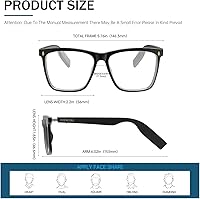
  • Frame Weight: The complete frame weighs 43g, making it one of the lighter options in the smart eyewear category.
  • Frame Materials: The front frame is constructed from PC (polycarbonate) and the temples are made from flexible TR90 material.
  • Lens Type: Lenses are photochromic with integrated blue light filtering and polarization for combined indoor and outdoor protection.
  • Water Resistance: The glasses carry an IPX4 rating, meaning they can withstand splashing water and sweat from any direction.
  • Frame Shape: The lens shape is rectangular, designed to suit a broad range of face structures.
  • Voice Assistants: Both Siri (Apple) and Google Assistant are accessible via a single button press on the temple controls.
  • Controls: One-touch physical buttons on the temples handle call answering, music play and pause, volume adjustment, and voice assistant activation.
  • GPS: These glasses do not include any built-in GPS functionality.
  • Warranty: AIRMARS provides a one-year after-sales warranty covering compatibility and manufacturing issues, with support available via email.

Related Reviews
Smart Bluetooth Glasses GS038
85%
88%
Comfort & Wearability
82%
Sound Quality
86%
Battery Life
83%
Build Quality
70%
Connectivity Stability
More
XO GS01 Bluetooth Audio Sunglasses
72%
88%
Value for Money
61%
Audio Quality
43%
Sound Leakage
67%
Battery Life
82%
Comfort & Fit
More
KONLEYA J6-5 Bluetooth Smart Glasses
66%
71%
Audio Quality
44%
Audio Leakage
68%
Battery Life
66%
Comfort & Fit
58%
Build Quality
More
Smart Bluetooth Audio Glasses G05-T3
84%
89%
Hands-Free Calling Performance
92%
Bluetooth Connectivity
74%
Sound Quality
78%
Comfort & Fit
85%
Battery Life
More
E10-C Smart Glasses Bluetooth Sunglasses
84%
88%
Comfort and Fit
91%
Battery Life
72%
Sound Quality
85%
Ease of Use
80%
Build Quality
More
GenXenon GS07 Bluetooth Audio Smart Glasses
84%
88%
Bluetooth Audio Quality
76%
Battery Life
91%
Comfort & Fit
89%
Hands-Free Functionality
82%
Waterproof Durability
More
RUIMEN Bluetooth Audio Smart Glasses AJ01
81%
83%
Audio Quality
89%
Comfort and Fit
78%
Battery Life
85%
Water Resistance
74%
Voice Control Functionality
More
MNVOEQ T6 AI Bluetooth Translation Smart Glasses
69%
67%
Translation Accuracy
61%
Audio Quality
53%
Battery Life
79%
Comfort & Fit
72%
Lens Quality
More
Delhi Tornado KY01B Smart Glasses with AI Translation and Bluetooth Audio
81%
88%
Translation Accuracy
84%
Audio Quality
72%
Bluetooth Connectivity
79%
Battery Life
85%
Build Quality
More
Blackview Open-Ear Bluetooth Smart Sunglasses
76%
88%
Value for Money
83%
Comfort & Fit
61%
Audio Quality
79%
Call Clarity
86%
Bluetooth Connectivity
More

FAQ

Turn the glasses on by holding the power button until you see or hear a pairing signal, then open Bluetooth settings on your phone and select the AIRMARS device from the list. The connection usually completes within a few seconds. Once paired, they should reconnect automatically each time you turn them on within range of your phone.

The lenses do include a genuine blue light filtering coating, which is built into the photochromic lens material. That said, like most passive blue light filters at this price tier, the reduction is partial rather than total — you will likely notice less eye strain after long screen sessions, but it is not the same as a clinical-grade filter.

In warm, bright conditions most users find the transition takes around 20 to 30 seconds. One important caveat: cold temperatures slow the photochromic reaction noticeably, so if you are in a winter climate, the lenses may take a minute or longer to fully darken when you step outside.

Yes, calls are handled through the built-in microphone and temple speakers. The microphone performs adequately in calm indoor or low-wind outdoor settings, but in gusty conditions the wind noise can make it harder for the other person to hear you clearly. For occasional calls while commuting or driving, it works well enough; for frequent or important calls outdoors, results can be inconsistent.

Probably yes, if the volume is turned up. Open-ear temple speakers direct sound outward as well as inward, so there is noticeable sound leakage at medium to high volumes. In quiet environments like offices or trains, people nearby will likely hear what you are listening to. Best to use them at lower volumes in shared spaces.

No, these are not designed to accept prescription inserts or replacement lenses. If you require vision correction, these will not work as your primary eyewear unless you wear contact lenses underneath.

IPX4 covers splashing and sweat from any direction, so light rain and exercise are both fine. You should not submerge them or wear them in heavy rain or in a swimming pool — the rating is splash-resistant, not waterproof. For cycling in light showers or a gym workout, they hold up well.

The 8-hour music playback and 7-hour call time figures are measured under controlled conditions, so real-world use will vary depending on volume level and Bluetooth activity. Most users find they comfortably last a full workday of mixed use — some background music, occasional calls — before needing a top-up. The 2-hour charge time is quick enough that an evening charge keeps them ready for the next day.

They pair with any Bluetooth-enabled device including laptops running macOS or Windows and tablets running Android or iOS. The connection experience is the same as with a phone — fast pairing, stable range up to around 10 to 15 meters.

First try forgetting the device in your phone's Bluetooth settings and re-pairing from scratch. If that does not work, make sure your phone's Bluetooth stack is not running too many simultaneous connections, as some Android devices limit active pairings. A small number of users have noted occasional dropout with specific Android models, so if problems persist, contacting AIRMARS support directly is the recommended next step — they offer email-based troubleshooting under the one-year warranty.