Overview

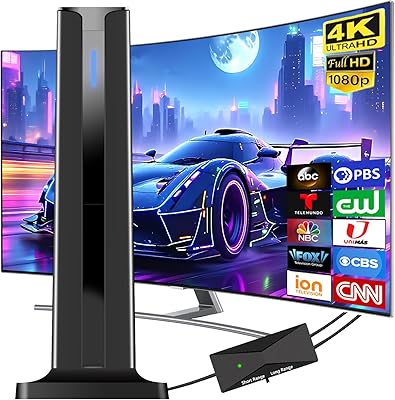
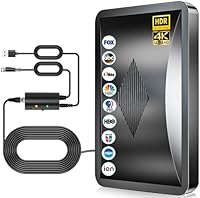
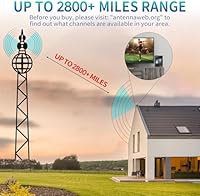
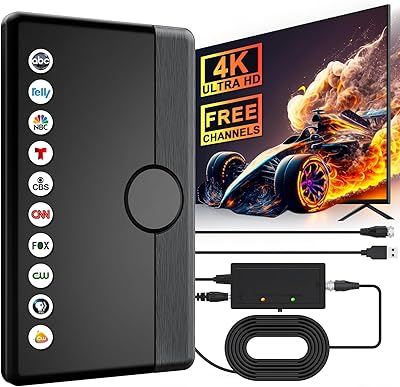
The Qellaff 2025 Indoor/Outdoor Digital TV Antenna enters a crowded market with a straightforward pitch: ditch the cable bill and pull in free over-the-air channels without a monthly subscription. It ships with a 38-foot thick coaxial cable, which gives you real flexibility in where you place it — window, attic, or even an RV roof. The 2025 Smart IC Chip is the headline upgrade, promising better interference rejection than older amplified antennas at this price tier. That said, the advertised 2800-plus miles range is a marketing figure, not a real-world guarantee — most users will see solid results within 50 to 70 miles of broadcast towers.
Features & Benefits

The Smart IC Chip amplifier is the core of what makes this OTA antenna stand apart from passive options. It actively filters out cellular and FM interference, which in practice means fewer pixelated freeze frames on your local NBC or CBS feed. The antenna handles everything from 720p up to 4K HDR, so it won't bottleneck a modern television. That 38-foot cable matters more than most people expect — it lets you experiment with placement without being stuck near the TV. One technical note worth flagging: this antenna runs at 90-ohm impedance rather than the more common 75-ohm standard, though most modern TVs handle this without any noticeable issue. Mounting options include adhesive strips, wall brackets, and cable ties.

Best For

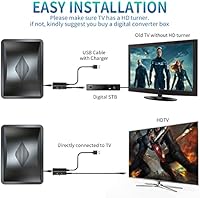
This indoor/outdoor antenna is a strong fit for suburban and rural households sitting within a reasonable distance of their nearest broadcast towers — think 30 to 60 miles — who want free access to ABC, NBC, CBS, Fox, and PBS without a recurring bill. RV users and renters benefit especially, since the flexible mounting and long cable allow easy setup without drilling or permanent changes. It also works well for anyone who finds antenna tech intimidating; the three-step installation is about as approachable as it gets. If your home has an awkward layout where the living room sits far from the best signal window, the long cable run solves that cleanly.

User Feedback

Buyers consistently praise how quickly they get up and running — most report pulling in a dozen or more local channels within minutes of first plugging in. The generous cable length earns particular appreciation from people in larger homes. Where opinions split is on the range claims: shoppers near metro areas tend to be satisfied, while those in genuinely remote locations pull fewer channels than the box implies, which is predictable given how OTA signals actually behave. A handful of reviewers note that connector build quality feels a bit light for permanent outdoor exposure. Customer service response seems reasonably prompt, though long-term durability data remains thin given how recently this model launched.

Pros

  • Pulls in ABC, CBS, NBC, Fox, and PBS cleanly for households within 60 miles of broadcast towers.
  • The 38-foot coaxial cable is one of the longest included in this category, solving awkward room layouts.
  • Setup takes under ten minutes with no apps, accounts, or technical knowledge required.
  • The 2025 amplifier chip filters LTE and FM interference better than older budget-tier antennas.
  • Works indoors and outdoors, giving you real flexibility to find the strongest signal spot.
  • Compatible with virtually every modern smart TV via standard coaxial input — no adapters needed.
  • Lightweight and compact enough to pack into an RV or take to a vacation property.
  • Supports 4K and 1080p signal formats, so picture quality is strong when reception is stable.
  • Multiple mounting styles — adhesive, wall bracket, cable ties — suit renters and homeowners alike.

Cons

  • The advertised range is a theoretical ceiling; real-world performance drops sharply past 60 to 70 miles.
  • Channel count varies widely by location — rural buyers often receive far fewer stations than expected.
  • Connector quality feels underbuilt relative to the cable body, especially for frequent repositioning.
  • Adhesive mounting strips lose grip on textured surfaces and in cold or humid outdoor conditions.
  • No published IP or weatherproofing rating makes confident long-term outdoor use difficult to plan for.
  • The 90-ohm impedance differs from the 75-ohm standard, which can matter with older AV equipment.
  • Amplifier over-drive in strong-signal urban areas occasionally causes reception issues rather than improvements.
  • Customer support quality is inconsistent — some users get useful advice, others receive generic responses.
  • Long-term durability data is thin since the product only launched in late 2025.

Ratings

The Qellaff 2025 Indoor/Outdoor Digital TV Antenna has been scored below using AI analysis of verified global buyer reviews, with spam, bot-generated, and incentivized feedback actively filtered out. Scores reflect the honest consensus of real users — suburban cord-cutters, RV travelers, and apartment dwellers alike — and do not shy away from the friction points as much as the genuine wins. Both sides of the ownership experience are represented transparently.
Signal Reception Quality
73%
27%
Users within 40 to 60 miles of broadcast towers consistently report pulling in major network channels with stable, clear pictures. The 2025 amplifier chip makes a noticeable difference compared to older passive antennas, especially in homes with some wall obstruction between the antenna and the window.
Reception drops significantly beyond 60 miles regardless of the marketed range figure, and buyers in hilly or heavily wooded areas report frustrating signal dropouts even on strong network stations. Rescanning channels after every repositioning attempt adds friction that some users did not anticipate.
Ease of Installation
91%
The setup process genuinely takes under ten minutes for most people, and the three-step approach is clear enough that non-technical users — including older adults setting this up solo — rarely need outside help. The adhesive backing and included mounting hardware mean you do not need a single tool.
A few buyers found the included instructions thin on troubleshooting guidance, particularly around optimal antenna positioning when initial scans come up short. The cable management options are basic, and routing 38 feet of coax neatly through a living space takes a bit of planning.
Cable Length and Quality
86%
Thirty-eight feet of coaxial cable is genuinely generous for this price tier, and users in larger homes consistently call it out as the feature that made the difference — letting them place the antenna near a window far from the TV. The cable feels noticeably thicker and sturdier than what ships with many competing antennas.
The connectors at each end feel slightly undersized relative to the cable body, and a handful of reviewers noted looseness at the TV input after several repositioning cycles. For permanent outdoor runs, the connector quality may become a concern over time as weather exposure takes its toll.
Build Quality and Durability
62%
38%
The antenna housing is compact and tidy, and for indoor use it holds up well sitting on a windowsill or stuck to a wall. The overall fit and finish is acceptable for the mid-range price point, and nothing about it feels dangerously fragile under normal handling.
Long-term outdoor durability is a real question mark given how recently this model launched. Several buyers who mounted it on a roof or exterior wall reported that the housing shows wear faster than expected, and the adhesive strips lose grip in humid or cold conditions, requiring additional fastening.
Channel Count and Variety
69%
31%
In metro and suburban markets, users routinely pick up all major networks — ABC, CBS, NBC, Fox, PBS — plus a solid selection of secondary subchannels covering news, weather, and Spanish-language programming. For households replacing a basic cable package, the free channel haul is meaningful.
The advertised channel count of 2000 is a theoretical ceiling that essentially no one reaches in practice. Rural buyers are often disappointed to find only 6 to 12 stable channels, and the gap between the marketing claims and real-world results in lower-density areas generates consistent frustration in reviews.
Amplifier Performance
74%
26%
The Smart IC Chip does a credible job rejecting FM and LTE interference, which tends to be the main culprit behind pixelation on amplified antennas in urban areas. Users near cell towers noticed fewer breakups than with previous antennas they had owned.
The amplifier cannot overcome line-of-sight limitations or extreme distance — physics still wins. A few users also noted that in areas with very strong signals, the amplifier occasionally over-drove reception and caused issues that went away only after bypassing it or reducing gain.
4K and HD Picture Quality
83%
When the signal locks in cleanly, the picture quality through this OTA antenna is genuinely impressive on a modern 4K television. Local news and sports broadcast in 1080i look noticeably crisper than the same content streamed through a compressed internet feed.
Picture quality is entirely dependent on signal stability, so the highs are high but the lows — pixelation, freezing, or complete signal loss during bad weather — can feel jarring by contrast. Users expecting consistently flawless 4K output in fringe reception areas will come away disappointed.
Outdoor Weather Resistance
57%
43%
The antenna can handle moderate weather when properly secured, and users in dry climates who mounted it on a covered porch report it holding up reasonably well over several months of use. The thick cable jacket adds some protection against UV degradation compared to thinner-cabled competitors.
There is no IP rating published for this antenna, which makes it hard to set confident expectations for rain or snow exposure. Buyers in wetter climates have flagged performance degradation and housing discoloration after extended outdoor exposure, suggesting it is better treated as a semi-protected outdoor option than a fully weatherproof one.
Value for Money
78%
22%
Measured against what a comparable amplified antenna with a long cable costs at retail, the pricing sits in a fair zone. For users who successfully cut the cord and replace even a basic cable tier, the antenna pays for itself quickly in saved monthly fees.
The value calculation changes for buyers in poor reception zones who end up pulling fewer channels than expected — at that point, the effective cost-per-channel received starts to look less competitive. Spending more on a directional or multi-directional rooftop antenna may serve fringe-area buyers better.
Mounting Versatility
81%
19%
The variety of mounting options — adhesive pads, wall bracket holes, and cable tie slots — genuinely accommodates a wide range of living situations without requiring drilling. RV owners and apartment renters especially appreciate being able to install and remove it without leaving marks.
The adhesive pads included are functional but not particularly strong, and some users found them inadequate for textured walls or surfaces that see temperature swings. The wall mount hardware is minimal, and buyers wanting a more secure permanent installation often supplement it with their own fasteners.
Compatibility with Smart TVs
88%
This OTA antenna connects to any television with a coaxial input, which covers virtually every smart TV sold in the past decade. Users report it working cleanly with major brands across the board, with no additional adapters or settings adjustments needed beyond running a standard channel scan.
The 90-ohm impedance is a slight departure from the 75-ohm standard used by most TV tuners, and while the vast majority of sets handle this without issue, it is a spec worth flagging for anyone using the antenna with older or specialty AV equipment where impedance matching matters.
Portability and Flexibility
85%
At just over a pound and with a compact footprint, this indoor/outdoor antenna is easy to pack into an RV, bring to a vacation home, or reposition around a house during testing. The long cable means you can try multiple spots without unplugging from the TV repeatedly.
The 38-foot cable, while useful, becomes unwieldy when you are actively moving the antenna around to find the best signal spot indoors. It is long enough to be hard to manage during experimentation but may still fall short for certain attic or rooftop placements in taller homes.
Customer Support Experience
66%
34%
Several buyers who reached out about installation issues or poor channel reception reported getting a response within a reasonable window, and Qellaff appears to engage with negative reviews on the platform. The 24-hour support claim seems at least partially backed up by actual buyer accounts.
The quality of support responses varies — some users report receiving genuinely helpful placement advice, while others describe generic troubleshooting scripts that did not address their specific situation. Resolution of hardware defects reportedly takes longer than the initial response time suggests.
Setup Speed
92%
From opening the box to watching live broadcast TV, most users report being up and running in five to eight minutes. The plug-and-play nature means there is no app to configure, no account to create, and no pairing process — the TV does all the work during a standard channel scan.
Users who do not get great results on the first scan often underestimate how much antenna position matters, and iterating through placements to maximize channel count can turn a quick setup into a longer trial-and-error process — particularly in houses where the best signal spot is not obvious.

Suitable for:

The Qellaff 2025 Indoor/Outdoor Digital TV Antenna is a practical choice for suburban and semi-rural households sitting within roughly 40 to 60 miles of their nearest broadcast towers who want to stop paying for basic cable. If your viewing habits revolve around local news, network primetime, sports on ABC or Fox, and public broadcasting, this OTA antenna covers that territory without a recurring bill. Renters and apartment dwellers who cannot install a permanent rooftop dish benefit from its flexible adhesive and cable-tie mounting, which leaves no lasting marks. RV owners will appreciate the compact footprint and the 38-foot cable, which gives enough reach to experiment with placement on different sides of a vehicle. It also works well for older adults or anyone who dreads complicated tech setups — the channel-scanning process is handled entirely by the TV itself once the coax is plugged in.
Not suitable for:

The Qellaff 2025 Indoor/Outdoor Digital TV Antenna is not the right call for anyone living more than 60 to 70 miles from broadcast towers, regardless of what the packaging implies about range. The 2800-plus miles figure is a marketing number, not an engineering specification — buyers in genuinely remote or mountainous areas will likely pull in a handful of channels at best and should look at a dedicated outdoor directional antenna instead. If you need reliable reception through dense foliage, multiple thick walls, or in a basement with no cable routing to an exterior wall, this antenna will struggle consistently. Anyone planning a fully permanent outdoor installation in a high-rain or high-humidity climate should also pause — the housing and connectors are not rated for harsh weatherproofing, and long-term durability data is limited given how recently this model launched. Finally, if you are already close to towers and own a strong passive antenna, the amplifier here may not offer a meaningful upgrade worth the switch.
Specifications

  • Brand: Manufactured by Qellaff, a brand focused on consumer antenna products.
  • Model Year: This antenna features a 2025 hardware revision with an updated Smart IC Chip amplifier.
  • Antenna Type: Amplified omnidirectional digital TV antenna designed for both indoor and outdoor installation.
  • Dimensions: The antenna housing measures 8.26 x 5.9 x 1.37 inches, keeping the footprint compact and unobtrusive.
  • Weight: The complete unit weighs 1.28 pounds, making it light enough for easy repositioning or travel.
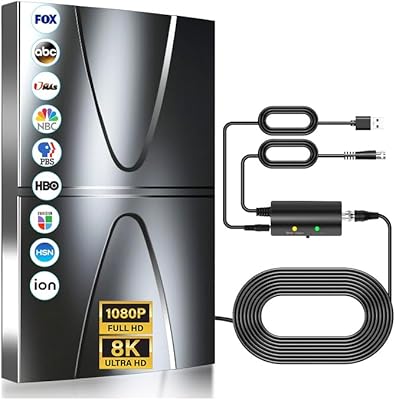
  • Coaxial Cable: Includes 38 feet of thick coaxial cable, providing generous reach between the antenna placement and your television.
  • Impedance: Rated at 90 ohms, which differs slightly from the 75-ohm standard used by most televisions — though compatibility issues are rare with modern sets.
  • Signal Formats: Supports 720p, 1080i, 1080p, 2K, and 4K HDR broadcast formats for broad television compatibility.
  • Amplifier: Built-in Smart IC Chip signal booster actively filters LTE and FM interference to improve channel stability and reception gain.
  • Reception Pattern: Omnidirectional 360-degree design picks up signals from multiple directions without requiring manual aiming.
  • Mounting Options: Can be mounted using included adhesive strips, wall-mount hardware, or cable ties — no drilling required for basic installation.
  • Compatible Locations: Suitable for use indoors, outdoors, in attics, on rooftops, and inside RVs or other vehicles.
  • Channel Capacity: Specified to support up to 2000 channels, though actual channel count depends entirely on local broadcast tower availability.
  • Broadcast Networks: Capable of receiving free over-the-air signals from ABC, CBS, NBC, Fox, PBS, Univision, and available local subchannels.
  • Availability: First listed for sale in August 2025, making long-term durability data still limited at this stage.
  • Market Ranking: Holds a Best Sellers Rank of number 49 in the TV Antennas category on Amazon as of its review period.
  • Customer Support: Qellaff offers customer service contact with a stated response target of within 24 hours.
  • Items Included: Package contains one antenna unit, one 38-foot coaxial cable, mounting accessories, and adhesive strips.

Related Reviews
iGENJUN ANT-CS8218 Amplified Indoor Outdoor TV Antenna
72%
73%
Signal Reception Quality
67%
Amplifier Performance
88%
Ease of Installation
48%
Range Accuracy vs. Claimed Specs
71%
Build Quality & Materials
More
BEFORE 150-Mile Motorized Outdoor TV Antenna
70%
71%
Signal Reception
74%
Motorized Rotation
58%
Build Quality & Durability
66%
Ease of Installation
83%
Dual TV Output
More
Vragey HD012 Indoor/Outdoor TV Antenna
70%
71%
Signal Reception Quality
88%
Ease of Setup
63%
Amplifier Performance
34%
Range Accuracy vs. Marketing Claims
67%
Build Quality & Durability
More
DTVSMARTSHOW DT013 Indoor TV Antenna
79%
93%
Ease of Setup
71%
Signal Reception Quality
66%
Channel Count
88%
Value for Money
69%
Build Quality
More
Yirkais BJ001 Indoor Outdoor TV Antenna
73%
71%
Signal Reception Quality
63%
Amplifier Performance
93%
Ease of Setup
84%
Placement Flexibility
78%
4K and HD Signal Clarity
More
UltraPro Outdoor 70-Mile HD TV Antenna
76%
73%
Signal Reception
61%
Range Accuracy
82%
Installation Ease
78%
Build Quality
81%
Weather Resistance
More
GE 29884 Outdoor Long-Range TV Antenna
79%
83%
Signal Reception Strength
88%
Ease of Installation
86%
Build Quality & Durability
79%
Channel Count & Variety
84%
Value for Money
More
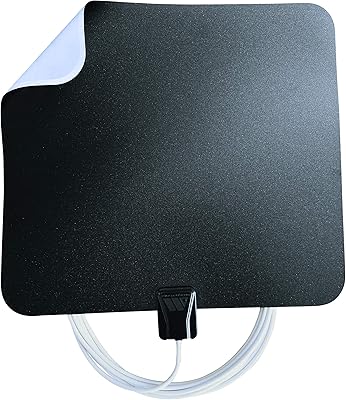
Winegard FL5500A FlatWave Amped Digital HD Indoor TV Antenna
86%
88%
Signal Reception
91%
Ease of Setup
90%
Value for Money
84%
Range Performance
87%
Build Quality
More
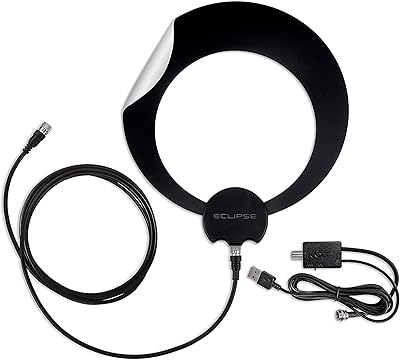
Antennas Direct ClearStream Eclipse Indoor TV Antenna
77%
74%
Signal Reception
67%
Amplifier Performance
93%
Design & Profile
91%
Ease of Setup
62%
Cable Length
More
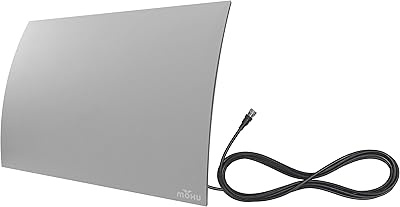
Mohu Gateway Indoor TV Antenna
86%
87%
Signal Reception
92%
Setup and Installation
89%
Design and Aesthetics
90%
Value for Money
84%
Durability and Build Quality
More

FAQ

That depends almost entirely on where you live relative to broadcast towers. In a suburban area within 40 to 60 miles of a major market, pulling in 20 to 40 channels is realistic. In a rural location farther out, you might see 6 to 15. The easiest way to check your specific situation before buying is to enter your address at a free site like AntennaWeb or TVFool, which show you exactly which towers are within reach.

No — that figure is a marketing number, not a realistic performance specification. No consumer-grade amplified antenna can pull reliable signals from thousands of miles. In practice, this OTA antenna performs well within about 40 to 70 miles of broadcast towers under good conditions. Treat the range claim as a competitive marketing label, not a technical guarantee.

Yes, as long as your TV has a coaxial input — which virtually every smart TV sold in the past decade does. Just plug in the cable, go to your TV settings, and run a channel scan. No apps, accounts, or special settings are needed. The antenna does all its work at the hardware level.

It can handle outdoor installation, but with some caveats. There is no published IP weatherproofing rating for this unit, so it is not designed to withstand heavy rain or prolonged moisture exposure the way a purpose-built outdoor antenna would be. For a covered porch, attic vent, or sheltered rooftop spot in a dry climate, it is generally fine. For fully exposed year-round outdoor use in a rainy region, a dedicated weatherproof outdoor antenna would serve you better long-term.

Antenna placement makes a bigger difference than most people expect. Try moving it to a window facing the direction of your nearest broadcast towers — even a few feet can change results dramatically. Higher is usually better, so an attic placement often outperforms a living room window. Most importantly, run a fresh channel scan every time you reposition it, because the TV will not automatically update its channel list after a move.

If your TV was made in the last 15 years and has a built-in digital tuner, yes. If you have a very old analog-only television, you would need a separate digital converter box between the antenna and the TV. Most households will not run into this issue, but it is worth checking if your set is more than 15 years old.

For the overwhelming majority of modern TVs, no — the slight impedance mismatch causes no noticeable signal degradation in real-world use. It is a spec worth knowing about if you are using older or specialty AV equipment that is more sensitive to impedance matching, but for a typical home television setup it is not a practical concern.

Yes, and this is actually one of the stronger use cases for it. The compact size, tool-free mounting options, and 38-foot cable give you flexibility to position it wherever reception is best at each campsite or parking spot. Just keep in mind that channel availability will change with every location, so you will need to rescan channels each time you set up somewhere new.

None at all. Over-the-air TV is completely free — the antenna picks up broadcast signals directly from local towers, the same way rabbit ears did decades ago, just with far better technology. No internet, no streaming account, no subscription of any kind is involved.

Qellaff offers customer support with a stated 24-hour response target. User experiences with their support team are mixed — some buyers report receiving genuinely useful placement advice, while others describe fairly generic troubleshooting responses. If you run into persistent reception issues, it is also worth checking community forums dedicated to cord-cutting, where experienced users often diagnose antenna problems faster than any brand support line.