Overview

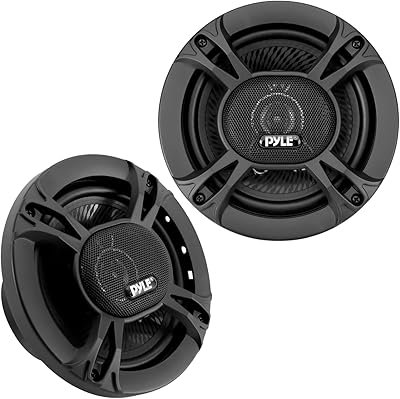
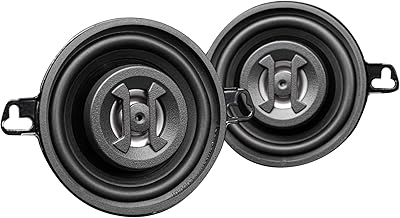
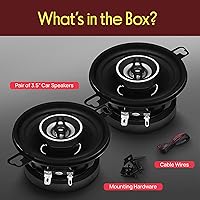
The Pyle PL31BK 3.5-inch Car Coaxial Speakers are a no-frills, budget-conscious replacement aimed squarely at drivers whose factory door speakers have finally given up. Pyle has long occupied the entry-level audio space, and this pair fits that reputation — accessible, widely stocked, and priced for practicality over performance. The box includes both speakers, wiring, and mounting hardware, so you are not hunting for extra parts before getting started. Beyond cars, they are compatible with boats, motorcycles, and RVs too. Just set expectations accordingly: honest everyday listening is the goal here, not audiophile-grade output from a premium system.
Features & Benefits

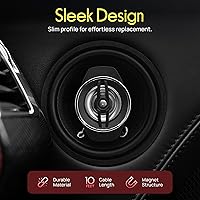
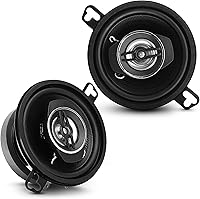
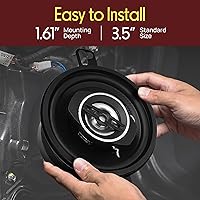
This speaker pair runs on a 4-ohm impedance that plays nicely with virtually any factory or aftermarket head unit — no external amplifier required. Power handling sits at 60W RMS, with a 120W peak figure reflecting momentary bursts rather than sustained output, so keep that distinction in mind. The poly injection cone woofer handles mid and low frequencies, while a 1-inch neodymium dome tweeter manages the high end. A butyl rubber surround keeps resonance in check and holds up better over time than foam alternatives. At just 1.61 inches deep, these fit door cavities where bulkier speakers simply will not go. Sensitivity at 88 dB is adequate for stock radio setups.

Best For

This speaker pair makes the most sense for someone replacing completely dead or blown factory speakers who just needs working audio again. If your old door speakers crackle, distort, or have quit entirely, the PL31BK set gets the job done without a complicated install. Everything you need is in the box, which makes it particularly appealing for DIY installers who would rather spend an afternoon swapping speakers than a weekend chasing down missing parts. These also work well in secondary vehicles — a fishing boat, a camper, a weekend motorcycle — where functional sound matters more than a refined listening experience. Always verify your cutout dimensions before ordering.

User Feedback

Buyers who install these Pyle coaxial speakers on a stock head unit tend to walk away satisfied, particularly when replacing completely failed OEM speakers — the improvement is immediately noticeable. Easy installation comes up repeatedly in reviews, and most find the included hardware genuinely useful rather than an afterthought. On the downside, bass response is thin; do not expect much below the midrange, and the overall volume ceiling is modest. A handful of buyers hit fitment issues, finding their vehicle's opening needed adapter rings not included in the box. Build quality feels light, but the materials hold up reasonably well for daily commuter use.

Pros

  • Noticeable and immediate improvement over blown or crackling factory door speakers
  • Everything needed for installation comes in the box — wires, hardware, no extra shopping required
  • The 1.61-inch mounting depth fits tight door cavities that reject most standard speakers
  • Works with any stock head unit thanks to standard 4-ohm impedance — no amplifier needed
  • Butyl rubber surround holds up better over time than foam alternatives in hot vehicle interiors
  • Midrange and vocal clarity is solid for podcasts, talk radio, and acoustic music
  • Compatible with boats, RVs, and motorcycles — not just cars
  • Tweeter avoids the harsh, fatiguing edge common in cheap budget-tier competitors
  • Shallow, compact form factor blends cleanly into door panels without looking out of place

Cons

  • Bass response is noticeably thin — low-end frequencies lack body even at moderate volume
  • Volume ceiling is limited; pushing the head unit past roughly 75 percent introduces distortion
  • Build materials feel lightweight and plastic-forward, which raises questions about long-term durability
  • Some vehicle models require adapter rings for proper fitment, and none are included in the box
  • Minor rattling reported at higher volumes, suggesting loose tolerances in the cone assembly
  • High-frequency output can become slightly brittle on compressed streaming audio at louder levels
  • Short wiring leads complicate cleaner or longer-run installations in larger vehicles
  • Not a practical standalone solution for bass-forward music genres without a separate subwoofer
  • Long-term durability data is thin, and hot-climate users report earlier-than-expected wear

Ratings

The Pyle PL31BK 3.5-inch Car Coaxial Speakers were evaluated using AI-driven analysis of verified global buyer reviews, with spam, bot-generated, and incentivized feedback actively filtered out to ensure accuracy. The scores below reflect real ownership experiences across a wide range of vehicles and use cases, from daily commuter cars to weekend RVs. Both the genuine strengths and the recurring frustrations are represented transparently, so you can make an informed decision before buying.
Value for Money
83%
For buyers replacing completely dead factory speakers, the price-to-improvement ratio is hard to argue with. Most users on a tight budget report feeling like they got more than they paid for, especially when the alternative was silence or constant crackling on the commute to work.
Buyers who have previously owned mid-range aftermarket speakers tend to feel the gap more acutely — the performance simply does not compete at a higher level. A few users felt the total package was acceptable but not exceptional even within its price tier.
Sound Quality
61%
39%
Clarity in the midrange and high frequencies is genuinely decent for an entry-level two-way coaxial design. Voices, guitars, and higher-frequency instruments come through cleanly enough to make daily listening — podcasts, talk radio, casual music — noticeably more enjoyable than blown OEM speakers.
Low-end response is the most consistent complaint across user feedback. Bass feels thin and lacks body, and even moderate bass-heavy genres like hip-hop or EDM expose the limitations quickly. This speaker pair is not designed to satisfy anyone who prioritizes a full, warm sound signature.
Bass Response
44%
56%
At the very low end of expectation, the woofer manages to reproduce some mid-bass presence, which is enough for spoken word content or acoustic music without sounding completely hollow. Users who primarily listen to news, podcasts, or classical music are least affected by this limitation.
This is the weakest dimension of the PL31BK set. Without a subwoofer to fill in the low frequencies, the sound can feel noticeably thin. Multiple users specifically flagged that these speakers struggle below roughly 80 Hz, making them a poor standalone choice for bass-forward listening.
Ease of Installation
88%
The shallow 1.61-inch mounting depth was frequently praised by DIY installers who had struggled to fit bulkier speakers into tight door panels. The included wiring and mounting hardware genuinely cover what most installs need, and the 4-ohm impedance means direct compatibility with virtually any stock head unit.
A recurring issue involves fitment on certain vehicle models where the speaker opening does not match perfectly without adapter rings, which are not included. Users who encountered this had to source additional hardware separately, adding friction to what was otherwise a straightforward install.
Build Quality
58%
42%
The butyl rubber surround is a legitimate positive — it holds up better over time than foam surrounds and resists temperature-related degradation, which matters in a car environment that sees wide thermal swings. For everyday commuter use, the construction holds together without obvious issues.
The overall feel is undeniably lightweight and plastic-forward, which makes some users uneasy during handling. A few reported minor rattling at higher volumes, suggesting the enclosure and cone assembly are not built to tight tolerances. It is functional, but it does not inspire confidence in long-term durability.
Treble Clarity
74%
26%
The 1-inch neodymium dome tweeter punches above its weight class for this price tier. High-frequency detail on cymbals, acoustic strings, and female vocals comes across with reasonable definition, and the tweeter avoids the harsh, fatiguing edge that plagues some budget competitors.
At higher volume levels, some users noted the treble can become slightly harsh or brittle, particularly on compressed streaming audio. The tweeter also lacks the refinement to reveal subtle high-frequency details that more experienced listeners would notice immediately.
Volume Output
67%
33%
At moderate listening levels on a stock head unit, these Pyle coaxial speakers produce sufficient volume for a standard cabin environment. The 88 dB sensitivity rating means the speakers respond well to moderate power input, making them functional without any amplification.
The volume ceiling is noticeably limited. Pushing the head unit past roughly 75 percent output tends to introduce distortion before the speakers reach what most users would consider genuinely loud. For highway driving with windows down, the output is underwhelming.
Compatibility & Fitment
63%
37%
The 3.5-inch form factor and shallow mounting depth give this speaker pair a wider-than-average compatibility range. They have been installed successfully in cars, motorcycles, boats, and RVs, which makes them a versatile option for buyers with multiple vehicles or unusual mounting situations.
Fitment is not universal despite the marketing language. Vehicle-specific cutout shapes and bracket configurations catch some buyers off guard. Without checking exact mounting dimensions against your specific door panel, there is a real risk of needing adapter hardware that adds cost and effort.
Durability Over Time
62%
38%
Short-term durability reports are mostly positive — users who have run these speakers through one to two years of regular use report no catastrophic failures. The KSV voice coil and rubber suspension are designed to resist heat fatigue, which is a practical advantage in vehicle audio.
Longer-term feedback is thinner and less encouraging. Some users report cone and surround wear appearing earlier than expected, particularly in vehicles parked in hot climates. The lightweight construction does raise legitimate questions about multi-year performance in demanding conditions.
Midrange Performance
71%
29%
Vocals and midrange instruments come through with reasonable presence and intelligibility, which is the frequency range most critical for everyday listening. For commuters who primarily consume talk content or singer-songwriter music, midrange reproduction is the genuine strength of this design.
The midrange lacks the warmth and texture that slightly pricier speakers deliver. There is a slight hollowness in the upper-mid frequencies that becomes apparent when switching from this speaker pair to any mid-tier competitor, even without a direct side-by-side comparison.
Packaging & Included Accessories
79%
21%
The inclusion of mounting hardware and wiring in the box is a practical touch that saves a separate parts run. For first-time installers especially, having everything laid out and ready to use reduces the intimidation factor and gets the job done in a single sitting.
The wiring leads are functional but short, and a couple of users found the gauge insufficient for cleaner installations. The hardware selection covers the basics but does not account for vehicle-specific scenarios, meaning some installers will still need supplementary parts.
High-Frequency Extension
69%
31%
Frequency response extending to 20 kHz means the tweeter technically covers the full audible range, and for casual listening this is perfectly adequate. Users who stream at decent bitrates report the top end sounding airy enough to avoid the muffled quality common in cheaply designed full-range drivers.
The high-frequency extension is rated but not always fully realized in practice, particularly as volume increases. The neodymium tweeter's output at the uppermost frequencies can roll off earlier than the spec suggests, which slightly diminishes the sense of openness and air in the soundstage.
Aesthetic & Visual Design
72%
28%
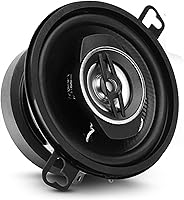
The black poly injection cone and clean grille design look presentable inside a door panel, and the compact form factor does not crowd the surrounding interior. For buyers who want replacement speakers that blend in rather than stand out, the unobtrusive styling works well.
Design is purely functional with no distinctive or premium visual cues. The plastic components look exactly like budget-tier audio hardware, which may bother buyers who care about interior aesthetics, especially in nicer vehicles where mismatched materials are more visible.

Suitable for:

The Pyle PL31BK 3.5-inch Car Coaxial Speakers are purpose-built for a very specific type of buyer: someone whose factory door speakers have died, distort constantly, or simply stopped working, and who needs a functional, affordable replacement without a complicated installation process. If you drive a commuter car, a beater, or a secondary vehicle where you just want to hear the radio clearly again, this speaker pair delivers exactly that without demanding extra equipment or technical knowledge. DIY installers who appreciate having wiring and mounting hardware included in the box will find the setup process refreshingly straightforward. These also work well in non-car applications like a small boat, camper, or motorcycle where audio fidelity takes a backseat to basic functionality and weather-resistant durability. Buyers with restricted door panel cavities will appreciate the 1.61-inch mounting depth, which fits where many competitors simply cannot. At this price point, the value proposition is strongest for anyone coming from completely failed OEM audio rather than from a previous aftermarket upgrade.
Not suitable for:

The Pyle PL31BK 3.5-inch Car Coaxial Speakers are not the right call for anyone who cares seriously about audio quality or who has already experienced a mid-range or better aftermarket speaker system. If bass response matters to you — even moderately — this speaker pair will disappoint; the low end is genuinely thin, and no amount of head unit EQ adjustment fully compensates for the physical limitations of a small, entry-level woofer cone. Buyers who listen to bass-heavy music genres at higher volumes will hit the distortion ceiling quickly and find the experience frustrating rather than satisfying. Anyone replacing a previous set of well-regarded aftermarket speakers should look at least one price tier higher, because the drop in clarity and dynamics will be immediately noticeable. Shoppers who have not confirmed their vehicle-specific cutout dimensions should also proceed carefully — fitment issues are real, and adapter rings are sometimes required but not included. Finally, anyone expecting these to perform adequately without a subwoofer in a full audio build will likely be underwhelmed by the overall sound signature.
Specifications

  • Peak Power: Each speaker handles up to 120W peak power, reflecting short burst capacity rather than continuous output.
  • RMS Power: Continuous RMS power handling is rated at 60W per speaker, which is the more meaningful figure for everyday listening.
  • Impedance: Both speakers operate at 4 ohms, making them directly compatible with virtually any factory or aftermarket head unit.
  • Woofer Size: The main cone driver measures 3.5 inches in diameter, designed to replace standard OEM speaker positions in door panels.
  • Tweeter Size: Each unit includes a 1-inch dome tweeter for high-frequency reproduction above the woofer's range.
  • Tweeter Type: The tweeter uses a neodymium film dome construction, which provides lightweight high-frequency response without significant added mass.
  • Cone Material: The woofer cone is made from poly injection material, a common choice in entry-level speakers for its balance of rigidity and low weight.
  • Surround Material: Butyl rubber surrounds are used on both drivers, offering better long-term durability and thermal resistance compared to foam alternatives.
  • Voice Coil: A dual 1-inch high-temperature KSV voice coil is fitted in each speaker, designed to resist heat-related degradation over time.
  • Sensitivity: Sensitivity is rated at 88 dB, meaning these speakers produce adequate volume from low-power head units without requiring external amplification.
  • Mounting Depth: The shallow mounting depth of 1.61 inches allows installation in door cavities and panels where deeper speakers would not physically fit.
  • Dimensions: Each speaker measures 3.46″ in diameter and 2.01″ in depth, maintaining a compact footprint for tight mounting locations.
  • Frequency Response: The frequency response extends up to 20 kHz, covering the full audible high-frequency range with the dome tweeter handling the upper register.
  • Mounting Type: These speakers use a panel mount configuration, compatible with standard door panel, side panel, and similar flat surface installations.
  • Connectivity: Connection is wired only, with no wireless or Bluetooth functionality — standard speaker wire leads are included in the package.
  • Compatibility: Designed for use in cars, boats, motorcycles, and RVs, provided the mounting location accommodates the 3.5-inch cutout size.
  • Included Accessories: Each package includes one pair of speakers, pre-attached wiring leads, and mounting hardware sufficient for a basic installation.
  • Weight: The complete pair weighs approximately 1.9 pounds total, reflecting the lightweight construction materials used throughout.
  • Warranty: Pyle covers this speaker pair under a limited warranty; buyers should confirm current terms directly with Pyle or the point of purchase.
  • Item Count: One purchase includes two speakers sold as a matched pair, intended for stereo left and right channel replacement.

Related Reviews
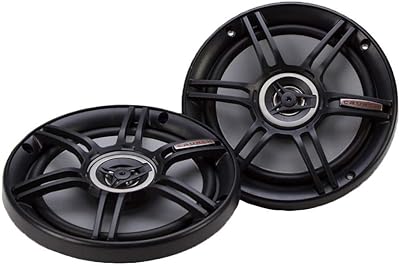
Crunch CS65CXS 6.5-Inch 3-Way Coaxial Car Speaker
84%
89%
Sound Quality
92%
Bass Performance
87%
Installation Ease
81%
Durability
85%
Build Quality
More
Pyle PL613BK 6.5-Inch 3-Way Triaxial Car Stereo Speakers
84%
86%
Audio Performance
91%
Ease of Installation
88%
Bass Quality
80%
Build Quality
85%
Compatibility with Vehicles
More
Orion CB35 3.5-Inch Coaxial Car Speakers
72%
78%
Sound Clarity
43%
Bass Performance
88%
Value for Money
81%
Build Quality
91%
Ease of Installation
More
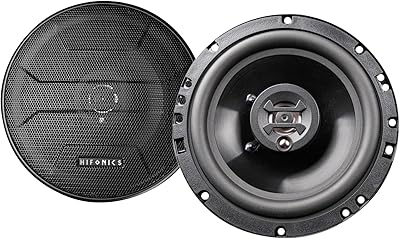
Hifonics ZS653 Zeus 6.5 Inch 3-Way Car Audio Coaxial Speakers
85%
88%
Sound Quality
85%
Bass Performance
92%
Ease of Installation
80%
Build Quality
91%
Value for Money
More
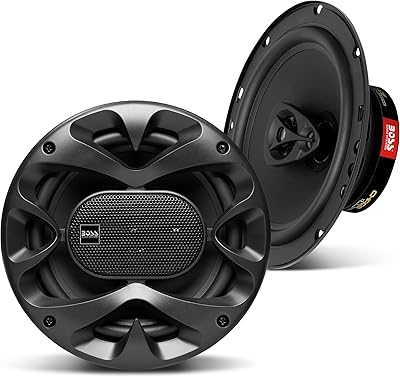
BOSS Audio Systems CH6530B 6.5 Inch 3-Way Coaxial Car Door Speakers
81%
84%
Sound Quality
91%
Ease of Installation
68%
Bass Performance
80%
Durability
89%
Compatibility with Car Systems
More
CT Sounds BIO-5-25-COX 5.25-inch Coaxial Car Speakers
75%
81%
Sound Clarity
54%
Bass Response
78%
High-Frequency Performance
88%
Value for Money
72%
Build Quality
More
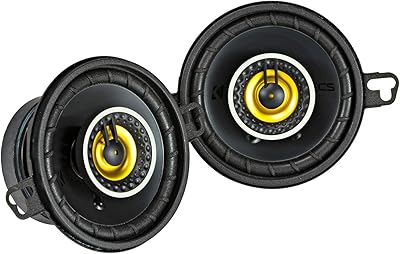
Kicker CSC35 3.5-Inch Coaxial Car Speakers
80%
83%
Sound Clarity
52%
Bass Response
91%
Installation Ease
78%
Build Quality
88%
Value for Money
More
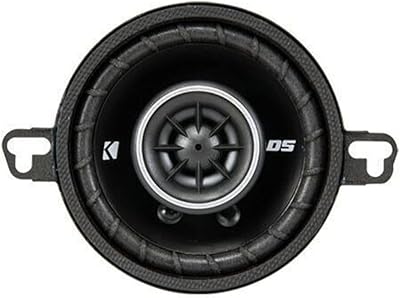
KICKER DSC350 3.5-Inch Coaxial Speakers
77%
83%
Sound Clarity
54%
Bass Response
91%
Installation Ease
82%
Build Quality
88%
Durability in Heat
More
Pyle PL53BL 5.25” 3-Way Car Speakers
83%
84%
Sound Quality
92%
Value for Money
88%
Ease of Installation
89%
Durability
75%
Bass Performance
More
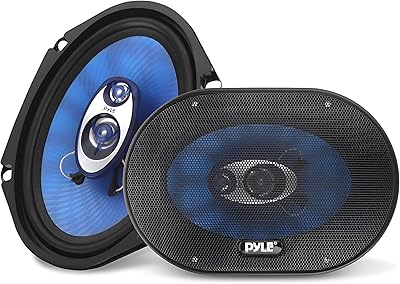
Hifonics Zeus ZS35CX 3.5-inch Car Speakers
73%
88%
Value for Money
79%
Sound Clarity
41%
Bass Response
92%
Installation Ease
67%
Build Quality
More

FAQ

Yes, and this is actually the most common setup buyers use. The 4-ohm impedance and 88 dB sensitivity mean a standard factory head unit has no trouble driving this speaker pair to reasonable volume. You do not need an external amplifier to get functional results, though adding one would improve output ceiling and clarity.

You need to check two things: the cutout diameter of your existing speaker location and the available depth behind the mounting surface. The speakers need roughly a 3.5-inch opening and at least 1.61 inches of clearance behind the panel. Some vehicles use non-standard brackets or shapes, so it is worth pulling the door panel or consulting a vehicle-specific fitment guide before ordering.

For most standard installations, the included wires and mounting hardware are sufficient to complete the job. That said, some vehicles require adapter rings or vehicle-specific wiring harness adapters that are not in the box. If your car has a non-standard speaker bracket layout, plan to source those separately.

They are not rated as waterproof, so direct water exposure is a problem. That said, many buyers do install them in boats and marine environments with acceptable results in sheltered, non-exposed mounting locations. If your boat installation puts the speakers in direct contact with spray or rain, you should look for speakers with a proper marine rating instead.

The 120W figure is peak power, which describes the maximum the speaker can handle in a momentary burst — not what your radio continuously delivers. Most factory head units output somewhere between 10W and 22W RMS per channel, which falls well within the speaker's 60W RMS continuous rating. There is no mismatch issue here for a typical factory system.

If your current factory speakers are blown, distorting, or just worn out after years of use, then yes — the improvement will be immediately obvious. If your factory speakers are still in reasonable condition, the difference will be more subtle and depends heavily on your expectations. These are entry-level speakers, so they outperform failed OEM hardware easily but do not dramatically outclass a decent, well-maintained factory system.

Bass is the honest weak point of this speaker pair. The 3.5-inch woofer cone is physically too small to reproduce deep low-end frequencies with much authority, so if bass matters to you — even casually — a subwoofer would be a worthwhile addition. For talk radio, podcasts, or acoustic music, the lack of deep bass is less noticeable.

Most people with basic tools and a little patience can handle the install themselves. The process involves removing the door panel, disconnecting the old speaker, connecting the wiring leads, and mounting the new speaker using the included hardware. Plenty of vehicle-specific tutorial videos exist online to walk you through the door panel removal, which is typically the trickiest part.

Short-term durability is generally fine — most users get through the first year or two without issues under normal commuter conditions. The butyl rubber surround is a genuine positive for longevity compared to foam. That said, buyers in very hot climates or who regularly push high volume levels have reported earlier wear, so the long-term track record in demanding conditions is less consistent.

No grille is included in the package. The speakers are designed to fit behind existing door panel grilles or speaker covers already built into your vehicle. If your door panel does not have a factory grille over the speaker location, you would need to source a compatible aftermarket grille separately.