Overview

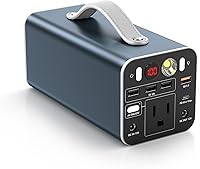
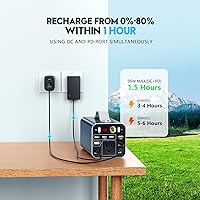
The Powdeom ES150A 155Wh Portable Power Station is a compact, budget-conscious unit built for campers, travelers, and anyone who wants a reliable power reserve without spending a fortune. At just 4 lbs with a leather-grip handle, it's light enough to toss in a car trunk or a large backpack without a second thought. What sets this compact power station apart at its price point is the pure sine wave output — a feature typically reserved for pricier units. It can recharge from zero to 80% in roughly an hour when both DC and PD inputs are used together, which is genuinely useful before heading out on a trip.
Features & Benefits

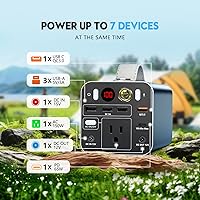
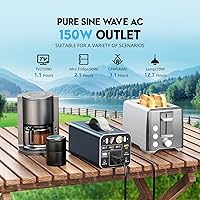
The 150W AC outlet runs on a pure sine wave, which matters if you're powering sensitive electronics like a CPAP machine or a laptop — modified sine wave inverters can cause real problems with those. The 65W USB-C PD port pulls double duty as both an input and an output, so you can charge a laptop quickly or top up the Powdeom unit from a wall adapter. With seven output ports total, you can run a phone, tablet, camera, and laptop simultaneously without juggling cables. A built-in BMS covers over-temperature and short-circuit protection, and the three-mode LED light adds practical value on a dark campsite.

Best For

This portable battery station is a strong fit for weekend campers who need to run a small fan, power a CPAP overnight, or keep multiple devices charged without hauling something heavy. Van-lifers and remote workers who need a lightweight laptop backup will appreciate how little space it takes up. It also works well as a home emergency reserve for short power outages — enough to keep phones charged and a light running through the night. Anyone shopping for pure sine wave AC at a lower price point will find this compact power station hard to beat among similarly sized options.

User Feedback

Buyers consistently praise the fast recharge speed and the overall value relative to capacity, especially against bigger-brand alternatives. Handle comfort and the LED display readability also draw positive mentions. Where things get mixed: real-world usable capacity tends to come in noticeably below the rated 155Wh once inverter conversion losses are factored in, so don't plan device runtimes too tightly. Some users have noted that sustained AC output occasionally dips below the advertised peak. Inverter hum during AC use is a minor but recurring complaint. Warranty service response has been inconsistent, which is a fair concern given that Powdeom is not yet a widely established name in this space.

Pros

  • Pure sine wave AC output protects sensitive electronics like CPAPs and laptops — a rare feature at this price tier.
  • Recharges from zero to 80% in roughly one hour using combined DC and PD inputs, which is genuinely fast for this class.
  • At just 4 lbs, this compact power station is light enough to carry one-handed without fatigue.
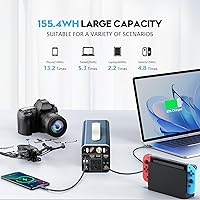
  • Seven simultaneous output ports mean you can charge a laptop, phone, camera, and tablet all at once.
  • The 65W USB-C PD port works both as a fast input and a fast output, adding real everyday flexibility.
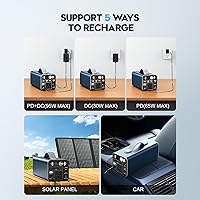
  • Five recharging methods — including solar and dual-input combined — give you practical options in the field.
  • The built-in BMS provides meaningful protection against overheating, short circuits, and voltage spikes.
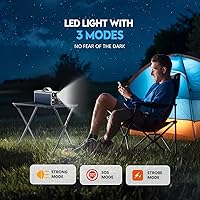
  • Three LED modes including SOS make it a credible emergency tool beyond just a power source.
  • The leather-grip handle is a small but thoughtful detail that makes carrying it comfortable over distance.
  • Value relative to capacity is strong compared to similarly sized units from better-known brands.

Cons

  • Actual usable capacity falls noticeably short of the rated 155Wh once real-world inverter conversion losses are applied.
  • Sustained AC output can dip below the advertised 150W peak under continuous heavy loads.
  • The inverter produces an audible hum during AC use that can be distracting in quiet environments.
  • Solar charging effectiveness is highly dependent on panel quality and conditions — the 60W ceiling is a best-case figure.
  • Powdeom is not a widely established brand, which creates legitimate uncertainty around long-term parts and support availability.
  • Customer service response under the 12-month warranty has been reported as inconsistent by some buyers.
  • The 155Wh capacity is too modest for multi-day off-grid use or running larger appliances for extended periods.
  • Display readability in direct sunlight has been flagged by some users as subpar compared to competing units.

Ratings

Our AI scoring system analyzed thousands of verified global buyer reviews for the Powdeom ES150A 155Wh Portable Power Station, actively filtering out incentivized, bot-generated, and spam submissions to surface what real users consistently experience. The scores below reflect both the genuine strengths that keep buyers satisfied and the recurring pain points that caused frustration — nothing is glossed over. Whether you are camping, working remotely, or prepping for a power outage, these ratings are designed to help you make a clear-eyed decision.

Value for Money
84%
Among buyers comparing this compact power station against similarly priced alternatives, the consensus is that the feature set — especially the pure sine wave AC and 65W PD port — punches above what the price tag suggests. Many users explicitly noted they did not expect this level of output capability at this tier.
A subset of buyers felt the effective usable capacity, once real-world conversion losses are factored in, slightly undercut the perceived value. When measured against what you actually get to use versus what is advertised, the equation becomes a bit less flattering.
Recharge Speed
88%
The combined DC-plus-PD dual input getting this portable battery station to 80% in roughly an hour is one of the most praised aspects across user reviews. Campers and travelers consistently called this out as a standout trait — charge it the night before or during a drive, and it is ready to go.
Single-input charging via the DC adapter alone is notably slower and can feel underwhelming for users who did not realize dual-input was required for the advertised speed. A few buyers expressed frustration that the one-hour claim requires both ports active simultaneously.
AC Output Quality
81%
19%
The pure sine wave inverter earned specific praise from users running CPAP machines and laptops, who noted their devices ran cleanly without the interference or excess heat that cheaper modified sine wave units can cause. For a budget-tier station, this is a legitimately meaningful technical advantage.
Some users reported that sustained AC output under continuous heavy loads did not consistently hold at the full 150W, with the unit occasionally throttling back. This is unlikely to affect light use but can be a problem for borderline devices right at the watt ceiling.
Portability
91%
At 4 lbs with a leather-wrapped handle, this compact power station is genuinely easy to carry one-handed, and its slim 12 x 5 x 5 inch profile fits cleanly in a backpack side pocket, car glove area, or under an airline seat. Multiple reviewers mentioned it as one of the lightest units they had tried at this capacity.
The 12-inch length, while slim, means it does not sit neatly in some compact bags or side pockets designed for smaller power banks. A handful of users noted the form factor is better suited to flat surfaces than tight packing situations.
Port Variety & Simultaneous Use
86%
Having seven usable output ports — including QC 3.0, PD 65W, three USB-A, AC, and DC — is a practical win for users who travel with a lot of gear. Reviewers camping with a group especially appreciated being able to keep multiple phones, a camera, and a laptop all charging at once without juggling adapters.
Running all ports simultaneously draws down the battery faster than some users expected, and the total shared power budget means high-draw devices compete with each other. A few buyers noted charging speeds dropped noticeably on PD when the AC outlet was also active.
Build Quality
72%
28%
The overall casing feels solid for a budget unit, and the leather handle adds a premium-adjacent touch that users noticed. Most reviewers reported no rattles, loose ports, or structural concerns after several months of regular use during camping trips.
Powdeom is not a well-established brand, and some buyers expressed concern about long-term durability given the manufacturer's limited track record. A few noted the display panel felt slightly flimsy and that the finish showed light scratches more readily than expected.
Display & Interface
63%
37%
The digital display provides useful at-a-glance information on remaining capacity and input/output wattage, which reviewers appreciated for monitoring charge status during camping or outage scenarios without guessing.
In direct sunlight, the display is reportedly difficult to read clearly, which is a real annoyance when using the Powdeom unit outdoors — exactly the context most buyers purchase it for. The interface lacks granularity for precise capacity tracking, which frustrated more technically minded users.
LED Utility
77%
23%
The built-in LED with three modes — steady, flash, and SOS — earned consistent praise from campers who found it genuinely useful as a campsite light or emergency signal tool. The claimed 50-hour steady runtime in light mode impressed users who tested it over multiple nights.
The LED brightness in steady mode is adequate but not powerful enough to illuminate a large area, limiting it to close-range task lighting rather than a true lantern replacement. Some users wanted a dimmer setting between full bright and flash.
Noise Level
58%
42%
When only USB or DC ports are in use, the Powdeom unit runs silently, which reviewers appreciated for nighttime device charging in a tent or bedroom without any fan noise disturbing sleep.
Activating the AC outlet triggers an audible inverter hum that multiple reviewers flagged as more noticeable than expected in quiet environments. In a still tent at night, it is hard to ignore — a recurring complaint that drags this score down meaningfully.
Solar Charging Compatibility
61%
39%
Supporting up to 60W of solar input gives the portable battery station a meaningful off-grid recharge option that competitors at this price point do not always offer. Buyers who paired it with a quality 60W panel reported reasonable recharge times under good sunlight conditions.
Real-world solar performance varies considerably and is heavily dependent on panel quality and sunlight availability — factors the product listing does not adequately caveat. Buyers in partly cloudy climates or using lower-quality panels reported disappointingly slow solar recharge times.
Safety & Protection
83%
The built-in BMS protection — covering overheating, over-voltage, over-current, and short circuits — gave buyers real confidence when using the unit indoors during outages or leaving it charging overnight. No widespread reports of safety incidents have surfaced in user feedback.
While the BMS functions as described, some users noted the unit runs noticeably warm during fast dual-input charging, which can feel concerning even if it is within normal operating parameters. Better thermal communication on the display would reassure users during high-input charging sessions.
Warranty & After-Sales Support
51%
49%
The 12-month warranty is a baseline standard expectation, and some buyers reported positive resolution experiences when reaching out with defective unit claims within the coverage window. The included documentation is functional if basic.
A recurring theme in negative feedback is inconsistent or slow customer service response, which is a meaningful risk given how little brand equity Powdeom currently holds. Buyers who experienced issues outside of straightforward cases described the support process as frustrating and drawn out.
Setup & Ease of Use
89%
Out of the box, this portable battery station requires virtually no setup — plug in, press the port activation button, and start charging. Reviewers across all age groups noted the learning curve is essentially zero, making it accessible even for less tech-savvy buyers preparing for emergencies.
The user guide is basic and does not clearly explain the dual-input charging process for achieving maximum recharge speed, leaving some buyers unaware they needed two simultaneous inputs to hit the advertised one-hour recharge time.
Battery Capacity Accuracy
55%
45%
The rated 155Wh capacity is sufficient for the use cases advertised — keeping phones topped up, running a CPAP, or powering a laptop for a few hours — and buyers with calibrated expectations generally got what they needed from a single charge.
When users actually measured effective output capacity under real load conditions, usable energy consistently fell short of the 155Wh headline figure due to inverter conversion losses. For buyers who planned device runtimes based on rated capacity alone, this discrepancy caused genuine disappointment.

Suitable for:

The Powdeom ES150A 155Wh Portable Power Station is a practical pick for anyone who needs a lightweight, grab-and-go power source for short trips or unexpected outages rather than extended off-grid living. Weekend campers will find it capable enough to run a CPAP machine through the night, keep a small fan humming, and charge several devices without issue. Remote workers and van-lifers who just need a reliable laptop backup — without the bulk and weight of a larger station — will appreciate how easily this compact power station tucks into a vehicle or under a desk. It also makes a sensible emergency reserve for homeowners: enough capacity to keep phones charged, run a lamp, and power a small fan during a brief outage lasting several hours. Festival-goers and day hikers who need simultaneous charging across multiple devices will get real value from its seven output ports.
Not suitable for:

The Powdeom ES150A 155Wh Portable Power Station is not the right tool if you need sustained, heavy-duty power for more than a few hours at a stretch. At 155Wh of rated capacity — with real-world usable energy somewhat lower once inverter losses are factored in — this portable battery station simply cannot keep a full-size refrigerator, a power-hungry electric cooler, or high-wattage tools running for long. Anyone planning extended off-grid trips of more than a day or two should seriously consider a unit with 500Wh or more. If you are sensitive to noise, the inverter hum during AC use may bother you in a quiet tent or bedroom setting. Buyers who prioritize long-term brand reliability and robust after-sales support may also find the relatively unknown manufacturer and inconsistent warranty service response harder to accept than the price savings justify.
Specifications

  • Capacity: The unit stores 155Wh of energy, equivalent to a 42000mAh rating, sufficient for charging smartphones multiple times or running a CPAP machine for a single night.
  • AC Output: A single AC outlet delivers 150W of pure sine wave power, making it compatible with sensitive electronics including laptops under 140W and small medical devices.
  • USB-C PD Port: The 65W USB-C PD port functions as both a fast-charging output for laptops and devices and a high-speed input for recharging the unit itself.
  • USB-A Ports: Three standard USB-A ports provide simultaneous charging for phones, cameras, and other accessories alongside other active outputs.
  • QC Port: One Qualcomm Quick Charge 3.0 port enables accelerated charging for compatible smartphones and accessories.
  • DC Output: One DC output port supports compatible accessories such as car-plug devices and certain portable fans or coolers.
  • Max Input Rate: When both the DC adapter and PD 65W port are used together, the unit accepts up to 95W of combined input power, enabling a 0–80% charge in approximately one hour.
  • Solar Input: The unit supports solar panel input up to 60W, though actual charge speed depends entirely on panel quality, wattage, and available sunlight conditions.
  • Recharge Methods: Five distinct recharging options are supported: standard wall outlet, 65W PD adapter, 12V car charger, solar panel, and simultaneous wall-plus-PD dual input.
  • Battery Type: The internal battery uses Lithium Polymer cell chemistry, which offers a favorable weight-to-capacity ratio compared to older Lithium-Ion formats.
  • Weight: The unit weighs 4 lbs, keeping it light enough for one-handed carry over moderate distances without physical strain.
  • Dimensions: Physical dimensions measure 12 x 5 x 5 inches, giving it a slim, elongated profile that fits easily in a car trunk, bag, or under a desk.
  • LED Light: An integrated LED lamp offers three modes — steady bright, flashing, and SOS — with an estimated runtime of up to 50 hours in steady mode.
  • Protection System: A built-in Battery Management System (BMS) provides active protection against over-temperature, over-voltage, over-current, over-power conditions, and short circuits.
  • AC Frequency: The AC outlet operates at 50Hz, which is the standard frequency used across Europe, Asia, and many other regions outside North America.
  • Certifications: The unit carries CE certification, indicating it meets relevant European safety, health, and environmental protection standards.
  • Warranty: Powdeom provides a 12-month warranty from the date of purchase, covering manufacturing defects under normal use conditions.
  • In the Box: Each unit ships with the power station itself, one DC charging adapter, one power cable, and a printed user guide.
  • Handle Design: A soft leather-wrapped handle is integrated into the top of the unit, providing a more comfortable grip compared to bare plastic handles common at this price tier.
  • Manufacturer: The unit is manufactured by Guangzhou Aokaidun Electric Appliance Co., Ltd, a Chinese electronics manufacturer that markets this product under the Powdeom brand name.

Related Reviews

APC PE6U4W Desk Mount Surge Protector
78%
88%
Mounting Design
61%
Outlet Spacing
83%
USB Charging Performance
74%
Surge Protection
69%
Build Quality
More
Philophca 350W DeWalt-Compatible Power Inverter
81%
93%
Battery Compatibility
88%
AC Output Stability
91%
Portability
84%
LED Work Light
78%
Value for Money
More
Kzreect Inverter-MK 220W Portable Power Inverter
85%
94%
Portability and Size
89%
Charging Speed (USB-C & USB-A)
82%
Battery Compatibility
88%
Ease of Use
90%
Safety Features (Overload, Overcurrent)
More
Vari Power Hub Desk Mount Charging Station
79%
96%
Ease of Installation
88%
Build Quality
93%
Clamp Stability
84%
Outlet Layout & Design
67%
USB Charging Performance
More
Emtec X200 Power Plus 1TB Portable SSD
76%
83%
Value for Money
61%
Transfer Speed
91%
Portability
72%
Build Quality
88%
Setup & Compatibility
More
Emtec X200 Power Plus 256GB mSATA Portable SSD
88%
89%
Performance & Speed
91%
Build Quality & Durability
95%
Portability & Size
85%
Compatibility & Setup
88%
Reliability & Longevity
More
Silicon Power Armor A60 1TB Portable Hard Drive
76%
88%
Build Quality
84%
Shock & Drop Protection
54%
Transfer Speed
67%
Water Resistance
91%
PS4 Compatibility
More
YOTUO 500GB USB-C Hub External Hard Drive
73%
81%
Value for Money
67%
Build Quality
52%
Transfer Speed
84%
Port Selection
91%
Setup & Ease of Use
More
Greenworks ING502 500W Portable Power Inverter
78%
93%
Ecosystem Integration
88%
Port Variety
71%
Battery Runtime
76%
Build Quality
82%
LCD Display
More
Emtec X200 Power Plus 512GB Portable SSD
74%
93%
Portability
91%
Ease of Setup
61%
Transfer Speed
74%
Build Quality
58%
Cable Quality
More

FAQ

For most standard CPAP machines running without a humidifier, yes — it should manage a full night on a single charge. A typical CPAP draws around 30–60W, and at 155Wh of rated capacity you can expect roughly 2–4 hours of runtime depending on pressure settings and whether humidification is on. If your CPAP uses a humidifier, expect closer to 1.5–2 hours, which may not get you through the night. Disabling the humidifier is the single most effective way to extend runtime.

Using only the included DC wall adapter, expect a full charge in around 3 to 4 hours. If you plug in both the DC adapter and a 65W PD charger simultaneously, the combined 95W input cuts that down significantly — the unit can hit 80% in roughly one hour, which is one of its stronger practical advantages.

Based on the product specifications, it is a genuine pure sine wave inverter. This distinction genuinely matters if you plan to run sensitive electronics like CPAPs, medical equipment, or certain laptops — modified sine wave inverters can interfere with those devices or cause them to run less efficiently. Pure sine wave at this price point is uncommon and worth taking seriously as a differentiator.

Yes, as long as your laptop draws less than 140W under full load. The 65W USB-C PD port is the fastest and most efficient route for laptop charging and works well with most modern ultrabooks and mid-range laptops. The AC outlet can also power a laptop charger directly, giving you flexibility if your laptop requires a proprietary barrel connector.

The Powdeom ES150A 155Wh Portable Power Station supports solar input up to 60W, but real-world results vary considerably based on your panel's actual wattage output, sunlight intensity, and angle. Under strong, direct sun with a quality 60W panel, you might recharge in 3–4 hours. In partial shade or with a lower-output panel, it could take much longer. The unit does not come with a solar panel, so that is a separate purchase.
Yes, there is an audible inverter hum when the AC outlet is active — this is normal for any device with a built-in inverter at this size and price point. Most users describe it as a low, steady hum rather than a loud fan noise. In a quiet bedroom or small tent it can be noticeable, but outdoors or with any ambient noise it tends to fade into the background.

Yes, it supports 12V car charging via the DC input port, which makes it convenient to top up during long drives before arriving at a campsite. Car charging is the slowest of the five recharge methods available, so plan for several hours of driving to make a meaningful dent in the battery level.

Powdeom is not a widely recognized name in the power station market — it sits firmly in the value-brand category manufactured by Guangzhou Aokaidun Electric Appliance Co., Ltd. The CE certification provides some baseline safety assurance, and the BMS protection system is a real safeguard. That said, the 12-month warranty and customer service response have received mixed feedback, so it is worth keeping purchase records and managing expectations accordingly for long-term support.

Up to seven devices simultaneously across all available ports: three USB-A, one QC 3.0, one 65W USB-C PD, one AC outlet, and one DC output. Keep in mind that total available power is shared across all active ports, and running everything at once will draw down the battery faster. For best results with high-draw devices, prioritize the AC or PD port and leave USB-A for lower-draw accessories.

The built-in BMS will trigger an over-power protection cutoff before any damage occurs — the unit will shut off the AC outlet rather than try to sustain a load it cannot handle. You will need to disconnect the overloading device and restart the unit. This is a standard safety behavior and is working as intended, not a malfunction.