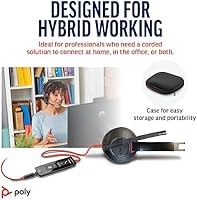


Overview

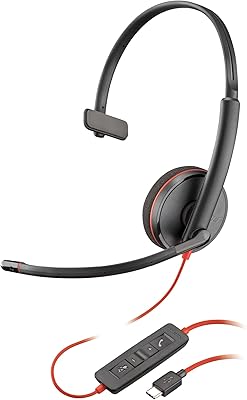
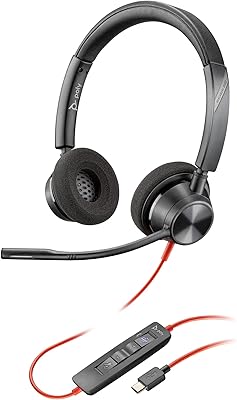
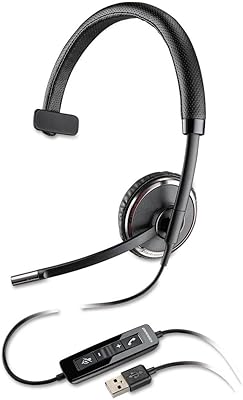
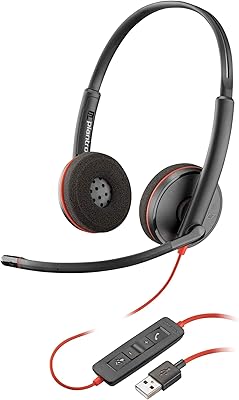
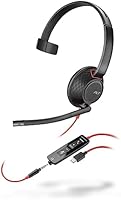
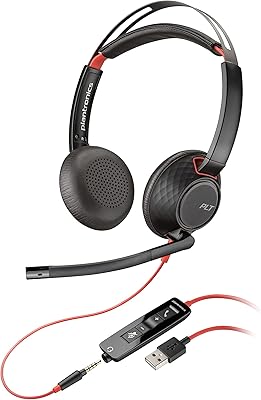
The Poly Blackwire 5210 sits in an interesting spot in the wired headset market — not competing with audiophile gear, nor scraping the bottom of the budget bin. This monaural headset is built around one core idea: get on a call fast, without friction. The single-ear design is a deliberate choice that lets you stay aware of your surroundings while remaining focused on whoever you are talking to. Plug it in and it works. No driver installation, no configuration screens, no waiting. The included carrying case rounds out a package that feels considered rather than thrown together, especially at this price tier.

Features & Benefits

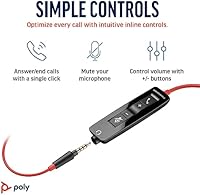
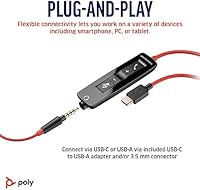
The noise-canceling boom mic is the standout here — and it is worth being precise about what that means. The cancellation works on the outbound side, cleaning up what the other person hears. Your own ears get no passive isolation from ambient noise, which is by design for a single-ear headset. SoundGuard DIGITAL handles sudden audio spikes, a genuinely useful feature if you are on back-to-back calls with unpredictable audio environments. Connectivity is flexible: USB-C natively, a USB-A adapter for older machines, and a 3.5mm jack for mobile. The inline remote keeps call controls within reach, and at just 61 grams, the headset rarely reminds you it is there.

Best For

This wired headset is a natural fit for people who live on calls but do not want to be completely cut off from what is happening around them. Think customer support agents, help desk staff, or remote workers bouncing between video calls and messaging apps — anyone who needs both ears available at times. It also works well for frequent travelers: the carrying case is compact enough for a laptop bag, and the tri-connector setup means one headset covers a hotel laptop, a personal phone, and a conference room PC. If you are on a locked-down corporate machine where installing audio software is not an option, plug-and-play compatibility makes this a practical, low-friction pick.

User Feedback

Buyers consistently point to mic clarity as the reason they chose this over cheaper alternatives — a noticeable step up from bundled or no-name USB headsets. Where feedback gets more mixed is around extended wear. A portion of users report the headband starts to feel tight after several hours, particularly for those with larger heads. Cable durability comes up occasionally too, with some noting connector wear after months of heavy daily use. On the Teams and Zoom front, most users report truly zero setup required, validating the plug-and-play claim. The carrying case earns genuine appreciation from travelers, though a few home-based users consider it unnecessary packaging.

Pros

  • Outbound noise-canceling mic delivers noticeably cleaner call audio compared to generic USB headsets at similar prices.
  • Plug-and-play setup works reliably on Windows and Mac with zero driver installation required.
  • Tri-connectivity covers USB-C, USB-A, and 3.5mm — one headset handles a laptop and a smartphone without extra gear.
  • SoundGuard DIGITAL provides real hearing protection during long call sessions, a feature many competitors skip at this tier.
  • At just 61 grams, the Blackwire 5210 is light enough to forget you are wearing it during shorter call blocks.
  • Certified Teams and Zoom compatibility means call controls work as expected straight out of the box.
  • The included carrying case is a genuine travel accessory, not just filler packaging.
  • Inline controls handle mute, volume, and call management without needing to touch the connected device.
  • Single-ear design keeps you connected to your surroundings — a real advantage in shared or open office environments.
  • Strong brand reliability from Poly means firmware and platform support are more consistent than no-name alternatives.

Cons

  • Headband pressure becomes uncomfortable for many users after three to four hours of continuous wear.
  • Cable connector wear has been reported after six to twelve months of heavy daily use.
  • Inline mute status does not always sync with the Microsoft Teams UI mute indicator, creating confusion mid-call.
  • Volume adjustment increments on the inline remote feel coarser than ideal for fine-tuning during live calls.
  • The all-plastic construction feels less durable than the price suggests, with some users reporting stress cracks near adjustment joints.
  • Mobile 3.5mm connection disables the inline call controls, a limitation that is not clearly communicated at purchase.
  • Listening audio quality is flat and uninspiring for anything beyond voice calls.
  • Users with larger heads consistently report the headband fit as tight and hard to adjust adequately.

Ratings

The Poly Blackwire 5210 has been put through its paces by a wide range of buyers — from home-office professionals to call center veterans — and the scores below reflect what they actually experienced. These ratings are generated by AI after analyzing thousands of verified global reviews, with spam, bot activity, and incentivized feedback actively filtered out. Both the genuine strengths and the recurring frustrations are represented transparently, so you can make a genuinely informed decision.

Microphone Clarity
88%
Users switching from budget USB headsets consistently notice a meaningful jump in how they sound on calls. Colleagues and clients report voices coming through clean and natural, even in moderately noisy home offices or open-plan environments where background chatter is unavoidable.
The noise cancellation works on the outbound signal only — it does not block what you hear. In very loud environments like busy cafes or construction-adjacent home offices, callers may still occasionally pick up intrusive background sound.
Comfort & Wearability
72%
28%
At just 61 grams, the headset barely registers during the first few hours of wear. The soft ear cushion does its job well for most users, and many support staff report getting through a full morning of calls without any significant discomfort.
Headband pressure becomes a recurring complaint after the three-to-four-hour mark, particularly for users with larger heads. A handful of reviewers mention the on-ear pad feels less forgiving than over-ear alternatives during marathon call days.
Build Quality
69%
31%
The frame feels solid enough for daily desk use, and the boom arm holds its adjusted position reliably without flopping around mid-call. For the price tier, the construction is adequate and meets expectations most buyers bring to it.
The all-plastic construction is the most consistent criticism across long-term reviews. Several users note the headband feels less premium than the price implies, and a few report stress cracks appearing near the adjustment joints after extended daily use.
Cable Durability
63%
37%
The cable performs reliably in the short to medium term, and most users who travel with the included case report no issues with the connector after the first six months of use. The retractable design helps reduce stress on the cable during transport.
Beyond six to twelve months of heavy daily use, a noticeable portion of reviewers report connector loosening or intermittent audio dropouts. The cable feels thin relative to the wear patterns expected from a professional-use device.
Connectivity Versatility
91%
The combination of USB-C native support, the bundled USB-A adapter, and a 3.5mm jack for mobile makes this one of the more practical single-headset solutions for people who work across multiple devices. Switching from a laptop to a phone mid-day requires no extra gear.
A small number of users note the 3.5mm mobile connection lacks the call control functionality available over USB, meaning mute and volume buttons become inactive when connected to a smartphone. That limitation is not clearly flagged in the packaging.
Plug-and-Play Setup
93%
The zero-driver experience is genuinely reliable across Windows and Mac. IT managers in particular appreciate that deploying these across a team requires no software configuration, and employees on managed or locked-down corporate machines face no compatibility barriers.
A small subset of Linux users and those on older operating systems have reported the headset not being auto-detected as expected. These are edge cases, but worth noting for organizations running non-standard system environments.
Teams & Zoom Compatibility
87%
For the vast majority of buyers, the certified compatibility with Microsoft Teams and Zoom translates to a genuinely frictionless experience — the headset shows up as the correct audio device immediately, and call controls respond as expected without any app configuration.
A handful of Teams users report that the inline mute button does not sync its status with the Teams UI mute indicator, creating occasional confusion about whether they are actually muted on a call. Not a dealbreaker, but worth awareness.
Sound Quality for Listening
74%
26%
For a call-focused headset, the listening quality is better than expected. Voices on conference calls come through clearly and without the tinny quality common at this price point, and the 20Hz–20kHz frequency range handles video playback or casual music reasonably well.
This is not a headset designed for audio quality beyond voice calls, and it shows during music playback. The single-ear design and dynamic driver combination produce flat, unexciting audio that anyone expecting headphone-quality listening will find disappointing.
Inline Controls
82%
18%
The call control buttons are logically placed and sized well enough to operate without looking down at the cable. Answering, ending, and muting calls becomes second nature after a day or two, which matters when you are juggling multiple responsibilities simultaneously.
Volume adjustment via the inline control is a minor weak point — the increments feel coarser than ideal, making fine-tuning during a live call slightly awkward. A few users also note the buttons lack tactile distinctiveness, making them harder to differentiate by feel alone.
Single-Ear Design Practicality
79%
21%
For roles that require environmental awareness — reception desks, shared office floors, customer-facing support positions — keeping one ear free is not a compromise but a genuine operational advantage. Users in these settings consistently rate this aspect positively.
Remote workers in home environments, where ambient awareness is less critical, sometimes wish they had opted for a dual-ear model instead. The design assumption does not suit every use case, and buyers who primarily work in isolation may find the open-ear experience more distracting than helpful.
Value for Money
77%
23%
Relative to generic USB headsets in the same price range, the Poly brand heritage, SoundGuard hearing protection, and certified platform compatibility provide a tangible step up. For business buyers who need reliability, the package feels fairly priced.
Compared to a few competing wired headsets from Jabra and Logitech at similar price points, the plastic construction and cable longevity concerns make some buyers question the long-term cost-per-use calculation, especially for heavy daily users.
Carrying Case Usefulness
71%
29%
Travelers and hot-deskers genuinely appreciate having a structured case rather than cramming the headset into a laptop bag loose. It keeps the cable organized and the ear cushion protected, and several frequent flyers mention it survives bag life noticeably better than uncased headsets.
For users who work from a fixed home desk and never move the headset, the case is essentially unused after unboxing. It adds bulk to the package and is the most commonly cited example of included accessories that serve only a subset of the buyer base.
Hearing Protection (SoundGuard)
84%
For professionals spending six or more hours per day on calls, SoundGuard DIGITAL is a meaningful feature that competitors at this price point often omit. Users report greater confidence during back-to-back call sessions without the acoustic fatigue associated with unprotected listening at higher volumes.
The protection feature operates silently in the background, which means most users only truly appreciate it in hindsight or when reading the specs after purchase. It does not eliminate all audio fatigue, and very sensitive users may still benefit from volume discipline alongside hardware protection.
Weight & Portability
89%
At 61 grams, this is one of the lightest wired professional headsets available in its class. Users who previously wore heavier dual-ear models frequently call out the weight reduction as a meaningful improvement to their daily experience, especially during afternoon call blocks.
The lightweight build is partly a function of the plastic-heavy construction, which is a trade-off some buyers feel consciously. The headset does not feel particularly rugged despite its low weight, and a few users describe it as feeling slightly fragile during transit.

Suitable for:

The Poly Blackwire 5210 is a genuinely practical choice for professionals whose workday revolves around voice calls and who need a headset that works across multiple devices without any setup friction. Call center agents, help desk staff, and customer support reps who spend six or more hours daily on the phone will appreciate the lightweight frame and the outbound noise-canceling mic that keeps their voice sounding clean regardless of what is happening nearby. The single-ear design is a real advantage in roles where staying aware of the room matters — a shared office floor, a reception desk, or a hybrid workspace where colleagues might need your attention. Remote workers who switch between a laptop and a smartphone throughout the day will also find the tri-connectivity setup genuinely useful, since one headset handles both without any extra adapters to hunt down. Business users on managed corporate machines benefit from the plug-and-play reliability, which removes the need for IT involvement entirely.

Not suitable for:

Anyone expecting this wired headset to double as a quality listening device for music, podcasts, or media will likely come away underwhelmed — the audio is tuned for voice clarity, not entertainment, and the single-ear design does nothing to create an immersive listening experience. Users who work in complete home isolation and never need to monitor their surroundings may find the open-ear format more distracting than helpful and would be better served by a dual-ear model. The all-plastic construction is also a real consideration for buyers expecting premium hardware at this price point; it performs adequately in the short term but has a track record of wear after heavy daily use over many months. If cable-free freedom is important to your workflow, this is simply the wrong category of product — the Poly Blackwire 5210 is wired-only, and there is no wireless version of this particular model. Buyers who prioritize passive noise isolation, meaning blocking out what they themselves hear during calls, should also look elsewhere, as the on-ear single-cup design offers minimal ambient sound reduction on the listener side.

Specifications

  • Connectivity: Connects via USB-C natively, includes a USB-C to USB-A adapter for older ports, and supports a 3.5mm jack for mobile device use.
  • Ear Design: Single-ear (monaural) on-ear configuration, designed to keep one ear free for environmental awareness during calls.
  • Weight: The headset weighs 61 grams, making it one of the lighter options in the professional wired headset category.
  • Frequency Response: Audio frequency range spans 20 Hz to 20,000 Hz, covering the full spectrum of human hearing for clear voice reproduction.
  • Microphone Type: Features a flexible noise-canceling boom microphone that filters outbound background noise before it reaches the caller.
  • Impedance: Driver impedance is rated at 32 Ohm, standard for headsets designed for direct connection to PC and mobile audio outputs.
  • Audio Driver: Uses a dynamic driver type, which is well-suited for voice call clarity and consistent performance in professional communication scenarios.
  • Hearing Protection: SoundGuard DIGITAL technology actively limits sudden loud audio spikes and manages long-term sound exposure to protect the user's hearing.
  • Inline Controls: Integrated inline remote supports call answer and end, volume up and down, and microphone mute without interacting with the connected device.
  • Platform Support: Certified for use with Microsoft Teams and Zoom, and broadly compatible with other major softphone and collaboration platforms on PC and Mac.
  • Included Accessories: Package includes the headset, a USB-C to USB-A adapter, and a semi-rigid carrying case for storage and transport.
  • Cable Feature: Cable is retractable, which helps manage cord length during desk use and reduces tangle risk during storage or travel.
  • Material: Primary construction is plastic throughout the headband and housing, keeping the overall weight low at the trade-off of a less premium feel.
  • Mobile Jack: The 3.5mm connection supports audio on smartphones and tablets, though inline call controls are inactive when using this connection type.
  • Release Date: This 2023 version with native USB-C support was first made available in December 2023, replacing earlier USB-A-only variants.
  • Water Resistance: The headset carries no water or moisture resistance rating and should be kept away from liquids during use and storage.
  • Compatible Devices: Officially compatible with cellphones, desktops, laptops, and tablets across PC and Mac operating systems.
  • Best Sellers Rank: Ranked number 109 in the Computer Headsets category on Amazon at time of evaluation, reflecting strong sustained market adoption.

Related Reviews
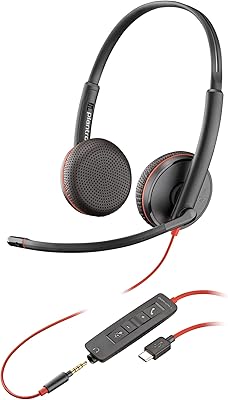
Poly Blackwire 5220 USB-A Headset
87%
89%
Comfort for Extended Use
91%
Sound Clarity and Noise Cancellation
78%
Microphone Performance
85%
Build Quality and Durability
94%
Ease of Setup and Installation
More
Poly Blackwire 3225 USB-C
78%
88%
Microphone Clarity
83%
Comfort & Wearability
81%
Sound Quality for Calls
71%
Build Quality
93%
Plug-and-Play Setup
More
Poly Blackwire 3210 USB-C
78%
88%
Microphone Clarity
91%
Call Platform Compatibility
84%
All-Day Wearing Comfort
82%
Build Quality
87%
Value for Money
More
Poly Blackwire 3320 USB-C Wired Headset
85%
91%
Comfort for Long Hours
87%
Sound Quality
90%
Microphone Clarity
82%
Build Quality
94%
Ease of Use/Setup
More
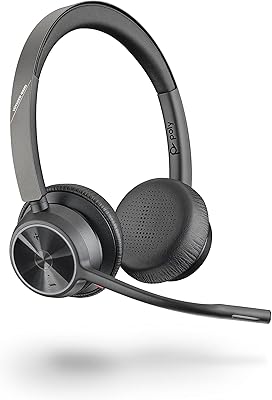
Plantronics Blackwire C3220 USB Headset
85%
90%
Comfort for Long Calls
88%
Noise Cancellation Effectiveness
85%
Audio Quality
65%
Build Quality
91%
Inline Controls (Ease of Use)
More
Plantronics Blackwire 510 USB Headset
83%
88%
Comfort for Long-Term Use
91%
Audio Clarity during Calls
75%
Build Quality and Durability
92%
Compatibility with UC Applications
89%
Microphone Performance (Noise-Canceling)
More
Poly Voyager 4310 UC Wireless Headset
86%
90%
Battery Life
85%
Noise Cancellation
88%
Comfort for Long Hours
91%
Bluetooth Connectivity
84%
Call Quality
More
Poly EncorePro 510 QD Wired Headset
87%
88%
Comfort for Long Usage
91%
Noise Cancellation Performance
89%
Sound Clarity & Microphone Quality
72%
Build Quality & Durability
95%
Ease of Use & Setup
More
Poly Blackwire 8225
Poly Blackwire 8225
76%
88%
Call Audio Clarity
84%
Microphone Performance
71%
Active Noise Canceling
82%
Comfort & Fit
62%
Build Quality
More
Poly Sync 20+ Portable Bluetooth Speakerphone
88%
90%
Sound Quality
88%
Noise Cancellation
93%
Battery Life
91%
Portability
86%
Connectivity Options
More

FAQ

Yes, it is certified for Microsoft Teams and is recognized as an audio device automatically when plugged in. No drivers or software installation are required, which makes it a reliable choice for managed corporate machines where installing software is restricted. One thing to note is that the inline mute button status may not always sync visually with the Teams mute indicator on screen.

Unfortunately, no. The inline controls for mute, volume, and call management only function over the USB connection. When you use the 3.5mm jack to connect to a smartphone or tablet, those buttons become inactive. You would need to manage calls directly from your phone screen in that scenario.

The noise cancellation on the Poly Blackwire 5210 applies to the microphone — meaning it cleans up what the other person hears, not what you hear. In a moderately noisy office, callers will typically hear your voice clearly without much background intrusion. That said, in very loud environments, some ambient sound can still bleed through, so it is not a substitute for a studio-quiet setup.

For the first few hours, most users find this monaural headset genuinely comfortable thanks to its low weight and soft ear cushion. However, headband pressure is a commonly reported issue beyond the three-to-four-hour mark, particularly for people with larger heads. If marathon all-day wear is your primary use case, it is worth trying it on an extended basis early in your return window.

The headset itself has a single USB-C cable, and the 3.5mm connection is a separate input on the inline remote. In practice, you would connect it to your laptop via USB-C for work calls and unplug the USB-C end to use the 3.5mm on your phone when needed. It is not a simultaneous dual-connection setup, but switching between devices is straightforward.

Short to medium term, the cable performs reliably for most users. After six to twelve months of heavy daily use, a portion of buyers report signs of connector wear or occasional audio dropouts near the plug. If you are rough on cables or travel frequently, investing in a protective case and avoiding sharp bends near the connector will extend its lifespan considerably.

Yes, plug-and-play compatibility works on both Mac and Windows without any drivers. The headset is recognized as a standard USB audio device by both operating systems, and call controls function correctly across both platforms with supported apps like Zoom and Teams.

It depends entirely on how you use the headset. Travelers and people who hot-desk genuinely appreciate it — the case keeps the cable tidy and the ear cushion protected inside a bag. If you leave your headset on a fixed desk and never move it, the case will likely sit in a drawer after the first week. It is a nice inclusion either way and does not feel cheap.

The 2023 version uses a USB-C cable natively, which is the primary update over the earlier USB-A model. An adapter is included in the box to maintain backward compatibility with USB-A ports, so functionally both versions work with the same range of devices. If you have a modern laptop with only USB-C ports, the newer version is the more natural fit.

The single-ear design provides essentially no passive sound isolation for the wearer — that is intentional. One ear is covered by the headset and one remains completely open, so you will hear your surroundings clearly throughout a call. If you need to block out distracting noise on your end, this design is not built for that purpose and a closed dual-ear headset would serve you better.