Overview

The PNY XLR8 Gaming 32GB DDR4 Desktop Memory sits comfortably in the sweet spot for desktop builders who want a meaningful upgrade without chasing flagship prices. Running at 3200MHz, you get enough bandwidth headroom that modern titles load assets faster and multitasking feels noticeably less congested than on a 16GB setup. PNY's XLR8 Gaming line is the brand's enthusiast tier — a clear step above their basic value sticks. The 2x16GB dual-channel configuration matters more than it might seem: splitting capacity across two slots lets your CPU access memory on two pathways simultaneously, which delivers real throughput gains over a single 32GB module. Just don't expect record-breaking overclocking potential — this is a reliable everyday performer, not a benchmark chaser.
Features & Benefits

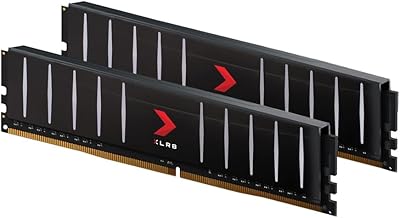
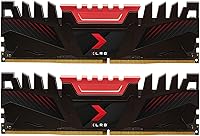
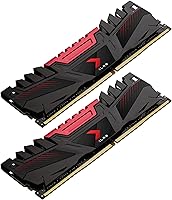
At 3200MHz with CL16 latency, this DDR4 memory kit hits a frequency-latency balance that works well for gaming and general desktop use without requiring manual configuration. The standout convenience feature is Intel XMP 2.0 support — drop the sticks in, enable the profile in your BIOS, and you're running at rated speed within minutes. The 1.35V operating voltage is lower than older DDR3 standards, meaning less heat generated and a lighter load on your motherboard's power delivery. Backward compatibility with slower DDR4 speeds means you won't hit a wall if your board doesn't officially list 3200MHz support. The black PCB with subtle gold and red accents fits most builds cleanly without the visual noise of full RGB kits.

Best For

This 32GB desktop memory makes the most sense for desktop upgraders stepping up from 8GB or 16GB who want a low-hassle installation. Gamers who stream, run Discord, and keep a browser open alongside their game will notice the breathing room almost immediately. Light content creators — photo editing in Lightroom, cutting short video clips — also benefit without needing to spend more on higher-tier kits. On the Intel side, XMP activation is genuinely one-click easy. AMD users can still run this kit well, but should expect to dig into BIOS settings manually to hit rated speeds. If RGB lighting isn't a priority and you'd rather put that budget toward other components, the XLR8 Gaming RAM offers a sensible, no-regrets trade-off.

User Feedback

With a 4.6-star average across well over a thousand ratings, this DDR4 memory kit has built a consistent track record. Buyers regularly note that installation is painless and the XMP profile activates without drama — two things that sound basic but genuinely matter when you're mid-build late at night. On the flip side, a subset of AMD platform users mention that reaching the rated 3200MHz speed required navigating BIOS settings manually rather than a simple toggle. The understated aesthetic draws mixed reactions: some builders appreciate the clean look, while those running RGB-heavy setups find the kit visually out of place. Long-term reliability reports skew positive, with most owners describing stable, crash-free operation well beyond the initial warranty window.

Pros

  • Dual-channel 2x16GB configuration gives your CPU two memory pathways, improving real-world throughput noticeably.
  • XMP 2.0 support on Intel platforms means rated speeds activate in one BIOS step, no manual tuning needed.
  • The 1.35V operating voltage runs cooler than older standards, reducing stress on your motherboard over time.
  • Backward compatibility with lower DDR4 speeds makes this DDR4 memory kit broadly compatible across motherboard generations.
  • 32GB of capacity handles modern gaming, streaming, and background apps simultaneously without breaking a sweat.
  • Clean black PCB with gold and red accents fits most build aesthetics without demanding attention.
  • Backed by a strong satisfaction record across a large pool of verified buyers, signaling consistent build quality.
  • Easy installation experience that even first-time builders report completing without issues.
  • No need to overspend on RGB premium — the XLR8 Gaming RAM delivers solid specs at a sensible price point.

Cons

  • AMD users may need to manually configure BIOS settings to reach the full 3200MHz rated speed.
  • No RGB lighting option for builders who want memory that matches an illuminated system aesthetic.
  • CL16 latency is decent but not competitive for users who specifically prioritize tight timing performance.
  • 3200MHz is a solid mid-range frequency, but faster DDR4 kits exist at comparable prices from some competing brands.
  • No heat spreader design beyond the PCB itself, which may concern builders in poorly ventilated cases.
  • Older motherboards with limited DDR4 support may require a BIOS update before this kit runs reliably at rated speeds.
  • The kit does not include any bundled software or warranty registration tools, which some buyers expect at this tier.

Ratings

The scores below reflect an AI-driven analysis of verified global buyer reviews for the PNY XLR8 Gaming 32GB DDR4 Desktop Memory, with spam, bot submissions, and incentivized feedback actively filtered out before scoring. Each category is weighted against real-world usage patterns reported by desktop builders, gamers, and everyday PC users across multiple platforms. Both the strengths that keep buyers satisfied and the friction points that surface in negative reviews are represented transparently.

Installation Ease
93%
Buyers consistently describe the physical installation as straightforward, even for first-time builders. The modules seat firmly with a satisfying click, and on Intel platforms the XMP profile activates in one BIOS step — no manual timing adjustments needed.
A small but vocal group of AMD users found they had to spend extra time in BIOS to manually configure speeds to the rated 3200MHz. On older boards, an initial failure to post at rated speed caused brief confusion before they sorted out the settings.
Performance Consistency
88%
Once configured correctly, this DDR4 memory kit runs at rated speeds without throttling, crashing, or spontaneous reboots — which is exactly what most buyers need from daily-use memory. Users running games, streaming software, and background tabs simultaneously report smooth, uninterrupted sessions.
At 3200MHz CL16, the performance ceiling is respectable but not exceptional by current DDR4 standards. Buyers who benchmarked this kit against tighter-latency alternatives noticed a measurable gap in synthetic memory tests, even if real-world gaming differences were minor.
Compatibility
74%
26%
The kit's backward compatibility with lower DDR4 frequencies means it slots into a wide range of motherboards without issue, including older 300-series and 400-series Intel platforms. Most buyers running mainstream Z490, B560, and Z690 boards reported zero compatibility headaches.
AMD platform compatibility is the most cited friction point across reviews. Some Ryzen users had to manually set DRAM frequency in BIOS after the system defaulted to 2133MHz, and a handful reported instability on budget A-series boards even at reduced speeds.
Value for Money
86%
Buyers upgrading from 16GB systems overwhelmingly feel the performance-per-dollar ratio is fair for what this 32GB desktop memory delivers. The dual-channel configuration at this price tier is a genuine strong point, especially compared to single-stick alternatives.
Some reviewers pointed out that competing brands offer DDR4 kits with tighter timings or RGB aesthetics at similar price points, making the value argument slightly less clear-cut for buyers who care about either benchmarking headroom or build visuals.
Long-Term Reliability
91%
Owners reporting back after a year or more of use consistently describe stable, issue-free operation. The XLR8 Gaming RAM appears to hold up well under sustained workloads, with very few reports of degraded performance or module failure over time.
Because this is a passive module without active cooling, a small number of users in poorly ventilated cases reported occasional thermal-related instability during extended heavy workloads. This appears to be edge-case rather than systematic, but it is worth noting for compact or airflow-limited builds.
XMP Profile Accuracy
84%
On Intel boards, the XMP 2.0 profile reliably delivers the advertised 3200MHz frequency without requiring any fine-tuning. Buyers appreciated that the kit performed exactly as labeled from day one, which is not always guaranteed at this price tier.
The XMP profile is Intel-centric by design, and AMD boards do not natively read XMP in the same way. Users on AMD platforms who expected plug-and-play speed activation were occasionally disappointed to find they needed to intervene manually.
Thermal Performance
77%
23%
The 1.35V operating voltage keeps heat generation modest under typical gaming and productivity workloads. Most buyers running air-cooled mid-tower builds never reported warmth as a concern, even during multi-hour gaming sessions.
There is no heatspreader or thermal pad on these modules, which means heat has nowhere to dissipate actively during prolonged stress. In tight cases with limited airflow, a handful of reviewers noted the modules ran warmer than expected after extended periods.
Aesthetics
63%
37%
For builders who prefer a clean, understated look, the black PCB with gold and red accents is a welcome alternative to the visual noise of RGB-heavy kits. It complements dark-themed builds without demanding attention.
Buyers with RGB-forward builds felt the static color scheme looked out of place next to illuminated components. Several reviewers specifically noted they would have paid a small premium for an RGB variant, and the absence of one was a genuine disappointment.
Dual-Channel Effectiveness
89%
Running as a matched 2x16GB pair, the kit consistently activates dual-channel mode on compatible boards, delivering noticeably better memory bandwidth than a single-stick setup. Buyers doing content creation tasks alongside gaming appreciated the throughput improvement.
A small number of users who installed both sticks in incorrect slots experienced the system running in single-channel mode without realizing it, slightly misattributing lower-than-expected performance to the kit rather than slot placement.
Packaging & Delivery Condition
82%
18%
The modules arrive in protective static-safe packaging, and nearly all buyers reported receiving the kit in undamaged, factory-fresh condition. The no-frills presentation is functional and appropriate for a memory kit at this tier.
There is no included installation guide or QR code pointing to setup resources, which a handful of first-time builders found slightly off-putting. While experienced builders won't miss it, beginners occasionally wished there was a quick-start reference in the box.
BIOS Configuration Simplicity
71%
29%
Intel platform users almost universally describe the BIOS experience as effortless — one toggle to enable XMP and the kit runs at full speed immediately. This ease of setup was one of the most frequently praised aspects of the entire ownership experience.
AMD users on older AGESA firmware versions reported that the system sometimes defaulted back to base speeds after a BIOS reset, forcing them to re-enable the manual speed profile. This recurring step frustrated some users who expected a more persistent configuration.
Gaming Workload Handling
87%
In memory-demanding titles and situations where multiple applications run in parallel, this DDR4 memory kit holds up well. Gamers who switched from 16GB setups reported tangible reductions in stuttering during asset-heavy open-world sequences and faster initial load times.
Users benchmarking the kit in pure gaming frame-rate tests found the gains over similarly priced CL14 or CL15 alternatives to be minimal. For those chasing maximum frames per second, the CL16 latency leaves a slight gap compared to tighter-timed competition.
Multitasking Headroom
92%
Jumping to 32GB is where this kit earns its keep for users who push their systems hardest. Running a game, a stream, a browser with a dozen tabs, and a Discord call simultaneously becomes noticeably more comfortable than on a 16GB system.
For users whose workload is limited to a single game with nothing else running, the full 32GB capacity rarely gets utilized, meaning part of the upgrade goes underused. It is the right buy for the right person, but not universally necessary.

Suitable for:

The PNY XLR8 Gaming 32GB DDR4 Desktop Memory is a strong fit for desktop PC builders who are tired of watching their system struggle under the weight of modern workloads and want a practical, well-priced upgrade without overthinking the decision. If you're currently running 8GB or 16GB and notice slowdowns when gaming while streaming or keeping a dozen browser tabs open, jumping to this dual-channel 32GB kit will address that directly. Intel platform users especially will appreciate how frictionless the setup is — XMP 2.0 means the kit configures itself to rated speeds with a single BIOS toggle, no manual timing adjustments required. Budget-conscious content creators who do photo culling, light video editing, or work in memory-heavy creative software will also get real mileage out of the extra headroom. It's the kind of kit that just works, and for a wide range of everyday builders, that reliability is worth more than chasing marginally faster specs.
Not suitable for:

Builders looking to push aggressive overclocks or squeeze every last megahertz out of their system should look elsewhere — the XLR8 Gaming RAM is tuned for stable everyday performance, not competitive memory benchmarking. If your build centers on a high-end AMD platform and you're not comfortable navigating BIOS settings manually, be aware that achieving the full 3200MHz rated speed may require more effort than a simple toggle, since AMD's EXPO profiles differ from Intel's XMP standard. This is also not the right choice for laptop upgrades or small-form-factor systems, as the DIMM form factor is strictly for full-size desktop motherboards. Enthusiasts who have invested in a heavily themed RGB build may find the understated black and gold aesthetic clashes rather than complements. And if you're already running a 32GB kit at comparable speeds, this 32GB desktop memory offers no compelling reason to switch.

Specifications

  • Capacity: This kit includes two 16GB modules for a total of 32GB in a dual-channel configuration.
  • Memory Type: Uses DDR4 DRAM technology, the standard for modern desktop platforms before DDR5 adoption.
  • Frequency: Rated at 3200MHz (PC4-25600), delivering strong bandwidth for gaming and multitasking workloads.
  • CAS Latency: Operates at CL16, a competitive latency rating for DDR4 kits in this frequency range.
  • Voltage: Runs at 1.35V, which is lower than many older memory standards and helps reduce heat output.
  • Form Factor: Standard DIMM form factor designed exclusively for full-size desktop motherboards.
  • XMP Support: Includes Intel XMP 2.0 profile support, enabling automatic speed configuration through a single BIOS setting.
  • Compatibility: Backward compatible with lower DDR4 frequencies, supporting a wide range of motherboards across multiple generations.
  • PCB Design: Features a black PCB with gold and red accent styling as part of the XLR8 Gaming aesthetic.
  • Dimensions: Each module measures 6.77 x 4.65 x 0.51 inches, fitting standard full-height DIMM slots without clearance issues in most cases.
  • Weight: The complete kit weighs approximately 2.82 ounces, consistent with standard unheatspreader DDR4 modules.
  • Brand Series: Part of PNY's XLR8 Gaming line, which is the brand's enthusiast-focused memory tier above their entry-level offerings.
  • OS Support: Officially listed as compatible with Windows 10 and older operating systems.
  • Device Type: Designed for desktop PCs only and is not compatible with laptops or small-form-factor systems using SO-DIMM slots.

Related Reviews

PNY XLR8 Gaming 32GB DDR4 Desktop RAM
79%
88%
Performance at Rated Speed
83%
Plug-and-Play Setup
79%
RGB Lighting Quality
91%
Thermal Efficiency
84%
Compatibility Range
More
PNY XLR8 Gaming 32GB DDR4 3600MHz Desktop RAM
79%
93%
Clearance & Low-Profile Design
89%
XMP Compatibility & Setup
91%
Stability & Reliability
78%
Performance at 3600MHz
82%
Value for Money
More
Gigastone Game PRO 32GB DDR4 RAM Kit
77%
93%
Value for Money
91%
Installation Ease
88%
XMP Performance Stability
82%
Platform Compatibility
76%
Build & Module Quality
More
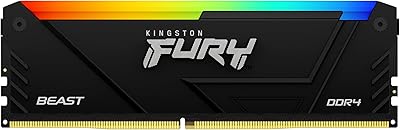
Kingston FURY Beast 32GB 3600MT/s DDR4 RGB Desktop Memory
87%
88%
Performance
93%
RGB Lighting Customization
91%
Ease of Installation
85%
Compatibility with AMD Ryzen
86%
Overclocking Potential (Intel XMP)
More
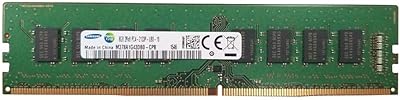
Samsung DDR4-2133p 8GB Desktop Memory
86%
91%
Value for Money
88%
Performance for Everyday Tasks
94%
Compatibility with Intel & AMD Systems
86%
Energy Efficiency
90%
Ease of Installation
More
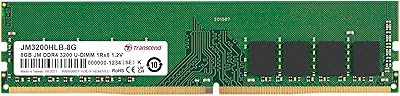
Transcend JM3200HLB-8G 8GB DDR4 Desktop RAM
74%
91%
Value for Money
88%
Compatibility
86%
Installation Ease
74%
Memory Speed
61%
Latency Performance
More
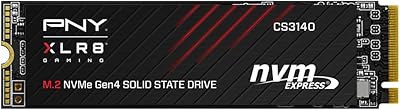
PNY XLR8 Gaming CS3140 4TB SSD
89%
96%
Sequential Read Performance
94%
Sequential Write Performance
91%
Random Read/Write IOPS
89%
Installation Ease
90%
PS5 Compatibility
More
Acclamator OUNCE 32GB DDR4 Desktop RAM
75%
88%
Value for Money
79%
Performance at Speed
74%
Compatibility
78%
XMP Reliability
57%
Brand Reliability
More
OWC 32GB DDR4 2666MHz SO-DIMM RAM Kit
85%
94%
Mac Compatibility
91%
Installation Ease
77%
Value for Money
86%
Build Quality
92%
Warranty & Support
More
NVTEK 32GB DDR4 3200MHz SODIMM RAM
77%
83%
Value for Money
68%
Compatibility
88%
Installation Ease
91%
Memory Capacity
57%
Brand Trust & Reputation
More

FAQ

It will physically work in AMD boards, but there is a nuance worth knowing. Intel systems recognize XMP 2.0 profiles natively, so speeds activate with one toggle. On AMD platforms, you'll typically need to enable a compatible profile manually in your BIOS, or set the frequency and timings yourself. It's not a dealbreaker, but AMD users should be comfortable with basic BIOS navigation.

By default, most motherboards will boot new RAM at a conservative base speed like 2133MHz or 2400MHz regardless of what the sticks are rated for. To get the full 3200MHz, you need to enter your BIOS after the first boot and enable the XMP profile. On Intel boards this is a one-click step; on AMD it may require a little more manual input.

Yes, in principle. If your motherboard has four DIMM slots, you can add another matching kit later. That said, running four sticks does increase the demands on your memory controller and can occasionally cause stability issues at higher speeds. For best results, try to match the brand, model, and speed of the original kit, and test stability after installation.

For pure gaming at 1080p or 1440p, 16GB is still sufficient for most titles. Where 32GB starts to justify itself is when you're gaming while streaming, running a browser with multiple tabs, keeping Discord open, or using creative software alongside your games. If you multitask heavily or work in memory-intensive applications between sessions, the upgrade is genuinely noticeable.

Most likely yes. This DDR4 memory kit does not have a tall heatspreader, so its height profile is relatively low compared to high-profile RGB alternatives. However, it is always worth checking the clearance specifications of your specific CPU cooler, especially if you use a large tower cooler with a wide base that hangs over the first DIMM slot.

No, the PNY XLR8 Gaming 32GB DDR4 Desktop Memory does not include RGB lighting. The styling is limited to the black PCB with gold and red printed accents. If RGB is important to your build aesthetic, you will need to look at other kits. If it is not, the lack of RGB is actually a selling point since it keeps the price down.
Yes, this 32GB desktop memory is compatible with Intel 600-series and 700-series motherboards that support DDR4. Just note that some newer boards, particularly higher-end Z790 variants, are DDR5-only, so confirm your board specifically supports DDR4 before purchasing.

First, make sure both modules are seated firmly in the correct slots. Most motherboards want dual-channel RAM installed in specific paired slots, usually slots 2 and 4, rather than slots 1 and 2. Consult your motherboard manual for the recommended configuration. If one stick still goes undetected after reseating, try each module individually to determine if one is faulty.

DDR4 memory is generally very durable and can outlast the rest of a build by years under normal operating conditions. PNY backs the XLR8 Gaming line with a lifetime warranty, which covers manufacturing defects. Most long-term owners report stable, trouble-free performance well past initial purchase, which aligns with the product's consistent buyer satisfaction record.

Absolutely. The kit is backward compatible with lower DDR4 frequencies, so if your board tops out at 2666MHz or 2933MHz, the memory will run at that speed instead without any issues. You won't get the full rated performance, but you also won't have any compatibility problems, which makes it a practical choice even if you plan to upgrade your motherboard later.

Where to Buy