Overview

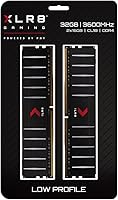
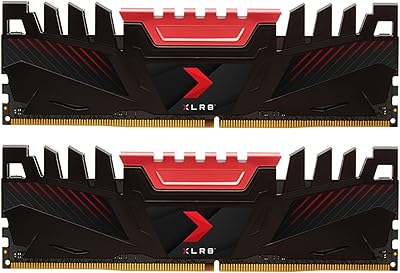
The PNY XLR8 Gaming 32GB DDR4 3600MHz Desktop RAM is a practical, no-nonsense memory kit aimed at builders who need solid performance without sacrificing clearance space inside their case. PNY sits comfortably in the reliable mid-range tier — not the flashiest brand on the shelf, but one with a consistent track record. The dual-channel 2x16GB configuration is the real story here: running two sticks in tandem gives your system noticeably better bandwidth than a single 32GB module ever would. At 3600MHz, you're hitting what most enthusiasts consider the price-to-performance sweet spot — fast enough to matter, affordable enough to justify. That said, this low-profile RAM kit isn't for everyone; if you're chasing ultra-tight timings or bold RGB lighting, look elsewhere.
Features & Benefits

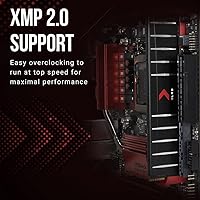
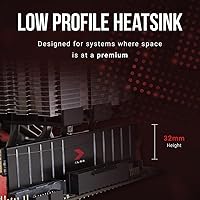
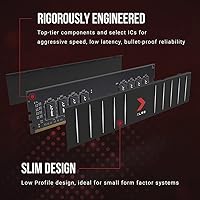
The most distinctive thing about this low-profile RAM kit is its 32mm profile height — noticeably shorter than standard DDR4 sticks, and it makes a real difference when you're running a tower cooler with fins that hang over the DIMM slots. The 3600MHz speed pairs with CL18 latency, which is a fair trade-off at this price tier; it's not the tightest timing available, but it's competent and stable in practice. Intel XMP 2.0 support means you enable the rated speed in BIOS with a single toggle — no manual tuning required. Operating at 1.35V is well within the normal range for performance DDR4. Backwards compatibility down to 2133MHz also adds peace of mind for boards with stricter memory support lists.

Best For

The XLR8 Gaming memory makes the most sense for two specific types of builders. If you're pairing it with a beefy air cooler like the Noctua NH-D15 or Deepcool AK620, the low clearance height is essentially the deciding factor — full-height sticks simply won't fit under those heatsinks on many boards. AMD Ryzen users also have a natural reason to land on 3600MHz: it aligns well with the Infinity Fabric clock, translating into tangible system responsiveness. For anyone jumping from 16GB, the upgrade feels meaningful in heavier workloads. ITX builders and budget-focused enthusiasts who don't need RGB or premium tight timings will find this DDR4 3600 kit hits a comfortable, sensible middle ground.

User Feedback

With a 4.6-star average across over 300 ratings, the general reception for this DDR4 3600 kit is genuinely positive — but the details matter. Most buyers highlight how XMP enables effortlessly on first boot, with broad compatibility reported across AMD and Intel motherboards alike. Stability during long gaming sessions and memory-intensive workloads gets consistent praise. On the critical side, a recurring theme is that CL18 timings leave some performance on the table compared to similarly priced G.Skill or Corsair options with tighter latency. A few users also found the black-and-gold styling underwhelming next to flashier alternatives. Overall, the feedback paints a picture of reliable, unfussy memory that does exactly what it promises without any drama.

Pros

  • The 32mm low-profile height solves real cooler clearance problems that standard-height sticks simply cannot.
  • XMP 2.0 enables the full 3600MHz speed with a single BIOS toggle — no manual tuning required.
  • Dual-channel 2x16GB configuration delivers meaningfully better bandwidth than a single 32GB module.
  • 3600MHz hits the well-documented Ryzen Infinity Fabric sweet spot for AMD platform users.
  • Backwards compatibility down to 2133MHz means it works reliably across a wide range of motherboards.
  • Stability under sustained, memory-intensive workloads gets consistent praise from real-world users.
  • The restrained black-and-gold design blends into most builds without clashing against other components.
  • Easy installation with broad reported compatibility across both AMD and Intel motherboard brands.
  • Operating at 1.35V is standard and safe for performance DDR4, with no exotic power requirements.

Cons

  • CL18 latency is not class-leading — tighter CL16 kits exist at a similar price from competing brands.
  • No RGB lighting makes this a poor fit for builders who prioritize a visually striking memory aesthetic.
  • The low-profile design, while a strength in constrained builds, offers zero benefit in open or spacious cases.
  • PNY lacks the brand prestige of G.Skill or Corsair, which may matter for warranty confidence to some buyers.
  • At 1.35V, voltage is slightly higher than entry-level DDR4 kits, which could be a minor concern on sensitive boards.
  • The XLR8 Gaming line has limited availability in some regions compared to more widely distributed competitors.
  • Manual overclocking headroom beyond the rated 3600MHz is modest; this kit is not tuned for extreme pushing.
  • Buyers who do not need the low-profile design are paying a form-factor premium they will never use.

Ratings

The scores below reflect an AI-driven analysis of verified global buyer reviews for the PNY XLR8 Gaming 32GB DDR4 3600MHz Desktop RAM, with spam, incentivized, and bot-generated feedback actively filtered out before scoring. Each category is weighted against real installation experiences, long-term stability reports, and direct comparisons buyers made against competing kits. Both the genuine strengths and the recurring frustrations are reflected honestly in every score.

Clearance & Low-Profile Design
93%
This is the category where the XLR8 Gaming memory earns its strongest marks and where most buyers specifically sought it out. Builders pairing it with large air coolers like the Noctua NH-D15 consistently report zero clearance issues, and ITX system builders highlight the 32mm height as the deciding factor over otherwise comparable kits.
A small number of users noted that without a clearance problem to solve, the low-profile design offers no tangible benefit — and may even feel like a downgrade aesthetically compared to taller, more visually imposing heat spreaders found on competing kits.
XMP Compatibility & Setup
89%
The overwhelming majority of buyers report that enabling XMP 2.0 in BIOS brought the kit to its full 3600MHz on the very first boot without any fuss. Across both AMD and Intel platforms, the profile loaded cleanly and held without needing secondary adjustments, which is exactly what most builders want from a performance kit.
A handful of users on older or budget motherboards found the XMP profile did not stick cleanly, requiring manual BIOS intervention to stabilize. These cases appear to be edge cases tied to specific board firmware rather than a systemic issue with the kit itself.
Stability & Reliability
91%
Long-term stability is one of this low-profile RAM kit's most praised qualities. Buyers running sustained gaming sessions, video exports, and virtual machine workloads report no unexpected crashes, blue screens, or memory errors over months of use, which speaks well to the quality of the underlying DRAM modules PNY is using.
A very small number of users reported stability hiccups specifically when running the kit in systems with aggressive memory overclocking beyond the rated XMP profile. This is largely expected behavior for a kit not marketed as an extreme overclocking product.
Performance at 3600MHz
78%
22%
For AMD Ryzen builds in particular, hitting the 3600MHz Infinity Fabric sync point translates to genuinely snappier system responsiveness — faster game load times, smoother multitasking, and better 1% lows in CPU-sensitive titles. The dual-channel configuration compounds this, delivering real bandwidth gains over single-channel setups.
The CL18 latency keeps this kit from competing with the best-performing options at this frequency tier. Buyers who benchmarked it against CL16 kits noted measurable differences in latency-sensitive workloads, and enthusiasts chasing top-tier scores will likely feel the gap more acutely than casual users.
Value for Money
82%
18%
At its price point, this DDR4 3600 kit strikes a reasonable balance between speed, capacity, and the specialized low-profile form factor. Buyers consistently note that paying a modest premium over standard-height kits for the clearance advantage is a fair trade, especially given that purpose-built low-profile options are relatively scarce.
Compared strictly on a specs-per-dollar basis, competing kits from G.Skill and Corsair sometimes offer tighter CL16 timings at similar or only slightly higher prices. Buyers who do not specifically need the low-profile design may find this kit a harder sell on pure performance value alone.
Motherboard Compatibility
86%
Reported compatibility spans a wide range of AMD X570, B550, and B450 boards as well as Intel Z490 and Z590 platforms, and the backwards-compatible frequency support down to 2133MHz adds a useful safety net for systems with stricter memory qualification lists. Most buyers had no compatibility-related surprises.
A few users with budget B450 or H410 boards noted that achieving stable 3600MHz required additional BIOS tuning beyond simply enabling XMP, and some boards never officially validated the kit at full speed. These are edge cases, but relevant for buyers on entry-level platforms.
CAS Latency & Timings
67%
33%
For everyday gaming and productivity tasks, CL18 at 3600MHz is practically indistinguishable from tighter alternatives in subjective feel. Users who were not actively benchmarking reported no sense of sluggishness, and for the majority of real-world workloads the latency delta is essentially invisible.
This is where the kit takes its most consistent critical hits. Benchmarking users and enthusiasts who compared it head-to-head with CL16 kits at similar frequencies noted a clear gap in latency-sensitive applications. If memory timing performance is your primary metric, CL18 is a genuine limitation at this speed class.
Build & Module Quality
84%
The physical construction of the XLR8 Gaming memory modules feels solid, with a well-fitted heat spreader that sits flush and shows no signs of warping or detachment even after multiple reseating cycles. The PCB quality appears consistent with what PNY delivers across its mid-range lineup.
The heat spreader on a low-profile 32mm stick is obviously thinner than on full-height modules, and a few users felt it offered less thermal coverage than they expected, though no thermal instability was reported in practice under normal desktop workloads.
Aesthetics & Visual Design
62%
38%
For builders who prefer a clean, professional look over aggressive styling, the matte black PCB and subtle gold accents are genuinely appealing. It blends quietly into most builds without clashing against other components, and the absence of RGB is a positive for those running non-lit systems.
Buyers expecting a visually impactful gaming aesthetic were frequently underwhelmed. The design reads more as functional than inspired, and compared to the lit, sculpted spreaders on G.Skill Trident Z or Corsair Vengeance RGB kits, the XLR8 look can feel plain inside a windowed case.
Installation Experience
88%
The straightforward DIMM form factor and clearly labeled orientation make physical installation genuinely effortless even for first-time builders. Multiple users specifically noted that the sticks seated with a satisfying, confident click and did not require excessive force, which is a small but reassuring quality indicator.
No meaningful installation complaints surfaced in buyer feedback. The only minor note was that a small number of users initially installed the sticks in adjacent slots rather than the correct alternating slots for dual-channel, which is a user error rather than a product issue.
Thermal Performance
74%
26%
Under standard desktop and gaming workloads, the kit runs cool and stable without active cooling. The low-profile spreader still dissipates enough heat for DDR4 operating at 1.35V, and no thermal throttling or heat-related instability was reported in typical use cases.
The compact heat spreader naturally has less surface area than full-height alternatives, which means sustained extreme workloads — particularly on overclocked configurations beyond the rated XMP — could push thermals higher than a taller module would under the same conditions.
Overclocking Headroom
58%
42%
Some users reported modest success pushing the kit slightly beyond 3600MHz with manual timing adjustments, and the XMP baseline provides a clean, stable starting point for incremental tuning experimentation on capable motherboards.
This is not a kit built with hardcore overclocking in mind, and the feedback reflects that. Most buyers who attempted to push subtimings tighter or clock speeds higher ran into stability walls relatively quickly, and the CL18 baseline gives less room to maneuver compared to premium binned alternatives.
Brand Confidence & Warranty
76%
24%
PNY backs this kit with a limited lifetime warranty, which matches the coverage offered by most major competitors. Long-term buyers who have owned PNY memory for multiple years report no significant reliability concerns, and the brand has a stable enough track record to feel trustworthy for a desktop memory purchase.
PNY does not carry the same enthusiast brand equity as Corsair or G.Skill, and a subset of buyers expressed mild hesitation at checkout purely on name recognition. RMA experiences with PNY are less frequently discussed in enthusiast communities, making it harder to gauge support quality under adverse circumstances.

Suitable for:

The PNY XLR8 Gaming 32GB DDR4 3600MHz Desktop RAM was clearly built with a specific type of builder in mind, and for that builder it is genuinely hard to beat at this price tier. If you are running a large tower air cooler — think Noctua NH-D15, Deepcool AK620, or anything with fins that hang aggressively over the motherboard — the 32mm low-profile height is not a nice-to-have, it is a necessity. AMD Ryzen platform users also have a natural alignment here, since 3600MHz sits right at the Infinity Fabric sweet spot, meaning you are getting tangible system responsiveness rather than just a spec sheet number. Compact ITX and mATX builders dealing with tight DIMM slot headroom will appreciate the same clearance advantage. And if you are upgrading from 16GB to 32GB in a dual-channel configuration for the first time, the difference in multitasking headroom — across gaming, content creation, or even heavy browser workloads — is real and noticeable.
Not suitable for:

The PNY XLR8 Gaming 32GB DDR4 3600MHz Desktop RAM makes deliberate trade-offs, and buyers who do not share its specific constraints will likely find better value elsewhere. If your build has no cooler clearance issues and height is a non-factor, competing kits from G.Skill or Corsair often offer tighter CL16 timings at comparable or slightly higher price points — and tighter latency does matter if you are benchmarking or pushing competitive frame rates. RGB enthusiasts looking for a visual centerpiece in a windowed case will find the understated black-and-gold design disappointing compared to more theatrical alternatives. Overclockers who enjoy manually dialing in subtimings may also find the CL18 baseline a less exciting starting point than kits with more headroom. Finally, laptop or small-form-factor PC users should note this is strictly a desktop DIMM — it has no relevance for SO-DIMM-based systems whatsoever.
Specifications

  • Capacity: This kit provides 32GB of total memory across two 16GB DDR4 SDRAM modules in a dual-channel configuration.
  • Memory Type: DDR4 SDRAM, the standard for desktop platforms released between 2016 and the early 2020s.
  • Frequency: Rated at 3600MHz (PC4-28800) when XMP 2.0 is enabled in BIOS.
  • CAS Latency: CL18 primary latency at the rated 3600MHz XMP speed profile.
  • Voltage: Operates at 1.35V under the XMP profile, which is standard for performance-tier DDR4.
  • Form Factor: Standard DIMM form factor designed exclusively for desktop motherboards.
  • Profile Height: Low-profile design measuring just 32mm tall, significantly shorter than most standard DDR4 heat spreaders.
  • XMP Support: Intel XMP 2.0 certified, allowing automatic speed configuration through a single BIOS setting.
  • Backwards Compatibility: Compatible with lower DDR4 frequencies including 3200, 3000, 2933, 2800, 2666, 2400, and 2133MHz.
  • Kit Configuration: Ships as a matched two-module kit optimized for dual-channel installation.
  • Color & Finish: Black PCB with gold heat spreader accents; no RGB lighting elements.
  • Module Dimensions: Each module measures approximately 3.94″ in length and 1.26″ in height (32mm profile).
  • Weight: The complete two-module kit weighs approximately 3.52 ounces total.
  • Model Number: Official model identifier is MD32GK2D4360018LP.
  • Brand Series: Part of PNY's XLR8 Gaming lineup, which targets enthusiast and gaming desktop users.
  • Release Date: First made available in October 2021.
  • Warranty: PNY provides a limited lifetime warranty on this memory kit.
  • Compatible Platform: Designed for desktop systems; compatible with Intel and AMD platforms that support DDR4 memory.

Related Reviews
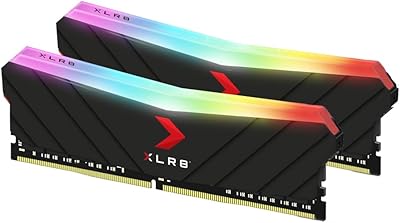
PNY XLR8 Gaming 32GB DDR4 Desktop RAM
79%
88%
Performance at Rated Speed
83%
Plug-and-Play Setup
79%
RGB Lighting Quality
91%
Thermal Efficiency
84%
Compatibility Range
More
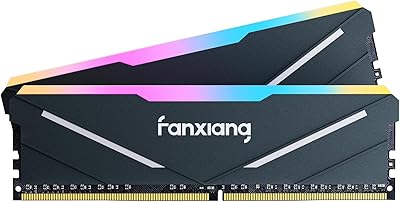
fanxiang RGB DDR4 32GB 3600MHz RAM
80%
88%
Value for Money
91%
Installation Ease
79%
XMP & BIOS Compatibility
82%
Gaming Performance
84%
RGB Aesthetics
More
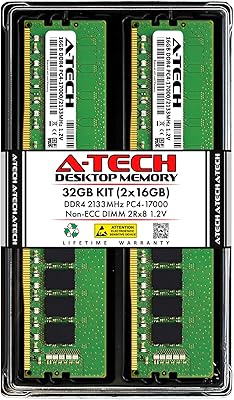
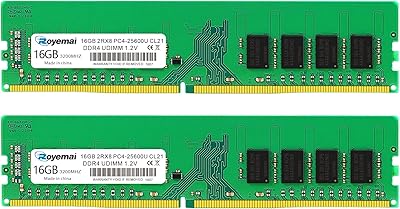
A-Tech 32GB DDR4 2133MHz Desktop RAM
79%
88%
Value for Money
94%
Installation Ease
69%
Compatibility
86%
Stability & Reliability
61%
Memory Speed
More
D DUOMEIQI 32GB Kit DDR4 3200MHz Desktop RAM
87%
91%
Performance for Gaming
88%
Ease of Installation
85%
System Compatibility
92%
Value for Money
87%
Multitasking & Productivity Performance
More
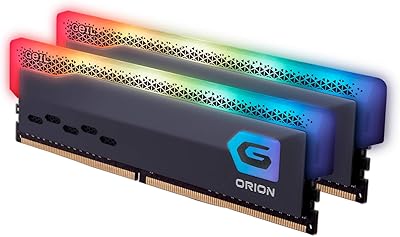
GeIL Orion RGB DDR4 RAM 32GB (2x16GB) 3600MHz
88%
92%
Gaming Performance
89%
RGB Customization
88%
Ease of Installation
87%
Value for Money
85%
Multitasking Performance
More
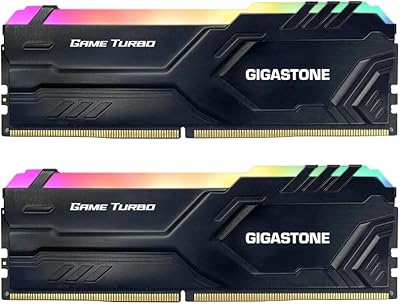
Gigastone Game Turbo 64GB Kit DDR4 RAM
77%
88%
Value for Money
84%
Performance at Speed
91%
XMP Setup Ease
87%
Stability & Reliability
82%
Platform Compatibility
More
Gigastone Game Turbo 32GB DDR4 RAM
80%
88%
Value for Money
91%
Installation Ease
86%
XMP Performance
83%
Gaming Performance
84%
RGB Lighting Quality
More
PNY XLR8 Gaming 32GB DDR4 Desktop Memory
83%
93%
Installation Ease
88%
Performance Consistency
74%
Compatibility
86%
Value for Money
91%
Long-Term Reliability
More
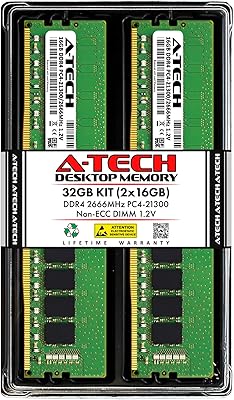
A-Tech 32GB DDR4 2666MHz Desktop RAM Kit
81%
88%
Value for Money
71%
Compatibility
93%
Ease of Installation
82%
Performance Improvement
84%
Build Quality
More
Silicon Power Value Gaming DDR5 32GB RAM
76%
84%
Value for Money
81%
Performance at Rated Speed
58%
Compatibility
89%
XMP & EXPO Activation
83%
Thermal Management
More

FAQ

Yes, but it is straightforward. By default, your system will boot the memory at the motherboard's standard JEDEC speed — often 2133MHz or 2400MHz. To unlock the full 3600MHz, go into your BIOS, find the XMP or DOCP setting, and enable it. That is all there is to it; no manual timing adjustments needed.

That is exactly the scenario this low-profile RAM kit was designed for. At just 32mm tall, it clears the fins of virtually every large air cooler on the market, including the NH-D15 and comparable units from Deepcool, be quiet!, and Thermalright. Standard-height DDR4 sticks often top out at 42–44mm, which causes real clearance conflicts with those coolers.

It is solid, but not the absolute best available at this speed. CL18 at 3600MHz is a reasonable and stable combination — you will not notice the difference in everyday gaming or productivity. If you are benchmarking or doing competitive performance tuning, kits offering CL16 at the same frequency exist, often for a modest price premium. For most users, CL18 at 3600MHz is plenty.

Yes, and it is actually a natural fit. Ryzen processors using AMD's Infinity Fabric architecture perform best when memory runs at or near 3600MHz, since that frequency aligns the fabric and memory clocks in a 1:1 ratio. Just enable DOCP (AMD's version of XMP) in your BIOS and you are good to go.

Technically yes, but you would be running in single-channel mode with one stick, which cuts memory bandwidth roughly in half. The kit is sold and tested as a matched pair for dual-channel operation, so you would get the best performance — and the experience the kit was designed for — by installing both sticks from the start.

No. The XLR8 Gaming memory uses a plain black PCB with gold-accented heat spreaders and no RGB elements at all. If a lit memory kit is important to your build aesthetic, this is not the right choice. If you prefer a clean, understated look — or simply do not want to manage RGB sync software — it works in your favor.

The kit will still work — it will just default to a lower supported frequency, such as 2666MHz or 3200MHz, depending on your board. PNY built in backwards compatibility with a range of standard DDR4 speeds for exactly this reason. You will lose some performance headroom, but the system will remain stable.

For pure gaming in 2024 and beyond, 32GB is increasingly practical rather than excessive. Modern titles are creeping past 16GB recommendations, and if you run your browser, Discord, and other background apps while gaming, 16GB can start to feel tight. For content creators who also game, 32GB is genuinely useful. If all you do is light gaming on older titles, 16GB would likely suffice.

Check your motherboard manual for the correct slot configuration — most boards want the sticks in slots 2 and 4 (the second and fourth slots from the CPU), not slots 1 and 2 side by side. Installing them in the wrong slots will still work, but you will miss out on dual-channel bandwidth. The manual diagram takes about 30 seconds to check and is worth it.

PNY offers a limited lifetime warranty on this DDR4 3600 kit, which matches the standard offered by most major competitors including Corsair and G.Skill. In practice, DDR4 RAM rarely fails outright, so warranty terms matter less here than with mechanical components. PNY's customer support reputation is generally considered adequate, though Corsair's RMA process is often cited as more streamlined by enthusiasts who have used both.

Where to Buy