
Overview

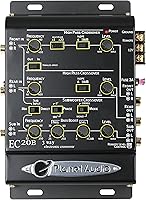
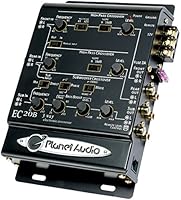
The Planet Audio EC20B Car Electronic Crossover is a budget-friendly 3-way unit built for car audio enthusiasts who want more precise signal control than a standard head unit can deliver. A crossover splits your audio signal into dedicated frequency bands — highs to tweeters, mids to midrange drivers, lows to your subwoofer — so each speaker only handles what it was designed for. This crossover unit has been on the market since 2009, and that kind of longevity at an accessible price point usually means it fills a real, practical need. Planet Audio has always catered to value-conscious builders, and the EC20B fits squarely in that tradition. Don't expect boutique audiophile construction here — but for the right buyer, that's perfectly fine.

Features & Benefits

The EC20B splits your signal three ways — high, mid, and low — directing each band to the right speaker zone without overlap or muddiness bleeding between channels. The variable subwoofer filter sweeps from 32 Hz all the way to 250 Hz, giving you real flexibility to tune low-end rolloff to match your enclosure and amplifier combination. The high-pass filter tops out at 8 kHz, which is a wider range than many competitors at this price, handling tweeters cleanly. A built-in bass boost lets you add up to 12 dB of punch at a frequency you select, saving you from needing a separate equalizer in simpler setups. The 8V pre-amp output also gives aftermarket amplifiers a strong, clean signal level to work from.

Best For

This signal processor is a natural fit for the first-time DIY builder stepping up from a factory system who needs to actively manage frequency routing across multiple amplifiers. If your head unit lacks high-voltage preamp outputs, the EC20B's boosted signal level bridges that gap nicely. It also handles setups where a subwoofer runs alongside full-range speakers from separate amps, especially when phase alignment is a concern. Experienced installers running complex multi-zone builds or chasing precise digital time-alignment will quickly outgrow it, though. For a second vehicle, a project car, or anyone wanting functional active crossover control without committing to a full DSP processor budget, it lands in a useful spot.

User Feedback

Buyers who have spent time with this crossover unit generally appreciate how straightforward the installation is — the inputs and outputs are clearly marked, and most people with basic car audio experience report getting it running without much difficulty. Improved bass separation after adding it to a system comes up repeatedly as a genuine highlight. On the critical side, a consistent thread in longer-term reviews points to modest build quality, with the plastic housing drawing mixed reactions over time. The bass boost is useful at moderate settings, but pushing it hard tends to introduce distortion rather than clean added punch. Overall, value-for-money sentiment leans noticeably positive, particularly among buyers who approached the unit with expectations matched to its price tier.

Pros

  • Clear labeling on all inputs and outputs makes installation approachable even for first-timers.
  • Three-way signal splitting keeps highs, mids, and lows properly separated across dedicated speaker zones.
  • The subwoofer phase toggle is genuinely useful for fixing bass cancellation without repositioning hardware.
  • 8V preamp output gives aftermarket amplifiers a stronger, cleaner signal than most factory head units can supply.
  • The high-pass filter's wide range makes it flexible enough to work with a broad variety of tweeter and midrange drivers.
  • Variable bass boost frequency lets you target exactly where you want added punch rather than applying a fixed shelf.
  • Compact dimensions make it easy to tuck into tight install locations under a dash or behind a panel.
  • Has maintained consistent market availability since 2009, suggesting reliable parts sourcing and brand support.
  • Noticeably improves bass separation in multi-amp setups where previously the sub and mids were stepping on each other.

Cons

  • Plastic housing feels lightweight and raises questions about durability in hot, enclosed install environments.
  • Bass boost introduces audible distortion when pushed toward its upper range rather than delivering clean added output.
  • No digital display or precision markings on the dials, making repeatable tuning adjustments harder to nail down.
  • The EC20B offers no time-alignment or parametric EQ, which limits its usefulness as a system grows more complex.
  • Input voltage ceiling is low, which can be a bottleneck when paired with higher-output source units.
  • Build quality inconsistencies have been noted across units, suggesting quality control is not tightly managed.
  • Offers no remote gain or tuning control, so adjustments require physical access to the unit after installation.
  • Buyers with amplifiers that already include onboard crossover controls may find little added value here.

Ratings

The scores below reflect our AI-driven analysis of verified global user reviews for the Planet Audio EC20B Car Electronic Crossover, with spam, bot-generated, and incentivized feedback actively filtered out before scoring. Every category captures the honest consensus — what buyers genuinely praised and where frustration consistently surfaced — so you get a transparent picture before committing to a purchase. Both the strengths that make this crossover unit a popular budget pick and the limitations that have disappointed some buyers are reflected without bias.

Value for Money
84%
Buyers consistently describe this crossover unit as one of the better budget options for the functionality it delivers. For someone building their first multi-amp setup without a large budget, getting active 3-way crossover control, phase adjustment, and bass boost in one box at this price tier feels like a genuine win.
A segment of reviewers feels the value proposition weakens over time if reliability issues emerge, since replacing or repairing the unit erodes the initial savings. Those comparing it directly to mid-range competitors note the gap in build and component quality starts to feel significant once you factor in longevity.
Ease of Installation
81%
19%
Clear labeling on every input and output is one of the most frequently praised aspects, especially among first-time DIY installers who dread guesswork during a dash install. The standard RCA connections mean no proprietary cables or adapters are needed, and most buyers report getting the unit running in under two hours.
A handful of reviewers note the included documentation is sparse, which means anyone unfamiliar with crossover signal routing may need to consult external guides to understand optimal placement in their signal chain. Routing RCA cables cleanly to a hidden mounting spot can also add unexpected complexity to what seems like a simple install.
Build Quality
57%
43%
The unit is compact and light enough to mount discreetly in tight spaces, and for buyers who tuck it safely behind a panel in a climate-controlled cabin, it generally holds together through regular daily use without obvious mechanical failure.
The plastic housing is the most consistent point of criticism across reviews, with several users describing it as flimsy relative to even modestly more expensive competitors. Long-term reliability concerns surface frequently, particularly from buyers in warmer climates where heat buildup in enclosed install locations accelerates wear on the chassis and internal components.
Bass Performance
76%
24%
The combination of a sweepable low-pass filter and the variable bass boost frequency gives users a genuinely useful range of tools to shape low-end output without adding a separate equalizer. Buyers running a single subwoofer off a dedicated amp report that dialing in the 32–250 Hz filter range makes a noticeable difference in how the sub integrates with the rest of the system.
The onboard bass boost is where opinions divide sharply — at conservative settings it adds punch, but multiple reviewers warn that pushing it beyond roughly half its range introduces audible distortion that undermines the clarity gains made elsewhere. For buyers expecting clean, high-output bass boost across the full 12 dB range, the reality tends to fall short.
Signal Clarity
72%
28%
For an entry-level unit, the EC20B does a respectable job of passing a clean signal when operating within its comfort zone — moderate gain settings with a factory or low-output aftermarket head unit. Buyers with well-matched system components report improved clarity and reduced muddiness compared to running everything full-range.
When pushed with higher input voltages near or at the 4.5V ceiling, some users detect a slight degradation in signal quality, including faint noise floor increases. Audiophiles with trained ears or high-resolution setups tend to notice colorations that buyers in more casual listening environments would likely never register.
Subwoofer Phase Control
83%
The 0/180-degree phase toggle earns consistent praise from buyers who have dealt with bass cancellation caused by awkward subwoofer placement — flipping the switch and hearing the low end snap back into coherence is a satisfying and practical fix that saves time during install tuning.
A binary switch rather than a continuously variable phase adjustment limits its usefulness to installations where exactly 180 degrees of correction is the right answer, which is not always the case. Buyers whose enclosures require an intermediate phase offset are left without a solution and may need to address the issue elsewhere in the chain.
High-Pass Filter Range
79%
21%
The high-pass filter's sweep from 40 Hz all the way to 8 kHz is notably wider than what many competitors in this price bracket offer, which makes this signal processor versatile enough to protect a broad range of tweeter and midrange driver combinations without needing to swap units.
Some users note that the filter knob's physical travel across such a wide range makes precise fine-tuning difficult — small movements of the dial can shift the crossover point considerably, making it hard to land exactly where you want without a reference measurement tool.
Compatibility
77%
23%
Standard RCA in and out makes the EC20B broadly compatible with the overwhelming majority of aftermarket head units and amplifiers on the market, and the 8V output handles most common amp input sensitivities without needing significant gain adjustment at the amp.
The 4.5V input ceiling creates friction for anyone running a high-output aftermarket head unit, since exceeding that threshold risks clipping at the crossover stage. Buyers with factory radios lacking RCA outputs face an extra step — and extra cost — adding a line output converter before the signal even reaches this unit.
Tuning Flexibility
74%
26%
Having independent control over the low-pass frequency, high-pass frequency, bass boost level, bass boost center frequency, filter slope, and subwoofer phase in a single box gives budget builders more tuning levers than most single units at this price point provide.
All controls are analog knobs without detents, numeric scales, or memory positions, so returning to a previously dialed-in setting after any adjustment requires guesswork. Buyers who share the vehicle with others who might accidentally bump the controls have noted this as a real, recurring frustration.
Noise Floor
66%
34%
In well-grounded installs with quality RCA cables, most buyers report an acceptably quiet noise floor during normal listening — the unit does not introduce obvious hiss or hum when the system is properly set up and grounded.
Ground loop sensitivity is a reported issue in a subset of installations, particularly in vehicles with complex factory electrical systems. Buyers who did not invest in quality shielded RCA cables or take care with grounding report picking up alternator whine or interference that requires additional troubleshooting to resolve.
Mounting & Footprint
80%
20%
At just over two pounds and with a relatively flat profile, this crossover unit is easy to tuck under a dash, inside a center console cavity, or behind a kick panel without taking up significant real estate — a practical advantage in smaller vehicles where space is limited.
The plastic housing means it is not well-suited to trunk mounting in hot climates without some form of heat shielding, and the mounting hardware included in the box is minimal, leaving buyers to source their own brackets or use industrial adhesive solutions.
Long-Term Reliability
58%
42%
A meaningful portion of buyers report years of trouble-free use when the unit is installed in protected, well-ventilated locations, and its long market history since 2009 suggests that it is not plagued by systematic early failure.
A consistent thread in longer-term reviews describes failure or degraded performance after one to three years, particularly in hot-climate installs or setups where the unit sees heavy heat cycling. At this price tier, the component-level quality does not inspire high confidence for buyers planning a system they intend to keep for five or more years.
Documentation & Support
53%
47%
For buyers already familiar with car audio signal chains, the labeled controls are intuitive enough that the included manual is largely unnecessary, and Planet Audio's long market presence means third-party installation guides and community forum discussions are easy to find online.
The printed documentation packaged with the unit is widely considered inadequate for newcomers — it covers the basics but offers little guidance on optimal crossover point selection, gain staging relative to the amplifier, or troubleshooting common issues like ground noise. First-time installers frequently report having to rely entirely on YouTube and forums to fill that gap.

Suitable for:

The Planet Audio EC20B Car Electronic Crossover is a strong fit for the budget-conscious car audio enthusiast who is ready to move beyond a factory head unit but isn't yet committed to a high-end DSP processor. If you're running separate amplifiers for your subwoofer and full-range speakers, this crossover unit gives you the active frequency management to keep those channels clean and properly separated. First-time DIY installers tend to get the most out of it — the controls are approachable, and the wide filter ranges give you enough room to experiment and dial things in without needing advanced signal processing knowledge. It's also a practical choice for a second vehicle or a project car where you want real crossover functionality without a significant investment. Anyone whose primary goal is tightening up bass response and eliminating frequency overlap between their sub and mids will find it does exactly that job well.

Not suitable for:

Serious audiophiles or experienced builders running high-output, multi-zone systems should look past this signal processor toward a proper digital signal processor with time-alignment and parametric EQ capabilities. The EC20B is an entry-level unit, and its plastic housing and component quality reflect that — if long-term reliability in a hot car environment is a priority, the build materials may give you pause. Buyers expecting the onboard bass boost to function cleanly at its upper limits will likely be disappointed, as it tends to color the sound noticeably when pushed hard. It's also not the right tool if your amplifier chain already has well-featured crossovers built in, since adding this unit would introduce unnecessary signal chain complexity. If your head unit already outputs a strong preamp voltage and your amps have their own high- and low-pass filtering, the practical value of adding this crossover unit shrinks considerably.

Specifications

  • Crossover Type: 3-way active electronic crossover that splits the audio signal into separate high, mid, and low frequency bands for dedicated speaker zones.
  • Subwoofer Filter: Variable low-pass filter for the subwoofer channel sweeps from 32 Hz to 250 Hz, allowing precise control over low-end rolloff.
  • High-Pass Filter: Variable high-pass filter spans 40 Hz to 8 kHz, providing an unusually wide tuning range suitable for both tweeters and midrange drivers.
  • Filter Slope: Selectable filter slope of either 6 dB or 18 dB per octave, giving users control over how steeply frequencies are cut at the crossover point.
  • Bass Boost: Onboard bass boost is variable from 0 to 12 dB and can be centered anywhere between 25 Hz and 250 Hz for targeted low-frequency emphasis.
  • Subwoofer Phase: Subwoofer output phase is switchable between 0 and 180 degrees to help align bass output with the rest of the speaker system.
  • Output Voltage: Maximum preamp output voltage is 8V, which exceeds the output level of most factory head units and provides a strong signal to aftermarket amplifiers.
  • Input Voltage: Maximum input voltage is rated at 4.5V, which should be noted when pairing with high-output aftermarket source units.
  • Frequency Response: The unit maintains a frequency response of 10 Hz to 20 kHz, covering the full range of human hearing with minimal roll-off at the extremes.
  • Output Channels: Provides three separate output channels: front, rear, and subwoofer, enabling independent amplifier connections for each speaker zone.
  • Power Requirement: Operates on a standard automotive 12V DC power supply, compatible with all standard passenger vehicle electrical systems.
  • Dimensions: The unit measures 8.3 x 5.1 x 1.8 inches, a compact footprint that fits in most under-dash or behind-panel mounting locations.
  • Weight: Weighs 2.35 pounds, light enough for flexible mounting without requiring heavy-duty brackets or additional support hardware.
  • Manufacturer: Designed and sold by Planet Audio, a brand focused on accessible, value-oriented car audio components for the consumer market.
  • Model Number: The official model designation is EC20B, which should be referenced when sourcing compatible wiring harnesses or replacement parts.
  • Market Availability: First made available in May 2009, the EC20B has maintained continuous market presence for over fifteen years, indicating stable product support.
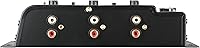
  • Connectivity: Uses standard RCA-style preamp connections for both inputs and outputs, compatible with the vast majority of aftermarket head units and amplifiers.

Related Reviews
Planet Audio P350MB Single Din Car Stereo
74%
78%
Bluetooth Connectivity
86%
Ease of Installation
81%
Hands-Free Calling
74%
Voice Assistant Integration
62%
Audio Output Quality
More
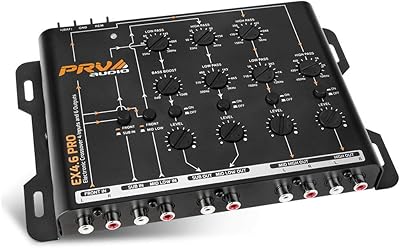
PRV Audio EX4.6PRO 4-Way Electronic Crossover

82%
91%
Signal Quality
93%
Output Headroom
62%
Build Quality
84%
Value for Money
87%
Tuning Flexibility
More
Planet Audio P9695B Double Din Car Stereo
69%
83%
Value for Money
78%
Bluetooth Performance
58%
Screen Mirroring (A-Link)
61%
Touchscreen Responsiveness
86%
Media Source Versatility
More
Planet Audio PEQ10 Car Equalizer
85%
88%
Sound Quality
91%
Ease of Installation
87%
Bass Control
85%
Versatility in Setup
72%
Remote Control Functionality
More
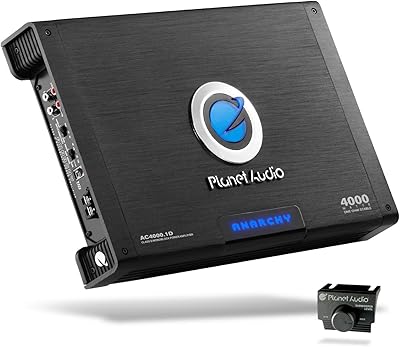
Planet Audio AC4000.1D Monoblock Car Amplifier
77%
88%
Value for Money
79%
Power Output
82%
Thermal Management
67%
Build Quality
63%
Installation Experience
More
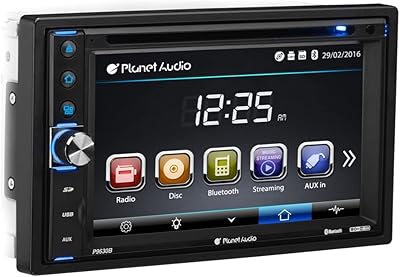
Planet Audio P9630B Double Din DVD Receiver
66%
83%
Value for Money
76%
Bluetooth Performance
74%
Touchscreen Usability
62%
Sound Quality
44%
Preamp Output Quality
More
Planet Audio TR1500.1M Monoblock Car Amplifier
70%
88%
Value for Money
79%
Bass Output & Performance
83%
Ease of Installation
63%
Build Quality
57%
Thermal Management
More
Stetsom STX 104 PRO Car Audio Crossover
83%
89%
Sound Quality
85%
Ease of Installation
92%
Customization Options
87%
Build Quality
76%
Compatibility with Other Audio Equipment
More
Planet Audio AC8D 8-Inch Car Subwoofer
71%
88%
Value for Money
74%
Bass Output & Sound Quality
63%
Build Quality
79%
Amplifier Compatibility
83%
Installation Ease
More
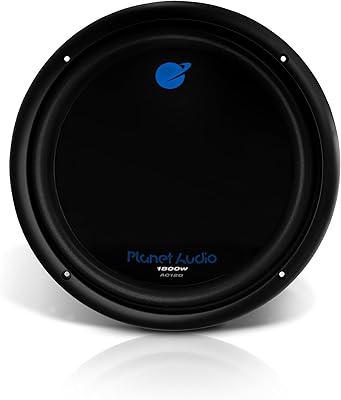
Planet Audio AC12D 12-Inch Car Subwoofer
72%
88%
Value for Money
74%
Bass Output
83%
Voice Coil Flexibility
62%
Build Quality
57%
Long-Term Durability
More

FAQ

It depends on whether your factory head unit has RCA preamp outputs. Many OEM stereos do not, which means you would need a line output converter to step the speaker-level signal down to a preamp signal before feeding it into this crossover unit. If your factory radio does have RCA outputs, you can connect directly.

The slope controls how sharply frequencies are cut beyond your chosen crossover point. A 6 dB slope is more gradual, meaning some overlap exists between bands, which can sound more natural but lets more unwanted frequencies through. The 18 dB slope cuts more aggressively, which is generally better for protecting tweeters or getting tighter bass separation. Most people running a dedicated subwoofer will prefer the steeper 18 dB setting on the low-pass output.

Yes, that is exactly what the 0/180-degree phase toggle is there for. When a subwoofer is mounted in an enclosure positioned away from the main speakers, the bass waves can arrive slightly out of sync, causing them to partially cancel each other out. Flipping the phase switch reverses the subwoofer's output polarity, and in many installations that restores the punch and fullness you expect from the low end.

Most first-time installers find it manageable. The inputs and outputs are clearly labeled, and the connections are standard RCA, so no special tools or adapters are needed in most setups. The main challenge is deciding where to physically mount it and routing your RCA cables cleanly. Budget a couple of hours if this is your first time working behind a dash.

Yes, that is one of the most common use cases for this signal processor. You connect your head unit's preamp output into the EC20B's inputs, then run separate RCA cables from the front and rear outputs to your full-range amp, and from the subwoofer output to your sub amp. Each channel gets only the frequencies appropriate for it.

Keep it conservative. A few decibels of boost at a well-chosen frequency can meaningfully improve perceived punch, but pushing the boost toward its upper limit tends to introduce distortion rather than clean output, and it puts extra thermal stress on your subwoofer and amplifier. Many experienced installers set the bass boost to zero and handle any low-end shaping through the amplifier's gain and the subwoofer's own tuning instead.

The EC20B improves signal management, not the quality of the signal itself. If your amplifiers and speakers are already good, actively routing the correct frequencies to the right drivers will make a noticeable difference in clarity and bass separation. But if the rest of your chain is weak, the crossover alone won't compensate for that.

Under the dash is the most common spot, ideally somewhere with moderate airflow and away from direct heat sources like the transmission tunnel. Behind a removable panel in the trunk works well too if your RCA runs are already going back there. Avoid mounting it in direct sunlight or anywhere it might get wet.

Head unit crossovers are often limited in range and can degrade signal quality because they apply the filtering digitally before the signal hits the preamp output. A dedicated external crossover like this one handles the split after the full-range preamp signal leaves the head unit, which preserves signal integrity. It also typically gives you wider tuning ranges and more physical control over the settings.

Lifespan varies depending on the install environment, but units in moderate climates that are installed away from extreme heat tend to hold up for several years of regular use. The build is entry-level plastic rather than metal, so it is not as robust as a higher-end unit would be. If you are building a long-term system you plan to keep for many years, it is worth budgeting for an upgrade down the line, but for a project build or a system you expect to evolve, it handles the job reliably enough.