Overview

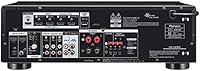
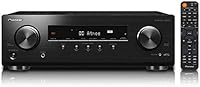
The Pioneer VSX-534 is a 5.2-channel AV receiver from 2019, aimed squarely at home theater builders who want real surround sound performance without an intimidating price tag. It passes through 4K video with both HDR10 and Dolby Vision intact, meaning your TV gets the full picture signal without any downgrading. Bluetooth streaming is built in — pair your phone once and this AV receiver picks up the connection automatically next time. At roughly 12 pounds and a standard rack-friendly footprint, it slots into most entertainment centers without trouble. If you're trading up from a soundbar or a bare-bones stereo setup, this Pioneer receiver represents a solid entry point into proper multi-channel audio.

Features & Benefits

One of the more practical additions here is the Dolby Atmos Height Virtualizer, which simulates overhead audio without requiring you to mount speakers on the ceiling or install Atmos-enabled drivers. It's not identical to a full height-speaker setup — that's worth stating plainly — but for most living rooms it delivers a noticeably more dimensional soundstage. DTS:X decoding handles object-based content from that format as well. The five HDMI inputs mean you can keep a console, a Blu-ray player, a streaming stick, and more all connected at once. A mid-range dialogue control lets you push vocal frequencies up independently, which is genuinely useful when action scenes are drowning out conversation. The three-slot personal preset memory rounds things out for households with mixed listening habits.

Best For

This AV receiver makes the most sense for a few specific types of buyers. If you're building your first proper home theater and want Atmos and 4K support without jumping into premium territory, it checks those boxes cleanly. Cord-cutters with multiple HDMI devices — a streaming box, a gaming console, maybe a smart TV stick — will appreciate having five HDMI inputs without constantly swapping cables. Soundbar upgraders with an existing set of 5.1 speakers will find the transition straightforward. The virtual height channels work well in small to mid-sized rooms; in larger spaces, the amp section may feel stretched. Note that this Pioneer receiver has no Wi-Fi or voice assistant support, which may matter if smart home integration is on your checklist.

User Feedback

Across more than a thousand ratings, this Pioneer receiver holds a 4.2 out of 5 average, and the feedback breakdown is pretty telling. Setup gets praised regularly — buyers mention the on-screen menus are clear and the initial calibration doesn't require a manual. Bluetooth reliability is another frequent highlight, with the auto-reconnect working as advertised for most users. On the critical side, several reviewers point out the absence of Wi-Fi and app control, which rivals at a similar price sometimes include. A handful of buyers in larger rooms note the amplifier feels underpowered under demanding conditions. The virtual Atmos performance draws mixed reactions — most find it impressive given the price, but those coming from a full Atmos setup will notice the difference. Overall, satisfaction runs high for the intended use case.

Pros

  • Dolby Atmos Height Virtualizer delivers convincing overhead audio without requiring ceiling speaker installation.
  • Five HDMI inputs handle multiple devices simultaneously without constant cable-swapping.
  • Bluetooth auto-reconnect resumes playback from a paired device without any manual re-pairing.
  • 4K HDR10 and Dolby Vision passthrough work reliably without degrading the video signal.
  • The on-screen menu system is clean and well-organized, making initial setup approachable for first-timers.
  • Mid-range dialogue control independently boosts vocal clarity — a genuine help for TV dramas and talk-heavy content.
  • DTS:X decoding adds flexibility for object-based audio content beyond just the Dolby ecosystem.
  • The personal preset system lets multiple household members store their own preferred listening configurations.
  • Compact, standard-rack footprint fits most AV cabinets without requiring shelf modifications.
  • Strong overall satisfaction among verified buyers, with consistent praise across diverse usage scenarios.

Cons

  • No Wi-Fi, AirPlay, Chromecast, or companion app — smart streaming requires a separate device entirely.
  • No automatic room correction system means speaker calibration is entirely manual, which takes time to get right.
  • The amplifier section struggles in larger rooms or when driving less efficient speakers at higher volumes.
  • No HDMI 2.1 support rules out 4K at 120Hz passthrough for next-generation console gaming.
  • The remote lacks backlighting, making it awkward to use in a properly darkened viewing room.
  • No HDMI eARC support limits lossless audio return from newer smart televisions.
  • Speaker terminals accept only bare wire or pin connectors — no banana plug binding posts included.
  • Some long-term owners report HDMI and Bluetooth reliability issues emerging after roughly 18 to 24 months.
  • Virtual Atmos performance drops off noticeably in open-plan or large spaces where the effect becomes diffuse.
  • Warranty and support experiences vary significantly for buyers outside North America.

Ratings

The Pioneer VSX-534 scores below are generated by AI after analyzing thousands of verified global user reviews, with spam, bot-submitted, and incentivized feedback actively filtered out. This Pioneer AV receiver earns strong marks in several key areas, though the analysis also surfaces real pain points that buyers in specific situations should weigh carefully. Both the strengths and the limitations are reflected transparently in every category score.

Audio Performance
78%
22%
For a receiver in this price bracket, the surround imaging is genuinely convincing — buyers running a 5.1 setup in a mid-sized room consistently report that movie soundtracks feel full and well-separated. The DTS:X decoding handles object-based content cleanly, and dialogue comes through with good presence.
In larger rooms or with demanding speaker loads, the amplifier section starts to feel constrained. Users pushing the receiver toward higher volumes notice some compression, and audiophiles comparing it against higher-wattage competitors find the dynamics a bit flat during complex orchestral or action-heavy passages.
Dolby Atmos Experience
71%
29%
The Height Virtualizer does a credible job of adding a sense of vertical space to Atmos-encoded content without requiring ceiling speakers. For first-time Atmos users in average-sized living rooms, the effect is noticeable and genuinely adds dimension to blockbuster films and immersive game audio.
Buyers who have previously used a dedicated Atmos setup with physical height speakers are quick to point out the gap. The virtualization works best in treated or smaller rooms — in open-plan spaces, the overhead effect becomes diffuse and unconvincing. It is an approximation, not a substitute.
Connectivity & Inputs
88%
Five HDMI inputs is a practical win for households with a gaming console, Blu-ray player, streaming device, and cable box all running simultaneously. The addition of optical, coaxial, and USB inputs means legacy devices are not left out, which buyers upgrading from older setups particularly appreciate.
There is no HDMI ARC 2.0 or eARC support, which limits lossless audio return from newer smart TVs. A small number of users also reported intermittent HDMI handshake issues when switching between 4K sources, requiring an input re-cycle to restore picture — not a widespread problem, but worth noting.
4K & HDR Passthrough
84%
HDR10 and Dolby Vision passthrough both work reliably, and buyers confirm the receiver does not clip or alter the video signal on the way to the display. Setting up a 4K HDR chain with a modern television is straightforward, and the picture quality arriving at the screen matches what you would get from a direct connection.
There is no support for HDR10+ or the newer HDMI 2.1 bandwidth needed for 4K at 120Hz — a limitation that matters increasingly to console gamers using a PlayStation 5 or Xbox Series X at full capability. Buyers planning to build around next-generation gaming hardware should factor this in before purchasing.
Bluetooth Reliability
86%
The auto-reconnect feature works consistently in real-world use — most buyers report that picking up their phone and pressing play is all it takes to resume audio after a gap. Pairing a new device is quick, and the signal holds steady at typical in-room distances without dropout complaints.
Bluetooth is strictly for audio streaming; there is no control app or wireless setup companion to go with it. A few users also noted that when multiple previously-paired devices are in range simultaneously, the auto-connect occasionally latches onto the wrong one, requiring a manual switch.
Setup & Ease of Use
83%
The on-screen display is clean and logically organized, and most buyers report getting a basic surround setup running in under an hour without consulting the manual. The front-panel layout is intuitive, and the personal preset system makes it easy for households where different people have different volume and mode preferences.
There is no automatic room correction system like Audyssey or MCACC, which means speaker levels and distances need to be dialed in manually. For first-time receiver buyers, this step can be tedious, and without calibration the default sound balance is rarely optimal out of the box.
Remote Control
67%
33%
The included remote covers all core functions and the button layout is sensible enough that most users do not need to look at it after a week of use. Battery life is solid, and the preset recall buttons are conveniently placed for quick access during movie nights.
The remote feels lightweight and cheap relative to the receiver itself, and the lack of backlighting makes it frustrating in a darkened home theater room. There is also no support for HDMI-CEC control integration that would allow a single remote to handle the full system, which feels like a missed opportunity.
Smart Features & App Control
41%
59%
The Bluetooth auto-connect is the one feature that approaches smart-device convenience, and for buyers who only need wireless audio streaming from a phone, it handles that task well without any app installation or account setup required.
There is no Wi-Fi, no Ethernet port, no support for AirPlay, Chromecast, or Spotify Connect, and no companion app for iOS or Android. At this price point, several competing receivers include at least basic network streaming — the absence here is a real gap that buyers who want multi-room audio or voice assistant integration will feel immediately.
Build Quality
74%
26%
The chassis feels sturdy enough for permanent installation in an AV rack, and the front panel has a clean, professional look that does not cheapen the appearance of a dedicated home theater setup. Ventilation slots are well-positioned, and the unit runs at a reasonable temperature under normal use.
The back panel connections, while functional, feel less robust than those on premium-tier receivers — banana plug binding posts are not included, and the speaker terminals accept bare wire or small pins only. The overall fit and finish is adequate for the price but would not satisfy buyers used to handling higher-end hardware.
Value for Money
82%
18%
Considering the feature set — Atmos support, DTS:X, five HDMI inputs, 4K HDR passthrough, and Bluetooth — the asking price is competitive for what you get. Buyers stepping up from a soundbar or a two-channel setup consistently describe it as a worthwhile investment that delivers a noticeable upgrade in audio experience.
The value calculation shifts depending on how you use it. Buyers who need Wi-Fi streaming, voice control, or next-gen HDMI bandwidth will likely find themselves wanting more within a year or two, making the long-term value proposition weaker than the initial price suggests.
Dialogue Clarity
79%
21%
The dedicated mid-range control for boosting vocal frequencies is a practical tool that pays off during dialogue-heavy TV shows and films where background music or effects tend to overwhelm speech. Users with mild hearing sensitivity to high-frequency sounds particularly appreciate having this adjustment available.
The control is a manual adjustment on the remote rather than an automated or scene-based feature, so it requires active switching between content types. Users who forget to reset it after a dialogue-heavy show may find the sound balance slightly off during music playback or action sequences.
Gaming Performance
72%
28%
For gaming on older or current-generation consoles at 1080p or 4K30, the receiver handles input switching and audio decoding without noticeable lag complaints. The multiple HDMI inputs make it practical to keep several consoles connected without juggling cables, which dedicated gaming households value.
The lack of HDMI 2.1 means 4K at 120Hz and variable refresh rate passthrough are off the table for PS5 and Xbox Series X users who want the full capability of their hardware. Competitive gamers sensitive to input lag may also want to verify display settings, as some users reported needing to enable a direct mode to minimize processing delay.
Surround Sound Accuracy
76%
24%
With a properly configured 5.1 speaker array, the channel separation and soundstage positioning are convincing for both film and music. Action sequences with directional audio cues — vehicles, gunfire, ambient weather — come through with solid placement and good front-to-back depth.
Without an automatic calibration system, getting the most out of the surround performance requires patience and a willingness to experiment with manual speaker settings. Buyers who skip this step often underestimate what the receiver can actually do, leading to mixed impressions that do not reflect its true capability.
Long-Term Reliability
69%
31%
The VSX-534 has been on the market since 2019 and the majority of long-term owners do not report hardware failures within the first two to three years of regular use. Pioneer has a reasonable track record for mid-range receiver durability, and parts availability has not been flagged as a concern.
A small but consistent thread of reviews mentions issues appearing after 18 to 24 months of use, including HDMI board faults and Bluetooth module instability. Pioneer support response times receive mixed feedback, and buyers outside North America occasionally note difficulty accessing warranty service through local channels.

Suitable for:

The Pioneer VSX-534 is the right call for anyone building their first dedicated home theater on a realistic budget — particularly buyers who already own a 5.1 speaker setup and want to put it to proper use. If you're coming from a soundbar or a basic stereo receiver, the jump in surround performance will feel substantial. Cord-cutters with several HDMI devices to manage — a streaming stick, a gaming console, a Blu-ray player — will find the five-input layout a practical daily convenience rather than a luxury. The virtual Atmos feature works especially well in small to medium-sized rooms where the listening position is relatively fixed, making it a reasonable alternative to a full ceiling-speaker installation. Families or shared households will also appreciate the personal preset system, which lets each person store their preferred volume and listening mode without re-configuring from scratch every time.

Not suitable for:

The Pioneer VSX-534 is a harder sell for buyers who expect their AV receiver to double as a smart home hub. There is no Wi-Fi, no Ethernet, no AirPlay, no Chromecast, and no voice assistant support — competing units in a similar price range sometimes include at least a subset of these, so the omission is notable rather than excusable. Buyers with larger rooms or high-efficiency speakers who like to listen loud will likely hit the ceiling of what the amplifier section can comfortably deliver. Next-generation console gamers who want 4K at 120Hz or variable refresh rate passthrough will need to look elsewhere, as HDMI 2.1 is not present. Anyone who has already experienced a properly configured Atmos system with physical height speakers should also temper expectations — the virtualization is competent but not a like-for-like replacement, and the gap becomes obvious on certain content. Finally, buyers who want automatic room correction for speaker calibration will find the fully manual setup process more demanding than they might prefer.

Specifications

  • Channels: The receiver supports a 5.2-channel configuration, meaning it powers five amplified speaker channels and provides two dedicated subwoofer preamp outputs — not six amplified channels.
  • Dimensions: The unit measures 17.1 x 12.6 x 6.8 inches, fitting standard AV rack shelves without modification.
  • Weight: The receiver weighs 12 pounds, making it manageable for solo installation in most entertainment centers.
  • HDMI Inputs: Five HDMI inputs are provided, all supporting 4K passthrough at up to 60Hz with HDR10 and Dolby Vision compatibility.
  • HDR Support: The unit passes through HDR10 and Dolby Vision video signals to a connected display without downgrading or processing the image.
  • Audio Decoding: Supported audio formats include Dolby Atmos, Dolby Atmos Height Virtualizer, DTS:X, Dolby TrueHD, DTS-HD Master Audio, and standard Dolby Digital and DTS.
  • Bluetooth: Bluetooth wireless audio streaming is built in, with auto-reconnect functionality that resumes playback automatically when a previously paired device is detected.
  • Digital Inputs: One optical (Toslink) digital audio input and one coaxial digital audio input are included for connecting televisions, set-top boxes, or disc players.
  • Analog Inputs: Multiple RCA analog stereo inputs are provided for connecting legacy audio sources such as CD players or game consoles with analog output.
  • USB Audio: A front-panel USB port supports audio playback from compatible storage devices and also provides basic device charging.
  • Headphone Output: A standard 3.5mm headphone jack is located on the front panel for private listening without disrupting speaker output.
  • Presets: Up to three personal presets can be stored, each capturing the current volume level and listening mode for quick recall via the front panel or remote.
  • Dialogue Control: A dedicated mid-range control allows independent volume adjustment of the frequency range most associated with vocal dialogue, adjustable via the remote control.
  • Remote Control: An IR remote control is included in the box and requires two AA batteries, which are supplied with the unit.
  • Wi-Fi & Network: There is no built-in Wi-Fi, Ethernet port, AirPlay, Chromecast, or network streaming capability of any kind.
  • Voice Assistant: The receiver does not support Amazon Alexa, Google Assistant, or any other voice control platform.
  • Manufacturer: The receiver is manufactured by Pioneer, a Japanese consumer electronics brand with a long history in audio and AV components.
  • Release Date: The receiver was first made available for purchase in March 2019 and has not been discontinued by the manufacturer as of the available product data.

Related Reviews
Pioneer MVH-S320BT
Pioneer MVH-S320BT
86%
88%
Ease of Installation
91%
Bluetooth Connectivity
89%
Smartphone Integration
80%
Sound Quality
85%
Touchscreen Usability
More
Pioneer DEH-S1200UB
Pioneer DEH-S1200UB
89%
94%
Sound Clarity
87%
Ease of Installation
90%
Build Quality
88%
Connectivity Options
92%
USB & AUX Compatibility
More
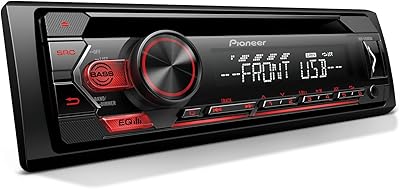
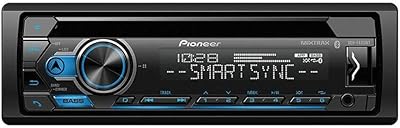
Pioneer DEH-S4100BT CD Receiver
84%
91%
Bluetooth Functionality
85%
Sound Quality
88%
Ease of Setup
70%
App Compatibility
83%
Build Quality
More
Pioneer DEH-S6220BS CD Receiver
85%
91%
Bluetooth Performance
89%
Sound Quality
87%
Ease of Use
85%
Voice Control Functionality
80%
SiriusXM Compatibility
More
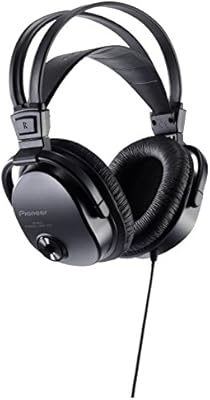
Pioneer SE-M521 Over-Ear Headphones
83%
87%
Sound Quality
92%
Comfort for Long Sessions
68%
Bass Performance
91%
Build Quality
58%
Cord Length & Convenience
More
Pioneer TS-WX010A Under-Seat Subwoofer
86%
91%
Value for Money
85%
Bass Quality
95%
Ease of Installation
90%
Size & Portability
87%
Sound Clarity
More
Pioneer TS-WX1210A 12″ Subwoofer
86%
92%
Bass Performance
94%
Ease of Installation
88%
Sound Clarity
90%
Value for Money
85%
Build Quality
More
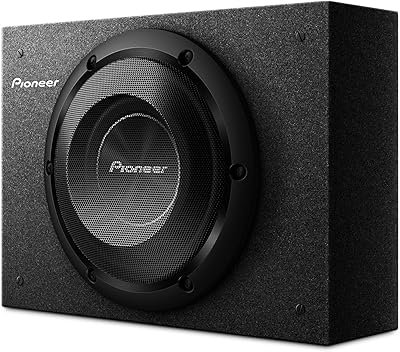
Pioneer TS-A2000LB 8” Subwoofer
85%
89%
Bass Performance
85%
Installation Ease
91%
Value for Money
87%
Sound Clarity
80%
Design and Build Quality
More
Pioneer TS-A25S4 10” Subwoofer
84%
88%
Bass Performance
84%
Installation Ease
86%
Sound Quality
89%
Power Handling
85%
Build Quality
More
Pioneer TS-A250D4 10” Subwoofer
86%
91%
Bass Performance
88%
Power Output
87%
Wiring Flexibility
85%
Installation Ease
90%
Sound Clarity
More

FAQ

It supports Dolby Atmos decoding and also includes the Dolby Atmos Height Virtualizer, which simulates overhead sound without ceiling speakers. To be straightforward about it: the virtualizer is a processing effect, not the same as a physical height speaker setup. For most people in a standard living room it sounds impressive, but if you have experienced a full Atmos rig before, you will notice the difference.

Unfortunately, no. The Pioneer VSX-534 uses HDMI 2.0, which caps 4K passthrough at 60Hz. If 4K at 120Hz or variable refresh rate is important for your gaming setup, you would need a receiver with HDMI 2.1. For 1080p or 4K at 60Hz gaming, it works fine without issues.

You get five HDMI inputs, plus optical, coaxial, and analog options, so most households can leave everything connected permanently. Switching between sources is handled through the remote or front-panel controls and is straightforward once you label your inputs during setup.

No, there is no voice assistant integration of any kind. This receiver predates the widespread inclusion of smart voice features in mid-range AV hardware, and Pioneer did not add that functionality to this model. If smart home integration is on your list, this is a genuine gap to factor in.

The auto-reconnect works reliably for most users — you start playing audio on your phone and the receiver picks it up without any button-pressing. The one edge case worth knowing is that if multiple previously-paired devices are in range at the same time, it can occasionally latch onto the wrong one and need a manual input switch.

The 5.2 designation means five amplified speaker channels (front left, front right, center, surround left, surround right) and two subwoofer preamp outputs. The subwoofer outputs are line-level signals for powered subwoofers — they are not amplified speaker channels. So you can run two subwoofers simultaneously, but the amp section itself powers five speakers.

Most buyers handle the setup themselves without professional help. The on-screen display walks you through input assignment and basic speaker configuration clearly. The main time investment is the manual speaker level and distance calibration — there is no automatic room correction system, so you need to do that part by ear or with a sound level meter.

Yes, this AV receiver is compatible with standard passive speakers regardless of brand, as long as the impedance falls within a typical 6 to 16 ohm range. Just connect your existing speakers to the corresponding binding posts on the back and run through the speaker setup in the menu.

Not directly — there is no control app, no Wi-Fi, and no network interface. Some users pair it with a universal remote app that operates via an IR blaster on their phone, but that requires third-party hardware. For native app control, this receiver is not the right choice.

It depends on the room and your speakers. In a small to medium-sized room with reasonably efficient speakers, it handles the job well. In a larger open-plan space or with speakers that demand more power to drive properly, users report that the amplifier starts to feel stretched at higher volumes. If your room is on the larger side, it is worth checking your speaker sensitivity ratings before committing.

Where to Buy

eBay
In stock $175.00