
Overview

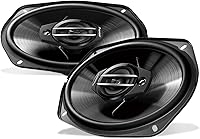
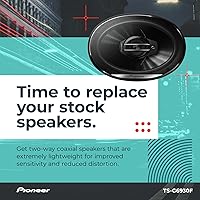
The Pioneer TS-G6930F 6x9 3-Way Car Speakers sit squarely in that practical sweet spot most drivers actually need — a meaningful upgrade over dull factory audio without demanding a full system overhaul. Pioneer has been a trusted name in car audio for decades, and that reputation matters when you're choosing a drop-in replacement. The 3-way coaxial design is a genuine step up from the 2-way speakers most cars ship with, adding a dedicated midrange driver for cleaner frequency separation. These are built for daily drivers, not audiophiles chasing perfection. Keep expectations grounded, and they'll likely impress you.

Features & Benefits

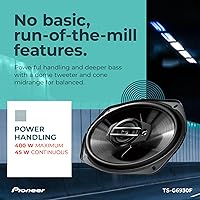
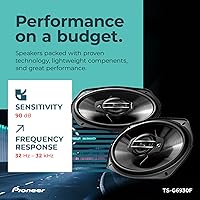
The coaxial speaker set packs a decent amount into its design. The 90dB sensitivity rating is arguably the most important spec for most buyers — it means these speakers can push clear, audible sound even when paired with a stock head unit running modest power. On paper, the 400W peak figure sounds impressive, but the real-world number to focus on is the 45W RMS rating, which reflects continuous, reliable output. The frequency range stretches from 32Hz to 32kHz, giving a wide audio canvas, though deep bass lovers should temper expectations without a subwoofer in the mix. The polypropylene cone holds up well against moisture and temperature shifts — a practical concern inside any car.

Best For

These Pioneer 6x9s are a strong fit for anyone swapping out tired or blown factory speakers in a sedan, SUV, or truck with existing 6x9 cutouts — which covers a huge range of vehicles. If your head unit is still stock, the high sensitivity rating means you won't need an amp to hear a real difference. They're also versatile enough sonically to handle pop, hip-hop, rock, and podcasts without sounding tuned for just one genre. Installation is manageable for DIY enthusiasts with basic tools; the kit includes grilles and mounting screws out of the box. One caveat: check fitment first, as some vehicles may require an adapter bracket.

User Feedback

Buyer sentiment around the G-Series speakers is largely positive, with the most consistent praise landing on how much cleaner and louder they sound compared to factory stock speakers. Owners frequently call out the straightforward installation as a highlight — most report getting both speakers mounted without professional help. On the critical side, several users note that bass can feel thin in the lower registers without an amp or dedicated subwoofer backing them up, which is fair for any unamplified coaxial in this class. Fitment hiccups come up occasionally for specific vehicle makes, so a quick adapter check beforehand is worth the effort. Overall, most buyers consider the sound improvement worth the price.

Pros

  • Noticeably clearer and louder than typical factory-installed speakers right out of the box.
  • The 3-way driver layout delivers better frequency separation than standard 2-way OEM replacements.
  • A 90dB sensitivity rating makes these Pioneer 6x9s genuinely usable with a stock head unit.
  • Broad 32Hz to 32kHz frequency response handles a wide range of music styles well.
  • Polypropylene cone construction holds up against heat and humidity inside a car cabin.
  • Installation is DIY-friendly — grilles, mounting screws, and a warranty sheet are all included.
  • Sold as a pair, so both rear deck speakers are covered in a single purchase.
  • Pioneer's brand reliability gives buyers confidence in long-term build quality at this price tier.
  • Flush-mount design fits cleanly into most standard 6x9 factory speaker locations.
  • Strong value perception — most owners feel the sound improvement clearly justifies the cost.

Cons

  • Bass output feels thin at higher volumes without an external amplifier or subwoofer to supplement.
  • The 45W RMS rating is modest — buyers who later add an amp should watch their power matching carefully.
  • Some vehicle models require separate adapter brackets for a proper fit, adding extra cost.
  • The tweeter at 11mm is on the smaller side, which can limit upper-frequency presence in larger cabins.
  • Peak wattage figures on the packaging are misleading — real-world headroom is set by the 45W RMS spec.
  • Not waterproof, which matters if installed in a location exposed to rain or condensation.
  • Long-term durability feedback from owners is mixed, with some units showing wear after a few years.
  • Imaging and soundstage are limited by the coaxial format — drivers who want precise stereo separation will notice.
  • No built-in crossover tuning options, so sound balance relies entirely on the head unit or receiver settings.

Ratings

Our editorial AI has analyzed thousands of verified global purchases of the Pioneer TS-G6930F 6x9 3-Way Car Speakers, actively filtering out incentivized reviews, bot activity, and outlier feedback to surface what real buyers consistently experience. The scores below reflect both the genuine strengths and recurring frustrations owners report after weeks and months of real-world use. Nothing is inflated — if a category shows a mixed score, there is a real pattern behind it.

Sound Clarity
84%
Owners repeatedly note how much cleaner vocals and instruments sound compared to whatever dull factory speakers came out of their car. On daily commutes playing mixed playlists — pop, podcasts, classic rock — the G-Series speakers produce an open, detailed midrange that stock units simply cannot match at any volume.
At higher volume levels, some listeners report a slight hardness in the upper-mids, particularly with acoustically bright recordings. It is not a dealbreaker, but audiophiles accustomed to component-quality separation will notice the coaxial format's ceiling pretty quickly.
Bass Performance
61%
39%
For casual listeners who are not bass-obsessed, the low-end output from this coaxial speaker set is a clear step up from most OEM units. Mid-bass punch — the kind you feel in kick drums and basslines during everyday listening — is present and reasonably defined without any additional hardware.
This is the category where expectations most often get disappointed. Without an external amplifier or a dedicated subwoofer, deep bass feels noticeably thin, especially in larger vehicle cabins. Hip-hop and EDM fans in particular tend to find the low-end output underwhelming when relying on a stock head unit alone.
Value for Money
88%
The overwhelming consensus among buyers is that the sound improvement relative to the asking price is genuinely hard to argue with. Replacing blown or muffled factory speakers with these Pioneer 6x9s and hearing the difference on the first drive tends to reinforce that the purchase was a smart one.
A small subset of buyers who upgraded from already-decent aftermarket speakers felt the jump was less dramatic and questioned whether the price was justified for a marginal improvement. Buyers coming from absolute stock speakers will feel far more satisfied than those managing expectations from a previous upgrade.
Installation Ease
83%
The included hardware — mounting screws and grilles — means most buyers can complete the swap in under two hours with basic tools. Owners with standard 6x9 rear deck cutouts consistently describe the process as intuitive, even for first-time installers following a YouTube tutorial.
Vehicle fitment is not universal, and a meaningful number of buyers discover mid-installation that their specific car requires a separate adapter bracket or spacer to achieve a secure, flush fit. This adds cost and time that was not anticipated at purchase, which is a recurring source of frustration in feedback.
Build Quality
74%
26%
The polypropylene cone construction gives these speakers a practical edge in the punishing environment of a car interior, where summer heat and winter condensation can degrade cheaper materials quickly. Most owners report the speakers feel solid and well-assembled right out of the box.
After extended use — particularly from buyers who run them at consistently high volumes — some durability concerns emerge. A portion of long-term owners note that the build feels more mid-tier than premium up close, and a few report degradation in sound quality after 18 to 24 months of heavy use.
High-Frequency Detail
71%
29%
The integrated tweeter handles cymbal shimmer and vocal air with reasonable detail for a coaxial unit in this price bracket. Listeners who primarily stream pop or acoustic music on daily drives find the treble smooth and non-fatiguing during longer commutes.
The 11mm tweeter is on the smaller side, and in larger vehicle cabins the high-frequency presence can feel slightly thin or recessed. Buyers who have previously used a dedicated component tweeter setup will notice the limitations of the integrated design fairly immediately.
Sensitivity & Headroom
86%
At 90dB sensitivity, these are genuinely well-matched to stock head units, and that is exactly where most buyers are using them. Owners consistently report that the speakers get satisfyingly loud without distortion at moderate volume settings, even without any additional amplification in the signal chain.
Buyers who later add an aftermarket amplifier sometimes find the 45W RMS ceiling becomes a consideration when pushing higher output levels consistently. The speakers handle the extra power reasonably, but there is a noticeable limit to how far they scale compared to higher-RMS alternatives.
Midrange Accuracy
78%
22%
The dedicated midrange driver in the 3-way layout is what most separates these from standard 2-way replacements. Vocal clarity — whether it is a podcast host or a lead singer — benefits noticeably from the additional driver, making speech and instruments feel more present and grounded in the mix.
Under demanding listening conditions with complex, layered music tracks, the midrange can occasionally feel crowded or slightly compressed. This is a known limitation of coaxial architecture rather than a flaw unique to this speaker set, but it is worth noting for buyers comparing against component systems.
Fit & Compatibility
69%
31%
For the wide range of sedans, trucks, and SUVs that ship with standard 6x9 openings, these Pioneer 6x9s drop in cleanly and the mounting hardware aligns without modification. Buyers with common domestic and import vehicles tend to report straightforward compatibility.
A recurring thread in buyer feedback involves unexpected fitment issues — particularly shallow mounting depth in certain Japanese-market vehicles and some newer compact cars. The need for adapter plates is not always flagged clearly before purchase, leading to mid-project frustration for a portion of buyers.
Long-Term Durability
67%
33%
Many owners report solid, consistent performance for the first year or more of regular daily use, with no significant degradation in sound output under normal driving conditions. The Pioneer brand history gives buyers reasonable confidence that the product will not fail prematurely.
Beyond the 12-to-18 month mark, mixed reports begin to appear, with some buyers noting a gradual softening of sound quality or occasional rattling at high volumes. The one-year warranty window does not fully cover the period when these issues most commonly surface in owner feedback.
Package Completeness
81%
19%
Including both grilles and mounting screws in the box is a detail that buyers genuinely appreciate — it removes a common extra step and keeps the total cost of the project predictable. Getting a matched pair in a single purchase also simplifies the buying process significantly.
The warranty documentation is basic, and some buyers feel the included installation guidance is minimal for novice users. There is no wiring harness adapter included, which is a practical gap given that many modern vehicles use proprietary connector formats that require a separate purchase.
Brand Reliability
89%
Pioneer's name carries real weight in the car audio segment, and buyers regularly cite it as the primary reason they chose this speaker set over similarly priced alternatives. The brand's multi-decade track record provides a level of trust that newer or lesser-known competitors cannot easily replicate.
A small number of buyers feel that Pioneer's G-Series line does not fully reflect the brand's premium reputation — it is positioned at the accessible end of their lineup, and some feel the quality gap between this and Pioneer's higher-tier options is more apparent than the marketing suggests.
Volume & Loudness
82%
18%
Owners consistently note that these speakers get meaningfully louder than their factory replacements before any distortion creeps in, which is exactly what most daily drivers are after. The high sensitivity rating delivers real-world headroom that makes a noticeable difference during highway driving with road noise present.
At the upper end of the volume range — especially in smaller vehicles where the speakers are pushed harder — a degree of harshness becomes apparent. This is most noticeable with compressed audio sources like streaming at lower bitrates, where the speaker's limitations become audible before the volume ceiling is reached.

Suitable for:

The Pioneer TS-G6930F 6x9 3-Way Car Speakers are an excellent choice for everyday drivers who are tired of the flat, lifeless sound coming from their factory-installed speakers and want a noticeable improvement without touching their head unit or wiring a new amplifier. They fit naturally into vehicles that already have 6x9 cutouts — a layout common in the rear decks of sedans, the doors of trucks, and the cargo areas of some SUVs — making the swap straightforward for anyone comfortable with basic car work. The high 90dB sensitivity rating is particularly useful for buyers sticking with a stock radio, since these speakers can deliver clear, room-filling sound even from modest power output. Music listeners who jump between genres — rock one commute, podcasts the next, R&B on the weekend — will appreciate how balanced and versatile the G-Series speakers sound across different content types. For the budget-conscious buyer who wants a trusted brand and a real-world upgrade without committing to a full audio system build, this coaxial speaker set hits a practical and reliable middle ground.

Not suitable for:

The Pioneer TS-G6930F 6x9 3-Way Car Speakers are not the right call for anyone chasing deep, thumping bass as their primary goal — without a dedicated subwoofer and external amplifier, the low-end output from any unamplified coaxial at this price point will leave bass enthusiasts wanting more. Serious audiophiles who expect component-level sound separation and studio-accurate reproduction should look toward a dedicated component speaker system instead, as the coaxial format has inherent physical limitations in driver placement and imaging. Buyers with aftermarket head units pushing high continuous wattage may also find the 45W RMS rating a bottleneck over time if they push volume aggressively. If your vehicle does not have existing 6x9 openings, you will need custom fabrication or an adapter bracket, which adds cost and complexity that may not be worth it compared to a size-appropriate alternative. Anyone expecting a true plug-and-play fit across all vehicles should also verify compatibility upfront, as certain makes and models require adapter plates that are sold separately.

Specifications

  • Speaker Size: Each speaker measures 6x9 inches, a standard size that fits a wide range of factory cutouts found in sedans, trucks, and SUVs.
  • Configuration: 3-way coaxial design with separate woofer, midrange, and tweeter drivers mounted on a single chassis for improved frequency separation.
  • Peak Power: Rated at 400W peak power per speaker, which reflects short-burst handling capacity under ideal conditions.
  • RMS Power: Continuous (RMS) power handling is 45W per speaker, representing the reliable, sustained output level for everyday use.
  • Sensitivity: Sensitivity is rated at 90dB, enabling clear, loud playback even when driven by a low-powered factory head unit.
  • Frequency Response: Audio frequency response spans 32Hz to 32kHz, covering a broad range from deep low-end tones through ultra-high treble.
  • Impedance: Speaker impedance is 4 Ohm, which is compatible with the vast majority of factory and aftermarket car head units.
  • Tweeter Diameter: The integrated tweeter measures 11mm in diameter, handling high-frequency reproduction within the coaxial assembly.
  • Cone Material: The woofer cone is constructed from polypropylene, a material chosen for its resistance to humidity and temperature fluctuations inside a vehicle cabin.
  • Mounting Type: Flush-mount installation is used, allowing the speakers to sit flat and even within the factory speaker opening.
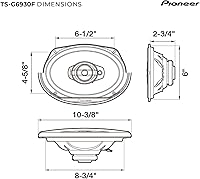
  • Dimensions: Overall product dimensions are 3.88″ deep, 10.38″ wide, and 7.25″ tall per speaker unit.
  • Item Weight: Each speaker weighs approximately 1.37 pounds, keeping the total added weight to the vehicle minimal.
  • In the Box: The package includes two 3-way speakers, two grilles, eight mounting screws, and a one-year warranty information sheet.
  • Sold As: Sold as a matched pair, so a single purchase covers both the left and right speaker positions.
  • Warranty: Covered by a one-year limited manufacturer warranty from Pioneer.
  • Water Resistance: These speakers are not waterproof or water-resistant, and should not be installed in locations exposed to direct moisture or rain.
  • Connectivity: Wired coaxial connectivity with standard car speaker terminals; no wireless or Bluetooth components are included.
  • Mounting Hardware: Eight mounting screws are included in the box, supporting straightforward installation in most OEM 6x9 speaker locations without additional hardware purchases.

Related Reviews
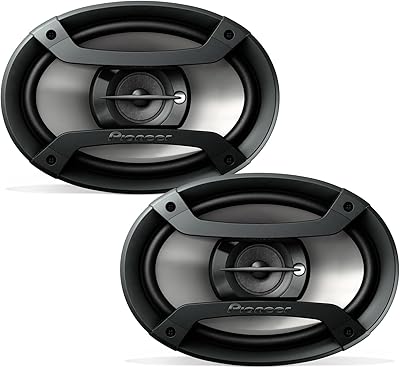
Pioneer TS-F6935R 6″x9″ 3-Way Coaxial Car Speakers
75%
78%
Sound Clarity
63%
Bass Performance
86%
Value for Money
74%
Build Quality
81%
Installation Ease
More
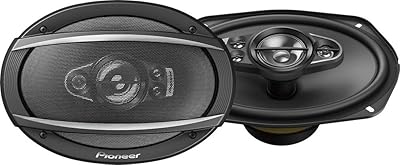
Pioneer TS-A6990F 6×9 Car Coaxial Speakers
78%
83%
Sound Quality
74%
Bass Response
81%
High-Frequency Clarity
78%
Midrange Performance
71%
Power Handling & Amplifier Compatibility
More
Pioneer TS-A1371F 5.25” 3-Way Speakers
85%
89%
Sound Quality
91%
Bass Performance
85%
Treble Clarity
88%
Ease of Installation
82%
Durability
More
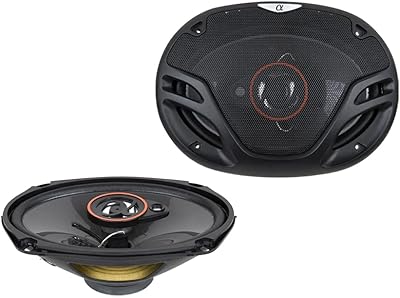
Alphasonik NS693 6x9 3-Way Car Speakers
76%
88%
Value for Money
76%
Sound Clarity
61%
Bass Response
91%
Ease of Installation
79%
High-Frequency Performance
More
Alphasonik AS29 6x9 3-Way Car Speakers
72%
83%
Value for Money
71%
Sound Clarity
58%
Bass Performance
88%
Installation Ease
63%
Build Quality
More
Pioneer TS-A1680F 6.5-inch Car Coaxial Speakers
79%
88%
Sound Clarity
63%
Bass Response
84%
High-Frequency Detail
91%
Installation Ease
86%
Value for Money
More
Pioneer TS-G4644R 4x6″ 2-Way Coaxial Car Speakers
85%
90%
Value for Money
88%
Ease of Installation
83%
Sound Quality
74%
Bass Performance
87%
Build Quality
More
Cerwin-Vega V693 6×9 Coaxial Car Speakers
77%
83%
Sound Quality
88%
Bass Performance
79%
Treble Clarity
74%
Mid-Range Presence
91%
Volume & Sensitivity
More
BATVOX CS691 6x9 Car Coaxial Speakers
71%
83%
Value for Money
71%
Sound Clarity
58%
Bass Performance
62%
Treble Quality
89%
Installation Ease
More
Pioneer TS-X210 4-Inch Surface Mount Speakers
77%
86%
Sound Clarity
58%
Bass Performance
88%
Installation Ease
79%
Build Quality
74%
Value for Money
More

FAQ

They will work fine with a factory head unit. The 90dB sensitivity rating means the G-Series speakers are specifically well-suited to the modest power output most stock radios deliver. You will hear a clear improvement over OEM speakers without adding an amp, though an amplifier will let you push more volume and dynamics if you want to go further down the road.

The 400W figure is a peak rating, meaning it reflects the maximum power the speaker can handle in a very brief, controlled burst. The number that actually matters for day-to-day listening is the 45W RMS rating, which is the continuous power level the speakers handle reliably over time. Most buyers running a stock radio will never approach either number, and that is completely fine.

Honest answer: the low end is decent for a coaxial speaker at this price point, but do not expect chest-thumping bass. These Pioneer 6x9s reproduce mid-bass reasonably well — enough for most pop, rock, and hip-hop listening — but if deep, punchy bass is your priority, you will want to pair them with a dedicated subwoofer and amplifier setup.

For most vehicles with existing 6x9 cutouts, yes. The package includes grilles and mounting screws, and the wiring uses standard car speaker connectors. Someone comfortable with a screwdriver and basic car door or rear deck panel removal should be able to complete the job in an hour or two. If your vehicle has non-standard connectors, inexpensive wiring harness adapters are widely available.

Most vehicles with factory 6x9 openings will accept these speakers, but fitment is not guaranteed for every make and model. The key measurement to check is the mounting depth — at 3.88 inches, there needs to be enough clearance behind the panel. Some vehicles, particularly Japanese models with shallow speaker pockets, may require a spacer or adapter bracket. Always cross-reference your vehicle against a speaker fit guide before ordering.

They can work in any location that accommodates a 6x9 speaker, including front doors if those openings are large enough. That said, most vehicles with 6x9 slots have them in the rear deck or the rear doors. Front door locations tend to use smaller sizes like 6.5-inch or 5.25-inch, so check your front door dimensions before assuming these will fit there.

Owner feedback on durability is generally positive, with many buyers reporting solid performance after a year or more of regular use. However, there are occasional reports of wear after extended use, particularly from owners who run them at consistently high volumes. The polypropylene cone construction is a good sign for longevity in the variable heat and humidity of a car interior, and the one-year warranty provides some peace of mind.

Grilles are included in the box along with mounting screws, so you do not need to purchase anything extra for a basic installation. Having grilles pre-included is a small but appreciated detail that saves a separate trip to an auto parts store.

These speakers are rated at 4 Ohm impedance, so they are best matched to a head unit or amplifier with a 4-Ohm output rating. Running a mismatched impedance can lead to distortion or, in extreme cases, damage to your head unit. Most factory radios and a large majority of aftermarket amplifiers operate at 4 Ohm, so this is rarely a problem, but it is worth confirming your amp specifications before connecting.

One purchase includes a pair of two speakers, covering one stereo channel pair — typically both rear deck positions. If you want to replace all four speakers in your vehicle, you would need to purchase additional speakers separately for the front positions, and those are likely a different size than 6x9.

Where to Buy