Overview

The BATVOX CS691 6x9 Car Coaxial Speakers are a straightforward, no-frills upgrade for anyone tired of the thin, lifeless sound that ships from the factory. These 6x9 coaxials come from a relatively new brand — sold under both the BATVOX and KASIYLUX names, which can cause some confusion when searching for support or warranty information. That said, the speaker pair slots into standard 6x9 cutouts without any custom fabrication, making installation accessible for most DIYers. The 3-way design, which includes a piezo tweeter, is a step up from typical two-way OEM units. Just keep expectations grounded — this is a solid entry-level option, not a high-end audio system.
Features & Benefits

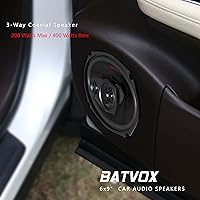
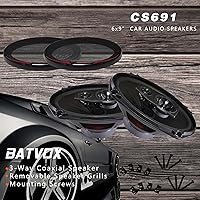
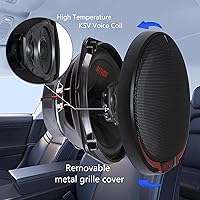
The CS691 speakers are rated at 200W RMS power, which is the number that actually matters for real-world use — the 400W peak figure is a burst rating, not a continuous one. At 4 ohms and 90dB sensitivity, they pair well with stock head units and do not require an external amplifier to sound respectable. The frequency range spans 50Hz to 20kHz, meaning they handle everything from vocal midrange to cymbal highs within a single unit. The removable grille is a practical touch, giving you the option to install them exposed or covered. One honest note: the piezoelectric tweeter can sound bright or edgy at high volumes, which is worth knowing if you like cranking things up.

Best For

This budget speaker pair makes the most sense for everyday commuters and casual listeners who want a genuine improvement over blown or mediocre factory speakers without spending a lot. If your car has standard 6x9 openings in the rear deck or doors, installation is essentially plug-and-play — no amp, no crossover, no special wiring needed. They are also a reasonable fit for anyone running a stock head unit and not looking to build out a full system. What they are not is the right call for bass-heads or anyone expecting audiophile-level separation and imaging at this price point. Keep that in mind and they will likely deliver exactly what you need.

User Feedback

Buyers who have installed the CS691 speakers generally come away pleased with how much louder and clearer they sound compared to whatever came stock — easy installation is consistently the top compliment. Where things get mixed is bass: without a dedicated subwoofer, low-end punch is limited, and some listeners find the highs a bit harsh once the volume climbs. A handful of buyers have flagged minor fitment quirks depending on the vehicle. Durability feedback is thin, which is not unusual for a brand only on the market since early 2023. The dual brand naming — BATVOX on the box, KASIYLUX in the specs — has also raised eyebrows and is worth knowing before you buy.

Pros

  • Drops into standard 6x9 mounting locations without cutting, adapters, or professional help.
  • Works straight off a stock head unit — no amplifier required to get decent volume.
  • Noticeable step up in clarity and loudness compared to typical factory speakers.
  • 4-ohm impedance makes these 6x9 coaxials compatible with virtually any car stereo.
  • Removable grille gives you the flexibility to install them exposed or covered.
  • 3-way driver configuration handles a wider frequency range than basic two-way OEM units.
  • The pair comes in well under most competing 3-way speaker options at this size.
  • At 90dB sensitivity, they get genuinely loud without straining a low-powered source.

Cons

  • Piezo tweeter can sound bright and harsh at higher volumes, which wears on the ears over time.
  • Bass output is thin without a dedicated subwoofer — do not expect punchy low-end from this budget speaker pair.
  • The brand appears under both BATVOX and KASIYLUX names, creating confusion around warranty and support.
  • Limited long-term durability data available since the product only launched in early 2023.
  • Not waterproof, which limits placement options in vehicles prone to moisture or condensation.
  • Minor fitment issues have been reported for certain vehicle models — worth checking compatibility before buying.
  • The 400W peak power figure is a marketing number; real continuous output is half that.
  • Brand reputation and after-sales support infrastructure are largely unproven compared to established audio names.

Ratings

The BATVOX CS691 6x9 Car Coaxial Speakers have been evaluated by our AI system after analyzing verified buyer reviews from global markets, with spam, bot-generated, and incentivized feedback actively filtered out. The scores below reflect the honest consensus across thousands of real-world installations — capturing both what buyers genuinely appreciated and where the speakers fell short. Strengths and frustrations are weighted equally, so you get a clear picture before committing.
Value for Money
83%
For the price, most buyers feel they are getting noticeably more speaker than factory units offer, and that perception holds up for casual daily use. Commuters replacing blown or tired OEM speakers frequently describe the upgrade as punching above its price bracket.
Buyers who compare these against slightly pricier alternatives from established audio brands often feel the gap in quality is larger than the gap in price. At the upper end of the budget tier, there are competing options with better tweeter quality that make the value calculation less obvious.
Sound Clarity
71%
29%
Vocal and midrange clarity is a clear step up from most factory speakers, with listeners noting that dialogue in podcasts and vocals in pop and rock tracks come through with noticeably more definition. The 3-way driver layout contributes to a more layered sound than basic two-way coaxials.
Clarity starts to break down at higher volumes, where the piezoelectric tweeter introduces a brittle, glassy quality to the upper frequencies that fatigues the ear over longer drives. Genre matters a lot — acoustic or spoken-word content fares better than electronic or heavily mastered tracks.
Bass Performance
58%
42%
Low-end output is a genuine improvement over thin factory speakers, and for genres like pop, country, or talk radio, the bass response feels adequate without additional equipment. Buyers who mostly listen at moderate volume levels and do not prioritize heavy bass report feeling satisfied.
Anyone expecting meaningful low-end punch will be disappointed — the CS691 speakers simply cannot move enough air to produce deep, impactful bass on their own. Without a dedicated subwoofer in the system, hip-hop, EDM, and bass-forward music sounds noticeably flat and lacking in body.
Treble Quality
62%
38%
High-frequency presence is there, and at moderate listening volumes the tweeter adds a sense of air and openness that most factory speakers completely lack. For casual listeners who do not push the volume past halfway, the treble is generally pleasant and detailed enough.
The piezoelectric tweeter is the CS691's most consistent weak point — it becomes harsh and piercing once the volume climbs, an issue that a silk-dome tweeter at the next price tier handles far more gracefully. Buyers with volume-up habits frequently mention needing to dial back treble EQ just to make long drives tolerable.
Installation Ease
89%
Installation is one of the strongest points for these 6x9 coaxials, with first-time DIYers regularly describing a clean, uncomplicated process that took under an hour from start to finish. Standard speaker wire connections and a fit that works in most common 6x9 openings remove most of the friction from the install.
A small number of buyers have encountered mounting depth issues in certain vehicle models where the speaker sits close to the rear deck or door panel, requiring some improvisation. The included hardware is minimal, and a few users noted that the mounting template or instructions could be more detailed for less experienced installers.
Volume Output
84%
The 90dB sensitivity rating translates directly into real-world loudness that surprises buyers coming from dull stock speakers — most report filling the cabin comfortably with a factory head unit at moderate volume settings. Highway driving at speed without straining the stereo is a common positive mention.
While the volume headroom is good, pushing these speakers to high output levels is where audio quality begins to suffer, so the usable loudness range is somewhat narrower than the raw sensitivity number implies. A few buyers noted slight distortion creeping in at the top of the volume range.
Build Quality
66%
34%
The speakers feel reasonably solid for the price tier, with a construction that does not feel flimsy out of the box. The removable grille has a secure fit and the overall assembly inspires enough confidence for a budget car audio install.
Closer inspection reveals plastic components and a general build quality that reflects the price point rather than exceeding it. Long-term durability is genuinely unknown given the brand's limited time on the market, and a few buyers have raised concerns about the grille clips losing their grip over time.
Compatibility
81%
19%
The 4-ohm impedance and standard 6x9 coaxial format mean these speakers will work with essentially any car stereo you connect them to, including older factory systems and modern aftermarket units alike. Buyers across a wide range of vehicle types have reported clean compatibility without needing adapters.
Some vehicle-specific fitment issues have surfaced, particularly with models where rear deck depth is limited or mounting hole patterns are non-standard. These are edge cases rather than widespread problems, but it is worth verifying your vehicle's specs before assuming a perfect bolt-in fit.
Frequency Balance
67%
33%
The 50Hz to 20kHz range gives this budget speaker pair a wider tonal coverage than many similarly priced competitors, and at normal listening volumes the balance between mids and highs is reasonably coherent. Casual music listeners and podcast listeners in particular report a natural, unforced sound.
The tonal balance is inconsistent across the full volume range — what sounds fairly even at moderate levels can skew bright and thin when pushed harder, largely due to the treble overcoming the mid and low drivers. The low end drops off noticeably below 80Hz in real-world cabin conditions.
Brand Reliability
53%
47%
In terms of the physical product delivered, most buyers report receiving exactly what was advertised and having the speakers work as expected right out of the box. There are no widespread reports of dead-on-arrival units or manufacturing defects.
The dual BATVOX and KASIYLUX branding creates genuine confusion when buyers try to research the company, seek warranty support, or look for replacement parts. The brand has minimal established track record in the audio space, and the limited warranty provides little reassurance about post-purchase support if something goes wrong.
Durability
61%
39%
Early buyers who have owned these 6x9 coaxials for several months to a year report no major failures under regular use, which is a promising early signal. For drivers who listen at moderate volumes and do not push the speakers hard, the build appears to hold up adequately.
There simply is not enough long-term ownership data yet to rate durability with confidence — the product has been on the market for just over two years. Buyers in climates with significant temperature swings or vehicles with higher-than-average vibration have noted some concern about longevity that remains unresolved.
Packaging & Unboxing
74%
26%
The speakers arrive well-protected in a box that keeps them secure during shipping, and most buyers find the unboxing experience clean and free of damage. The removable grilles are included and intact, and the overall presentation feels appropriate for the price.
Documentation inside the package is thin — the manual is basic and lacks vehicle-specific guidance that would help newer installers. A few buyers mentioned that included mounting hardware was sparse, requiring a trip to the hardware store to complete the job cleanly.
Midrange Performance
73%
27%
Midrange is arguably where the CS691 speakers perform most consistently, with voices, guitars, and acoustic instruments coming through with reasonable warmth and presence. Daily commuters who listen to podcasts, audiobooks, or talk radio frequently cite the midrange as the clear highlight.
When the bass is thin and the treble gets harsh at volume, the midrange ends up carrying more of the sonic weight than it ideally should, which makes the overall sound feel slightly unbalanced on demanding material. The midrange also loses some of its composure when competing with road noise at highway speeds.

Suitable for:

The BATVOX CS691 6x9 Car Coaxial Speakers are a practical pick for everyday drivers who are fed up with the hollow, compressed sound of factory-installed speakers and want a real improvement without touching their wallet too hard. If your car has standard 6x9 cutouts in the rear deck or doors, installation is genuinely straightforward — no amplifier, no custom wiring, no professional help needed. This makes the CS691 speakers especially appealing to DIY-minded buyers who want to spend an afternoon on an upgrade rather than a weekend. Commuters and casual listeners who care about fuller, clearer audio during their daily drive will notice an immediate difference compared to most OEM setups. Anyone running a stock head unit will also appreciate that the 4-ohm impedance and 90dB sensitivity mean these speakers perform well without extra power.
Not suitable for:

The BATVOX CS691 6x9 Car Coaxial Speakers are not the right fit for listeners who take sound quality seriously and expect precise imaging, deep bass, or refined high-frequency detail. The piezoelectric tweeter, while functional, can become fatiguing or harsh when you push the volume — a known limitation of that tweeter type that silk-dome alternatives tend to handle more gracefully. Bass-heads will be disappointed; these are coaxial speakers, not subwoofer replacements, and low-end output at this price tier is modest at best. Buyers investing in a full car audio build with an amplifier and dedicated subwoofer should look at more capable mid-range coaxials from established audio brands. The relatively new and inconsistently branded manufacturer also means long-term support, replacement parts, and warranty follow-through are harder to predict than with more established names.
Specifications

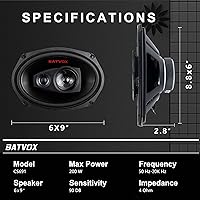
  • Speaker Size: Each speaker measures 6x9 inches, fitting the most common aftermarket and factory replacement cutout size found in car rear decks and doors.
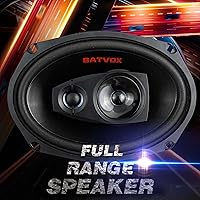
  • Configuration: 3-way coaxial design combines a woofer, midrange, and piezoelectric tweeter in a single speaker unit for full-range audio reproduction.
  • Peak Power: Rated at 400W peak power per pair, representing the maximum burst output the speakers can briefly handle under ideal conditions.
  • RMS Power: Continuous RMS output is 200W, which is the practical power figure to match against your head unit or amplifier when sizing compatibility.
  • Impedance: 4-ohm impedance rating ensures broad compatibility with factory head units and most aftermarket car stereo receivers without additional components.
  • Sensitivity: 90dB sensitivity means the speakers produce strong output from relatively low input power, making them well-suited for use with stock head units.
  • Frequency Response: Covers a frequency range of 50Hz to 20kHz, spanning bass, midrange, and treble within the single coaxial driver assembly.
  • Tweeter Type: Uses a piezoelectric tweeter to handle high-frequency reproduction, which is a common but less refined choice compared to silk-dome tweeters at higher price tiers.
  • Quantity: Each package includes 2 speakers, sufficient for a standard stereo left-right pair installation in one vehicle location.
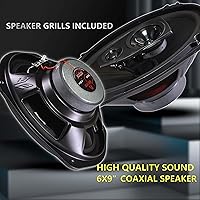
  • Grille: Comes with a removable protective grille, giving installers the option to mount speakers exposed or covered depending on the vehicle and aesthetic preference.
  • Connectivity: Wired connection only — no Bluetooth or wireless capability, as these are passive speakers designed to connect directly to a car stereo output.
  • Mounting Type: Designed for standard coaxial car-mount installations, fitting most 6x9 openings without the need for custom brackets or cutting.
  • Waterproofing: These speakers are not rated as waterproof, so installation in locations exposed to direct moisture, rain, or condensation is not recommended.
  • Item Weight: The pair weighs approximately 6.4 pounds total, which is typical for 6x9 coaxial speakers at this size and build level.
  • Warranty: Covered by a limited warranty from the manufacturer; specific terms and duration should be confirmed directly with the seller at time of purchase.
  • Manufacturer: Listed under the BATVOX brand with KASIYLUX also appearing in product documentation — both names refer to the same manufacturer and product line.
  • Power Source: Corded electric — powered via the vehicle's head unit or amplifier output, with no battery or standalone power source required.
  • Audio Output: Stereo output configuration, designed to be installed as a matched pair for standard two-channel left and right audio reproduction.

Related Reviews

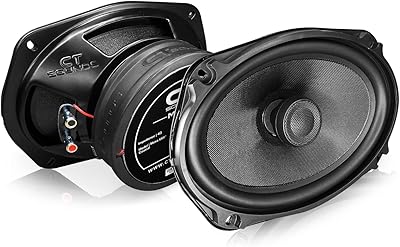
CT Sounds BIO-6X9-COX 6×9 Coaxial Car Speakers
76%
88%
Value for Money
83%
Sound Clarity
54%
Bass Response
91%
Ease of Installation
79%
Tweeter Performance
More
JBL GX9628 6x9 Coaxial Car Speakers
79%
83%
Sound Quality
88%
Power Handling
61%
Impedance Compatibility
91%
Ease of Installation
79%
Build Quality
More
STINGER HC-69 6x9 Coaxial Car Speakers
83%
89%
Sound Clarity
87%
Bass Performance
91%
Installation Ease
92%
Overall Value
84%
Build Quality
More
NVX NSP69 6×9 Coaxial Car Speakers
77%
83%
Sound Clarity
54%
Bass Output
91%
Installation Ease
78%
Build Quality
86%
Value for Money
More
NVX XSP692 6x9 2-Way Coaxial Car Speakers
80%
83%
Sound Quality
62%
Bass Performance
87%
Treble & Clarity
85%
Midrange Performance
81%
Build Quality
More
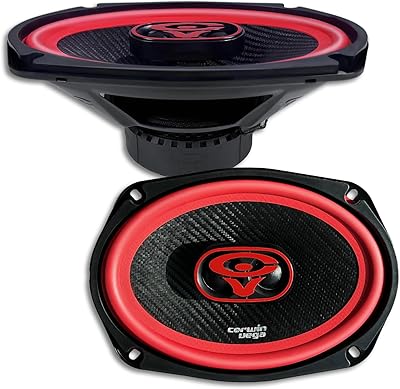
Cerwin-Vega V693 6×9 Coaxial Car Speakers
77%
83%
Sound Quality
88%
Bass Performance
79%
Treble Clarity
74%
Mid-Range Presence
91%
Volume & Sensitivity
More
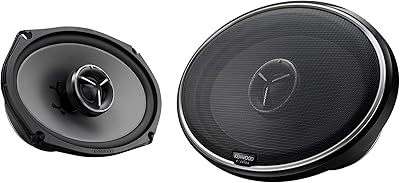
Kenwood KFC-X694 6x9 2-Way Car Speakers
77%
83%
Sound Clarity
58%
Bass Response
91%
Installation Ease
77%
Build Quality
79%
Value for Money
More
Kicker CS Series 6x9 Coaxial Car Speakers
80%
86%
Sound Clarity
74%
Bass Performance
78%
Treble & High-Frequency Response
83%
Build Quality
81%
Ease of Installation
More
CT Sounds Meso 6x9” 400W 2-Way Coaxial Car Speakers
83%
91%
Sound Quality
88%
Bass Performance
85%
Ease of Installation
92%
Build Quality
89%
Value for Money
More
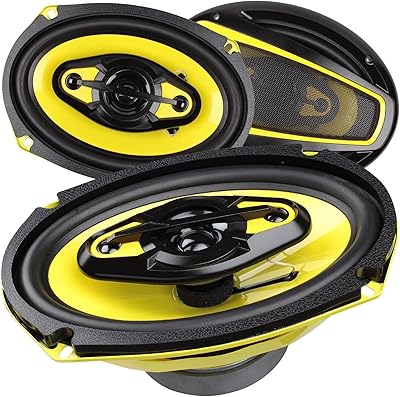
AUDIOTEK AT694 6×9-Inch 4-Way Car Speakers
72%
73%
Sound Quality
58%
Bass Performance
67%
Build Quality
88%
Ease of Installation
79%
Value for Money
More

FAQ

No amp needed. The CS691 speakers run at 4 ohms with 90dB sensitivity, which is a combination that works well straight off most stock head units. As long as your stereo has speaker wire outputs, you can connect these directly without any additional equipment.

In most cases they drop right in. The BATVOX CS691 6x9 Car Coaxial Speakers are designed for standard 6x9 cutouts found in common rear deck and door locations. That said, mounting depth and exact hole patterns can vary by vehicle, so it is worth checking your specific car model before assuming a perfect fit.
Most people notice an immediate improvement in volume and clarity over typical OEM speakers. The 3-way design adds more definition across the frequency range than a basic factory two-way unit. Just keep expectations realistic — this budget speaker pair is a meaningful step up from stock, but it is not going to rival a premium branded coaxial at three times the price.

Yes, unfortunately that is a known trait of piezoelectric tweeters. They tend to produce a brighter, harder high-frequency character compared to silk-dome alternatives, and the effect gets more noticeable as you push the volume. If you are sensitive to harsh treble, try rolling off a little top-end EQ through your head unit — it usually helps quite a bit.

You will get more low-end presence than most factory speakers offer, but do not expect thumping bass. The 6x9 coaxial format has physical limits, and at this price point the low-end output is adequate for casual listening rather than bass-heavy music. If bass is a priority, pairing these with a small subwoofer is the way to go.

This is a legitimate inconsistency worth knowing about. Both names refer to the same manufacturer and product line — it appears the brand operates under multiple trade names across different platforms. It does not affect how the speakers perform, but it can create confusion when looking up warranty information or customer support, so keep your purchase receipt handy.

It is one of the more beginner-friendly installs in car audio. You typically need a screwdriver, a trim removal tool, and the ability to splice or connect speaker wires. Most rear deck installations take under an hour even for a first-timer. There are plenty of vehicle-specific installation videos online that make the process even clearer.

Technically you can use a single speaker, but the stereo image — the sense that sound is coming from both sides — will be gone, and the listening experience will feel very one-sided. For any real improvement in how your audio sounds, installing both speakers is strongly recommended.

No — they are not waterproof and are not rated for outdoor or marine environments. Exposure to moisture, rain, or high humidity could damage the drivers and degrade sound quality quickly. For any wet-environment application, you would need speakers specifically built and sealed for that purpose.

Honestly, it is hard to say with confidence yet. The product has only been on the market since early 2023, so there is limited long-term user feedback available. Early buyers report the speakers holding up fine under normal use, but multi-year durability data is still sparse. Treating them reasonably — not running them at max power constantly — is the best way to extend their life.