Overview

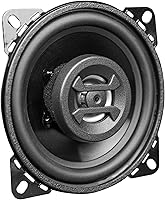
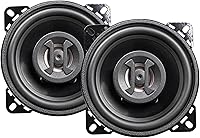
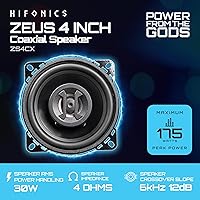
The Hifonics Zeus ZS4CX 4-inch Coaxial Car Speakers are a value-tier entry from Maxxsonics USA, part of the brand's long-running Zeus lineup that has been on the market since early 2017. These Zeus coaxials follow a straightforward 2-way coaxial format, making them a practical drop-in swap for factory-installed drivers in tight mounting locations. On paper, they carry a 30W RMS rating with a 175W peak figure — that gap matters, and we will address it. At 4 Ohms with 88 dB sensitivity, they are designed to work directly off a standard head unit without requiring an external amplifier to function properly.
Features & Benefits

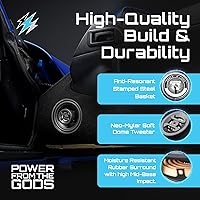
The ZS4CX pair puts a few components to work that you would not always find at this price point. The Neo-Mylar soft dome tweeter is a genuine step up from the cheap piezo units that budget speakers often use — it handles highs with more detail and less harshness. The woofer cone is built from Alpha Cellulose Poly, a material light enough to respond quickly to mid-bass transients without sounding flabby. A passive Butterworth crossover manages the frequency split between the two drivers smoothly, avoiding the brittle transition that cheaper designs produce. A pure copper voice coil in a Kapton former helps manage heat buildup, and the rubber moisture surround adds practical durability for humid or variable climates.

Best For

This Hifonics 4-inch speaker set makes the most sense for drivers swapping out tired, thin-sounding factory speakers without spending much. If you drive a compact car or any vehicle where a 4-inch opening is what you are working with, these fit the slot neatly. They also suit rear-deck or overhead positions in vans and SUVs where deep bass is less of a priority. Casual listeners who want clearer vocals, better podcast playback, or more intelligible talk radio will find these satisfying. Just keep expectations grounded on the low end — a 4-inch cone has physical limits, and anyone chasing real bass will need a separate subwoofer alongside this setup.

User Feedback

With a 4.4 out of 5 rating across over a hundred buyers, these Zeus coaxials sit comfortably for the segment. The most consistent praise covers easy installation — reviewers frequently note that replacing OEM speakers takes under an hour with basic tools and no cutting or fabrication. Mid and high-range clarity compared to stock gets mentioned positively across multiple reviews. The recurring criticism is that low-end output is thin, which is honest and expected from a 4-inch driver. Several buyers also flag that the 175W peak figure does not reflect real-world output — actual loudness is modest and closer to what the 30W RMS number would suggest. Build quality is generally viewed as acceptable for the price tier.

Pros

  • Replacing worn factory speakers is straightforward, typically requiring only basic hand tools and under an hour of work.
  • The Neo-Mylar dome tweeter produces noticeably cleaner highs than the cheap piezo tweeters found in many budget competitors.
  • Vocals, dialogue, and spoken-word content come through with good clarity at normal listening volumes.
  • The rubber surround adds durability and holds up better than foam in vehicles exposed to humidity or temperature swings.
  • At 4 Ohms, these Zeus coaxials work directly off most factory and aftermarket head units without any additional hardware.
  • The passive Butterworth crossover delivers a smooth handoff between drivers, avoiding the brittle or harsh transition common in entry-level coaxials.
  • Sold as a pair, the price-per-speaker ratio is hard to argue with for casual daily drivers.
  • The Kapton voice coil former helps manage heat during extended listening, reducing the risk of distortion on longer drives.

Cons

  • Low-end output is thin by nature — do not expect meaningful bass from a 4-inch driver without a separate subwoofer.
  • The 175W peak power figure is a marketing number; real-world loudness reflects the more modest 30W RMS rating.
  • At 88 dB sensitivity, this Hifonics 4-inch speaker set will not get impressively loud off weaker or older head units.
  • Build materials feel appropriate for the price but will not impress anyone used to handling mid-range or premium speakers.
  • Output starts to compress and lose composure when pushed to higher volume levels for extended periods.
  • Not ideal for use with an external amplifier, as the speakers are tuned for head-unit-level power delivery.
  • The 4-inch size limits mounting flexibility — buyers with larger cutouts will need to source adapter plates separately.

Ratings

The scores below were generated by our AI after analyzing verified buyer reviews for the Hifonics Zeus ZS4CX 4-inch Coaxial Car Speakers from multiple global sources, with spam, bot submissions, and incentivized feedback actively filtered out. Each category reflects the genuine distribution of praise and frustration found across hundreds of real ownership experiences. Both the strengths that earned repeat purchases and the pain points that frustrated buyers are represented transparently.
Sound Clarity
83%
Buyers consistently praise the improvement in vocal and midrange clarity over factory speakers, particularly for podcasts, talk radio, and acoustic tracks during daily commutes. The Neo-Mylar tweeter draws specific positive mentions for producing crisp, non-fatiguing high frequencies at moderate volume.
At higher playback volumes, some users report that the top end becomes slightly edgy and the midrange loses some definition. The clarity advantage is most apparent at moderate listening levels, and a few buyers noted the sound feels flat when pushed.
Bass Performance
47%
53%
For a 4-inch coaxial, the mid-bass punch is respectable during casual listening — voices and light percussion come through with enough body to feel natural rather than hollow. Buyers using these as rear-fill or secondary cabin speakers tend to rate bass satisfaction higher since they are not relying on them as the primary source.
Low-end output is the most common criticism by a significant margin. Buyers expecting anything close to full bass response from these Zeus coaxials are frequently disappointed, and reviewers are blunt that without a subwoofer, bass-heavy genres like hip-hop or EDM sound thin and unsatisfying.
Volume & Loudness
61%
39%
At everyday listening volumes — typical for a commute or background music while driving — the ZS4CX pair handles output cleanly and without obvious strain. Most buyers driving compact cars find the volume ceiling adequate for their daily use cases.
The 88 dB sensitivity rating limits how loud these speakers get off a standard head unit, and multiple buyers flag that the 175W peak figure bears no resemblance to real-world loudness. Those who crank the volume regularly find the speakers start to compress and sound stressed well before reaching a satisfying level.
Ease of Installation
91%
Installation is one of the most praised aspects across all buyer feedback. First-timers report completing the swap in under an hour using only basic hand tools, and the standard coaxial format means no custom fabrication or bracket work is needed for most factory 4-inch positions.
A handful of buyers note that vehicle-specific wiring harness adapters are not included, which can catch first-timers off guard if they did not research connector compatibility beforehand. Door panel removal can also be tricky in certain vehicles, though that is a car-specific issue rather than a speaker one.
Build Quality
67%
33%
The rubber surround and epoxy-treated spider give these speakers a more durable feel than many competitors at this price tier. Buyers handling them out of the box generally describe the construction as solid enough to inspire reasonable confidence for the cost.
The overall build does not feel premium in hand, and buyers upgrading from mid-range or higher-end speakers will notice the difference in material weight and finish immediately. A few reviewers mentioned that mounting tabs felt slightly fragile during installation and required careful handling.
Value for Money
88%
Among the strongest attributes in buyer feedback — owners who set realistic expectations consistently feel the ZS4CX pair punches above its price class. Getting a pair of coaxials with a Mylar tweeter, Butterworth crossover, and rubber surround for this outlay is repeatedly called out as a genuine bargain.
Buyers who misjudge the product tier based on the inflated peak wattage figure tend to feel let down and rate value lower. If the purchase decision was driven by the 175W number rather than the 30W RMS spec, the perceived value drops considerably once the speakers are installed.
Durability
74%
26%
Long-term owners report that these Zeus coaxials hold up well under regular use, with rubber surrounds maintaining their integrity over time better than foam alternatives common at this price point. Several buyers mention using them for two or more years without degradation in sound or physical condition.
There are scattered reports of early failures, particularly in very hot climates or vehicles without air conditioning where interior temperatures spike. The voice coil components handle moderate heat well, but sustained high temperatures over time appear to accelerate wear in a subset of cases.
Tweeter Quality
79%
21%
The Neo-Mylar soft dome design is a meaningful step above the piezo tweeters found in many similarly priced coaxials, and buyers who have owned budget competitors specifically call this out. High-hat detail, string instruments, and female vocals reproduce with noticeably more nuance.
The tweeter can sound a bit forward or present in acoustically bright vehicles — compact cars with hard interior surfaces occasionally amplify the high-frequency output in ways that make the treble feel slightly aggressive during extended listening.
Crossover Performance
76%
24%
The passive Butterworth crossover earns quiet but consistent praise from buyers with some audio background, who note the transition between woofer and tweeter avoids the abrupt, hollow gap that cheaper coaxials often produce. Music sounds coherent rather than split across two disconnected drivers.
Non-audiophile buyers rarely comment on this specifically, suggesting the benefit is subtle rather than transformative. Those using the speakers with a head unit at its lower power settings may not notice the crossover advantage at all, since the effect becomes more apparent at moderate playback levels.
Moisture Resistance
71%
29%
The rubber surround and water-resistant rating give buyers in humid climates or older vehicles with occasional moisture intrusion reasonable confidence. Owners in coastal or high-humidity regions report no early deterioration after extended use.
These are not marine-rated speakers, and buyers who installed them in boats or truly wet environments report premature failure. The water resistance is adequate for automotive humidity but should not be treated as a substitute for purpose-built marine drivers.
Packaging & Presentation
63%
37%
The speakers arrive well-protected and ready to install, with both units included and no reports of widespread transit damage. For a value-tier product, the unboxing experience meets basic expectations.
Packaging is purely functional with no installation accessories or documentation beyond the basics. Buyers hoping for mounting hardware, wiring guides, or adapter rings will need to source those separately, which is a minor but recurring complaint from first-time installers.
Compatibility
82%
18%
The 4-Ohm impedance and standard coaxial mounting format make this Hifonics 4-inch speaker set compatible with the vast majority of factory head units and most aftermarket decks without any impedance matching or additional hardware. Fit is reported as straightforward across a wide range of vehicle makes.
Vehicles with non-standard 4-inch cutout shapes or unusual mounting depths occasionally require adapter rings or custom brackets. Buyers with older domestic vehicles or some Japanese imports mention needing to verify clearance depth carefully before assuming a direct drop-in fit.
Heat Tolerance
69%
31%
The Kapton voice coil former and copper winding help manage thermal buildup during normal continuous listening, and buyers who use these speakers for long highway drives at moderate volumes report no issues. The design reflects a genuine effort to address heat management at this price tier.
Extended sessions at high volume in warm climates push these speakers noticeably harder than their thermal design prefers. A few buyers report subtle distortion creeping in after prolonged use on hot days, suggesting the heat tolerance has a practical ceiling that casual daily use does not typically reach but aggressive listening can.

Suitable for:

The Hifonics Zeus ZS4CX 4-inch Coaxial Car Speakers are a practical choice for anyone who simply wants to replace dead or dull factory speakers without investing serious money or time. If your car has 4-inch speaker cutouts and your current drivers sound thin, muffled, or distorted at moderate volume, the ZS4CX pair will deliver a noticeable step up in clarity — especially in the midrange and high-frequency ranges. They work well powered directly from a factory or aftermarket head unit, so no external amplifier is needed. Commuters who spend a lot of time listening to podcasts, talk radio, or vocal-heavy music will appreciate the improved definition these Zeus coaxials bring to those formats. They also make solid sense as secondary cabin speakers in vans, SUVs, or trucks where a full-range driver is needed in a tight or overhead mounting spot.
Not suitable for:

The Hifonics Zeus ZS4CX 4-inch Coaxial Car Speakers are not the right fit for anyone who prioritizes strong bass output or listens to bass-heavy music at high volume. A 4-inch cone simply cannot move enough air to produce meaningful low-end, and no amount of power will change that physical constraint — if deep bass matters to you, a dedicated subwoofer is required regardless of which small coaxials you choose. Buyers hoping that the 175W peak rating translates to loud, room-filling output will be disappointed; real-world performance is governed by the 30W RMS figure, which is modest. These Zeus coaxials also are not a good match for anyone running a dedicated amplifier with serious output, as the speakers are tuned for head-unit-level power and may not hold up as well under sustained high wattage. Audiophiles or experienced car audio enthusiasts chasing component-level accuracy and staging will likely want to look at a step-up option with a separate tweeter and crossover setup.
Specifications

  • Speaker Size: Each driver measures 4 inches in diameter, fitting standard compact mounting cutouts found in many factory car audio positions.
  • Configuration: 2-way coaxial design with a woofer and tweeter mounted on a shared axis, eliminating the need for separate tweeter installation.
  • RMS Power: Continuous RMS power handling is rated at 30 watts per speaker, which reflects the safe, sustained operating level.
  • Peak Power: Peak power is rated at 175 watts, representing a brief transient ceiling rather than a continuous operating figure.
  • Sensitivity: Sensitivity is rated at 88 dB measured at 1 watt and 1 meter, indicating these speakers are suited to head-unit power levels.
  • Impedance: Nominal impedance is 4 Ohms, which is compatible with virtually all factory and aftermarket head units without modification.
  • Tweeter Type: The high-frequency driver is a Neo-Mylar soft dome tweeter, offering cleaner treble reproduction than piezo alternatives.
  • Woofer Material: The woofer cone is constructed from Alpha Cellulose Poly, balancing lightweight mass with sufficient rigidity for mid-bass response.
  • Crossover Type: A passive Butterworth crossover is included, managing the frequency split between the woofer and tweeter for smooth tonal transitions.
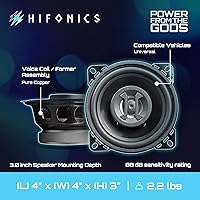
  • Voice Coil: The voice coil is wound with pure copper and mounted on a Kapton former, which aids in heat dissipation during extended use.
  • Spider Material: The spider is made from epoxy-infused natural fiber, providing controlled cone movement and added mechanical durability.
  • Surround Material: The woofer surround is rubber, offering better moisture resistance and longer lifespan compared to foam surrounds.
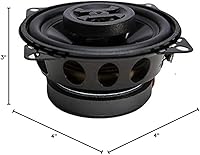
  • Dimensions: Each speaker measures 4″ deep by 4″ wide by 3″ high, with the pair weighing approximately 2.18 pounds combined.
  • Sold As: The ZS4CX is sold as a pair, meaning both left and right channel speakers are included in one package.
  • Manufacturer: These speakers are designed and distributed by Maxxsonics USA, the parent company behind the Hifonics brand.
  • Frequency Response: The listed frequency response begins at 6 kHz on the specification sheet, reflecting the tweeter-focused upper range performance.
  • Signal-to-Noise: Signal-to-noise ratio is listed at 70 dB, indicating reasonable background noise rejection for a value-tier coaxial driver.
  • Water Resistance: The speakers carry a water-resistant rating, making them a viable option in vehicles exposed to moderate humidity or occasional moisture.
  • Power Source: These speakers operate on DC power, drawing their signal directly from a standard car audio head unit or amplifier output.
  • Warranty: A time-based manufacturer warranty is included; buyers should verify the specific duration directly with Maxxsonics USA at the time of purchase.

Related Reviews
Hifonics ZS653 Zeus 6.5 Inch 3-Way Car Audio Coaxial Speakers
85%
88%
Sound Quality
85%
Bass Performance
92%
Ease of Installation
80%
Build Quality
91%
Value for Money
More
Hifonics ZS-525CX Zeus 5.25 Inch 2 Way Car Audio Coaxial Speakers
86%
88%
Sound Quality
85%
Bass Performance
92%
Build Quality & Durability
90%
Ease of Installation
91%
Value for Money
More
Hifonics ZS-693 Zeus 6x9 Coaxial Speakers
74%
91%
Value for Money
83%
Midrange Clarity
78%
High-Frequency Performance
61%
Bass Response
88%
Installation Ease
More
CT Sounds BIO-4-COX 4-Inch Coaxial Car Speakers
76%
83%
Sound Clarity
61%
Bass Performance
79%
Highs & Treble Smoothness
76%
Midrange Accuracy
91%
Installation Ease
More
Blaupunkt GTX 401 4-Inch Coaxial Car Speakers
70%
81%
Value for Money
67%
Sound Quality
43%
Bass Response
71%
Treble Clarity
74%
Midrange Performance
More
Hifonics Zeus ZS35CX 3.5-inch Car Speakers
73%
88%
Value for Money
79%
Sound Clarity
41%
Bass Response
92%
Installation Ease
67%
Build Quality
More
Crunch CS4CX 4-Inch Full-Range Coaxial Car Speakers
82%
80%
Sound Quality
65%
Bass Response
90%
Ease of Installation
84%
Build Quality
78%
Durability
More
AUDIOTEK AT694 6X9-Inch 4-Way Car Audio Coaxial Speakers
83%
88%
Sound Quality
90%
Bass Response
85%
Ease of Installation
78%
Build Quality
92%
Value for Money
More
Hifonics Zeus ZS5768CX 5x7/6x8″ 2-Way Car Audio Coaxial Speakers
85%
87%
Sound Quality
88%
Bass Performance
82%
Ease of Installation
90%
Durability
75%
Fitment Compatibility
More
Cerwin-Vega V4 4-inch 2-Way Coaxial Car Audio Speakers
84%
88%
Sound Quality
94%
Ease of Installation
72%
Bass Performance
80%
Build Quality
85%
Power Handling
More

FAQ

You can wire them directly to a standard factory or aftermarket head unit without any amplifier. At 4 Ohms and 30W RMS, the ZS4CX pair is sized for head-unit power levels. Adding an amp is not necessary, though a modest one would not hurt if you want a bit more headroom.

You will want to confirm that your car has 4-inch speaker cutouts before ordering. Check your vehicle's manual or use an online speaker fit guide by entering your make, model, and year. The mounting depth is 3 inches, so measure the clearance behind your panel as well to avoid fitment issues.

No, and this is worth clarifying. The 175W figure is a peak rating, meaning a brief ceiling the speaker can theoretically handle in a transient spike. The real number to pay attention to is 30W RMS, which is the continuous power the speaker handles safely. Real-world loudness will reflect that 30W figure, not 175W.

It is one of the more beginner-friendly car audio jobs out there. In most vehicles, you remove the door panel or speaker grille, unscrew the factory speaker, disconnect two wires, and connect the new ones — positive to positive, negative to negative. The whole process typically takes under an hour with a basic screwdriver and panel removal tool.

Expect limited low-end output. A 4-inch cone physically cannot move enough air to generate meaningful bass on its own, and that is true of any speaker this size regardless of brand. These Zeus coaxials handle mids and highs well, but if bass is important to you, a separate subwoofer is really the only way to get it.

They carry a water-resistant rating and a rubber surround that handles humidity reasonably well, but they are not rated for full marine or outdoor use. For a boat or outdoor setup with direct water exposure, you would want speakers specifically certified for marine environments. In a car with occasional moisture, they should hold up fine.

The package includes the pair of speakers, but wiring harness adapters for your specific vehicle are typically sold separately. Whether you need an adapter depends on your car's connector type. Many aftermarket retailers sell vehicle-specific harness adapters inexpensively, and they are worth picking up to avoid cutting factory wiring.

Most buyers report a clear and immediate improvement over factory speakers, particularly in vocal clarity and high-frequency detail. Factory speakers are generally built to a very low cost threshold, so even a modestly priced aftermarket coaxial tends to outperform them. The improvement is most obvious with spoken word, acoustic music, and anything with prominent vocals.

Both speakers in the pair are identical — there is no left- or right-specific driver. You can install either one on either side without any difference in performance. Just connect positive to positive and negative to negative on each side and you are good to go.

At this price point, build quality is functional rather than exceptional, but buyers generally report solid durability for normal daily listening. The rubber surround is a meaningful advantage over foam for longevity, particularly in hot or humid climates. With moderate power and no sustained distortion, these Zeus coaxials should hold up well for several years of regular use.

Where to Buy