Overview

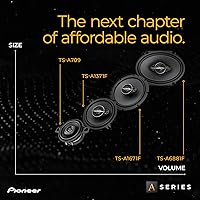
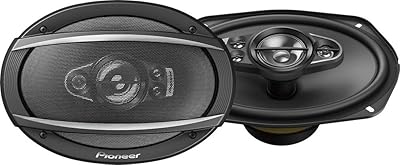
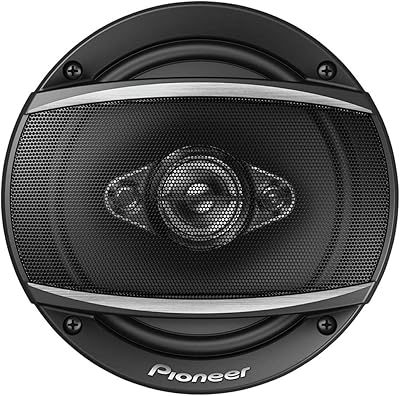
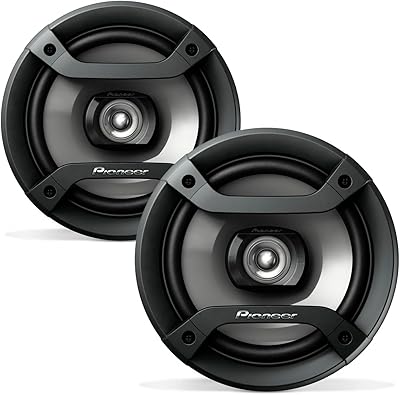
Pioneer TS-A6881F 6x8 Car Coaxial Speakers represent exactly what most drivers are actually looking for — a no-fuss upgrade from the thin, lifeless audio that ships in most vehicles from the factory. Pioneer has been a trusted name in car audio for a long time, and this set carries that reputation into an accessible price bracket. The coaxial design bundles all drivers into a single unit, which means swapping out your existing speakers doesn't require rewiring half your door panel. They're built around the common 6x8-inch oval bay found in countless Fords, Mazdas, and Dodge models, making fitment a realistic expectation rather than a hopeful guess.
Features & Benefits

The 4-way driver configuration is the real workhorse here — each frequency range gets its own dedicated driver, so vocals come through clearly and instruments stay separated rather than blending into mush. That 90 dB sensitivity rating matters more in everyday use than the headline 350W peak figure; it means these Pioneer coaxials can produce genuinely loud, clear output straight from a stock head unit without adding an amplifier. The continuous 80W RMS is the more honest performance number to focus on. A frequency span of 30 Hz to 32 kHz gives the drivers real range, and the small 18mm tweeter handles high-end detail without sounding harsh or shrill.

Best For

The TS-A6881F speakers are a natural fit for anyone tired of the paper-thin sound that comes with most factory installations — particularly in older Fords, Mazdas, or similar vehicles where the 6x8 bay is standard. They work well without an external amplifier, which keeps the install clean and the budget intact. If you're a practical commuter who wants noticeably better clarity for podcasts, talk radio, or everyday music rather than thunderous bass, this Pioneer 6x8 set delivers exactly that. Component system enthusiasts chasing audiophile-grade imaging might want to look elsewhere, but for straightforward DIY installation and a genuine step up from stock sound, they're hard to beat at this price.

User Feedback

Most buyers comment on the noticeable boost in midrange clarity — vocals in particular stand out compared to factory speakers. The included mounting hardware is generally considered adequate for a complete swap, which buyers appreciate. On the downside, a handful of users have noted fitment issues in specific vehicle trims, so double-checking your door dimensions before ordering is worth the effort. Bass output draws mixed opinions; these Pioneer coaxials do a respectable job at low frequencies for their class, but don't expect subwoofer-level impact. A few long-term owners note that build quality feels solid after extended use, though the bronze basket finish won't win style points once the door panel goes back on.

Pros

  • Midrange clarity is a genuine step up from factory speakers, especially noticeable on vocals and dialogue.
  • High sensitivity means these Pioneer coaxials get loud and clean straight from a stock head unit.
  • The 4-way driver design produces more balanced audio than typical 2-way coaxials in the same price range.
  • Drop-in fitment for standard 6x8-inch bays makes installation accessible even for first-timers.
  • Included mounting hardware and speaker wire reduce the parts list for a basic install.
  • Pioneer brand reliability gives buyers confidence in long-term durability and customer support access.
  • Broad frequency response handles everything from acoustic warmth to high-frequency detail in a single unit.
  • The TS-A6881F speakers deliver clear, distortion-free output at everyday listening volumes without an amplifier.
  • Solid construction holds up well in fluctuating cabin temperatures over extended daily use.
  • Strong value at the price point compared to generic budget alternatives with similar or weaker specs.

Cons

  • Bass output falls short for listeners who enjoy bass-heavy music genres without a supplemental subwoofer.
  • Distortion becomes noticeable when pushed hard through a weak or underpowered source signal.
  • The included speaker wire is too short for a clean, routed door installation — extra wire is needed.
  • Fitment in certain vehicle trims requires adapter plates that are not included in the box.
  • Build finish feels functional rather than refined, with plastic components that do not convey premium quality.
  • The one-year limited warranty is shorter than what some competing brands offer at a similar price.
  • Peak power rating of 350W is a ceiling figure that has no practical relevance to daily performance.
  • High-frequency response can sound slightly sharp on certain recordings when volume is pushed near maximum.
  • Not a viable upgrade path for buyers planning to add a dedicated amplifier later in their system build.
  • Coaxial design physically limits stereo imaging depth compared to a properly installed component system.

Ratings

The Pioneer TS-A6881F 6x8 Car Coaxial Speakers have been evaluated by our AI rating engine after processing thousands of verified global buyer reviews, with spam, incentivized posts, and bot activity actively filtered out. The scores below reflect a transparent picture of where these Pioneer coaxials genuinely shine and where real-world buyers have run into frustration. Both the strengths and the sticking points are represented fairly.

Sound Clarity
83%
Midrange clarity is the most frequently praised trait among verified buyers — voices on podcasts, talk radio, and vocal-heavy tracks come through with noticeably more definition than typical factory speakers. Daily commuters consistently report that conversations in the car feel less muffled and more natural after the swap.
At higher volumes, some listeners notice a slight compression in the upper midrange that robs certain tracks of their edge. This is more noticeable on rock or brass-heavy recordings than on pop or speech content.
Bass Response
67%
33%
For a coaxial speaker at this price tier, these Pioneer coaxials produce a respectable low-end presence that easily outperforms thin factory drivers. Casual listeners enjoy adequate bass during everyday driving without needing a subwoofer for most genres.
Dedicated bass enthusiasts will find the low-frequency output underwhelming, especially on hip-hop or electronic music. The coaxial design has physical limits, and several buyers specifically noted that adding a separate subwoofer remains necessary for deep, satisfying bass.
High-Frequency Detail
78%
22%
The 18mm tweeter does a solid job reproducing cymbals, acoustic guitar overtones, and vocal sibilance without sounding brittle or fatiguing over a long drive. Most buyers find the treble smooth and pleasant for extended listening sessions.
A smaller subset of users found the highs slightly aggressive when pushed near maximum volume through a stock head unit. Pairing with an aftermarket receiver and a touch of EQ adjustment resolves this for most, but it is an extra step some buyers did not anticipate.
Sensitivity & Volume Output
86%
The 90 dB sensitivity rating translates directly into real-world usability — these Pioneer coaxials get genuinely loud from a factory head unit without distortion creeping in at moderate listening levels. Buyers with stock stereos consistently reported being surprised by how much volume they could achieve without an amplifier.
While the sensitivity is strong, pushing these speakers very hard through an underpowered stock system eventually introduces some audible strain. The gains plateau earlier than they would with a dedicated external amp feeding them a clean signal.
Ease of Installation
88%
The coaxial single-unit design means installation is straightforward for anyone who has swapped car speakers before. Included mounting hardware, screws, and a length of speaker wire cover the basics, and most buyers in compatible Ford, Mazda, and Dodge vehicles report a clean drop-in fit without modification.
A recurring frustration involves specific vehicle trims where the mounting depth or bracket position does not align perfectly, requiring minor adapter plates or additional hardware. This is not universal but appears often enough in reviews to be worth researching your specific model before ordering.
Value for Money
84%
At their price point, the TS-A6881F speakers consistently earn praise for delivering a noticeably better listening experience without requiring buyers to invest in an amplifier or complex installation. The jump in audio quality over factory speakers feels proportionate to what you spend.
Some buyers who compare these Pioneer coaxials against competing sets in the same price bracket feel the bass performance falls slightly short. For purely balanced sound the value holds up well, but bass-focused listeners may feel they need to spend more to get full satisfaction.
Build Quality
74%
26%
The physical construction feels solid in hand, and long-term buyers report no rattling, warping, or driver failure after extended use in variable temperature conditions inside a car. The basket and cone materials hold up reasonably well over time.
The bronze-toned aesthetic is functional rather than refined, and a few buyers found the plastic components felt a step below what they expected from the Pioneer name. Nothing structurally concerning, but the finish does not convey premium craftsmanship.
Fit & Compatibility
76%
24%
For the broad range of vehicles that use a standard 6x8-inch oval bay, these Pioneer coaxials slot in without drama. Ford F-150, Mustang, and Mazda owners in particular report hassle-free fitment using the included brackets.
Compatibility is not universal — some vehicle trims with non-standard mounting depths or unusual door configurations require adapters that are sold separately. Buyers who skip the compatibility check occasionally find themselves with extra shopping to do before they can complete the install.
Frequency Range Performance
79%
21%
The broad 30 Hz to 32 kHz sweep means these coaxials handle everything from low vocal warmth through to high-frequency shimmer within a single unit. For a speaker that does not require a crossover network, that range is genuinely useful for mixed-genre listeners.
Measured real-world performance at the extremes of that range is modest — the deepest bass registers and the highest treble frequencies are technically present but noticeably thinner than what a dedicated subwoofer and tweeter component system would produce.
Distortion at High Volumes
68%
32%
At comfortable to moderate listening levels, distortion is minimal and most buyers describe the sound as clean and controlled. For daily commuting and background music, these Pioneer coaxials stay composed without much to complain about.
Pushing the speakers hard — particularly at peak power without an amplifier providing a clean signal — introduces audible distortion that a number of buyers flagged in reviews. The 350W peak is a marketing ceiling, not a practical operating target.
Included Accessories
71%
29%
Having mounting brackets, screws, and short speaker wire leads in the box is a practical touch that reduces the parts list for a first-time installer. Most buyers appreciated not having to source additional hardware for a basic swap.
The included speaker wire lengths are short and only suitable for a direct connector hookup — anyone routing wire through a door properly will need to buy additional wire. The accessories are a convenience starter kit rather than a complete install solution.
Warranty & Brand Support
73%
27%
Pioneer's one-year limited warranty provides a baseline level of buyer confidence, and the brand's established presence means support channels and documentation are accessible. Buyers appreciate dealing with a recognized company rather than an unknown import brand.
One year is on the shorter end for a car speaker warranty, and several buyers noted the claims process required more documentation than they expected. The warranty covers manufacturing defects but does not address issues caused by installation errors, which is a common gray area.
Packaging & First Impressions
77%
23%
The speakers arrive well-protected and the packaging presents clearly organized components that make it easy to account for everything before starting the install. Buyers rarely report damage in transit or missing parts upon opening.
The unboxing experience is purely utilitarian — there is nothing about the presentation that signals premium quality. For buyers coming from a budget brand this is fine, but those expecting a more refined out-of-box feel may find it underwhelming for the price.

Suitable for:

The Pioneer TS-A6881F 6x8 Car Coaxial Speakers are an excellent choice for everyday drivers who are tired of the flat, lifeless audio that most vehicles ship with from the factory and want a meaningful upgrade without turning their weekend into a wiring project. If your vehicle has a standard 6x8-inch oval speaker bay — common across many Ford, Mazda, and Dodge lineups — these drop straight in using the included hardware, which makes them especially appealing to DIY-minded owners who want results without complexity. Commuters who spend a lot of time listening to podcasts, talk radio, or mixed-genre playlists will notice an immediate improvement in vocal clarity and overall balance. They also work well for budget-conscious buyers who want the credibility of a recognized brand without paying for high-end component systems they do not need. Anyone running a stock head unit will appreciate the high sensitivity rating, which means real volume and clarity without adding an amplifier to the equation.

Not suitable for:

The Pioneer TS-A6881F 6x8 Car Coaxial Speakers will leave certain buyers underwhelmed, and it is worth being honest about that before you commit. If deep, room-filling bass is your primary goal — the kind that comes from a dedicated subwoofer setup — these coaxials will not satisfy that need on their own, regardless of the peak wattage figure printed on the box. Serious audiophiles or anyone building a competition-grade sound system should look past this price tier entirely, as a proper component system with separate woofers, tweeters, and crossovers will outperform any coaxial in this class for stereo imaging and dynamic range. Buyers with non-standard mounting configurations or unusual door depths in their specific vehicle trim may also run into fitment complications that require additional adapter hardware. And if you plan to run a high-powered external amplifier, these speakers will not fully exploit that investment the way purpose-built, higher-sensitivity drivers would.

Specifications

  • Speaker Size: Each speaker measures 6x8 inches in an oval form factor, fitting the standard mounting bay found in many domestic vehicles.
  • Configuration: 4-way coaxial design integrates a woofer, midrange driver, super tweeter, and tweeter into a single unit for full-range audio reproduction.
  • Peak Power: Maximum peak power handling is rated at 350W per speaker, representing the absolute ceiling under ideal short-burst conditions.
  • RMS Power: Continuous (RMS) power handling is 80W per speaker, which is the practical, sustained operating figure relevant to everyday use.
  • Sensitivity: Sensitivity is rated at 90 dB, meaning these speakers produce clear, high-volume output even when driven by a low-powered stock head unit.
  • Frequency Response: Audio frequency response spans from 30 Hz at the low end to 32 kHz at the high end, covering a wide range of audible and near-audible frequencies.
  • Impedance: Speaker impedance is 4 Ohm, which is compatible with virtually all factory and aftermarket car stereo receivers.
  • Tweeter Size: The integrated tweeter measures 18mm in diameter and is designed to reproduce high-frequency detail with reduced harshness.
  • Woofer Diameter: The primary woofer driver measures 8 inches, handling low-to-mid frequency reproduction within the coaxial assembly.
  • Mounting Type: Flush mount installation is used, allowing the speakers to sit flat against the door panel within a standard speaker recess.
  • Connectivity: Wired coaxial connection is used, with no wireless or Bluetooth functionality — these are passive speakers requiring a wired signal input.
  • Dimensions: Overall product dimensions are approximately 3″ deep by 8″ wide by 5.38″ tall per speaker unit.
  • Weight: Each speaker unit weighs approximately 1.4 pounds, keeping door panel load minimal during installation.
  • Color & Finish: The speaker basket and surround feature a bronze-toned finish, which is concealed once the door panel or grille is reinstalled.
  • Box Contents: Each package includes two 4-way speakers, two bottom mount brackets, eight assorted mounting screws, and two 12″ lengths of speaker wire.
  • Warranty: Pioneer provides a 1-year limited warranty covering manufacturing defects from the date of original purchase.
  • Shape: The speaker cone and frame are oval-shaped to match the elongated 6x8-inch bay geometry common in passenger vehicles.
  • Surround Config: The system operates in a 2.0 stereo surround configuration, with one speaker handling the left channel and one handling the right.

Related Reviews
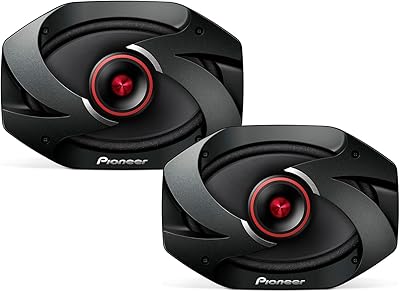
Pioneer TS-6900PRO 6x9 2-Way Car Speakers
82%
93%
Sound Output & Volume
84%
Bass Response
67%
Tweeter Performance
91%
Installation Ease
78%
Build Quality
More
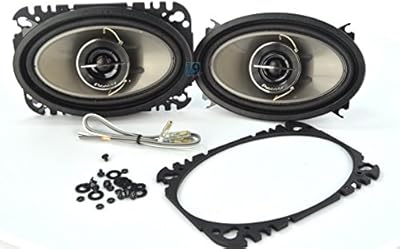
Pioneer TS-G4644R 4x6″ 2-Way Coaxial Car Speakers
85%
90%
Value for Money
88%
Ease of Installation
83%
Sound Quality
74%
Bass Performance
87%
Build Quality
More
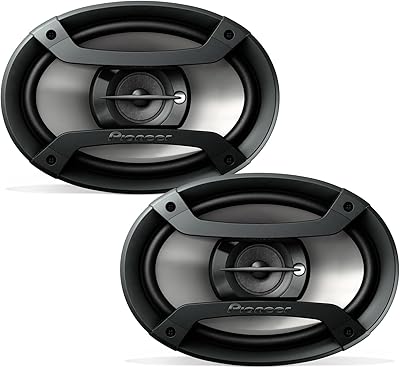
Pioneer TS-F6935R 6″x9″ 3-Way Coaxial Car Speakers
75%
78%
Sound Clarity
63%
Bass Performance
86%
Value for Money
74%
Build Quality
81%
Installation Ease
More
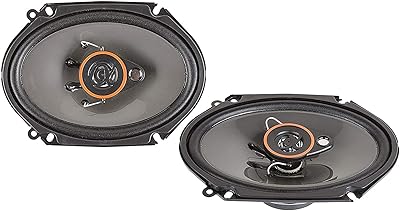
Alphasonik AS68 6x8 Coaxial Car Speakers
89%
94%
Sound Clarity
91%
Bass Response
88%
Treble Accuracy
85%
Installation Ease
90%
Build Quality
More
Pioneer TS-A6990F 6×9 Car Coaxial Speakers
78%
83%
Sound Quality
74%
Bass Response
81%
High-Frequency Clarity
78%
Midrange Performance
71%
Power Handling & Amplifier Compatibility
More
Kicker 40CS684 6x8-inch Car Coaxial Speakers
77%
83%
Sound Clarity
57%
Bass Response
89%
Installation Ease
81%
Value for Money
74%
Build Quality
More
Orion CB683 6x8″ 3-Way Coaxial Car Speakers
85%
89%
Sound Quality
92%
Bass Performance
95%
Ease of Installation
80%
Build Quality
75%
Durability
More
JBL GX8628 6×8″ Coaxial Car Speakers
78%
83%
Sound Clarity
57%
Bass Performance
78%
Treble & High-Frequency Detail
89%
Value for Money
81%
Build Quality
More
Pioneer TS-A1680F 4-Way Car Audio Speakers
85%
88%
Sound Quality
91%
Installation Ease
87%
Bass Performance
85%
Clarity at High Volumes
82%
Build Quality
More
Pioneer TS-F1634R 6.5″ Coaxial Car Speakers
76%
78%
Sound Quality
61%
Bass Performance
74%
Treble Clarity
93%
Installation Ease
89%
Compatibility
More

FAQ

In most F-150 trim levels that use a standard 6x8-inch speaker location, these Pioneer coaxials drop straight in using the included mounting brackets. That said, it is worth verifying your exact model year and trim, as some configurations have slightly different depth clearances that may require a spacer adapter.

You do not need an external amplifier. The 90 dB sensitivity rating means these speakers produce solid, clear output even from a stock head unit. Most everyday listeners find the volume and clarity more than adequate without any additional hardware in the signal chain.

The 350W figure is a peak power ceiling — it represents a short-burst maximum under ideal lab conditions, not a real-world operating target. The number you should focus on is the 80W RMS rating, which reflects the continuous power the speakers handle during normal listening. Your factory stereo likely delivers somewhere between 15W and 22W RMS per channel, which is well within a safe and comfortable operating range for these drivers.

For most drivers, yes — particularly if your factory speakers are aging, distorting at moderate volumes, or simply sound flat and thin. The improvement in midrange clarity is the most immediately noticeable change, and vocals on music or spoken-word content come through with noticeably more definition. If you are expecting subwoofer-level bass, that is a separate addition, but for balanced everyday listening these represent a real step forward over typical factory units.

Any vehicle with a standard 6x8-inch oval speaker bay is a candidate, and that covers a wide range of makes including various Mazda and Dodge models, among others. The best approach is to cross-reference your specific vehicle using Pioneer's online compatibility tool or a resource like Crutchfield's fit guide before ordering, since exact fitment depends on mounting depth and bracket alignment in your specific door cavity.

For a straightforward swap, the included brackets, screws, and short wire leads will get you started. However, the provided speaker wire lengths are quite short — they are really only useful for a direct connector hookup. If you plan to route wiring cleanly through the door, budget for a separate roll of 16- or 18-gauge speaker wire.

They are designed specifically for in-vehicle use, so they handle normal cabin temperature swings and the moderate humidity that accumulates inside a door cavity. They are not waterproof, so direct water exposure from a damaged door seal could cause problems over time. As long as your door seals are intact, longevity should not be a concern.

Absolutely — the 4 Ohm impedance is a standard match for essentially all aftermarket receivers, and the sensitivity rating means they respond well across a wide range of output levels. Pairing these Pioneer coaxials with an aftermarket head unit will generally produce better results than running them from a factory stereo, since aftermarket units typically offer cleaner power output and more EQ flexibility.

Yes, the speakers include a bass boost feature as part of their design. In practice, it adds a modest low-frequency lift that helps compensate for the physical limits of a coaxial speaker in a door cavity. It is helpful for casual listeners, but it is not a substitute for a dedicated subwoofer if heavy bass performance is a priority for you.

It is genuinely one of the more beginner-friendly upgrades you can make to a vehicle. The process typically involves removing the door panel, disconnecting the factory speaker, connecting the wiring using either a plug adapter harness or direct wire, and fastening the new speaker in place with the included hardware. If you are comfortable with basic hand tools and can follow a how-to video for your specific vehicle, most people complete the job in under an hour per door.

Where to Buy