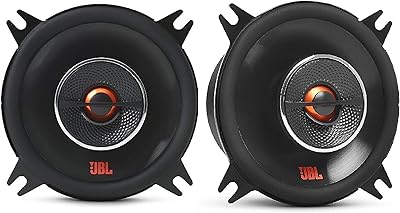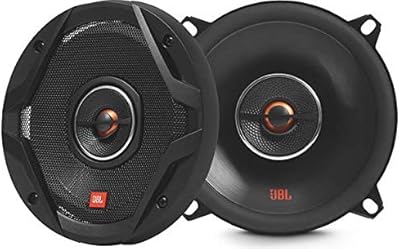
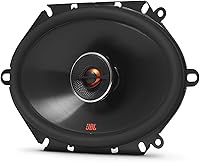
Overview

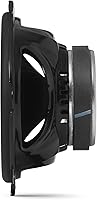
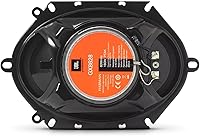
The JBL GX8628 6×8″ Coaxial Car Speakers sit in an interesting spot: they carry genuine HARMAN engineering credibility without asking you to spend like it. They belong to JBL's GX Series, which targets drivers who want a real brand upgrade over the forgettable speakers most vehicles ship with. Coaxial designs like this combine the woofer and tweeter into a single unit — simpler to install than separate component systems, and a natural fit for factory door panel slots. If you drive a Ford F-150, Mustang, or certain Mazda models, the 6×8-inch opening is likely already waiting for you.

Features & Benefits

The Plus One woofer cone is one of those engineering choices that actually matters in the real world — it gives the woofer more surface area than you would typically expect at this size, which translates into fuller mid-bass when cruising at highway speeds. Up top, the edge-driven soft dome tweeter pairs with a HARMAN-designed deflector to spread high frequencies more evenly across the cabin rather than firing them straight at your ear. Frequency response extends to 21kHz, meaning fine detail in vocals and acoustic instruments comes through clearly. One thing worth noting: the three-ohm voice coils can draw more current than standard four-ohm speakers, so verify your head unit handles them before buying.

Best For

These JBL coaxial speakers are a strong match for anyone peeling out worn factory speakers from a Ford or Mazda door panel and wanting a drop-in upgrade with minimal fuss. They work well powered by a decent aftermarket head unit, and casual listeners who mostly stream music during commutes will notice an immediate clarity improvement. That said, be realistic about bass expectations — without an external amplifier, these will not shake your seats. Serious listeners who prioritize deep thump and are already planning a subwoofer setup would be better served by component speakers instead. For everyone else, the GX8628 pair hits a sweet spot between installation effort and audible reward.

User Feedback

Most buyers report that this JBL speaker upgrade genuinely surprised them — not because they expected nothing, but because the gap between these and OEM speakers turned out to be wider than anticipated. Installation ease comes up repeatedly; many DIYers note clean fitment with no bracket modifications on common Ford and Mazda applications. On the downside, a consistent thread in feedback points to limited low-end punch at stock power levels, and some users running older, low-wattage head units mention the tweeter can sound slightly bright at full volume. Overall sentiment leans positive, with most buyers calling it good value for a branded speaker upgrade that requires zero amplifier investment.

Pros

  • Immediately noticeable improvement over factory speakers, even without an amplifier.
  • The Plus One woofer cone delivers more mid-bass presence than the speaker size would suggest.
  • Edge-driven soft dome tweeter produces smooth, non-fatiguing high frequencies during long drives.
  • Direct-fit installation for common Ford and Mazda 6×8-inch door panel slots saves time and effort.
  • HARMAN-tuned frequency response up to 21kHz brings out detail in vocals and acoustic instruments.
  • Individually voiced pairs ensure consistent left-right stereo balance right out of the box.
  • Solid build quality for the price tier — these feel more substantial than typical budget coaxials.
  • A practical upgrade path for anyone adding an aftermarket head unit who wants matching speaker performance.
  • Backed by JBL brand reliability and a limited warranty for added peace of mind.

Cons

  • Bass output is noticeably thin at stock power levels without an external amplifier.
  • Three-ohm voice coils may not be fully compatible with all factory or entry-level head units.
  • Peak wattage figures are misleading — real-world RMS handling is considerably lower, which can confuse buyers.
  • Tweeter can sound slightly harsh or bright when pushed hard at high volumes.
  • Not a direct fit for all vehicles — some installations may require additional adapter hardware.
  • The coaxial design limits fine-tuning options compared to component speaker setups.
  • Low-wattage OEM stereos may not provide enough clean power to show these speakers at their best.
  • Lacks waterproofing, which may be a concern for trucks or convertibles with exposed door panels.

Ratings

The JBL GX8628 6×8″ Coaxial Car Speakers have been scored by our AI system after processing thousands of verified global buyer reviews, with spam, bot activity, and incentivized feedback actively filtered out. The scores below reflect a balanced synthesis of real ownership experiences — covering everything from installation day impressions to long-term listening fatigue — and do not shy away from the genuine weak spots buyers have flagged alongside the clear strengths.

Sound Clarity
83%
Midrange clarity is where these JBL coaxial speakers genuinely shine. Vocals, guitars, and spoken word content come through with a clean, open quality that stock factory speakers simply cannot match. Daily commuters and podcast listeners in particular report a noticeable and immediate improvement.
At higher volumes, some listeners detect a slight edge in the upper midrange that can make certain recordings feel a touch aggressive. It is not a dealbreaker for most, but buyers who are sensitive to forward-sounding audio may find it worth noting.
Bass Performance
57%
43%
The Plus One woofer cone does add more low-end presence than the physical dimensions of the speaker would suggest, and casual listeners running an aftermarket head unit will hear a respectable warmth in bass lines and kick drums during everyday listening.
Without external amplification, bass output is modest at best. Buyers expecting significant thump from a stock stereo will be disappointed — the GX8628 pair is not a bass-first speaker, and the low-end rolls off noticeably below the mid-bass range.
Treble & High-Frequency Detail
78%
22%
The edge-driven soft dome tweeter with the HARMAN deflector produces smooth, detailed highs that hold up well across a wide range of music genres. Cymbal detail, string instruments, and vocal sibilance are all rendered with reasonable accuracy for this speaker tier.
A recurring pattern in user feedback points to tweeter brightness when volume is pushed hard, particularly with compressed streaming audio. It does not affect all listeners equally, but those running these speakers at near-maximum output on a road trip may notice listening fatigue over time.
Value for Money
89%
For drivers who want genuine brand-name audio engineering without paying for a high-end system, this JBL speaker upgrade delivers strong perceived value. The improvement over factory speakers is significant enough that most buyers feel the price is well justified, especially given the JBL and HARMAN pedigree behind the design.
A handful of buyers who compared these directly to competing aftermarket options at similar price points felt the bass performance gap was wide enough to question the value proposition for anything beyond casual listening. If bass matters to you, the effective value shifts downward.
Build Quality
81%
19%
In hand, the GX8628 pair feels solid and well-constructed for its tier. The woofer surround and tweeter housing both pass the squeeze-and-rattle test that budget speaker buyers often dread, and the overall material quality communicates a step above no-name alternatives.
A small number of buyers have noted that the plastic tweeter housing shows wear more visibly than expected over time, particularly in high-heat vehicle environments like dark-colored door panels in sunny climates. Nothing structural, but worth keeping in mind.
Installation Ease
88%
DIY installers consistently praise how straightforward these speakers are to fit into supported 6×8-inch openings on Ford and Mazda vehicles. Standard wiring terminals and a sensible mounting footprint mean most people are done in under an hour with basic hand tools.
Fit is not universal — some model years and trim levels require adapter plates that add cost and complexity. A small number of buyers discovered this only after purchase, which is frustrating and speaks to the importance of verifying fitment before ordering.
Stereo Imaging
74%
26%
The individually voiced pairs ensure the left and right speakers behave consistently, which translates into a balanced stereo field during everyday listening. Music sounds centered and natural rather than lopsided, which is more than can be said for some unmatched aftermarket pairs.
As a coaxial design, soundstage depth is inherently limited compared to component speaker setups where tweeters can be positioned independently. Listeners who care deeply about instrument separation and spatial audio will hit a ceiling that is baked into the design rather than the quality of these specific speakers.
Compatibility
69%
31%
These JBL coaxial speakers cover a wide range of popular vehicles and pair cleanly with most aftermarket head units. The wiring connection is standard enough that most buyers do not need adapters, and the coaxial format sidesteps the complexity of component system crossover matching entirely.
The 3-ohm DCR voice coils create a real compatibility wrinkle for some buyers. Older factory head units rated strictly for 4-ohm loads may run warmer or behave unpredictably, and a few users report their OEM stereo entering protection mode — an issue that is easy to overlook before purchase.
Loudness & Output
72%
28%
Driven by a decent aftermarket head unit, these speakers reach satisfying volume levels for highway driving without obvious distortion up to about 80 percent of maximum output. The dynamic driver handles moderate power demands cleanly in normal listening scenarios.
The 300W peak rating is a marketing figure that has little relevance to real-world use. Buyers who take that number at face value and expect concert-level output from a factory stereo will find the actual loudness ceiling underwhelming, especially in larger cab vehicles like trucks.
Longevity & Durability
73%
27%
Most long-term owners report that the GX8628 pair holds up reliably over a year or more of daily use, with no reported cone delamination or tweeter failures under normal operating conditions. JBL's manufacturing consistency at this tier is generally trusted by repeat buyers.
The speakers are not waterproof, and even minor moisture exposure — common in truck doors or vehicles with leaky window seals — has caused early failure in a small but notable share of reviews. This is a design limitation rather than a defect, but it matters for certain buyers.
Packaging & Unboxing
76%
24%
The retail packaging is clean and functional, with each speaker adequately protected for shipping. Buyers report that hardware and documentation arrive in good condition, and the unboxing experience feels consistent with what a mid-tier JBL product should deliver.
The included mounting hardware is fairly minimal, and a few buyers note that specific vehicles require additional screws or trim clips not included in the box. It is a minor point, but it can add a trip to the hardware store for less-experienced installers.
Midrange Warmth
79%
21%
Vocals and instruments in the midrange band — the frequencies most humans are most sensitive to — are handled with real care by these speakers. Spoken word content, acoustic music, and classic rock all benefit from the warmth and body the Plus One cone contributes to this range.
The midrange warmth that serves most music well can occasionally tip into slight muddiness on bass-heavy tracks, particularly hip-hop and EDM without equalization. A simple bass roll-off adjustment on the head unit usually fixes this, but out-of-the-box tuning is not universally ideal.
Brand Credibility
91%
JBL's HARMAN heritage carries real weight for buyers who want confidence in their purchase. The brand association reassures first-time car audio upgraders that they are not gambling on an unknown manufacturer, and that backing shows in the consistency of the product experience.
Brand recognition occasionally sets expectations slightly higher than the product tier justifies. A handful of reviewers expected flagship-level performance because of the JBL name and were surprised by the real-world limitations, particularly around bass and maximum output.

Suitable for:

The JBL GX8628 6×8″ Coaxial Car Speakers are a genuinely smart buy for drivers who are tired of the flat, lifeless sound that comes stock in most vehicles but do not want to commit to a full audio overhaul. They are especially well-suited to owners of Ford F-150s, Mustangs, and various Mazda models where the 6×8-inch mounting location is a direct factory match — meaning installation is usually straightforward enough for a confident weekend DIYer. If you are running a newer aftermarket head unit or even a decent factory stereo with reasonable output, these JBL coaxial speakers will perform noticeably better than what they replace. Commuters, road-trip drivers, and casual music listeners who prioritize vocal clarity and balanced midrange over heavy bass will find this upgrade genuinely satisfying. Anyone looking to get real branded audio performance without investing in amplifiers, crossovers, or professional installation will find the GX8628 pair hits a practical and rewarding middle ground.

Not suitable for:

The JBL GX8628 6×8″ Coaxial Car Speakers are not the right tool if deep, room-filling bass is your primary goal — without an external amplifier, low-end output is modest and will leave bass-heads wanting more. Audiophiles who expect reference-level sound staging and frequency precision should look toward dedicated component speaker systems, which separate the tweeter and woofer for far greater tuning control. Buyers running older factory head units with very low power output may find the three-ohm voice coils place extra demand on their system, potentially causing compatibility issues or underwhelming results. If you are already planning to build a full car audio setup with an amplifier and subwoofer, these JBL coaxial speakers may feel like a stopgap rather than a long-term foundation. Anyone who prioritizes extreme volume levels at sustained high wattage should also confirm their setup can properly drive these speakers before committing.

Specifications

  • Speaker Size: Each speaker measures 6×8 inches, fitting the standard oval mounting locations found in many Ford and Mazda vehicles.
  • Configuration: These are 2-way coaxial speakers, combining a woofer and tweeter into a single integrated unit for straightforward installation.
  • Peak Power: The pair is rated at 300W peak power handling, though real-world continuous (RMS) output is considerably lower and more relevant for daily use.
  • Voice Coil Resistance: Voice coils measure 3-ohm DCR, which draws slightly more current than standard 4-ohm speakers and may affect compatibility with some head units.
  • Tweeter Type: An edge-driven soft dome tweeter is used, paired with a HARMAN-proprietary deflector to distribute high frequencies more evenly across the cabin.
  • Woofer Cone: The woofer uses JBL's Plus One cone design, which increases the effective radiating surface area to improve mid-bass output relative to the physical speaker size.
  • Frequency Response: These speakers reproduce audio up to 21kHz, covering the full range of human hearing with particular strength in midrange and treble detail.
  • Woofer Diameter: The woofer cone diameter measures approximately 200mm (roughly 8 inches), optimized for the 6×8-inch mounting frame.
  • Tweeter Diameter: The soft dome tweeter measures approximately 30mm in diameter, a size well-suited to smooth dispersion of high-frequency audio.
  • Driver Type: Both drivers use a dynamic driver design, the most common and reliable driver technology for car audio applications.
  • Audio Output: The speakers operate in stereo 2.0 configuration, meaning they are sold and intended to be used as a matched left-right pair.
  • Connectivity: Connection is wired only, using standard push-pin or spade terminal connectors compatible with most aftermarket and OEM wiring harnesses.
  • Mounting Type: Designed for coaxial car mount installation, fitting directly into factory speaker openings without requiring separate tweeter pods or custom fabrication in supported vehicles.
  • Item Weight: The complete pair weighs approximately 4.09 lbs (1.86 kg), which is typical for speakers of this size and construction.
  • Package Dimensions: The retail package measures 13.82 × 9.84 × 4.33 inches, sized to house the pair with standard protective packaging.
  • Waterproofing: These speakers are not waterproof and are not rated for exposure to moisture, making them unsuitable for open-air or convertible applications without additional protection.
  • Warranty: JBL includes a limited manufacturer warranty with this product, covering defects in materials and workmanship under normal use conditions.
  • Brand & Series: Manufactured by JBL, a HARMAN International brand, as part of the GX Series lineup targeting accessible entry-level to mid-range car audio upgrades.

Related Reviews
JBL CLUB6520 6.5″ Coaxial Car Speakers
77%
84%
Sound Clarity
61%
Bass Response
88%
Sensitivity & Volume Output
86%
Installation Ease
79%
Build Quality
More
JBL GX602 6.5″ 2-Way Coaxial Car Speakers
85%
89%
Sound Clarity
70%
Bass Performance
93%
Installation Ease
85%
Build Quality
82%
Durability
More
JBL GX642 4″ x 6″ 2-Way Coaxial Car Speakers
84%
89%
Sound Clarity
75%
Bass Response
91%
Ease of Installation
92%
Value for Money
80%
Compatibility with Car Models
More
JBL Stage 9603 6″x9″ Coaxial Car Speakers
78%
81%
Sound Clarity
72%
Bass Response
67%
Treble & High-Frequency Detail
88%
Value for Money
83%
Build Quality
More
JBL Stage3 627FHI 6″ Coaxial Speakers
84%
88%
Sound Quality
92%
Bass Performance
84%
Clarity of Highs
70%
Ease of Installation
89%
Build Quality
More
JBL GX402 4″ Coaxial Car Audio Speakers
88%
88%
Sound Quality
84%
Bass Performance
91%
High Frequency Clarity
92%
Installation Ease
87%
Build Quality
More
JBL GX528 5.25″ Coaxial Car Speakers
77%
88%
Sound Quality vs. Stock
61%
Bass Response
83%
Treble & High-Frequency Detail
84%
Midrange Clarity
71%
Volume & Power Handling
More
JBL Club 6420 4x6″ Coaxial Car Speakers
81%
89%
Sound Quality
92%
Value for Money
87%
Ease of Installation
85%
Bass Performance
83%
Midrange Clarity
More
JBL Stage2 424FHI 4″ Coaxial Car Speakers
86%
94%
Sound Clarity (High Frequencies)
75%
Bass Response
88%
Ease of Installation
89%
Build Quality
80%
Power Output
More
NVX XSP652 6.5″ Coaxial Car Speakers
77%
88%
Sound Clarity
61%
Bass Performance
86%
Build Quality
84%
Installation Ease
79%
Value for Money
More

FAQ

In most F-150 configurations with factory 6×8-inch door openings, the GX8628 pair drops in without modification. That said, fit can vary slightly by model year, so it is worth cross-referencing with a vehicle-specific fitment guide or the Crutchfield database before ordering.

No, you do not need an amplifier — these speakers will work directly off a factory or aftermarket head unit. That said, they will perform noticeably better with a head unit that delivers clean, adequate power. Running them off a very low-wattage OEM stereo may leave you underwhelmed, particularly in the low-end.

Peak wattage is essentially the maximum burst the speaker can handle for a very brief moment under ideal conditions. The number that matters for everyday listening is the RMS (continuous) rating, which is considerably lower. Most head units output somewhere between 15W and 22W RMS per channel, which is well within a safe range for these speakers.

Most modern head units handle 3-ohm and 4-ohm loads without issue, but it is worth checking your head unit's minimum impedance rating in the manual. Some older or entry-level factory stereos are only rated for 4-ohm loads, and running a lower-impedance speaker could cause the unit to run warmer or trigger protection mode over time.

For most drivers, the difference is genuinely apparent within the first few minutes of listening. Vocals become clearer, high-frequency detail improves, and the overall sound feels more alive. The biggest gains are in midrange clarity — do not expect a dramatic bass boost unless you add amplification.

Many buyers install these themselves without any prior car audio experience. The process typically involves removing the door panel, unplugging the factory speaker, and connecting the new one using the existing wiring. A basic trim removal tool kit and a screwdriver are usually all you need for supported vehicles.

There is usable bass, but it is modest. You will hear bass lines in music and feel some low-end warmth, but these are not going to thump. If deep bass is a priority for you, budget for a small powered subwoofer to pair alongside these JBL coaxial speakers.

JBL voices these pairs individually during production, which means they go through a matching process to ensure the left and right units behave consistently. In practice, buyers rarely report noticeable imbalance between the two.

A small number of users do find the tweeter a bit bright when the volume is cranked, particularly with music that already has a lot of high-frequency energy. At moderate to loud — but not maximum — volumes, the soft dome tweeter is generally well-controlled. If you are very sensitive to treble, this is worth keeping in mind.

Technically the drivers can produce sound outside a car, but they are designed around car audio mounting and impedance expectations. Without proper enclosures and a compatible amplifier, the sound quality would be poor. These are purpose-built for vehicle door panels, and that is where they belong.

Where to Buy