Overview

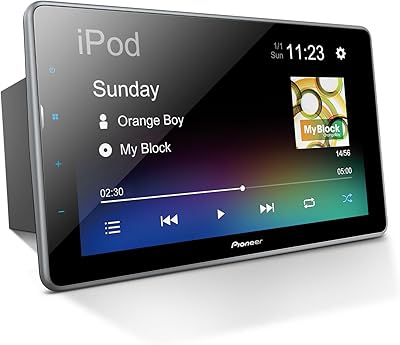
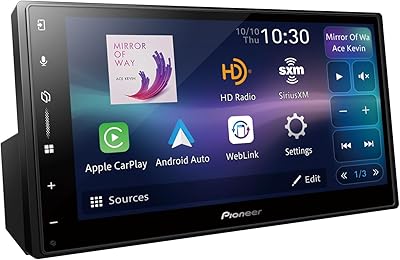
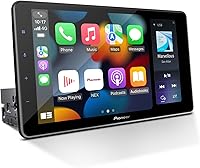
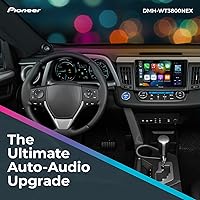
The Pioneer DMH-WT3800NEX In-Dash Receiver is built for a specific kind of driver: someone stuck with a single-DIN dash opening who refuses to settle for a tiny, outdated screen. Rather than requiring a double-DIN cutout or an expensive dash kit, this floating head unit mounts a large 9″ display above the slot, giving your interior a near-factory-clean look without major surgery. It sits firmly in the premium aftermarket tier, and the headline justification for that price is wireless CarPlay and Android Auto — no cables, no dongles. Just know going in that installation still requires patience, and possibly a professional hand.
Features & Benefits

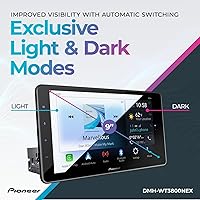
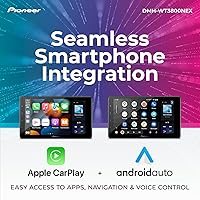
Drop your phone on the seat and the music keeps playing — that is the real-world payoff of wireless smartphone integration. The DMH-WT3800NEX connects to both CarPlay and Android Auto without a cable, which sounds minor until you have lived with a wired setup for years. The 9″ capacitive screen responds the way a modern touchscreen should: instantly, without pressing hard. Its automatic light and dark mode adjusts based on your headlights or a set schedule, so the display never blinds you at night or washes out in afternoon sun. Split-screen mode lets you run navigation and music simultaneously — a small feature that saves a surprising amount of in-drive fiddling. FLAC support is a genuine bonus for anyone with a high-quality audio library.

Best For

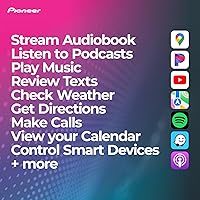
This Pioneer receiver makes the most sense for drivers who already have a single-DIN slot and do not want to pay for custom dash fabrication just to fit a larger screen. If your daily routine involves leaning on Google Maps or Apple Maps, or switching between podcasts and playlists, this unit handles that workflow without making you juggle apps. It is also a solid pick for audiophile-leaning drivers stepping up from a factory head unit — FLAC playback and cleaner amplified output make a noticeable difference on a decent speaker setup. And if you have been running a wired CarPlay setup and constantly untangling cables, the wireless connectivity alone will feel like a meaningful improvement. Budget-conscious buyers may want to look at wired-only alternatives, but those committed to a cable-free cabin will find this well worth considering.

User Feedback

With around 149 ratings and a 4.0 out of 5 score, this floating head unit has enough feedback to be directionally useful, though it is not a deeply reviewed product yet. Buyers consistently praise the clean floating display aesthetic and how responsive the touchscreen feels straight out of the box. Wireless CarPlay pairing draws repeated compliments for reliability. On the critical side, the Amazon Alexa functionality requires downloading both the Vozsis and Weblink apps — it is functional, but feels bolted on rather than native, and several users found the setup frustrating. Installation in vehicles with non-standard dash configurations has tripped up a few DIY buyers. A handful also mention occasional split-screen performance hiccups. Overall, balanced satisfaction with a few friction points — not a perfect unit, but a genuinely capable one.

Pros

  • Wireless CarPlay and Android Auto work reliably for most users — no cable to fumble with every time you get in the car.
  • The 9″ capacitive touchscreen is genuinely responsive, a clear step up from older resistive-screen units.
  • Automatic light and dark mode switching keeps the display readable in bright sun and non-distracting at night.
  • Split-screen mode lets you run navigation and a media source simultaneously without toggling back and forth.
  • FLAC audio support is a real differentiator for drivers who maintain high-quality music libraries.
  • The floating display design delivers a large-screen experience in a single-DIN slot without major dash modifications.
  • Built-in Bluetooth handles hands-free calls cleanly, with consistently positive feedback on voice clarity.
  • HD Radio reception is crisp in urban areas, and SiriusXM compatibility adds flexibility for subscribers.
  • The rear camera input works smoothly with a wide range of aftermarket cameras and switches automatically on reverse.
  • Firmware updates from Pioneer have addressed early software bugs, showing ongoing manufacturer support.

Cons

  • Alexa integration requires two separate third-party apps and feels bolted on rather than natively integrated.
  • Installation in vehicles with non-standard dash layouts has frustrated many DIY buyers — professional install is often necessary.
  • The floating display arm protrudes noticeably, which can feel intrusive in compact interiors or obstruct nearby HVAC controls.
  • Split-screen mode can lag when both panels are running demanding apps simultaneously.
  • Initial wireless pairing occasionally requires a reset, particularly with certain Android devices.
  • The built-in amplifier runs out of headroom at high volumes — external amplification is needed for premium speaker setups.
  • Running multiple connectivity layers at once — split-screen, Alexa app, and Bluetooth — has caused intermittent freezes for some users.
  • No backup camera is included in the box, which feels like an omission at this price point.
  • The plastic bezel shows fingerprints easily and the overall finish does not feel fully commensurate with the premium pricing.
  • With only 149 ratings, the review pool is still relatively shallow — directionally useful, but not a deeply validated picture yet.

Ratings

The Pioneer DMH-WT3800NEX In-Dash Receiver earned an overall 4.0 out of 5 across 149 verified buyer ratings — and our AI-driven scoring below reflects that same balanced picture, drawn from real-world user feedback worldwide with spam, bot, and incentivized reviews actively filtered out. Strengths in wireless connectivity and display quality are clearly reflected, but so are the friction points around installation complexity and the Alexa setup experience.
Wireless Connectivity
91%
Buyers consistently highlight how well wireless CarPlay and Android Auto hold their connection during daily commutes — no cable to plug in when you drop into the driver seat, and no mid-route dropouts reported by the majority of users. For frequent drivers who swap between home, office, and errands, this alone feels like a significant quality-of-life upgrade.
A small but vocal group of users report that initial wireless pairing occasionally requires a full reset before it stabilizes, particularly with older Android devices. The connection is reliable once established, but getting there on the first setup is not always frictionless.
Touchscreen Responsiveness
88%
The 9″ capacitive panel draws near-unanimous praise for how naturally it responds to finger input — drivers upgrading from resistive-screen units describe the difference as night and day. Tapping, swiping, and pinch-zooming on maps feels accurate even while wearing light driving gloves.
A handful of buyers note occasional sluggishness when running split-screen mode with high-resolution navigation apps, suggesting the processor is working close to its limits under heavier loads. It is not a constant issue, but it is worth knowing if you plan to multitask heavily.
Display Quality
86%
The automatic light and dark mode switching earns genuine appreciation from users who drive in varied lighting conditions. Reviewers who commute through sunny afternoons report that the bright mode keeps the screen legible without squinting, while the night mode does not blast their eyes at a red light.
The screen is not rated for direct harsh sunlight and a few users in high-glare climates note visible washout during peak afternoon hours even on the brightest setting. Viewing angles are solid but not exceptional compared to some competing units in the same price range.
Split-Screen Usability
79%
21%
The ability to keep Google Maps running on one half while controlling Spotify or a radio source on the other is a feature buyers who use it regularly find genuinely useful. It removes the irritating back-and-forth toggling that plagues single-source head units during long road trips.
Performance in split-screen mode is not always smooth — some users flag intermittent lag when both panels are running demanding apps. The layout also feels a bit cramped on the navigation side, and drivers with larger hands occasionally mis-tap between panes.
Audio Quality
83%
Buyers with mid-tier aftermarket speakers report a noticeable improvement over factory units, particularly in clarity at higher volumes. FLAC file support is a genuine differentiator for audiophiles who maintain lossless music libraries on a USB drive.
The built-in amplifier output is adequate but not exceptional — users running higher-end speaker setups typically find they need an external amp to realize the full potential of the unit. At moderate listening volumes the sound is clean, but headroom thins out at max output.
Installation Experience
58%
42%
For vehicles with a clean, standard single-DIN slot, the mounting system is well-engineered and the floating display bracket aligns predictably. Users with straightforward installs report the hardware side goes smoothly when following the included documentation carefully.
This is one of the more consistently flagged pain points in user reviews. Non-standard dash configurations, tight firewall clearances, and complex wiring harness differences across vehicle makes have left a meaningful portion of buyers recommending professional installation outright. DIY confidence matters a lot here.
Amazon Alexa Integration
54%
46%
Once configured through the Vozsis and Weblink apps, Alexa does function and can handle basic voice commands, smart home controls, and shopping list queries while driving. Users who invest the setup time and keep both apps updated report it works reliably enough for casual use.
The app-dependent nature of this feature frustrates a significant share of buyers who expected a native, plug-and-play voice assistant. Keeping two separate apps updated, managing permissions, and re-authenticating after phone updates adds friction that feels mismatched with the rest of the unit's capabilities.
Build Quality & Materials
77%
23%
The unit feels solid and well-finished for an aftermarket head unit — the floating arm bracket has minimal flex once locked, and the chassis does not rattle over rough road surfaces. Pioneer's hardware reputation holds up here in terms of physical durability.
The plastic bezeling around the screen shows fingerprints readily and some users feel the overall material finish does not fully match the premium price expectation. The floating design does protrude noticeably from the dash face, which can feel less integrated in some vehicle interiors.
Bluetooth Performance
84%
Hands-free call quality draws positive comments from commuters who rely on it daily — voice clarity on both ends is consistently described as good, and audio streaming over Bluetooth is stable across typical in-car distances. Multi-device pairing works without requiring a full reconnect each time.
A small number of users report that Bluetooth audio drops briefly when transitioning between wireless CarPlay and a standalone Bluetooth source. It reconnects quickly, but the interruption is noticeable enough to appear in multiple reviews.
Value for Money
73%
27%
For buyers who specifically need a single-DIN solution with a large screen and wireless smartphone integration, this Pioneer receiver occupies a niche that very few competitors address as completely. The feature density at this price point is hard to match within the single-DIN floating format.
Buyers comparing it against double-DIN units at similar or lower prices often feel the value equation tilts against the DMH-WT3800NEX — you are partly paying for the floating display engineering rather than raw processing power. If your dash allows a double-DIN install, it is worth cross-shopping before committing.
HD Radio & SiriusXM Performance
76%
24%
HD Radio reception quality earns solid marks from users in metro areas — station clarity is noticeably crisper than standard FM, and the tuner locks onto HD signals quickly. SiriusXM compatibility is appreciated by subscribers who want to centralize all audio through one interface.
HD Radio performance degrades predictably in rural or fringe-signal areas, which is expected but still noted. SiriusXM requires a separate subscription and compatible tuner accessory, which a few buyers discovered post-purchase and found somewhat misleading given how it is positioned in the feature list.
Rear Camera Compatibility
78%
22%
The rear camera input works cleanly with a wide range of aftermarket backup cameras, and the display switches to camera view automatically on reverse engagement. Image quality on the screen is sharp enough to make low-speed maneuvering genuinely easier.
The unit does not include a camera in the package, which some buyers expect given the price tier. Camera lag has been flagged in a small number of reviews, particularly with budget camera modules — though that may reflect the camera hardware rather than the receiver itself.
App & Software Stability
69%
31%
Under normal daily use conditions — wireless CarPlay, Bluetooth audio, standard radio — the interface runs without notable crashes or freezes. Firmware update availability through Pioneer has helped address some early software bugs reported by launch-window buyers.
Running edge-case combinations like split-screen plus Alexa app plus Bluetooth active simultaneously has produced intermittent freezes for a portion of users. The software architecture feels stretched at its limits when multiple connectivity layers are running concurrently.
Aesthetic & Dash Integration
74%
26%
The floating display concept genuinely solves a visual problem — a 9″ screen in a single-DIN slot looks modern and purposeful rather than like an afterthought. Buyers frequently comment that it draws attention for looking factory-premium rather than obviously aftermarket.
The display arm protrudes from the dash by a meaningful amount, which does not suit every vehicle interior. In smaller cabins or vehicles with pronounced dash curvature, the unit can feel physically intrusive and some users have noted it partially obstructs HVAC controls below.

Suitable for:

The Pioneer DMH-WT3800NEX In-Dash Receiver is purpose-built for drivers whose vehicles have a single-DIN dash opening and who have been reluctantly living with a small, outdated factory unit because a double-DIN swap felt too invasive or expensive. If you rely heavily on your phone for navigation and music — whether that means Apple Maps on an iPhone or Google Maps on Android — the wireless CarPlay and Android Auto integration will make your daily commute meaningfully less fiddly. It is also a strong fit for audiophiles stepping up from a basic head unit, since FLAC playback support and cleaner amplified output make a real difference on a decent aftermarket speaker setup. Drivers who split their in-car time between navigation and media streaming will particularly appreciate the split-screen capability, which removes the constant toggling that plagues simpler units. If you want a unit that looks modern and nearly integrated in the dash without cutting new openings, the floating display design delivers that in a way few alternatives can match.
Not suitable for:

The Pioneer DMH-WT3800NEX In-Dash Receiver is not the right call if your vehicle has a double-DIN slot available — at that point, you can get more processing power, better software stability, and often a cleaner install at the same or lower price from competing units. Buyers without prior car audio installation experience should also think carefully: non-standard dash configurations and complex wiring harnesses have caused genuine frustration for DIY installers, and professional installation adds cost that can shift the value equation. If voice assistant integration is a priority for you and you expect it to work like a native built-in feature, the Alexa setup here — dependent on maintaining two third-party apps — will likely disappoint. Drivers in very compact interiors should know the floating display arm protrudes noticeably from the dash face, and in some vehicles it can partially obstruct nearby controls. Finally, buyers cross-shopping on strict budget terms may find the price harder to justify when wired-only or double-DIN alternatives offer comparable core functionality for less.

Specifications

  • Display Size: Features a 9″ floating capacitive touchscreen that mounts above a single-DIN dash opening via an adjustable arm bracket.
  • Touch Technology: Capacitive multi-touch panel — the same technology used in modern smartphones — for fast, accurate input without the need to press firmly.
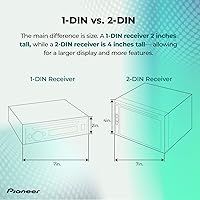
  • Dash Fitment: Designed exclusively for single-DIN (2″ tall) dash openings; does not require a double-DIN cutout or custom dash fabrication in most vehicles.
  • Apple CarPlay: Supports both wireless and wired Apple CarPlay, compatible with iPhone models running a current version of iOS.
  • Android Auto: Supports both wireless and wired Android Auto for compatible Android smartphones running Android 6.0 or later.
  • Bluetooth: Built-in Bluetooth handles hands-free calling, audio streaming (A2DP/AVRCP), and multi-device pairing without a separate adapter.
  • Wi-Fi: Built-in dual-band Wi-Fi enables wireless smartphone mirroring and supports over-the-air connectivity for compatible apps.
  • Audio Formats: Supports FLAC, MP3, WAV, AAC, and other common audio formats for USB playback, catering to standard listeners and lossless-audio enthusiasts alike.
  • Video Formats: Playback-compatible with AVI, MP4, MKV, MPEG, DivX, FLV, WMV/ASF, M4V, H.263, and H.264 video formats via USB input.
  • Audio Output: 2.1 channel stereo surround output configuration with RCA preamp outputs for connecting external amplifiers.
  • Radio Tuner: Built-in HD Radio tuner delivers noticeably cleaner FM reception in supported markets; also SiriusXM-ready with an optional tuner accessory.
  • Amazon Alexa: Amazon Alexa is accessible via the Vozsis and Weblink smartphone apps (free, available for iOS and Android) — it is not a standalone built-in feature.
  • Rear Camera Input: Includes a dedicated rear-view camera input that automatically triggers on reverse engagement; camera is not included and must be purchased separately.
  • Split-Screen Mode: Allows simultaneous display of CarPlay or Android Auto on one side and a native receiver source (radio, USB media) on the other half of the screen.
  • Dark & Light Mode: Screen brightness mode switches automatically based on vehicle headlight status or a user-defined time schedule to optimize visibility in all conditions.
  • Connectivity Ports: Rear panel includes USB 2.0 input for media playback and device charging, plus RCA outputs for connecting to external audio equipment.
  • Dimensions: Unit body measures 7 x 2 x 5.25 inches and weighs 3.8 pounds; the floating display arm adds additional protrusion depth beyond the dash face.
  • Color & Finish: Matte black finish across the chassis and bezel; consistent with most factory dash color schemes for a relatively unobtrusive look.
  • Model Number: Manufacturer model number is DMH-WT3800NEX; ASIN on Amazon is B0BX3TRY8P, first listed in March 2023.
  • User Rating: Holds a 4.0 out of 5 stars rating based on 149 Amazon ratings as of the time of this review analysis.

Related Reviews

Pioneer AVH-W4400NEX In Dash Multimedia Receiver
86%
87%
Overall Performance
91%
Ease of Setup
89%
Audio Quality
78%
Display Clarity
92%
Bluetooth Connectivity
More
Pioneer DMH-342EX Digital Multimedia Receiver
84%
85%
Audio Quality
91%
Bluetooth Performance
88%
Ease of Use
84%
Display Clarity
89%
Voice Control (Alexa)
More
Pioneer DMH-C5500NEX 8″ Capacitive Touchscreen Receiver
83%
92%
Smartphone Integration
88%
Audio Quality
75%
Ease of Installation
85%
Build Quality
90%
Alexa Integration
More
Pioneer DMH-241EX
Pioneer DMH-241EX
75%
88%
Sound Quality
91%
FLAC & Audio Format Support
61%
Touchscreen Responsiveness
83%
Bluetooth Performance
86%
Ease of Installation
More
Pioneer DMH-T450EX 9″ Car Multimedia Receiver
75%
91%
Display Size & Clarity
88%
Touchscreen Responsiveness
86%
Bluetooth Performance
89%
Audio Quality & EQ Flexibility
71%
Installation Experience
More
Pioneer DMH-130BT 6.8″ Double Din Car Receiver
78%
88%
Bluetooth Performance
67%
Touchscreen Responsiveness
91%
Installation Experience
78%
Audio Quality
82%
Backup Camera Integration
More
Pioneer AVH-3500NEX 7″ Motorized Touchscreen In-Dash Receiver
83%
75%
Ease of Installation
90%
Smartphone Connectivity (Apple CarPlay & Android Auto)
88%
Audio Quality
82%
Bluetooth Performance
85%
Display Clarity and Responsiveness
More
Pioneer DMH-W3050NEX Double Din Multimedia Receiver
78%
88%
Wireless CarPlay Performance
71%
Android Auto Compatibility
91%
Touchscreen Responsiveness
86%
Audio Output Quality
82%
HD Radio Reception
More
Pioneer DMH-1600NEX
Pioneer DMH-1600NEX
79%
88%
Smartphone Integration
84%
Display Quality
79%
Audio Performance
73%
Bluetooth & Hands-Free Calling
82%
Rear Camera Compatibility
More
Pioneer DEH-S4100BT CD Receiver
84%
91%
Bluetooth Functionality
85%
Sound Quality
88%
Ease of Setup
70%
App Compatibility
83%
Build Quality
More

FAQ

For most users, wireless CarPlay connects automatically and holds steady throughout a drive. A small number of buyers — particularly those with older Android devices — report occasional pairing hiccups on first setup, but once the connection is established it tends to stay stable. Keeping a USB cable in the glovebox as a fallback is not a bad idea, since the unit supports wired CarPlay as well.

If your vehicle has a straightforward single-DIN slot and a standard wiring harness, a confident DIYer can handle the install following Pioneer's documentation. However, if your dash has unusual geometry, tight clearances behind the slot, or a non-standard factory harness, professional installation is genuinely worth the cost — several buyers who attempted complex installs themselves ended up taking it to a shop anyway.

The arm and display protrude noticeably from the dash face — more than a flush-mount unit would. In most mid-size and full-size vehicles this is not a functional problem, but in compact cars or vehicles with dash curvature it can feel physically intrusive and may partially block nearby controls. It is worth measuring your dash area before buying if you have a tighter interior.

It is app-dependent. To use Alexa, you need to download both the Vozsis and Weblink apps on your phone, keep them updated, and keep your phone connected. It works once configured, but it is not a native, always-on voice assistant the way some buyers expect. If hands-free Alexa is a top priority, go in knowing there is some setup overhead involved.

Under moderate use — say, navigation on one side and radio or Bluetooth audio on the other — it runs acceptably. Where some buyers notice lag is when both panels are running demanding apps simultaneously, like Google Maps alongside a streaming music service. It is functional, but the processor is clearly working near its limits in those heavier multitasking scenarios.

In the majority of vehicles with a standard single-DIN opening, yes — the receiver body slots into the existing space and the display floats above it on the mounting arm. No cutting is required. That said, the depth of the unit behind the dash and the arm's position relative to your specific dash face can vary by vehicle, so checking Pioneer's vehicle fit guide before purchasing is always a smart move.

No camera is included — the Pioneer DMH-WT3800NEX In-Dash Receiver only provides the rear camera input. You will need to purchase a compatible aftermarket backup camera separately. The good news is the input is standard enough to work with a wide range of third-party cameras at various price points.
Yes, FLAC playback via USB is natively supported. If you have invested in high-quality audio files and a decent set of aftermarket speakers, you will notice a real improvement over compressed formats. Just keep in mind the built-in amplifier has its limits at high volumes — for a truly high-fidelity setup, pairing it with an external amp will get you the best results.

The automatic light mode does a solid job of boosting brightness in daytime conditions, and most users find it legible during typical sunny driving. In very harsh, direct-sunlight scenarios — think a summer afternoon with the sun directly facing your dash — some glare and washout has been noted even at maximum brightness. It is better than most aftermarket units but not completely glare-proof.

The unit is SiriusXM-ready but not SiriusXM-included. You will need a compatible SiriusXM tuner accessory and an active subscription to use the satellite radio functionality. If you are already a SiriusXM subscriber with a compatible tuner from a previous head unit, there is a reasonable chance you can reuse it — check Pioneer's compatibility list to confirm.