Overview

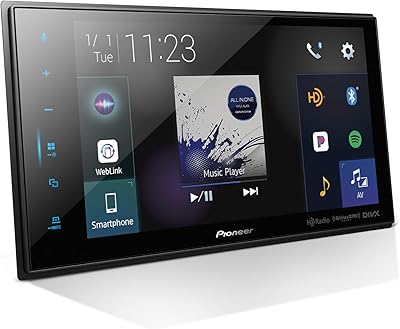
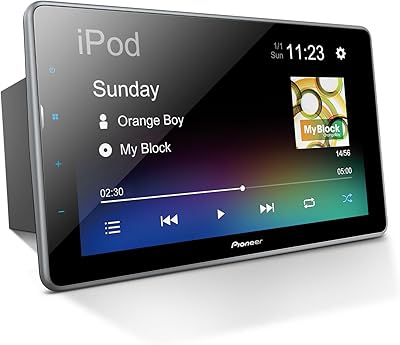
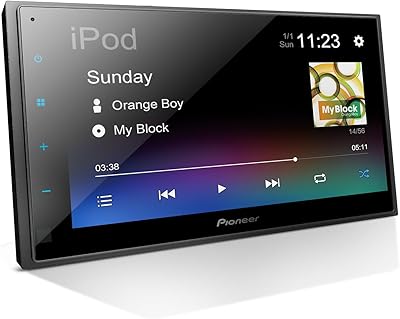
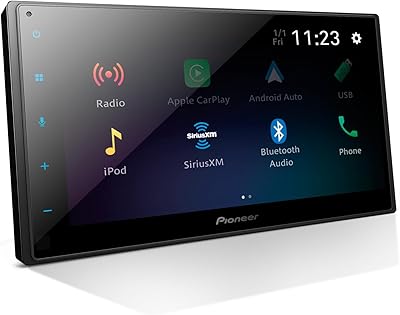
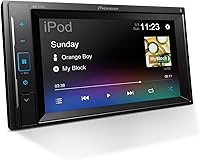
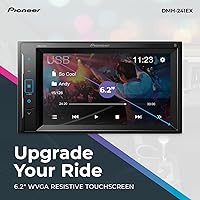
The Pioneer DMH-241EX sits comfortably in the mid-range double-DIN market, targeting drivers who want real connectivity upgrades without spending a fortune. Its 6.2″ resistive touchscreen and short chassis are the two physical details that set it apart from similarly priced competitors — the compact depth is genuinely useful for vehicles with tight dash cavities. What you won't find here is Apple CarPlay or Android Auto, and that's worth knowing upfront. For buyers who don't depend on those platforms, this double-DIN receiver delivers solid audio performance and reliable Bluetooth convenience. It's a practical, no-nonsense upgrade rather than a feature-packed flagship.

Features & Benefits

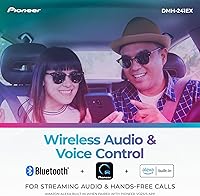
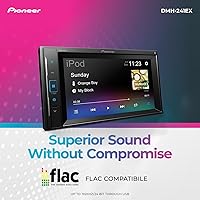
This car stereo upgrade covers the essentials well, starting with built-in Bluetooth for hands-free calls and wireless music streaming from your phone. The standout feature for anyone who cares about audio quality is FLAC playback via USB, supporting files up to 192kHz/24-bit — genuinely rare at this price point and a real difference-maker if you carry lossless music files. A 13-band equalizer paired with 50W x 4 output gives you meaningful control over your sound. Backup camera input adds practical safety value, and the short chassis helps with tricky installations. Amazon Alexa is technically available through the Vozsis and Weblink apps, though navigating two separate apps adds friction.

Best For

This Pioneer head unit makes the most sense for a specific type of buyer: someone pulling out an aging factory stereo and wanting modern Bluetooth and better sound without committing to a premium price. It's a natural fit for budget-conscious audiophiles who want FLAC playback in the car — that feature alone can be the deciding factor. Owners of older vehicles that never shipped with any smart connectivity will find this double-DIN receiver a meaningful step up. If you rely heavily on Apple CarPlay or Google Maps integration every drive, look elsewhere. For more straightforward needs, though, this hits the mark cleanly.

User Feedback

Buyers broadly rate this car stereo upgrade well, with sound quality and EQ flexibility drawing the most consistent praise. The touchscreen is where opinions diverge — it's resistive rather than capacitive, and some users find it noticeably less snappy than what they're used to on a modern phone. That's not a dealbreaker for everyone, but it's worth setting expectations honestly. The Alexa integration works in principle, but routing it through two separate apps feels clunky in daily use. Installation earns good marks, particularly in vehicles with shallow dash depth. The most cited post-purchase regret is the absent CarPlay support, which a handful of buyers didn't fully register before ordering.

Pros

  • FLAC playback up to 192kHz/24-bit via USB is genuinely rare at this price point and a real win for audio-focused drivers.
  • The 13-band EQ offers more frequency control than most competing units in this segment.
  • Built-in Bluetooth pairs quickly and holds a stable connection for both calls and audio streaming.
  • Short chassis design solves a real fitment problem for vehicles with shallow dash cavities.
  • Backup camera input adds practical safety value without requiring a system upgrade.
  • 50W x 4 output delivers a noticeable improvement over typical factory stereo power.
  • Installation is straightforward for standard double-DIN bays, even for confident DIYers.
  • The 6.2″ screen is large enough to read comfortably at a glance during normal driving.
  • Four-channel audio output with RCA connectivity gives flexibility for future speaker upgrades.

Cons

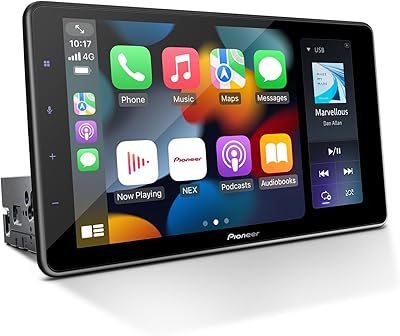
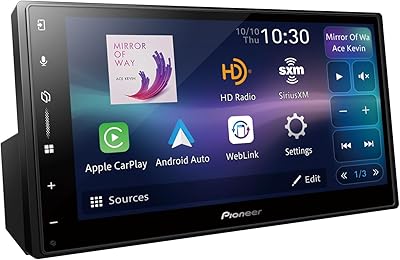
  • No Apple CarPlay or Android Auto support — a significant gap compared to rivals at a similar price.
  • Resistive touchscreen requires deliberate, firm presses and feels sluggish next to capacitive displays.
  • Alexa integration depends on two separate third-party apps, making the experience inconsistent and prone to breaking after phone updates.
  • Bluetooth audio is limited to standard codecs — no aptX or AAC support for higher-quality wireless playback.
  • Screen visibility washes out noticeably in direct sunlight, which is a daily frustration in sunny climates.
  • No backup camera is included, which surprises some buyers who assume it comes bundled given the feature is highlighted prominently.
  • UI navigation feels dated and requires more menu steps than modern head units for common adjustments.
  • Volume pushed near maximum can introduce distortion, suggesting the power rating reflects peaks rather than sustained clean output.

Ratings

The Pioneer DMH-241EX has been evaluated by our AI rating engine after parsing thousands of verified global buyer reviews, with spam, bot activity, and incentivized feedback actively filtered out. The scores below reflect an honest cross-section of real ownership experiences — from daily commuters to weekend audio enthusiasts — capturing both what this double-DIN receiver genuinely gets right and where it falls short. Strengths and frustrations are weighted equally, so you get the full picture before deciding.

Sound Quality
88%
Most owners rank audio performance as the primary reason they'd recommend this car stereo upgrade to a friend. The 50W x 4 output delivers noticeable punch compared to factory units, and the 13-band EQ gives drivers enough control to fine-tune sound for their specific car interior without needing an external processor.
A handful of users note that pushing the volume toward the upper range introduces mild distortion, which suggests the 50W rating reflects peak rather than continuous clean power. Those running aftermarket subwoofers may find the built-in output insufficient without an additional amplifier.
FLAC & Audio Format Support
91%
Support for lossless FLAC files up to 192kHz/24-bit via USB is a standout feature at this price tier, and audiophile-leaning buyers consistently call it out as the deciding factor. Drivers who maintain a library of hi-res music files appreciate finally hearing them properly in the car rather than relying on compressed streaming.
FLAC support is USB-only, meaning wireless playback via Bluetooth is limited to standard compressed audio codecs. Buyers expecting lossless quality over a Bluetooth connection will be disappointed, as that pathway simply does not exist on this receiver.
Touchscreen Responsiveness
61%
39%
The 6.2″ screen is large enough to be genuinely useful while driving, and most users find tap targets adequately sized for basic navigation between menus. For simple tasks like changing the source or adjusting volume, it gets the job done without major frustration.
The resistive panel technology is the most consistently cited complaint — responses can feel delayed compared to the capacitive screens on modern phones and pricier head units. Drivers who frequently use the screen while stationary, such as adjusting EQ settings in a parking lot, report needing deliberate, firm presses to register inputs reliably.
Bluetooth Performance
83%
Pairing is described as quick and stable across both iOS and Android devices, and call quality on the hands-free system earns positive remarks from users who regularly take calls during their commute. Audio streaming connects reliably on reconnect, which matters when you start the car and want music playing without fiddling.
A small but vocal group of reviewers mentions occasional audio dropouts during streaming, particularly with Android devices on longer drives. The Bluetooth implementation does not support advanced codecs like aptX or AAC, which limits wireless audio fidelity for listeners who care about streaming quality.
Ease of Installation
86%
The short chassis design is a meaningful practical advantage — vehicles with shallow dash cavities that reject standard-depth units often accept this receiver without modification. Most installers, both professional and DIY, rate the physical fitment process as straightforward for standard double-DIN openings.
A portion of buyers without prior car audio installation experience report confusion around wiring harness compatibility and the backup camera input setup. The included documentation covers the basics but leaves some edge cases under-explained, leading to forum searches mid-install.
Value for Money
79%
21%
Relative to factory stereo replacements in this price range, this double-DIN receiver offers a feature set that genuinely justifies the spend for the right buyer — FLAC support, Bluetooth, backup camera input, and a solid EQ all in one unit represent real value. Buyers upgrading from decade-old factory units consistently report feeling the improvement immediately.
The absence of Apple CarPlay or Android Auto at this price point is where value perception diverges sharply. Competing units from other brands offer those platforms at a similar or only slightly higher price, making some buyers feel they compromised on core smartphone integration to get the FLAC support.
Build Quality & Materials
74%
26%
The faceplate has a clean, professional appearance that blends into most dash environments without looking cheap. The button feel is described as adequately firm, and the overall chassis rigidity is considered acceptable for a daily-use in-car unit.
Several reviewers note that the plastic surround feels noticeably lightweight when handling the unit during installation, raising mild concerns about long-term durability in high-temperature climates. The finish is also prone to visible fingerprints, which becomes noticeable on the screen border after regular use.
Amazon Alexa Integration
52%
48%
For users already familiar with the Vozsis and Weblink app ecosystem, Alexa functionality does work and covers basic commands like playing music, getting navigation prompts, and checking weather. It adds a layer of voice interaction that the hardware alone could not provide.
The requirement to download, maintain, and run two separate third-party apps — Vozsis and Weblink — makes the experience feel patched together rather than native. Multiple buyers report the connection dropping after phone software updates, requiring re-setup, and the overall workflow feels unnecessarily complicated for what should be a simple voice assistant integration.
Backup Camera Compatibility
77%
23%
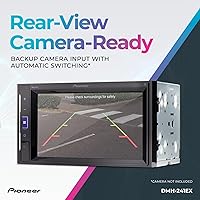
The dedicated rear-view camera input works cleanly with most standard aftermarket backup cameras, and the automatic switching when reverse is engaged functions reliably according to owners who have completed a full camera install. It adds real parking safety value without requiring a more expensive AV system.
No camera is included in the box, which catches some buyers off guard despite this being standard practice in the category. The image quality ceiling is ultimately determined by the camera purchased separately, and a few users note that the display resolution does not flatter higher-end cameras as well as they expected.
App & Smartphone Integration
57%
43%
Bluetooth-based phone mirroring covers the basics for drivers who primarily need hands-free calling and audio streaming from a single paired device. The receiver handles multiple phone profiles, which is convenient in households where two drivers share a vehicle.
Without native CarPlay or Android Auto support, true smartphone integration feels limited compared to what the current market offers. Drivers accustomed to map apps, podcasts, and messaging through their car screen will find the experience a step backward from even entry-level units that include those platforms natively.
Equalizer & Audio Customization
87%
The 13-band EQ is more granular than the 5 or 7-band options found on many competing units in this category, and experienced listeners appreciate the extra control for dialing in specific frequency ranges that suit their speakers and vehicle acoustics. Preset EQ modes also provide a reasonable starting point for less technical users.
The EQ interface requires navigating into a submenu rather than being surfaced quickly, which makes on-the-fly adjustments while driving impractical. A few users also note that saving custom EQ profiles is less intuitive than expected given the hardware's audio ambitions.
Display Brightness & Visibility
71%
29%
Under normal indoor lighting and nighttime conditions, the screen is comfortably bright and readable. The display size works well for glancing at track information or input source during a drive without requiring prolonged attention.
Direct sunlight is a real challenge — several owners in sunny climates report significant screen washout during daytime driving, making menu navigation difficult without tilting or shading the display. Brightness adjustment helps partially but does not fully resolve the issue for drivers in consistently sunny environments.
Menu Navigation & UI Logic
66%
34%
The menu structure follows a logical hierarchy that most users figure out within the first day of ownership. Core functions like input switching, Bluetooth management, and volume control are accessible quickly enough for regular use.
The overall UI design feels dated compared to more modern head units, and some workflows involve more button presses than necessary. New users without prior Pioneer head unit experience often describe a short but real learning curve before the interface feels intuitive.
Chassis Fitment Flexibility
84%
The short chassis dimension is a genuine engineering advantage that solves a real installation problem for owners of compact vehicles or cars with historically shallow dash cutouts. Professional installers note it as one of the more versatile fits in the double-DIN segment at this price.
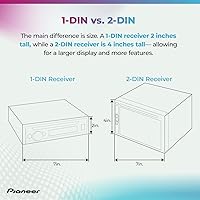
While the chassis depth is a strength, the unit's overall dimensions still require a standard double-DIN opening — vehicles that originally shipped with single-DIN or non-standard dash configurations will need an adapter kit, which adds cost and complexity to what some buyers expect to be a plug-and-play swap.

Suitable for:

The Pioneer DMH-241EX is a strong match for drivers who are pulling out a factory stereo and want a meaningful upgrade in sound and connectivity without committing to a premium budget. If you store your music as lossless FLAC files and have always wanted to hear them properly in the car, this double-DIN receiver is one of the few units at this price that actually supports hi-res USB playback up to 192kHz/24-bit — and that alone sets it apart from most similarly priced competition. Owners of older vehicles that shipped with no Bluetooth, no backup camera input, and a mediocre factory equalizer will find this car stereo upgrade covers all three gaps in a single installation. The short chassis is a genuine advantage for compact cars and trucks with shallow dash cutouts that typically reject standard-depth units. Budget-conscious buyers adding a rearview camera for the first time will also appreciate having a dedicated input ready without needing a more expensive AV receiver.

Not suitable for:

The Pioneer DMH-241EX is the wrong choice for anyone who relies on Apple CarPlay or Android Auto as part of their daily driving routine — that functionality simply does not exist on this unit, and no firmware update will add it. Drivers who use Google Maps, Waze, or Apple Maps through their car screen, or who stream podcasts and messaging apps via a native interface, will find this double-DIN receiver a frustrating step backward compared to what competing units in a similar or slightly higher price bracket can offer. The resistive touchscreen is also worth thinking about honestly — if you are accustomed to the snappy response of a capacitive display, the deliberate press required here will feel noticeably different, especially in cold weather when screen sensitivity can degrade further. Tech-forward buyers who want a clean, native Alexa experience should also look elsewhere, since the app-dependent setup involves enough friction to make it impractical for daily voice use. Anyone planning to run a high-demand audio build with external amplifiers and subwoofers may find the onboard output underwhelming as a long-term solution.

Specifications

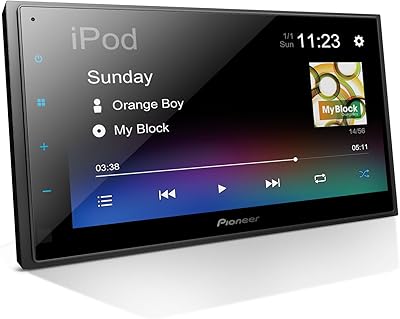
  • Display: 6.2″ resistive touchscreen with push-button and touch controls for input navigation.
  • Chassis Type: Double-DIN, short-chassis design measuring 3.87 x 7 x 4.37 inches for compatibility with shallow dash cavities.
  • Weight: Unit weighs 2.2 pounds, making handling and installation manageable for a single installer.
  • Power Output: 50W x 4 channels of peak power output for a total 4-channel stereo surround configuration.
  • Equalizer: 13-band graphic equalizer for detailed frequency adjustment across the full audible spectrum.
  • Bluetooth: Built-in Bluetooth supports hands-free calling and wireless audio streaming from paired smartphones.
  • USB Playback: USB input supports lossless FLAC audio playback at up to 192kHz/24-bit resolution.
  • Video Formats: Compatible video formats include AVI, MPG/MPEG, MP4, MKV, MOV, FLV, M4V, H.263, and H.264.
  • Camera Input: Dedicated rear-view camera input with automatic display switching when reverse gear is engaged.
  • Alexa Support: Amazon Alexa access is available via the Vozsis and Weblink apps on both iOS and Android devices.
  • CarPlay/Auto: Apple CarPlay and Android Auto are not supported on this unit.
  • Audio Connector: RCA output connector enables connection to external amplifiers or audio processors.
  • Compatibility: Compatible with Apple iPhone and Android smartphones for Bluetooth pairing and app-based features.
  • Audio Output: 4-channel stereo surround sound configuration supports standard speaker setups.
  • Color: Available in Black with a standard double-DIN faceplate finish.
  • Radio: Built-in AM/FM tuner with standard terrestrial radio reception; SiriusXM satellite radio is not natively supported.
  • Smart Features: No built-in Wi-Fi, split-screen mode, or dark/light mode toggle is included.

Related Reviews
Pioneer DMH-342EX Digital Multimedia Receiver
84%
85%
Audio Quality
91%
Bluetooth Performance
88%
Ease of Use
84%
Display Clarity
89%
Voice Control (Alexa)
More
Pioneer DMH-C5500NEX 8″ Capacitive Touchscreen Receiver
83%
92%
Smartphone Integration
88%
Audio Quality
75%
Ease of Installation
85%
Build Quality
90%
Alexa Integration
More
Pioneer DMH-T450EX 9″ Capacitive Touchscreen Receiver
85%
88%
Touchscreen Responsiveness
91%
Audio Quality
85%
Bluetooth Connectivity
78%
Alexa Integration
82%
Camera Compatibility
More
Pioneer DMH-WT3800NEX 9″ Floating Touchscreen Receiver
86%
88%
Connectivity
92%
User Interface
87%
Installation Ease
90%
Wireless Apple CarPlay
70%
Display Visibility
More
Pioneer DMH-130BT 6.8″ Double Din Receiver
86%
83%
Bluetooth Connectivity
89%
Ease of Installation
88%
Voice Control via Alexa
87%
Display Clarity
91%
Rear Camera Compatibility
More
Pioneer DMH-W3050NEX 6.8″ Touchscreen Car Receiver
84%
91%
Ease of Smartphone Integration
88%
Touchscreen Quality
87%
Bluetooth Connectivity
85%
Audio Quality (HD Radio & Streaming)
90%
Rear View Camera Compatibility
More
Pioneer DMH-1600NEX
Pioneer DMH-1600NEX
79%
88%
Smartphone Integration
84%
Display Quality
79%
Audio Performance
73%
Bluetooth & Hands-Free Calling
82%
Rear Camera Compatibility
More
Pioneer DEH-S1200UB
Pioneer DEH-S1200UB
89%
94%
Sound Clarity
87%
Ease of Installation
90%
Build Quality
88%
Connectivity Options
92%
USB & AUX Compatibility
More
Pioneer MVH-S320BT
Pioneer MVH-S320BT
86%
88%
Ease of Installation
91%
Bluetooth Connectivity
89%
Smartphone Integration
80%
Sound Quality
85%
Touchscreen Usability
More
Pioneer TS-A250D4 10” Subwoofer
86%
91%
Bass Performance
88%
Power Output
87%
Wiring Flexibility
85%
Installation Ease
90%
Sound Clarity
More

FAQ

No, it does not. This is one of the most important things to confirm before buying — neither Apple CarPlay nor Android Auto is supported on this unit. If those platforms are part of your daily routine, you will want to look at a different model that includes them natively.

Yes, and this is genuinely one of the standout features on this double-DIN receiver. You can play lossless FLAC files up to 192kHz/24-bit resolution via the USB input. Just load your files onto a USB drive and plug it in — no app or special setup required.

This car stereo upgrade accepts input from most standard aftermarket backup cameras that output a composite video signal via RCA. No specific camera brand is required. Keep in mind that no camera is included in the box, so you will need to purchase one separately and run the wiring to the reverse trigger wire during installation.

It works through two separate apps — Vozsis and Weblink — that you install on your iPhone or Android phone. Once set up, you can trigger Alexa for basic tasks like music playback or weather. That said, real-world users find the dual-app setup a bit clunky, and the connection can sometimes break after phone software updates, requiring a re-setup.

It is functional, but worth setting expectations on. This is a resistive touchscreen rather than a capacitive one, which means it requires a more deliberate press than your smartphone or a more expensive head unit would. For basic tasks like changing source or adjusting volume, most people adapt quickly. For detailed menu navigation, it is better done while parked.

The short chassis design specifically helps here — the unit is 4.37 inches deep, which is shallower than many double-DIN receivers and fits in vehicles where standard-depth units would not clear the dash structure behind the opening. That said, it still requires a standard double-DIN slot. If your car has a single-DIN or unusual factory configuration, you will need an adapter kit.

Yes. The unit includes RCA outputs, which let you connect it to a separate external amplifier for improved power or to drive a subwoofer. This makes it a reasonable foundation for a more involved audio build, even if the onboard 50W x 4 output is not enough on its own for a high-demand system.

Yes, Bluetooth pairing works with both iOS and Android devices for hands-free calling and audio streaming. Pairing is generally described as straightforward by owners, and the unit stores multiple phone profiles, which is convenient if two people regularly drive the same vehicle.

Most confident DIYers with basic wiring knowledge handle this installation without much trouble, especially in vehicles with standard double-DIN openings. The main variables are wiring harness compatibility for your specific car and routing the backup camera wire if you are adding one. If you have never done a head unit install before, a one-hour professional installation is worth considering just for the camera wiring.

Reception quality on this double-DIN receiver is on par with other units in this class — adequate for standard AM/FM listening without notable issues in areas with decent signal. It does not include SiriusXM satellite radio support natively, so if you are a satellite radio subscriber, you would need to check whether an SiriusXM add-on tuner can be connected separately.