Overview

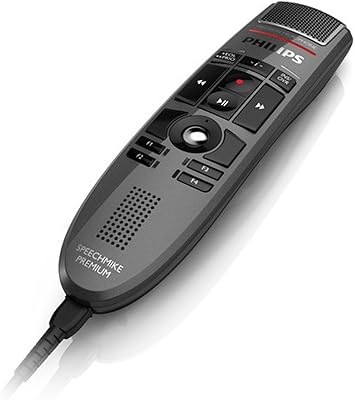
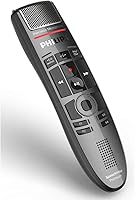
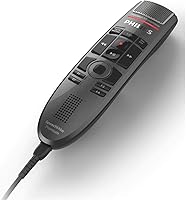
The Philips SpeechMike Premium Touch SMP3700 is a professional dictation microphone built specifically for the demands of medical, legal, and documentation-heavy workflows. It sits at the top of Philips' dedicated dictation lineup and is widely regarded as a credible replacement for the Nuance PowerMic — a transition many clinics and law firms have made without looking back. The SMP3700 connects via USB with no drivers to install, works out of the box with Dragon and other major speech recognition platforms, and feels solid in hand during long dictation sessions. The antimicrobial surface coating is a practical touch that matters in shared clinical environments, not just a spec on a sheet.
Features & Benefits

What separates this dictation microphone from a generic USB mic is the engineering behind the capsule. Handling noise isolation is achieved through a decoupled microphone mount, so even fidgety hands during long reports won't muddy the audio. The built-in pop filter and optimized grille work together to keep plosives and breath noise from undermining Dragon's accuracy. The SMP3700 is natively recognized by Dragon without any driver installation, which saves real IT headaches in larger practices. The unidirectional polar pattern does meaningful work in busy offices by focusing on your voice while pushing background noise aside. Since it draws power directly from USB, there are no batteries to manage.

Best For

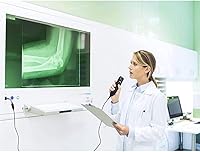
This SpeechMike makes the most sense for professionals who dictate all day and need accuracy they can count on. Radiologists and hospitalists generating dozens of notes per shift will notice the difference over a standard headset. Legal professionals using Dragon for transcription get a hardware partner designed with exactly that workflow in mind. In shared-device clinical settings — where a microphone passes between staff — the antimicrobial coating adds genuine value that cheaper alternatives simply don't offer. It also suits anyone upgrading from an older SpeechMike or retiring a PowerMic III. Home-office workers with serious dictation demands will find it worthwhile, though casual users will likely find the price hard to justify.

User Feedback

Users who switch to this dictation microphone from a standard headset consistently report noticeable improvements in Dragon recognition accuracy — fewer corrections per session adds up fast over a full workday. The metal build earns regular praise; it feels like something built to last years, not months. Button placement gets positive marks too, with most users finding the controls intuitive after a short adjustment period. On the downside, a handful of users report compatibility quirks on certain Mac configurations, and initial setup can feel more involved than expected for first-time SpeechMike users. A few also wish the bundled software were more comprehensive. At this price, those friction points are worth knowing upfront.

Pros

  • Dragon speech recognition accuracy improves noticeably over standard headset mics, reducing correction time per session.
  • Solid metal construction feels built to last years, not months, under daily professional use.
  • Plug-and-play USB setup requires no driver installation for Dragon users on Windows.
  • Unidirectional pickup rejects ambient office and clinical noise without repositioning the mic.
  • Antimicrobial surface coating supports standard disinfection protocols in shared healthcare environments.
  • Bus-powered via USB — no batteries, no charging cables, no mid-shift interruptions.
  • Button feedback is tactile and reliable, allowing confident single-handed operation during dictation.
  • The SMP3700 is a proven PowerMic replacement that fits naturally into existing Dragon-based workflows.
  • Long-term owners consistently report zero performance degradation after several years of intensive daily use.
  • Compact and light enough to carry between offices, wards, or courtroom locations without dedicated storage.

Cons

  • Premium price is hard to justify for anyone with infrequent or light dictation needs.
  • Fixed USB-A cable creates compatibility friction on modern laptops with only USB-C ports.
  • macOS users outside the Dragon ecosystem may encounter audio routing issues requiring manual workarounds.
  • No desktop stand included in the box, which matters for users who set the mic down between sessions.
  • Button layout requires a relearning period for users migrating directly from a PowerMic III.
  • Cable is not user-replaceable, which becomes a real problem if wear develops after years of daily use.
  • SpeechExec button remapping software adds flexibility but demands extra setup time that documentation barely covers.
  • Recognition accuracy gains depend heavily on correct mic positioning — careless technique still produces poor results.
  • Button responsiveness on heavily used units may degrade noticeably after three or more years.
  • Philips warranty and support responsiveness receives mixed feedback from long-term users reporting hardware issues.

Ratings

The Philips SpeechMike Premium Touch SMP3700 has been evaluated through AI-assisted analysis of verified purchaser reviews gathered globally, with spam, bot-generated, and incentivized submissions actively filtered out to preserve integrity. The scores below reflect the honest consensus of real-world users — predominantly healthcare and legal professionals — across both what this dictation microphone does well and where it falls short. Strengths and frustrations are weighted equally, so the picture you get is complete, not curated.
Voice Recognition Accuracy
93%
Most users coming from headset mics report an immediate and measurable drop in Dragon correction time after switching to the SMP3700. Clinicians dictating ten or more reports per shift describe it as the single biggest workflow improvement they made that year. The decoupled capsule and unidirectional pickup do exactly what they promise in noisy ward and office environments.
A small but consistent group of users note that accuracy gains depend heavily on proper mic positioning — hold it too far away or at an awkward angle and recognition rates slip. Those expecting perfection without any voice profile training in Dragon will be disappointed regardless of hardware.
Build Quality
91%
The metal housing is one of the first things users mention unprompted — it feels substantial in a way that plastic dictation mics simply do not. Reviewers who have owned the device for three or more years report no structural degradation, cracking, or button wobble, which matters when the mic is picked up and set down dozens of times daily.
The build quality premium is real, but so is the weight relative to lighter plastic competitors. A handful of users with repetitive strain concerns found extended holds tiring. The grille, while well-engineered, can collect residue over time and requires deliberate cleaning to maintain.
Ease of Setup
88%
For Dragon users, the plug-and-play experience is genuinely straightforward — plug in via USB, let the OS recognize it, and Dragon picks it up without any manual driver installation. IT teams managing multiple units across a practice find this particularly valuable since rollout requires almost no per-machine configuration.
Users outside the Dragon ecosystem sometimes find the setup less intuitive, especially on macOS where certain system audio routing settings need manual adjustment. A few first-time SpeechMike owners also expected more detailed onboarding documentation in the box.
Button Layout & Tactile Feel
82%
18%
After a short adjustment period, most users describe the button placement as intuitive for single-handed operation during dictation. The physical click feedback is clear and consistent, which is important when you need to confirm record and stop actions without looking at the device mid-sentence.
Users transitioning from a PowerMic III report a noticeable layout difference that requires a relearning period of one to two weeks. A few users with larger hands felt the controls were positioned slightly close together, leading to occasional accidental presses during longer sessions.
Noise Rejection
86%
The unidirectional polar pattern handles busy open-plan offices and clinical environments better than most competing dictation mics at this price tier. Users in radiology departments with ambient scanner noise report that their recordings remain clean and intelligible without needing to retreat to a quiet room.
It is not immune to very loud or low-frequency ambient noise — HVAC rumble in older buildings or nearby construction has tripped up a few users. In those edge cases, even the best unidirectional capsule needs positional compensation to maintain clean captures.
Antimicrobial Surface
84%
Healthcare users consistently call this out as a genuine functional benefit rather than a marketing footnote. In environments where the SMP3700 is shared across shifts or departments, the surface treatment meaningfully supports standard disinfection protocols without degrading over time with repeated wipe-downs.
The benefit is inherently invisible and difficult to verify independently, so some users are skeptical about long-term efficacy. It is also worth noting that the treatment covers the housing but does not eliminate the need for standard device hygiene practices entirely.
Software Compatibility
71%
29%
Within the Dragon NaturallySpeaking and Dragon Medical ecosystem, compatibility is excellent and well-maintained. Users on Windows 10 and 11 working within that stack report virtually no software-side issues across extended use periods.
Outside of Dragon, compatibility becomes patchier. Several macOS users report needing workarounds for system-level audio conflicts, and users of alternative speech recognition platforms occasionally find the button programming features do not translate cleanly without the Philips SpeechExec software installed.
Microphone Audio Clarity
89%
For dictation purposes, the audio capture is clean, well-balanced, and consistent — the integrated pop filter handles normal speech plosives effectively so recordings do not need post-processing. Legal professionals transcribing from recordings praise the intelligibility even when played back at lower volumes.
This is a dictation microphone, not a studio instrument, and users who approach it expecting broadcast-quality audio will find it adequate but not exceptional. The 70 dB signal-to-noise ratio is solid for speech, but do not expect it to shine in music or voice-over applications.
Ergonomics & Comfort
78%
22%
At 4.3 ounces and sized to sit naturally in one hand, the SMP3700 works well for intermittent dictation throughout a workday. The cylindrical form factor is familiar to anyone who has used a previous-generation SpeechMike, and most users adapt quickly.
Extended continuous-hold sessions — think court reporters working uninterrupted for hours — surface some fatigue feedback. The device lacks a desktop stand in-box, so users who prefer to set it down between dictations need to source a compatible stand separately.
Cable & Connectivity Reliability
83%
The USB cable is generously long for desk use and the connection is stable across long sessions with no reported dropout issues in the majority of reviews. Bus-powered operation means one fewer cable to manage and no power brick cluttering the workspace.
The cable is not field-replaceable without contacting Philips support, which frustrates users who have had cable wear issues after years of daily use. A detachable or braided cable option would address the small but recurring complaints about long-term cable durability.
Value for Money
67%
33%
For professionals who dictate as a core job function, the productivity return on investment is clear — better recognition accuracy translates directly into time saved, and time saved at a physician or attorney billing rate justifies the cost quickly. Long-term durability also stretches the cost-per-year favorably.
At its price point, the SMP3700 is a hard sell for anyone with light or occasional dictation needs. Casual users and small home-office setups will likely find the value proposition weak compared to capable USB mics available at a fraction of the cost.
Learning Curve
74%
26%
Existing Philips SpeechMike users will feel at home almost immediately — the interface logic carries over from previous generations. For Dragon users specifically, the device is designed with that workflow in mind, so the pairing feels natural within a day or two.
First-time SpeechMike users or those migrating from a PowerMic face a steeper adjustment than the marketing suggests. Button remapping via SpeechExec adds flexibility but requires time investment to configure properly, and the documentation could do more to guide new users through that process.
Durability Over Time
88%
Multi-year ownership reviews are consistently positive on physical longevity — the metal construction holds up to the daily abuse of being picked up, set down, and pocket-carried in clinical coats. Users who have owned one unit for four or five years report it still performs identically to when new.
Button contacts on heavily used units show some responsiveness degradation reported after three or more years of intensive daily use. Given the price, users reasonably expect a longer functional lifespan, and Philips warranty support responsiveness gets mixed marks in long-term user feedback.
Portability
72%
28%
The compact dimensions and sub-5-ounce weight make the SMP3700 genuinely portable for professionals who move between offices, wards, or courtroom locations. It fits easily into a bag without any protective case, and the corded USB connection is universally available on laptops and workstations alike.
The fixed USB-A cable, while practical at a desk, is less versatile in modern laptop setups dominated by USB-C ports. Users frequently need a dongle or hub, which adds friction in mobile use cases where speed and simplicity matter most.

Suitable for:

The Philips SpeechMike Premium Touch SMP3700 is purpose-built for professionals whose livelihood depends on fast, accurate dictation — and that audience will get every dollar's worth out of it. Physicians, radiologists, and hospitalists who push through ten or more patient notes per shift will notice the difference in Dragon recognition accuracy almost immediately, translating directly into fewer corrections and more time for actual patient care. Legal professionals, court reporters, and documentation-heavy administrative staff will similarly appreciate how the hardware and software work together without friction. In shared clinical environments — where a single device passes between multiple staff members across shifts — the antimicrobial surface is a thoughtful, practical feature rather than a box-ticking exercise. Anyone already in the Philips ecosystem upgrading from an older SpeechMike generation, or transitioning away from a Nuance PowerMic setup, will find the learning curve minimal and the performance step-up meaningful.

Not suitable for:

If your dictation needs are occasional or light, the Philips SpeechMike Premium Touch SMP3700 is genuinely difficult to justify on cost alone — capable USB microphones exist at a fraction of the price for users who dictate a few times a week. Podcasters, streamers, and content creators should look elsewhere entirely; this is a dictation tool optimized for speech recognition accuracy, not broadcast audio quality or musical capture. Users working primarily on modern laptops with only USB-C ports will hit an immediate friction point, since the fixed USB-A cable requires a hub or adapter that adds inconvenience in mobile setups. Mac users outside the Dragon ecosystem should research compatibility carefully before purchasing, as button programming and device integration are significantly more polished on Windows. And if you are not using Dragon or a similarly supported speech recognition platform, much of what makes this SpeechMike worth its price simply does not apply to your workflow.
Specifications

  • Connectivity: Connects via corded USB-A, drawing power directly from the host computer with no external power supply required.
  • Dimensions: The device measures 7.2 x 1.77 x 1.26 inches, sized for a comfortable single-handed grip during extended dictation sessions.
  • Weight: Weighs approximately 4.3 oz (120 g), balancing durability and portability for daily professional use.
  • Housing Material: The body is constructed from metal, contributing to long-term structural durability under repeated daily handling.
  • Surface Treatment: An antimicrobial coating is applied to the outer surface to inhibit germ colonization and support disinfection in shared-use environments.
  • Polar Pattern: Uses a unidirectional (cardioid) polar pattern that focuses on the speaker's voice and reduces pickup of ambient room noise.
  • Frequency Response: Captures audio across a frequency range extending up to 20 kHz, covering the full spectrum relevant to clear speech reproduction.
  • Signal-to-Noise Ratio: Rated at 70 dB SNR, delivering a clean audio signal well-suited for speech recognition processing.
  • Audio Sensitivity: Microphone sensitivity is rated at 90 dB, providing consistent capture of normal speaking voices at close range.
  • Impedance: Output impedance is 200 Ohm, which is standard for professional-grade USB dictation microphones.
  • Microphone Form: Features a large-diaphragm capsule mounted in a decoupled configuration to minimize handling noise transmission to the recording.
  • Pop Filter: An integrated pop filter is built into the optimized grille design to reduce plosive artifacts without requiring an external accessory.
  • Operation: Controlled via push-button operation, allowing single-handed start, stop, and function control during dictation without interacting with the computer.
  • Speech Recognition: Natively compatible with Nuance Dragon speech recognition software, enabling plug-and-play installation without additional driver configuration.
  • Power Source: Bus-powered through the USB connection, eliminating the need for batteries or a separate power cable.
  • Channels: Records in mono (single channel), which is standard and optimal for dictation and speech recognition workflows.
  • Model Number: Official model designation is SMP3700, part of the Philips SpeechMike Premium Touch product line.
  • Manufacturer: Designed and manufactured by Philips, a brand with an established history in professional dictation hardware.

Related Reviews

Philips SpeechMike Premium LFH3500
79%
91%
Audio Clarity
93%
Speech Recognition Compatibility
88%
Build Quality
86%
Ergonomics & Handling
84%
Programmable Function Keys
More
Philips SpeechMike Premium Air SMP4000
74%
83%
Wireless Reliability
88%
Build Quality
79%
Voice Capture Clarity
91%
Button Layout & Ergonomics
62%
Software Compatibility
More
Philips LFH3200 SpeechMike III Pro USB Dictation Microphone
82%
92%
Speech Recognition Accuracy
88%
Ergonomics and Comfort
85%
Build Quality and Durability
90%
Noise-Canceling Performance
87%
Ease of Use and Setup
More
Deoproce Premium Snail Revital Premium Cream 50mL
87%
94%
Hydration Effectiveness
88%
Anti-Aging Performance
91%
Texture & Finish
85%
Skin Compatibility
90%
Absorption Rate
More
Yves Saint Laurent Touche Éclat Radiant Touch #2 Luminous Ivory
85%
88%
Hydration & Skin Feel
91%
Effectiveness for Dark Circles
85%
Blendability & Texture
87%
Buildable Coverage
92%
Radiance & Glow
More
Philips SHP6000
Philips SHP6000
79%
88%
Sound Accuracy
83%
Comfort & Wearability
61%
Build Quality
91%
Value for Money
74%
Cable Design & Quality
More
Philips TAH3209
Philips TAH3209
73%
74%
Sound Quality
91%
Battery Life
86%
Fast Charging
68%
Comfort & Fit
66%
Build Quality & Durability
More
Meta Portal 10″ Touch
86%
92%
Ease of Setup
89%
Audio Quality
90%
Camera Performance
85%
Design & Aesthetics
80%
Privacy Features
More
Philips A4216 Wireless Headphones
88%
88%
Sound Quality
94%
Battery Life
82%
Comfort & Fit
91%
Portability & Storage
87%
Build Quality & Durability
More
Philips TAT1108 Wireless Earbuds
85%
88%
Sound Quality
91%
Call Clarity
86%
Battery Life
90%
Comfort & Fit
82%
Water Resistance
More

FAQ

Yes, the Philips SpeechMike Premium Touch SMP3700 is natively recognized by Dragon without any manual driver installation on Windows. You plug it in, Dragon detects it as the active audio input, and you can start dictating within minutes. Mac users may need to verify audio input settings manually before Dragon picks it up cleanly.
It functions as a strong alternative in terms of Dragon compatibility and dictation workflow, and many clinics and legal offices have made the switch without issues. The button layout differs from the PowerMic III, so expect a week or two of adjustment if your muscle memory is built around that device. The audio quality and recognition accuracy are comparable or slightly better in most side-by-side user reports.

The coating is applied to the outer housing and is designed to inhibit bacterial colonization on the surface, which complements — but does not replace — standard disinfection routines. It is integrated into the material rather than a removable layer, so it does not wear off with regular wipe-downs using approved cleaning agents. Users in clinical environments who clean their devices daily report no visible degradation after years of use.

The SMP3700 works as a standard USB audio input device, so it will function with any software that accepts a microphone input. However, the button programming features — which let you map the physical controls to recording functions — work most reliably through Philips SpeechExec software or within the Dragon environment. Outside of those ecosystems, the buttons may not behave as expected without additional configuration.

It is compatible with macOS, but the experience is smoother on Windows. A subset of Mac users report needing to manually set the device as the default audio input in System Settings, and certain button mapping features require the Philips SpeechExec software, which has more limited macOS support. If you are on Mac and outside the Dragon ecosystem, it is worth checking current software compatibility before purchasing.

The package includes the microphone unit with an attached USB-A cable. There is no desktop stand, no carrying case, and no printed setup guide beyond basic documentation. If you prefer to rest the mic on your desk between dictations, you will need to source a compatible stand separately — several third-party options fit the cylindrical body well.

Less than you might expect, thanks to the decoupled capsule mount inside the housing. Normal grip shifts and button presses during active dictation rarely show up as audible artifacts in recordings. Users who tap the device or hold it very loosely in a way that creates vibration will pick up some noise, but natural dictation handling is well-managed.

The unidirectional polar pattern does a solid job of prioritizing your voice and pushing ambient noise to the background, but it is not a noise-cancelling microphone in the active electronic sense. In moderately noisy environments — background conversations, HVAC, typical office hum — recordings stay clean and Dragon accuracy holds up well. Very loud or low-frequency ambient noise in close proximity can still bleed through, so positioning matters in particularly loud settings.

Based on long-term user feedback, three to five years of intensive daily use is common before any performance degradation becomes noticeable. The metal housing holds up well physically, and most wear issues reported over time relate to cable stress near the connector or gradual softening of button responsiveness rather than audio quality decline. Treating the cable gently at the stress points will noticeably extend its lifespan.

Honestly, probably not — and it is worth being direct about that. The performance advantages of this dictation microphone shine when you are dictating for hours daily and where accuracy gains translate into real time savings. For light or occasional use, the cost is difficult to justify against capable mid-range USB microphones that will serve infrequent dictation tasks just fine. The premium is best earned by heavy professional users, not occasional ones.