Overview

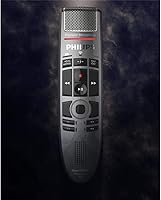
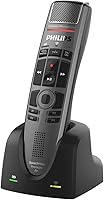
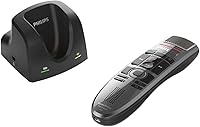
The Philips SpeechMike Premium Air SMP4000 is a wireless dictation microphone built specifically for professionals who spend serious time capturing spoken notes — think physicians, lawyers, and corporate teams with heavy documentation workloads. Available since 2017 and still holding a solid rank among computer microphones on Amazon, it has earned staying power in a fairly niche category. The ergonomic handheld body puts push-button controls right at your fingertips, so you can start, stop, and navigate recordings without touching your keyboard. It ships with a docking station, international power adapters, and two USB cables — a genuinely complete kit straight out of the box.
Features & Benefits

What sets the SMP4000 apart from a standard USB desk mic is the wireless freedom it provides. You are not tethered to a cable while dictating, which matters more than it sounds when you are mid-thought and need to lean back or reach for a file. The unidirectional polar pattern does a reasonable job of rejecting ambient office noise, keeping focus on your voice. Audio sensitivity sits at 23 dB — entirely adequate for speech capture, though this is not a recording mic for music or podcasting. The battery is rechargeable and docks neatly into the included station overnight, and at just 4.2 ounces it will not fatigue your hand during extended sessions.

Best For

This wireless dictation mic makes the most sense for people already embedded in a professional transcription workflow — particularly doctors dictating directly into EHR systems or legal professionals generating case notes at volume. Dragon NaturallySpeaking and Philips SpeechExec users will get the most out of the button layout and software integration; without compatible dictation software, much of the value is lost. It also suits anyone who finds a wired mic genuinely disruptive — those who pace, rotate in their chair, or simply resent cable clutter on a busy desk. Casual users hoping for a general-purpose USB microphone will likely find it over-engineered for their needs.

User Feedback

Buyers who rely on this Philips SpeechMike day-to-day tend to praise the sturdy build quality and intuitive button placement, noting that the physical controls become second nature fairly quickly. Wireless reliability draws consistent positive mentions as well, with most users reporting stable connections during normal desk use. On the other side, a recurring frustration involves initial setup complexity, particularly around software pairing after system updates. Some buyers have noted the docking station feels less robust than the mic itself after prolonged use. Battery life generally satisfies for a standard workday, though heavier users push it closer to its limits. Those upgrading from older wired SpeechMike models describe the transition as natural but acknowledge the price premium is noticeable.

Pros

  • Wireless operation removes cable constraints during long dictation sessions without sacrificing audio focus.
  • The unidirectional pickup pattern keeps voice recordings clean in reasonably controlled office environments.
  • Physical push-button controls become second nature quickly, cutting keyboard interruptions during heavy documentation work.
  • Ships as a complete kit — docking station, two USB cables, and international power adapters included.
  • The lightweight 4.2 oz body reduces hand fatigue during extended daily use.
  • Dragon NaturallySpeaking recognition accuracy improves noticeably for many users compared to generic USB microphones.
  • Rechargeable battery and overnight docking station make power management effortless for standard workdays.
  • Compact enough to travel between office locations without adding meaningful bag weight.
  • Build quality on the mic body itself holds up well under years of daily professional handling.

Cons

  • Software compatibility issues surface frequently after Windows updates or Dragon version upgrades.
  • The docking station feels noticeably cheaper than the mic and shows wear after months of daily use.
  • No active noise cancellation limits usefulness in open-plan offices or shared clinical spaces.
  • Initial wireless setup is more involved than expected for a device at this price point.
  • Battery life under heavy continuous dictation falls short of a full workday for some users.
  • Full button functionality requires compatible dictation software — without it, controls are largely non-functional.
  • Replacement docking stations and accessories are not always easy to source quickly when hardware fails.
  • The premium over comparable wired SpeechMike models is difficult to justify for users with fixed desk setups.

Ratings

The scores below for the Philips SpeechMike Premium Air SMP4000 were generated by our AI engine after analyzing verified buyer reviews from multiple global markets, with spam, incentivized, and bot-flagged submissions actively filtered out before scoring. Each category reflects the real distribution of opinions — including the friction points that professional users raise repeatedly alongside the strengths that keep this mic competitive years after launch. Nothing has been smoothed over: where buyers are divided, the scores show it.
Wireless Reliability
83%
Most professionals report that the wireless connection stays stable throughout a full dictation session at a normal desk distance, which is exactly the use case it was designed for. Doctors and legal staff in particular note they can move naturally — leaning back, turning away from the screen — without signal drops interrupting their train of thought.
A smaller but vocal group of buyers reports occasional disconnection events, usually after a PC goes to sleep or following software updates. Re-pairing is not always intuitive, and a handful of users find this disruptive enough to question the wireless convenience altogether.
Build Quality
88%
The handheld body feels dense and purposeful in the hand — not the hollow plastic that populates the budget end of this category. Users who have owned previous SpeechMike generations consistently note that the SMP4000 maintains that same durable, professional-grade construction they relied on for years of daily use.
The docking station is a weak spot that multiple reviewers call out specifically. It feels noticeably lighter and less solid than the mic itself, and a subset of longer-term owners report that the charging contacts or retention mechanism loosen with repeated daily docking over many months.
Voice Capture Clarity
79%
21%
For its intended job — capturing clear spoken dictation in a reasonably quiet office environment — this wireless dictation mic performs well. The unidirectional pattern does a solid job of keeping the focus on the speaker, and Dragon NaturallySpeaking users in particular report high recognition accuracy when using it as their primary input device.
This is not a broadcast or studio microphone, and buyers who expect that level of audio fidelity will be disappointed. Background HVAC noise or open-plan office chatter can creep into recordings, and the 23 dB sensitivity means it rewards proper mic technique — holding it at the right distance matters more than it would with a higher-sensitivity device.
Button Layout & Ergonomics
91%
The physical controls are one of the most praised aspects of the SMP4000 among experienced dictation users. After a short adjustment period, most professionals describe the button positions as intuitive enough to operate without looking, which significantly reduces interruptions to their documentation flow during high-volume work sessions.
Users transitioning from non-Philips workflows occasionally find the button mapping takes longer to internalize than expected, particularly if they are used to software-only controls. Those with larger hands have also noted that extended gripping can feel slightly awkward given the narrow form factor.
Software Compatibility
62%
38%
When the SMP4000 is paired with Philips SpeechExec or a current version of Dragon NaturallySpeaking, the integration is genuinely smooth — button functions map correctly, and the device is recognized reliably on supported configurations. Buyers in well-maintained IT environments tend to have a positive out-of-box experience.
This is the single most common frustration in buyer reviews. Compatibility issues surface after Windows updates, with certain EHR platforms, or when IT departments manage driver installations. The mic essentially requires an actively supported software ecosystem, and buyers who hit a compatibility wall describe the troubleshooting process as time-consuming and poorly documented.
Battery Life
74%
26%
For a standard eight-hour office workday involving moderate dictation use, the built-in lithium polymer battery holds up adequately for most buyers. The included docking station makes overnight charging a natural habit, and users who dock the mic at the end of each day rarely report mid-day power issues.
Heavier users — those dictating for several hours continuously rather than in short bursts — push the battery closer to its limits and occasionally report falling short of a full day. There is no quick-charge capability, so if the mic goes into a session depleted, there is no fast recovery option.
Setup & Initial Configuration
58%
42%
Users who work within a straightforward Windows PC and Philips SpeechExec setup report that the initial configuration is manageable, especially with the documentation provided. The included accessories — two USB cables and international power adapters — mean buyers are not hunting for missing components on day one.
Outside of that ideal scenario, setup frustration is a recurring theme. Getting the wireless connection, software drivers, and button mapping all working simultaneously can require multiple attempts, and buyers without IT support describe the process as more involved than the premium price point suggests it should be.
Value for Money
66%
34%
For professionals whose income depends on documentation speed and accuracy — physicians billing by volume, attorneys tracking billable hours — the productivity gains from a well-integrated wireless dictation mic can justify the price fairly quickly. Long-term owners who have used it without issue for several years generally consider it money well spent.
The sticker price is high by any measure, and buyers who encounter persistent software or connectivity problems feel it acutely. Compared to wired SpeechMike alternatives that cost less and require no wireless troubleshooting, the wireless premium is hard to defend for users who primarily dictate from a fixed desk position.
Portability & Form Factor
81%
19%
At 4.2 ounces and roughly the size of a slim TV remote, the SMP4000 is easy to tuck into a bag or desk drawer. Professionals who move between offices or carry it in a work bag appreciate that it does not add meaningful bulk, and the docking station is compact enough to sit unobtrusively on a crowded desk.
The form factor is optimized for desk use rather than true mobile portability — the docking station is not something most people will carry between sites daily. Buyers hoping to use it comfortably in non-desk environments like a car or a consultation room standing up find the ergonomics less accommodating.
Docking Station Quality
57%
43%
The ACC4000 docking station functions as intended for charging and keeping the mic ready for use, and the inclusion of international power adapters is a practical touch for users who travel between regions. Most buyers find daily docking straightforward once the habit is established.
The quality gap between the mic and its dock is something multiple reviewers notice and comment on. Reports of the dock losing its grip on the mic or the charging connection becoming unreliable after six to twelve months of daily use are common enough to be a real concern for buyers expecting enterprise-grade durability throughout.
Noise Rejection
72%
28%
In a private office or quiet clinical setting, the unidirectional pickup pattern performs meaningfully better than an omnidirectional desk microphone would. Users dictating in controlled environments report clean captures that require minimal post-processing before transcription.
Open offices, shared workrooms, and clinical spaces with ambient equipment noise expose the limits of this mic. It is not noise-cancelling in any active sense, and buyers who work in louder environments note that background sound intrusion affects recognition accuracy more than they expected for a device at this price.
Compatibility with Dragon NaturallySpeaking
77%
23%
Dragon users who land on a stable driver and software configuration report noticeably better recognition accuracy compared to generic USB microphones, which is a meaningful endorsement given how sensitive Dragon is to audio input quality. The button controls also integrate to allow hands-free session management.
Version mismatches between Dragon updates and the SMP4000 firmware or drivers have caused recognition degradation for a subset of users. Nuance and Philips update cycles do not always align, and buyers running the latest Dragon release occasionally find they need to wait for a firmware patch or roll back their software.
Long-Term Durability
71%
29%
The mic body itself accumulates generally positive long-term feedback, with many owners reporting two or more years of daily professional use without hardware failure. The push buttons retain their tactile feedback well over time, which matters for users who operate them hundreds of times per day.
Durability concerns tend to center on the charging ecosystem rather than the mic itself — dock degradation, cable wear, and connector loosening are the most common failure points reported by long-term owners. Replacement parts are not always easy to source quickly, which creates downtime risk for professionals who depend on the device daily.

Suitable for:

The Philips SpeechMike Premium Air SMP4000 was built for professionals whose daily output depends heavily on dictation — and that audience is where it genuinely delivers. Physicians dictating patient notes into EHR platforms, lawyers generating case documentation, and corporate managers who push through high volumes of voice memos will find the wireless freedom and purpose-built button layout meaningfully reduce friction in their workflow. It is particularly well-matched to Dragon NaturallySpeaking and Philips SpeechExec users who want a hardware input that integrates cleanly with their existing software rather than fighting against it. If you already work within a mature dictation ecosystem and spend several hours a day with a mic in hand, the ergonomic design and reliable wireless connection will feel like a genuine upgrade over both wired alternatives and generic USB microphones. Users in private offices or controlled acoustic environments will also get the most from the unidirectional pickup, where background noise is minimal and the mic can do its job without interference.
Not suitable for:

This wireless dictation mic is a poor fit for anyone outside a dedicated professional transcription workflow — and that group is larger than the marketing suggests. Casual users who want a solid USB microphone for video calls, podcasting, or occasional voice memos will find the price hard to justify when general-purpose mics deliver comparable audio for a fraction of the cost. The Philips SpeechMike Premium Air SMP4000 also depends heavily on compatible software to unlock its full button-mapping functionality; without Dragon NaturallySpeaking or Philips SpeechExec, it is essentially an expensive wireless mic with physical controls you cannot fully use. Buyers who work in open-plan offices or noisy clinical environments should temper expectations — the mic is not actively noise-cancelling, and louder surroundings will affect dictation accuracy. Anyone without access to IT support or patience for occasional driver troubleshooting after system updates may find the ownership experience more stressful than productive. Finally, those upgrading from a wired SpeechMike primarily to avoid cable clutter — rather than for genuine mobility needs — may find the wireless premium hard to justify once the docking station is factored back into the desk setup anyway.
Specifications

  • Brand: Manufactured by Philips under the SpeechMike Premium Air product line.
  • Model Number: The exact model reference is SMP4000/00, also sold under ASIN B07655DYH3.
  • Dimensions: The microphone body measures 6.89 x 1.26 x 1.77 inches (L x W x H).
  • Weight: The mic weighs 4.2 oz (0.12 kg), light enough for extended handheld use throughout the workday.
  • Connectivity: Connects to a PC via the included ACC4000 USB docking station; no direct wired connection to the mic itself.
  • Wireless: Operates wirelessly between the handheld mic and the docking station receiver, providing cable-free freedom at the desk.
  • Polar Pattern: Unidirectional (cardioid) pickup pattern focuses on the speaker and reduces ambient noise from other directions.
  • Audio Sensitivity: Rated at 23 dB, optimized for close-range speech capture rather than broad or high-sensitivity audio recording.
  • Channels: Single-channel (mono) audio output, which keeps dictation file sizes lean and compatible with transcription workflows.
  • Battery Type: Built-in rechargeable lithium polymer battery; one unit is included and pre-installed in the device.
  • Charging Method: Battery charges by placing the mic in the ACC4000 docking station, which connects to power via the included supply.
  • Power Supply: Includes one power supply with interchangeable adapter heads for US, UK, Europe, and Asia Pacific outlets.
  • Included Cables: Two USB cables are included in the box for connecting the docking station to a host PC.
  • Platform: Designed for Windows PC use; compatible with Philips SpeechExec and Dragon NaturallySpeaking dictation software.
  • Hardware Platform: PC-only; no native Mac or mobile platform support is listed by the manufacturer.
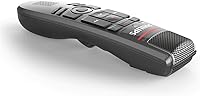
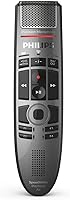
  • Form Factor: Handheld microphone with integrated push-button controls designed for one-handed operation during dictation.
  • In the Box: Package includes the SMP4000 microphone, ACC4000 docking station, international power supply, and two USB cables.
  • Launch Date: First made available on October 25, 2017, and remains an active, non-discontinued product as of this review.

Related Reviews
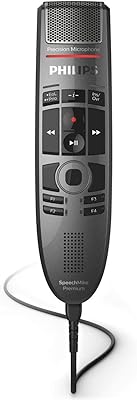
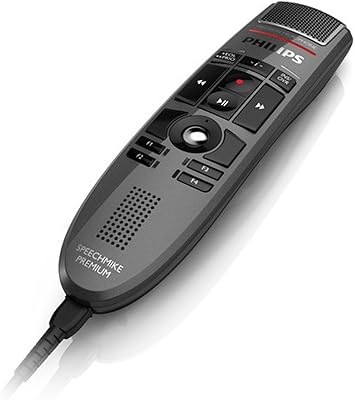
Philips SpeechMike Premium Touch SMP3700
82%
93%
Voice Recognition Accuracy
91%
Build Quality
88%
Ease of Setup
82%
Button Layout & Tactile Feel
86%
Noise Rejection
More
Philips SpeechMike Premium LFH3500
79%
91%
Audio Clarity
93%
Speech Recognition Compatibility
88%
Build Quality
86%
Ergonomics & Handling
84%
Programmable Function Keys
More
Roland RH-A30 Premium Open-Air Headphones
84%
92%
Sound Clarity
88%
Comfort for Long Sessions
85%
Build Quality
91%
Soundstage & Audio Balance
60%
Noise Isolation
More
Rugged Air RA900 Premium Stereo Aviation Pilot Headset
87%
91%
Comfort for Extended Use
88%
Noise Cancellation
89%
Build Quality & Durability
75%
Volume Control Usability
92%
Compatibility with Aircraft Systems
More
Philips LFH3200 SpeechMike III Pro USB Dictation Microphone
82%
92%
Speech Recognition Accuracy
88%
Ergonomics and Comfort
85%
Build Quality and Durability
90%
Noise-Canceling Performance
87%
Ease of Use and Setup
More
Deoproce Premium Snail Revital Premium Cream 50mL
87%
94%
Hydration Effectiveness
88%
Anti-Aging Performance
91%
Texture & Finish
85%
Skin Compatibility
90%
Absorption Rate
More
YUHUO Compressed Air Duster 360000 RPM Electric Air Duster
86%
88%
Performance & Power
91%
Ease of Use
85%
Battery Life
93%
Portability & Size
67%
Noise Level
More
Bumble and bumble Don't Blow It Fine (H)air Styler Air Dry Cream, 5 Fl Oz
84%
88%
Effectiveness for Fine Hair
90%
Lightweight Feel
85%
Volume and Body
92%
Ease of Use
80%
Scent/Fragrance
More
Truwelby Compressed Air Duster
87%
88%
Performance
91%
Battery Life
87%
Ease of Use
80%
Build Quality
92%
Noise Level
More
Philips SHP6000
Philips SHP6000
79%
88%
Sound Accuracy
83%
Comfort & Wearability
61%
Build Quality
91%
Value for Money
74%
Cable Design & Quality
More

FAQ

You will need compatible dictation software to get full value from the SMP4000. It will be recognized as a USB audio device without software, but the programmable push buttons only function properly when paired with Philips SpeechExec or Dragon NaturallySpeaking. If you do not already use one of these platforms, factor that into your purchase decision.

Yes, it is one of the primary use cases the device was designed for. Most Dragon users report clean audio input and reliable button mapping once the drivers and software are correctly configured. Occasional compatibility hiccups can occur after Dragon version updates, but these are generally resolved with a driver refresh or firmware check.

For typical office dictation use — meaning regular bursts of recording throughout the day rather than continuous hours-long sessions — the battery comfortably covers a standard workday for most users. Heavy users who dictate for several hours straight may find it runs low by late afternoon. Docking the mic overnight eliminates this concern entirely for most workflows.

This wireless dictation mic is engineered for desk-range use rather than room-to-room mobility. In practice, it performs well within a normal seated work area, but range drops or interference are more likely as distance from the dock increases. Think of it as a desk tool that frees you from cable constraints, not a wide-area wireless device.

Philips officially lists PC as the supported platform, and the full software integration with SpeechExec is Windows-only. Some users have reported basic audio recognition on Mac, but button functionality and full feature support cannot be guaranteed outside the supported Windows environment.

Initially, yes — but the docking station is a noted weak point in longer-term user feedback. After many months of daily use, some owners report that the charging contacts or the physical retention of the mic in the dock become less reliable. It functions well when new; just be aware that the dock tends to show wear faster than the mic body itself.

Users upgrading from wired SpeechMike generations generally describe the transition as natural, since the button layout and ergonomics are familiar. The main practical difference is freedom from the cable, which is either a meaningful quality-of-life improvement or a marginal one depending entirely on how much you move during dictation. The wireless version carries a price premium, so if you dictate from a fixed position, the wired alternative may be a smarter buy.

It can, depending on your environment. The unidirectional mic does a reasonable job of rejecting off-axis sound in quiet or semi-quiet offices, but it is not actively noise-cancelling. Open-plan offices, shared workrooms, or spaces with loud HVAC systems will introduce more ambient noise into recordings, which can reduce recognition accuracy in Dragon or similar software.

Replacement cables are standard USB and easy to source anywhere. Replacement docking stations (ACC4000) are available through Philips and select third-party resellers, though they are not always in stock at every retailer. It is worth bookmarking a supplier when you first purchase, since downtime waiting for a replacement dock can disrupt a professional dictation workflow.

It is manageable if you follow the documentation carefully, but it is not plug-and-play in the way a basic USB headset would be. Getting the wireless connection, drivers, and software button mapping all working together requires a few deliberate steps. If your workplace has IT support, involving them for the initial setup will save time and frustration.