

Overview

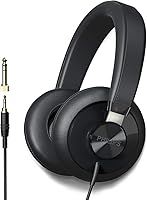
The Philips SHP6000 sits in a rare spot in the headphone market — a wired, over-ear set that targets home studio users and budget audiophiles without asking them to break the bank. What sets it apart at this price is its Hi-Res Audio certification, a standard most headphones at this level simply don't meet. The single-sided 3-meter cable keeps desk setups tidy, and the included 3.5mm-to-6.3mm adapter means you can plug into a phone, laptop, audio interface, or vintage amplifier without hunting for extra accessories. The foldable design is a practical bonus for anyone who needs to pack these away between sessions.

Features & Benefits

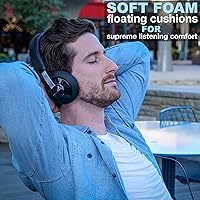
The 40mm neodymium dynamic drivers inside this over-ear set are tuned for accuracy rather than the pumped-up bass you'd find in consumer-focused headphones. The result is a wide, natural soundstage that lets you hear individual instruments and mix details clearly. Because the impedance sits at a low enough level, you don't need a headphone amplifier — a phone or laptop drives them without effort. The foam ear cushions and padded headband do a solid job of keeping pressure off your ears during long sessions. Passive sound isolation won't block out a loud room, but it handles moderate background noise well enough for focused, distraction-free listening.

Best For

These Philips headphones make the most sense for home studio monitoring, podcasting, and anyone who values honest audio reproduction over hyped sound signatures. If you're a student, remote worker, or casual audiophile who spends hours at a desk, the all-day comfort and wired reliability make them a practical daily driver. The bundled adapter makes them equally at home plugged into a modern laptop or an older mixer. They're not the right pick for commuting or gym use — the 3-meter cable is designed for stationary setups, not pockets. For zero-latency wired listening at a desk, they punch well above their price.

User Feedback

Buyers consistently praise the open, spacious sound and the comfort of extended wear — two areas where the SHP6000 genuinely over-delivers for the price. Value-for-money sentiment is strong across reviews. That said, honest buyers point out that the all-plastic construction feels less premium than the audio quality suggests, and some longer-term owners have noted that the ear pads lose their cushioning faster than expected. The 3-meter cable gets mixed reactions — great for desk use, awkward if you need to move around. Compared to similarly priced rivals, most reviewers feel these headphones hold their own on sound accuracy, even if build refinement lags behind.

Pros

  • Hi-Res Audio certification delivers genuine detail and clarity that most headphones at this price simply cannot match.
  • The neutral, accurate sound signature is ideal for podcast editing and home studio mixing work.
  • Low impedance means no external amplifier is needed — phones and laptops drive them without effort.
  • The included 3.5mm-to-6.3mm adapter adds real-world flexibility across a wide range of devices.
  • Cushioned ear cups and a padded headband make extended desk sessions noticeably more comfortable than cheaper alternatives.
  • The single-sided cable design keeps workstation setups tidy and reduces tangles during daily use.
  • Foldable construction makes storage compact enough to fit neatly into a backpack between sessions.
  • These Philips headphones deliver a wide, open soundstage that helps separate instruments clearly in a mix.
  • Lightweight build reduces neck and head fatigue during long listening or editing sessions.
  • Strong value-for-money ratio that consistently impresses buyers coming from similarly priced consumer headphones.

Cons

  • The all-plastic build feels noticeably cheap in hand and is vulnerable to cracking after drops or rough handling.
  • Ear pad foam compresses and degrades within six to twelve months of regular daily use.
  • No in-line cable controls means adjusting volume or skipping tracks requires reaching back to the source device.
  • The 3-meter cable is impractical for anything outside a fixed desk or studio setup.
  • No carrying case is included despite the foldable design, leaving the headphones unprotected during transport.
  • Passive isolation is insufficient for noisy environments — loud rooms bleed through clearly.
  • Bass extension at the low end is lean enough to disappoint listeners who enjoy bass-heavy music genres.
  • Long-term ownership costs rise if ear pads need replacing, quietly eroding the initial value advantage.
  • Headband padding is subject to the same compression and wear issues as the ear cups over time.

Ratings

The Philips SHP6000 earns its reputation as one of the most compelling budget studio headphones on the market, and these scores reflect that — drawn from AI analysis of thousands of verified global purchases, with spam, bot activity, and incentivized reviews actively filtered out. Buyers range from hobbyist podcasters to home mixing enthusiasts, giving us a wide and honest cross-section of real-world experience. Both the genuine strengths and the recurring frustrations are represented here without softening either side.

Sound Accuracy
88%
Users who bought these specifically for home studio work and podcast editing consistently praise the flat, honest sound signature. Instruments sit where they should in the mix, and voices come through without artificial warmth or boosted bass muddying the picture — something buyers switching from consumer headphones notice immediately.
A small segment of casual listeners find the neutral tuning underwhelming, expecting more punch and excitement from everyday music. If you primarily stream pop or hip-hop for enjoyment rather than critical listening, the restrained low end can feel dry compared to consumer-tuned rivals.
Comfort & Wearability
83%
Long desk sessions are where these headphones genuinely shine. The cushioned headband and foam ear cups distribute pressure evenly enough that many users report wearing them for three to four hours without significant fatigue — a meaningful achievement at this price point.
Over time, the foam ear pads compress and lose their original softness, which is a recurring complaint among owners past the six-month mark. Some users with larger heads also find the clamping force a little firm during the first few weeks before the headband breaks in.
Build Quality
61%
39%
The overall construction is solid enough for careful home use, and the foldable hinge mechanism feels reasonably well-engineered for the price. Users who treat them gently and store them properly report no structural issues well into their first year of ownership.
The all-plastic chassis is the most divisive aspect of this headset. Multiple reviewers describe it as feeling noticeably cheap when handled, and a few have reported the headband cracking after drops or rough handling. Longevity is a genuine concern for anyone expecting years of daily use.
Value for Money
91%
Across the board, buyers are struck by how much audio performance they get relative to what they paid. The Hi-Res Audio certification alone would justify a higher price tag on a different brand, and for budget-conscious audiophiles or students setting up their first home studio, the value proposition is hard to argue with.
The value calculus shifts if durability becomes an issue — replacing ear pads or the cable adds cost over time. Buyers who want a headphone that holds up to two or more years of daily wear may find themselves spending more in the long run than a slightly pricier but sturdier alternative.
Cable Design & Quality
74%
26%
The single-sided 3-meter cable is genuinely well-thought-out for desk and studio use. It keeps the listening area tidy, does not tangle as aggressively as dual-sided cables, and the length is generous enough to reach across a standard workstation setup without straining.
That same 3-meter length becomes a liability anywhere outside a desk setup. Users who tried taking these headphones on a commute or to a library quickly found the cable unmanageable without tucking most of it into a bag. The cable itself is also reported to feel thin and somewhat fragile at the jack connector over time.
Noise Isolation
67%
33%
The circumaural fit creates a reasonable passive seal that softens background chatter and low-level ambient noise. In a quiet home office or studio room, the isolation is sufficient to focus on the audio without being pulled out of the mix by external distractions.
This is not active noise cancellation, and buyers who expected otherwise were disappointed. Louder environments — open offices, cafes, public transport — bleed through noticeably. Users working near HVAC systems or in shared households found the isolation insufficient for serious critical listening sessions.
Soundstage & Imaging
86%
The wide, open soundstage is one of the most praised qualities in buyer reviews. Users mixing tracks describe being able to clearly place individual elements left, right, and center, which is exactly what you need when editing podcasts or making production decisions on a budget setup.
A handful of audiophiles who have used higher-end open-back headphones find the soundstage a step behind truly open designs at a higher price tier. For strictly competitive use cases like competitive gaming with directional audio cues, the imaging precision does not quite match dedicated gaming headsets.
Ease of Use
89%
Plug-and-play simplicity is genuinely appreciated here. The low impedance means no amplifier is needed, and the included adapter covers the vast majority of connection scenarios out of the box. Users report zero setup friction whether connecting to a smartphone, a laptop, or a small mixing board.
There are no in-line controls on the cable, which means volume and playback require reaching for the source device directly. For users accustomed to headphones with media control buttons, this feels like a noticeable omission during casual listening outside of a studio context.
Portability
71%
29%
The foldable design makes storage compact enough to fit into a backpack side pocket, which is a practical bonus for students and remote workers who carry them between locations. At just over 15 ounces, the weight is light enough to not feel burdensome in a bag.
There is no carrying case or pouch included, which feels like an oversight given the foldable design. Tossing them loose into a bag risks scratching the plastic shell or snagging the cable, and several buyers noted cosmetic wear appearing within a few months of regular transport.
Driver Performance
84%
The 40mm neodymium drivers handle dynamic range well for the price, reproducing both quiet ambient textures and louder transients without obvious distortion. Acoustic guitar recordings and vocal-heavy tracks in particular come through with a clarity that impresses buyers stepping up from cheap stock earbuds.
Bass extension at the very low end is limited compared to headphones with larger or more bass-tuned drivers. Electronic music producers and listeners who need tight, deep sub-bass representation in their mixes may find the low-frequency response a little lean for their workflow.
Compatibility
93%
The bundled 3.5mm-to-6.3mm adapter is a small but genuinely useful touch that many competitors skip at this price. Buyers using these across multiple devices — a smartphone for casual listening, a laptop for editing, and a mixer for music production — report a smooth experience switching between all three.
No wireless or Bluetooth option exists, which is by design but does eliminate a segment of potential buyers. Users who occasionally want to step away from their desk while listening will find the wired-only format limiting in ways that feel more restrictive in 2024 than they might have in previous years.
Ear Pad Durability
54%
46%
Out of the box, the foam ear cushions provide a soft and comfortable fit that most buyers appreciate during initial use. The material is gentle on skin and does not cause the sweating or irritation that some synthetic leather pads are known for during warmer months.
Pad degradation is the single most repeated long-term complaint in reviews. Many users report visible wear, flaking, and compression within six to twelve months of regular daily use. Replacement pads are available but add to the overall cost of ownership in a way that undercuts the original value proposition.
Headband Comfort
78%
22%
The fully cushioned headband distributes the headphone weight evenly enough that most users do not notice pressure on the top of the skull even after extended sessions. This is often cited as a secondary comfort factor that keeps the SHP6000 wearable for longer than comparable headphones in the price range.
The headband padding is also foam-based and subject to the same compression issues as the ear pads over time. A small number of buyers with longer hair or specific hairstyles found the headband snagging or pulling, which was an annoyance during regular use.
Hi-Res Audio Certification
82%
18%
For buyers who specifically seek out Hi-Res Audio certified gear, this certification carries real credibility. Users who listen to high-bitrate FLAC files or studio master recordings report a tangible improvement in perceived detail and texture compared to non-certified headphones they previously owned at a similar price.
In practice, the certification only matters if the source content and playback device also support high-resolution audio. Buyers streaming standard-quality audio from typical apps are unlikely to notice any meaningful difference, and a few reviewers felt the Hi-Res branding set expectations that their use case could not actually fulfill.

Suitable for:

The Philips SHP6000 is a strong match for anyone building or refining a home studio setup on a modest budget — particularly podcasters, bedroom producers, and hobbyist mixing engineers who need honest, accurate sound reproduction without spending on professional-grade equipment. Students studying audio production or music technology will find the neutral sound signature genuinely useful for learning how a mix actually sounds rather than how a bass-boosted consumer headphone colors it. Remote workers and desk-bound professionals who spend long stretches in focused listening sessions will also appreciate the comfort level, which holds up well during extended wear. If you regularly switch between a laptop, a smartphone, and a small mixer or audio interface, the included adapter and easy-to-drive impedance mean these headphones work across all of them without any extra gear. Budget-conscious audiophiles who want to explore Hi-Res Audio source files without committing to a high-end price point will find these headphones a genuinely capable and honest entry point.

Not suitable for:

The Philips SHP6000 is not a good fit for buyers who prioritize durability and long-term build quality, since the all-plastic construction and foam ear pads have a track record of wearing down within the first year of daily use. Commuters and mobile listeners will find the 3-meter cable more frustration than convenience — it is simply too long and too unwieldy for public transport or walking around. Anyone looking for meaningful noise blocking in loud environments, such as open offices, coffee shops, or busy households, should look elsewhere, as the passive isolation only takes the edge off moderate ambient noise rather than blocking it out. Bass-heavy music fans who want physical impact and low-end punch from hip-hop, EDM, or similar genres will likely find the neutral tuning underwhelming for casual enjoyment listening. Wireless-first users will also be out of luck, since there is no Bluetooth option and the wired-only format is a hard constraint with no workaround.

Specifications

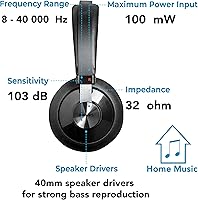
  • Driver Type: 40mm neodymium dynamic drivers tuned for accurate, flat sound reproduction rather than consumer-style bass enhancement.
  • Impedance: Impedance measures 31.97 Ohm, low enough to be driven directly from smartphones, laptops, and audio interfaces without a dedicated amplifier.
  • Sensitivity: Sensitivity is rated at 103 dB, meaning these headphones produce adequate volume from low-power portable sources without distortion.
  • Connectivity: Wired only via a 3.5mm audio jack; no Bluetooth or wireless functionality is supported.
  • Cable Length: A single-sided cable measuring 3 meters is attached, designed primarily for stationary desk and studio use.
  • Adapter Included: A 3.5mm-to-6.3mm stereo adapter is included in the box, enabling compatibility with mixers, amplifiers, and professional audio equipment.
  • Ear Placement: Circumaural over-ear design fully encloses the ears to create a passive sound-isolating seal.
  • Noise Control: Noise reduction is achieved passively through the over-ear cushion seal; there is no active noise cancellation technology.
  • Weight: Total headphone weight is 15.2 oz (approximately 430g), which is within the standard range for full-size over-ear studio headphones.
  • Foldable: The headphones feature a foldable design that reduces storage footprint when not in use.
  • Ear Cushion Material: Ear cushions are made from foam padding covered in a soft material designed to reduce pressure and heat buildup during extended sessions.
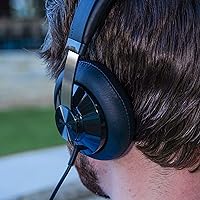
  • Headband: The headband is fully cushioned with foam padding to distribute weight evenly across the top of the skull.
  • Hi-Res Audio: These headphones carry official Hi-Res Audio certification, confirming a frequency response that exceeds standard 16-bit/44.1kHz CD-quality audio.
  • Form Factor: Full-size over-ear circumaural headphones intended primarily for home studio, monitoring, and extended listening use.
  • Package Contents: Box includes the headphones and a single-sided 3-meter cable along with a 3.5mm-to-6.3mm adapter; no carrying case is included.
  • Hardware Interface: Standard 3.5mm audio jack connector with the included adapter extending compatibility to 6.3mm ports.
  • Package Dimensions: Retail packaging measures approximately 9.21 x 7.72 x 4.29 inches, suitable for standard shelf or courier storage.
  • Manufacturer: Manufactured by Philips, a Dutch consumer electronics brand with a long-standing presence in audio and personal care products.

Related Reviews
Philips TAT1108 Wireless Earbuds
85%
88%
Sound Quality
91%
Call Clarity
86%
Battery Life
90%
Comfort & Fit
82%
Water Resistance
More
PHILIPS TAT3519 Wireless Earbuds
83%
88%
Sound Quality
92%
Battery Life
75%
Noise Cancellation
90%
Comfort and Fit
83%
Connectivity
More
Philips A4216 Wireless Headphones
88%
88%
Sound Quality
94%
Battery Life
82%
Comfort & Fit
91%
Portability & Storage
87%
Build Quality & Durability
More
Philips H5209 Wireless Headphones
83%
94%
Battery Life
88%
Sound Quality
85%
Comfort
91%
Call Clarity
87%
Bluetooth Connectivity
More
Philips TAH3209
Philips TAH3209
73%
74%
Sound Quality
91%
Battery Life
86%
Fast Charging
68%
Comfort & Fit
66%
Build Quality & Durability
More
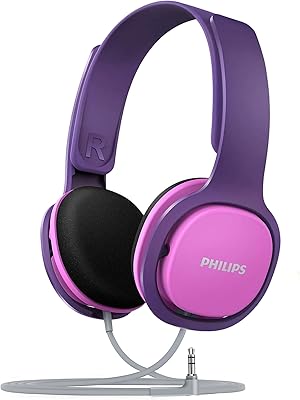
Philips SHK2000 Kids On-Ear Headphones
77%
94%
Hearing Safety
96%
Ease of Use
81%
Comfort for Young Children
62%
Build & Durability
74%
Sound Quality
More
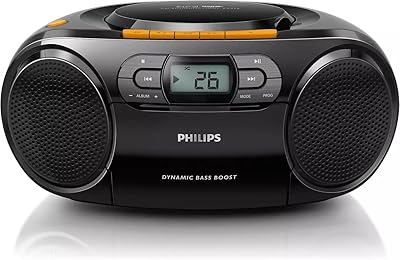
Philips Portable CD Player Boombox
84%
88%
Sound Quality
91%
Bass Performance
84%
Portability
92%
Value for Money
75%
Build Quality
More
PHILIPS TAR1506 Portable AM/FM Radio
83%
88%
Reception Quality
80%
Sound Quality
91%
Portability & Size
90%
Ease of Use
85%
Build Quality
More
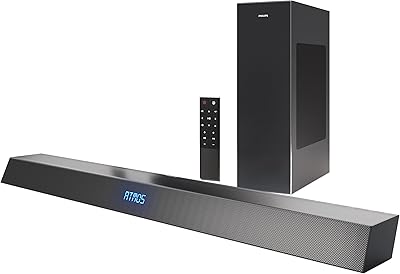
PHILIPS FX10 Bluetooth Stereo System
84%
89%
Sound Quality
93%
Bass Performance
81%
Build Quality
88%
Ease of Setup
85%
Remote Control Functionality
More
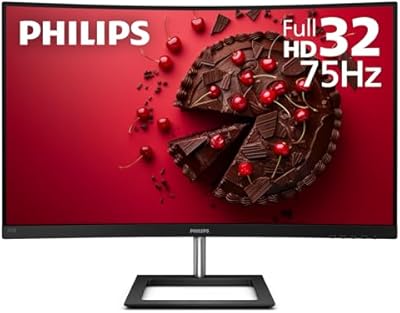
Philips 322E1C 32″ Curved Monitor
87%
93%
Display Quality
88%
Immersion & Curvature
90%
Color Accuracy
85%
Gaming Performance
91%
Ease of Setup
More

FAQ

No, you do not. The impedance on these headphones is low enough that a standard smartphone, laptop, or tablet will drive them to comfortable listening volumes without any additional hardware. If you are connecting to a mixer or audio interface, those devices will also power them without issue.

The cable on this over-ear set is not detachable — it is fixed to the left ear cup. If the cable is damaged, you would need to either have it repaired or replace the headphones entirely, which is worth factoring in if you plan on heavy daily use.

The noise isolation is passive, meaning it relies entirely on the physical seal the ear cups create around your ears. In a quiet home office or studio environment they work well enough to stay focused, but in louder spaces like open offices or public transport, a significant amount of ambient noise still gets through. Do not expect the kind of isolation you would get from active noise-cancelling headphones.

Yes, technically — the wired connection means zero latency, which is a real advantage for gaming audio. The wide soundstage also helps with spatial awareness in games. That said, there is no microphone included, so you would need a separate mic for voice chat, and the neutral tuning means sound effects will not have the exaggerated bass punch some gaming headsets are known for.

Yes, third-party replacement ear pads compatible with the SHP6000 ear cup size are available from various accessory sellers online. This is worth knowing upfront, since the foam pads do tend to degrade with regular use over time. Swapping them out is relatively straightforward and can extend the useful life of the headphones noticeably.

It depends entirely on how you plan to use them. For a desk setup — connected to a laptop, a mixer, or an audio interface — the length is genuinely useful and keeps slack from becoming a problem. For anything involving movement, like using them with a phone in your pocket or commuting, the cable is far too long to manage comfortably.

They work perfectly well for casual music listening, especially if you enjoy genres like jazz, classical, acoustic, or vocal-heavy music where detail and instrument separation matter. If your main listening habits revolve around bass-heavy genres like EDM or hip-hop and you want physical low-end impact, the neutral tuning may feel underwhelming compared to consumer-tuned headphones in the same price range.

The folding mechanism reduces the overall profile enough to fit into the main compartment or a side pocket of most full-size backpacks. However, no carrying case or pouch is included, so without some kind of protective sleeve the plastic shell is exposed to scratches and general wear during transport.

Yes, any device with a standard 3.5mm headphone jack will work with this over-ear set, including the Nintendo Switch in handheld mode, the PS5 DualSense controller, and the Xbox Series controller. For devices that use 6.3mm outputs, the included adapter covers you as well.

Based on patterns in buyer feedback, the foam ear pads typically start showing visible compression and wear between six months and one year of daily use. Lighter use stretches this timeline considerably. The good news is that compatible third-party replacement pads are available, so pad wear does not have to mean the end of the headphone's life.