


Overview

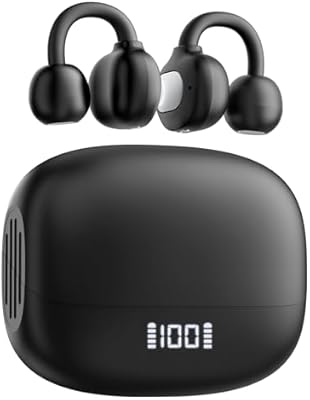
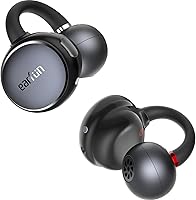
The EarFun Clip Open-Ear Earbuds arrived in May 2025, stepping into a category that's quietly gaining ground among active users who want music without losing touch with the world around them. These clip-on earbuds sit entirely outside the ear canal — that's not a limitation, it's the whole idea. They land in the mid-range wireless market with a C-shaped clip design, LDAC codec support, and Bluetooth 6.0, a surprisingly capable spec sheet for the price. Early reception has been positive, though the review base is still relatively new. Just set expectations accordingly: sound leakage is real, ambient noise is intentional, and this format won't suit everyone.

Features & Benefits

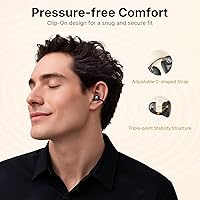
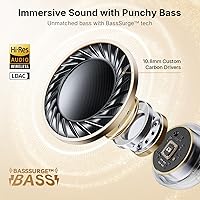
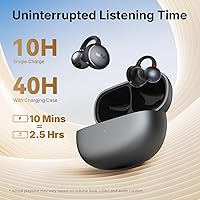
The titanium memory wire frame wrapped in liquid silicone is what makes this open-ear set practical for long sessions — it bends to your ear shape and stays put without pressure or soreness. Nothing enters the ear canal, which removes a whole category of fatigue. On the audio side, 10.8mm carbon dynamic drivers deliver solid range, and the LDAC codec on a compatible Android device adds real clarity at the high end. Bluetooth 6.0 holds the connection well and handles two simultaneous device connections cleanly. The battery runs to 10 hours on a charge, and the case extends that to 40. Ten minutes plugged in is enough for 2.5 hours of playback — a practical buffer.

Best For

This open-ear set earns its place most clearly in active outdoor use. Runners and cyclists are the natural fit — road awareness is not optional, and these clip-on earbuds keep it fully intact. People who find in-ear buds painful after 30 minutes may want to try the clip format; it genuinely changes the equation for long-wear comfort, though getting the clip positioned correctly takes a few tries at first. Android users get the added bonus of Google Fast Pair and full LDAC access. Regular switchers between a laptop and a phone will value the two-device connection. Skip this if passive isolation is your priority or if you prefer a more discreet look.

User Feedback

Sitting at 4.2 stars from around 350 ratings — a small sample so far — the EarFun Clip is trending well but hasn't been in enough hands long enough to say much about long-term durability. Comfort earns the most consistent praise: buyers who've been avoiding earbuds due to ear canal discomfort report wearing these clip-on earbuds for hours without trouble. Call performance is more nuanced: workable in quiet to moderately loud spaces, but wind cuts through the dual mics more than you'd hope. The open-ear format means sound escapes at volume, which people nearby will notice. A minority of users with smaller ears flag fit stability as worth checking before committing.

Pros

  • Clip-on design completely eliminates ear canal pressure, making all-day wear realistic for most users.
  • Titanium memory wire holds its shape and adapts to different ear contours better than rigid plastic clips.
  • LDAC support delivers noticeably improved wireless audio quality for Android users with compatible devices.
  • Bluetooth 6.0 keeps the connection stable and fast-pairing on supported devices.
  • Dual-device multipoint connection switches between phone and laptop without manual re-pairing.
  • The 40-hour total battery life with the case is strong for this category and price tier.
  • A 10-minute fast charge providing 2.5 hours of playback is a practical backup for rushed mornings.
  • IP55 water resistance handles sweat and light rain without worry during outdoor workouts.
  • Physical button controls are reliable and avoid the accidental activation problems common with touch panels.
  • The companion app adds useful EQ and control options, though it is entirely optional for buyers who prefer a simple plug-and-play setup.

Cons

  • Open-ear format means sound leaks noticeably at higher volumes, which can be disruptive in quiet shared spaces.
  • Wind significantly degrades microphone performance during outdoor calls, which is a real issue for cyclists and runners.
  • The clip mechanism has a learning curve, and first-time users often need several attempts to find a comfortable, secure fit.
  • Users with smaller ears report inconsistent fit stability, with the earbuds occasionally shifting during intense movement.
  • No noise isolation means concentration-heavy tasks in noisy environments become harder, not easier.
  • The review base is still relatively small and recent, so long-term durability and reliability data simply does not exist yet.
  • iOS users miss out on LDAC entirely, capping the audio quality at standard AAC levels.
  • The clip-on form factor is visually prominent and may feel bulky or awkward for users accustomed to minimal in-ear designs.
  • Bass response is inherently limited by the open-ear acoustic design, regardless of driver quality.
  • No wireless charging on the case, which is a minor but notable omission at this price point.

Ratings

The scores below reflect an AI-driven analysis of verified global user reviews for the EarFun Clip Open-Ear Earbuds, with spam, incentivized, and bot-flagged submissions actively filtered out before scoring. Each category is weighted against real-world usage patterns across active, commuting, and work-from-home buyers to give an honest picture of where these clip-on earbuds genuinely deliver and where they fall short. Both the standout strengths and the recurring frustrations are factored in transparently, so the numbers tell the full story.

Wearing Comfort
88%
The absence of anything entering the ear canal is the single most praised aspect across the review base. Buyers who previously gave up on earbuds due to soreness or pressure report wearing the EarFun Clip for three, four, even six hours without discomfort, which is a meaningful shift for that group. The liquid silicone coating against the ear feels soft and non-irritating even in warm conditions.
The clip mechanism requires a short adjustment period, and users with smaller or atypically shaped ears report that the fit never feels fully secure. A handful of reviewers noted mild cartilage pressure after extended sessions once the novelty wore off, suggesting the design is optimized for average ear geometries rather than the full range.
Audio Quality
83%
For an open-ear design at this price tier, the 10.8mm carbon drivers punch above expectations, delivering clear mids and reasonable detail. Android users pairing via LDAC hear a noticeable improvement in high-frequency clarity over standard Bluetooth codecs, and several buyers coming from cheaper open-ear alternatives called the difference meaningful during music playback.
Bass response is inherently limited by the open acoustic design — physics, not a driver failure — so buyers expecting any real low-end weight will be disappointed regardless of EQ adjustments. iOS users are capped at AAC, which narrows the gap between these and less capable alternatives in that ecosystem.
Call Quality
71%
29%
In controlled or moderately noisy indoor environments, the dual-mic AI system does a solid job of isolating the user's voice, and call recipients on the other end regularly report clear audio during office or home sessions. For remote workers taking calls from a desk, the performance is reliable enough to replace a basic headset.
Wind is a persistent weak point that reviewers consistently flag — outdoor calls during cycling or running in breezy conditions degrade quickly, with wind noise bleeding noticeably into the transmitted voice. The open-ear format also means the user hears ambient sound clearly during calls, which can make it harder to focus in chaotic environments.
Fit Stability
74%
26%
For standard to slightly larger ear shapes, the titanium memory wire holds the clip securely through moderate exercise including running and gym workouts. Buyers who have tried cheaper plastic-framed clip earbuds note that the memory wire returns to shape consistently and does not loosen over repeated wears the way softer materials tend to.
Users with smaller ears or those doing high-intensity lateral movements report more movement and occasional repositioning mid-workout. The initial setup requires bending the wire to your specific ear, and getting that calibration right takes patience — some buyers took three or four wears before the fit felt natural and stable.
Battery Life
91%
Ten hours of continuous playback on the earbuds alone covers most full working days or long travel days without a recharge, and the case adding another 30 hours brings the total to a level that genuinely removes battery anxiety for most users. The fast charge feature, delivering 2.5 hours from a ten-minute charge, is a practical lifesaver for rushed mornings.
The case itself requires a cable to charge and does not support wireless charging, which feels like a mild omission at this segment. A small number of users report getting closer to 8 hours of real-world battery on the earbuds rather than the advertised 10, particularly at higher volumes with LDAC active.
Bluetooth Connectivity
86%
Bluetooth 6.0 delivers noticeably faster initial pairing and a more stable connection at moderate distances compared to older-generation earbuds in a similar price range. The dual-device multipoint connection works reliably for users switching between a phone and a laptop, and Google Fast Pair on Android removes most of the friction from the first setup.
Multipoint connections can occasionally stutter when both connected devices are generating audio simultaneously, requiring a manual source switch in some cases. iOS users do not benefit from Fast Pair, making the initial setup slightly more manual and less polished than the Android experience.
Sound Leakage
58%
42%
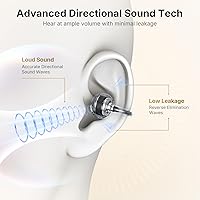
At low to moderate volumes in everyday environments, the directional sound technology does reduce leakage to a more contained level than older open-ear designs, which is a real improvement for casual use in semi-public spaces like offices or libraries at reasonable volumes.
This is the most common practical complaint from buyers who underestimated the open-ear trade-off — at higher volumes, people within arm's reach will hear what is playing. In quiet environments like meeting rooms, library study areas, or planes, this becomes a social problem that no firmware update or EQ adjustment can fix.
Build Quality
77%
23%
The titanium memory wire frame feels premium relative to the price and has a structural integrity that cheap alternatives lack. The overall assembly feels considered rather than cost-cut, and the buttons have a satisfying tactile click that holds up well through repeated daily use.
The product launched in May 2025 and the review pool is still small enough that long-term durability data is largely absent. A few early buyers have noted that the liquid silicone coating on the ear clip shows minor wear marks after consistent daily use, though whether this affects longevity is not yet clear.
Water Resistance
82%
18%
IP55 is a solid rating for active use — it handles sweat during intense workouts and light rain without any reported issues from buyers using these clip-on earbuds in gym or outdoor running contexts. No one in the current review base has reported moisture-related failures under normal use conditions.
IP55 does not cover submersion, so swimmers or buyers who train in heavy rain should understand the rating's limits. The case carries no specific water resistance rating, which means it needs to be stored away from moisture even if the earbuds themselves can take some exposure.
Controls & Usability
79%
21%
Physical buttons are consistently preferred over touch controls by active users who have experienced accidental activation while adjusting fit or wiping sweat. The button layout is intuitive enough that most users have playback, volume, and call management memorized within a day without consulting the manual.
The button placement on a clip-style earbud is less ergonomic than on a standard in-ear design, and a few users report needing to reposition the earbud after pressing buttons firmly during a run. There is no voice assistant shortcut out of the box, though button remapping via the app partially addresses this.
App Experience
73%
27%
The EarFun App delivers genuine utility for users who want EQ control or button remapping, and the interface is clean enough that it does not require a tutorial to navigate. Buyers who use the EQ presets report that the sound profile can be meaningfully shaped, which adds value for those willing to spend a few minutes configuring it.
The app is optional, and for users who skip it there is no loss of core functionality, but that also means the out-of-box EQ tuning leans toward a relatively flat profile that some buyers find underwhelming without adjustment. Android support is more robust than iOS within the app, with occasional connectivity sync issues reported on Apple devices.
Value for Money
84%
At this price tier, the combination of Bluetooth 6.0, LDAC, 40-hour total battery, and a purpose-built clip design for active use is difficult to match in the open-ear category. Buyers comparing this open-ear set to competing options at similar or higher prices consistently note that the spec-to-cost ratio tilts in its favor.
Buyers who prioritize sound isolation or deep bass response will find that any open-ear design at any price fails to serve those needs, making the value equation irrelevant if the format is not right for their use case. A small segment of reviewers felt the absence of wireless case charging and the iOS LDAC limitation were meaningful enough at this price to push them toward alternatives.
Noise Isolation
31%
69%
There is a narrow scenario where the lack of isolation is genuinely positive — runners, cyclists, and pedestrians in traffic actively need ambient awareness, and the open design delivers that without compromise or a special transparency mode to enable.
For any buyer expecting the listening experience to be buffered from the outside world, this design delivers the opposite. Ambient noise enters freely at all times, and this is not a fixable limitation — it is the core premise of the open-ear format, making this category a near-zero score for isolation-focused buyers.
Microphone Performance
69%
31%
In still, indoor conditions the microphone setup captures voice clearly and the AI processing does a reasonable job of suppressing consistent background hum like HVAC systems or office ambient noise, which covers the most common work-from-home and commuting scenarios adequately.
Wind sensitivity remains the clearest limitation, and buyers using these clip-on earbuds outdoors in anything beyond a light breeze will notice degraded call quality from the receiving end. Compared to in-ear designs with sealed microphone housings, the open positioning of the mics makes them more susceptible to unpredictable environmental noise.

Suitable for:

The EarFun Clip Open-Ear Earbuds are built with a very specific type of user in mind, and if you fit that profile, they make a genuinely strong case for themselves. Runners and cyclists will find the most value here — road awareness is a real safety concern, and this open-ear clip format keeps your ears free while still delivering music or podcasts at a decent quality level. They also work well for people who have given up on traditional earbuds due to ear canal discomfort or pressure fatigue; hours of wear become far more tolerable when nothing is physically inserted into the ear. Android users get an extra edge with LDAC codec support and Google Fast Pair, making the setup and audio experience noticeably smoother on compatible devices. Remote workers or commuters who take frequent calls while staying alert to their environment will also appreciate the dual-mic call handling and the ability to stay connected to both a phone and a laptop at the same time.

Not suitable for:

The EarFun Clip Open-Ear Earbuds are the wrong choice if sound isolation is anywhere near your priority list — the open-ear format means ambient noise comes in freely, and at moderate to high volumes, people sitting near you will hear what you are listening to. Anyone who uses earbuds primarily in loud environments like busy offices, noisy public transit, or construction-adjacent spaces will find the listening experience frustrating and fatiguing rather than immersive. Audiophiles or critical listeners on iOS devices will also hit a ceiling, since LDAC is Android-only and the open design limits low-end impact by its very nature. The clip mechanism takes some adjustment and may not sit securely on smaller or unusually shaped ears, so buyers with that concern should look for a return-friendly option before committing. Finally, if you prefer discreet, low-profile earbuds, the visible clip-on design is noticeably more prominent than a standard in-ear bud.

Specifications

  • Driver Size: Each earbud uses a 10.8mm custom carbon dynamic driver designed to reproduce audio across the full frequency range up to 20 kHz.
  • Bluetooth Version: The earbuds connect via Bluetooth 6.0, offering faster pairing and more stable wireless connections compared to previous generations.
  • Audio Codecs: LDAC and standard Hi-Res Audio certification are supported, enabling high-fidelity wireless playback on compatible Android devices.
  • Battery Life: A single full charge delivers up to 10 hours of continuous playback, with the USB-C charging case extending total runtime to 40 hours.
  • Fast Charging: Ten minutes of charging via USB-C provides approximately 2.5 hours of additional playback, reducing downtime between sessions.
  • Water Resistance: The earbuds carry an IP55 rating, offering protection against sweat, splashing water, and light rain during outdoor use.
  • Microphones: Two built-in microphones work with an AI-powered environmental noise cancellation algorithm to improve voice clarity during calls.
  • Multipoint: The earbuds can maintain simultaneous Bluetooth connections to two devices, such as a smartphone and a laptop, at the same time.
  • Ear Fit Type: A C-shaped open-ear clip design with a 0.55mm titanium memory wire frame allows the earbud to rest outside the ear canal entirely.
  • Ear Cushion: The contact surfaces use a liquid silicone coating that is skin-friendly and designed to reduce pressure and friction during extended wear.
  • Controls: Playback, volume, and call management are handled through physical push buttons, with no touch-sensitive surfaces on either earbud.
  • Companion App: The optional EarFun App for iOS and Android allows users to customize EQ settings, reassign button functions, and toggle listening modes.
  • Weight: The total system weighs 49 grams, with individual earbuds designed to be lightweight enough to minimize clip pressure on the ear.
  • Impedance: The impedance is rated at 32 Ohm, making the earbuds easy to drive from standard smartphone and tablet audio outputs.
  • Sensitivity: Audio sensitivity is rated at 100 dB, providing adequate loudness at normal volume levels without requiring a dedicated amplifier.
  • Charging Port: The charging case uses a USB-C port for recharging, with a USB-C cable included in the box.
  • Included Items: The package contains the EarFun Clip earbuds, a USB-C charging case, a USB-C charging cable, and a printed user manual.
  • Frame Material: The structural clip frame is built from 0.55mm titanium memory wire, which flexes to conform to different ear shapes and returns to its original form.
  • Connectivity: Google Fast Pair is supported for accelerated Bluetooth pairing on compatible Android devices without navigating system Bluetooth menus.
  • Frequency Response: The stated frequency response extends up to 20 kHz, covering the standard audible range for human hearing under typical listening conditions.

Related Reviews
LOBKIN S18 Open Ear Clip On Earbuds
83%
73%
Sound Quality
88%
Comfort & Fit
85%
Battery Life
92%
Water Resistance
79%
Build Quality
More
SoundPEATS POP Clip Open-Ear Earbuds
79%
91%
Wearing Comfort
84%
Battery Life
67%
Sound Quality
71%
Call Quality
88%
Button Controls
More
Baseus Bowie MC1 Open Ear Clip-On Earbuds
87%
85%
Sound Quality
88%
Comfort & Fit
92%
Battery Life
91%
Water Resistance
87%
Build Quality
More
PAXA M10019 Open Ear Clip-On Earbuds
78%
88%
Comfort & Wearability
91%
Style & Aesthetics
67%
Audio Quality
58%
Volume Ceiling
71%
Fit Security
More
Nothing Ear (Open) Open-Ear Earbuds
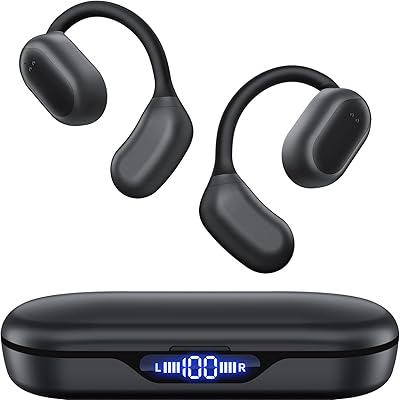
79%
91%
Wearing Comfort
83%
Workout Stability
74%
Sound Quality
77%
Call Quality
49%
Sound Leakage
More
Htcmf O8 Open Ear Earbuds
84%
75%
Sound Quality
90%
Comfort & Fit
95%
Battery Life
88%
Waterproof Durability
84%
Bluetooth Connectivity
More
Monster AC338 Open-Ear Bluetooth Earbuds
75%
83%
Comfort & Fit
78%
Battery Life
61%
Audio Quality
86%
Water & Sweat Resistance
81%
Bluetooth Connectivity
More
Haowolf SP05 Open-Ear Bluetooth Sports Earbuds
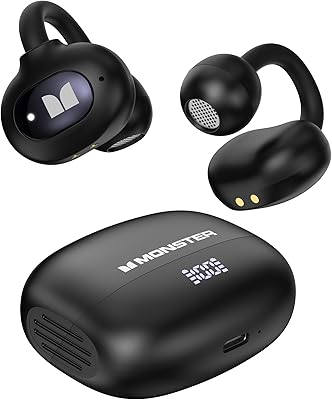
80%
88%
Comfort & Wearability
83%
Fit & Stability
92%
Battery Life
67%
Sound Quality
71%
Call Quality
More
PSIER EP20 Open Ear Bluetooth Earbuds
86%
85%
Sound Quality
92%
Comfort & Fit
90%
Battery Life
88%
Waterproof Performance
86%
Bluetooth Connectivity
More
AMINY U9 Open-Ear Clip-On Earbuds
78%
91%
Wearing Comfort
83%
Secure Fit During Activity
74%
AI Translation Accuracy
61%
Sound Quality
88%
Battery Life
More

FAQ

For most people, they hold up well once you figure out the correct positioning. The titanium memory wire bends to your ear shape, which helps. That said, there is a learning curve the first few times — it may take a couple of wears to get the clip seated where it feels locked in. Buyers with very small ears have occasionally flagged fit stability as an issue, so if you are on the smaller end, it is worth checking the return policy before committing.

They pair with iPhones without any problem via standard Bluetooth. The main thing you miss on iOS is LDAC — Apple devices do not support that codec, so the audio will default to AAC instead. You also lose Google Fast Pair, which is Android-only. The earbuds still work fine for music and calls on an iPhone, but Android users do get more out of the hardware.

It depends on your volume level. At moderate volumes the leakage is manageable, but if you tend to push the volume higher in noisy environments, people nearby will hear it. Open-ear design inherently cannot contain sound the way in-ear buds do, so this is a built-in trade-off rather than a flaw. For a crowded train where you would normally crank the volume, these may not be the most considerate choice.

In calm to moderately noisy settings, the dual-mic setup handles calls reasonably well and your voice comes through clearly. Wind is the weak point — if you are outdoors on a breezy day, the mics pick up a fair amount of wind noise and call quality drops. For indoor calls or walking in calm conditions, most users are satisfied with the performance.

You can absolutely just pair them and go — the app is completely optional. Out of the box, the button controls handle playback, volume, and calls without any setup. The EarFun App is worth installing if you want to tweak the EQ or remap buttons, but buyers who prefer a simple setup will not feel like they are missing anything essential by skipping it.

Ten minutes on USB-C gets you around 2.5 hours of listening, which is genuinely useful when you forget to charge overnight. The case itself charges via USB-C as well. It is not wireless charging — the case needs a cable — but the fast charge feature on the earbuds themselves is a practical backup for rushed situations.

The IP55 rating covers sweat and the kind of moisture you generate during a hard workout, so the gym environment is exactly what they are built for. The memory wire frame has reportedly been flex-tested extensively, which suggests EarFun put real effort into longevity. That said, the product launched in May 2025 and the review base is still relatively small, so there is not much long-term durability data available yet from real-world users.

Yes, that is one of the more practical features here. Multipoint connection supports two simultaneous Bluetooth connections, so you can be linked to your phone and laptop at the same time. Switching audio between them is handled automatically when a call or media plays on either device, which makes the transitions less disruptive than manually re-pairing.

No, and that is by design. The AI noise cancellation is specifically for calls — it helps the microphones filter background noise so the person you are speaking to hears you more clearly. For listening, the open-ear format intentionally lets ambient sound in. If you need isolation for listening, an in-ear or over-ear design with active noise cancellation is a better fit.

Setup from a device pairing standpoint is straightforward. The physical clip design takes a little more adjustment to get right — you are essentially bending the wire to match your ear and finding the right angle for the speaker to face your ear canal. Most people figure it out within a few tries. The user manual walks through it, and there are tutorial videos from EarFun that help if you get stuck. It is not complicated, just different from what most buyers are used to.

Where to Buy